You need water in a remote location but have no access to the power grid.
This leaves your farm, home, or livestock at risk, creating constant worry and inefficiency.
A solar water pump is a system that uses electricity generated by photovoltaic (PV) panels to power a pump.
This technology provides a clean, cost-effective, and reliable way to move water for drinking, irrigation, or livestock, especially in off-grid areas.
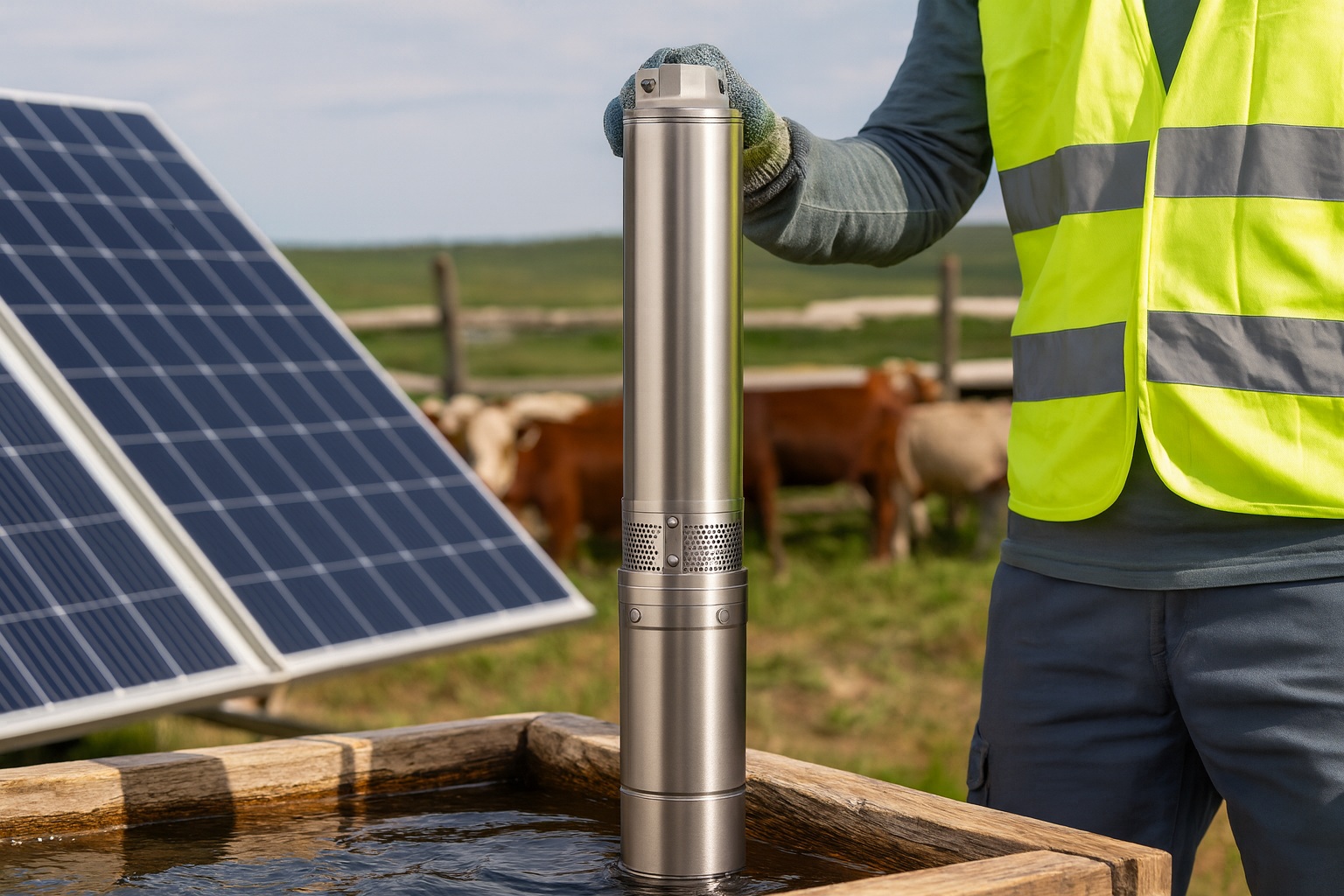
With the growing global demand for clean energy and sustainable water solutions, solar water pumps have become essential equipment.
They are widely used across Africa, the Americas, Australia, and Asia.
These systems operate independently of the power grid, making them both environmentally friendly and highly cost-effective over their lifespan.
This article will break down exactly what a solar water pump is.
We will explore the core technology that makes it work, the different types of pumps available for specific jobs, and the critical role of the motor.
By the end, you will understand how this technology provides a dependable water supply anywhere the sun shines.
How Does the Technology Actually Work?
You see the panels and the pump, but the connection seems complex.
You might worry that such a system is too complicated to be reliable for a critical need like water.
This uncertainty can make you hesitant.
The technology is simple and robust.
Solar panels generate DC electricity from sunlight.
This power is managed by a controller, which runs an efficient motor that drives the pump to move water.
The working principle of a solar water pump system is surprisingly direct.
Its simplicity and minimal moving parts are key reasons for its exceptional reliability.
There is no complex grid connection, no ongoing fuel costs, and no noisy generator to maintain.
The entire operation is powered by a clean, free, and abundant source of energy.
The process begins with the solar array.
These panels are the system's power plant.
When sunlight strikes the photovoltaic (PV) cells within the panels, it generates direct current (DC) electricity.
This raw power then flows through a cable to the system's brain: the intelligent controller.
The Role of the Smart Controller
The controller is a vital piece of the puzzle.
It acts as a manager, regulating the flow of electricity to ensure the motor receives the correct voltage and current for optimal performance.
Most advanced controllers use a technology called Maximum Power Point Tracking (MPPT).
This feature actively optimizes the power output from the solar panels.
It essentially squeezes every available drop of energy from the sunlight, even in low-light conditions like dawn, dusk, or on cloudy days.
This maximizes the amount of water pumped each day.
The Powerhouse: Motor and Pump
The controller sends this refined power to the motor.
The motor's job is to convert electrical energy into mechanical energy, causing it to spin.
This spinning action is what drives the pump.
Finally, the pump itself, whether submerged deep in a well or placed on the surface, uses this mechanical motion to physically move water from its source to where it is needed—a storage tank, an irrigation system, or a livestock trough.
The entire process is automated, starting as soon as there is sufficient sunlight to generate power.
| Component | Function | Result |
|---|---|---|
| Solar Array | Converts sunlight into DC electricity. | Raw, usable power is generated. |
| MPPT Controller | Manages and optimizes the DC power. | Stable, maximized power is sent to the motor. |
| BLDC Motor | Converts electrical energy to mechanical energy. | The pump's mechanism is driven to spin efficiently. |
| Pump Unit | Uses mechanical motion to move water. | Water is lifted from the source to the desired outlet. |
Matching the Pump to the Job: Finding the Right Fit
You think any solar pump can handle your water needs.
You might buy a high-flow pump for a deep well, only to find it cannot lift the water high enough.
This mismatch leads to system failure.
Solar pumps are specialized tools, not one-size-fits-all devices.
Their effectiveness comes from choosing the right pump type for your specific need, whether it is high pressure for deep wells or high volume for surface irrigation.
Solar pumps are not a single product.
They are a diverse category of products, each engineered to solve a specific water-moving challenge.
The reason they "work" so well is that a correctly chosen pump operates within its peak efficiency zone, delivering maximum water for the energy it consumes.
Choosing the wrong pump is like using a race car to haul heavy stones—it might move, but it will perform poorly and likely break down.
The two most important factors to consider are head and flow.
'Head' refers to the total vertical distance the pump needs to lift the water.
'Flow' is the amount of water you require over a specific period, often measured in liters or gallons per minute.
A pump designed for high head (lifting water from deep down) will typically have a lower flow rate, while a pump designed for high flow (moving a lot of water horizontally) will have a lower head capacity.
The global market features three popular types of solar deep well pumps, each with a distinct design.
Understanding their strengths helps in designing a system that works reliably and efficiently for your application.
Type 1: The Solar Screw Pump (The Deep Well Specialist)
This pump is the go-to solution for deep wells.
- Best For: Low flow and very high head. It is ideal for domestic water supply, lifting water to high-elevation tanks for livestock, and small-scale irrigation where well depth is the main challenge. It is widely used in electricity-scarce regions of Africa and Latin America.
- How It Works: It uses a positive displacement mechanism. A rotating stainless steel screw (rotor) turns inside a fixed rubber housing (stator). This action creates sealed cavities of water that are powerfully pushed upwards.
- Advantages: It can handle extreme well depths and is highly resistant to sand and silt, which would quickly damage other pump types. It maintains its efficiency even in harsh water conditions.
- Limitations: The flow rate is limited, making it unsuitable for large-scale farm irrigation.
Type 2: The Solar Plastic Impeller Pump (The Volume Mover)
This pump is the workhorse for moving large amounts of water.
- Best For: High flow and low-to-medium head. It is perfect for farm irrigation, filling ponds, pasture water supply, and home gardens. It is a popular choice in agricultural regions of Africa and the Americas.
- How It Works: This is a multi-stage centrifugal pump. A series of spinning plastic impellers grab the water and accelerate it outwards, stage by stage, to build high flow rates at moderate pressure.
- Advantages: It delivers a very high volume of water, is lightweight, and is the most economical option. The engineered plastic is highly resistant to wear from fine sand.
- Limitations: It has poor durability in highly corrosive water environments or in very deep wells that require high pressure.
Type 3: The Solar Stainless Steel Impeller Pump (The Durability Expert)
This model is built for longevity in harsh environments.
- Best For: High flow and medium-to-high head in corrosive water. It is designed for acidic or alkaline water conditions, such as those found in the alkaline soils of Australia and parts of the Americas, as well as for high-end homes and ranches.
- How It Works: It functions just like the plastic impeller pump, but every part that touches water, including the impellers and pump body, is made from corrosion-resistant SS304 stainless steel.
- Advantages: It offers extremely high corrosion resistance, a very long service life, and high reliability even in harsh chemical environments.
- Limitations: The cost and weight are higher, targeting more niche and premium markets where durability is the top priority.
| Requirement | Best Pump Type | Why It Works Best |
|---|---|---|
| Deep Well (over 80m) | Solar Screw Pump | Its design is specialized for creating high pressure. |
| Large Farm Irrigation | Solar Plastic Impeller Pump | It provides the highest water volume for the lowest cost. |
| Acidic or Alkaline Water | Solar Stainless Steel Impeller Pump | The stainless steel material will not corrode over time. |
The Engine Room: Why the Motor is Key to Performance
You focus only on the pump and the solar panels.
You end up with an inefficient motor that wastes precious solar power, delivering less water than you expected.
This oversight leads to poor performance.
The heart of any solar pump is its motor.
A high-efficiency brushless DC (BLDC) motor is the secret to a powerful and reliable system, as it converts more sunlight into pumped water, especially in low light.
While the pump does the visible work of moving water, the motor is the unsung hero that truly determines if a solar pump system "works" effectively.
The motor's job is to convert the electrical energy from the solar panels into the mechanical force that drives the pump.
Any inefficiency in this crucial step means wasted energy.
Wasted energy means less water is pumped and often requires you to purchase more solar panels to compensate, which drives up the total system cost.
This is why the choice of motor technology is so critical.
Modern, high-performance solar pumps have standardized on Brushless DC (BLDC) permanent magnet motors.
This technology is a game-changer for solar pumping.
A BLDC motor can achieve efficiencies exceeding 90%.
This means that for every 100 watts of power your panels generate, over 90 watts are converted into useful work.
Older brushed DC motors, in contrast, might only be 60-70% efficient.
That massive difference in efficiency is what separates a good system from a great one.
It is the difference between having water on an overcast day and having none at all.
Technical Advantages of the BLDC Motor
BLDC motors are not just slightly better; they represent a significant leap forward in technology.
Their design offers several key advantages that are perfectly suited for solar applications.
- High Efficiency: They waste very little energy as heat. This strong efficiency across a wide range of speeds means they start pumping earlier in the morning and stop later in the evening, maximizing daily water output.
- High Torque: They use powerful rare-earth magnets, such as 40SH neodymium iron boron, to produce high starting torque. This allows the pump to start easily under load and helps it handle difficult water conditions.
- Long, Maintenance-Free Life: The "brushless" design eliminates physical brushes, which are the most common point of failure in older DC motors. This results in a service life that can exceed a decade with zero motor maintenance.
- Compact and Lightweight: The powerful magnets and efficient design allow BLDC motors to be significantly smaller and lighter than traditional motors of the same power output. In some cases, they are 47% smaller and 39% lighter, which simplifies installation and reduces shipping costs.
The Market Value of an Efficient Motor
As the core driving force, the motor determines the overall efficiency and competitiveness of the entire water pump system.
Its high efficiency directly reduces the number of solar panels needed, lowering the initial investment and operating costs for the end user.
This strategic role makes the motor the true heart of a modern, reliable solar water pump.
What About Bad Weather? The 24/7 Water Solution
You love the idea of solar power but fear cloudy days.
You worry that a week of bad weather will leave your home, farm, or livestock completely without water.
This is a legitimate concern.
Modern solar pump systems can work in any weather, day or night.
The solution is a hybrid AC/DC controller that automatically switches to grid power or a generator when sunlight is insufficient, guaranteeing an uninterrupted water supply.
The most common and valid concern about solar power is its dependence on the sun.
What happens on persistently cloudy days, during heavy rain, or at night when you still need access to water?
Early solar pump systems did not have a good answer.
The only options were to install a massive water storage tank to hold several days' worth of water or simply go without during bad weather.
Fortunately, modern technology has completely solved this problem.
The solution is not in the pump or the panels but in the intelligence of the controller.
Advanced systems now use a hybrid AC/DC controller, which acts as an automatic power manager to ensure the pump never stops working due to a lack of sun.
How the Hybrid System Guarantees Water
A hybrid controller is designed with two power inputs: one for the DC power from the solar panels and another for AC power from the electrical grid or a backup generator.
It is programmed with intelligent logic to always prioritize using free solar energy first.
- Full Sun Operation: When the sun is shining brightly, the controller directs 100% of the free DC energy from the panels to the pump motor. The AC input remains on standby.
- Low Light Operation (Hybrid Function): If clouds roll in and the solar power drops, the hybrid function kicks in. The controller can automatically identify the shortfall and blend AC power with the available solar power to keep the pump running at full speed. This maximizes the use of every bit of solar energy before relying on paid electricity.
- No Sun Operation: When there is no solar input at all, such as at night or during a storm, the controller automatically and seamlessly switches over to use only the AC power source.
The user does not have to do anything.
The switch is completely automatic, ensuring worry-free water use 24 hours a day.
This technology transforms a solar pump from a "daytime-only" device into a true 24/7, all-weather water solution, offering complete water security and peace of mind.
Conclusion
A solar water pump is a reliable, efficient, and cost-effective system.
Its success hinges on a flexible portfolio of pumps, a high-efficiency motor, and an intelligent control system.
FAQs
What is the lifespan of a solar water pump?
A quality solar pump system can last for over a decade.
The solar panels often have a warranty of 25 years, while the brushless motor and pump can operate reliably for many years with minimal maintenance.
Can a solar pump run without a battery?
Yes, most solar water pumps are designed to operate without batteries.
They pump water during sunny hours into a storage tank, and the stored water is then used whenever it is needed.
How much does a solar water pump system cost?
The cost varies widely based on the pump's size, the required depth (head), and the number of solar panels needed.
While the initial investment is higher than a conventional pump, the long-term savings on electricity and fuel are significant.
How do I choose a solar water pump?
To choose the right pump, you need to know your total daily water requirement, the water source depth (head), and your geographic location to estimate solar availability.
Consulting with a supplier will ensure a properly sized system.
Can solar pumps work on cloudy days?
Yes, they can.
While their output will be reduced, the high efficiency of modern systems allows them to pump water even in low-light conditions.
A hybrid AC/DC controller can supplement power on very cloudy days.
What maintenance does a solar water pump require?
Solar pump systems are very low-maintenance.
The primary tasks are to periodically clean the solar panels to ensure maximum sun exposure and to check any plumbing connections for leaks.
Can a solar pump work for a large farm?
Absolutely.
High-flow solar pumps, like plastic or stainless steel impeller models, are specifically designed for large-scale agricultural irrigation.
Multiple pumps can be used to meet very high water demands.
Is it difficult to install a solar water pump?
Installation is straightforward for someone with basic plumbing and electrical knowledge.
The systems are designed for simplicity, especially in remote locations, but hiring a professional is recommended to ensure optimal setup and performance.