Tired of shocking electricity bills from your pool pump?
This constant drain on your wallet feels frustrating, especially when you just want to enjoy your pool without the high cost.
Yes, solar pool pumps are absolutely worth it.
They drastically cut or even eliminate your pool's energy costs by using free power from the sun.
This makes them an environmentally friendly investment that offers a quick financial return.
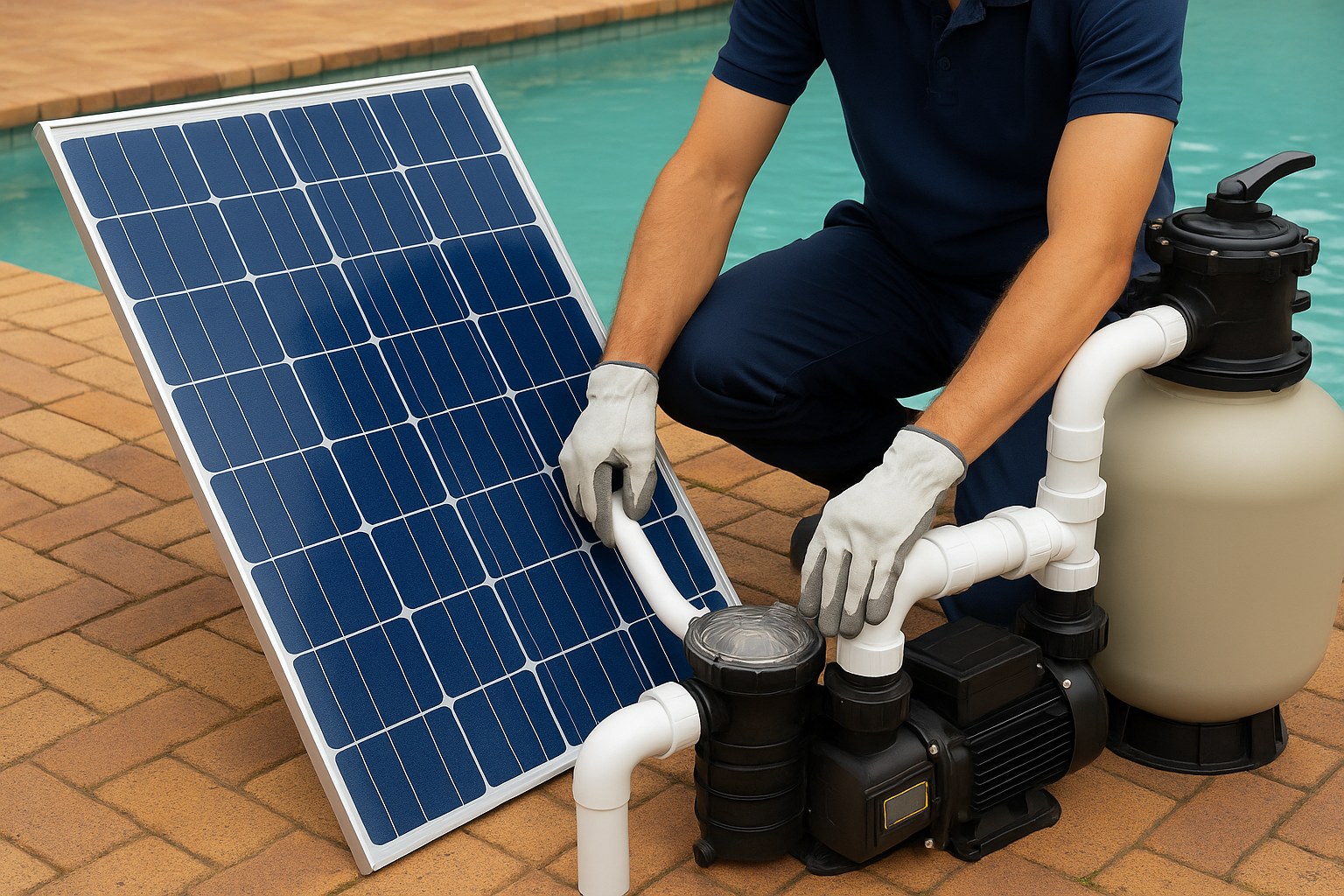
A solar pump seems like a simple, smart solution.
But to truly understand if it's the right investment for you, you need to look under the hood.
The technology that powers a simple pool pump is the same advanced engineering used in demanding applications like deep-well water extraction.
Understanding this core technology is the key.
It helps you appreciate the reliability, efficiency, and value a solar pump brings to any task, whether it's for your pool, farm, or home.
Let's dive into the components that make these systems so powerful and dependable.
This knowledge will show you exactly why they are a wise choice.
The Solar Screw Pump: A High-Head Specialist
Do you need to lift water from a very deep well?
Conventional pumps often can't handle the pressure.
This leaves you with an unreliable water source in remote or difficult terrain.
A solar screw pump is the perfect solution for deep wells.
It excels at pushing water from great depths (high head) even if the flow rate is low.
This makes it ideal for domestic use, livestock watering, and small-scale irrigation.
The solar screw pump stands out for its unique design.
It is a type of positive displacement pump.
Its main job is to generate very high pressure.
This allows it to lift water from depths where other pumps would fail.
It’s the go-to pump for challenging, high-lift situations.
This reliability makes it essential in many off-grid areas, especially across Africa and Latin America.
How a Screw Pump Mechanism Works
The heart of the pump is a simple, effective mechanism.
It consists of a single-helix metal rotor, often called a screw.
This rotor spins inside a double-helix rubber stator.
As the rotor turns, it creates a series of sealed cavities.
These cavities trap water at the inlet.
They then move the trapped water progressively up toward the outlet.
This squeezing or compression process is what builds the immense pressure needed to lift water from extreme depths.
Unmatched Performance in Harsh Conditions
One of the screw pump's biggest advantages is its toughness.
It is highly resistant to sand and other abrasives.
The rubber stator can handle particles that would quickly wear out or clog other types of pumps.
This durability means it can operate reliably in wells with sandy or murky water.
This reduces maintenance needs and extends the pump's service life.
It is a truly robust choice for difficult water sources.
Ideal Applications
The screw pump's low-flow, high-head characteristics make it suitable for specific, critical uses.
- Domestic Water Supply: Providing clean water to rural homes from deep wells.
- Livestock Watering: Ensuring a reliable water source for animals in remote pastures.
- Small-Scale Irrigation: Supplying water for small gardens or crops where high pressure is more important than high volume.
| Feature | Solar Screw Pump | Plastic Impeller Pump | Stainless Steel Pump |
|---|---|---|---|
| Best For | High Head, Deep Wells | High Flow, General Use | Corrosive Water, Durability |
| Flow Rate | Low | High | High |
| Sand Resistance | Excellent | Good | Moderate |
| Primary Use | Domestic, Livestock | Farm Irrigation, Pasture | Acidic/Alkaline Water |
The Plastic Impeller Pump: The High-Flow Workhorse
Struggling to irrigate a large farm or pasture efficiently?
Moving large volumes of water can demand a lot of energy and wear out equipment quickly.
You need a solution that delivers high output without a high price tag.
A solar plastic impeller pump offers a fantastic balance of performance and value.
This centrifugal pump delivers high flow rates and has great resistance to fine sand.
It's an economical and lightweight choice, making it ideal for farm irrigation and pasture water supply.
When your primary goal is moving a lot of water, the plastic impeller pump is an excellent choice.
It is a multi-stage centrifugal pump designed for maximum water output.
Its smart engineering makes it a very popular option for agriculture and large-scale water supply.
It strikes a perfect balance between upfront cost and dependable performance.
It's widely used in water-intensive settings across Africa and the Americas.
Understanding the Multi-Stage Centrifugal Design
This pump works by using a series of spinning impellers.
Water enters the center of an impeller and is thrown outward by centrifugal force.
The water then enters a stationary diffuser, which slows the water down and converts its speed into pressure.
This pressurized water is then directed to the next impeller in the series.
Each stage "boosts" the pressure a little more.
The more stages a pump has, the higher it can lift water while still maintaining a high flow rate.
Why Plastic Impellers Excel with Sandy Water
The impellers in this pump are made from high-strength, engineered plastics.
These materials are surprisingly durable and wear-resistant.
They perform exceptionally well in water containing fine sand or silt.
While metal impellers can be slowly worn away by abrasive particles, these plastic impellers often last longer in such conditions.
The material's slight flexibility helps it manage small particles without sustaining significant damage.
This resistance to wear ensures a longer service life and more consistent performance over time.
Key Advantages and Limitations
This pump offers several compelling benefits.
- High Water Output: Its main advantage is its ability to move large volumes of water, perfect for irrigation.
- Lightweight: The plastic components make it lighter than metal pumps, simplifying installation and reducing shipping costs.
- Economical: It is typically more affordable than its stainless steel counterparts, offering great value.
However, it does have some limitations.
It is not the best choice for highly corrosive water with high or low pH levels.
It is also not designed for the extreme depths that a screw pump can handle.
The Stainless Steel Impeller Pump: The Premium Durability Choice
Is your water source acidic or alkaline?
Corrosive water can destroy a standard pump in months.
This leads to frequent, expensive replacements and frustrating downtime for your home or business.
**For corrosive environments, the solar stainless steel impeller pump is the best choice.
It is built with premium SS304 stainless steel for maximum durability and corrosion resistance.
This pump delivers high flow and is the most reliable option for harsh water conditions.**
When reliability and long-term durability are the top priorities, the stainless steel impeller pump is in a class of its own.
This pump model combines the high-flow capabilities of a centrifugal design with superior, robust materials.
Its construction is focused on one thing: withstanding the toughest water conditions imaginable.
Choosing this pump is a long-term investment in your water infrastructure's security.
It is the top-tier selection for those who cannot afford to compromise on quality.
Built for the Toughest Water Conditions
The key feature of this pump is its construction material.
The impellers, diffusers, and pump body are all made from SS304 stainless steel.
This grade of steel has excellent resistance to corrosion from both acidic and alkaline water.
This makes it the only viable option in regions with aggressive water chemistry.
This is especially critical in areas with alkaline soil, like parts of Australia, or where water quality is a known issue.
It prevents the rapid degradation that would destroy lesser pumps.
Performance for Demanding Applications
This pump isn't just about toughness; it also delivers impressive performance.
It offers both high flow rates and good medium-to-high head capability.
This versatility makes it suitable for a range of demanding applications.
It is the ideal choice for water supply to high-end homes, large ranches, and commercial farms where reliability is paramount.
Its robust performance ensures a consistent and powerful water supply, day after day.
Cost Versus Long-Term Value
The main consideration for this pump is its higher initial cost.
The premium materials and manufacturing make it more expensive than a plastic impeller model.
However, it is crucial to think about the total cost of ownership.
In a corrosive environment, a stainless steel pump might last for ten years or more.
A less-resistant pump might fail in less than a year.
The savings from avoiding multiple replacements and eliminating downtime often make the stainless steel pump the more economical choice in the long run.
The BLDC Motor: The Efficient Heart of the System
Are you worried about wasting money on too many solar panels?
An inefficient motor wastes precious solar energy.
This means you need a larger, more expensive solar array to get the job done, increasing system complexity and cost.
Every modern solar pump is powered by a high-efficiency Brushless DC (BLDC) motor.
With efficiency over 90%, these motors use far less power.
This reduces the number of solar panels needed, cutting upfront costs and ensuring reliable performance.
The pump itself is only half of the system.
The motor that drives it is the true core of its power and efficiency.
Today's best solar pumps are powered by advanced BLDC permanent magnet motors.
These motors are a massive leap forward from older technologies.
They are the key to unlocking the full potential of a solar water pump system.
Unlocking Unmatched Efficiency
BLDC motors are incredibly efficient.
Their efficiency ratings routinely exceed 90%.
This is a huge improvement over older brushed DC motors (60-75%) or standard AC motors (70-85%).
This high efficiency comes from using a permanent magnet rotor made of materials like neodymium iron boron.
There are no brushes that create friction and wear out.
This design not only saves energy but also eliminates a common point of failure and maintenance.
How High Efficiency Reduces System Costs
The market value of a high-efficiency motor is enormous.
Because the motor wastes very little solar energy, it requires less power to operate the pump.
This directly translates to needing fewer solar panels.
Solar panels are often one of the most expensive components of a water pumping system.
Reducing the required size of the solar array can lower the total upfront investment by a significant amount.
This makes the entire system more affordable, more accessible, and easier to install.
| Motor Technology | Efficiency | Lifespan | Maintenance | Key Feature |
|---|---|---|---|---|
| BLDC Motor | > 90% | Long | None | High torque, compact |
| Brushed DC Motor | 60-75% | Shorter | Brush replacement | Simple, low cost |
| AC Motor | 70-85% | Long | Low | Requires an inverter |
The Strategic Role of the Motor and Controller
The motor is the central driver of the system's performance and competitiveness.
A superior motor elevates the performance of any pump it is paired with.
This effect is amplified when combined with an intelligent Maximum Power Point Tracking (MPPT) controller.
The MPPT controller constantly adjusts the pump's electrical load.
It does this to extract the maximum amount of power possible from the solar panels as sunlight conditions change throughout the day.
This powerful combination of an efficient motor and a smart controller ensures the pump works effectively even on cloudy days.
It is this synergy that creates a truly reliable and cost-effective off-grid water solution.
Conclusion
Solar pumps are a smart investment, offering energy independence and long-term savings.
Matching the right pump and motor to your specific water needs ensures a reliable, efficient, and cost-effective solution.
Frequently Asked Questions
How long does a solar pool pump last?
A good quality solar pool pump can last over 10 years. The solar panels themselves are even more durable, often lasting 25 years or more with minimal degradation.
Can a solar pump run a pool cleaner?
Yes, many solar pool pumps can power automatic pool cleaners. You must size the pump correctly to ensure it provides enough flow and pressure for both filtration and cleaning.
Do solar pool pumps work at night?
Standard solar pumps do not work at night as they run directly off sunlight. However, you can add a hybrid controller to automatically switch to grid power or a generator.
What size solar pool pump do I need?
The pump size depends on your pool's volume. A pump should be able to circulate the entire volume of water at least once per day for proper filtration.
Is it hard to install a solar pool pump?
Installation is relatively straightforward for a qualified professional. It involves mounting the solar panels and connecting the pump and controller, which is often simpler than traditional electrical work.
Do solar pumps increase home value?
Yes, energy-efficient upgrades like solar pool pumps can increase home value. They are an attractive feature for potential buyers due to the significant long-term cost savings on electricity.
Can solar pumps run on cloudy days?
Yes, they can. Modern solar pumps and their MPPT controllers are efficient enough to run at reduced speed on cloudy days, maintaining water circulation even in low-light conditions.