You want a warm pool, but you dread the high energy bills.
Traditional heaters burn through money, making you choose between comfort and cost.
The solution is choosing the right technology for your climate and budget.
The better option depends on your priorities.
Solar pool heating offers near-zero running costs but relies on sunshine.
A heat pump works in cooler, cloudier weather but has a continuous electricity cost.
For most, solar is cheaper long-term.
Deciding how to heat your swimming pool is a major financial decision.
It impacts not only your upfront investment but also your monthly utility bills for years to come.
Many pool owners find themselves stuck between two popular technologies: electric heat pumps and solar heating systems.
Each one promises a warm, inviting pool, but they achieve this goal in fundamentally different ways.
A heat pump is an active, complex machine that uses electricity to pull heat from the surrounding air.
A solar system is a passive, simpler concept that uses the sun’s free energy to warm your water.
Understanding the core mechanics, costs, and performance differences of each is the only way to make an informed choice that fits your specific needs, your local climate, and your financial goals.
This comparison will break down everything you need to know.
Understanding Heat Pump Technology
You need reliable pool heating, even on cloudy days.
Relying only on the sun feels risky, especially if you have a short swim season.
You worry a solar heater won’t be enough.
A heat pump is like an air conditioner in reverse.
It uses electricity to pull ambient heat from the air and transfers it into your pool water.
This allows it to heat your pool even without direct sunlight, providing a consistent temperature.
To properly compare the two options, you first need to understand how a heat pump operates.
It doesn’t create heat like a gas heater does.
Instead, it captures existing heat and moves it.
This process is remarkably efficient compared to electric resistance heaters, but it still relies entirely on a constant supply of electricity from the grid.
A large fan draws in the outside air and directs it over an evaporator coil.
Liquid refrigerant inside this coil absorbs the heat from the air and becomes a gas.
The warm gas is then sent through a compressor, which increases its temperature and pressure significantly.
This very hot gas then flows through a heat exchanger, which has your pool water flowing through it.
The heat from the gas transfers to the water, warming it up.
As the gas loses its heat, it cools down and turns back into a liquid, and the cycle starts all over again.
Key Characteristics of Heat Pumps
This technology has a distinct set of advantages and disadvantages that are important to consider.
- Consistent Heating: Because it only needs ambient heat, not direct sunlight, a heat pump can operate in cloudy weather or even at night.
- Temperature Control: You can set a precise temperature, and the heat pump will work to maintain it, giving you complete control over your pool’s comfort.
- Energy Dependence: It is 100% dependent on electricity. This means it has a continuous operational cost that will show up on your monthly utility bill.
- Climate Limitations: Its efficiency drops significantly as the air temperature falls. Most heat pumps struggle to work effectively when the air temperature is below 50°F (10°C).
Cost and Complexity
The cost of a heat pump goes beyond just the purchase price.
It involves both the initial outlay and the long-term running expenses.
| Cost Factor | Description |
|---|---|
| Upfront Cost | Moderate to high, often comparable to a solar system installation. |
| Installation | Requires professional installation by both an electrician and a pool technician. |
| Running Cost | Moderate. While more efficient than other electric heaters, it can add a significant amount to your monthly power bill. |
| Maintenance | As a complex mechanical device with many moving parts and refrigerant, it requires regular servicing and can be expensive to repair. |
A heat pump offers reliability and precision, but that performance comes at the price of mechanical complexity and an ongoing relationship with your electric company.
Understanding Solar Pool Heating
You love the idea of using free energy from the sun.
But you’re not sure how a few panels on the roof can actually heat a whole pool.
The system seems too simple to be effective.
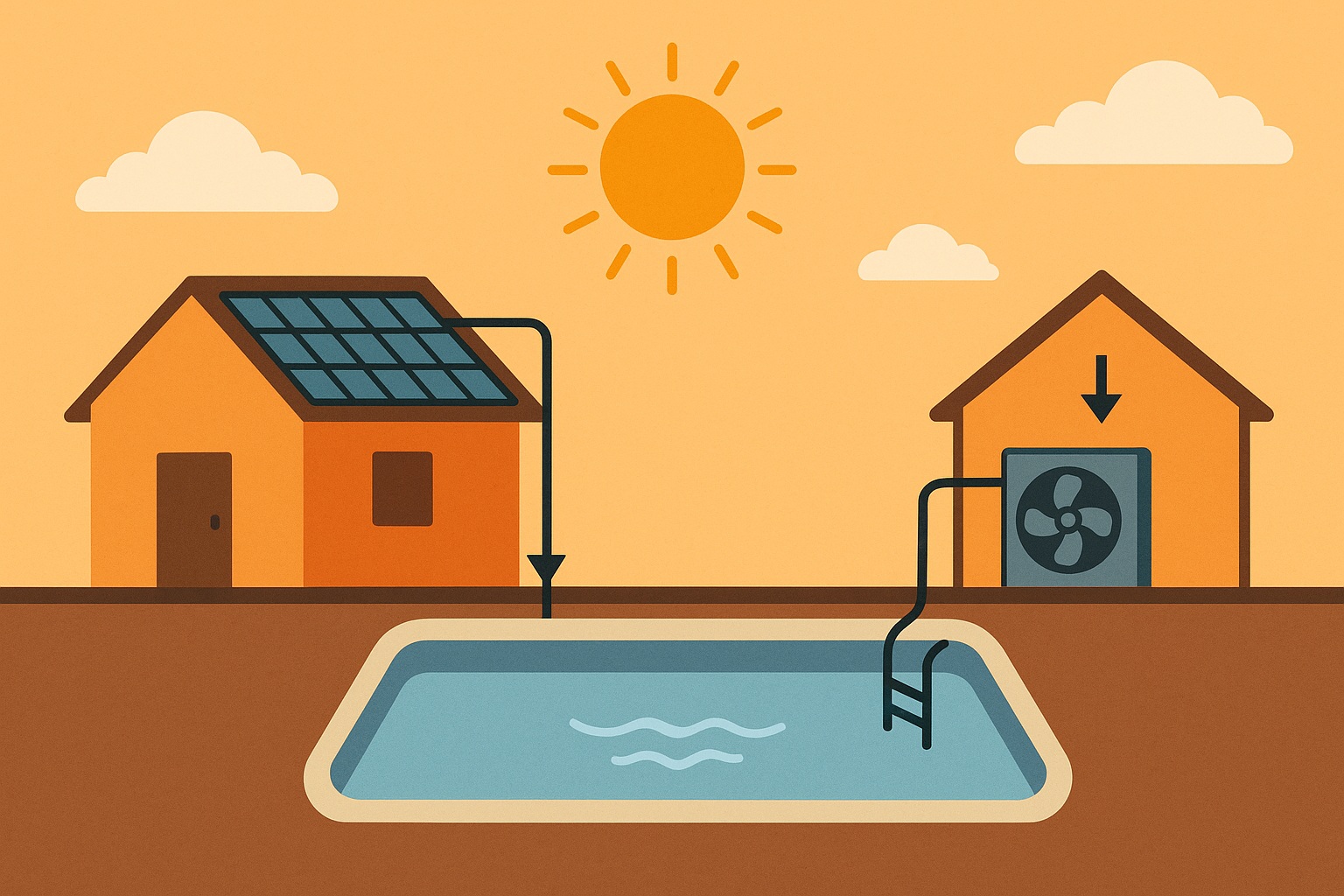
A solar pool heating system uses a pump to push your pool water through a series of solar collectors.
The water is heated by the sun’s energy in the collectors and then returned to the pool.
This simple, direct process adds dozens of degrees to your pool with zero energy cost.
The concept behind solar pool heating is elegantly simple and incredibly effective.
Instead of burning fuel or consuming large amounts of electricity to create heat, it uses the free, abundant energy from the sun.
The system has very few components.
First, you have a series of solar collectors, which are typically installed on your roof.
Second, you have a solar-powered circulation pump.
This pump is the heart of the system.
It draws water from your pool and pushes it up to the solar collectors.
The water then slowly flows through small channels inside the collectors, absorbing the sun’s thermal energy along the way.
The now-warm water flows out of the collectors and is returned to your pool.
This continuous cycle gradually raises the entire pool’s temperature throughout the day.
The system is controlled by an intelligent controller that monitors the temperature of the collectors and the pool water.
It only turns the pump on when the collectors are hotter than the pool, ensuring the system is always adding heat and not losing it.
The Power of Direct Thermal Transfer
This system doesn’t convert sunlight into electricity first; it uses the heat directly.
- Simplicity: With only one moving part—the pump—the system is incredibly robust and reliable. There are no compressors, fans, or refrigerant gases to worry about.
- Zero Running Cost: The energy source, the sun, is free. The system’s pump is powered by a small array of solar PV panels, meaning it costs nothing to operate.
- High Efficiency: Direct thermal heating is a very efficient way to transfer energy. The black collectors are designed to absorb the maximum amount of solar radiation.
- Environmental Impact: It is the most environmentally friendly way to heat your pool, producing zero emissions.
The Components of a Solar System
The elegance of a solar heating system lies in its simplicity and the synergy between its parts.
| Component | Role in the System |
|---|---|
| Solar Collectors | Absorb thermal energy from the sun and transfer it to the water flowing within. |
| Solar Pump | Circulates the pool water through the collectors using power from solar PV panels. |
| PV Panels | Provide the free DC electricity to run the circulation pump. |
| Controller | Automates the system, turning the pump on and off to maximize heat gain. |
A solar pool heating system represents a shift in thinking.
It moves away from complex, energy-consuming machines and toward a simple, sustainable solution that works in harmony with the natural environment.
The Engine of the Solar System: The Pump
A solar heating system is only as good as its pump.
An inefficient pump will struggle to move water to the roof, wasting solar energy and providing poor heating.
You need a pump that can do the job reliably using only solar power.
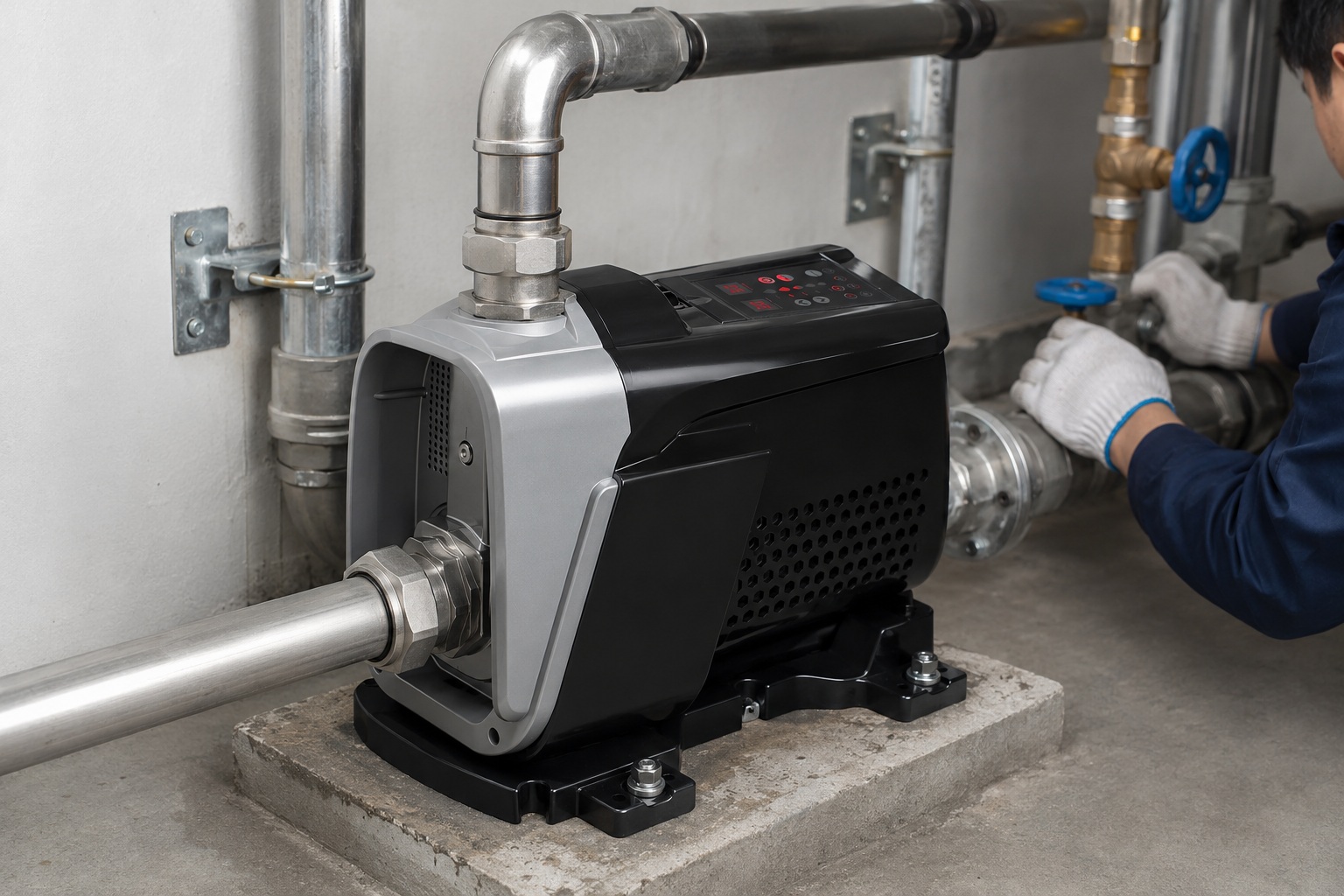
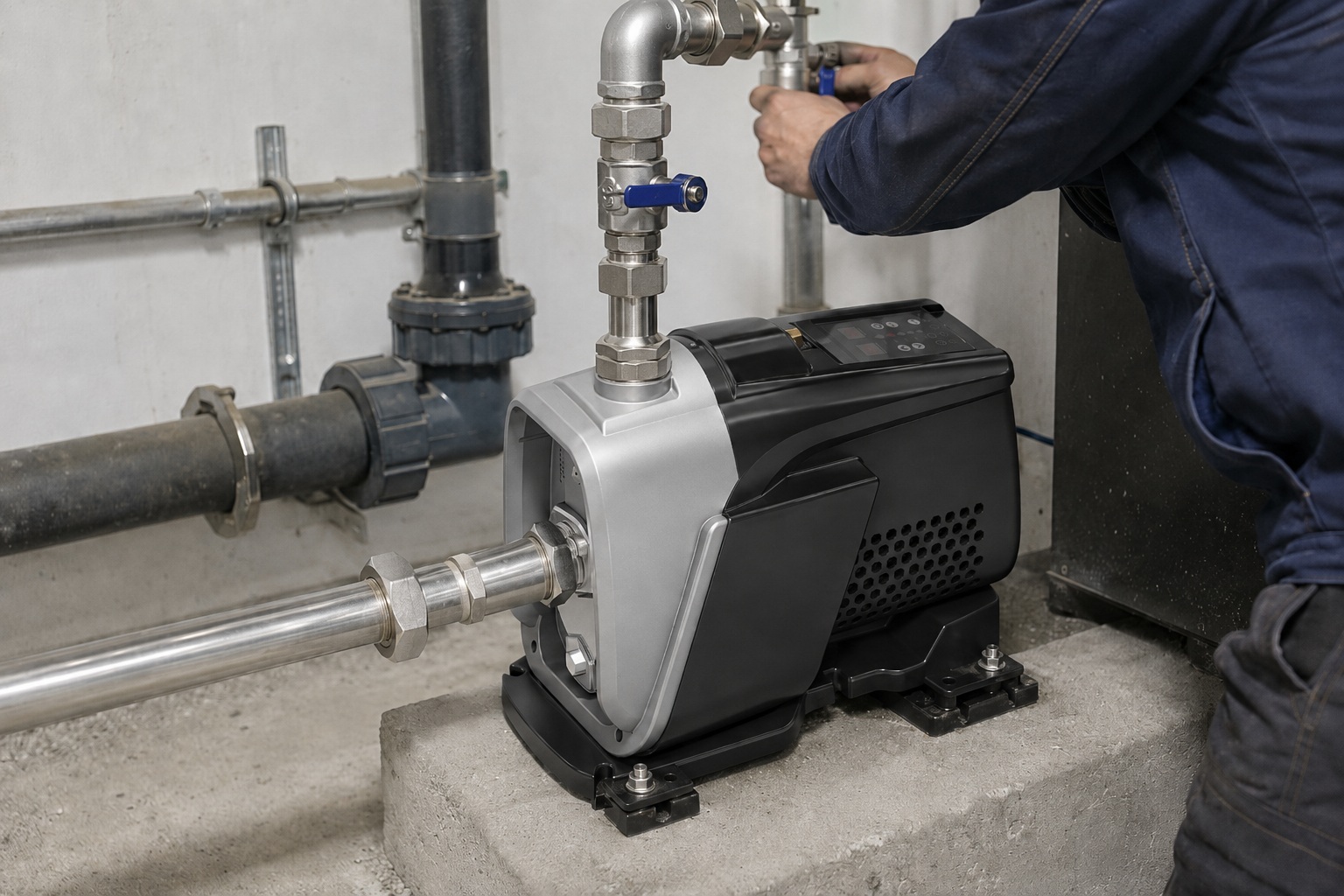
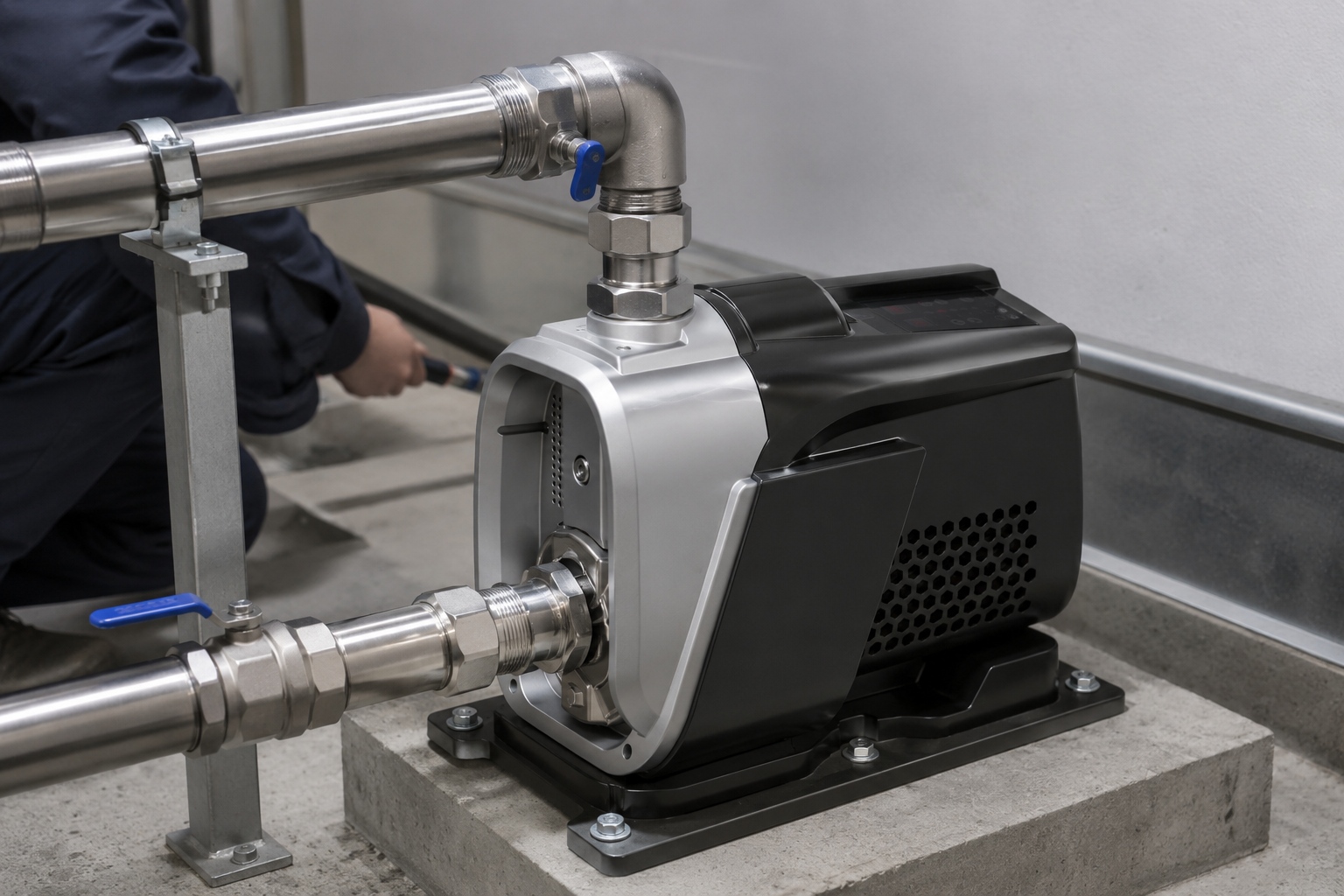
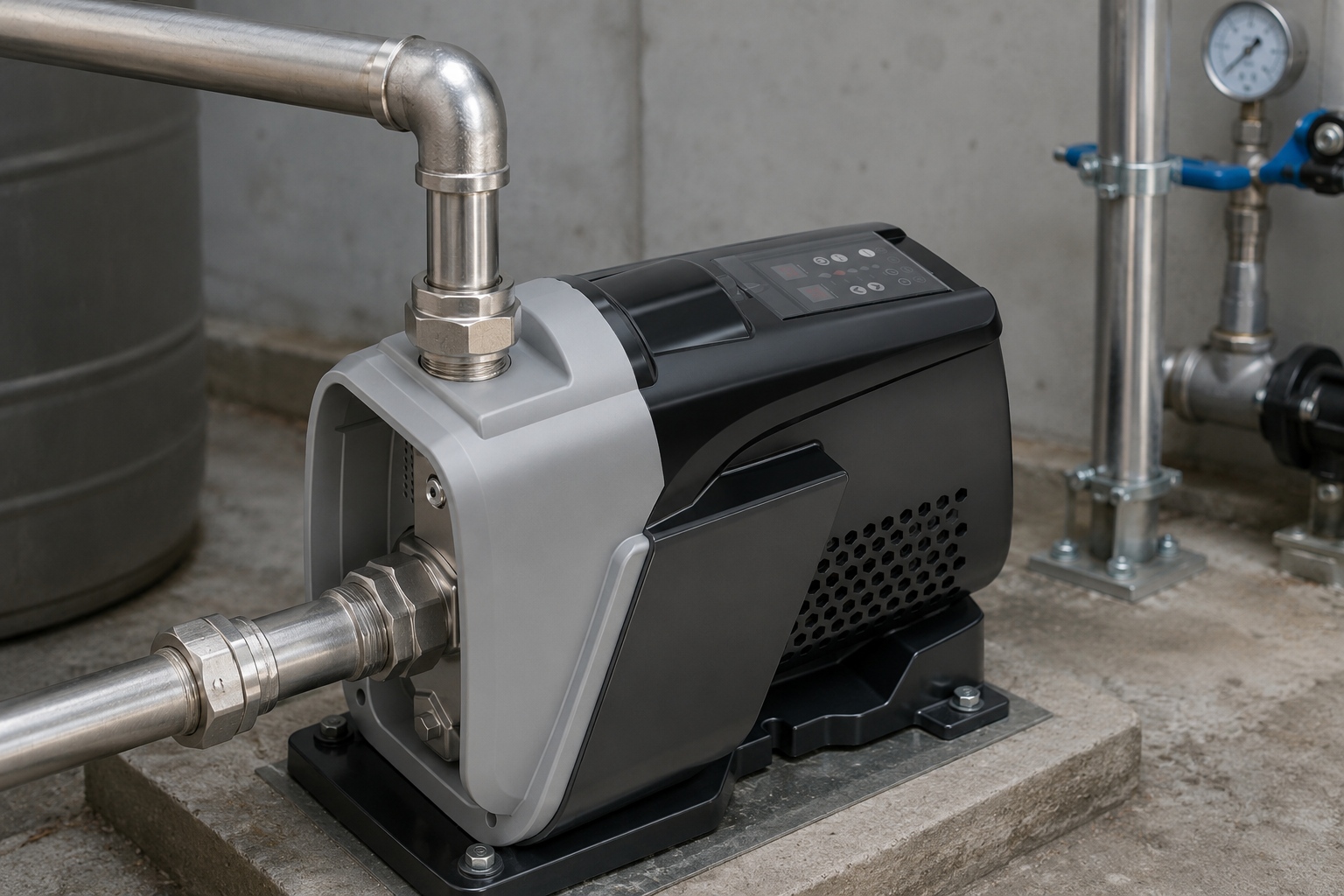
The system’s performance hinges on a high-efficiency solar pump.
It uses a Brushless DC (BLDC) motor that converts over 90% of solar electricity into pumping power.
This ensures strong water flow for effective heating, even with a small, affordable solar panel array.
While the solar collectors are the most visible part of the system, the pump is the true engine that makes it all work.
Without an efficient and powerful pump, the water can’t be circulated effectively, and no heating will occur.
This is where modern technology makes a massive difference.
The pump used in a solar heating system is not just any standard pool pump.
It is a specialized solar water pump driven by an advanced Brushless DC (BLDC) permanent magnet motor.
This piece of technology is the key to the entire system’s viability.
Traditional AC-powered pool pumps are notoriously inefficient; they waste a large portion of their energy as heat.
If you tried to power one with solar panels, you would need a massive, expensive array.
The BLDC motor, by contrast, is a marvel of efficiency, operating at over 90% efficiency.
It converts nearly every watt of solar energy generated by the PV panels directly into the work of moving water.
This extreme efficiency means that a powerful circulation pump can be run using just a few, affordable solar panels, keeping the total system cost low.
Why a Plastic Impeller Pump is Ideal
The specific type of pump used is also crucial for a pool environment.
A multi-stage centrifugal pump with a durable plastic impeller is the perfect match.
- High Flow Rate: These pumps are designed to move a large volume of water at low pressure, which is exactly what’s needed to circulate the entire pool volume through the collectors efficiently.
- Chemical Resistance: The plastic impeller is highly resistant to pool chemicals like chlorine and salt, ensuring a long and trouble-free service life. Standard metal components would corrode quickly.
- Wear Resistance: It is robust enough to handle the minor debris that can sometimes get past the pool’s main filter.
The BLDC Motor Advantage
The technical superiority of the BLDC motor cannot be overstated.
Its design is what unlocks the potential of a zero-cost heating system.
| Feature | Impact on the Solar Heating System |
|---|---|
| >90% Efficiency | Maximizes Heating. Ensures strong water flow using minimal solar panels. |
| Maintenance-Free | Increases Reliability. No brushes to wear out means a very long lifespan. |
| High Torque | Ensures Consistent Flow. Provides the power to push water up to the roof reliably. |
| Quiet Operation | Enhances Pool Environment. Significantly quieter than loud AC pool pumps. |
The pump is the unsung hero of the solar heating system.
Its high-tech motor is what connects the free energy from the sun to the warm water in your pool, making the whole concept practical, affordable, and incredibly effective.
Head-to-Head: Cost, Performance, and Reliability
It’s time to choose, but the options seem complicated.
One promises low running costs but depends on the weather.
The other promises reliability but comes with a continuous bill.
You need a clear comparison to make the right choice.
The best choice is a trade-off between running costs and all-weather performance.
Solar has a higher upfront cost but pays for itself with free energy.
A heat pump has a lower initial cost but a permanent operating expense.
Your climate and budget will determine the winner.
Let’s put the two technologies directly against each other across the categories that matter most to a pool owner: cost, performance, and long-term reliability.
There is no single "best" answer for everyone.
The right choice depends entirely on your location, your expectations for the swimming season, and your financial priorities.
Looking at a direct comparison can help clarify which system aligns best with your goals.
This breakdown moves beyond the technical specifications and focuses on the real-world experience of owning each type of heater.
It considers everything from the day you write the check for installation to the monthly bills and potential repairs you might face down the road.
This is the practical information you need to make a confident decision.
The Ultimate Comparison Table
This table provides a clear, at-a-glance summary of how the two systems stack up.
| Feature | Heat Pump | Solar Pool Heating | Winner (Depends on Priority) |
|---|---|---|---|
| Upfront Cost | Moderate to High | Moderate to High (Often similar to a heat pump) | Tie |
| Running Cost | Moderate to High. Adds a significant cost to your monthly electric bill. | Virtually Zero. Runs on free energy from the sun. | Solar (by a huge margin) |
| Performance | Excellent. Heats consistently in air above 50°F, day or night, sunny or cloudy. | Excellent in Sunshine. Performance depends directly on available sunlight. | Heat Pump (for consistency) |
| Swim Season | Can extend the season further into colder months. | Extends the season significantly, but is most effective in spring, summer, and fall. | Heat Pump (for cold climates) |
| Reliability | Fair. Complex machinery with many potential points of failure. | Excellent. Very simple system with only one moving part (the pump). | Solar |
| Lifespan | 8-12 years on average. | 20+ years for collectors, 10+ years for the solar pump. | Solar |
| Environmental Impact | Moderate. Uses electricity, which may come from fossil fuels. | Zero. No emissions. | Solar |
Making Your Decision
As the table shows, the decision comes down to a fundamental choice.
If your top priority is having a warm pool on demand, regardless of the weather, and you are willing to pay a continuous running cost for that convenience, a heat pump is an excellent choice.
If your top priority is eliminating ongoing costs, maximizing your return on investment, and choosing the most reliable and environmentally friendly option, a solar heating system is the superior solution.
For many homeowners in sunny climates, the massive long-term savings of a solar system make it the clear winner.
Conclusion
The best pool heater depends on your needs.
Solar offers zero running costs and high reliability, while heat pumps provide consistent heating in any weather for a continuous price.
Frequently Asked Questions
Can you run a solar pool heater and a heat pump together?
Yes, a hybrid system gives you the best of both worlds. You can use free solar heat on sunny days and the heat pump as a backup for cloudy weather.
Does a solar pool heater work in winter?
It can add some warmth on sunny winter days, but it generally cannot heat a pool to a comfortable swimming temperature in cold climates.
How much does a solar pool heater raise the temperature?
A properly sized solar system can typically raise the pool temperature by 10-15°F (6-8°C) above what it would be otherwise.
Do pool heat pumps work in the rain?
Yes, rain does not affect the operation of a heat pump, as it extracts heat from the ambient air, not from direct sunlight.
What is the payback period for solar pool heating?
The payback period is typically 2-4 years when compared to the operating costs of a heat pump or gas heater.
Do I need a cover for my pool with a heater?
Absolutely. A pool cover is the single most important factor in retaining heat, dramatically reducing both solar and heat pump operating costs.
Which system is easier to maintain?
Solar systems are much easier to maintain. They have only one moving part (the pump) and require very little attention.