When to use a booster pump?

Table of Contents

Struggling with weak showers and slow-filling appliances?
Low water pressure can make simple daily tasks frustrating.
A booster pump provides the powerful, consistent flow your home or business needs.

You should use a booster pump when you have consistently low water pressure from your municipal supply or well.
This is often indicated by weak showers, slow appliance operation, and poor flow when multiple fixtures are used at once.
They are essential for high-rises and remote locations.
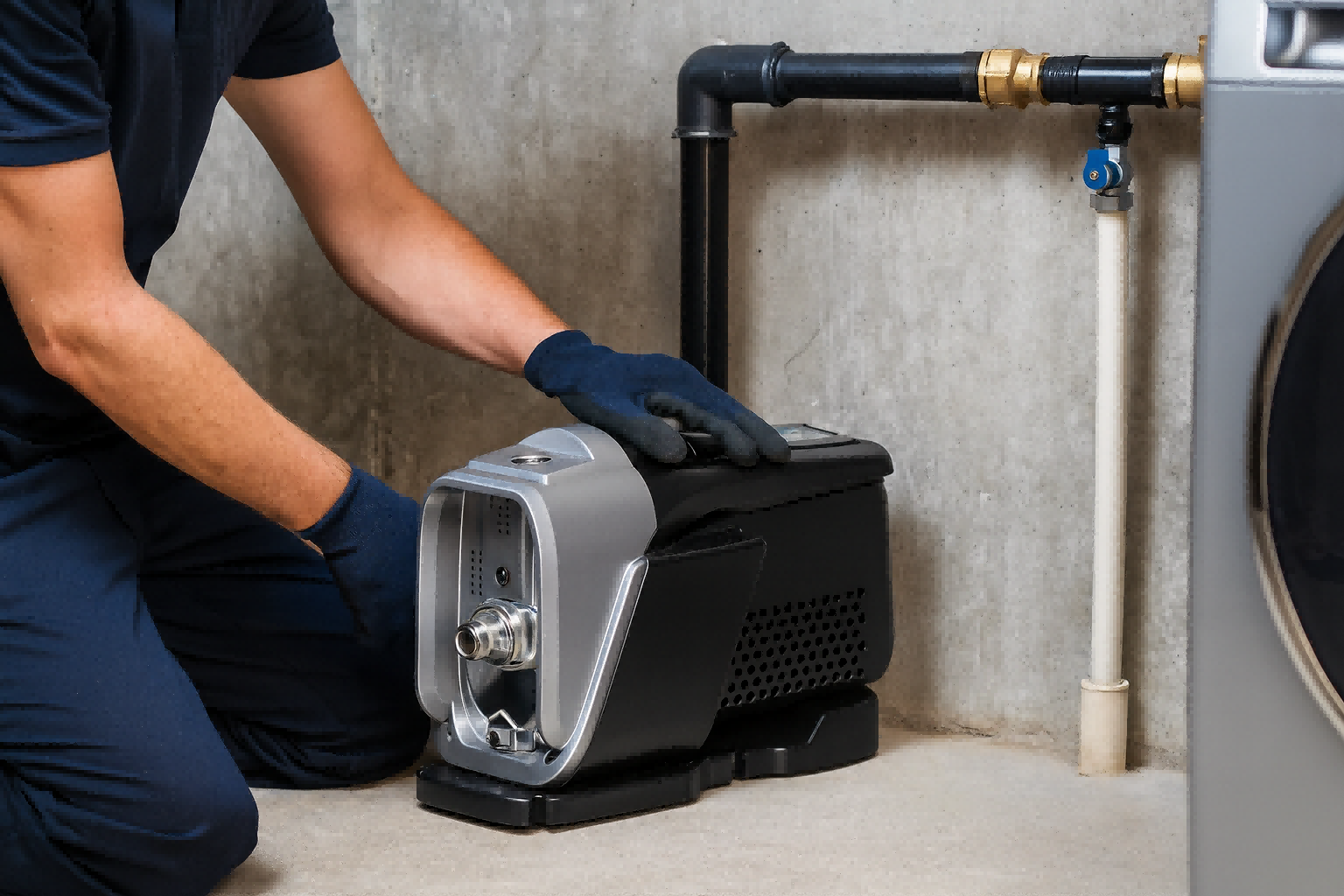
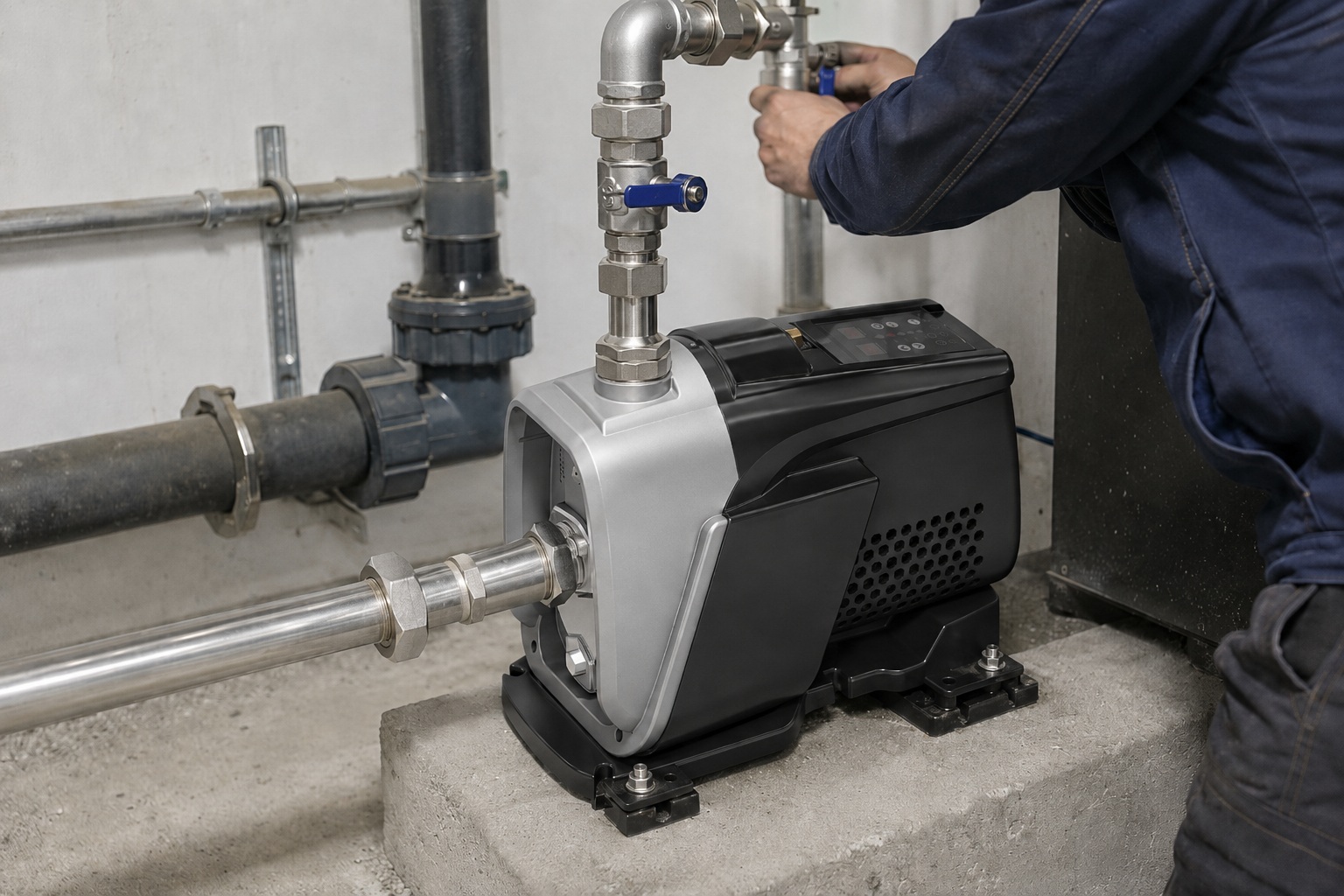
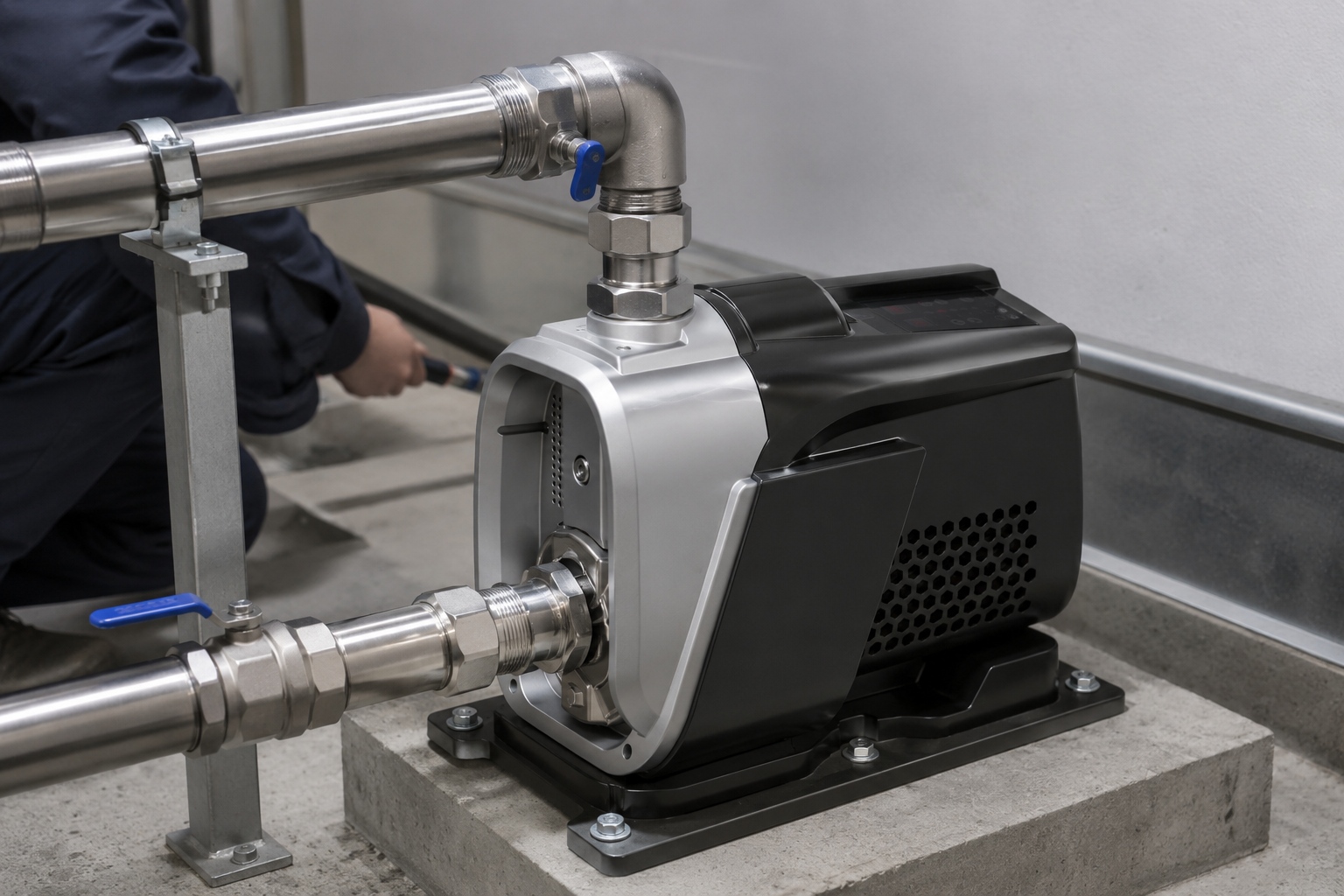
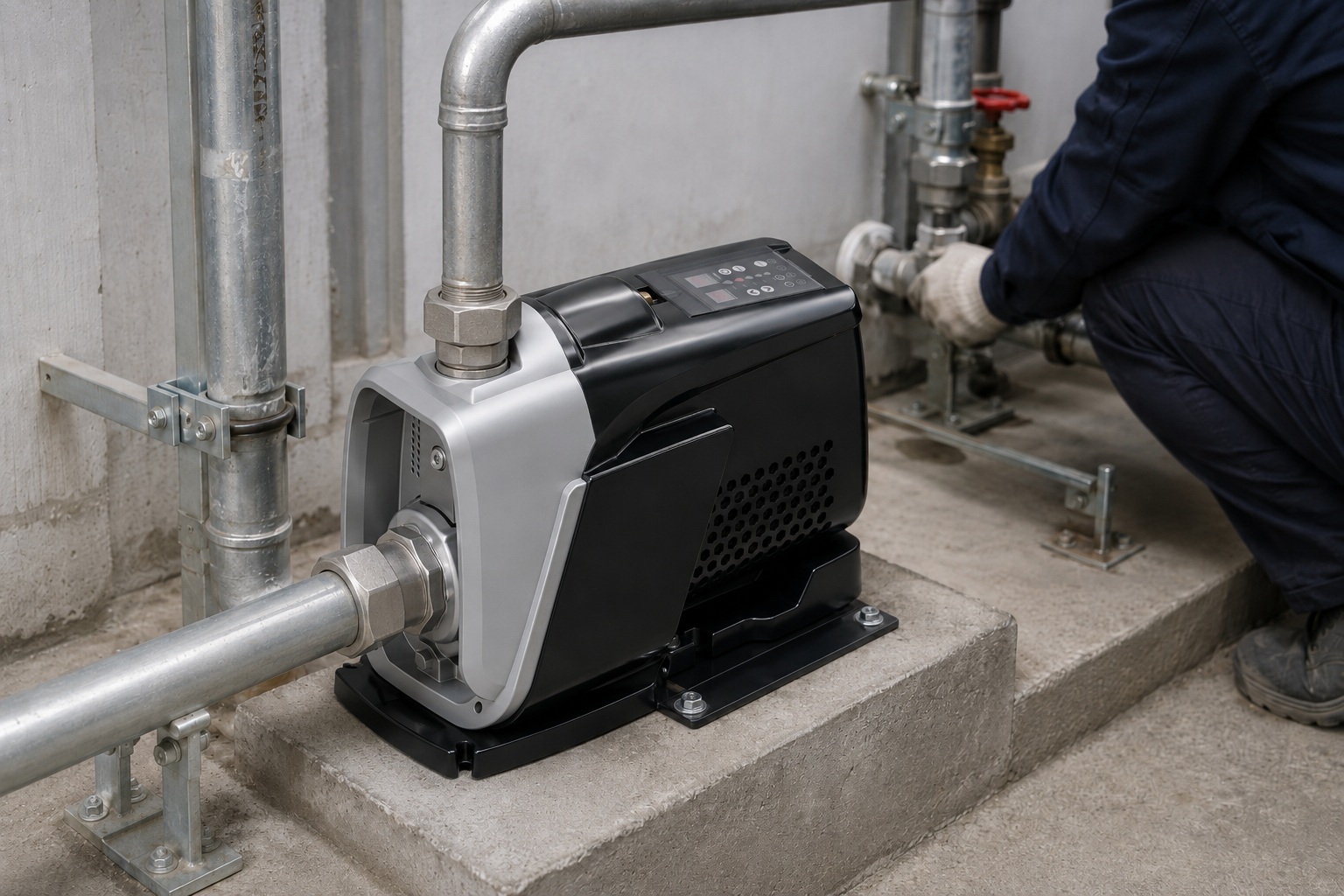
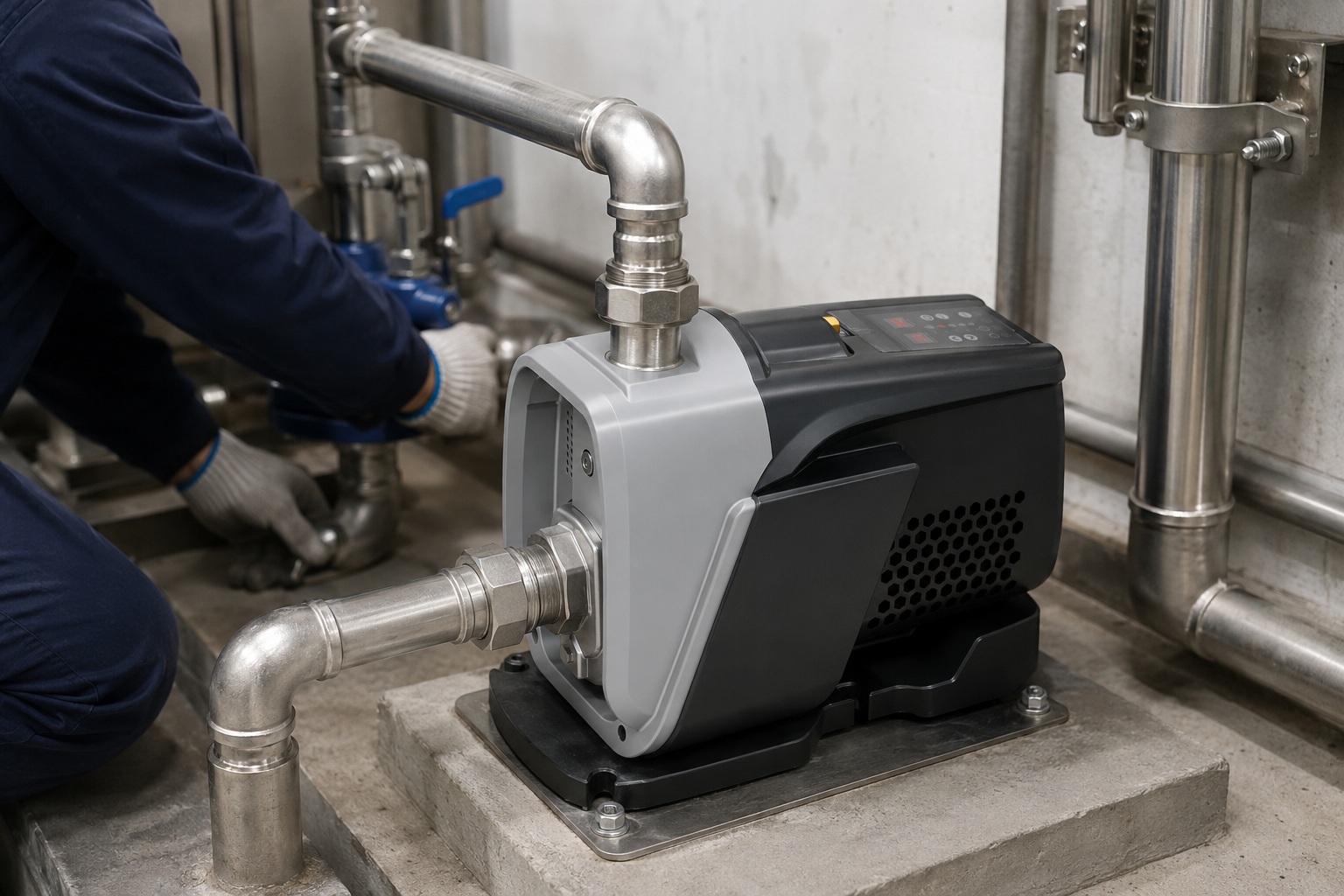
A booster pump installed in a clean utility room, showing gauges and pipes.

Low water pressure is a common problem that can disrupt everything from your morning shower to your irrigation system.
It can turn simple tasks into a waiting game and prevent appliances from working as they should.
While many factors can cause low pressure, a booster pump is often the most direct and effective solution.
However, it's important to know exactly when a booster pump is the right choice and what signs to look for.
This guide will walk you through the key indicators that point to needing a booster pump and explore the advanced features that make modern pumps a smart investment for consistent, reliable water pressure.
Understanding these details will help you make an informed decision and restore powerful water flow throughout your property.

Signs You Need a Booster Pump

Tired of trickling faucets and showers that lack power?
Low water pressure can feel like a constant inconvenience.
A booster pump is designed to solve these exact issues effectively.

The most common signs you need a booster pump include weak water flow from faucets and showers, inconsistent pressure when multiple appliances are running, and poor performance from washing machines or dishwashers.
These symptoms indicate your system's pressure is insufficient for your needs.

Recognizing the need for a booster pump often starts with noticing everyday annoyances that point to a larger problem.
These signs are your plumbing system's way of telling you it's struggling to deliver water with enough force.
Ignoring these symptoms can lead to inefficient appliance performance, longer chore times, and a generally unsatisfying water experience.
Let's break down these indicators in more detail to help you diagnose if a booster pump is the solution you need.
By understanding the specific problems, you can better appreciate how a modern, intelligent pump addresses each one with advanced technology.
This ensures not just a fix, but a significant upgrade to your entire water system.

Weak Water Flow

One of the most obvious signs is a consistently weak stream of water from your fixtures.
If your shower feels more like a drizzle than a downpour, or it takes forever to fill a pot of water in the sink, low pressure is likely the culprit.
This issue is often most noticeable at peak times when community water demand is high.
A booster pump directly tackles this by taking the existing water flow and increasing its pressure before it travels through your pipes.

Inconsistent Pressure

Have you ever been in the shower and had the water suddenly turn into a trickle because someone flushed a toilet or started the dishwasher?
This fluctuation happens when your system's pressure is too low to support multiple simultaneous demands.
Modern booster pumps, especially those with Variable Frequency Drive (VFD) technology, solve this problem perfectly.
They monitor your system's pressure in real time.
When an additional faucet is opened, the VFD instantly increases the pump's motor speed to maintain a steady, constant pressure everywhere.
You will no longer have to schedule your water use around the house.

Poor Appliance Performance

Many household appliances require a minimum water pressure to operate correctly.
Washing machines may take longer to fill, impacting cycle times and cleaning efficiency.
Dishwashers may fail to spray water with enough force to clean dishes properly.
Even tankless water heaters can have problems, as many require a certain flow rate to activate the heating element.
If your appliances aren't performing as advertised, insufficient water pressure could be the underlying cause.
Installing a booster pump ensures these appliances get the pressure they need to function efficiently, saving you time and improving results.

Situations in Specific Locations

The need for a booster pump can also be determined by your location.

Location Type Common Pressure Problem Booster Pump Solution
High-Rise Buildings Upper floors have significantly lower pressure due to gravity and distance from the main supply. A booster pump system ensures that every floor, including the top ones, receives strong and consistent water pressure.
Remote or Elevated Areas Homes at the end of a long water line or on a hill naturally receive lower pressure from the municipal supply. The pump boosts the incoming pressure to a usable level, overcoming the limitations of the local infrastructure.
Well Water Systems A well pump might deliver water to a storage tank, but may not create enough pressure for household distribution. A secondary booster pump is used to draw water from the storage tank and pressurize it for the home's plumbing system.

By recognizing these signs, you can confidently determine if a booster pump is the right solution for improving your home's water pressure.

Other Situations Where a Booster Pump is Useful

Is your garden suffering from inadequate sprinkler coverage?
Or do you rely on a rainwater storage tank?
A booster pump’s utility extends far beyond just improving household tap pressure.

Booster pumps are also incredibly useful for irrigation systems, ensuring sprinklers cover large areas effectively.
They are essential for drawing water from storage tanks, like rainwater harvesting systems, and pressurizing it for household or commercial use, and for many industrial processes.

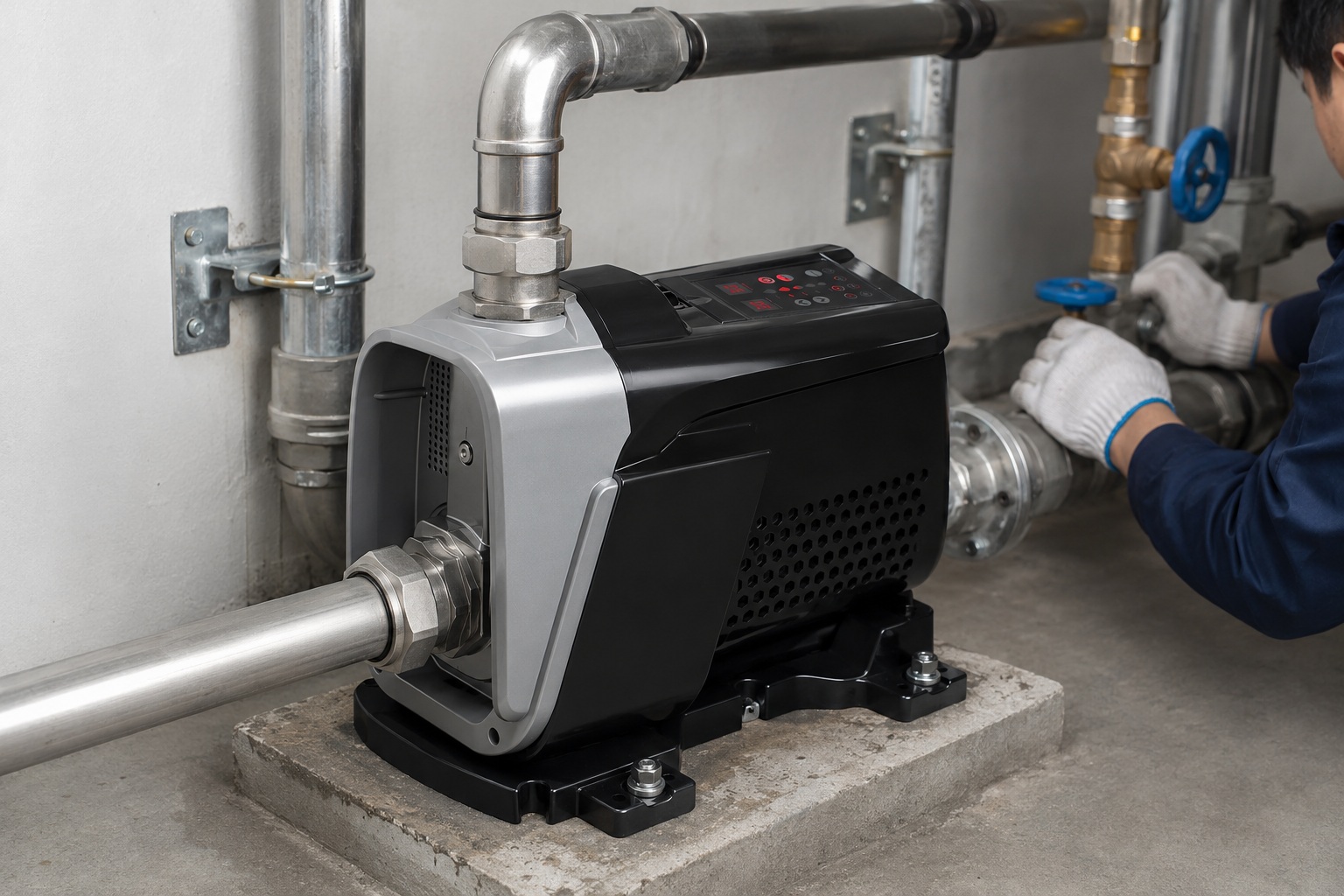
![An extensiv
While we often associate booster pumps with fixing weak showers, their applications are much broader.
Any situation where water needs to be moved from a low-pressure source to a point of use with sufficient force can benefit from this technology.
From lush, green landscapes to complex industrial operations, these pumps are versatile problem-solvers.
They unlock the full potential of alternative water sources and ensure specialized equipment runs at peak efficiency.
Let’s explore some of these other scenarios where a booster pump becomes an indispensable tool, revealing how advanced pump technology provides the power and control needed for these demanding applications.

Water Storage Tank Systems

Many homes and businesses use storage tanks for their water supply.
This is common in rainwater harvesting systems or properties relying on well water.
The water in these tanks is at or near zero pressure.
A booster pump is not just useful here; it is essential.
The pump draws water from the tank and provides the necessary pressure for it to be used in a home, business, or for other applications.

Advanced pumps offer significant advantages in these setups.

  • Intelligent Control: A VFD-driven pump can maintain constant pressure regardless of how many taps are open, providing a city-like water experience from a stored source.
  • Dry-Run Protection: This is a critical feature for tank-fed systems. If the tank runs empty, the pump will automatically shut down to prevent damage. Smart pumps feature a multi-stage recovery algorithm. The pump will attempt to re-prime itself and, if unsuccessful, will enter progressively longer "sleep" periods before trying again. This protects the motor and saves energy.
  • Soft Start/Stop: This function reduces the mechanical shock on the pump and plumbing each time the pump starts, which is crucial for extending the lifespan of a system that may cycle on and off frequently.

Large-Scale Irrigation Systems

For properties with large lawns, gardens, or agricultural fields, a powerful irrigation system is key.
Standard water pressure is often not enough to power multiple sprinkler heads or cover a large area evenly.
A booster pump can increase the pressure in the irrigation lines to ensure every sprinkler operates at its optimal range.
This results in better water distribution, healthier plants, and more efficient water use.

Modern booster pumps bring a new level of sophistication to irrigation:

  • High Efficiency: Pumps using Permanent Magnet Synchronous Motors (PMSM) are far more energy-efficient than traditional motors. When running for hours to water a large area, these energy savings can be substantial.
  • Quiet Operation: Gone are the days of loud, disruptive pumps. Advanced motor and controller designs allow modern pumps to operate at noise levels below 50dB, which is quieter than a library. This is a huge benefit for residential areas where noise pollution is a concern.
  • Durability for Outdoor Use: Pumps designed for these applications often feature robust construction, such as UV-resistant housings and internal electronics that are completely sealed from moisture and dust (achieving IP67 ratings). This ensures a long service life even when exposed to the elements.

Industrial and Commercial Applications

Businesses and industrial facilities have unique and demanding water pressure requirements.
A commercial kitchen may have multiple high-pressure sprayers and dishwashers running at once.
A manufacturing process might require a specific, unwavering water pressure for quality control.
A multi-story hotel needs to guarantee that a guest on the top floor has the same great shower experience as a guest on the ground floor.

In these scenarios, commercial-grade booster pump systems are non-negotiable.
Twin-pump systems are often used for redundancy and to meet high demand.
These systems work intelligently:

  1. One pump operates to meet normal demand.
  2. If demand increases beyond what the first pump can handle, the second pump automatically activates to assist.
  3. The system controller alternates which pump is the primary lead to ensure even wear and tear, extending the life of both pumps.
  4. If one pump fails, the other automatically takes over, ensuring an uninterrupted water supply—a critical feature for any commercial operation.

How to Identify When to Use Booster Pumps

You have low water pressure, but is a pump the right answer?
Sometimes, a simpler fix is all that's needed.
Diagnosing the root cause first can save you time and money.

Before buying a booster pump, you must investigate the cause of low pressure.
Blocked pipes, a partially closed valve, or an undersized plumbing system could be the real issue.
Installing a pump in these cases may not solve the problem or could even damage your plumbing.

Jumping straight to installing a booster pump without a proper diagnosis is a common mistake.
While a booster pump is a powerful tool, it's designed to augment an otherwise functional system that simply has an insufficient source pressure.
If the problem lies within your plumbing network itself—like a blockage or a leak—adding a pump might just put more stress on the weak point, potentially causing a much bigger, more expensive problem.
A careful assessment is the most critical step in the process.
Let’s walk through the factors that affect pressure and how to check for common issues before you decide that a booster pump is the definitive solution.
This professional approach ensures you are making the right investment for a long-term fix.

Key Factors Contributing to Low Water Pressure

Several variables can impact the water pressure in your building.
Understanding them helps you pinpoint the problem.

  • Pipe Diameter and Condition: Older homes, especially those with galvanized steel pipes, are prone to internal corrosion and mineral buildup. This effectively narrows the pipe's diameter, restricting water flow and causing a pressure drop. In this case, the solution is repiping, not boosting. Newer homes with PEX or copper are less susceptible but not immune.
  • Distance and Height: Water loses pressure as it travels over long distances and fights against gravity. This is a fundamental law of physics. If your home is far from the water main or on a high floor, your pressure will naturally be lower. This is a classic scenario where a booster pump is the correct solution.
  • Municipal Supply Pressure: The pressure delivered by your local water utility can vary. It might be consistently low for your entire neighborhood, or it might fluctuate depending on the time of day. You can measure this by attaching a simple pressure gauge to an outdoor hose spigot. If the incoming pressure is low, a booster pump is needed.
  • Hidden Leaks: Even a small, hidden leak in your plumbing can cause a significant drop in pressure. Before investing in a pump, it's wise to check for leaks. Turn off all water-using fixtures and check your water meter. If the meter is still spinning, you likely have a leak that needs to be fixed.

The Diagnostic Checklist: What to Check First

Before you purchase a pump, run through this simple checklist to rule out other issues.

Checkpoint Action to Take What It Tells You
Main Shutoff Valve Locate your home's main water shutoff valve (often near the meter or where the pipe enters the house). Ensure it is fully open. Sometimes these valves are accidentally left partially closed after maintenance, severely restricting flow. A simple turn can solve the problem.
Pressure Reducing Valve (PRV) If your home has a PRV, it might be failing or improperly adjusted. These are common in areas with high municipal pressure. A failing PRV can cause low or fluctuating pressure. They can often be adjusted or may need to be replaced by a plumber.
Clogged Fixtures Unscrew the aerators on your faucets and the showerhead. Check for and clean out any sediment or mineral buildup. If pressure is only low at specific fixtures, the issue is likely a localized clog, not a systemic pressure problem.
Water Heater If you only experience low pressure with hot water, there could be sediment buildup in your water heater's tank or a problem with its valves. This isolates the problem to your hot water system, indicating the main supply is likely fine.

By methodically ruling out these simpler issues, you can be confident in your decision.
If your pipes are clear, your valves are open, you have no leaks, and the incoming pressure from the source is still low, you have officially confirmed that a booster pump is the right choice to solve your water pressure woes.
At this point, you can begin exploring the benefits of modern, intelligent pump technology.
These systems not only boost pressure but also add a layer of protection and efficiency to your entire plumbing network.
They feature robust electronic protection against everything from voltage spikes to overheating, and their components are built from high-grade materials like stainless steel and use premium bearings for a longer, quieter operational life.

Conclusion

In summary, a booster pump is the right solution for consistently low water pressure.
First, diagnose the problem, then choose a modern pump for reliable, efficient, and quiet performance.

FAQs

What is the difference between a booster pump and a well pump?
A well pump moves water from the ground to a storage tank.
A booster pump increases the pressure of water that is already flowing in a system.

Can a booster pump be too powerful?
Yes.
An oversized pump can create excessive pressure, potentially damaging pipes, fittings, and appliances.
It's crucial to select a pump that matches your system's requirements.

Do booster pumps use a lot of electricity?
Modern booster pumps with Variable Frequency Drives (VFDs) are very energy-efficient.
They only run as fast as needed, saving up to 50% on electricity compared to older, fixed-speed pumps.

How long do booster pumps last?
A quality booster pump can last 8 to 15 years.
Longevity depends on the quality of materials, usage, and whether it has protective features like dry-run and overheat protection.

Are booster pumps noisy?
Older pumps can be noisy.
However, new intelligent pumps with permanent magnet motors are designed for ultra-quiet operation, often running at levels below 50 decibels, which is quieter than a conversation.

Can I install a booster pump myself?
While some DIY-savvy homeowners can install a pump, it often involves plumbing and electrical work.
For safety and to ensure correct installation, hiring a professional plumber is highly recommended.

Does a booster pump increase water volume?
No, a booster pump does not increase water volume (flow rate).
It only increases the pressure (force) of the water already available in the pipes.

Is a pressure tank necessary with a booster pump?
Yes, a pressure tank is highly recommended.
It reduces pump cycling, prevents water hammer, and helps maintain constant pressure, significantly extending the pump's lifespan.

Looking for a reliable water pump solution?

Contact RAFSUN today to get expert advice, technical support, and a customized water pump solution for your project.

👉 Contact UsSend us your inquiry now and our engineers will respond within 24 hours.

Picture of rafsunadmin

rafsunadmin

Welcome To Share This Page:
Product Categories
Latest News
Get A Free Quote Now !
VSD Contact Form

Related Products

Related News

滚动至顶部

Contact Rafsun to get the service for free

Rafsun Solar Water Pump-0

Get A Free Quote Now !

VSD Contact Form

Contact Rafsun to get the service for free

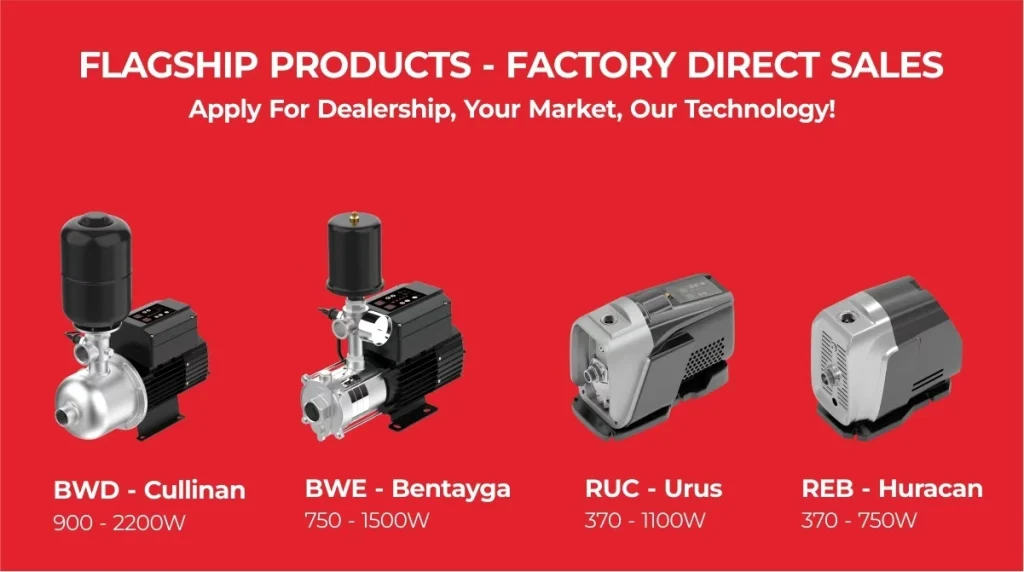
RAFSUN flagship inverter booster pumps product lineup for factory direct sales, featuring BWD Cullinan (900–2200W), BWE Bentayga (750–1500W), RUC Urus (370–1100W), and REB Huracan (370–750W). These high-efficiency RAFSUN Inverter Booster Pumps deliver constant water pressure, energy savings, and reliable performance for residential, commercial, and multi-story building applications.

Get A Free Quote Now !

VSD Contact Form