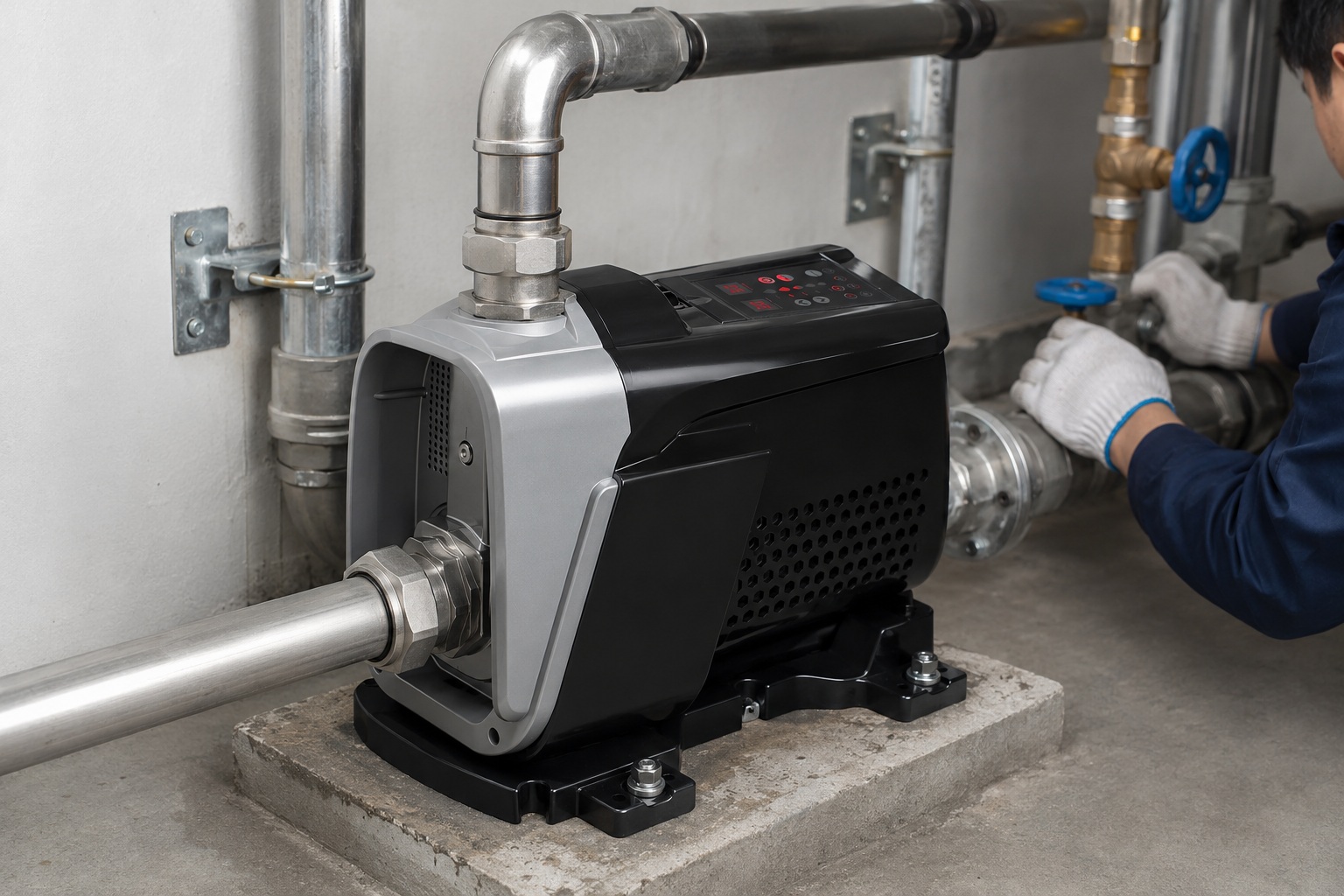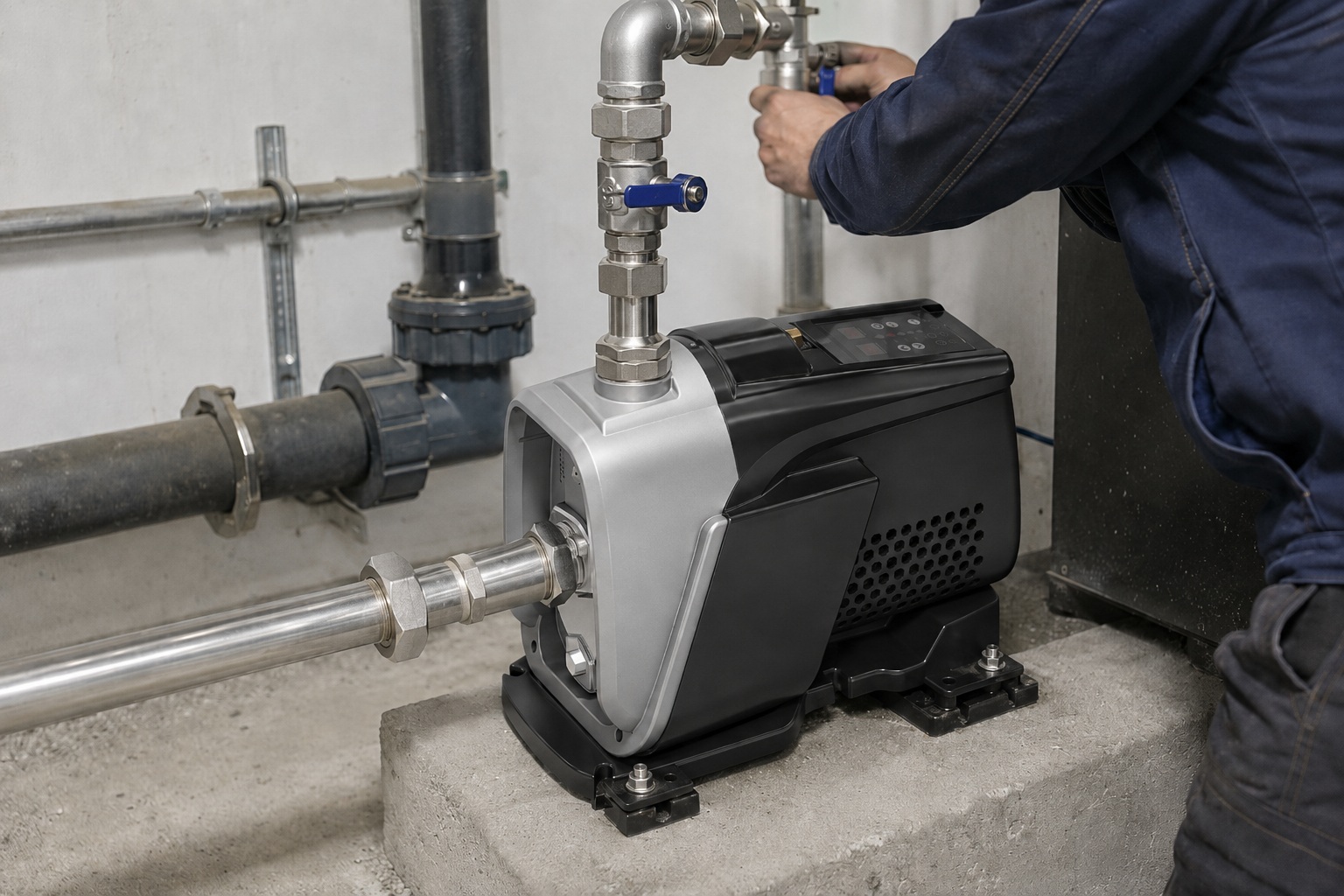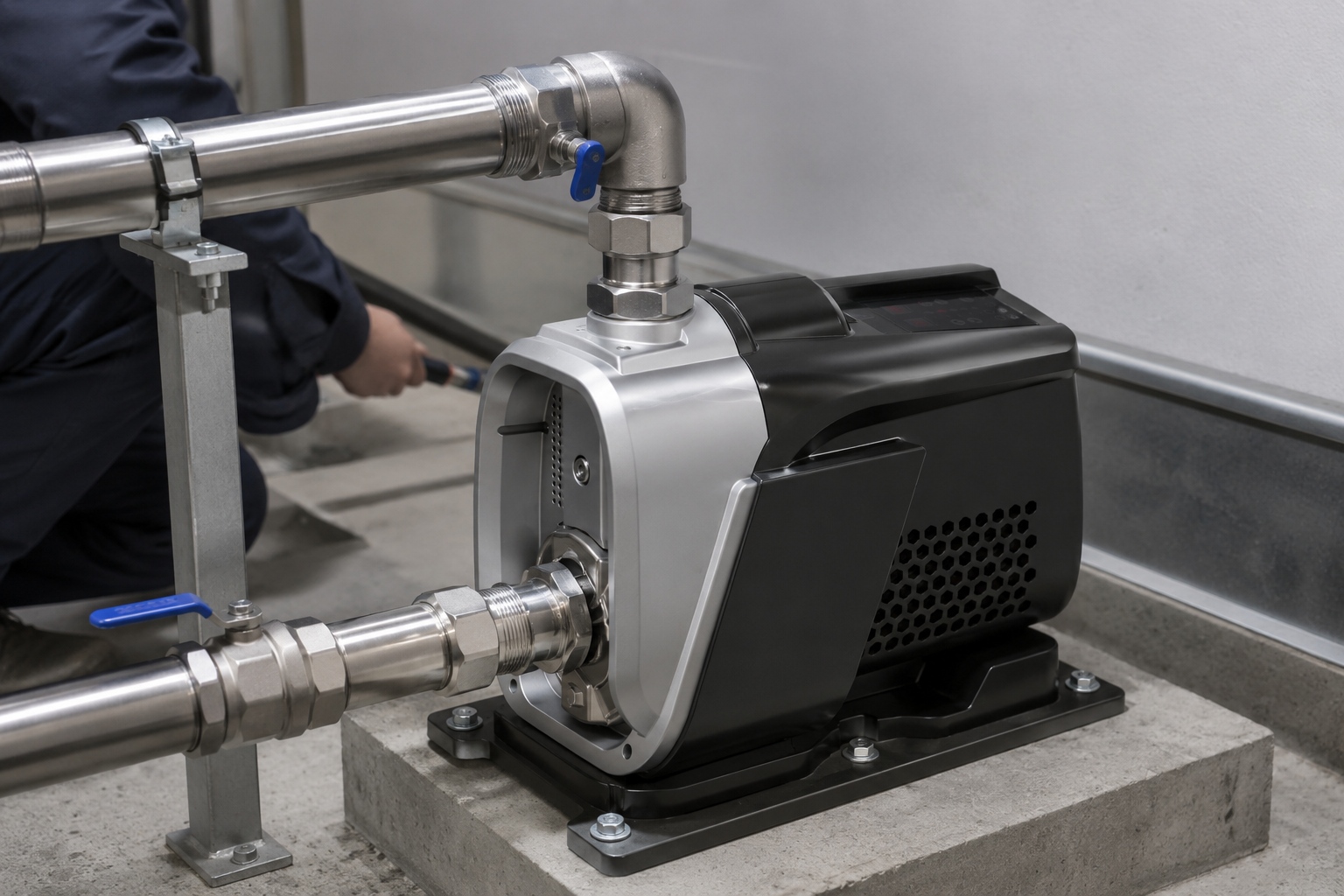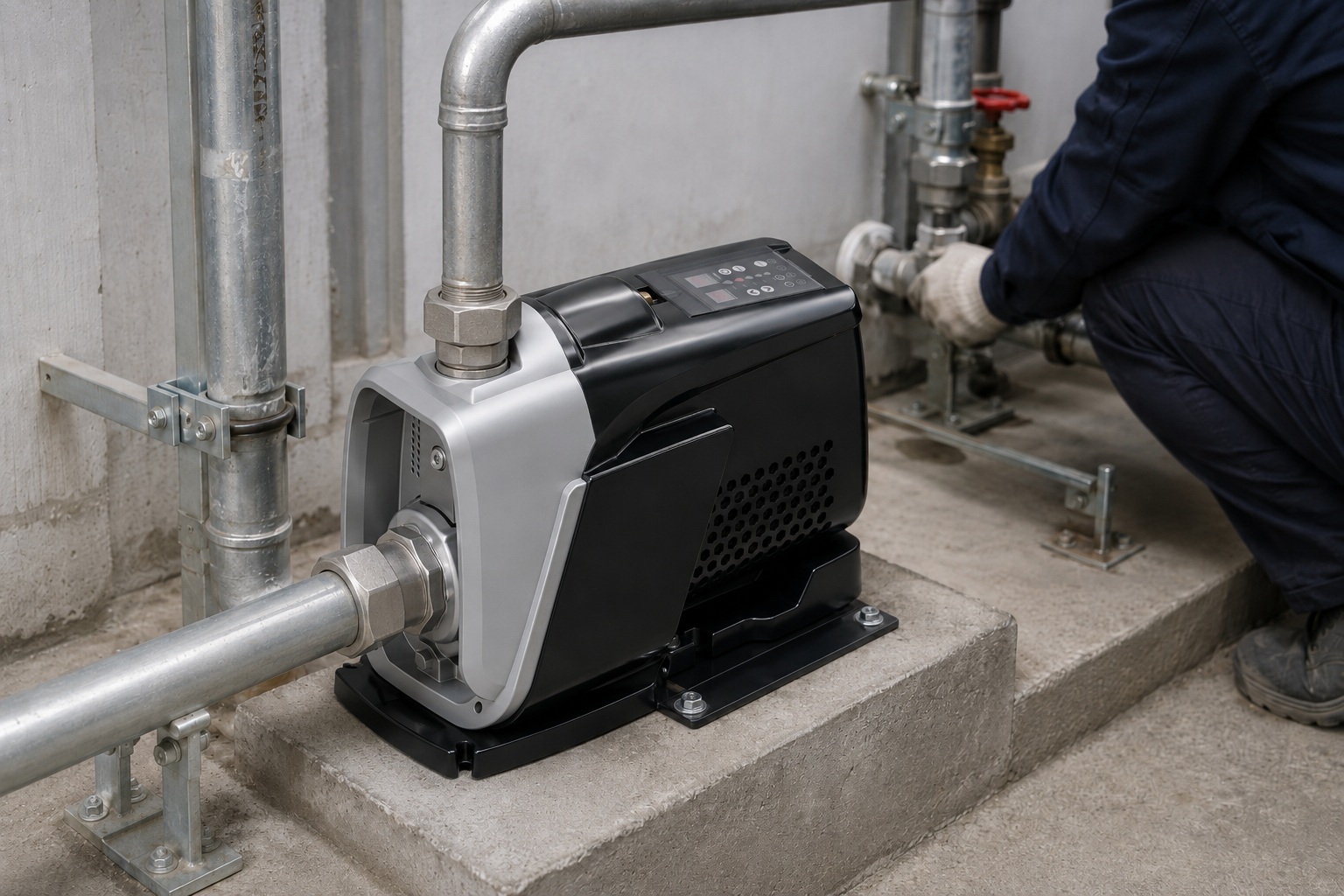
Are you tired of fluctuating water pressure disrupting your daily routines?
A pressure tank can be a game-changer for your water system.
It acts as a buffer.
This prevents your pump from constantly turning on and off for small water uses.
You do not strictly need a pressure tank with every booster pump.
However, it is highly recommended for most applications.
This is especially true for on-demand or single-speed pumps.
Some modern variable-speed pumps can operate without one by adjusting their speed to maintain pressure.

Deciding on the right setup can feel complex.
It involves balancing initial cost, long-term efficiency, and system lifespan.
Understanding the role of each component is the first step.
This guide will break down the key factors.
It will help you make an informed decision for your home or business.
This ensures you get a reliable and efficient water pressure system.
Benefits of using a pressure tank with a booster pump
Is your pump constantly clicking on and off?
This frequent cycling damages the motor and wastes energy.
A pressure tank provides a simple, effective solution to this problem.
A pressure tank acts as a small water reservoir.
It provides stored, pressurized water for minor uses, like washing hands.
This means the pump motor doesn't have to start for every small demand.
It significantly reduces wear and tear, extending the pump's life and saving electricity.
Let's dive deeper into the specific advantages a pressure tank brings to a booster pump system.
These benefits go beyond simply reducing pump starts.
They contribute to a more stable, quiet, and resilient water supply system.
A well-integrated pressure tank improves the user experience and protects your investment in the pump itself.
Prevents Short-Cycling
Short-cycling is the rapid on-and-off switching of a pump motor.
This is the primary issue that a pressure tank solves.
Each time a motor starts, it draws a large inrush of current.
This generates heat and puts significant stress on the motor windings and mechanical components.
A pressure tank creates a "drawdown" volume of water.
When you open a tap, this stored water is used first.
The system pressure drops slowly.
Only after a significant amount of water is used does the pressure switch activate the pump.
The pump then runs for a longer, more efficient cycle to refill the tank and repressurize the system.
This dramatically reduces the number of starts per hour.
For example, a system with a properly sized tank might reduce pump cycles by over 70%.
This leads directly to a longer motor lifespan and lower energy bills.
Improves Water Pressure Stability
A pressure tank acts as a hydraulic shock absorber.
It smooths out the pressure fluctuations inherent in a pumping system.
Without a tank, pressure can spike when the pump starts and drop suddenly when it stops.
This is noticeable when multiple fixtures are in use.
The tank provides a cushion of pressurized water.
This cushion helps maintain a more consistent pressure throughout the plumbing network.
When a second tap is opened, the tank supplies the initial demand.
This gives the pump time to adjust without a sudden pressure drop for the first user.
The result is a more comfortable and stable user experience.
Showers don't suddenly go cold or lose pressure when someone flushes a toilet.
Reduces System Noise
A significant portion of the noise from a water system comes from the pump motor starting and stopping.
The sound of the pump clicking on is often disruptive.
Water hammer, a knocking sound in the pipes, can also occur from the abrupt stop.
By minimizing the frequency of these start/stop events, a pressure tank makes the entire system quieter.
The pump runs for longer, smoother periods.
These periods are less frequent and therefore less noticeable.
The cushioning effect of the tank also helps to dampen the hydraulic shock that causes water hammer.
This contributes to a quieter plumbing system overall.
Provides Water During Power Outages
In the event of a power outage, your booster pump will not operate.
Without a pressure tank, your water supply stops immediately.
A pressure tank holds a reserve of pressurized water.
While this reserve is limited, it can be crucial during an emergency.
It typically holds enough water to flush a toilet a few times or fill a glass of water.
This small convenience can make a significant difference during a temporary power loss.
It provides a degree of resilience that a tankless system cannot offer.
When a pressure tank is not needed
Are you investing in a high-tech water pump?
Some advanced systems are specifically designed to operate without a traditional pressure tank.
This can save space and simplify installation.
Modern variable-speed drive (VFD) pumps are the primary example.
These "smart" pumps can adjust their motor speed in real-time to precisely match water demand.
This intelligent control eliminates the need for a large storage tank to buffer pressure, as the pump itself prevents short-cycling by running continuously at a lower speed.
Let's explore the technology that makes tankless operation possible.
Understanding these systems is key to knowing if you can forgo a pressure tank.
While it's a simplification, it's not always the best choice for every situation.
Even with advanced pumps, a very small tank, often called an expansion tank, can still offer benefits.
We'll break down the scenarios where you can confidently skip the large pressure tank.
The Role of Variable-Speed Drive (VFD) Pumps
A Variable-Speed Drive (VFD) or Variable Frequency Drive (VFD) pump is the game-changer in this discussion.
Unlike a single-speed pump that is either fully on or fully off, a VFD pump can run at any speed.
It uses a sophisticated controller to monitor system pressure constantly.
When a tap is opened slightly, the pump starts softly and runs at a low speed.
It provides just enough flow to match the demand and hold the pressure constant.
If another tap is opened, the controller senses the pressure drop.
It instantly increases the motor's speed (RPM) to meet the new, higher demand.
This technology offers several key advantages that make a large pressure tank redundant.
| Feature of VFD Pumps | How It Replaces a Pressure Tank's Function |
|---|---|
| Real-Time Speed Adjustment | The pump motor itself acts as the buffer, speeding up or slowing down instead of turning on and off. This directly prevents short-cycling. |
| Soft Start & Soft Stop | The motor ramps up and down gradually, which eliminates the hydraulic shock (water hammer) and mechanical stress that tanks help absorb. |
| Constant Pressure Output | The primary goal of the pump's controller is to maintain a precise, user-set pressure, providing the stability a tank is meant to improve. |
Why a Small Expansion Tank is Still Beneficial
Even with the most advanced VFD pumps, a small expansion tank is often recommended.
This is not for preventing short-cycling in the traditional sense.
Its purpose is to handle very small, near-zero demands and absorb minor fluctuations.
Consider these scenarios:
- Handling Drips or Leaks: A very slow leak in your plumbing could cause a VFD pump to constantly "hunt" or make tiny, frequent speed adjustments. A small tank can absorb this tiny demand, allowing the pump to remain off. Some advanced pumps have leak detection warnings for this purpose.
- Absorbing Thermal Expansion: In hot water systems, water expands as it heats. A small expansion tank provides a space for this expanded water to go, preventing excessive pressure build-up.
- Fine-Tuning Performance: The tank provides a tiny buffer that can smooth out the controller's response, preventing overly sensitive adjustments and ensuring perfectly stable pressure.
So, while the large, bulky pressure tank is not needed, a compact 1-to-5-liter expansion tank is often a wise addition to a VFD system for optimal performance and longevity.
Which type of system is right for you?
Are you feeling torn between a traditional setup and a modern one?
Choosing the right system depends on your budget, performance needs, and priorities.
There is no single "best" answer for everyone.
The best choice depends on your specific needs.
Traditional on-demand pumps with a pressure tank are a proven, cost-effective solution, ideal for standard residential use where initial cost is a key factor.
Variable-speed pumps offer superior performance, energy savings, and quiet operation, making them perfect for those seeking the best user experience and long-term value.
To make the best decision, you need a clear comparison.
Let's break down the key characteristics of each system type.
This will help you match your expectations with the right technology.
Consider factors like upfront cost, running cost, noise levels, and the level of comfort you desire from your water system.
This detailed comparison will guide you to the perfect fit.
System Comparison: Making the Right Choice
The decision boils down to a trade-off between upfront investment and long-term benefits.
Let's analyze the three main categories of booster pump systems.
This will help you determine which one aligns with your requirements.
1. Traditional On-Demand / Single-Speed Pumps
This is the classic setup.
It uses a pump that operates at a single, fixed speed.
It absolutely requires a pressure tank to function correctly.
- How it Works: A pressure switch detects when system pressure drops to a low point (e.g., 40 PSI). It turns the pump on. The pump runs at full power until the pressure reaches a high point (e.g., 60 PSI), then it shuts off. The pressure tank provides water during the "off" cycle.
- Pros: Lower initial purchase price for the pump and tank. Simple, widely understood technology.
- Cons: Noticeable pressure fluctuations between the high and low setpoints. Higher energy consumption due to constant full-power starts. More mechanical wear from frequent cycling. Generally louder operation.
This system is right for you if: You are on a tight budget and need a basic, functional pressure-boosting solution for a standard home.
2. Variable-Speed Drive (VFD) Pumps
This is the modern, high-efficiency solution.
These pumps use an integrated controller and a high-efficiency motor.
They can operate without a large pressure tank.
- How it Works: You set a desired constant pressure (e.g., 50 PSI). The pump's controller monitors the pressure and adjusts the motor's speed in real time to match the exact water demand, keeping the pressure perfectly stable.
- Pros: Delivers constant, unwavering water pressure. Exceptionally quiet operation (some models are under 50dB). Significant energy savings (up to 50% or more) as the pump only uses the power needed. Soft start/stop reduces mechanical stress, extending pump life. Advanced models include numerous electronic protections (against dry running, overheating, voltage issues, etc.).
- Cons: Higher initial purchase price. The technology is more complex than a simple on/off switch.
This system is right for you if: You prioritize performance, comfort, and long-term value. It's ideal for luxury homes, commercial applications, or anyone who values quiet operation and energy efficiency.
3. "Tankless" Systems
This term is often used interchangeably with VFD pumps, as they are the most common type of tankless pressure system.
However, it can also refer to specific all-in-one units designed for on-demand use.
These are almost always based on VFD technology.
The principles are the same as described for VFD pumps above.
The key takeaway is that the "tankless" feature is enabled by the pump's ability to vary its speed.
Feature Comparison Table
| Feature | Traditional System (with Tank) | Variable-Speed System (VFD) |
|---|---|---|
| Pressure Stability | Fluctuates (e.g., between 40-60 PSI) | Perfectly Constant |
| Energy Efficiency | Lower (pump always runs at 100% power) | High (pump matches power to demand) |
| Pump Lifespan | Shorter (due to hard starts & cycling) | Longer (due to soft starts & less stress) |
| Noise Level | Moderate to Loud | Very Quiet to Ultra-Quiet |
| Initial Cost | Low | High |
| Long-Term Cost | Higher (energy and maintenance) | Lower (energy savings and durability) |
| Component Count | Pump, Tank, Pressure Switch, Gauge | All-in-one Pump/Controller Unit |
Ultimately, a pressure tank is a vital component for older pump technology.
For modern VFD pumps, it is a non-essential accessory that can be replaced by a small expansion tank for fine-tuning.
Conclusion
A pressure tank is essential for single-speed pumps but often optional for modern variable-speed systems.
Your choice depends on balancing budget, performance needs, and desired efficiency for your water system.
FAQs
What size pressure tank do I need for a booster pump?
The required tank size depends on the pump's flow rate and desired cycle time. A common rule is one gallon of tank volume for every gallon-per-minute (GPM) of pump output.
Can I use a booster pump without a pressure tank?
You can with a variable-speed drive (VFD) pump, which adjusts its speed to maintain pressure. For standard single-speed pumps, operation without a tank is not recommended as it will cause rapid damage.
How long does a pressure tank last?
A well-maintained pressure tank typically lasts 5 to 15 years. Lifespan depends on water quality, system pressure, and the condition of the internal bladder or diaphragm.
Where should a pressure tank be placed?
The pressure tank should be installed on the discharge side of the pump. It should be placed as close to the pump's pressure switch as possible for accurate pressure readings.
How do I know if my booster pump pressure tank is bad?
Symptoms of a failing tank include rapid pump cycling, fluctuating water pressure, and the tank feeling waterlogged or extremely heavy. You can also check the air pressure via the Schrader valve.
What is the normal pressure for a booster pump?
For residential use, a typical setting for a traditional system is 40-60 PSI. For a VFD system, a constant pressure is set by the user, usually between 45-55 PSI.
What is the difference between a booster pump and a pressure pump?
The terms are often used interchangeably. A booster pump increases pressure in an existing line, and it is a type of pressure pump designed specifically for that task.
Does a pressure tank increase water pressure?
A pressure tank does not create or increase pressure; the pump does. The tank's purpose is to store pressurized water and stabilize the pressure within the system.