Struggling with weak water flow?
Your pump’s pressure switch could be the cause.
Choosing the right setting is crucial for consistent water pressure throughout your home.
A 40-60 PSI switch is generally better for multi-story homes or properties with high water demand because it delivers stronger, more consistent pressure. A 30-50 PSI switch is perfectly adequate for smaller, single-story homes and is a safer choice for older, more fragile plumbing systems.
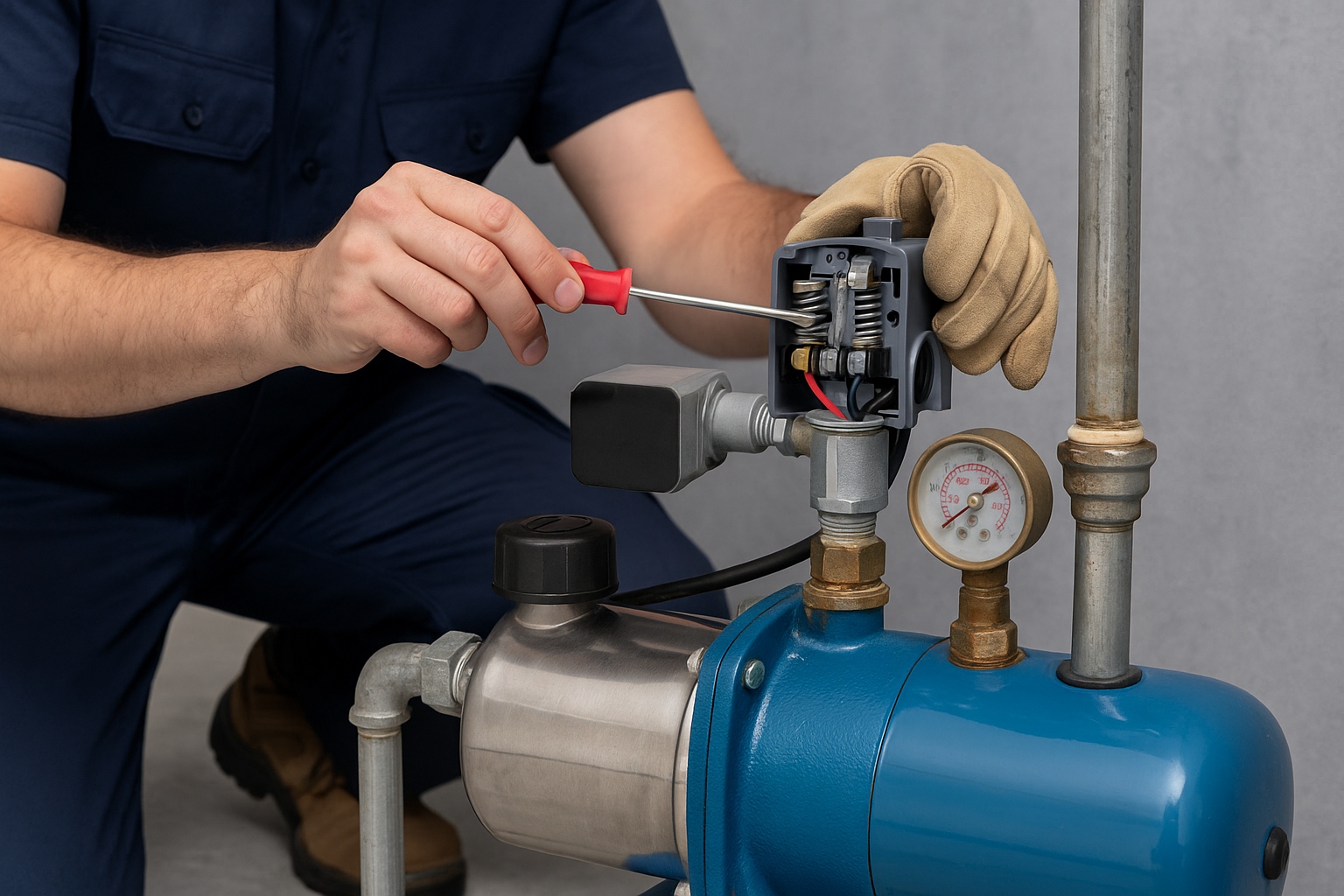
Choosing between a 30/50 and a 40/60 pressure switch seems simple.
However, this choice directly affects your daily comfort and your plumbing system’s health.
It determines if your upstairs shower is a trickle or a torrent.
It also impacts the lifespan of your pump and pipes.
Before you decide, it’s vital to understand the implications of each setting.
There might also be a more advanced solution that eliminates these trade-offs entirely.
What is the Difference in Pressure Range?
Confused by the numbers 30/50 versus 40/60?
These figures are not arbitrary.
They command your pump’s entire cycle, telling it precisely when to work and when to rest.
A 30/50 PSI switch starts your pump when pressure drops to 30 PSI and shuts it off at 50 PSI. In contrast, a 40/60 PSI switch starts the pump at a higher 40 PSI and stops it once it reaches 60 PSI.
Let’s dive deeper into what these numbers mean for your water system.
The pressure range of your switch is the single most important factor in how your well system performs.
It’s the brain of the operation.
Think of it as the thermostat for your water pressure.
What are Cut-In and Cut-Out Pressures?
The two numbers on a pressure switch define its operating cycle.
- Cut-In Pressure: This is the lower number (e.g., 30 PSI). When the water pressure in your system drops to this level, the switch closes an electrical contact. This tells the pump to turn on and start pushing more water into the pressure tank.
- Cut-Out Pressure: This is the higher number (e.g., 50 PSI). Once the pressure in the tank reaches this level, the switch opens the contact. This cuts power to the pump, causing it to shut off.
This cycle repeats every time you use water.
The difference between these two numbers is called the pressure differential.
A standard switch has a 20 PSI differential.
How Pressure Range Affects Your Experience
The pressure you feel at the tap is always somewhere between the cut-in and cut-out values.
With a 30/50 switch, your pressure will fluctuate between 30 and 50 PSI.
With a 40/60 switch, it fluctuates between 40 and 60 PSI.
| Feature | 30/50 PSI Switch | 40/60 PSI Switch |
|---|---|---|
| Minimum Pressure | 30 PSI | 40 PSI |
| Maximum Pressure | 50 PSI | 60 PSI |
| Average Pressure Feel | Weaker | Stronger |
| Pressure Fluctuation | Noticeable drop | Less noticeable drop |
This higher baseline pressure with a 40/60 switch means you get a more satisfying and consistent flow.
This is especially true when multiple faucets or appliances are running at once.
The water pressure won’t feel weak even as the tank is nearing its pump activation point.
Which Setting Is Best for Your Home Layout?
Is your home a single-story ranch or a multi-story colonial?
This layout is a critical factor.
The force of gravity can turn a strong flow into a disappointing trickle on upper floors.
A 40/60 PSI switch is necessary for two-story or larger homes to overcome gravity and deliver strong water pressure to upper floors. A 30/50 PSI switch is usually sufficient for single-story homes with simpler plumbing layouts and lower water demand.
Let’s explore the physics behind this recommendation.
Simply put, water is heavy.
Your pump must work against gravity to push it upwards.
The higher the water needs to travel, the more pressure is lost along the way.
This concept is known as "head loss."
The Impact of Gravity on Water Pressure
For every 2.31 feet of vertical height, you lose approximately 1 PSI of water pressure.
Let’s see how this affects different home layouts.
Imagine your pressure tank is in the basement of a two-story home.
The second-floor shower head might be 20 to 25 feet above the tank.
Using the 2.31 feet/PSI rule, you could lose around 10 PSI by the time the water reaches that shower.
Pressure Calculation for Different Home Types
Here’s how a 30/50 switch performs in this scenario:
- At Cut-Out (50 PSI): Your upstairs shower sees 50 PSI – 10 PSI = 40 PSI. This is a decent pressure.
- At Cut-In (30 PSI): Your upstairs shower sees 30 PSI – 10 PSI = 20 PSI. This is very weak and often unacceptable.
Now let’s run the same calculation with a 40/60 switch:
- At Cut-Out (60 PSI): Your upstairs shower sees 60 PSI – 10 PSI = 50 PSI. This is strong and satisfying.
- At Cut-In (40 PSI): Your upstairs shower sees 40 PSI – 10 PSI = 30 PSI. This is acceptable and much better than the low point of the 30/50 system.
As you can see, the higher operating range of the 40/60 switch provides a much better experience in homes where water has to travel vertically.
For a single-story home where the vertical distance is minimal, the pressure loss is negligible.
In those cases, the 30/50 PSI switch often provides perfectly adequate pressure without over-stressing the system.
Does a Higher Pressure Setting Affect Your Pump and Plumbing?
Boosting your water pressure feels great.
But this extra force puts additional strain on your entire water system.
It’s a trade-off between performance and longevity you must consider carefully.
Yes, a higher pressure setting forces the pump to work harder and longer, increasing wear and energy use. It also subjects older pipes, fittings, and fixtures to stress they were not designed to handle, risking leaks and costly damage.
The choice of pressure switch is not just about the water you feel.
It’s about the unseen forces at work inside your walls and on your equipment.
Let’s break down the two key areas of concern: the water pump and the plumbing pipes.
Pump Strain and Pump Capacity
A water pump’s job is to build pressure.
Forcing it to reach a higher cut-out pressure of 60 PSI instead of 50 PSI requires more work.
This means the pump will run for a longer period during each cycle.
This leads to:
- Increased Energy Consumption: Longer run times mean a higher electricity bill.
- More Heat Generation: The motor works harder, gets hotter, and is more prone to overheating.
- Accelerated Wear: Components like the motor, bearings, and impeller wear out faster under constant high stress.
It is crucial that your pump is actually rated to handle the higher pressure.
Not all pumps can efficiently or safely reach 60 PSI.
If you install a 40/60 switch on an underpowered pump, it might run continuously without ever reaching the cut-out pressure.
This will quickly destroy the pump motor.
Plumbing Compatibility and Risk
Your home’s plumbing system is a network of pipes, joints, and fixtures.
Higher water pressure increases the static force exerted on every component, 24/7.
While modern PEX or copper piping can typically handle this, older systems are at risk.
| Plumbing Material | Risk with 40/60 PSI Switch | Recommended Action |
|---|---|---|
| Galvanized Steel | High risk of corrosion flakes dislodging, leaks at threaded joints. | Avoid. Stick to 30/50 or upgrade plumbing. |
| Older Copper | Moderate risk of solder joint failure over time. | Inspect joints carefully before upgrading. |
| Modern Copper/PEX | Low risk. Generally safe for higher pressures. | Usually compatible. |
A sudden failure in an old pipe under high pressure can cause catastrophic water damage.
Even modern fixtures like faucets, toilet fill valves, and washing machine hoses have pressure limits.
Exceeding them can lead to premature failure and leaks.
If your home has older plumbing, choosing the gentler 30/50 PSI setting is the safer, more prudent decision.
Do You Need to Adjust Your Pressure Tank?
Absolutely.
Installing a new pressure switch without correctly setting up your pressure tank is a critical mistake.
This step is non-negotiable for a properly functioning and long-lasting system.
Yes, you must set the air pre-charge in your pressure tank to 2 PSI below the new switch’s cut-in pressure. For a 40/60 switch, the tank pre-charge must be 38 PSI. An incorrect pre-charge will cause rapid pump cycling and premature failure.
The pressure switch and the pressure tank work together as a team.
The tank stores pressurized water, so the pump doesn’t have to turn on every time you open a faucet.
The air inside the tank acts as a cushion.
Let’s examine why this pre-charge setting is so important.
The "2 PSI Below Cut-In" Rule
The rule is simple but vital: The pressure tank’s air charge must be 2 PSI below the pump’s cut-in pressure.
- For a 30/50 switch: Set the tank pre-charge to 28 PSI.
- For a 40/60 switch: Set the tank pre-charge to 38 PSI.
You must measure this pressure when the tank is completely empty of water.
To do this, turn off the power to your pump and open a faucet to drain all the pressure from the system.
Then, use a standard tire pressure gauge on the air valve at the top of the tank.
Consequences of an Incorrect Pre-Charge
Failing to adjust the tank’s pre-charge leads to serious problems.
Case 1: Pre-charge is too low (e.g., 28 PSI with a 40/60 switch).
The tank becomes waterlogged.
It holds very little water before the pressure rises, losing its ability to act as a reservoir.
This causes the pump to "short cycle," meaning it turns on and off very rapidly every time you use a small amount of water.
Short cycling is the number one killer of well pumps.
Case 2: Pre-charge is too high (e.g., 45 PSI with a 40/60 switch).
Water cannot enter the tank until the system pressure exceeds the air pressure.
You will experience a significant blast of water followed by a drop-off, and the pump will still cycle more frequently than it should.
The tank is not being used effectively.
Setting the correct pre-charge ensures a smooth, consistent drawdown of water from the tank.
This maximizes the time between pump cycles, saving energy and dramatically extending the life of your pump.
The Modern Alternative: Is There a Better Solution?
Are you tired of fluctuating water pressure and worrying about pump damage?
Traditional pressure switches offer a simple on/off function.
But modern technology provides a far more intelligent and efficient way to manage your water supply.
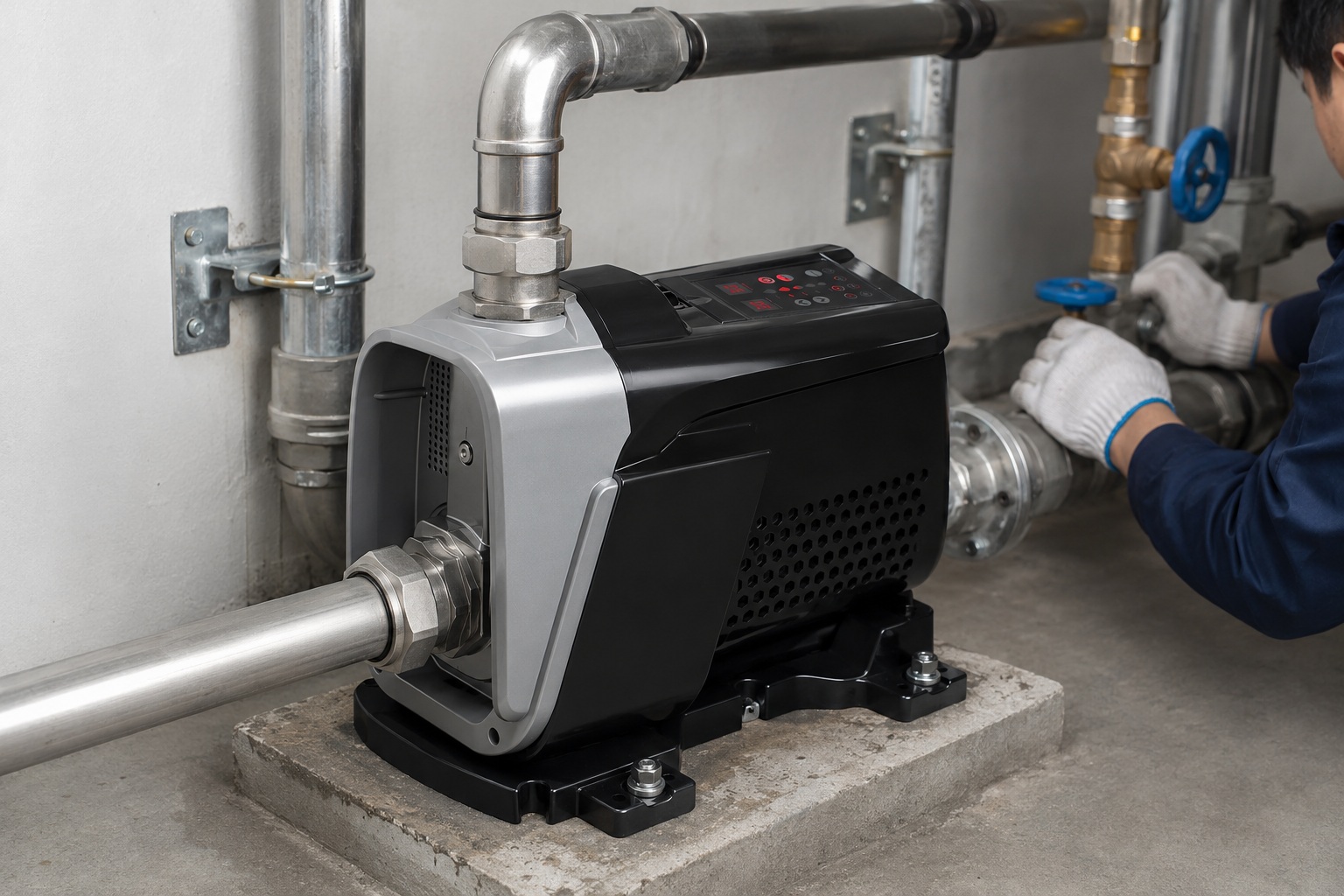
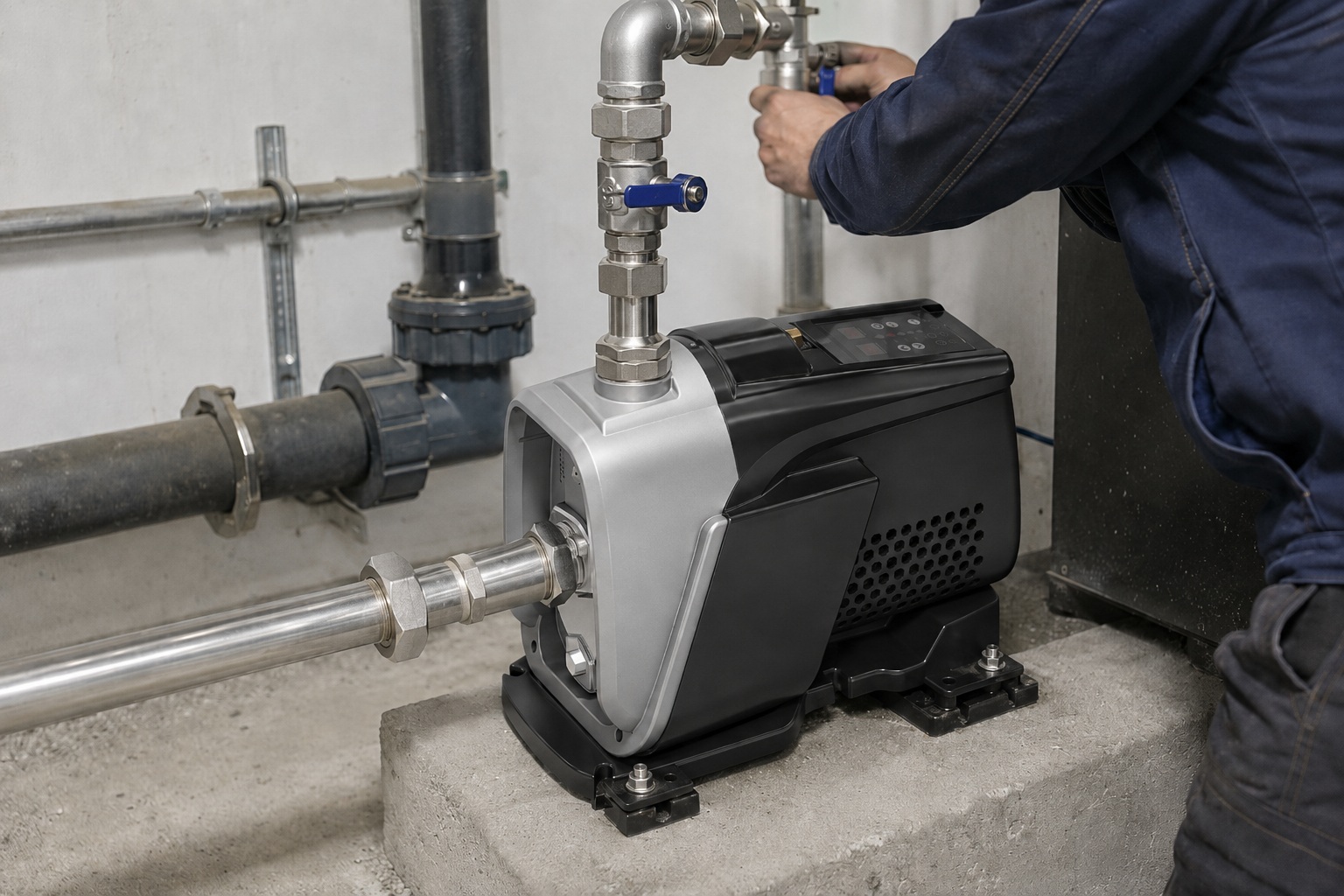
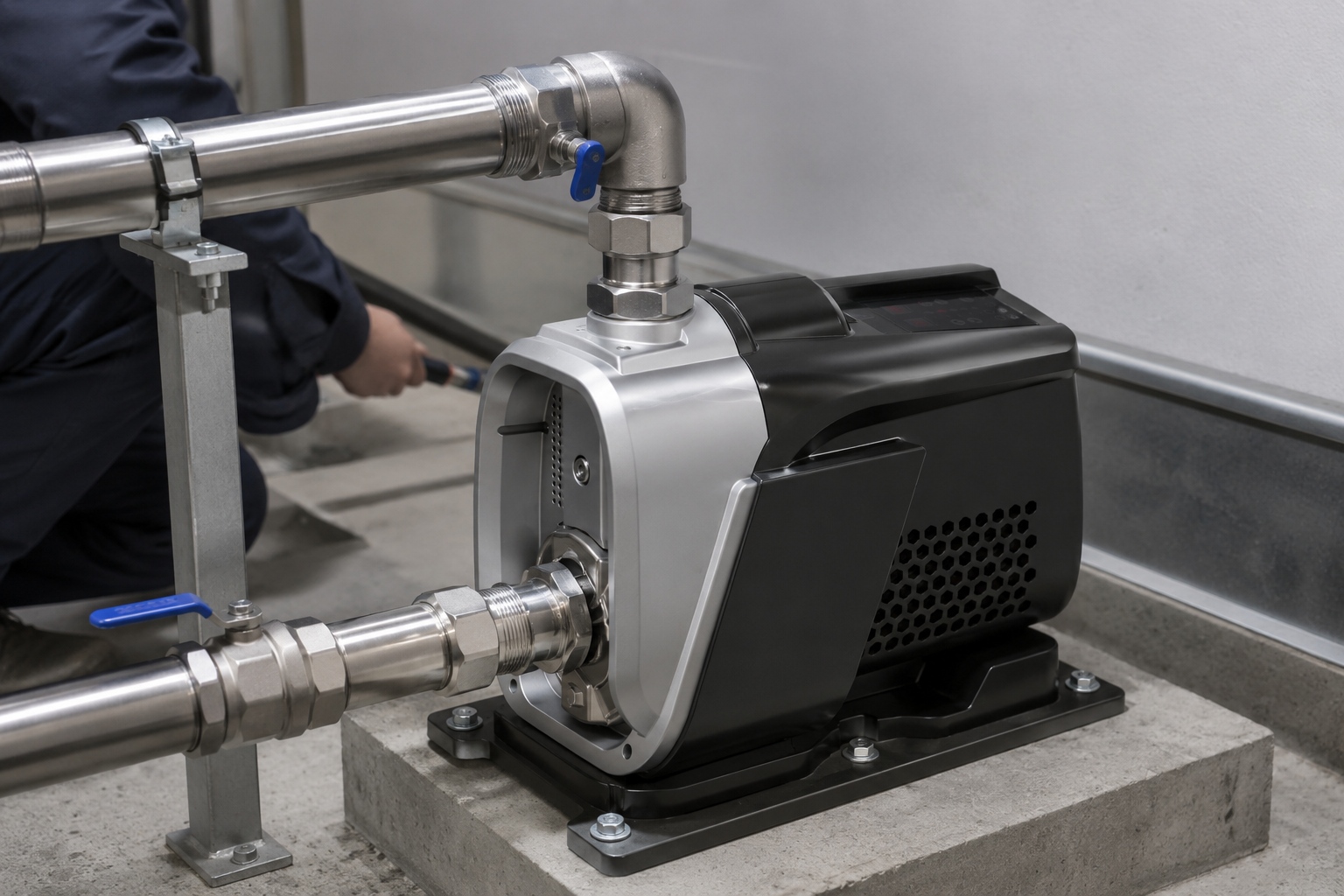
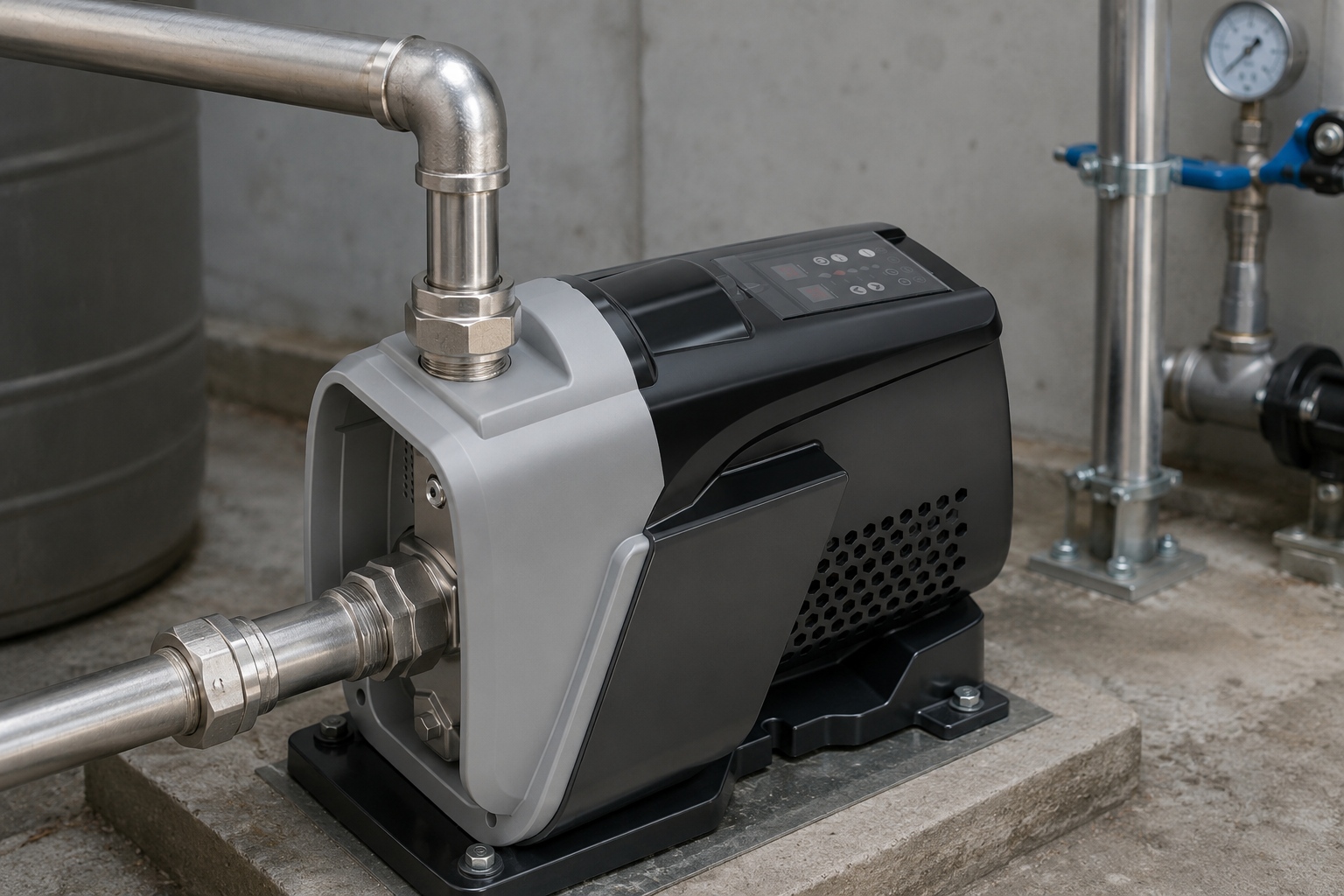
Yes, a Variable Frequency Drive (VFD) pump system is a superior modern alternative. It provides true constant pressure by adjusting the pump’s motor speed in real-time to match your exact water demand, eliminating pressure swings and drastically increasing efficiency.
Instead of debating between two fixed pressure ranges, imagine setting your desired pressure to exactly 50 PSI—and having it stay there.
Whether you are washing hands or running multiple showers, the pressure remains perfectly constant.
This is the power of a modern VFD-controlled system.
How a VFD System Works
Unlike a standard switch that just turns the pump on or off, a VFD controller constantly monitors the pressure in your pipes.
It works like the cruise control in your car.
- You Set the Desired Pressure: You use a simple interface to set your ideal water pressure, for example, 55 PSI.
- You Use Water: When you open a faucet, the pressure starts to drop.
- The VFD Responds Instantly: The controller detects the slight pressure drop and tells the pump motor to start spinning.
- It Matches Demand: Crucially, it doesn’t just turn the pump on to full speed. It adjusts the motor’s speed (its frequency) to precisely match the amount of water you are using. If you open a second faucet, the motor instantly speeds up to keep the pressure constant.
- Soft Start and Stop: When the pump turns on and off, it does so gradually. This "soft start" eliminates the violent mechanical jolt and electrical surge of traditional systems, preventing water hammer and reducing wear on the motor and pipes.
Key Advantages Over Traditional Switches
This intelligent approach delivers a host of benefits that a simple pressure switch cannot match.
| Feature | Traditional Switch (30/50 or 40/60) | VFD Controller System |
|---|---|---|
| Pressure Stability | Fluctuates by 20 PSI | Truly constant (±1-2 PSI) |
| Energy Efficiency | Low. Pump always runs at 100% speed. | High. Uses only the energy needed. |
| System Longevity | High stress from hard starts and stops. | Excellent due to soft starts/stops. |
| Built-in Protections | None. | Comprehensive (dry run, overheat, voltage). |
| Noise Level | Loud when pump kicks on. | Very quiet operation. |
A VFD system provides a luxury hotel-like water experience while simultaneously protecting your investment.
It actively safeguards the pump from conditions like running dry, overheating, or electrical surges.
While the initial investment is higher than a simple switch, the energy savings, reduced repair costs, and superior performance offer a compelling long-term value proposition.
Conclusion
Choosing between a 30/50 and 40/60 switch depends on your home’s needs.
But a modern VFD pump system offers a far superior solution for constant pressure and ultimate system protection.
FAQs
What is the best pressure for a well water system?
The best pressure is typically between 40 and 60 PSI. This range provides strong flow for most homes without over-stressing the plumbing system.
How do you increase water pressure from a private well?
You can increase pressure by adjusting your existing pressure switch to a higher range or by replacing it with a 40-60 PSI model, ensuring your pump and tank are set correctly.
Is 70 psi too high for house water pressure?
Yes, 70 PSI is generally considered too high for most residential plumbing. It can damage fixtures, void warranties, and significantly increase the risk of leaks.
Can I replace a 30-50 pressure switch with a 40-60?
Yes, you can, provided your water pump is powerful enough to reach 60 PSI and your plumbing is in good condition to handle the increased pressure.
What happens if well water pressure is too high?
High well water pressure can cause loud, banging pipes (water hammer), damage appliances like washing machines, and lead to leaks in faucets, toilets, and pipe joints.
Does a bigger pressure tank increase water pressure?
No, a bigger pressure tank does not increase water pressure. It only increases the amount of water stored, which reduces how often the pump needs to run.
How long should a well pump run per cycle?
A properly sized pump and tank system should run for at least one to two minutes per cycle to prevent excessive wear from frequent starts and stops.
What is the most common cause of well pump failure?
The most common cause is rapid "short cycling," where the pump turns on and off too frequently, usually due to a failed or improperly charged pressure tank.