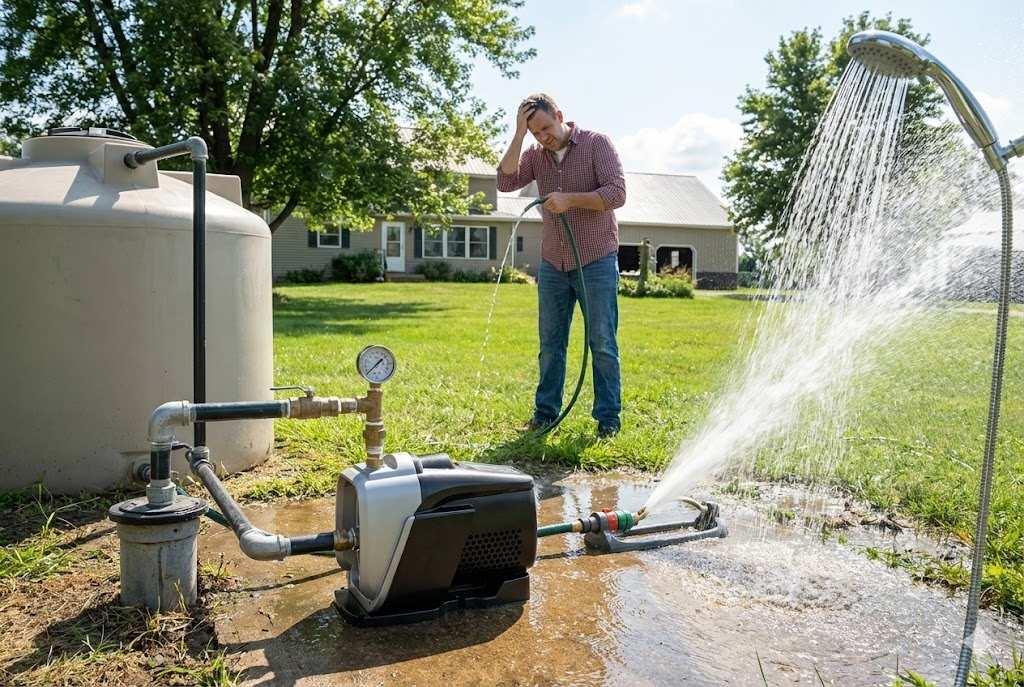
Low water pressure from your well can make daily tasks frustrating.
Simple showers become a trickle, and watering your lawn takes forever.
You need a powerful, consistent solution.
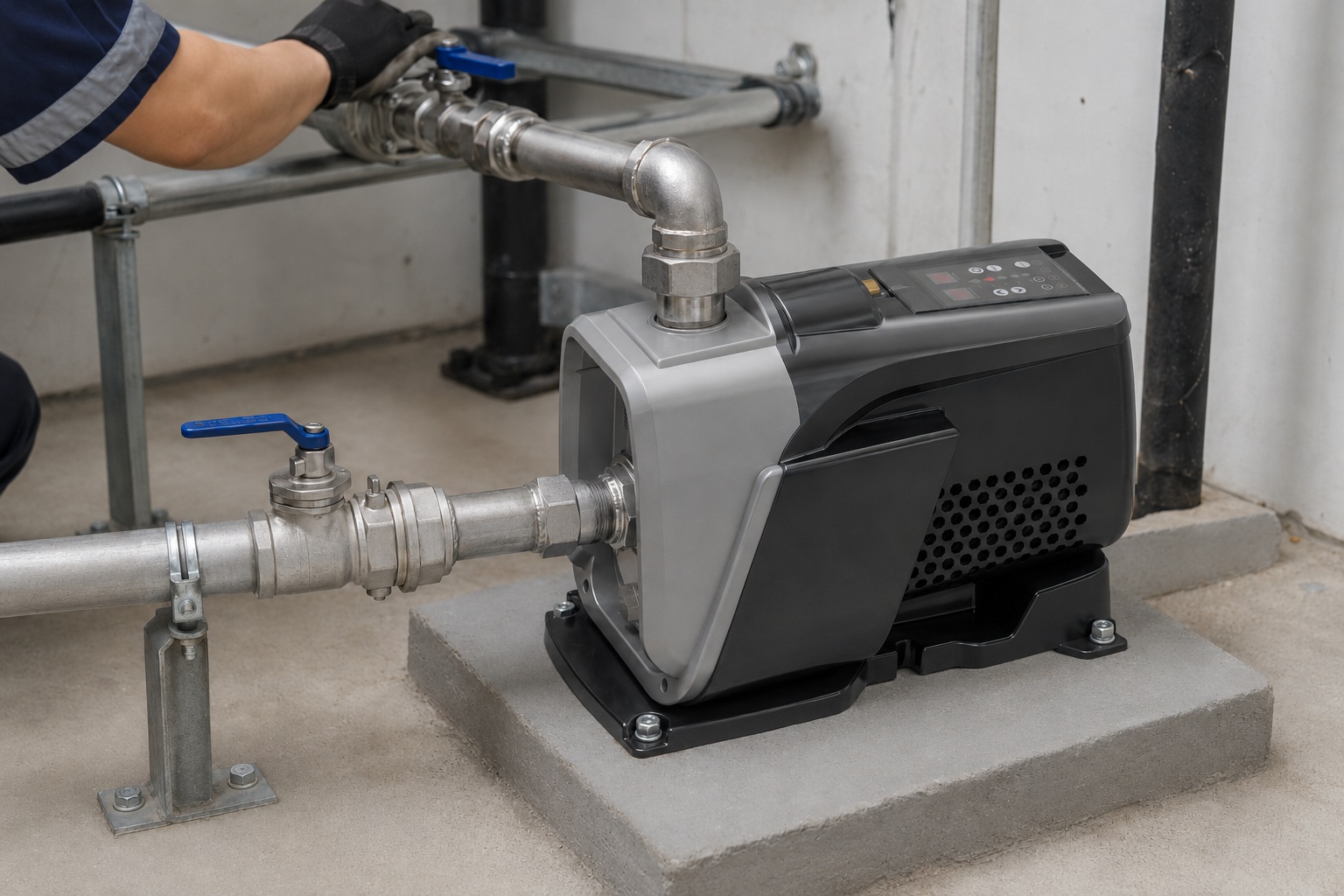
Yes, you can add a booster pump to your well system to increase water pressure.
For wells with low yield, it’s best to use a booster pump with an atmospheric storage tank to avoid running the well dry.
For high-yield wells, a booster pump can be installed in-line.
Adding a booster pump isn’t just a simple plug-and-play installation.
It’s a significant upgrade to your water system that requires careful thought and planning.
The right approach will transform your water pressure, but the wrong one could lead to costly damage to your well and pump.
Understanding the different methods and the critical factors involved is the first step toward a reliable, high-pressure water supply for your home or business.
This guide will walk you through the options, considerations, and the advanced technology that makes modern booster systems a smart choice.
We’ll explore how these systems work, why they are superior, and what you need to know before making a decision.
Options for Using a Booster Pump with a Well
Are you trying to decide on the best way to boost your well’s water pressure?
You have a few good options, but the right choice depends entirely on your well’s performance.
The most common methods involve using a storage tank or installing the booster directly.
For low-yield wells, a storage tank is essential.
It allows the well pump to fill the tank slowly over time without stress.
The booster pump then draws from this reservoir to provide high pressure on demand, protecting your well from being over-pumped.
Choosing the correct configuration for your booster pump is the most important decision you’ll make in this process.
It directly impacts the health of your well, the longevity of your equipment, and the consistency of your water pressure.
An incorrect setup can lead to a cycle of problems, including a dry well, a damaged well pump, and a burnt-out booster pump.
By understanding the mechanics of each option, you can tailor a solution that perfectly matches your well’s capabilities and your property’s water demands, ensuring a robust and reliable system for years to come.
The Ideal Method: Booster Pump with an Atmospheric Storage Tank
This configuration is widely recommended by professionals, especially for properties with low-yielding wells.
A low-yield well is one that cannot replenish water as fast as a standard pump draws it out.
In this system, the existing well pump operates on its own schedule.
Its sole job is to slowly fill a large, non-pressurized storage tank (often called a cistern or atmospheric tank).
A float switch inside the tank tells the well pump when to turn on (when the water level is low) and when to turn off (when the tank is full).
This process happens at a slow, steady pace that the well can easily keep up with, preventing the risk of running the well dry.
The booster pump is a separate, second pump.
It is installed after the storage tank.
When you turn on a faucet in your house, the booster pump activates.
It draws water from the storage tank and pressurizes it for delivery to your home.
Because it’s drawing from a large reservoir of water, it can provide strong, constant pressure without ever affecting the well itself.
This separation of tasks is the key to the system’s success.
The well pump is protected from overwork, and the booster pump has a consistent water source to draw from.
| Component | Function | Benefit for Low-Yield Wells |
|---|---|---|
| Well Pump | Fills the storage tank slowly. | Prevents over-pumping and running the well dry. |
| Float Switch | Controls the well pump based on tank water level. | Automates the filling process for maximum efficiency. |
| Storage Tank | Acts as a water reservoir. | Creates a buffer, ensuring water is always available for boosting. |
| Booster Pump | Draws from the tank to pressurize the system. | Provides high, consistent pressure on demand without straining the well. |
The Direct Method: In-Line Booster Pump
This option is suitable only for wells with a high yield, meaning the well recharges very quickly and can supply more water than the household typically demands.
In this setup, the booster pump is installed directly into the water line after the well’s pressure tank.
When a tap is opened, the drop in pressure activates the booster pump.
It then increases the pressure of the water coming directly from the well pump.
While this sounds simpler, it carries significant risks if your well’s capacity is overestimated.
If the booster pump pulls water faster than the well can replenish it, it can cause the well pump to run dry, leading to severe damage.
To mitigate this, it’s crucial that the system includes safeguards.
Many modern intelligent booster pumps come equipped with advanced dry-run protection.
These systems use sensors to detect if water stops flowing from the well.
If a no-water condition is detected, the pump will automatically shut down to prevent damage.
It will then enter a timed recovery mode, periodically attempting to restart to see if water has returned to the well, preventing a total system failure from a temporary issue.
The Alternative: Upgrading Your Well Pump
Sometimes, the issue isn’t just about pressure but also about flow rate.
A booster pump can only increase the pressure of the water it’s given; it cannot create more water.
If your well has a fundamentally low flow rate, simply boosting the pressure won’t solve the problem of running out of water during peak usage.
In these situations, the most effective long-term solution might be to replace the existing submersible well pump with a more powerful model.
A new pump, correctly sized for your well’s depth, yield, and your home’s water demand, can often deliver both the flow rate and the pressure you need without the complexity of a second pump.
Consulting with a well professional is essential here.
They can perform a flow test on your well to determine its maximum sustainable yield.
Based on this data, they can recommend a pump that maximizes your well’s potential without risking damage, providing a single, efficient solution to your water supply problems.
Considerations Before Installing a Booster Pump
Are you just focusing on the low pressure from your faucet?
Before you install any new equipment, you must look at the bigger picture of your entire water system.
A booster pump is a powerful tool, but it’s not a magic fix.
A successful installation depends on a clear understanding of your well’s capabilities, how the new pump will integrate with your existing setup, and the specific goals you want to achieve.
Ignoring these key factors can lead to wasted money, damaged equipment, and a system that still doesn’t meet your needs.
Taking the time to properly assess your situation is the difference between a successful upgrade and a costly mistake.
A booster pump introduces significant force into your plumbing system.
It demands more from your well and interacts with your existing pressure tank and switches.
Each of these components must work together in harmony.
A comprehensive evaluation ensures you’re choosing a solution that is not only effective but also safe and sustainable for the long-term health of your well and plumbing infrastructure.
Let’s dive deeper into the critical elements you must consider.
Understanding Your Well’s Yield
The single most important factor is the well’s yield, or its recharge rate.
This is the measure of how many gallons of water per minute (GPM) your well can sustainably produce.
If you install a booster pump that, in combination with your well pump, pulls 10 GPM, but your well can only yield 5 GPM, you will inevitably run the well dry.
How to Determine Well Yield?
A professional well contractor can perform a flow test.
This involves pumping the well at a specific rate for an extended period and monitoring the water level (the "drawdown").
This test provides a definitive number for your well’s sustainable yield.
You can do a rough estimation yourself by timing how long it takes for your well pump to fill a bucket of a known size, but this is far less accurate and doesn’t account for drawdown over time.
Why System Integration is Crucial
A modern water system is more than just a pump.
It’s an ecosystem of components that must work in concert.
Dropping a powerful booster pump into this system without proper integration is a recipe for disaster.
Key Integration Components
- Pressure Tank: A pressure tank is vital, even with a booster pump. It acts as a small reservoir of pressurized water. This allows you to draw small amounts of water (like washing hands) without triggering the pump. This dramatically reduces pump cycling (the number of times it turns on and off), which is the primary cause of motor wear and tear. A properly sized pressure tank can reduce cycling by over 70%.
- Flow and Pressure Switches: These are the brains of the operation. They tell the pump when to turn on and off based on water flow and system pressure. Intelligent VFD pumps use highly accurate sensors that monitor pressure in real-time, adjusting the motor speed to maintain a perfectly constant pressure level.
- Soft Start & Soft Stop: Abruptly starting a powerful motor sends a jolt of mechanical stress through the pump and pipes. It also causes hydraulic shock, known as "water hammer," which can damage pipes and fixtures. Advanced booster pumps use a soft-start function that gradually ramps up the motor speed. This ensures a smooth, quiet start that protects the entire system. The soft-stop function works similarly when the flow demand ceases.
The Difference Between Pressure and Flow Rate
It’s common for homeowners to confuse these two concepts, but they are very different.
- Flow Rate (measured in GPM or L/min): This is the volume of water moving through your pipes over a period of time. It’s determined by your well’s yield and the capacity of your well pump.
- Pressure (measured in PSI or Bar): This is the force behind the water. It’s what makes for a strong shower spray.
A booster pump is designed to increase pressure.
It cannot increase the flow rate beyond what the well pump can supply.
If you have a 5 GPM flow rate from your well, a booster pump can make that 5 GPM feel much stronger, but it can’t turn it into 10 GPM.
If your problem is that you run out of water when two showers are running at once, that is a flow rate problem.
In this case, a more powerful well pump (if the well can support it) or a storage tank system is the appropriate solution.
The Rise of Intelligent VFD Booster Pumps
Modern technology has revolutionized booster pumps, making them smarter, more efficient, and far more protective of your well system.
The core of this technology is the Variable Frequency Drive (VFD).
How VFD Technology Works
Instead of running at a single, fixed speed, a VFD controller constantly adjusts the motor’s speed (RPM) in real-time.
It uses a pressure sensor to monitor the system’s pressure.
If you turn on one faucet, the VFD runs the motor at a low speed, just fast enough to maintain your desired pressure.
If you turn on a second faucet and a shower, the VFD instantly speeds up the motor to meet the higher demand while keeping the pressure perfectly constant.
This provides several massive advantages over traditional fixed-speed pumps.
| Feature | Traditional Pump | Intelligent VFD Pump |
|---|---|---|
| Pressure | Fluctuates significantly. High when it kicks on, low before it starts. | Perfectly constant. The pressure you set is the pressure you get. |
| Energy Use | Runs at 100% power every time it turns on, wasting electricity. | Uses only the exact amount of energy needed to meet demand, saving up to 50%. |
| Noise | Loudly cycles on and off. | Operates at ultra-quiet levels, often below 50dB, thanks to variable speed. |
| System Stress | Abrupt starts cause water hammer and mechanical wear. | Soft start/stop functionality eliminates stress on pipes and the motor. |
Comprehensive Protection Systems
Beyond performance, intelligent pumps are designed for self-preservation.
A top-tier pump will include a suite of built-in protections that monitor the system and prevent damage from common problems.
This "digital shield" is a crucial feature for any well installation.
Key Protections to Look For
- Dry Run Protection: The most critical protection for a well system. It automatically shuts the pump off if it detects a lack of water, preventing burnout.
- Voltage Protection: Safeguards the electronics from damage caused by an unstable power grid (over-voltage or under-voltage). This is essential for rural properties.
- Overheating Protection: Monitors the temperature of both the motor and the electronics, shutting down if temperatures exceed safe limits to prevent permanent damage.
- Antifreeze Protection: In cold climates, the pump can automatically run for a few seconds periodically if the water temperature drops near freezing, preventing ice from forming and cracking the pump housing.
- Leak Detection: The smart controller can learn your water usage patterns. If it detects a small, continuous flow (like from a leaking pipe), it can alert you to the problem.
By insisting on a pump with these intelligent features, you are not just buying a booster; you are investing in a complete management and protection system for your entire water supply.
It’s the safest and most effective way to add a booster to a well.
Conclusion
Yes, you can add a booster pump to a well.
However, choosing the right system and considering your well’s capacity are crucial for a safe, effective, and long-lasting solution.
FAQs
What size booster pump do I need for my well?
The size depends on your desired pressure increase (PSI) and required flow rate (GPM).
A professional can help you calculate the exact size needed for your home’s fixtures and appliances.
Can a booster pump damage my well pump?
Yes, if not installed correctly.
A booster pulling water too quickly can cause the well pump to run dry and burn out, which is why a storage tank is recommended for low-yield wells.
How much pressure can a booster pump add?
Booster pumps are available in various sizes.
Most residential models can add between 20 to 60 PSI to your existing water pressure, depending on the specific model and system setup.
Do I need a pressure tank with a booster pump?
Yes, a pressure tank is highly recommended.
It reduces pump cycling for small water uses, which significantly extends the motor’s lifespan and prevents unnecessary wear and tear on the system.
Can I install a well booster pump myself?
While possible for experienced DIYers, professional installation is recommended.
Proper integration with the well, electrical systems, and plumbing is critical for safe and efficient operation of the booster pump.
How does a VFD booster pump save energy?
A VFD pump only runs the motor at the speed needed to meet the current water demand.
This avoids the high energy consumption of traditional pumps that run at full power every time they switch on.
What is dry-run protection?
Dry-run protection is a feature where the pump automatically shuts off if it senses there is no water.
This prevents the motor from overheating and burning out, a common issue with well applications.
Is a booster pump noisy?
Older, traditional pumps can be quite loud.
However, modern VFD booster pumps with permanent magnet motors are designed for ultra-quiet operation, often producing less noise than a quiet library (under 50 dB).