Worried about the cost and hassle of maintaining an off-grid water system?
Downtime isn’t an option when water is essential, but the fear of complex repairs often creates hesitation.
High-quality solar water pumps require very little maintenance, primarily consisting of keeping solar panels clean and conducting simple visual inspections. The core components, especially the brushless DC motor and sealed pump end, are engineered for a long, service-free operational life.
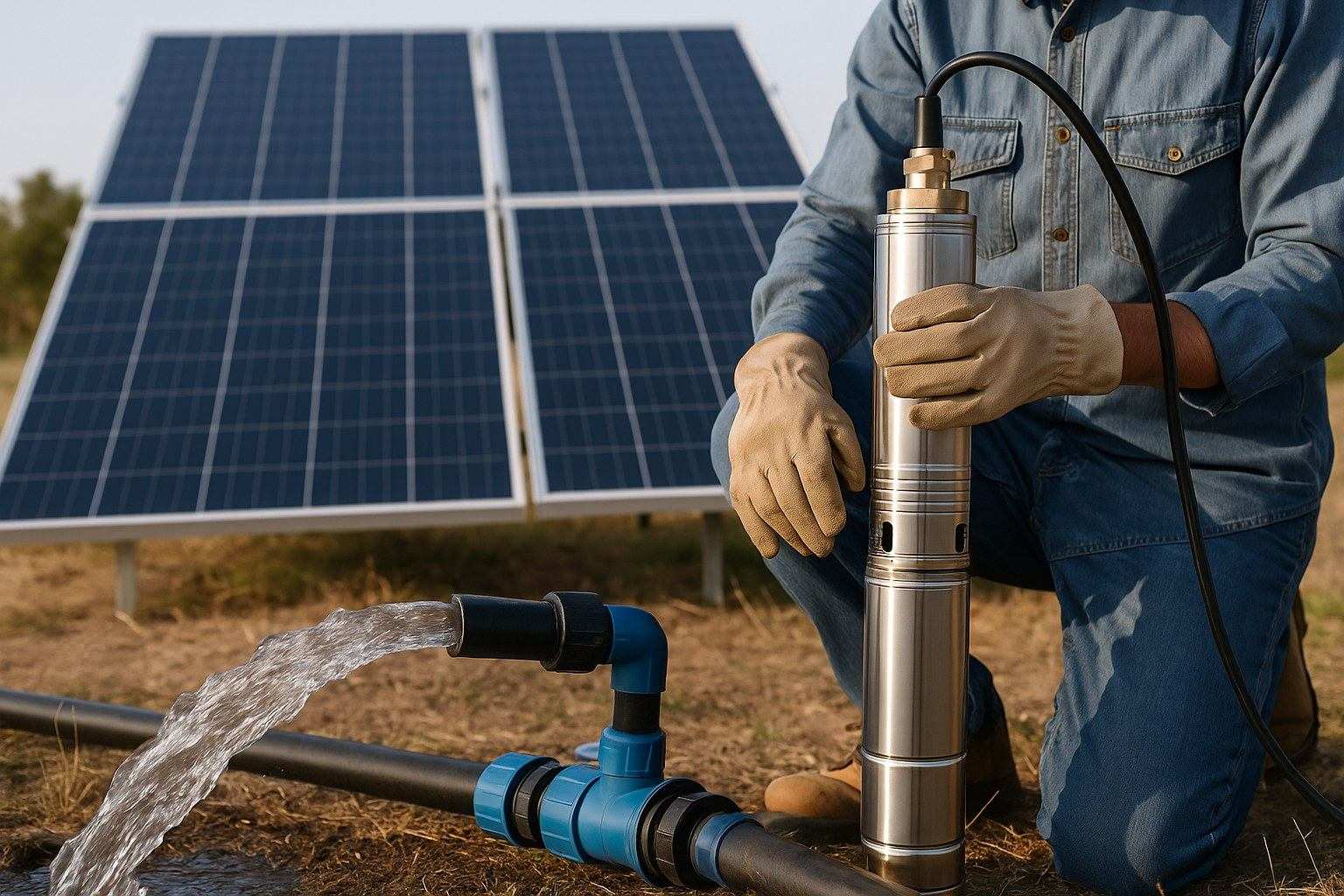
The term "low maintenance" is a key reason why solar water pumps have become a go-to solution for agriculture, livestock, and domestic water in remote areas.
Unlike traditional pumps that rely on complex engines or brush-filled motors, modern solar pumps are designed for reliability and longevity in places where a service technician is miles away.
The entire system is built on the principle of solid-state efficiency and durability.
However, "low maintenance" does not mean "no maintenance."
Understanding the few simple checks required is the key to maximizing the system’s lifespan and ensuring it delivers reliable water for decades.
Let’s break down the maintenance needs for each part of the system, from the panels that catch the sun to the pump that moves the water.
The Untouchable Heart: Why the BLDC Motor Needs No Maintenance
Do you think all electric motors need eventual servicing and brush replacements?
This old-school maintenance requirement is a major drawback, especially when a motor is located deep underground in a well.
Modern solar pumps use a Brushless DC (BLDC) permanent magnet motor, which is a sealed, maintenance-free unit. It has no brushes to wear out, no internal parts needing service, and is designed to operate for its entire lifespan without intervention.
The single greatest advancement in solar pump reliability is the universal adoption of the Brushless DC (BLDC) motor.
This piece of technology is the primary reason why solar pumps have moved from a niche product to an essential piece of infrastructure.
It fundamentally eliminates the most common failure and maintenance point of older DC motor systems.
Traditional brushed motors rely on small carbon blocks ("brushes") to make physical contact with a spinning commutator to transfer electricity.
This contact creates friction, heat, and wear.
Over time, these brushes wear down completely, requiring disassembly and replacement to keep the motor running.
In a submersible well pump application, this is an expensive and labor-intensive job.
The BLDC motor completely changes this dynamic.
Instead of physical brushes, it uses an intelligent electronic controller to switch the direction of the magnetic field, causing the rotor to spin.
There are no parts in direct contact that are designed to wear out.
This is not just a small improvement; it is a complete re-engineering of the motor for zero-maintenance reliability.
The Engineering Behind a Maintenance-Free Design
The reliability of a BLDC motor comes from its sophisticated yet mechanically simple construction.
- No Wearable Parts: By eliminating brushes, commutators, and the associated carbon dust, the motor’s lifespan is determined only by the high-quality, sealed bearings, which are typically rated for tens of thousands of hours of operation.
- Sealed for Life: These motors are housed in a hermetically sealed stainless steel casing. This protects the internal components from water, sand, and any other contaminants, ensuring the internal environment remains pristine.
- Superior Efficiency: Operating at over 90% efficiency, BLDC motors run significantly cooler than their brushed counterparts. Less waste heat means less thermal stress on components, which is a leading cause of premature failure in electronics and mechanical systems. A cooler motor is a longer-lasting motor.
What This Means for the Pump Owner
The practical benefits of a maintenance-free motor are profound and directly impact the total cost of ownership.
| Feature | Technical Advantage | Owner Benefit |
|---|---|---|
| No Brushes | Eliminates the primary wear component of DC motors. | Zero scheduled motor service. No need to pull the pump for motor maintenance. |
| Sealed Casing | Protects internal components from the well environment. | Extreme durability and resistance to harsh water conditions. |
| High Efficiency | Runs cooler with less thermal stress on windings and bearings. | Increased reliability and a projected service life exceeding 25,000 hours. |
Ultimately, with a BLDC motor at its core, the pump’s motor is a "fit and forget" component.
Once it is installed at the bottom of the well, it requires no further attention for its entire operational life.
Fuel for the Pump: Simple Solar Panel Care
Are your panels covered in a layer of dust or bird droppings?
This common issue can choke your pump’s power supply by up to 25%, drastically cutting water flow and making you think the pump itself is failing.
Solar panel maintenance involves one primary task: keeping the glass surface clean. Periodically wiping away dust, dirt, leaves, and other debris ensures the panels can absorb the maximum amount of sunlight and power the pump effectively.
The solar panels are the fuel tank of your water pump system.
If they can’t collect sunlight efficiently, every other high-tech component in the system will be starved for power.
Unlike the sealed, high-tech motor deep in the well, the panels are exposed to the elements 24/7.
They collect dust from fields, pollen from trees, residue from rain, and droppings from birds.
Even a thin, seemingly transparent layer of grime can significantly reduce the amount of light reaching the photovoltaic cells, directly impacting the pump’s performance.
Studies have shown that dirty solar panels can lose anywhere from 5% to 25% of their efficiency depending on the level of soiling.
In arid, dusty regions, the losses can be even more severe.
This reduction in power output can translate to slower pump speeds, lower water volume, and an inability for the pump to start in lower light conditions.
Fortunately, maintaining the panels is the simplest and most effective task an owner can perform.
It requires no special tools or technical knowledge, just a bit of routine attention.
Your Panel Maintenance Checklist
Keeping the panels in peak condition involves both cleaning and inspection.
A proactive approach can prevent small issues from becoming larger problems.
1. Scheduled Cleaning
The frequency of cleaning depends entirely on your local environment.
A simple visual check is your best guide; if you can see a noticeable film of dirt on the glass, it’s time to clean.
| Environment | Recommended Cleaning Frequency | Cleaning Notes |
|---|---|---|
| Dusty, Arid, Agricultural | Every 1-3 months | Dust and soil are the primary issues. A simple wipe-down is often sufficient. |
| Temperate with Regular Rain | Every 6-12 months | Rain helps wash away much of the dirt, but pollen and bird droppings may still need attention. |
| Coastal or Industrial | Every 3-6 months | Salt spray or industrial pollutants can create a sticky film that requires more effort to remove. |
How to Clean: Use a soft brush or cloth with plain water.
For stubborn grime, a small amount of non-abrasive soap can be used, but be sure to rinse it off completely.
Never use harsh chemicals or abrasive materials that could scratch the glass.
2. Physical Inspection
While you are cleaning, take a moment to inspect the panels and their mounting structure.
- Check for Damage: Look for any cracks, chips, or browning on the panel surface.
- Secure Mounting: Ensure all bolts and brackets holding the panels are tight and secure.
- Wiring Integrity: Check that all wires are properly secured and that the insulation is not cracked, frayed, or being chewed on by animals.
- Shading Issues: Take note if any new trees or structures are beginning to cast shadows on the panels during peak sun hours.
The Workhorse: Maintaining the Pump End
Are you worried about what’s happening to the pump itself, submerged deep underground?
Concerns about wear from sand or damage from corrosive water can make anyone anxious about the longevity of this critical, hard-to-access component.
Modern solar pumps are designed with sealed, water-lubricated bearings that require no maintenance. However, the lifespan of the pump end is determined by choosing the right pump type for your specific water quality and well conditions.
The "pump end" is the part of the system that does the physical work of moving water.
Just like the BLDC motor, it is engineered to be a sealed, long-life component that does not require scheduled servicing like greasing bearings or replacing seals.
The bearings inside are lubricated by the very water the pump is moving.
Therefore, the only "maintenance" required for the pump end is proactive: selecting the correct model before it is ever installed.
The primary factors that cause wear and tear on a submersible pump are abrasion from sand and corrosion from aggressive water chemistry.
Manufacturers have engineered different types of pumps specifically to combat these issues.
Choosing the right tool for the job is the single most important maintenance decision you will make.
Installing a pump that is not suited for your well is a guarantee of premature failure and a costly replacement job.
Matching the Pump to the Water
Think of pump selection as a long-term maintenance strategy.
Each design offers a unique set of advantages tailored to a specific environment.
1. For Sandy or Silty Wells: The Solar Screw Pump
- Design Principle: This pump uses a helical stainless steel rotor spinning inside a tough rubber stator. This positive displacement action is highly effective at moving water that contains suspended solids without sustaining rapid damage.
- Maintenance Advantage: It is exceptionally resistant to abrasion from sand, making it the most durable choice for new wells, boreholes with fine sand, or any water source that is not perfectly clean. It sacrifices high flow for extreme durability and high-lift capability.
2. For High-Volume Needs in Clean Water: The Plastic Impeller Pump
- Design Principle: This centrifugal pump uses a stack of precisely molded, wear-resistant plastic impellers to move large volumes of water. It is a highly efficient and economical design.
- Maintenance Advantage: In clean water, these pumps offer an excellent service life and the best performance-to-cost ratio. The plastic material can handle small amounts of fine sand better than some metals, but it is not intended for abrasive conditions. Its limitation is its susceptibility to corrosion in acidic or alkaline water.
3. For Aggressive or "Hard" Water: The Stainless Steel Impeller Pump
- Design Principle: This pump functions like the plastic impeller model but is built with premium SS304 stainless steel for the impellers, diffusers, and pump body.
- Maintenance Advantage: Stainless steel offers superior resistance to both corrosion and abrasion. This is the ultimate "install it and forget it" option for wells with acidic, alkaline, or brackish water. It provides the longest possible service life, ensuring that water chemistry does not become a reason for premature pump failure.
| Pump Type | Best For | Key Maintenance Advantage |
|---|---|---|
| Solar Screw Pump | Deep wells, sandy/silty water | Highly resistant to abrasive wear. |
| Plastic Impeller Pump | High flow needs in clean water | Economical and reliable in ideal conditions. |
| Stainless Steel Impeller Pump | Corrosive or aggressive water | Maximum resistance to corrosion for longest lifespan. |
Conclusion
Solar water pumps, built with maintenance-free motors and durable materials, require minimal upkeep.
Regular panel cleaning and correct initial pump selection are the keys to decades of reliable service.
Frequently Asked Questions
How long does a solar water pump last?
A well-maintained solar water pump system can last for 20-25 years.
The solar panels are often warrantied for 25 years, and the high-quality brushless motor pump can last 10 years or more.
Do solar pumps work on cloudy days?
Yes, solar pumps can work on cloudy days but at a reduced flow rate.
The pump’s output is directly proportional to the amount of sunlight the panels receive.
Can solar pumps run at night?
No, standard solar pumps cannot run at night without a battery bank or a hybrid controller connected to an AC power source like the grid or a generator.
What size solar pump do I need?
The required size depends on your daily water needs, the total vertical lift (head), and your geographic location (available sun hours).
A professional calculation is recommended.
How deep can a solar pump go?
Solar pumps can service a wide range of depths.
Specialized solar screw pumps are designed for very deep wells, capable of lifting water from over 200 meters (650 feet).
Are solar water pumps worth it?
Yes, for off-grid or remote locations, they are highly cost-effective.
They eliminate electricity bills or the fuel and maintenance costs associated with generators, offering a rapid return on investment.