Hesitant to invest in solar because of perceived high costs and unreliability?
This fear prevents many from accessing long-term savings and energy independence, keeping them tied to volatile fossil fuel prices.
Solar power's popularity is rapidly growing, but perception lags reality. Misconceptions about high initial cost, unreliability on cloudy days, and lack of versatility are the main barriers. Modern technology has largely solved these issues, making solar a highly viable and cost-effective choice today.
The conversation around solar energy is often a paradox.
On one hand, it's celebrated as the future of clean, sustainable power.
On the other hand, business owners and individuals hesitate, held back by persistent myths that have been circulating for years.
These concerns are not unfounded; they are rooted in the realities of older, first-generation solar technology.
However, the solar industry of today is a world apart from where it was even a decade ago.
Efficiency has skyrocketed, costs have plummeted, and engineering has solved many of the core challenges that once limited its application.
For industries that depend on consistent power for critical operations, like water pumping for agriculture or communities, understanding the modern reality of solar is not just an academic exercise.
It is a strategic business decision.
Let's dismantle these old myths one by one and reveal why solar power is not only popular but is becoming the most logical choice for a growing number of applications worldwide.
The High Initial Cost Myth
Do you see the upfront price tag of a solar system and immediately feel it's out of reach?
This initial sticker shock is the single biggest hurdle, making you question if the long-term benefits are worth the immediate financial outlay.
While there's an initial investment, solar panel costs have fallen over 85% in the last decade. The true financial picture is revealed in the Total Cost of Ownership (TCO), where solar systems often become significantly cheaper than diesel or grid power within a few years.
Focusing solely on the purchase price of a solar system is like judging the cost of a car by its sticker price alone, without considering fuel, maintenance, or repairs.
The traditional alternatives, like diesel generators or extending the electrical grid to a remote location, have a lower initial cost but come with a lifetime of recurring expenses.
Diesel fuel prices are volatile and unpredictable.
Generators require constant maintenance, including oil changes, filter replacements, and eventual engine overhauls.
Grid electricity involves monthly bills and demand charges that never end.
Solar power fundamentally changes this financial equation.
After the initial setup, the fuel—sunlight—is free.
Maintenance is minimal.
This is where the concept of Total Cost of Ownership (TCO) becomes critical for any strategic business decision.
Analyzing Total Cost of Ownership: Solar vs. Diesel
Let's consider a common scenario for a business owner like you: powering a water pump for agricultural irrigation in a remote location.
A 5-year TCO analysis shows a clear winner.
| Cost Component | Solar Water Pump System | Diesel Generator Pump System |
|---|---|---|
| Initial Investment | Higher (Panels, Pump, Controller) | Lower (Generator, Pump) |
| Fuel Costs (Years 1-5) | $0 | High and Variable (e.g., $3,000+/year) |
| Maintenance (Years 1-5) | Very Low (e.g., Panel cleaning) | Moderate (Oil, filters, repairs) |
| Labor (Refueling/Maint.) | Near Zero | Significant |
| 5-Year TCO | Significantly Lower | Significantly Higher |
The payback period for a solar water pump system is often just 1-3 years.
After that point, the system generates a positive return on investment every single day.
The Role of High-Efficiency Motors
The initial cost of a solar system is directly tied to its size, specifically the number of solar panels required.
This is where motor efficiency becomes a game-changer.
The core of a modern solar water pump is a high-efficiency Brushless DC (BLDC) permanent magnet motor.
These motors are a leap forward in technology.
They often achieve electrical efficiencies exceeding 90%, compared to 60-70% for older DC or AC motors.
What does this 20-30% efficiency gain mean for you?
- Fewer Panels Needed: A more efficient motor does the same amount of work with less power. This can reduce the number of solar panels needed by up to 30%, directly cutting the largest component of the initial system cost.
- Reduced Ancillary Costs: Fewer panels mean less racking, smaller and lighter support structures, and simpler wiring. For an importer, this also translates to lower shipping and handling costs, as the overall system is more compact. A motor that is 47% smaller and 39% lighter is a significant logistical advantage.
- Faster ROI: By reducing the upfront investment, the high-efficiency motor accelerates the system's return on investment, making the financial case for solar even more compelling.
So, the "high cost" myth crumbles when you evaluate the full financial picture and leverage modern, high-efficiency components.
The Unreliability & Intermittency Problem
What good is a solar pump if the sun isn't shining?
This is the most common operational fear: that a cloudy day or the setting of the sun will render your critical water supply useless.
This is a solved problem. Modern solar water pumping systems ensure 24/7 reliability through a combination of intelligent hybrid controllers that blend power sources and by using water storage as a simple, effective energy battery.
The idea that solar power stops when a cloud passes over is outdated.
While it's true that panel output fluctuates with sunlight intensity, modern systems are engineered with multiple layers of redundancy to guarantee performance.
They are no longer simple "on/off" devices tied directly to the sun's brightness.
Instead, they are sophisticated, intelligent systems designed for the real world, where weather is variable.
The goal is not to have power 100% of the time from the sun, but to have the water you need, when you need it, 100% of the time.
This is a crucial distinction, and it's achieved through two key strategies.
Intelligent Power Management: The Hybrid Controller
The most direct solution to intermittency is the AC/DC hybrid controller.
This device acts as the brain of the entire system, automatically managing power from multiple sources without any need for manual switching.
It provides ultimate flexibility and peace of mind.
Here is how it works in a prioritized sequence:
- Full Solar Power: When there is sufficient sunlight, the controller directs 100% of the power from the photovoltaic (PV) panels to the pump motor. It uses Maximum Power Point Tracking (MPPT) technology, which constantly adjusts the electrical load to squeeze up to 30% more power from the panels.
- Hybrid Function (PV + AC): If cloud cover or low sun reduces the PV output, the controller doesn't just shut down. It automatically identifies the power deficit and supplements the solar power by drawing just enough energy from an AC source (like the grid or a generator) to keep the pump running at the desired speed. This maximizes the use of free solar energy while guaranteeing performance.
- Full AC Power: At night or during extended periods of very heavy overcast, when there is no significant PV input, the controller automatically switches to run the pump entirely from the AC source.
This seamless, automatic transition ensures your water supply is never interrupted.
You get the economic benefits of solar without any compromise on reliability.
Water as a Battery: The Simple Storage Solution
For many applications, the problem of energy storage is solved in the simplest way imaginable: by storing water, not electricity.
Instead of investing in expensive and complex battery banks, a solar pump can spend the sunny hours of the day filling a large water tank or reservoir.
This stored water is then available for use 24/7, completely independent of whether the sun is shining or the pump is running.
This approach offers several advantages:
- Cost-Effective: A water tank is far cheaper and has a much longer lifespan than a battery bank.
- Low Maintenance: Unlike batteries, a tank requires virtually no maintenance.
- Efficient: There are no energy losses from charging and discharging batteries. All the energy generated goes directly into the work of pumping water.
By combining an intelligent hybrid controller with the simple, effective strategy of water storage, the "unreliability" of solar power becomes a non-issue.
The "One-Size-Fits-All" Misconception
Do you worry that a solar solution will be too rigid, failing to meet your specific and unique water needs?
This belief can stop you from exploring solar further, assuming it lacks the versatility required for specialized applications, from deep wells to corrosive water environments.
Far from being a rigid solution, the modern solar water pump market is highly specialized. A diverse portfolio of pumps exists, each engineered to excel in specific conditions, ensuring an optimized, efficient, and durable solution for any scenario.
The idea that one type of solar pump can solve every problem is a fundamental misunderstanding of modern water systems engineering.
The needs of a small household with a deep well are vastly different from those of a large farm requiring high-volume irrigation or a ranch with acidic water.
A successful solar water solution depends on correctly matching the pump technology to the specific application.
This is why a flexible product portfolio is a key indicator of a knowledgeable and capable supplier.
For an importer or distributor, having access to this range of options is critical.
It allows you to meet the diverse demands of your own customers, establishing you as a comprehensive solutions provider rather than just a seller of a single product.
Each pump type is a specialized tool, driven by the same ultra-efficient BLDC motor but designed for a different job.
Matching the Pump to the Application
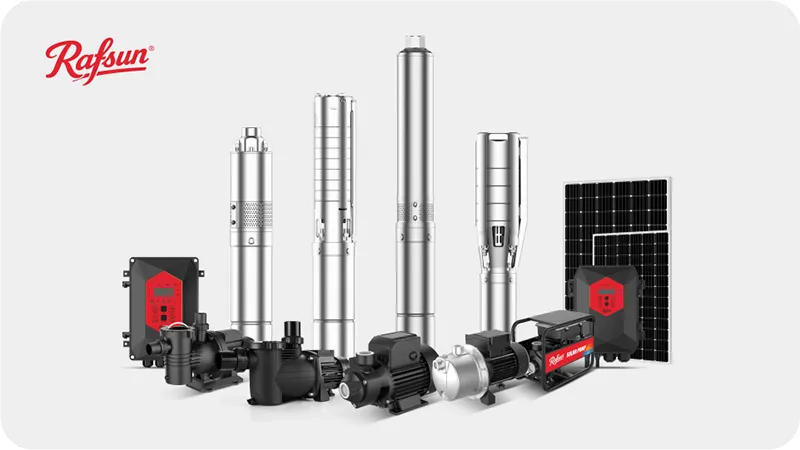
A professional solar pump portfolio includes several key technologies, each with distinct advantages.
This allows for precise system design based on water depth (head), required water volume (flow), and water quality.
| Pump Type | Flow & Head Characteristics | Key Advantage & Best Use Case | Ideal Markets |
|---|---|---|---|
| Solar Screw Pump | Low Flow, High Head | Handles Sand: Uses a stainless steel screw to push water. Highly resistant to sand and sediment. Perfect for deep wells, domestic water, and livestock in areas with poor water quality. | Africa, Latin America |
| Solar Plastic Impeller Pump | High Flow, Medium Head | Wear-Resistant & Economical: A multi-stage centrifugal pump. Excellent for moving large volumes of water for farm irrigation and pasture supply in relatively clean wells. | Africa, The Americas |
| Solar Stainless Steel Impeller Pump | High Flow, Medium-to-High Head | Corrosion-Resistant: Built with SS304 stainless steel. Designed for acidic, alkaline, or otherwise corrosive water. Ideal for premium homes and specific agricultural regions. | Australia, parts of The Americas |
The Strategic Advantage for Distributors
By understanding and offering this complete portfolio, you can move beyond a simple price-based conversation with your customers.
You can engage them as a consultant, helping them select the perfect pump for their needs.
- For the homeowner with a deep, sandy well: You offer the screw pump, guaranteeing a reliable water source where other pumps would fail.
- For the farmer needing to irrigate 50 acres: You provide the high-flow plastic impeller pump, an economical workhorse.
- For the high-end ranch in a region with aggressive water: You supply the premium stainless steel impeller pump, ensuring longevity and protecting their investment.
This approach transforms your business.
You are no longer just competing on price for a single item.
You are providing targeted, value-added solutions that build customer loyalty and establish your brand as a leader in efficiency, durability, and a deep understanding of the market's real-world needs.
Conclusion
Solar's perceived unpopularity stems from outdated myths.
Modern solar technology, especially in water pumping, is cost-effective, incredibly reliable, and highly versatile, making it the superior choice for countless applications.
Frequently Asked Questions
Why do some people not want solar panels?
Concerns often revolve around initial cost, aesthetics, and perceived unreliability.
However, modern solutions have made solar more affordable, versatile, and dependable than ever before.
Is solar really worth it in 2024?
Yes, dramatically lower costs and higher efficiency make the return on investment faster than ever.
For applications like water pumping, it's often the cheapest long-term solution.
What is the biggest problem with solar energy?
The biggest historical problem was intermittency.
This is now effectively solved by hybrid AC/DC controllers and simple "energy storage" solutions like pumping water into a tank.
Do solar panels require a lot of maintenance?
No, maintenance is very low.
It typically involves rinsing the panels with water a few times a year to remove dust, a task that rain often handles naturally.
How long do solar water pumps last?
A well-maintained solar water pump system can last for over 20 years.
The solar panels are often warrantied for 25 years, and brushless motors are designed for a long, maintenance-free life.
Can solar pumps work for very deep wells?
Yes, certain types of solar pumps, like screw pumps, are specifically designed for high-head applications.
They can efficiently lift water from wells that are hundreds of feet deep.