Worried that going solar means being left in the dark when the sun goes down?
This fear holds many back, tying them to the grid and preventing them from achieving true energy independence.
Yes, solar power is completely reliable at night when designed with the right technology. Through energy storage systems like batteries or intelligent AC/DC hybrid controllers, a solar setup can provide continuous, uninterrupted power 24 hours a day, regardless of sunlight.
The question of nighttime reliability is the most common and understandable concern for anyone considering solar energy.
After all, solar panels generate electricity from sunlight.
So, what happens when there is no sun?
The answer lies not in the panels themselves, but in the intelligence and design of the complete system.
To truly grasp how 24/7 reliability is achieved, we can look at some of the most demanding applications in the world: solar water pumping in remote, off-grid regions.
In these areas, a loss of power is not an inconvenience; it can be a critical failure for agriculture or a community's water supply.
The technologies perfected to guarantee continuous water flow from a solar pump are the very same principles that ensure your lights stay on all night.
Let's explore how these proven solutions make solar power a dependable round-the-clock energy source.
The Foundation of Nighttime Power: Energy Storage
Think solar panels are useless after sunset, leaving you without options?
This misconception can make you feel that a solar investment only works half the time, leaving you dependent on the grid and its escalating costs during peak evening hours.
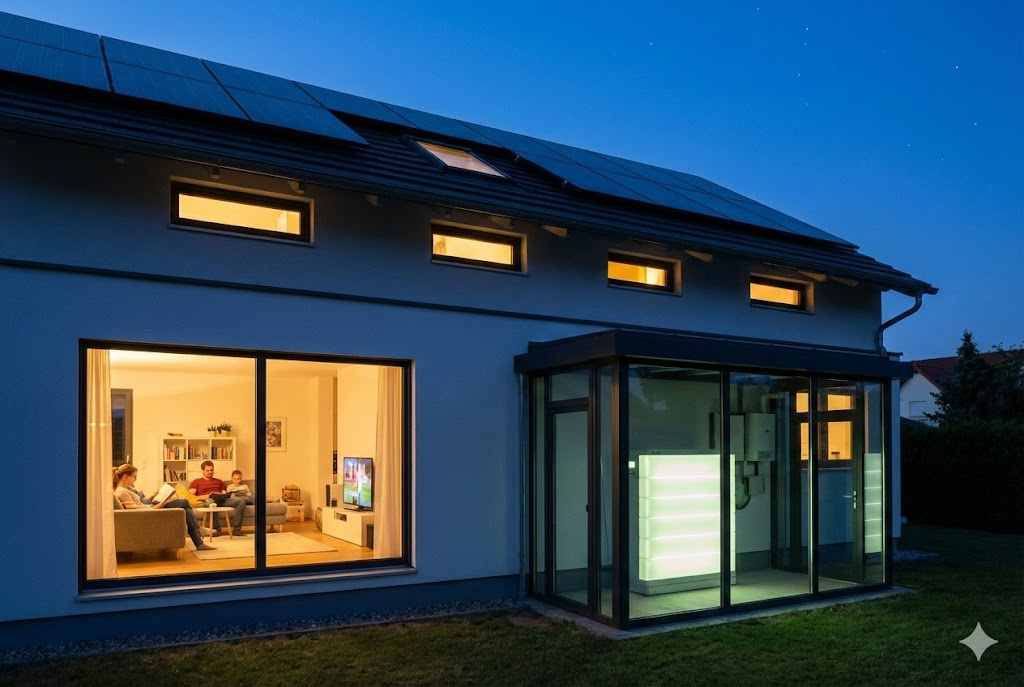
The core of nighttime solar reliability is energy storage. A properly sized battery bank acts as your personal energy reservoir, storing excess electricity generated during the day and releasing it on-demand to power your home all night long.
The most straightforward way to have power at night is to save it from the daytime.
Think of a solar battery system like a dam.
During the day, when your solar panels are producing more electricity than you are using, the excess energy flows into the battery bank, "filling the reservoir."
As the sun sets and your panels stop producing, your home's electrical system automatically begins to draw from the stored energy in the batteries.
This transition is seamless and silent.
You won't notice a flicker or a change.
You just continue using your appliances as usual, powered by the sunlight you captured hours earlier.
The key to a successful battery system lies in its design and sizing.
Sizing Your Energy Reservoir
A battery bank must be large enough to meet your entire nighttime energy demand.
This is calculated in kilowatt-hours (kWh).
An energy professional will help you audit your typical evening and overnight consumption to determine the right size.
Sizing it correctly ensures you have enough power to last until the sun rises again, even with some buffer for unexpected usage.
Choosing the Right Battery Technology
Not all batteries are created equal.
The two most common types for solar applications have distinct advantages.
| Battery Type | Key Advantage | Lifespan (Cycles) | Best For |
|---|---|---|---|
| Sealed Lead-Acid (AGM/Gel) | Lower upfront cost, proven technology | 500 - 1,500 | Budget-conscious off-grid projects, backup power. |
| Lithium-Ion (LiFePO4) | Longer lifespan, deeper discharge, higher efficiency, compact | 3,000 - 7,000+ | Daily cycling, whole-home power, long-term value. |
While lead-acid batteries have a lower initial price point, lithium-ion batteries offer a superior long-term investment.
They can be discharged more deeply (using more of their stored energy) and have a lifespan that is often 3-5 times longer, resulting in a lower overall cost of ownership.
For any application where reliability is non-negotiable, from mission-critical water pumps to powering your home, a well-designed battery storage system is the foundational answer to the nighttime question.
The Smart Alternative: AC/DC Hybrid Systems
Are you concerned about the high cost and eventual replacement of a large battery bank?
This financial barrier can make a fully off-grid solar system seem out of reach, forcing you to choose between energy freedom and your budget.
An AC/DC hybrid system provides 24/7 reliability without total reliance on batteries. It intelligently uses solar power first, then automatically blends in or switches to a grid or generator source, guaranteeing uninterrupted power in the most cost-effective way.
For many users, especially those who already have a connection to the electrical grid, a hybrid system is the most practical and intelligent path to solar reliability.
This technology offers the best of all worlds: it maximizes your use of free solar energy while using the grid as a built-in, infinitely large "battery" that requires no maintenance or replacement.
This is the exact same strategy used to ensure critical infrastructure, like solar water pumps in agriculture, can run on cloudy days or through the night when watering schedules demand it.
The system is managed by an advanced AC/DC hybrid controller, which acts as the brain of your energy system.
It operates on a simple, automatic, and highly efficient set of priorities.
How a Hybrid Controller Thinks
The controller's job is to make real-time decisions to power your loads without interruption and at the lowest possible cost.
- Solar First Priority: Whenever the sun is shining, the controller channels 100% of the required power directly from the solar panels. The grid is not used.
- Hybrid Blending Function: If clouds reduce solar output, the controller doesn't just give up and switch to the grid. It maximizes the use of every available watt of solar and then pulls only the small, supplemental amount of power needed from the AC source to meet the load.
- Automatic AC Takeover: At night, or during extended periods of bad weather with no solar input, the controller automatically and seamlessly switches to the AC source (grid or generator) to provide full power.
This functionality means you are always using the cheapest energy available—solar—without ever having to worry about an outage.
Hybrid vs. Battery-Only
| Feature | Battery-Only System | AC/DC Hybrid System |
|---|---|---|
| Nighttime Source | Stored DC power from batteries | AC power from grid/generator |
| Upfront Cost | High (due to battery bank) | Lower (controller is cheaper than batteries) |
| Maintenance | Battery monitoring, eventual replacement | Virtually none |
| Limitations | Finite energy storage capacity | Unlimited power (as long as grid is on) |
A hybrid system offers a pragmatic and powerful solution.
It makes solar reliable at night by leveraging existing infrastructure, removing the financial and maintenance burden of a large battery bank while still dramatically cutting your electricity bills.
Why System Efficiency Is Crucial for Nighttime Use
Does it seem like your stored energy runs out faster than it should?
This frustration comes from energy being wasted before it even gets to your appliances, forcing you to buy a larger, more expensive battery bank to compensate.
Overall system efficiency is the key to maximizing your nighttime power. High-efficiency components, from motors to inverters, waste less energy, allowing your stored battery power to last longer and accomplish more work through the night.
Having a battery is one thing; making that stored energy last all night is another.
Every time energy is converted or used, a small amount is lost as waste heat.
In an inefficient system, these small losses add up, draining your precious stored power much faster than necessary.
This is why, in professional-grade systems, efficiency is an obsession.
Consider the world of solar water pumping.
A pump is driven by a motor.
If that motor is inefficient, a significant portion of the solar energy is wasted just turning the motor itself, leaving less power to actually move water.
This forces the user to buy more solar panels and larger batteries.
The solution was to revolutionize the motor.
The High-Efficiency BLDC Motor Analogy
The gold standard in modern solar applications is the Brushless DC (BLDC) permanent magnet motor.
These motors are an engineering marvel of efficiency.
- Exceptional Efficiency: A BLDC motor can achieve an operational efficiency of over 90%. This means more than 90 cents of every dollar's worth of energy goes directly to doing the work (pumping water). Older motor types might be only 60-70% efficient.
- Real-World Impact: This 20-30% efficiency gain is enormous. It means the system needs up to 30% fewer solar panels and a smaller battery bank to perform the same task. The motor's design, often using powerful neodymium magnets, also makes it more compact (up to 47% smaller) and lighter, reducing shipping and installation costs.
Applying the Efficiency Principle to Your Home
This same logic applies directly to your home solar system.
Your battery is the central power source at night, and two components are critical for preserving its energy:
- The Inverter: The inverter converts DC power from your batteries to AC power for your appliances. A cheap, low-quality inverter might be 80% efficient, wasting 20% of your battery's energy as heat. A high-quality pure sine wave inverter can be over 95% efficient, drastically extending your nighttime runtime.
- Your Appliances: Older appliances, especially those with inefficient motors (refrigerators, freezers, air conditioners), are energy vampires. Using modern, energy-efficient appliances means your battery has to supply less power to begin with.
By investing in efficiency at every stage, you ensure that the energy you worked so hard to store during the day is not wasted overnight.
Matching the Solution to the Need: A Portfolio Approach
Are you feeling overwhelmed by a "one-size-fits-all" approach to solar?
This confusion can lead to installing a system that is either too expensive for your needs or inadequate for your reliability requirements, resulting in buyer's remorse.
True solar reliability isn't about a single product; it's about tailoring a solution from a flexible portfolio. Whether you need an off-grid battery system, a grid-tied hybrid, or a premium setup, the right choice depends entirely on your specific goals and environment.
There is no single "best" way to make solar reliable at night.
The optimal solution is different for a remote off-grid cabin than it is for a suburban home with a stable grid connection.
A sophisticated brand understands this and doesn't offer just one product.
Instead, it offers a portfolio of technologies that can be combined to meet diverse customer needs perfectly.
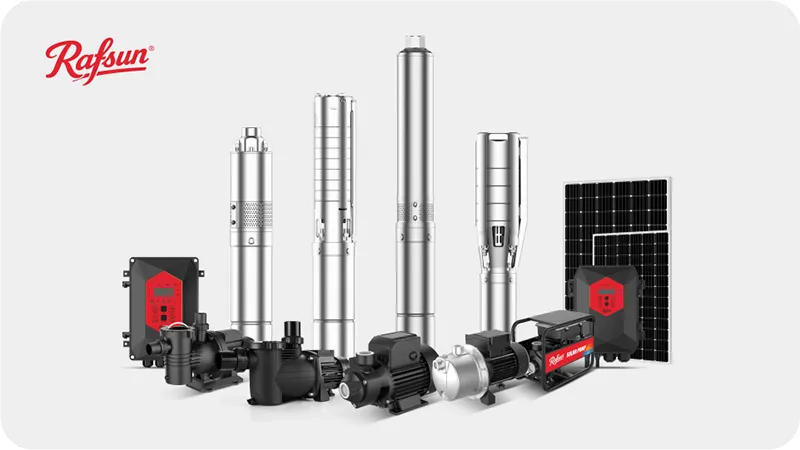
We can understand this by looking at how a professional portfolio of solar water pumps is structured.
Each pump type is engineered for a different scenario, providing a perfect analogy for different home solar needs.
Analogous Solutions for Nighttime Power
Let's use the pump portfolio as a guide to understand different reliability strategies.
-
Scenario 1: The Off-Grid Homesteader
- Pump Analogy: The Solar Screw Pump. This pump is designed for high reliability in deep wells where there is no backup (high head, low flow). It's a lifeline.
- Solar Solution: This parallels a full off-grid battery system. Reliability is the absolute top priority. The system must be robustly sized with a high-quality battery bank (likely Lithium-Ion) to guarantee power through the longest winter nights. Cost is secondary to survival.
-
Scenario 2: The Budget-Conscious Grid-Tied Homeowner
- Pump Analogy: The Solar Plastic Impeller Pump. This pump offers excellent performance and high output at an economical price point, ideal for farm irrigation where occasional downtime is not catastrophic (high flow, wear-resistant).
- Solar Solution: This user wants to slash electricity bills but has the grid as a backup. The AC/DC Hybrid System is the perfect fit. It provides the economic benefits of solar without the high upfront cost of a large battery bank. It's practical, cost-effective, and reliable.
-
Scenario 3: The Premium Home or Business Owner
- Pump Analogy: The Solar Stainless Steel Impeller Pump. This pump is built with premium materials for the ultimate in corrosion resistance and longevity, targeting high-end applications in harsh environments. Performance and durability are paramount.
- Solar Solution: This user wants the best of everything: maximum savings, seamless backup, and long-term performance. The solution is a combination of a large lithium-ion battery bank and an AC/DC hybrid controller. This provides complete energy independence with a built-in, no-compromise backup plan.
By understanding that different needs require different tools, you can choose the right combination of technology to make solar a perfectly reliable 24/7 power source for your specific situation.
Conclusion
Solar power is undeniably reliable at night.
With smart technologies like battery storage and hybrid controllers, you can have uninterrupted, cost-effective, and clean energy 24 hours a day.
Frequently Asked Questions
Can solar panels work with moonlight?
No, solar panels cannot generate any significant power from moonlight.
They require direct or indirect sunlight to produce electricity for use or storage.
How long do solar batteries last at night?
A properly sized battery bank should last all night until the sun rises.
This typically means designing for 8-12 hours of your average nighttime electricity usage.
Is it cheaper to use solar batteries or the grid at night?
Using stored solar energy from batteries is cheaper than using the grid.
Once the system is paid for, the "fuel"—sunlight—is free.
What happens to a solar system during a power outage at night?
A system with battery backup will continue to power your home seamlessly.
A grid-tied system without batteries will shut down for safety reasons.
Do solar panels need to be cleaned to work properly?
Yes, dirty panels can lose 5-15% of their efficiency.
Regular cleaning ensures you are generating and storing the maximum amount of power possible.
How many batteries are needed to power a house at night?
This depends on your energy use, but a typical home might need 10-20 kWh of storage.
An energy audit is required to calculate the exact size.