You need to lift water from a deep well.
But you are unsure if a solar pump has enough power.
Choosing the wrong pump means no water and wasted money.
The height a solar pump can push water, known as "head," varies significantly by type. A solar screw pump can achieve a high head of over 150 meters, while centrifugal impeller pumps are designed for medium heads, typically up to 80-100 meters, but with higher flow rates.
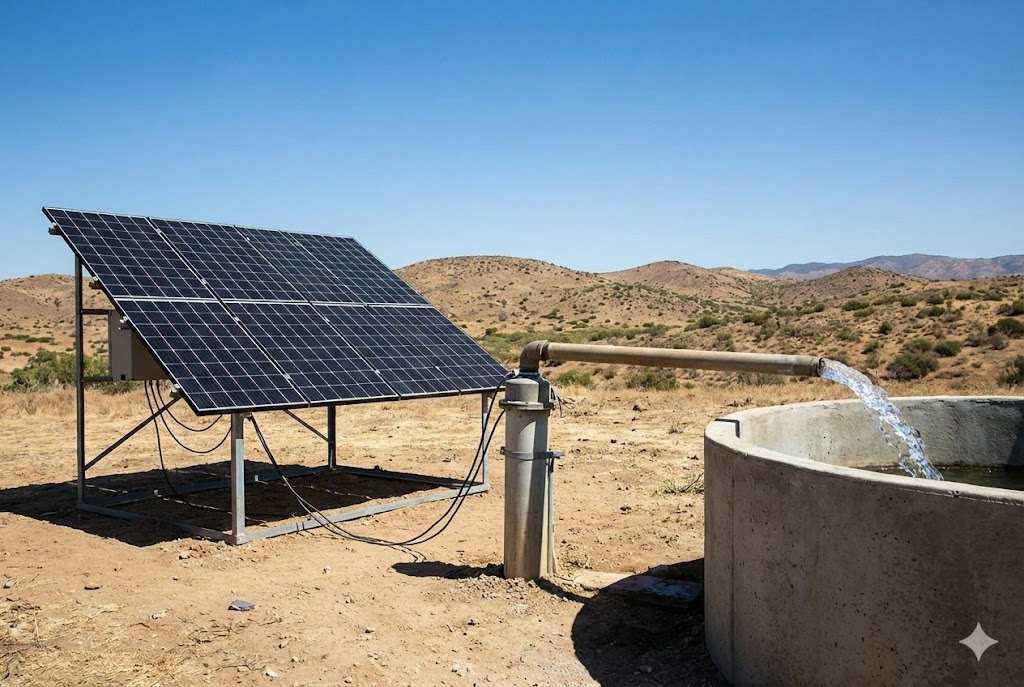
The lifting capability of a solar pump is not a single, fixed number.
It is a crucial specification determined by the pump's internal design and the power of its motor.
Different technologies are engineered for completely different tasks.
One pump might be a master of depth, effortlessly lifting a small stream of water from hundreds of meters below ground.
Another might excel at moving a large volume of water to a moderate height for irrigation.
Understanding this fundamental trade-off between height (head) and volume (flow) is the first step in selecting a pump that will perform effectively and reliably.
Let's explore the specific technologies that determine exactly how high a solar pump can push water.
The Depth Champion: Pushing Water with a Solar Screw Pump
You have an extremely deep well.
Standard pumps just do not have the power to lift water from that depth.
This leaves your valuable water source completely inaccessible.
A solar screw pump is the specialized solution for extreme depth. It is engineered to generate very high pressure, allowing it to push a steady stream of water from depths exceeding 150 meters (nearly 500 feet), making it ideal for the deepest wells.
The incredible lifting power of a solar screw pump comes from its unique design.
It is not a centrifugal pump.
Instead, it operates on a principle called positive displacement.
Inside the pump, a helical stainless steel rotor (the screw) spins within a flexible rubber stator.
This action traps pockets of water and forces them upwards through the pump.
Unlike an impeller which throws water, the screw mechanism acts like a hydraulic press, building immense pressure with each rotation.
This method is incredibly effective at working against the massive weight of a tall column of water, which is why it can achieve such a high head.
The trade-off for this exceptional lifting power is a lower flow rate.
It is designed to deliver a consistent, reliable stream of water from depths where other pumps would fail.
How Positive Displacement Creates High Head
The physics behind the screw pump directly translates to its performance in deep wells.
Every component is designed to maximize pressure.
- Pressure Building: The tight seal between the steel rotor and rubber stator prevents water from slipping backward. This allows pressure to build continuously, overcoming the hydrostatic pressure of the deep water column. Centrifugal pumps can experience "slippage" at very high heads, causing their efficiency to plummet.
- Consistent Performance: A screw pump's output is less affected by changes in head compared to a centrifugal pump. It will deliver a relatively stable flow rate whether it is pumping from 50 meters or 150 meters.
- Motor Synergy: This high-pressure system requires a motor with high torque. The BLDC motors used are perfectly suited for this, delivering the necessary twisting force efficiently, even at low speeds.
Matching the Pump to the Well Depth
For an importer or distributor, understanding the head chart of a screw pump is critical.
It allows you to provide customers in regions like Africa or Latin America with a reliable solution for their challenging deep-well applications.
| Pump Technology | Typical Max Head | Ideal Application | Key Advantage |
|---|---|---|---|
| Solar Screw Pump | 150m+ (500ft+) | Domestic water from very deep wells, livestock watering. | Extreme Lifting Height |
| Multi-Stage Impeller Pump | 80m - 100m (260-330ft) | Farm irrigation, community water supply. | High Water Volume |
| Single-Stage Centrifugal | < 30m (100ft) | Surface water transfer, pond circulation. | Very High Flow, Low Lift |
In summary, when the primary challenge is extreme depth, the solar screw pump is the engineered answer.
It answers the question "How high can it push water?" with "Higher than any other common solar pump type."
The Volume Mover: Pushing Water with a Plastic Impeller Pump
You need to irrigate a farm or water a large pasture.
Extreme depth is not the issue, but you need a lot of water.
A pump focused only on height will not deliver the volume you need.
A solar plastic impeller pump is designed for high flow at medium head. This multi-stage centrifugal pump can efficiently push large volumes of water to heights of 80-100 meters (260-330 feet), making it the workhorse for agricultural and residential use.
This pump works on a completely different principle than a screw pump.
It is a multi-stage centrifugal pump.
Inside, a stack of durable, wear-resistant plastic impellers spin at high speed.
Each impeller grabs water and accelerates it outward using centrifugal force.
The water is then funneled into the next impeller in the stack, which adds even more pressure.
Think of it like a series of throwers, each one throwing the water a bit higher than the last.
This design is brilliant at moving large quantities of water.
The final height, or head, is determined by the number and design of these impeller stages.
While it cannot reach the extreme depths of a screw pump, its ability to deliver a high flow rate makes it the perfect choice for most farming, livestock, and community water supply projects where the well depth is moderate.
The Balance Between Head and Flow
The performance of an impeller pump is a constant trade-off between how high it can push water (head) and how much water it can move (flow).
Understanding a pump curve is essential.
- Pump Curve Explained: A pump curve graph shows this relationship. At its lowest head (pumping to a low height), the pump will deliver its maximum flow rate. As the required head increases (pumping from deeper or uphill), the flow rate will decrease.
- Best Efficiency Point (BEP): Every impeller pump has a "sweet spot" on this curve where it operates most efficiently. Choosing a pump whose BEP matches your well's depth and your flow needs is crucial for performance and longevity. A system designed to operate at 80% or higher of its BEP will use less power and last longer.
- Multi-Stage Design: Adding more impellers (stages) to the pump increases its maximum potential head, but each design has its practical limits before efficiency is lost. This is why these pumps are ideal for the "medium head" range.
Application Determines Pumping Height
The a solar plastic impeller pump is incredibly versatile, but its lifting height must be matched to the task.
| Application | Required Head | Required Flow | Best Pump Choice |
|---|---|---|---|
| Small Home Garden | Low (20-40m) | Medium | Excellent fit, high efficiency. |
| Farm Drip Irrigation | Medium (50-80m) | High | The ideal application for this pump. |
| Community Water Tank | Medium (60-90m) | High | A very common and effective use case. |
| Deep Well Livestock | High (>120m) | Low | Not suitable; a screw pump is required. |
Ultimately, a solar plastic impeller pump provides a powerful and economical solution for moving large amounts of water to moderate heights.
It is the answer when the question is not just "how high" but "how much."
The Premium Performer: Pushing Water with a Stainless Steel Pump
You need a pump for a deep well with corrosive water.
You need reliability and high performance without worrying about material failure.
A standard pump might not last, and failure is not an option.
A solar stainless steel impeller pump combines durability with performance, pushing high volumes of water to medium-to-high heads of up to 100 meters (330 feet) or more. Its robust SS304 construction ensures it can handle this pressure continuously, even in harsh water.
This pump shares its core technology with the plastic impeller model.
It is a multi-stage centrifugal pump designed for high flow rates.
However, its key components—the impellers and the pump housing—are constructed from SS304 stainless steel.
This material upgrade provides two significant advantages related to its ability to push water.
First, stainless steel has superior structural integrity.
It can withstand the high internal pressures generated when pumping to significant depths without the risk of stress fractures or warping over time.
Second, it is highly resistant to corrosion from acidic or alkaline water.
This means the precisely engineered shape of the impellers will not degrade, ensuring the pump maintains its original performance curve and can deliver its full rated head for its entire service life.
This makes it the premium choice for high-end homes, critical ranching operations, and any application where long-term reliability justifies a higher initial investment.
How Material Science Impacts Pumping Height
The material of a pump is not just for longevity; it is integral to its performance under pressure.
A pump pushing water 100 meters vertically is enduring immense and constant force.
- Sustained Pressure Handling: The strength of stainless steel ensures the pump can operate at the higher end of its pressure curve day after day without material fatigue. This is especially critical in commercial or community water systems with constant demand.
- Maintaining Efficiency: In corrosive water, plastic impellers can become pitted or brittle. This changes their shape and dramatically reduces their ability to build pressure, effectively lowering the pump's maximum head. Stainless steel impellers do not suffer from this degradation, so the pump's "day one" performance is maintained for years. A 10% loss in impeller efficiency could result in a 15-20% reduction in achievable head.
- Reliability in Deep Installations: Pulling a pump from a 90-meter well is an expensive and difficult task. The reliability of stainless steel provides peace of mind that the pump will continue to meet its head specification without needing premature service.
For applications in the 70-100 meter range, especially where water quality is a concern, the stainless steel model guarantees it can not only reach that height but sustain that performance long-term.
It is an investment in guaranteed pressure and flow.
The Power Behind the Push: The High-Efficiency BLDC Motor
You see pumps with impressive head ratings.
But you wonder where the actual power comes from.
The pump itself is just mechanics; the motor does all the work.
The ability of any solar pump to push water to great heights is directly determined by the power and efficiency of its BLDC motor. This high-torque, brushless motor, with over 90% efficiency, converts solar energy into the powerful rotational force needed to overcome extreme water pressure.
The "wet end" of the pump—whether it is a screw or a set of impellers—is only half of the equation.
The Brushless DC (BLDC) permanent magnet motor is the heart of the system.
Lifting a column of water 100 meters high requires a tremendous amount of sustained torque.
The weight of that water creates immense back pressure that the motor must constantly fight against.
This is where the design of the BLDC motor is so critical.
It uses powerful 40SH neodymium iron boron permanent magnets and a sophisticated electronic controller to generate maximum torque from every watt of solar power.
Traditional motors waste a significant amount of energy as heat.
With an efficiency exceeding 90%, a BLDC motor turns more solar power into the raw mechanical work of lifting water.
A pump's maximum head rating is not just a feature of its plumbing; it is a direct reflection of the power its motor can deliver.
Translating Motor Efficiency into Water Height
The connection between the motor's technical specifications and the pump's on-site performance is direct and measurable.
More efficiency and more torque equal more pumping height.
- Torque vs. Head: Pumping against a high head requires high torque. The BLDC motor is specifically designed for high-torque applications. It can maintain its rotational force even as the load (water pressure) increases, which is essential for deep well pumps.
- Power Optimization: The motor is paired with an MPPT (Maximum Power Point Tracking) controller. This intelligent device constantly adjusts the electrical load to ensure the solar panels are operating at their peak efficiency, feeding maximum possible wattage to the motor. This means the pump can achieve a higher head even in less-than-perfect sunlight conditions.
- Compact Powerhouse: Advanced BLDC motors are significantly smaller and lighter (up to 47% smaller, 39% lighter) than older motor designs of the same power output. This allows for a more powerful motor to be fitted into a standard deep well pump, directly increasing its potential head without making it difficult to install.
Without a powerful, efficient, and reliable BLDC motor, even the best-designed pump mechanism would be unable to achieve the impressive head ratings required for modern deep well applications.
The motor is the engine that makes high-altitude water pumping possible.
Conclusion
A solar pump’s height is not fixed.
It depends on matching the right pump technology—screw for depth, impeller for volume—with a powerful, efficient motor to meet your specific needs.
Frequently Asked Questions
What is the maximum head of a solar water pump?
A specialized solar screw pump can achieve a maximum head of over 150 meters, while high-flow centrifugal pumps typically have a maximum head of around 100 meters.
How do I calculate the head for a solar pump?
Calculate total head by adding the vertical lift from the water level to the tank, plus any friction loss from pipes. This determines the pressure the pump must overcome.
Can a solar pump pump water uphill?
Yes, pumping uphill contributes to the total dynamic head. The pump must be powerful enough to overcome both the vertical lift from the well and the elevation gain to the destination.
What size solar pump do I need?
The required size depends on your total head (vertical lift + friction), your daily water volume needs, and the amount of solar irradiance available at your location.
Does a deep well require more solar panels?
Yes, a deeper well means a higher head, which requires more power from the motor. More power consumption requires a larger solar panel array to operate the pump effectively.
How much water can a solar pump pump in a day?
This depends on the pump's flow rate, the total head, and the number of peak sun hours per day. A high-flow pump can move thousands of gallons daily.