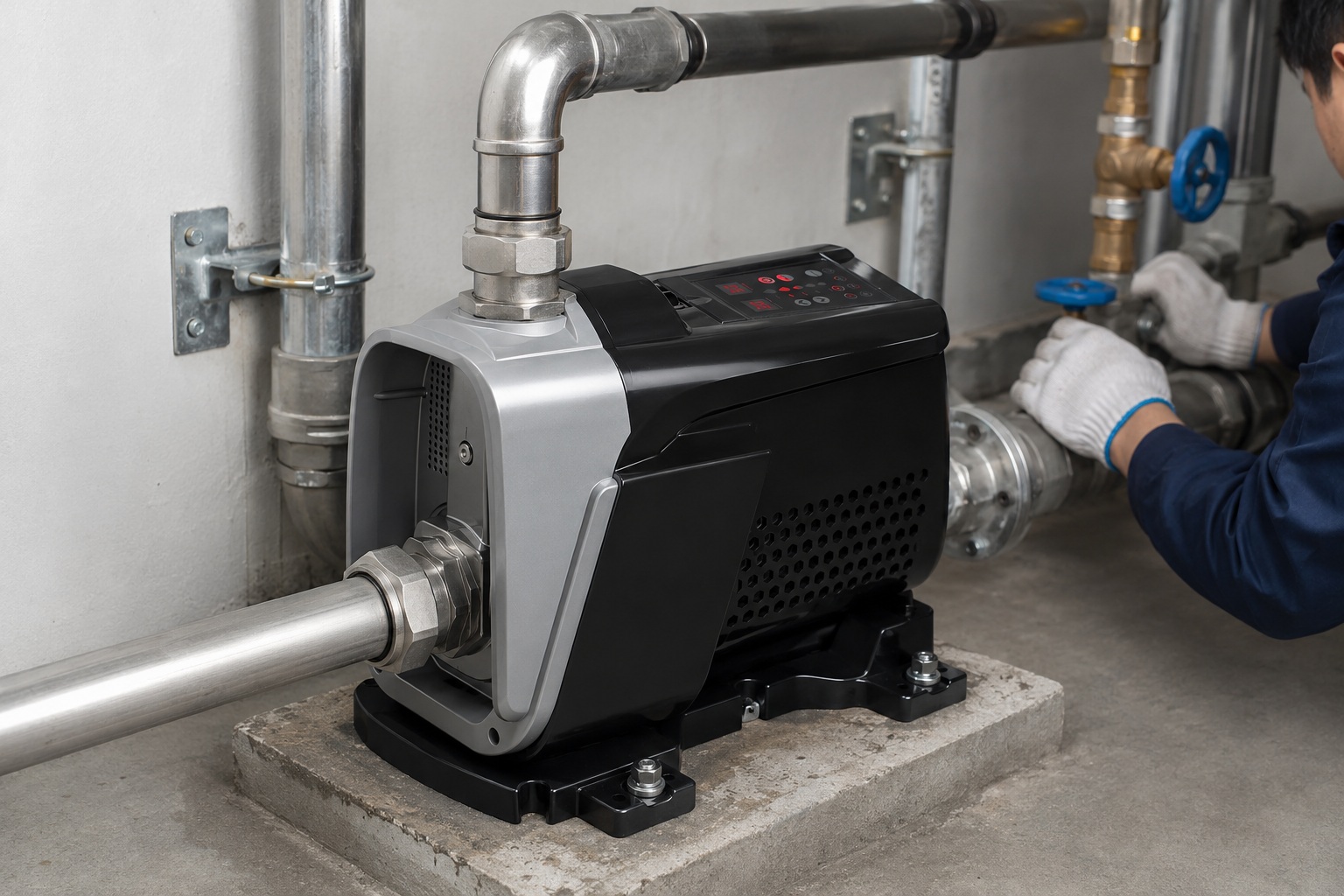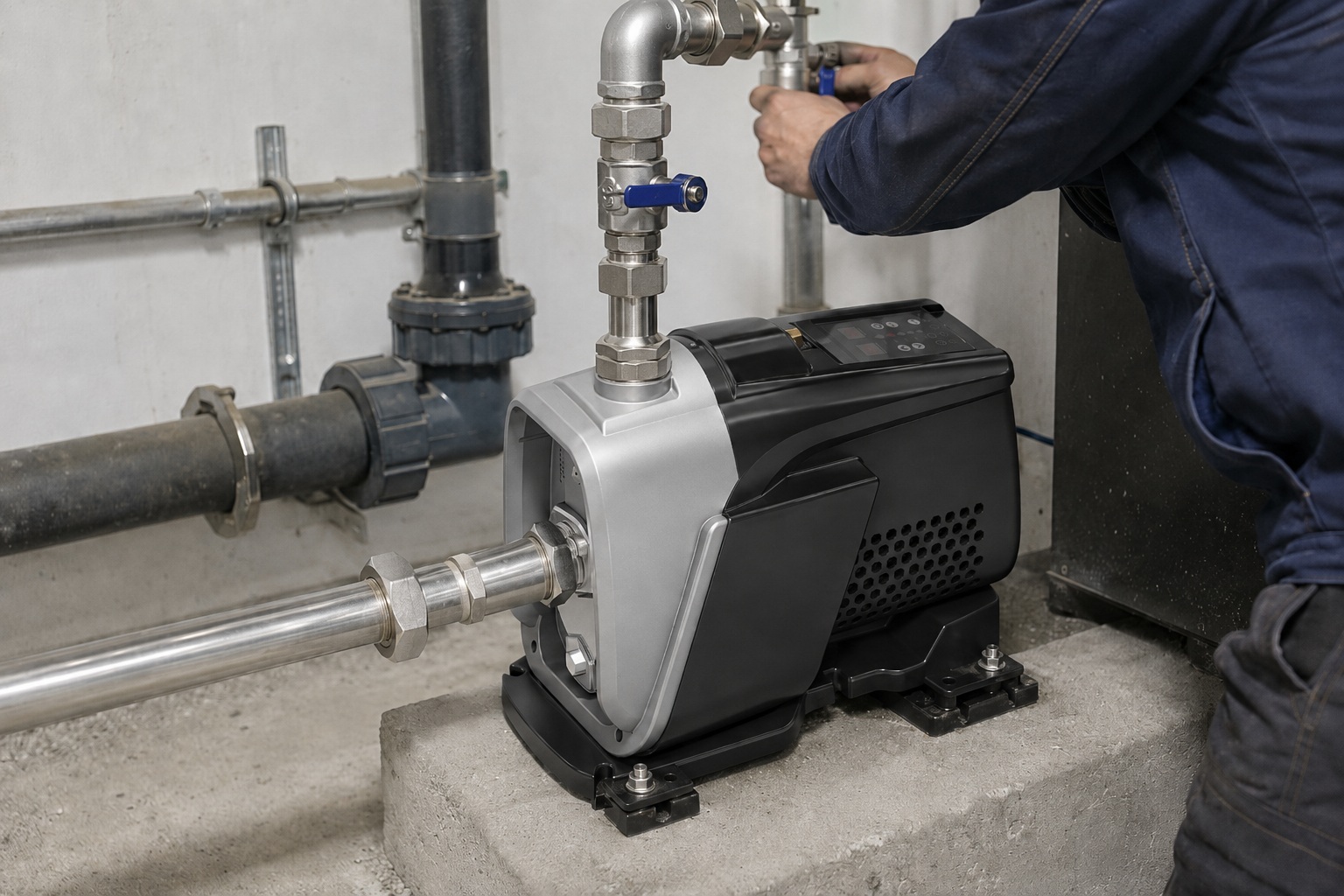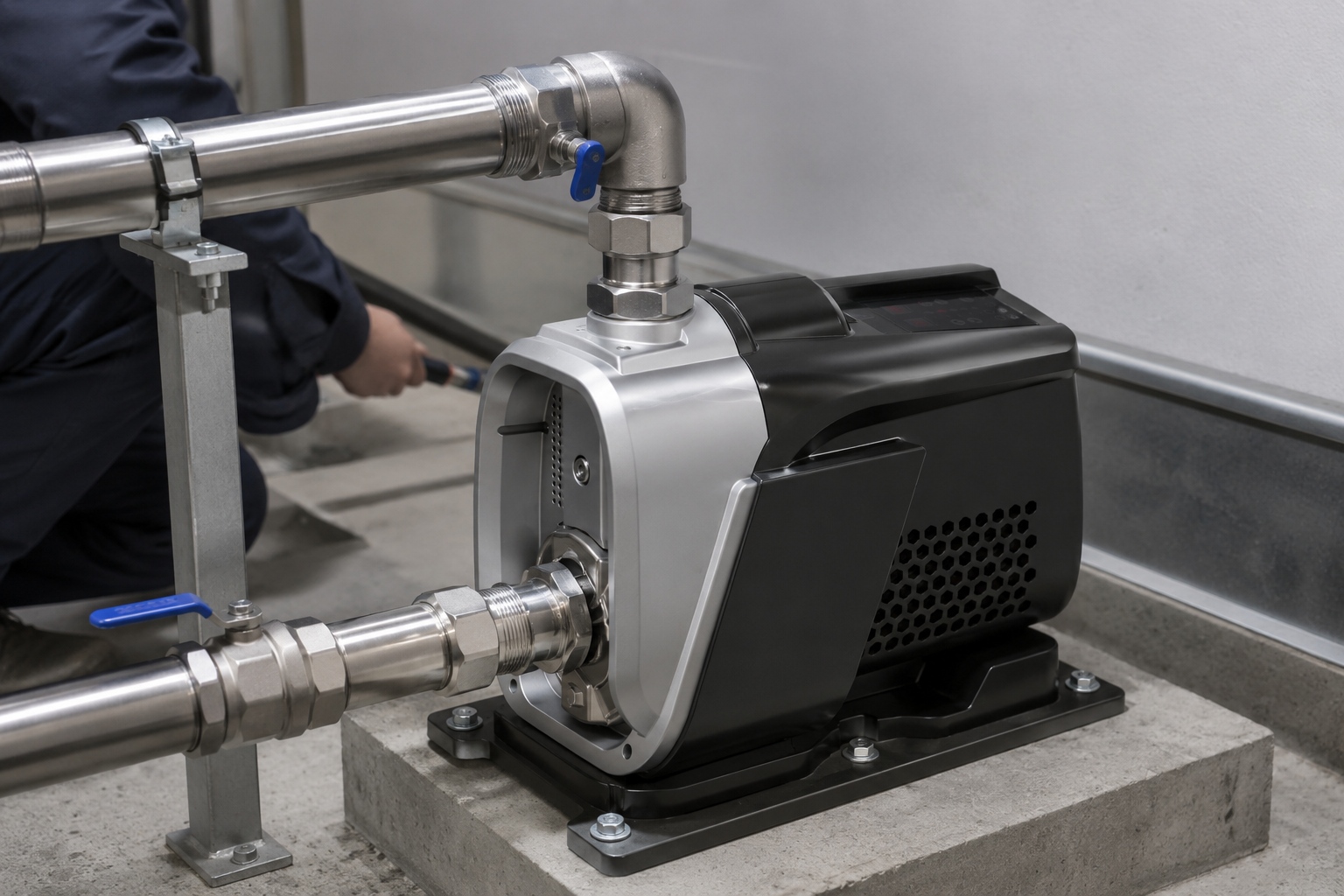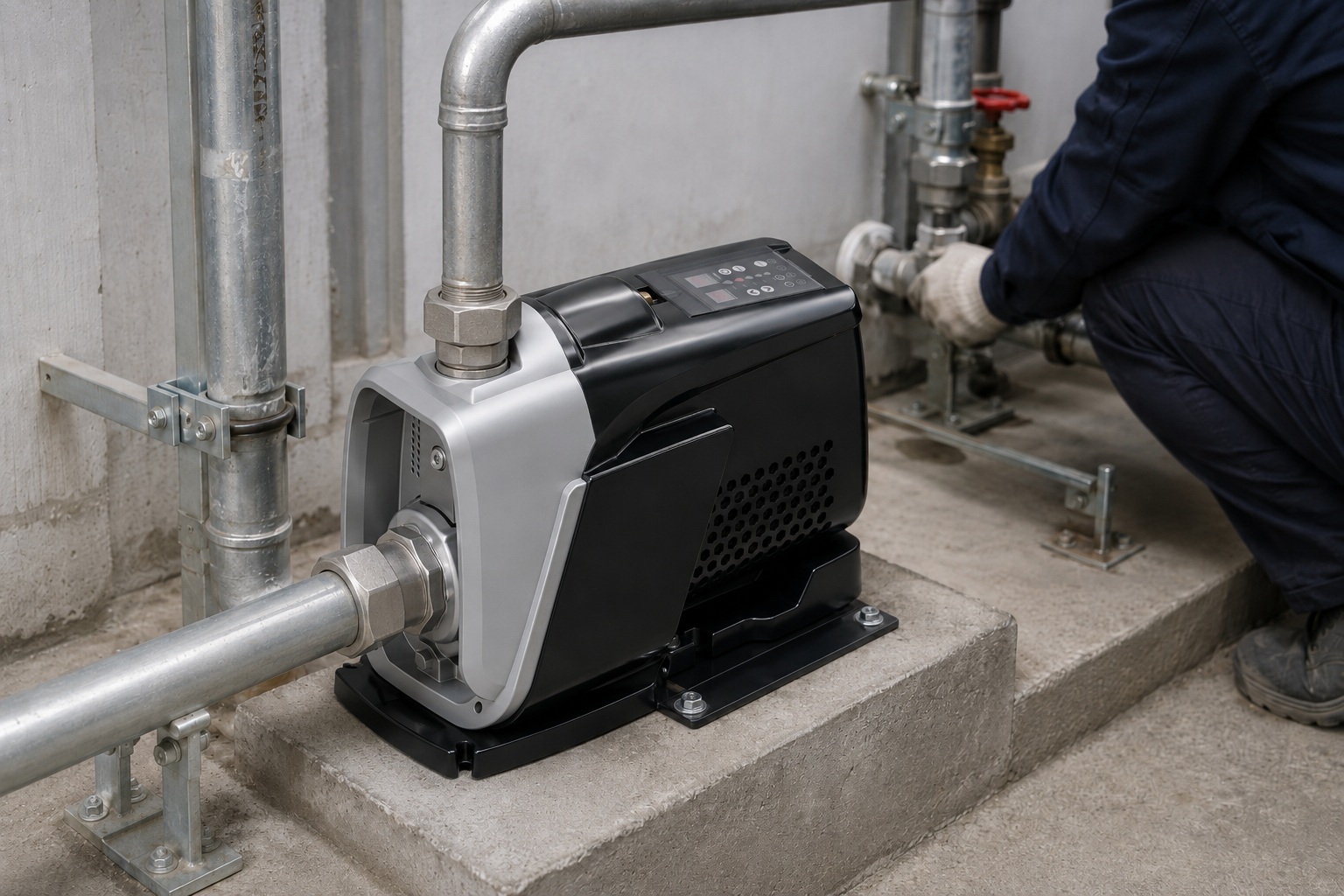
You have a 1HP pump.
You assume its power guarantees it will push water far enough.
But "far" is deceptive, and one wrong calculation means your project fails.
A 1HP pump's performance isn't about one number. A 1HP screw pump can push water over 150 meters (490 ft) high (high head, low flow), while a 1HP centrifugal pump might push it 50 meters (164 ft) high but with 5 times the volume (high flow, low head).
The question "how far" seems simple.
In the world of fluid dynamics, it is surprisingly complex.
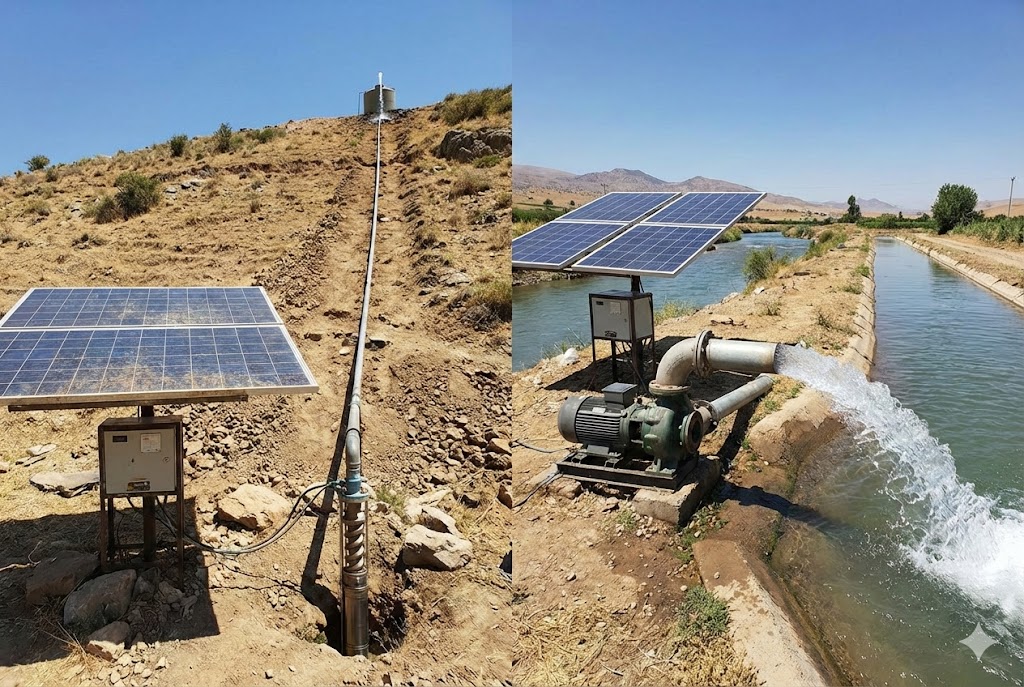
It can mean vertical distance (lifting water out of a deep well) or horizontal distance (moving water across a field).
These two tasks require completely different kinds of work from the pump.
A pump's horsepower rating is just its raw power input, like the engine size in a car.
It does not tell you if that car is a rock-crawling jeep designed for climbing or a race car built for flat-out speed.
To truly understand how far your 1HP pump can push water, we must first look beyond horsepower and examine the two fundamental jobs every pump is designed to do.
Understanding Head vs. Flow: The Two Jobs of a Pump
You focus only on a pump's horsepower.
This often leads to choosing the wrong pump for your specific job.
You end up with a weak trickle of water when you need a powerful flood.
A pump's performance is defined by its "head" and "flow rate." Head is the vertical height it can push water, measured in meters or feet. Flow rate is the volume of water it moves per minute. A 1HP motor's energy is divided between these two tasks.
Thinking of horsepower as a fixed budget of energy is helpful.
Every pump is designed to spend this budget in a specific way.
Some pumps are designed to be "climbers."
They spend most of their energy pushing water very high, but they deliver a smaller volume of water.
This is a high-head, low-flow pump.
Other pumps are "sprinters."
They spend their energy moving a large volume of water over a lower height.
This is a high-flow, low-head pump.
A 1HP motor provides the same amount of power to both, but the design of the pump's wet end—the impeller or screw—determines how that power is used.
For a distributor, explaining this fundamental trade-off to a customer like Andrew in Australia is the most critical first step.
It prevents costly mistakes and ensures the customer gets a system that perfectly matches their needs.
Deconstructing Total Dynamic Head (TDH)
The "head" is not just the simple vertical distance you can see.
It is a more comprehensive metric called Total Dynamic Head (TDH), which represents the total work the pump has to do to overcome gravity and friction.
TDH is made up of three components:
- Static Head: This is the vertical distance from the water source's surface to the highest point of delivery (e.g., the inlet of your water tank). It is the pure gravitational lift required.
- Friction Loss: As water moves through pipes, valves, and elbows, it creates friction, which the pump must overcome. Longer pipes, narrower pipe diameters, and more bends all increase friction loss, adding to the total head. For every 10 feet of horizontal pipe run, you can roughly add 1 foot of head as a rule of thumb, but this varies with pipe size and flow rate.
- Pressure Head: If you are pumping into a pressurized tank, the pump must also overcome the existing pressure inside that tank. Every 1 PSI of pressure is equivalent to 2.31 feet of additional head.
A 1HP pump's performance chart will show its maximum head, which is the point at which the pump can no longer push water higher, and the flow rate becomes zero.
The Critical Role of Flow Rate
Flow rate, measured in gallons per minute (GPM), liters per minute (LPM), or cubic meters per hour (m³/h), is the other half of the performance equation.
It tells you how much water the pump can deliver.
Your application determines your required flow rate.
| Application | Typical Flow Rate Requirement |
|---|---|
| Domestic Water Supply | 5 - 15 GPM (20 - 60 LPM) |
| Livestock Watering | 2 - 10 GPM (8 - 40 LPM) |
| Small-Scale Irrigation | 10 - 30 GPM (40 - 110 LPM) |
| Large Farm Irrigation | 50+ GPM (190+ LPM) |
The relationship between head and flow is always an inverse curve.
As the total head on the pump increases (e.g., pumping from a deeper well), the flow rate it can deliver will decrease.
A 1HP pump might deliver 50 GPM at 20 meters of head, but only 20 GPM at 60 meters of head.
Understanding your specific head and flow requirements is the only way to select the right 1HP pump.
Pump Type Dictates Performance: High Head vs. High Flow
You believe all 1HP pumps are created equal.
You install a high-flow pump for your very deep well.
The pump runs, but no water ever reaches the surface, wasting your investment.
The internal design of a pump determines how it uses its 1HP. A 1HP screw pump is built for high head, pushing low volumes to great heights. A 1HP centrifugal impeller pump is built for high flow, moving large volumes over shorter heights.
Now that we understand the trade-off between lifting high (head) and moving a lot (flow), we can look at how different pump designs are optimized for one or the other.
The horsepower is the engine, but the pump mechanism is the transmission and wheels.
It translates the motor's raw rotational power into the work of moving water.
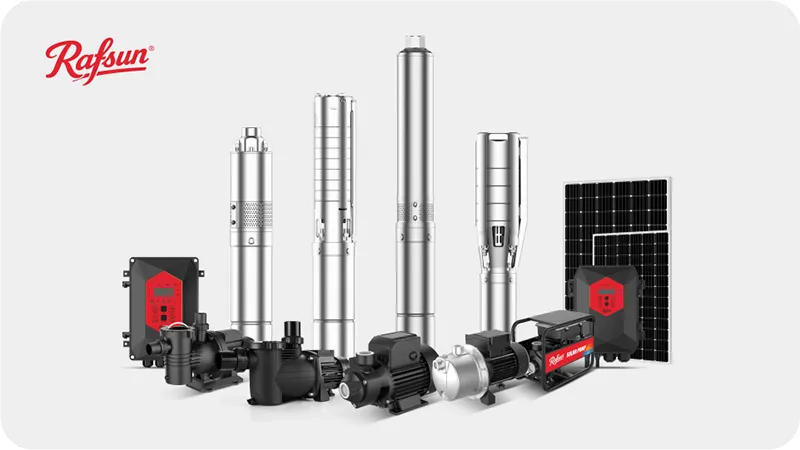
For solar deep well pumps, two designs dominate the market, each engineered for a completely different purpose.
Choosing the wrong one means the 1HP motor's power is applied inefficiently, resulting in poor performance or complete system failure.
This is a critical point for distributors to master.
When a customer in South Africa asks for a "1HP pump for a 120-meter well," the correct response is not a price, but a clarifying question: "Do you need a high-head screw pump or are you looking for a different type?"
This expertise builds trust and ensures project success.
The High-Head Specialist: Solar Screw Pumps
The solar screw pump, also known as a progressing cavity pump, is the ultimate "climber."
Its design is simple but incredibly effective for high-lift applications.
- Mechanism: It uses a single helical stainless steel rotor (the screw) that rotates inside a rubber stator. This action creates sealed cavities of water that are pushed progressively up the pump body.
- Performance: This design creates very high pressure. It spends nearly all of the motor's 1HP budget on generating head. As a result, a 1HP screw pump can easily achieve a head of over 150 meters (490 feet).
- Trade-off: The compromise is flow rate. Because the cavities are small, the volume of water moved with each rotation is low. This makes it unsuitable for applications that need large amounts of water quickly, like flood irrigation.
- Ideal Use Cases: Domestic water for homes with deep wells, livestock drinking water, and small-scale drip irrigation in arid regions like Africa and Latin America. It also has excellent resistance to sandy or silty water.
The High-Flow Workhorse: Solar Centrifugal Impeller Pumps
The solar centrifugal pump is the "sprinter."
It uses a multi-stage design with either plastic or stainless steel impellers.
- Mechanism: The motor spins a series of impellers at high speed. These impellers use centrifugal force to sling water outwards, increasing its velocity and pressure. Each impeller and diffuser set is called a "stage," and adding more stages increases the total head the pump can achieve.
- Performance: This design is highly efficient at moving large volumes of water. It spends the 1HP budget on accelerating a lot of water, resulting in high flow rates.
- Trade-off: While each stage adds pressure, a centrifugal pump is inherently less efficient at creating very high pressure compared to a screw pump. A 1HP centrifugal pump might have a maximum head of 50-70 meters (164-230 feet), significantly less than a screw pump of the same power.
- Ideal Use Cases: Farm irrigation, pasture water supply, and filling large storage tanks quickly. They are widely used in the Americas and Australia for agricultural purposes. Models with stainless steel impellers are essential for corrosive water conditions.
| Pump Type | 1HP Performance Profile | Best For |
|---|---|---|
| Solar Screw Pump | Head: >150m / Flow: Low | Deep wells, domestic supply, high lifts |
| Solar Impeller Pump | Head: <70m / Flow: High | Irrigation, tank filling, high volume needs |
The Hidden Factor: How Motor Efficiency Changes Everything
You've selected the right type of 1HP pump.
But you paired it with an inefficient, outdated motor.
Your pump underperforms, requires more solar panels, and fails prematurely, costing you money.
The actual water-moving power you get from a 1HP pump depends on motor efficiency. A high-efficiency (>90%) BLDC motor delivers more power to the shaft than a standard motor, pushing water farther and using up to 25% fewer solar panels.
We have established that horsepower is just an input rating.
We have also seen how the pump's design (screw vs. impeller) determines how that power is used.
Now we must consider the final, crucial factor: how much of that initial 1HP actually reaches the pump shaft to do the work?
This is the job of the motor.
The motor's function is to convert electrical energy from the solar panels into the mechanical, rotational energy that drives the pump.
No motor is 100% efficient; some energy is always lost as heat.
However, the difference in efficiency between a standard motor and a state-of-the-art motor is dramatic, and it directly impacts how far your 1HP pump can actually push water.
For a wholesale distributor, the motor technology is a key selling point.
It's the "secret ingredient" that elevates a good pump system to a great one.
It directly translates to lower system costs for the end-user and higher reliability, which are powerful competitive advantages.
The Power of Brushless DC (BLDC) Permanent Magnet Motors
The most advanced solar water pumps today do not use conventional DC or AC motors.
They use Brushless DC (BLDC) permanent magnet motors.
This technology offers a quantum leap in performance.
- Superior Efficiency: A standard induction motor might operate at 60-75% efficiency. A high-quality BLDC motor, by contrast, operates at an efficiency of over 90%. This means for every 1000 watts of power coming from the solar panels, a BLDC motor delivers over 900 watts of mechanical power to the pump. A standard motor might only deliver 750 watts. This 150-watt difference is substantial.
- Higher Power Density: BLDC motors with neodymium iron boron permanent magnet rotors are significantly smaller and lighter. A modern BLDC motor can be up to 47% smaller and 39% lighter than a traditional motor of the same power rating. This makes installation easier and cheaper.
- Greater Reliability: With no brushes to wear out, BLDC motors are virtually maintenance-free and have a much longer service life. They also produce less heat, reducing stress on all components.
What This Means for Your 1HP Pump
Let's put this into a real-world context.
Imagine two 1HP (approx. 750W) pump systems.
System A uses a standard motor with 75% efficiency. To get 750W of mechanical power to the pump shaft, the motor needs 750W / 0.75 = 1000W of electrical input from the solar panels.
System B uses a BLDC motor with 92% efficiency. To get the same 750W of mechanical power, the motor only needs 750W / 0.92 = 815W of electrical input.
That difference of 185W means System B can operate with fewer solar panels, saving significant upfront cost.
Furthermore, on a cloudy day when solar input is low, System B will start pumping earlier and keep pumping longer because it needs less power to get the job done.
It will push water farther and more reliably, all because of the efficiency of its motor.
Conclusion
A 1HP pump’s range depends on its design—screw for height, impeller for volume.
Ultimately, a high-efficiency BLDC motor maximizes this power, reducing costs and boosting reliability for any application.
Frequently Asked Questions
What is the difference between HP and CC in water pump?
HP (Horsepower) measures the motor's power output. CC (Cubic Centimeters) typically refers to the engine displacement in gas-powered pumps and is not used for electric or solar pumps.
How do I calculate the horsepower of a water pump?
To calculate required pump HP, you need the flow rate (GPM) and total dynamic head (feet). The formula is: HP = (Head x GPM) / (3960 x Efficiency).
Can a 1 HP pump lift water 100 feet?
Yes, easily. A 1HP screw pump can lift water over 490 feet (150m), while a 1HP centrifugal pump can typically lift water up to 230 feet (70m).
How high can a 1.5 HP submersible pump push water?
A 1.5HP submersible pump's lift depends on its type. A 1.5HP screw pump could push water over 200 meters, while a 1.5HP centrifugal pump would push a higher volume to around 90-100 meters.
How much pressure can a 1HP pump generate?
Pressure is directly related to head. A 1HP screw pump creating 150 meters (490 ft) of head generates about 213 PSI. A centrifugal pump creating 70 meters (230 ft) of head generates about 99 PSI.
What size pipe should I use for a 1 HP submersible pump?
Pipe size depends on flow rate and distance to minimize friction. For a typical 1HP pump, a pipe diameter of 1.25 to 2 inches is common for the main delivery line.