Your pump stops working.
Water supply is cut off, costing you time and money.
You fear a major mechanical breakdown, expecting an expensive replacement or complicated repair.
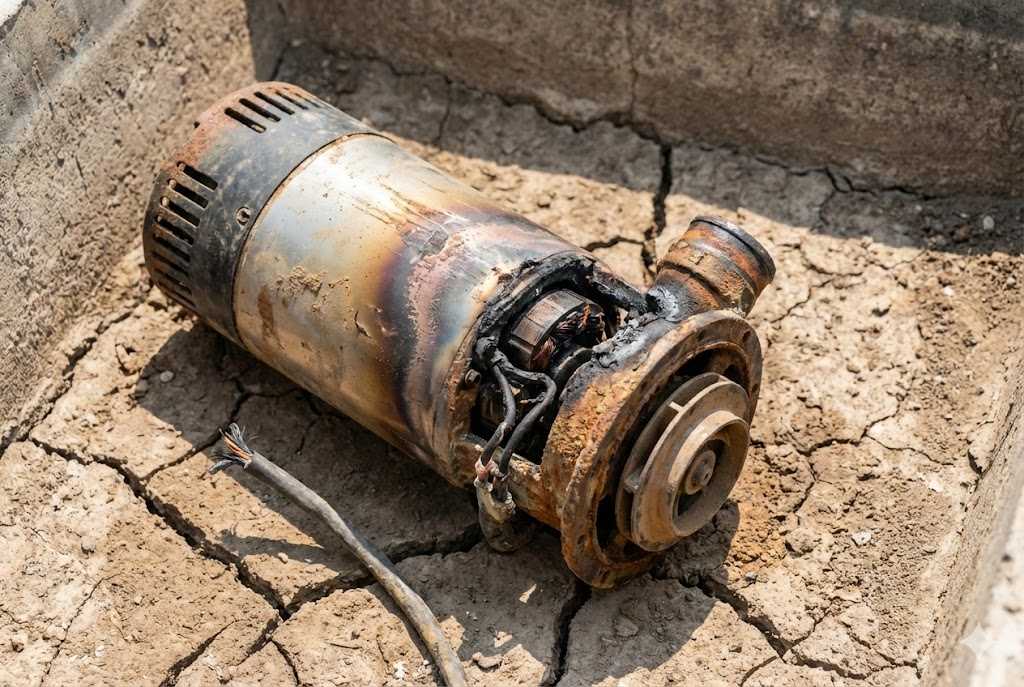
The most common cause of pump failure is not a manufacturing defect. It is an external factor like running dry, incorrect voltage, or choosing the wrong pump for the water quality. These issues cause rapid wear, overheating, and burnout.
A pump is the heart of any water system.
When it fails, everything stops.
While it is easy to blame the equipment itself, over 80% of premature pump failures are caused by system-level problems or a mismatch between the pump and its working environment.
The pump is a highly engineered machine designed for specific conditions.
When those conditions are not met, failure is not a matter of if, but when.
Understanding these common failure modes is the first and most critical step for any distributor or installer.
It allows you to guide your customers toward the right product, design a more resilient system, and prevent the callbacks and warranty claims that hurt your bottom line.
Let’s explore the real reasons pumps fail and how to prevent them from the start.
Mismatching the Pump to the Water: A Recipe for Disaster
You selected a pump with the right horsepower and flow rate.
But it failed in just a few months, leaving you with a frustrated customer.
You are left wondering what went wrong with a seemingly high-quality product.
Using the wrong pump for your water’s chemistry or sediment level is a leading cause of premature failure. A pump designed for clean water will be destroyed by sand, while a standard pump quickly corrodes in acidic water environments.
Water is not just water.
Its composition varies dramatically from one well to another.
It can be crystal clear, filled with abrasive sand, or have a corrosive chemical balance (pH).
Each of these conditions presents a unique challenge to the internal components of a water pump.
The materials and design of the pump’s "wet end"—the part that directly handles the water—are just as important as the motor’s horsepower.
Choosing a pump based on performance specs alone without considering the water quality is like sending a race car into a desert rally.
The failure is engineered into the system from day one.
For a distributor, guiding a customer like Andrew in Australia, who deals with diverse and sometimes harsh water conditions, requires a deep understanding of material science.
It’s about selling not just a pump, but a long-term, reliable solution matched perfectly to its environment.
The Abrasive Enemy: Sand and Silt
Abrasives are one of the most common and destructive elements found in well water.
Sand, silt, and grit act like liquid sandpaper on the pump’s internal components.
- Centrifugal Pumps: In a multi-stage centrifugal pump, sand rapidly wears down the impellers and diffusers. The tight tolerances between these parts are eroded, causing a significant loss of pressure and flow. A pump that once delivered 50 gallons per minute might drop to 20 GPM in a matter of months. Plastic impellers, while economical and resistant to fine sand, can be quickly damaged by larger, sharper particles.
- Screw Pumps: The design of a solar screw pump, with its stainless steel rotor turning inside a rubber stator, is inherently more resistant to abrasives. The rubber can flex and allow smaller particles to pass through without catastrophic damage. This makes screw pumps the superior choice for sandy wells common in Africa and parts of Latin America.
The Silent Killer: Corrosion
Corrosion is a chemical attack that eats away at the pump’s metal components.
This is determined by the water’s pH level and the presence of dissolved minerals or chemicals.
- Low pH (Acidic Water): Acidic water attacks cast iron and lower-grade steel components, causing them to rust and weaken.
- High pH (Alkaline Water): Alkaline water can cause mineral deposits to build up, restricting flow and eventually seizing the pump.
This is where material selection is critical.
A solar pump with a stainless steel impeller and pump body is designed specifically for these harsh environments.
Using SS304 stainless steel provides excellent resistance to a wide range of corrosive conditions, ensuring a long service life in the alkaline soils of Australia or acidic water in parts of the Americas.
| Water Condition | High-Risk Component | Recommended Pump Type |
|---|---|---|
| High Sand/Silt Content | Impellers, Diffusers, Stator | Solar Screw Pump |
| Fine Sand Content | Impellers, Seals | Solar Plastic Impeller Pump |
| Acidic or Alkaline pH | Pump Body, Impellers, Motor Housing | Solar Stainless Steel Impeller Pump |
Dry Running: The Fastest Way to Destroy Your Pump
Your well level drops on a hot day.
Your pump continues to run, but it is now pumping air instead of water.
In just a few minutes, the pump overheats, seizes, and burns out completely.
Dry running is a catastrophic failure mode. Without water to cool and lubricate the components, internal temperatures can rise by hundreds of degrees in under a minute, melting plastic parts, destroying mechanical seals, and causing terminal motor failure.
Water serves two vital purposes inside a submersible pump, beyond just being the fluid that is moved.
First, it is a lubricant for the pump’s bearings and seals.
Second, it is a coolant, carrying away the immense heat generated by the electric motor and the friction of the spinning components.
When you remove the water, you remove both the lubrication and the cooling system.
The result is a rapid, cascading failure that is almost always irreversible.
It is the single most avoidable cause of pump death, yet it happens every day.
This is why the control system is as important as the pump itself.
A pump sold without proper protection against dry running is an incomplete system.
For distributors, emphasizing built-in protection features is a powerful way to demonstrate product quality and a commitment to reliability.
It transforms the conversation from price to long-term value and asset protection.
The Chain of Failure in a Dry-Run Event
When a pump runs dry, a predictable sequence of destruction begins.
- Seal Failure: The mechanical seal, which keeps water out of the motor housing, is often the first component to fail. It relies on a thin film of water for lubrication and cooling. Without it, the seal faces can overheat and crack in seconds.
- Component Damage: In a centrifugal pump, the plastic impellers can warp or melt from the heat. In a screw pump, the rubber stator will overheat, soften, and can even fuse itself to the stainless steel rotor, seizing the pump solid.
- Water Ingress: Once the seal is compromised, water from the well can leak back into the motor housing as the pump cools.
- Motor Burnout: When the pump tries to start again, the water inside the motor housing causes an immediate electrical short, burning out the motor windings. This final step is what most people discover, but it is the end result of the initial dry-run event.
Prevention Through Intelligent Control
Modern solar pump systems solve this problem with intelligent controllers.
The controller is the brain of the system and is responsible for protecting the pump.
- Dry-Run Protection: Sophisticated controllers do not use simple float switches, which can fail. Instead, they monitor the pump’s electrical parameters, such as power draw (wattage) and speed (RPM). When the pump starts pumping air, its workload drops dramatically. The controller detects this abnormal signature and immediately shuts the pump off to prevent damage.
- Automatic Recovery: A smart controller will not just stop the pump; it will also manage its recovery. It will keep the pump off for a programmed period (e.g., 30 minutes) to allow the well to recover, and then attempt to restart. If the well is still dry, it will shut down again and wait longer. This automated process ensures the system can recover from a temporary low-water condition without manual intervention.
Investing in a system with an intelligent controller is the most effective insurance policy against dry-run failure.
Electrical Issues: The Power Problem
You have installed the correct pump in the right conditions.
But it fails to start, runs intermittently, or the motor burns out.
You blame the pump, but the hidden culprit is often the power supply.
Unstable or incorrect electrical supply is a major cause of pump motor failure. Over-voltage, under-voltage, or inconsistent power from solar panels on cloudy days can stress motor windings, cause overheating, and lead to burnout.
A pump’s motor is designed to operate within a specific voltage and current range.
Deviating from this range introduces electrical stress that damages the motor over time.
In solar pump systems, the power supply is inherently variable.
The sun’s intensity changes throughout the day and with passing clouds.
Managing this variable power source effectively is the single most important job of the solar pump controller.
A cheap, inefficient controller will pass this unstable power directly to the motor, shortening its life.
A high-quality, intelligent controller acts as a sophisticated power manager, ensuring the motor always receives clean, stable power, regardless of what the sun is doing.
This is why the controller and motor technology are inseparable.
A powerful pump is useless if its motor is not powered and protected correctly.
For distributors, selling a complete, technologically integrated system—pump, high-efficiency motor, and intelligent controller—is the key to delivering the reliability that professional customers demand.
The Core Technology: BLDC Motors and MPPT Control
The combination of a Brushless DC (BLDC) permanent magnet motor and a Maximum Power Point Tracking (MPPT) controller is the modern standard for high-performance solar pumping systems.
- BLDC Permanent Magnet Motor: These motors are fundamentally more efficient (over 90% efficiency) than older motor types. They convert more of the sun’s energy into mechanical work and less into wasted heat. They also have a wider operating voltage range and higher starting torque, helping them start reliably even in low-light conditions. Their compact design (up to 47% smaller) and lighter weight (up to 39% lighter) also simplify installation.
- MPPT Controller: The MPPT algorithm constantly analyzes the output of the solar panels and adjusts the electrical load to extract the absolute maximum amount of power available. On a cloudy day, it will slow the pump down but keep it running, whereas a simpler controller might just shut off. It acts as a perfect buffer, translating the variable solar input into a stable, optimized power supply for the BLDC motor.
The Hybrid Solution: AC/DC Controllers
For applications requiring 24/7 water availability, reliance on solar alone is a point of failure.
This is where advanced AC/DC hybrid controllers provide the ultimate solution.
- Dual Power Inputs: These controllers can be connected to the solar panel array and a backup AC power source (grid or generator) simultaneously.
- Automatic, Prioritized Switching: The controller’s default is to use 100% of the available solar power. It will always prioritize free energy from the sun.
- Power Blending: If solar power is not enough to meet the demand (e.g., on a cloudy day), the controller will seamlessly blend in AC power to make up the difference, maximizing the use of solar energy before drawing from the grid.
- Automatic Takeover: If solar power drops to zero (e.g., at night), the controller will automatically switch over to the AC source to ensure an uninterrupted water supply.
This technology eliminates pump failure due to insufficient power and provides total water security.
Conclusion
Pump failure is rarely caused by the pump itself.
It stems from environmental mismatches or electrical instability.
An integrated system with the right pump, an efficient motor, and an intelligent controller is the key to reliability.
Frequently Asked Questions
What are the signs of a failing well pump?
Signs include low water pressure, sputtering faucets, cloudy water, or a constantly running pump. An unusually high electric bill can also indicate a problem.
How do I know if my pump motor is bad?
A bad motor may fail to start, trip the circuit breaker immediately, or make a loud humming or grinding noise without turning the pump shaft.
Can a well pump be repaired?
Yes, many components like seals, bearings, or capacitors can be repaired. However, if the motor has burned out, it is often more cost-effective to replace the entire pump.
How often should a well pump be serviced?
A well pump itself requires little service, but the entire system should be inspected every 1-2 years. Check the pressure tank, wiring, and controller for proper operation.
Why does my water pump keep losing pressure?
This could be a leak in the plumbing, a faulty pressure switch, a waterlogged pressure tank, or a worn-out pump that can no longer build to the required pressure.
Does a submersible pump need a check valve?
Yes, a check valve is essential. It prevents water in the pipe from flowing back into the well when the pump shuts off, which prevents the pump from cycling too frequently.