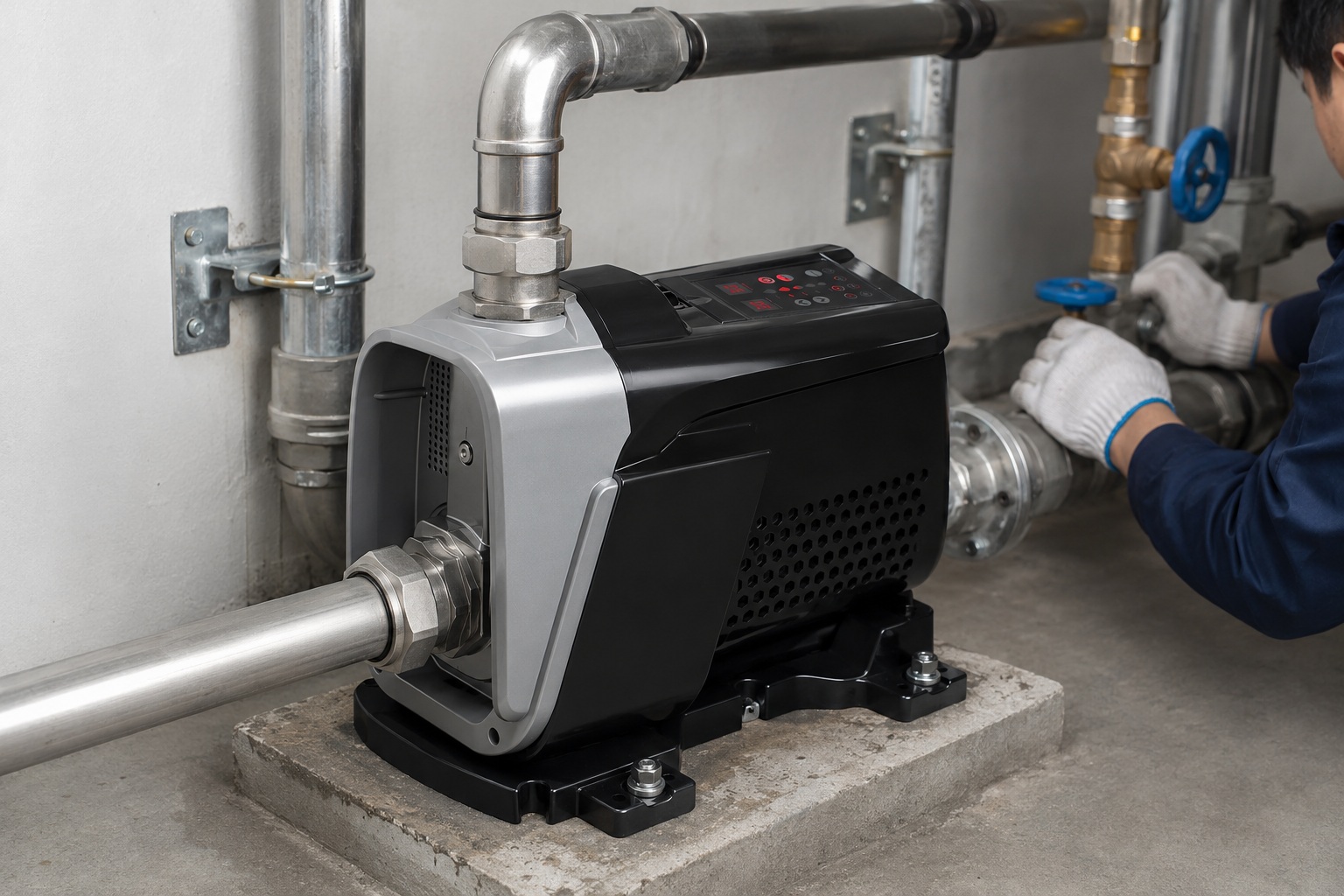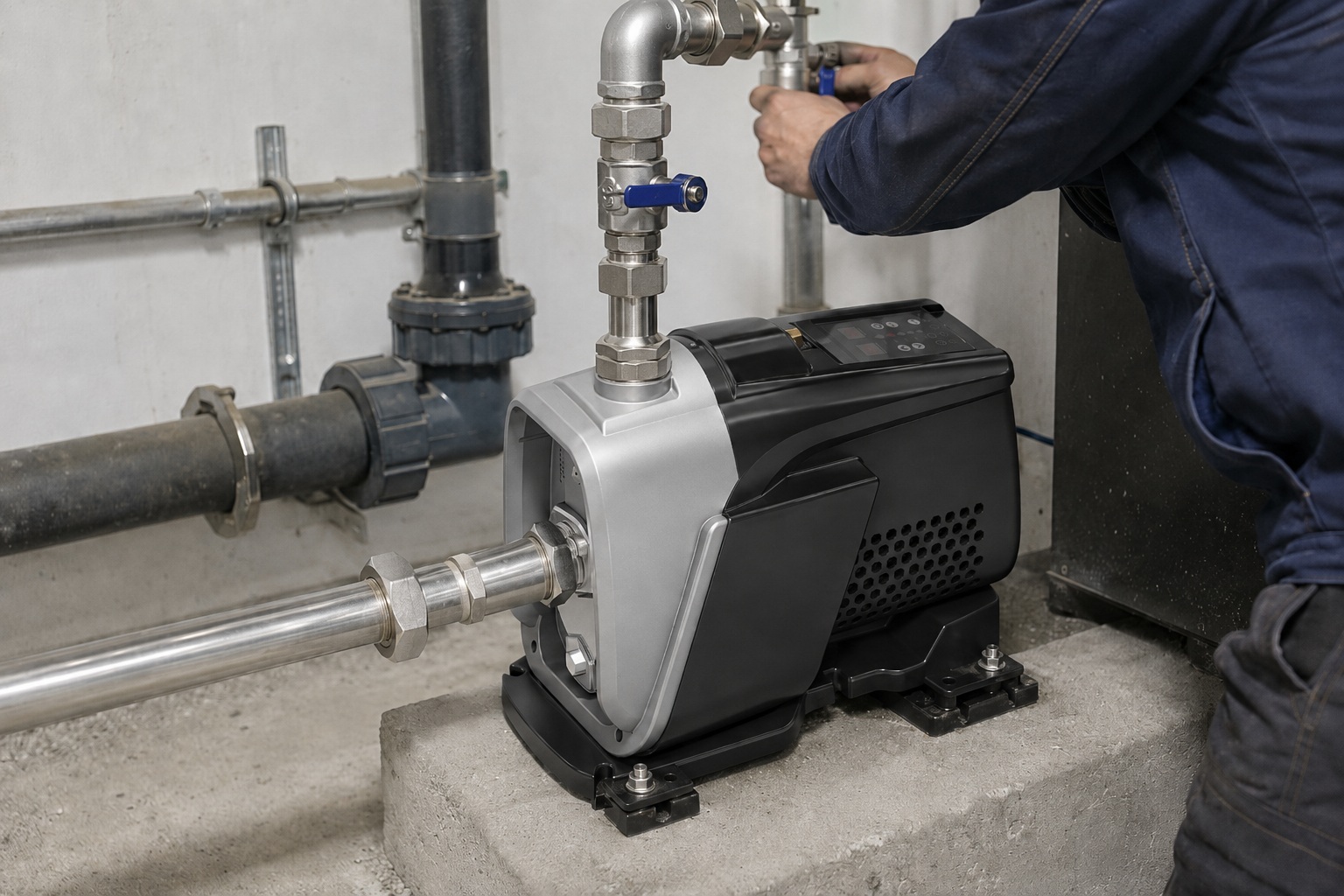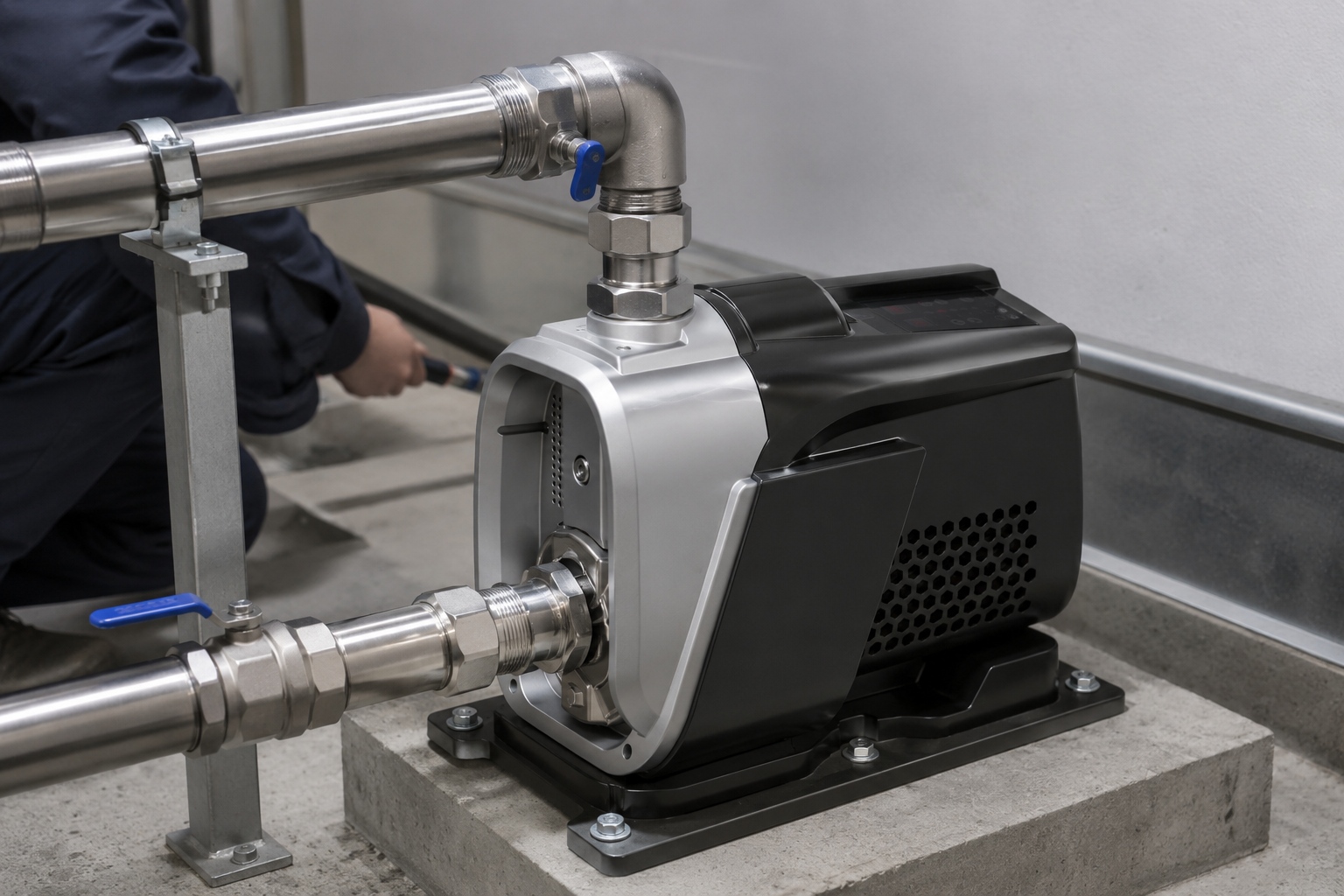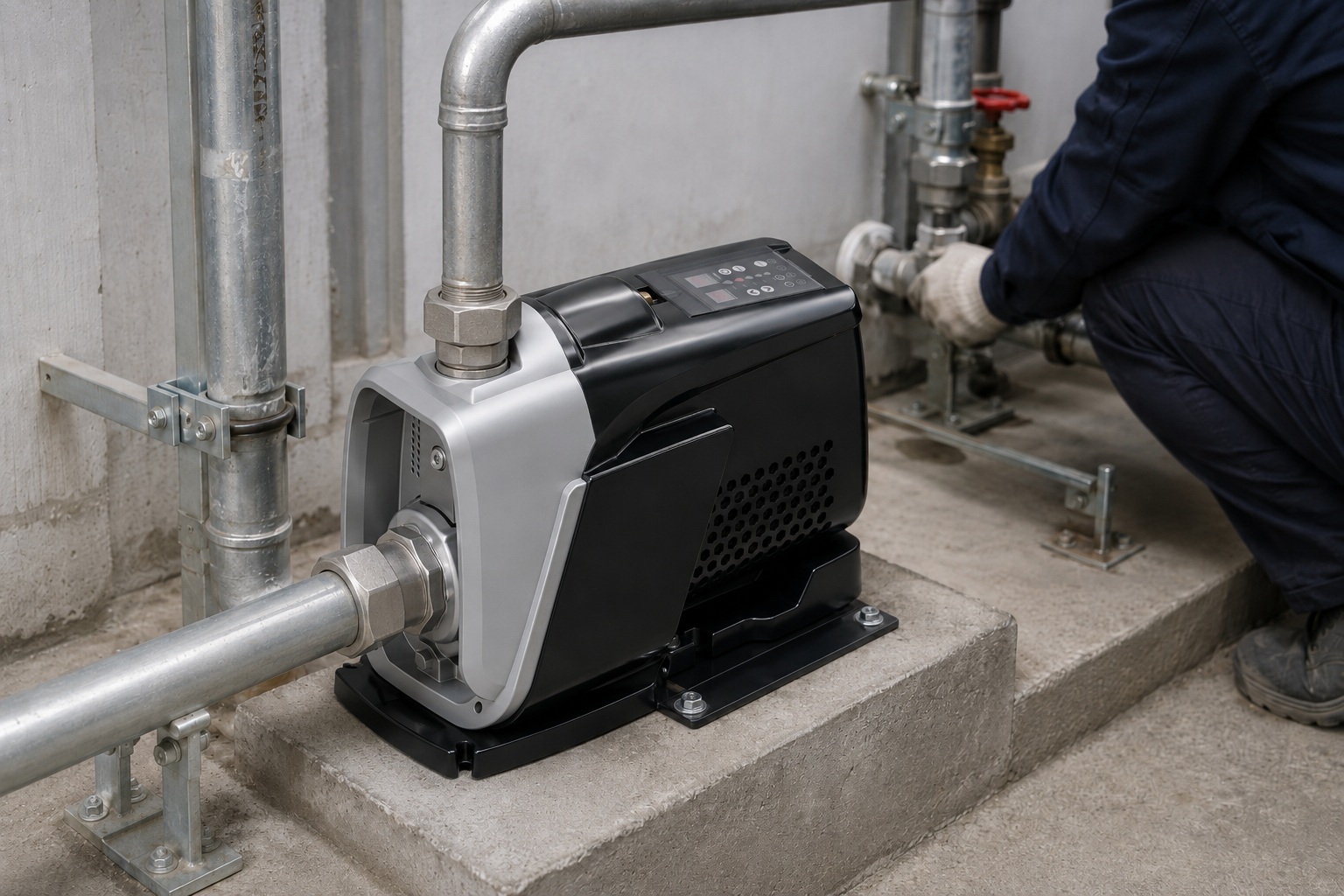
You need a powerful pump to move a serious amount of water.
But the term "powerful" is vague and confusing, leading to costly purchasing mistakes.
True power is about matching the right pump technology to your specific job.
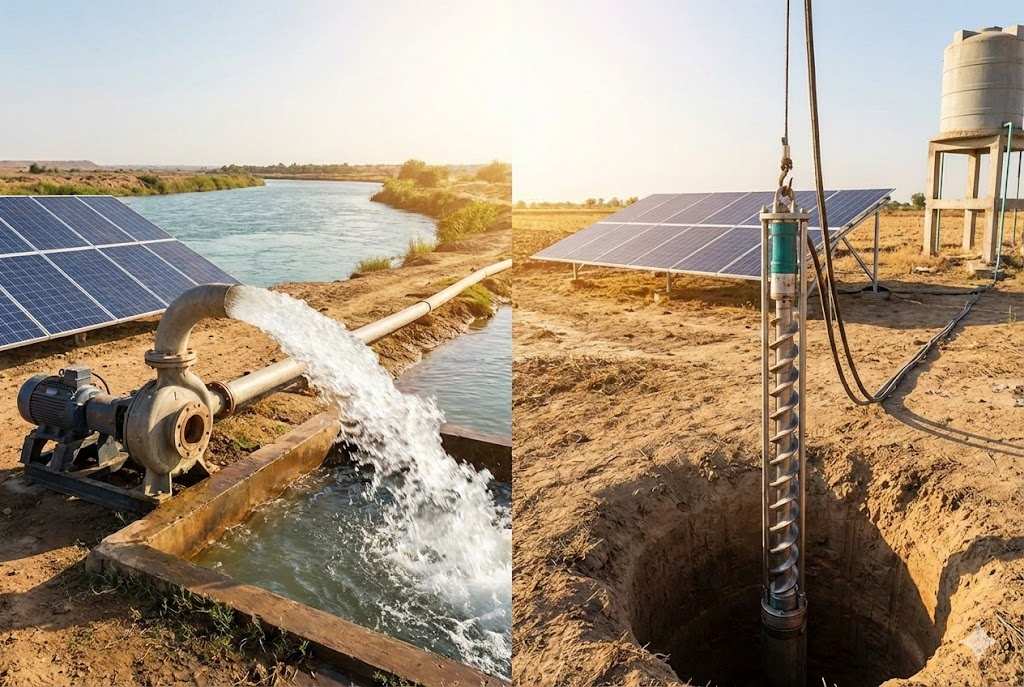
The "most powerful" solar pump depends on your goal. For delivering the highest volume of water (high flow rate), centrifugal impeller pumps are the most powerful. For lifting water from the deepest wells (high head), solar screw pumps are the most powerful.
Defining the "most powerful" solar water pump is not about a single horsepower number.
It is a question with two different answers.
Power can mean moving a massive volume of water across a field.
Or it can mean lifting a steady stream of water from hundreds of feet below ground.
The most powerful pump for a large irrigation farm is completely wrong for a deep domestic well.
Understanding this difference is the key to selecting a system that performs efficiently and reliably.
Let's explore the two primary types of solar pump power.
High-Flow Power: Centrifugal Impeller Pumps
You need to irrigate a large farm or fill a big reservoir quickly.
A low-flow pump will not get the job done, wasting time and stunting crop growth.
Centrifugal pumps are the powerhouse for moving massive volumes of water.
For high flow rates, multistage centrifugal pumps are the most powerful option. They use spinning impellers to move large volumes of water, making them ideal for farm irrigation, pasture water supply, and filling reservoirs.
When your priority is "gallons per minute" or "liters per hour," you are looking for high-flow power.
This is the domain of the centrifugal solar water pump.
These pumps work by using a motor to spin one or more impellers at high speed.
The rotation flings water outwards through centrifugal force, creating pressure and moving it through the system.
A pump with multiple impellers and chambers is called a "multistage" centrifugal pump.
Each stage adds more pressure, increasing the height (head) the pump can achieve while maintaining high flow.
There are two main variants in this category, each suited for different conditions and budgets.
Solar Plastic Impeller Pumps
These pumps are the workhorses for general agriculture.
They use durable, engineered plastic impellers.
This material choice makes them lightweight and highly economical.
They offer excellent resistance to wear from fine sand, a common issue in many agricultural wells.
This makes them a popular and cost-effective choice for surface-level irrigation and moderately deep wells across Africa and the Americas.
However, their limitation is durability in very deep wells or in water that is highly corrosive.
Solar Stainless Steel Impeller Pumps
This is the premium option for high-flow applications.
The pump utilizes impellers, and often the entire pump body, made from SS304 or higher-grade stainless steel.
This construction provides superior resistance to corrosion from acidic or alkaline water.
They are the go-to solution for challenging water conditions, such as those found in the alkaline soil regions of Australia or parts of the Americas.
While more expensive and heavier, their long service life and high reliability in harsh environments make them the most powerful long-term choice for high-value applications like high-end homes and ranches with corrosive water.
| Feature | Plastic Impeller Pump | Stainless Steel Impeller Pump |
|---|---|---|
| Primary Strength | High Flow, Wear Resistance | High Flow, Corrosion Resistance |
| Max Flow Rate | Very High | Very High |
| Head Range | Medium | Medium to High |
| Sand Resistance | Excellent (for fine sand) | Good |
| Corrosion Resistance | Low | Excellent |
| Cost | Economical | Premium |
| Ideal Application | Farm Irrigation, Gardens | Corrosive Water, High-End Homes |
High-Head Power: Solar Screw Pumps
You have a very deep well, and standard pumps cannot lift the water high enough.
Without enough lifting power, your well is useless, leaving you without water.
Solar screw pumps are designed specifically for extreme depth, delivering water from deep underground.
For high head (lifting water from deep wells), the solar screw pump is the most powerful. Its design allows it to generate immense pressure, pushing water from depths where centrifugal pumps cannot operate effectively.
When your primary challenge is depth, you need a pump that excels at creating pressure.
This is where the solar screw pump, also known as a progressing cavity pump, demonstrates its unique power.
Instead of spinning an impeller, it uses a completely different mechanism.
A single helical rotor (the "screw") rotates inside a rubber stator.
This action forms a series of sealed cavities that "progress" from the pump's intake to its outlet.
Water is pushed through these cavities under compression, generating very high pressure.
This design principle makes it incredibly effective at lifting water from great depths, often exceeding 200 meters (650 feet).
How Screw Pumps Generate Power
The power of a screw pump isn't about speed; it's about positive displacement.
Each rotation of the screw moves a fixed volume of water, regardless of the pressure (head).
This creates a steady, non-pulsating flow.
Because it can overcome immense back-pressure from the column of water above it, it is the undisputed champion of deep wells.
Another significant advantage is its exceptional resistance to sand and silt.
The flexible rubber stator and the design of the cavities can handle abrasive particles far better than the tight tolerances of a centrifugal impeller.
This makes them highly reliable in newly drilled or sandy boreholes.
When to Choose High-Head Power
The trade-off for this incredible lifting ability is flow rate.
Screw pumps are inherently low-flow devices.
They are not designed for bulk water transfer or large-scale irrigation.
Their power is focused on providing a reliable water supply for applications where depth is the main obstacle.
| Application | Required Power Type | Best Pump Choice |
|---|---|---|
| Deep Well Domestic Supply | High Head, Low Flow | Solar Screw Pump |
| Livestock Drinking Water | High Head, Low Flow | Solar Screw Pump |
| Small-Scale Drip Irrigation | High Head, Low Flow | Solar Screw Pump |
| Large-Scale Farm Irrigation | Low Head, High Flow | Centrifugal Impeller Pump |
The Real Source of Power: The BLDC Motor
You think a bigger pump is always a more powerful pump.
But a big, inefficient pump just wastes solar energy, requires more panels, and costs more to run.
The motor's efficiency is the true measure of a system's power and effectiveness.
The most critical component delivering power is the high-efficiency BLDC motor. A motor with over 90% efficiency converts more solar energy into water movement, making the entire system more powerful and cost-effective.
The pump end—whether it's a screw or an impeller type—is only half of the equation.
The true heart of any powerful solar pump is its motor.
An inefficient motor is like a leaky bucket.
It wastes the precious solar energy collected by your panels before it can even be used to move water.
Modern, high-performance solar pumps are driven by Brushless DC (BLDC) permanent magnet motors.
These are not the simple DC motors of the past.
They represent a massive leap in technology and are the core reason for the high performance of today's solar pump systems.
A high-quality BLDC motor can achieve an electrical-to-mechanical conversion efficiency of over 90%.
A traditional AC motor or brushed DC motor might only be 60-70% efficient.
This difference is enormous.
Why Efficiency Is the New Horsepower
A 90% efficient motor delivers significantly more shaft power from the same number of solar panels compared to a 70% efficient one.
This is the secret to a "powerful" system.
It means for a given water requirement, you need fewer solar panels, which reduces the initial cost and complexity of the installation.
These advanced motors use powerful neodymium iron boron permanent magnets (like 40SH grade) in their rotors.
This design eliminates the energy losses associated with energizing rotor windings, which is what happens in standard induction motors.
The result is a motor that is not only powerful but also remarkably compact and lightweight.
A modern BLDC motor can be up to 47% smaller and 39% lighter than a traditional motor of equivalent output.
Market Value of a Powerful Motor
The benefits of a high-efficiency motor extend beyond performance.
- Lower System Cost: Fewer solar panels are needed, reducing the single largest cost component of a solar pump system.
- Simplified Installation: A lighter motor and pump are easier to handle and install, especially in deep wells.
- Zero Maintenance: The brushless design means there are no brushes to wear out and replace.
- Longer Service Life: Less energy is wasted as heat, so the motor runs cooler, extending the life of its windings and bearings.
Ultimately, the BLDC motor is the core technology that enables a solar pump to be truly powerful, efficient, and competitive.
Power on Demand: AC/DC Hybrid Systems
You love your solar pump, but the water stops on cloudy days or at night.
This unreliability is a major problem for critical water needs like homes and livestock.
An AC/DC hybrid controller ensures you have water 24/7, combining solar power with a backup source.
For ultimate power and reliability, an AC/DC hybrid pump system is the top choice. It intelligently switches between solar power and a backup AC source (grid or generator), guaranteeing a worry-free water supply around the clock.
The ultimate expression of power is having water whenever you need it, without exception.
Standard DC solar pumps are fantastic, but their operation is tied to the sun.
For many users, this limitation is not acceptable.
This is where AC/DC hybrid systems provide a revolutionary solution.
These systems use a specially designed controller that can accept power from two sources simultaneously.
How Hybrid Controllers Provide Constant Power
The controller is the brain of the system.
It has separate input terminals for both the DC power from your solar panels and an AC power source, like your home's utility grid or a portable generator.
The controller's smart logic is designed to prioritize solar energy at all times to keep costs low.
- During Full Sun: The pump runs entirely on free energy from the solar panels. The AC input is ignored.
- During Low Sun (Cloudy Days): The controller uses a hybrid function. It draws the maximum available power from the solar panels and seamlessly blends in just enough AC power to maintain the pump's required speed and water flow. This maximizes the use of solar energy while ensuring performance does not drop.
- At Night or No Sun: When the photovoltaic (PV) input drops to zero, the controller automatically and instantly switches over to the AC power source, running the pump at full capacity.
This intelligent management ensures your water tank is always full, and your taps never run dry.
The Advantage of Uninterrupted Power
This hybrid capability transforms a solar pump from a daytime-only appliance into a full-time, primary water supply solution.
It provides the environmental and cost-saving benefits of solar without compromising on the 24/7 reliability of a conventional electric pump.
For homeowners, remote communities, and high-value livestock operations, the peace of mind offered by an AC/DC hybrid system is the most valuable form of power there is.
It removes all weather-related uncertainty from your water supply.
Conclusion
The "most powerful" solar pump is not one-size-fits-all.
Power means high flow for irrigation or high head for deep wells.
True system power comes from an efficient BLDC motor and a smart controller.
Frequently Asked Questions
What is the maximum flow rate of a solar pump?
High-capacity centrifugal solar pumps can deliver very high flow rates, often exceeding 50,000 liters (over 13,000 gallons) per hour, depending on the model and operating head.
How do you size a solar water pump?
Sizing requires knowing your daily water volume needs, the total dynamic head (vertical lift + friction), and your location's peak sun hours. These factors determine the pump and solar array size.
How many horsepower can a solar pump be?
Solar pump systems are available in a wide range of power ratings, from small pumps under 1 HP to large agricultural systems of 10 HP, 20 HP, or more.
Can you run a 5hp pump on solar?
Yes, you can run a 5 HP (approximately 3.7 kW) pump on solar. It requires a large solar array, typically around 5-6 kW, to provide sufficient power for the motor to operate effectively.
What is the disadvantage of a solar water pump?
The main disadvantage is the high initial investment cost for the panels, pump, and controller. They also only operate during the day unless they are a hybrid model or have batteries.
How long does a solar pump last?
A quality solar water pump system is very durable. The solar panels can last over 25 years, and the brushless motor and pump end can often last 15-20 years with minimal maintenance.
Do solar pumps work without a battery?
Yes, the vast majority of solar water pumps are direct-drive and do not use batteries. They pump water into a storage tank during the day, which provides water on demand.