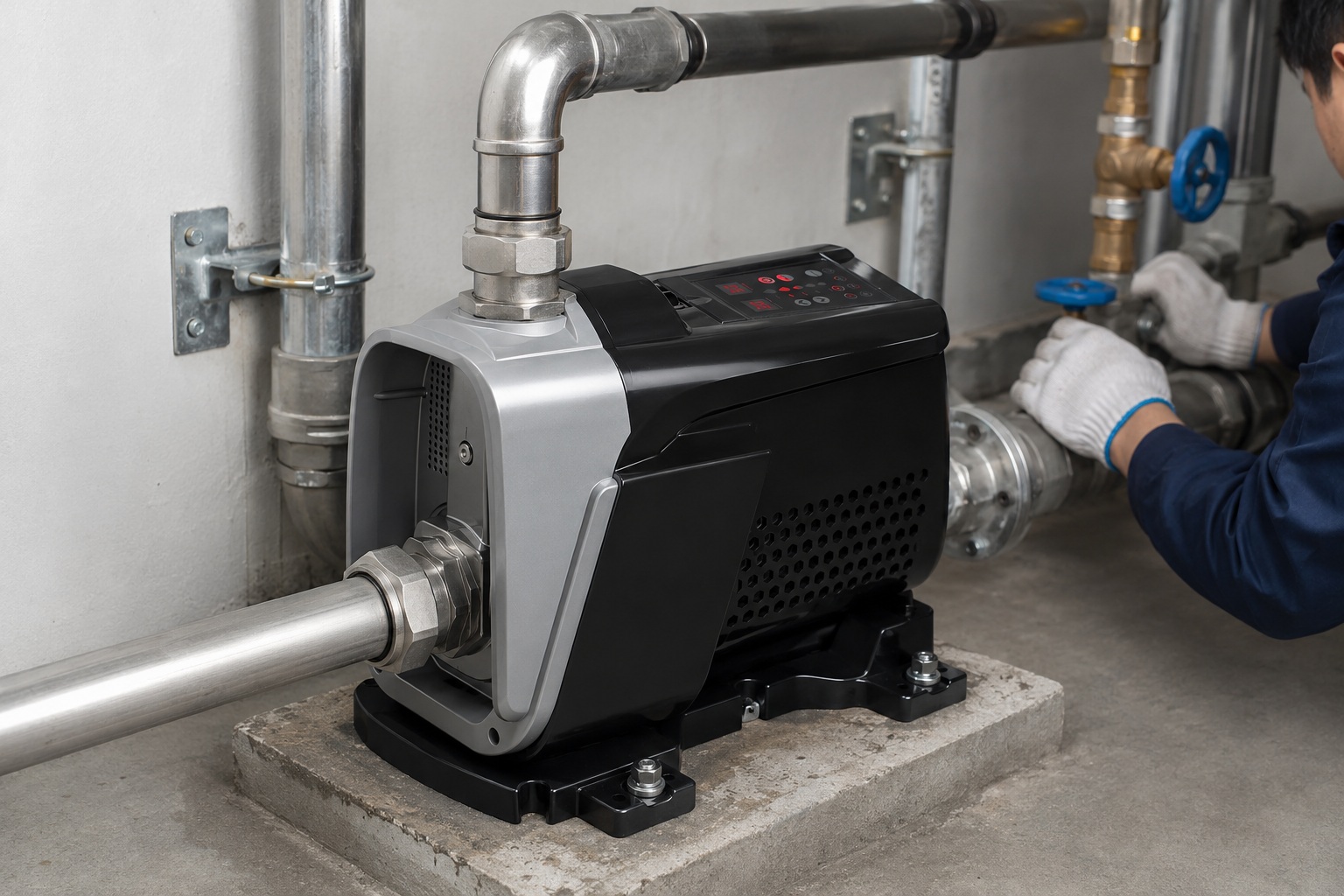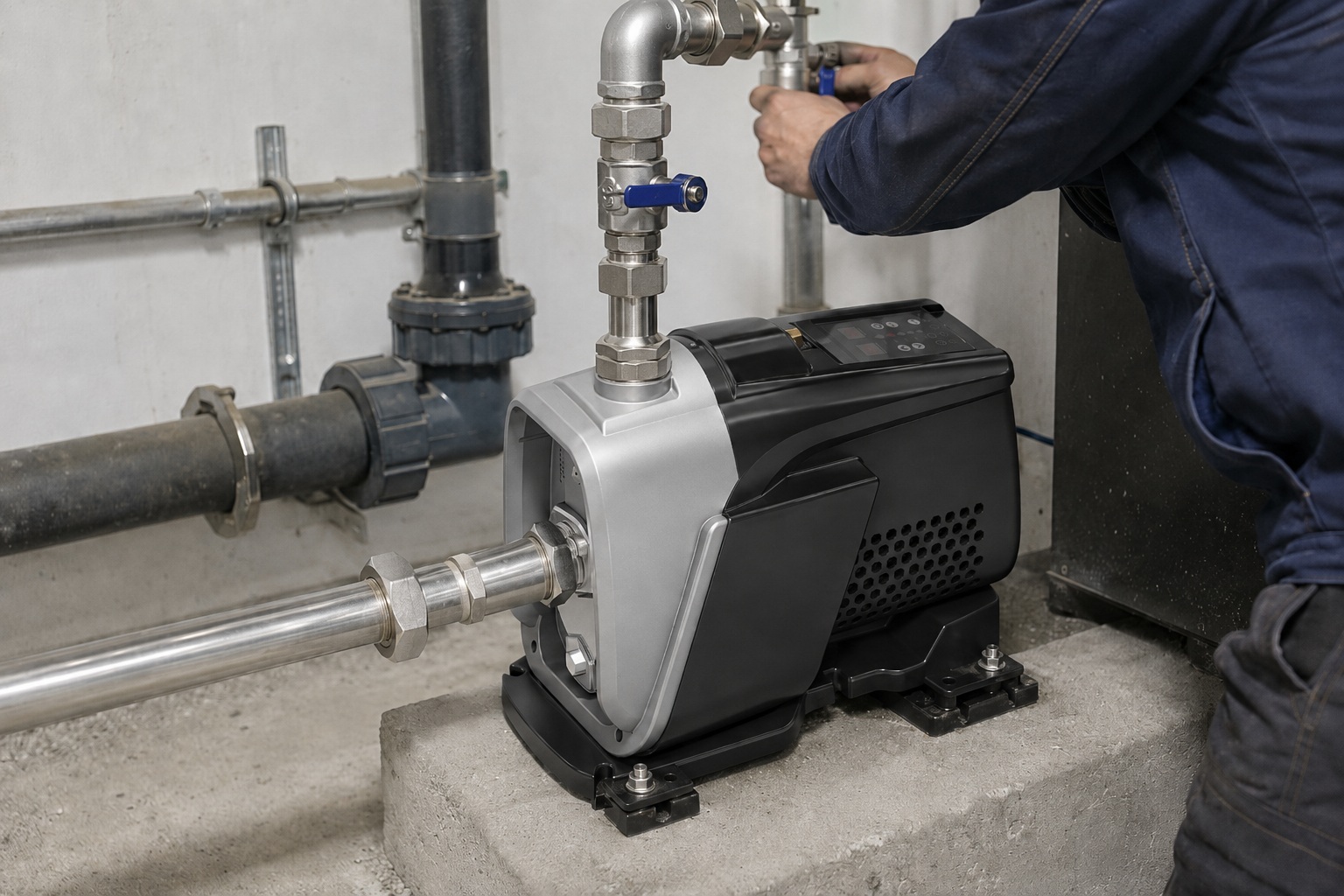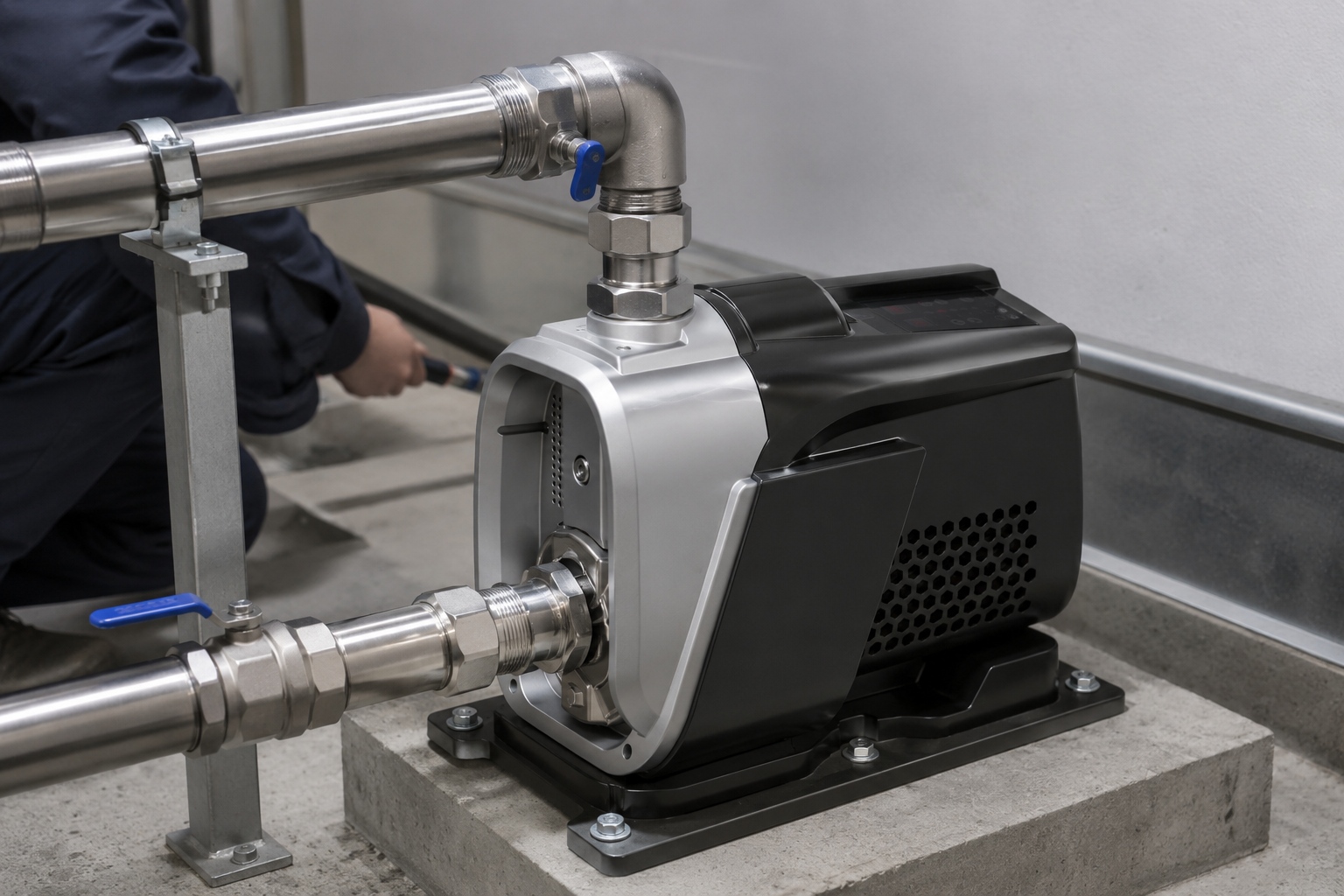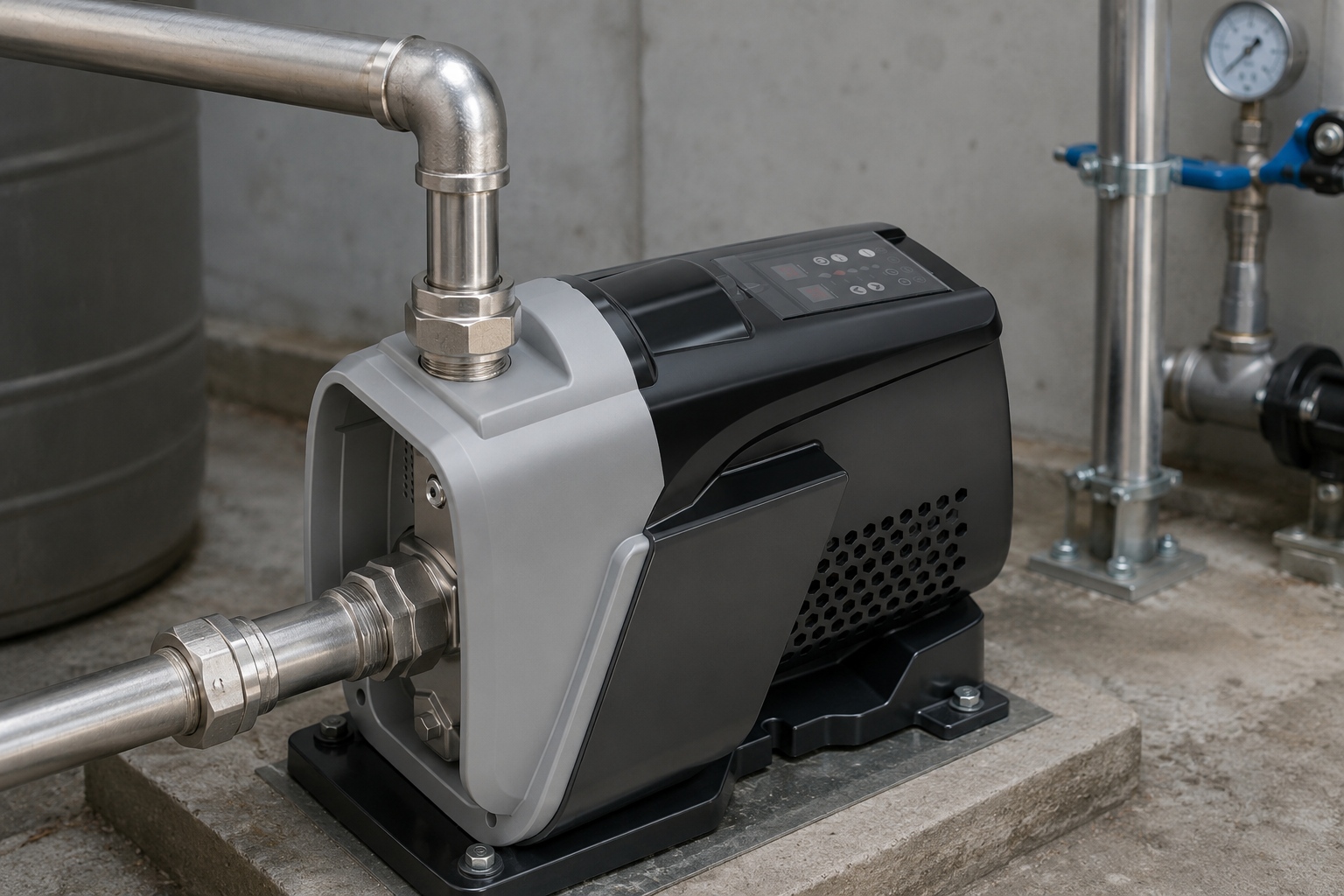
Are you struggling to choose the right pump for your application?
Picking the wrong one leads to poor performance and wasted energy.
Understanding the fundamental difference is your first step toward efficiency.
The main difference is the number of impellers inside the pump.
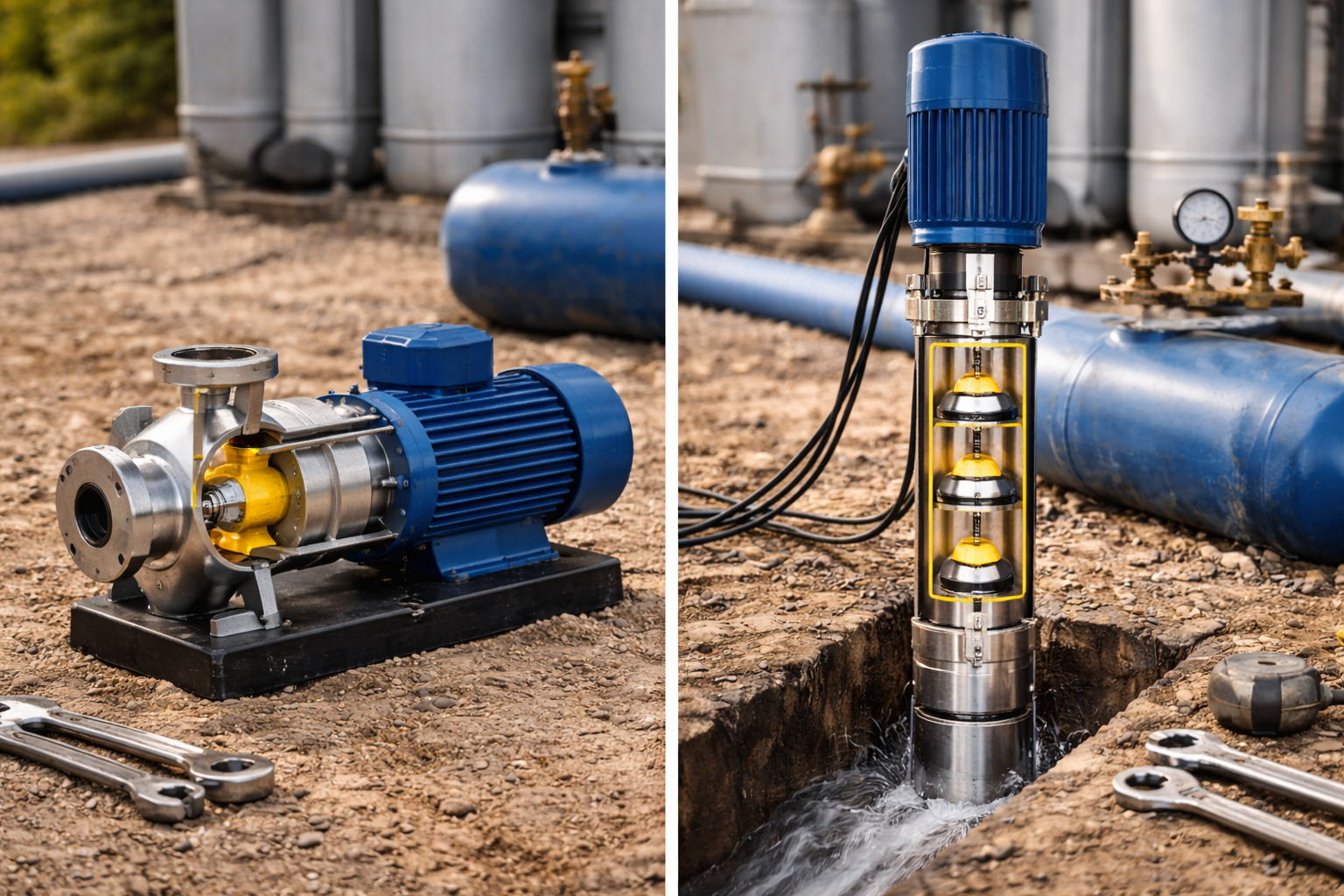
A single-stage pump has one impeller and is best for lower pressure needs.
A multi-stage pump has two or more impellers to build up very high pressure.
Choosing the correct pump design is critical for your system’s success and long-term operating cost.
While the number of impellers is the main distinction, this single design choice affects everything from pressure capabilities and efficiency to the pump’s complexity and ideal use case.
Understanding these differences ensures you invest in a solution that perfectly matches your requirements, preventing issues like under-pressurization or excessive energy consumption.
Let’s dive deeper into what sets these two powerful pump types apart.
Understanding the Core Design: Impellers and Pressure
Is the internal design of a pump a complete mystery to you?
The number and arrangement of impellers directly control the pressure the pump can generate.
Getting this wrong means your system won’t work.
A single-stage pump uses one impeller to generate pressure.
In contrast, a multi-stage pump uses several impellers arranged in series, with each "stage" adding more pressure to the water before it exits.
The design philosophy behind each pump type is tailored to a specific range of tasks.
The core of any centrifugal pump is the impeller.
It is a spinning rotor with vanes that flings water outwards using centrifugal force.
This action converts rotational energy into kinetic energy (velocity).
The water then enters a stationary casing called a volute, which is designed to slow the water down.
This slowing process converts the kinetic energy into potential energy, which we measure as pressure.
Single-Stage Pump Construction
The single-stage pump is the workhorse of the industry due to its elegant simplicity.
It contains just one impeller housed within a single volute casing.
Water enters the pump’s suction inlet, is drawn into the center (or "eye") of the impeller, and is accelerated outwards into the volute.
From the volute, it exits through a single discharge port at a higher pressure.
Because there is only one moment of pressure generation, the total head (pressure) it can produce is limited by the impeller’s diameter and its rotational speed.
| Component | Function in a Single-Stage Pump |
|---|---|
| One Impeller | Rotates to impart velocity to the fluid. |
| Volute Casing | Converts the fluid’s velocity into pressure. |
| Shaft & Seal | Transmits power from the motor and prevents leaks. |
| Bearings | Support the rotating shaft. |
This straightforward construction results in a robust, reliable, and easily maintained machine.
Multi-Stage Pump Construction
Multi-stage pumps are engineered for high-pressure challenges.
They contain two or more impellers on a single shaft, all housed within one larger casing.
Each impeller and its corresponding diffuser or volute is considered one "stage."
Water enters the first stage and its pressure is boosted, just like in a single-stage pump.
However, instead of exiting, the water is then guided to the eye of the second impeller.
The second stage adds more energy, further increasing the pressure.
This process repeats through every stage of the pump.
The final pressure at the discharge outlet is the sum of the pressure increases from each individual stage.
This series arrangement allows the pump to achieve extremely high heads that would be impossible for a single-stage pump of a similar size.
Pressure, Head, and Flow Characteristics
Do you need high pressure or high flow for your job?
Confusing these two can result in a system that fails to deliver water where it’s needed.
Choosing correctly depends on your specific head requirements.
Single-stage pumps are ideal for lower pressure and moderate flow applications.
Multi-stage pumps are built specifically to generate very high pressure, often at the expense of maximum flow rate compared to a single-stage pump of similar power.
The performance curve of a pump is its unique fingerprint, showing the relationship between the flow rate it can produce and the pressure (head) it can overcome.
Understanding these curves is essential for proper pump selection.
A pump’s suitability for a task is defined by its ability to meet the system’s required flow rate at a specific system head.
The Role of a Single Impeller
In a single-stage pump, the performance is governed by a single impeller.
The maximum head is determined primarily by the impeller’s diameter.
A larger diameter impeller, spinning at the same speed, will produce a higher head.
Likewise, increasing the rotational speed (RPM) will also increase the head.
However, there are practical physical limits to both diameter and speed.
These pumps are characterized by a performance curve that is typically balanced between achieving a good flow rate and a moderate amount of pressure.
They excel in applications where the goal is to move a significant volume of water against relatively low resistance.
This includes tasks like general water circulation, boosting pressure in a single-story home, or irrigation over flat terrain.
| Application Scenario | Single-Stage Suitability | Why? |
|---|---|---|
| Filling a Swimming Pool | Excellent | High flow rate is needed, but pressure requirement is low. |
| Home Pressure Boosting | Good | Provides a moderate pressure increase sufficient for most houses. |
| Skyscraper Water Supply | Unsuitable | Cannot generate enough head to push water to the top floors. |
How Multiple Stages Compound Pressure
A multi-stage pump’s key advantage is its ability to compound pressure.
Each stage functions like a small pump, adding its pressure contribution to the fluid before passing it to the next stage.
If a single stage adds 3 bar (approximately 30 meters of head), a four-stage pump with identical impellers will add approximately 12 bar (120 meters of head) in total.
This makes them the definitive choice for high-head applications.
The performance curve for a multi-stage pump will show a much higher maximum head compared to a single-stage pump of the same power rating.
This high-pressure capability is essential for applications such as:
- Boiler Feed Water: Pushing water into a high-pressure steam boiler.
- High-Rise Buildings: Delivering water to the top floors of skyscrapers.
- Reverse Osmosis: Providing the high pressure needed to force water through fine membranes.
- Long-Distance Water Transfer: Overcoming friction losses in very long pipelines.
Their design allows them to operate efficiently at these high-pressure setpoints.
Applications and Best Use Cases
Are you installing a pump for a small garden or a large industrial facility?
Using a high-pressure pump for a low-pressure job wastes money and energy.
Matching the pump type to the application is key.
Choose a single-stage pump for simplicity and cost-effectiveness in low-to-moderate pressure tasks like home water supply, irrigation, and general transfer duties where simplicity and easier maintenance are valued.
Choose a multi-stage pump for demanding high-pressure applications like boiler feed, high-rise building supply, deep well pumping, or long-distance water transport where generating significant head is the primary goal.
The final decision between a single-stage and a multi-stage pump almost always comes down to the specific requirements of the system it will be installed in.
While pressure is the main consideration, factors like initial cost, long-term maintenance, and operational complexity also play a role in determining the most suitable choice for the job.
Common Ground for Single-Stage Pumps
Single-stage pumps are the most common type of pump in the world for a reason.
Their simple, robust design makes them affordable, reliable, and easy to service.
They are the go-to solution for a vast range of fluid transfer applications where the pressure requirements are not extreme.
Key Applications Include:
- Residential Water Supply: Boosting mains pressure for single-family homes and small buildings.
- General Water Transfer: Moving water from a tank to a trough or between reservoirs.
- HVAC Systems: Circulating water in heating and cooling loops.
- Light-Duty Industrial Processes: Pumping chemicals or fluids in manufacturing settings.
- Garden and Small-Scale Irrigation: Supplying water to sprinklers over a limited area.
Their simplicity means fewer parts to wear out and easier access for maintenance or repair, making them a cost-effective choice over the pump’s entire lifecycle for these types of jobs.
Where Multi-Stage Pumps Excel
Multi-stage pumps are specialized tools designed for jobs where high pressure is non-negotiable.
Their ability to build head sequentially makes them indispensable in many commercial, industrial, and municipal applications.
While they are more complex and have a higher initial cost, they are the only viable option for certain tasks.
Key Applications Include:
- High-Rise Building Water Supply: They have the power to push water hundreds of meters vertically to supply upper floors.
- Boiler Feed Systems: Injecting feedwater into high-pressure steam boilers is a classic multi-stage application.
- Deep Well and Borehole Pumping: Lifting water from great depths requires the high head generated by multiple stages.
- Reverse Osmosis (RO) and Filtration: High-pressure membrane filtration systems rely on multi-stage pumps.
- Snowmaking: Pumping water at high pressure through snow cannons.
- Firefighting Systems: Providing the high pressure required for fire suppression sprinklers and hydrants.
In these scenarios, a single-stage pump would simply fail to perform, making the multi-stage pump the essential and correct choice despite its higher complexity.
Complexity, Cost, and Maintenance
Are you concerned about the budget for your project?
The initial purchase price is only part of the total cost of ownership.
Maintenance and reliability are just as important.
Single-stage pumps have a simpler design with fewer components.
This makes them less expensive to purchase, easier to install, and simpler to maintain, resulting in a lower overall cost of ownership for many standard applications.
Multi-stage pumps are inherently more complex and costly due to the multiple impellers and tighter tolerances.
Their maintenance can be more involved, but this is a necessary trade-off for their high-pressure capability.
When evaluating the cost of a pump, it is crucial to think beyond the sticker price.
The total cost of ownership includes the initial purchase price, installation costs, energy consumption over its lifetime, and the cost and frequency of maintenance and repairs.
A careful analysis of these factors will reveal the most economically sound choice for your specific needs.
The Simplicity of Single-Stage Pumps
The design of a single-stage pump directly contributes to its cost-effectiveness.
Fewer moving parts mean a simpler manufacturing process and lower material costs.
Cost Breakdown:
- Initial Cost: Significantly lower than a comparable multi-stage pump.
- Installation: Generally lighter and more compact, making installation easier and faster.
- Maintenance: Disassembly is straightforward. Replacing a seal or bearing is a common task that can often be done on-site with basic tools. Parts are widely available and less expensive.
This simplicity translates to high reliability.
With fewer components to fail, there is a lower probability of unexpected downtime.
For applications within its performance range, the single-stage pump almost always offers the lowest total cost of ownership.
The Complexity of Multi-Stage Pumps
The advanced capabilities of a multi-stage pump come with increased complexity and cost.
The manufacturing process is more demanding, requiring precise alignment of multiple impellers and diffusers on a single shaft.
The tolerances are much tighter to prevent internal leakage between stages, which would reduce efficiency.
Cost Breakdown:
- Initial Cost: Higher due to the greater number of precision components and more complex assembly.
- Installation: Can be heavier and longer than single-stage pumps, potentially requiring more robust mounting.
- Maintenance: A full overhaul is a more complex task. It requires careful disassembly and reassembly of the entire stage stack. Balancing the rotor assembly is critical. This often requires a specialized technician or a return to a workshop.
While maintenance is more involved, high-quality multi-stage pumps are designed for durability in continuous, demanding service.
Their higher initial and maintenance costs are justified by their unique ability to perform in high-head applications where no other pump type would succeed.
Conclusion
Choose a single-stage pump for simple, low-pressure tasks.
Opt for a multi-stage pump when high pressure is essential.
Your application’s head requirement is the ultimate deciding factor.
FAQs
What is the main advantage of a multistage pump?
Its main advantage is the ability to generate very high pressures, or head, far beyond what a single-stage pump of a similar size can achieve.
Can a single-stage pump be used for high pressure?
Generally, no. Single-stage pumps are designed for low to moderate pressure. High-pressure tasks are the specific domain of multi-stage pumps.
Are multistage pumps more efficient?
Not necessarily. Efficiency depends on operating at the pump’s Best Efficiency Point (BEP). A correctly sized single-stage pump can be more efficient for a low-pressure job.
What is head in a pump?
Head is the height to which a pump can raise a column of water. It is a way of measuring the pressure a pump can produce.
Why are multistage pumps more expensive?
They are more expensive due to their complex design, which includes multiple impellers, diffusers, and tighter manufacturing tolerances, leading to higher material and assembly costs.
How do I know if I need a multistage pump?
You need a multistage pump if your application requires pushing water to great heights, over long distances, or into a pressurized vessel like a boiler.
What happens if you use the wrong pump?
Using a single-stage pump for a high-head job will result in low or no flow. Using a multi-stage pump for a low-head job wastes energy and money.
Are vertical multistage pumps different?
They function on the same principle but are arranged vertically to save floor space. They are very common in building services and industrial applications.