Struggling to find the right solar pump for your pond?
The options are confusing, and a wrong choice leads to a stagnant pond and a weak, disappointing waterfall.
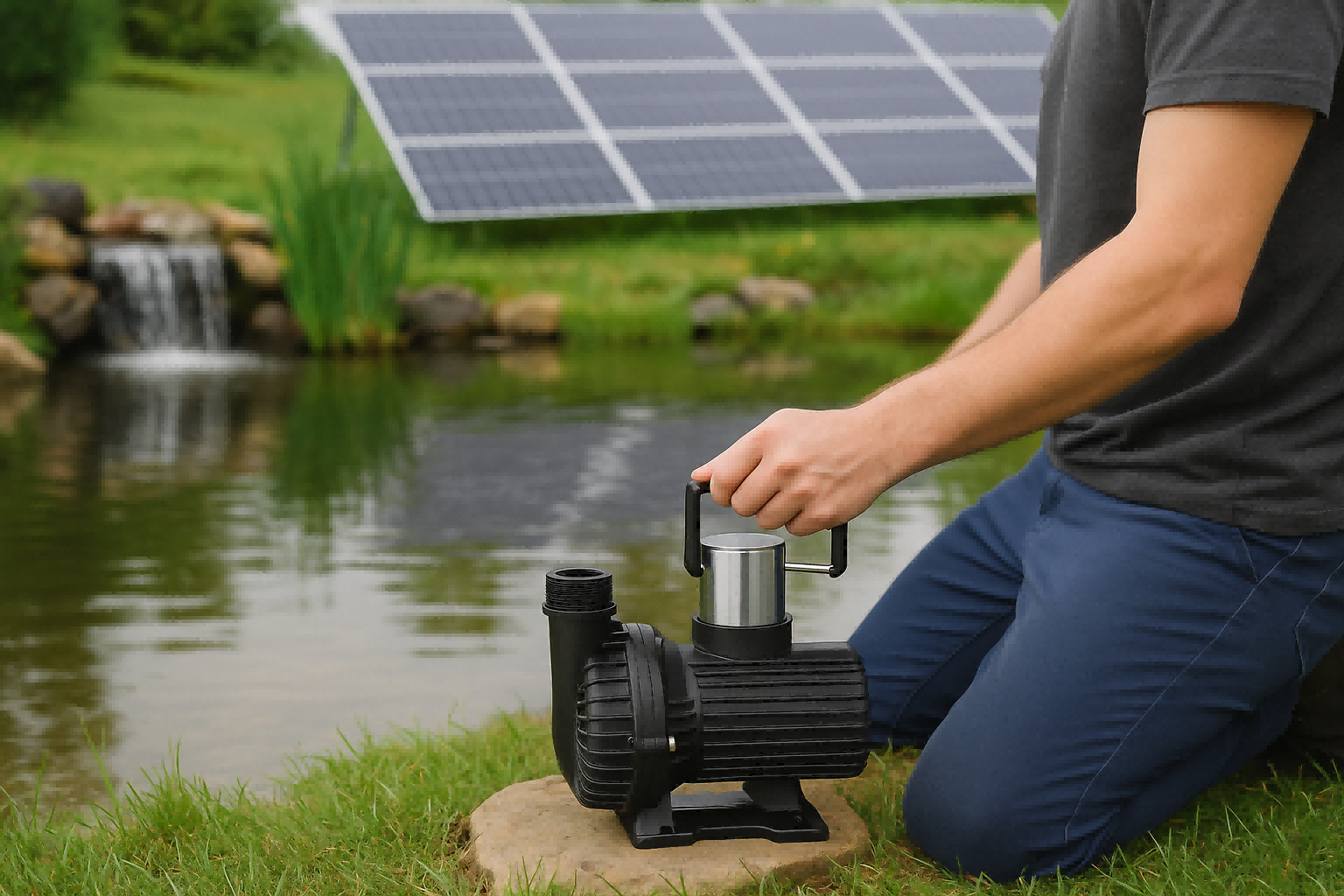
The best solar-powered pond pump combines a high-flow pump type matched to your pond’s needs with a high-efficiency motor. For most ponds, a plastic impeller pump is best for value. For durability, a stainless steel model excels. The ultimate "best" pump includes an AC/DC hybrid controller for 24/7 reliability.
The answer isn’t a single product.
It’s about understanding the system.
The "best" pump is actually a combination of three critical components: the motor that drives it, the pump mechanism that moves the water, and the controller that guarantees its performance.
Let’s explore each part to find the perfect solution for your specific needs.
The Foundation of "Best": The High-Efficiency BLDC Motor
A cheap motor wastes precious solar energy.
This means your pump sputters on cloudy days, starts late, stops early, and ultimately fails to provide the circulation your pond needs.
The best solar pumps are built around a high-efficiency Brushless DC (BLDC) permanent magnet motor. With efficiency rates over 90%, it turns more sunlight into power, ensuring better performance and a longer lifespan.
Before you even consider flow rates or materials, you must look at the motor.
The motor is the heart of any solar pump system.
It dictates how effectively the pump converts sunlight into water movement.
The difference between a standard motor and a premium one is dramatic, directly impacting performance and long-term value.
Many low-cost solar pumps use older, brushed motor technology with an energy efficiency of only 50-60%.
This means almost half of the energy collected by the solar panel is wasted as heat and friction.
The best solar pumps have moved far beyond this.
They utilize advanced Brushless DC (BLDC) permanent magnet motors.
These motors are a technological marvel.
The Power of >90% Efficiency
A BLDC motor uses powerful rare-earth magnets (like 40SH neodymium iron boron) and sophisticated electronics to create rotation without physical contact (brushes).
This elegant design pushes energy conversion efficiency to over 90%.
This isn’t just a technical specification; it delivers real-world advantages that define a superior pump.
- Superior Low-Light Performance: Because it wastes so little energy, a BLDC motor needs significantly less power to operate. This means the pump starts working earlier in the morning, runs later into the evening, and continues to perform on overcast days when less efficient pumps would have stopped. This can increase daily runtime by several hours.
- Smaller Solar Panel Requirement: A 90% efficient motor can produce the same water flow as a 60% efficient motor using a much smaller, less expensive solar panel. For distributors, this means a lower system cost and a more competitive price point for customers.
- Enhanced Durability & Zero Maintenance: The "brushless" design means there are no parts to wear out and replace. This results in a virtually maintenance-free motor with an operational lifespan that is years longer than its brushed counterparts, delivering a better return on investment. The design is also more compact, being up to 47% smaller and 39% lighter, simplifying handling and installation.
Why It’s the Starting Point for "Best"
For a B2B buyer, understanding the motor is key to stocking a superior product.
A pump with a BLDC motor is not just another solar pump; it’s a high-performance system.
It offers customers reliability, energy savings, and long-term durability.
It is the foundational component that makes all other features possible and is the first thing to look for when determining the "best" solar pump.
| Motor Technology | Energy Efficiency | Performance in Clouds | Maintenance | Defining Feature |
|---|---|---|---|---|
| Brushed DC Motor | 50% – 60% | Poor | Requires brush replacement | Low Initial Cost |
| BLDC Motor | > 90% | Excellent | None | High Performance & Value |
Best for General Use: The High-Flow Plastic Impeller Pump
You need strong circulation for your pond, but many pumps offer a weak trickle.
This leads to poor aeration, algae growth, and an unhealthy environment for fish, completely defeating the purpose of having a pump.
The best solar pump for most ponds is a multi-stage centrifugal pump with a durable plastic impeller. It delivers the high flow rate needed for effective circulation and waterfalls at an economical price.
Once you’ve confirmed the pump has a high-efficiency motor, the next step is choosing the right "wet end" — the part that actually moves the water.
For the vast majority of backyard ponds, garden water features, and general circulation needs, the goal is to move a large volume of water.
This is where the high-flow plastic impeller pump shines.
It is engineered specifically for this purpose, making it the best all-around choice for value and performance.
Designed for Circulation and Features
This pump type is a multi-stage centrifugal pump.
This design is focused on maximizing flow rate (Gallons Per Hour or Liters Per Hour) at a medium pressure, or "head."
This makes it perfectly suited for the most common pond tasks.
- Pond Circulation: The high flow rate ensures the entire volume of pond water is turned over regularly, which is critical for oxygenating the water and preventing stagnation. A common rule is to circulate the pond’s entire volume at least once every two hours.
- Waterfalls and Streams: These features depend on a high volume of water to look full and sound pleasant. A high-flow pump provides the strong, consistent flow needed to create an impressive visual and auditory effect.
- Filtration Systems: Biological and mechanical filters work best when a steady, high volume of water is pushed through them. This pump provides the necessary flow to keep the filtration system operating at peak efficiency.
The Material Advantage: Engineered Plastic
The term "plastic" can sometimes be misleading.
The impellers in these pumps are made from a high-strength, engineered polymer designed for durability in typical pond environments.
- Excellent Wear Resistance: Ponds contain fine sand, dirt, and other small suspended particles. The engineered plastic used in these impellers is highly resistant to the abrasive effect of these particles, ensuring a long service life.
- Lightweight and Economical: The materials make the pump lightweight, which simplifies installation—it can be easily placed without heavy equipment. Furthermore, the manufacturing process is more cost-effective, allowing distributors to offer a high-performance pump at a very competitive price point.
For any customer looking to power a standard pond of up to several thousand gallons, the plastic impeller solar pump offers an unmatched combination of performance, durability, and affordability. It is the workhorse of the solar pond pump world.
Best for Durability: The Stainless Steel Impeller Pump
Your pond has slightly acidic water or you’ve invested heavily in a premium landscape.
A standard pump might corrode or fail prematurely, costing you money and risking the health of your expensive koi fish or pristine water feature.
For the ultimate in longevity and reliability, the best pump is a solar model with a full SS304 stainless steel impeller and pump body. It offers superior corrosion resistance for harsh water and high-end applications.
While the plastic impeller pump is the best choice for most, some applications demand a higher level of durability and chemical resistance.
For these situations, the "best" pump is unequivocally one built with superior materials that can withstand the test of time and harsh conditions.
A solar pump featuring an SS304 stainless steel impeller and pump housing is the premium solution for discerning customers and challenging environments.
This is the pump you choose when "good enough" isn’t an option and long-term reliability is the primary goal.
When to Choose Stainless Steel
The decision to upgrade to a stainless steel pump is driven by either the water conditions or the nature of the project itself.
It’s the best choice in several specific scenarios.
- Ponds in Alkaline Soil Regions: Areas like parts of Australia and the Americas have alkaline soil, which can create corrosive water conditions. Stainless steel is highly resistant to this type of corrosion, ensuring a much longer pump lifespan.
- Ponds with Treated or Acidic Water: Ponds treated with certain chemicals or those that become acidic from large amounts of decaying leaves can degrade lower-quality materials. SS304 is an inert, food-grade stainless steel that remains stable in these environments.
- High-End Koi Ponds: Owners of valuable koi cannot risk pump failure. The high reliability and long service life of a stainless steel pump provide essential peace of mind.
- Architectural and Commercial Water Features: For professionally installed landscapes, fountains, and water features, the slightly higher upfront cost is a wise investment to minimize future maintenance calls and ensure client satisfaction.
The Investment in Longevity
A stainless steel pump carries a higher initial cost due to the price of the raw materials and the manufacturing process.
However, for the right application, it delivers a superior return on investment.
Its extreme durability means it will outlast other pumps by years, reducing the total cost of ownership significantly.
For a distributor like Andrew in Australia, having a premium stainless steel option is critical.
It allows him to cater to high-end residential clients and agricultural customers in regions with challenging water, providing a solution that is demonstrably better and built to last.
| Feature | Plastic Impeller Pump | Stainless Steel Impeller Pump | Best Application |
|---|---|---|---|
| Primary Advantage | High Flow, Economical | High Durability, Corrosion-Resistant | |
| Best For | General Ponds, Waterfalls | Koi Ponds, Harsh Water, Premium Projects | |
| Material | Engineered Polymer | SS304 Stainless Steel | |
| Cost | $ | $$ |
The Ultimate Feature: AC/DC Hybrid for 24/7 Reliability
Your beautiful waterfall stops and your pond’s aeration halts during a rainy week.
A pure DC solar pump is useless without the sun, risking the health of your pond and turning your water feature into a stagnant puddle.
The best solar pump system includes an AC/DC hybrid controller. It prioritizes free solar energy but automatically switches to grid power when needed, guaranteeing 24/7 operation and total peace of mind.
We have established that the best pump is built with an efficient motor and the right materials.
But there is one final feature that elevates a solar pump from being merely "good" to being the absolute "best" solution: an AC/DC hybrid power system.
This technology removes the single biggest drawback of solar power—its dependence on the weather.
For any application where consistent operation is critical, a hybrid system is not a luxury; it’s a necessity.
A hybrid system uses an intelligent controller with two power inputs.
One connects to the solar panels (DC power), and the other connects to a standard household or generator power source (AC power).
The controller’s software is the brain of the operation, seamlessly managing both sources to maximize savings without ever sacrificing performance.
How the Hybrid System Creates Unbeatable Value
The controller’s logic is elegantly simple and effective.
- Solar First: Whenever the sun is shining, the controller runs the pump using 100% free DC power from the solar panels. This is the primary mode, ensuring maximum cost savings.
- Smart Blending: During intermittent clouds or low-light conditions, the controller doesn’t just give up. It continues to draw as much power as possible from the solar panels and intelligently supplements it by drawing only the minimum amount of AC power needed to maintain pump speed. It maximizes the use of every available watt of solar energy.
- Automatic AC Backup: At night or during extended periods of heavy rain and storms, the controller automatically and instantly switches over to 100% AC power.
The result is a pump that runs continuously, 24/7, 365 days a year, just like a traditional electric pump, but with the lowest possible electricity bill.
The Deciding Factor for "Best"
The AC/DC hybrid feature is the ultimate problem-solver.
It provides the environmental and financial benefits of solar power with the ironclad reliability of grid power.
For a pond owner, it means their fish will always have aeration and their waterfall will always be running, regardless of the weather.
For a distributor, it is the most powerful selling feature in the arsenal.
It allows you to offer a product that addresses the customer’s primary concern about solar power head-on.
It’s the feature that closes the deal and solidifies a solar pump as the undisputed "best" choice for any critical water feature.
Conclusion
The best solar pump is a system.
It starts with a high-efficiency BLDC motor, uses the right pump type for the job, and ensures 24/7 reliability with a hybrid controller.
Frequently Asked Questions
What is the difference between a solar pond pump and a regular pump?
A solar pump runs on DC power from solar panels, offering zero running costs. A regular pump runs on AC power from the grid and has consistent electricity costs.
Do solar pond pumps work in winter?
Yes, they work as long as there is sunlight, though performance may be reduced due to shorter days and lower sun angles. An AC/DC hybrid ensures performance year-round.
Can a solar pond pump run a waterfall?
Absolutely. Choose a high-flow centrifugal model (plastic or stainless steel impeller) and size it correctly for the height and desired flow of your waterfall.
How do I choose a solar pump for my pond?
Calculate your pond’s volume. Choose a pump that can circulate the entire volume in 1-2 hours. For waterfalls, check the pump’s "head" rating to ensure it can lift water to the required height.
Are more expensive solar pond pumps better?
Often, yes. Higher prices typically mean you are getting a more efficient BLDC motor, more durable materials like stainless steel, and advanced features like an AC/DC hybrid controller.
Do solar pond pumps need cleaning?
Yes, the pump’s intake screen or pre-filter should be checked and cleaned periodically to prevent leaves and debris from clogging it and reducing water flow.
Can you run a solar pump directly from a solar panel?
Yes, but it’s not ideal. A controller (especially one with MPPT) is crucial for protecting the motor and maximizing the power drawn from the panel, improving overall performance.