Struggling with high energy bills and a pump that’s damaging your well?
You might think more horsepower is always better, but this common mistake leads to inefficiency and costly repairs.
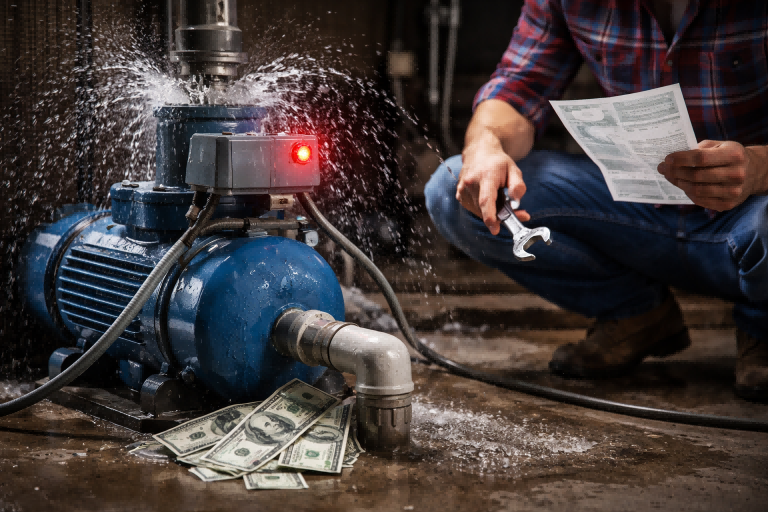
Yes, a water pump can be too powerful. An oversized pump causes rapid cycling, motor burnout, increased energy consumption, and can even damage your well or plumbing system. The key is matching the pump’s performance to the specific needs of your application.
The temptation to choose a pump with impressive horsepower is understandable.
It seems like a safe bet to ensure you’ll always have enough water pressure.
However, in water systems, balance is far more critical than brute force.
"Too powerful" often means "wrongly applied," leading to a host of problems that are both expensive and disruptive.
Instead of focusing on a single horsepower number, the professional approach is to understand the precise demands of the job.
This means analyzing two fundamental metrics that define a pump’s true performance: its flow rate and its head pressure.
Getting this balance right is the first and most important step to building an efficient, reliable, and long-lasting water system.
Flow vs. Head: Understanding True Pump Power
You bought a pump with high horsepower, but it’s not delivering the pressure you need.
This happens when you focus on one metric instead of the complete performance profile.
A pump’s power is a balance between flow rate (volume) and head (pressure). An overpowered pump is one where either metric is far too high for the application, creating inefficiency and system strain.
The term "power" is often misused in the pump industry.
True performance is not a single number but a dynamic relationship between the volume of water moved and the pressure it can overcome.
Understanding these two interconnected characteristics is essential for any distributor or installer aiming to provide clients with an effective solution rather than just a powerful motor.
A pump that looks strong on paper may be completely wrong for the job.
Deconstructing Performance: The Two Pillars
Every pump operates along a performance curve, which shows its flow rate at various head pressures.
You must analyze this curve to make a proper selection.
- Flow Rate (GPM/LPM): This measures the volume of water the pump moves per unit of time, typically in gallons per minute (GPM) or liters per minute (LPM). High flow is necessary for applications like large-scale irrigation or filling reservoirs quickly. Centrifugal pumps with plastic or stainless steel impellers are designed for high flow.
- Head (Feet/Meters): This is the vertical distance the pump can lift water. It represents the pump’s ability to overcome gravity and friction. High head is critical for deep wells or pushing water to elevated tanks. Progressing cavity (screw) pumps, for instance, are designed specifically for high-head, low-flow scenarios.
A pump might offer an impressive 50 GPM, but if that’s at zero head, it may only deliver 10 GPM when it has to lift water 100 feet.
Ignoring the head requirement is a primary cause of systems being either underpowered or wastefully overpowered.
The Critical Match: Application Determines Design
A pump is only "powerful" if its design matches the application’s demands.
Choosing the wrong type is a common mistake.
For example, using a high-flow irrigation pump to supply a single home from a deep well would be an inefficient and damaging choice.
The pump would cycle constantly, drawing massive amperage on startup, stressing the motor and electrical components, and achieving very little of its potential flow due to the high head resistance.
Conversely, using a high-head screw pump for a shallow irrigation system would deliver a frustratingly small amount of water.
It has the "power" to push water very high, but it lacks the design to move large volumes.
This mismatch is the true definition of an improperly powered system.
The Hidden Costs of an Oversized Pump
You selected a high-horsepower pump to be safe.
Now you’re dealing with constant motor failures, high electricity bills, and your well is drawing down too fast, risking permanent damage to the aquifer.
An oversized pump is a financial and mechanical liability. It leads to rapid on-off cycling which overheats the motor, wastes up to 50% more energy, and can cause destructive well drawdown and cavitation.
The decision to oversize a pump, often made with good intentions, introduces a cascade of destructive consequences.
It’s a classic case of overkill, where the excess capacity works against the system’s health, reliability, and efficiency.
The problems created by an overpowered pump are not minor inconveniences; they are significant operational issues that impact everything from component lifespan to the sustainability of the water source itself.
For distributors, understanding these risks is key to guiding clients toward smarter, more sustainable investments.
Mechanical Destruction from a Mismatch
The most immediate damage from an oversized pump is to the equipment itself.
- Rapid Cycling and Motor Burnout: An oversized pump fills the pressure tank extremely quickly, causing the pressure switch to shut it off. As water is used, the pressure drops rapidly, and the pump is forced to start again. This constant on-off cycling can happen every few minutes, generating immense heat in the motor windings. This is the leading cause of premature motor failure and drastically shortens the pump’s service life from years to months.
- Thrust Bearing and Impeller Wear: Each time a powerful submersible pump starts, it creates a massive upward and downward thrust on the shaft. Excessive cycling concentrates this wear and tear on the thrust bearings and impellers, leading to mechanical failure.
Financial and Environmental Consequences
The damage extends beyond the pump to your wallet and the environment.
- Extreme Energy Inefficiency: An electric motor consumes the most energy during startup. A constantly cycling oversized pump spends a large portion of its runtime in this high-draw startup phase. This can increase energy consumption by 30-50% compared to a correctly sized pump that runs for longer, more continuous periods. For a solar-powered system, this means a much larger and more expensive solar array is needed just to handle the repeated inrush current.
- Well Drawdown and Aquifer Damage: A pump that removes water faster than the well can naturally recharge causes "drawdown." If severe, the water level can drop below the pump’s intake, causing it to run dry and burn out. In extreme cases, excessive drawdown can permanently damage the porous rock formations of the aquifer, reducing the well’s future yield.
| Problem | Consequence of Oversized Pump |
|---|---|
| Mechanical Stress | Rapid on-off cycling leads to motor overheating and premature burnout. |
| Energy Consumption | Frequent high-amperage startups waste energy and increase electricity costs. |
| Well Health | Excessive drawdown can damage the aquifer and cause the pump to run dry. |
| System Wear | Constant powerful startups cause accelerated wear on bearings and impellers. |
The Engine of Efficiency: Why the Motor Matters
You’re trying to build a cost-effective solar pumping system.
But an inefficient motor forces you to buy more solar panels, increasing system cost by 30% or more just to compensate for wasted energy.
The solution is a high-efficiency Brushless DC (BLDC) motor. With over 90% efficiency, it converts more solar energy into water flow, reducing the required number of solar panels and lowering total system cost.
The conversation about an overpowered pump is often a conversation about wasted energy.
The most direct way to combat this waste is to attack it at its source: the motor.
The motor’s ability to convert electrical power into mechanical rotation is the single most important factor in a pump system’s overall efficiency.
Outdated motor technology wastes a huge percentage of incoming power as heat.
Modern motor technology minimizes this waste, ensuring that the power you generate is used for its intended purpose: moving water.
The Inefficiency of Old Technology
Many generic or low-cost pumps still use brushed DC or AC induction motors.
While functional, their efficiency ratings are often poor.
- Brushed Motors: These motors rely on physical carbon brushes to transmit power. The friction and electrical arcing inherent in this design limit their efficiency to around 60-75%. This means for every 1000 watts of solar power, up to 400 watts are lost as useless heat.
- AC Induction Motors: While reliable, standard AC motors in pump applications also suffer from lower efficiencies, especially when operated away from their optimal speed and load.
This wasted energy requires you to oversize the power source—whether it’s more solar panels or a higher electricity bill—just to achieve the desired performance.
The BLDC Permanent Magnet Advantage
Modern, high-performance solar water pumps are built around a Brushless DC (BLDC) permanent magnet motor.
This technology represents a quantum leap in efficiency.
- Efficiency Exceeding 90%: By using powerful neodymium iron boron permanent magnets and eliminating friction-prone brushes, BLDC motors convert over 90% of electrical energy into pumping power. The same 1000 watts of solar input now delivers 900+ watts of useful work.
- Compact and Powerful Design: These advanced motors are significantly smaller and lighter. A BLDC motor can be up to 47% smaller and 39% lighter than a traditional motor of equivalent output, making installation easier and cheaper.
- Unmatched Reliability: With no brushes to wear out, BLDC motors are virtually maintenance-free and have a significantly longer operational lifespan. This is a critical selling point for distributors supplying pumps for remote, off-grid locations.
Choosing a pump with a high-efficiency BLDC motor is the most strategic decision a distributor can make.
It directly reduces the client’s upfront investment in solar panels and their long-term operating costs, creating a value proposition that is difficult to beat.
The Smart Solution: Taming Power with a Controller
Your powerful solar pump works great on sunny days but is useless at night or when it’s cloudy.
You’re forced to choose between daytime-only water and installing a separate, expensive backup system.
An AC/DC hybrid controller solves this. It intelligently manages power, allows you to adjust pump speed to prevent overpowering, and automatically switches to grid or generator power to guarantee a 24/7 water supply.
A powerful pump is only useful if its power can be controlled and applied when needed.
The final piece of a modern, efficient water system is not in the pump or the motor, but in the "brain" that manages them: the controller.
A smart controller transforms a pump from a blunt instrument into a precision tool.
It optimizes energy use, protects the equipment, and provides the ultimate flexibility to adapt to changing conditions and demands.
For distributors, offering a system with an advanced controller elevates the product from a simple commodity to a complete, intelligent water management solution.
The Power of Smart Control
A state-of-the-art controller offers features that are essential for any solar pumping application.
- Maximum Power Point Tracking (MPPT): This is the core intelligence of a solar controller. MPPT technology constantly analyzes the output of the solar panels and adjusts the electrical load to extract the absolute maximum wattage available, regardless of sun intensity. An MPPT controller can boost a system’s daily water output by up to 30% compared to a direct connection.
- Variable Speed Control: This feature directly solves the "overpowered" problem. A controller with variable speed allows the user to precisely regulate the pump’s motor speed. You can run the pump at 100% to fill a large tank quickly, then dial it back to 40% for low-flow drip irrigation, all while consuming significantly less power. This level of control prevents system strain and maximizes efficiency.
Uninterrupted Water: The AC/DC Hybrid Advantage
The most significant innovation in pump control is the AC/DC hybrid capability.
This technology provides total water security by integrating solar and grid power seamlessly.
The controller is designed with dual power inputs and intelligent logic:
- Solar First: The system will always prioritize and use 100% free DC power from the solar panels whenever it is available.
- Hybrid Assist: On overcast days when solar power is reduced, the controller will draw as much power as it can from the panels and intelligently blend in the minimum amount of AC power needed to maintain the desired pump speed. This maximizes the use of free solar energy.
- Automatic Backup: When there is no solar input at night or during storms, the controller automatically and seamlessly switches over to the AC power source (grid or generator), ensuring the water supply is never interrupted.
This hybrid functionality gives the end-user the economic benefits of solar without sacrificing the 24/7 reliability of a traditional electric pump.
Conclusion
A water pump can be too powerful.
The solution is a balanced system: the right pump type, a high-efficiency BLDC motor, and an intelligent AC/DC controller for ultimate control.
Frequently Asked Questions
What happens if a pump is oversized for a well?
An oversized pump will short-cycle, leading to motor burnout. It can also cause excessive well drawdown, potentially damaging the aquifer and the pump itself by running dry.
Can you run a 3-phase pump on single-phase power?
Yes, you can run a 3-phase pump on single-phase power by using a Variable Frequency Drive (VFD), which converts the single-phase input to a 3-phase output for the motor.
What is pump short cycling?
Short cycling is when a pump turns on and off too frequently. It’s usually caused by an oversized pump filling a pressure tank too quickly or a waterlogged pressure tank.
How do I know if my well pump is too big?
Signs include very short run times (under one minute), loud noises when starting or stopping (water hammer), and a high electricity bill. A professional assessment is recommended.
How do you calculate the correct pump size?
Calculating pump size requires knowing the Total Dynamic Head (vertical lift + friction loss) and the desired flow rate (GPM). Consult a pump’s performance curve to find a match.
Is a bigger water pump better?
No. A bigger pump is only better if its performance curve matches the specific requirements of your system. An oversized pump is inefficient, unreliable, and costly to operate.
Does a higher HP pump use more electricity?
Yes, a higher horsepower (HP) pump has a more powerful motor that draws more amperage, resulting in higher electricity consumption, especially during its frequent startup cycles if oversized.