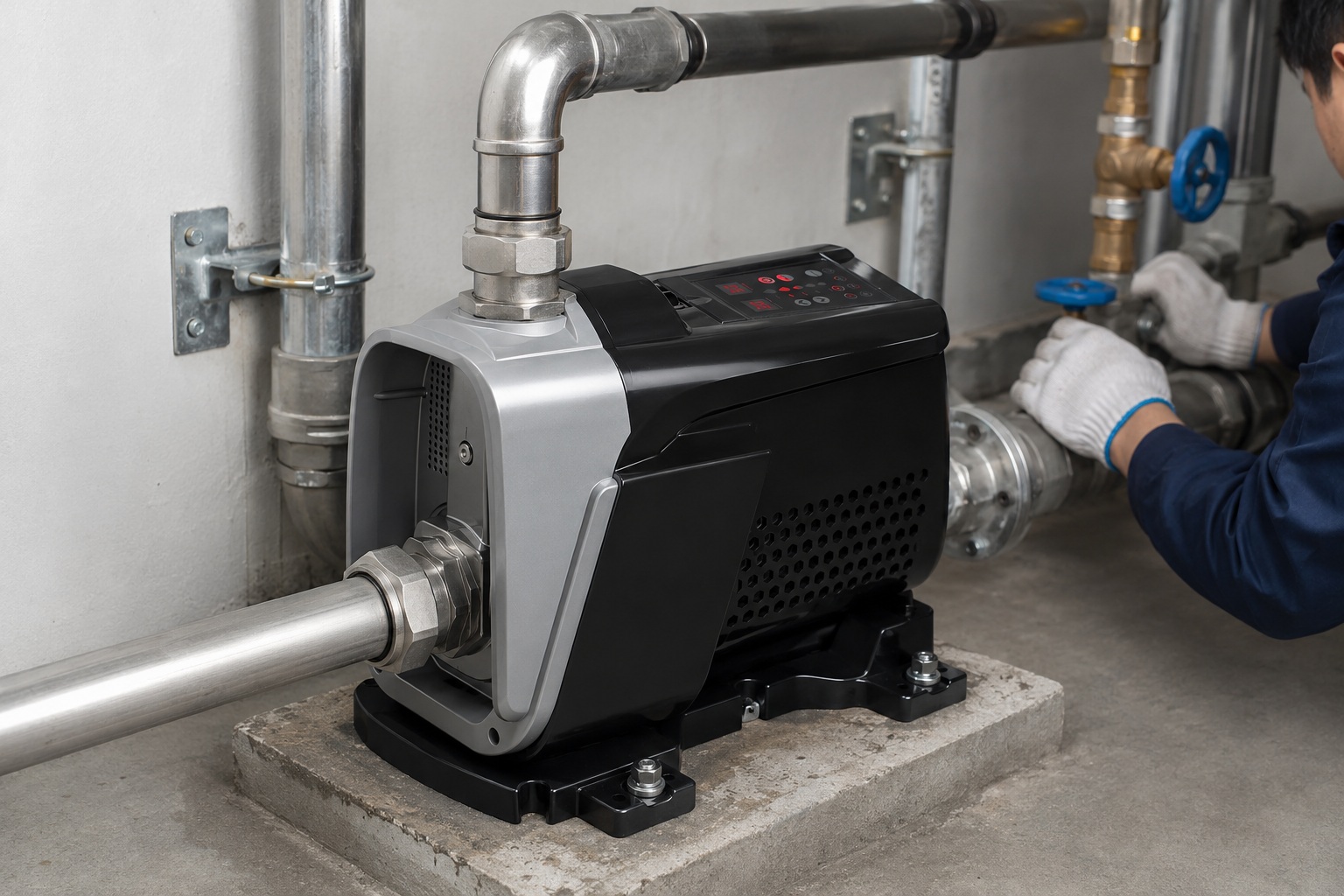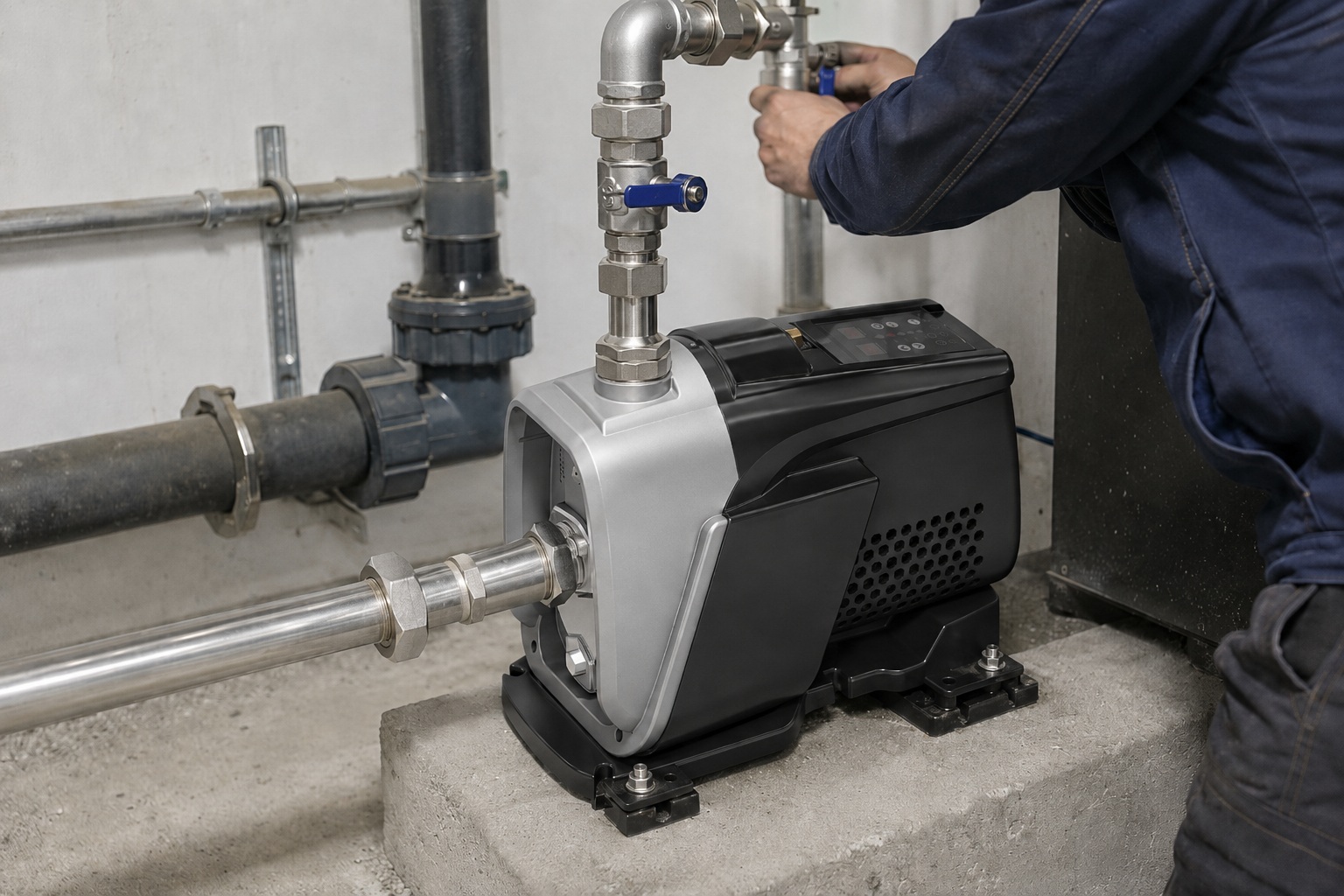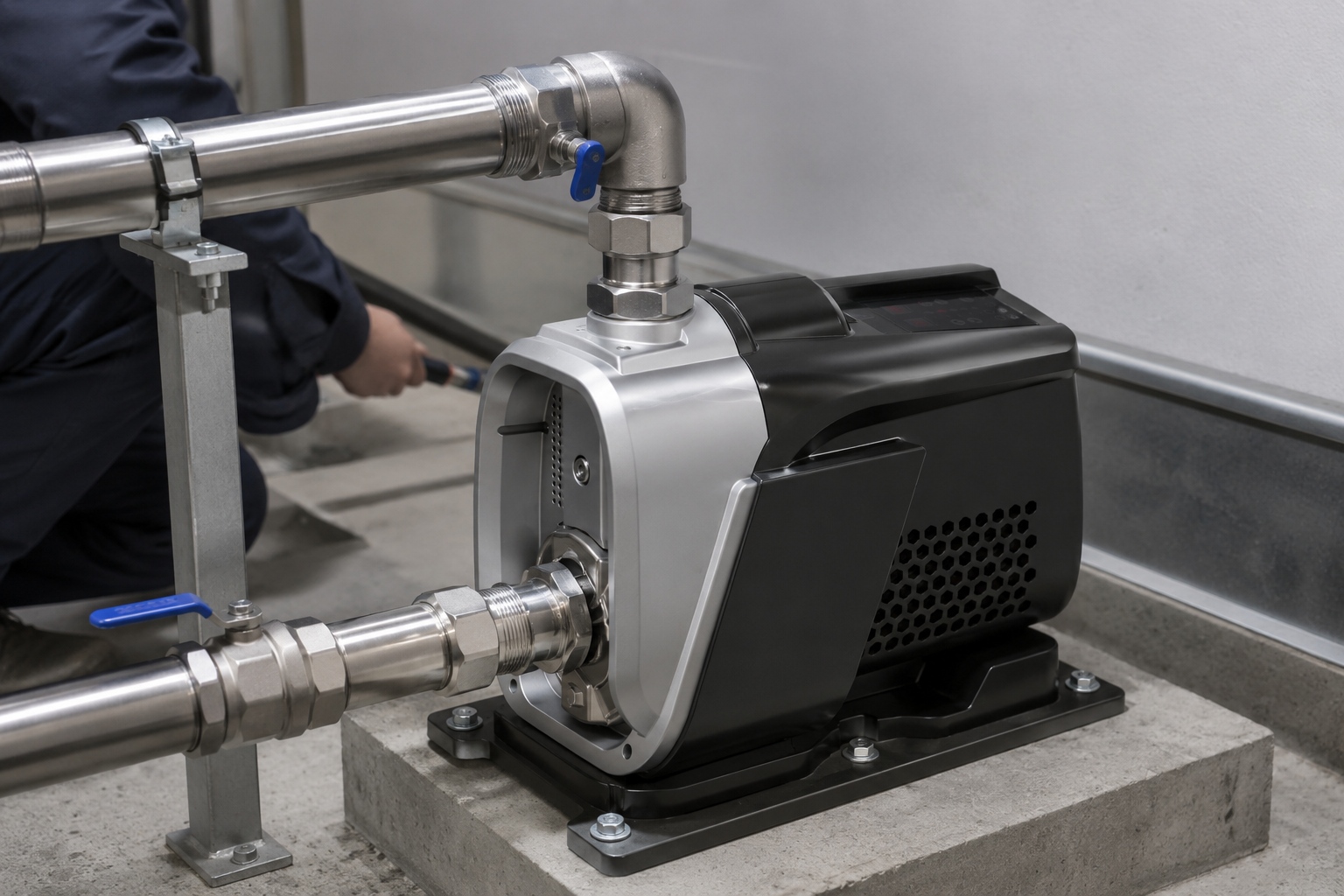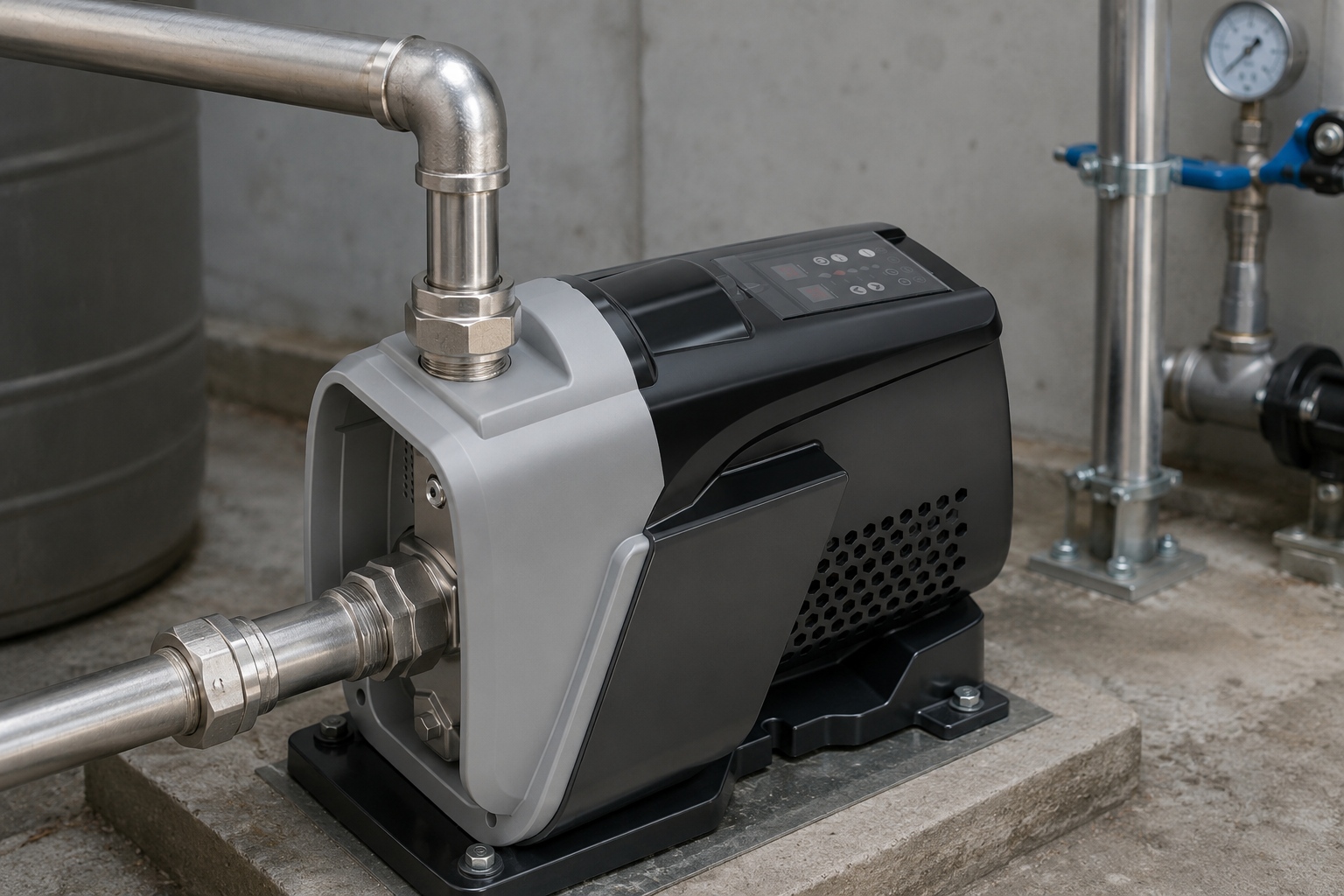
Struggling to choose the right pump for your system?
Making the wrong choice can lead to inefficiency and wasted space.
Let’s clarify the key differences to help you decide.
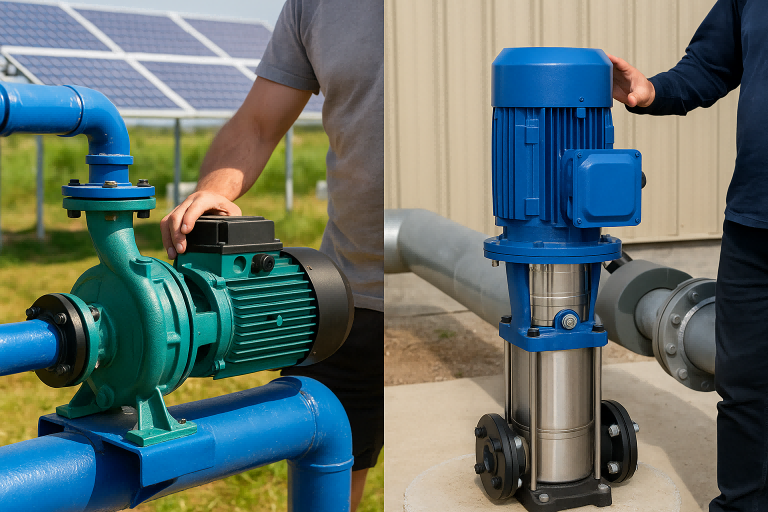
Inline pumps fit directly into a pipeline, with suction and discharge ports on the same axis. Vertical pumps have a vertical shaft and a top-mounted motor, designed to save floor space. Their primary differences lie in their installation footprint, flow path, and typical pressure capabilities.
Choosing the right pump is a critical decision in any fluid handling system.
The choice between an inline and a vertical pump often comes down to the specific demands of the application.
These demands include available space, required pressure, flow rate, and maintenance considerations.
While both are types of centrifugal pumps, their fundamental design differences dictate where they perform best.
Understanding these distinctions is the first step toward designing an efficient, reliable, and cost-effective system.
This guide will break down each pump type, compare them directly, and help you determine which is the superior choice for your needs.
Understanding the Core Design: Inline Pumps
Are you looking for a pump that integrates seamlessly into your existing pipework?
Inline pumps are designed for exactly this purpose, simplifying installation.
They offer a straightforward solution for many circulation and boosting needs.
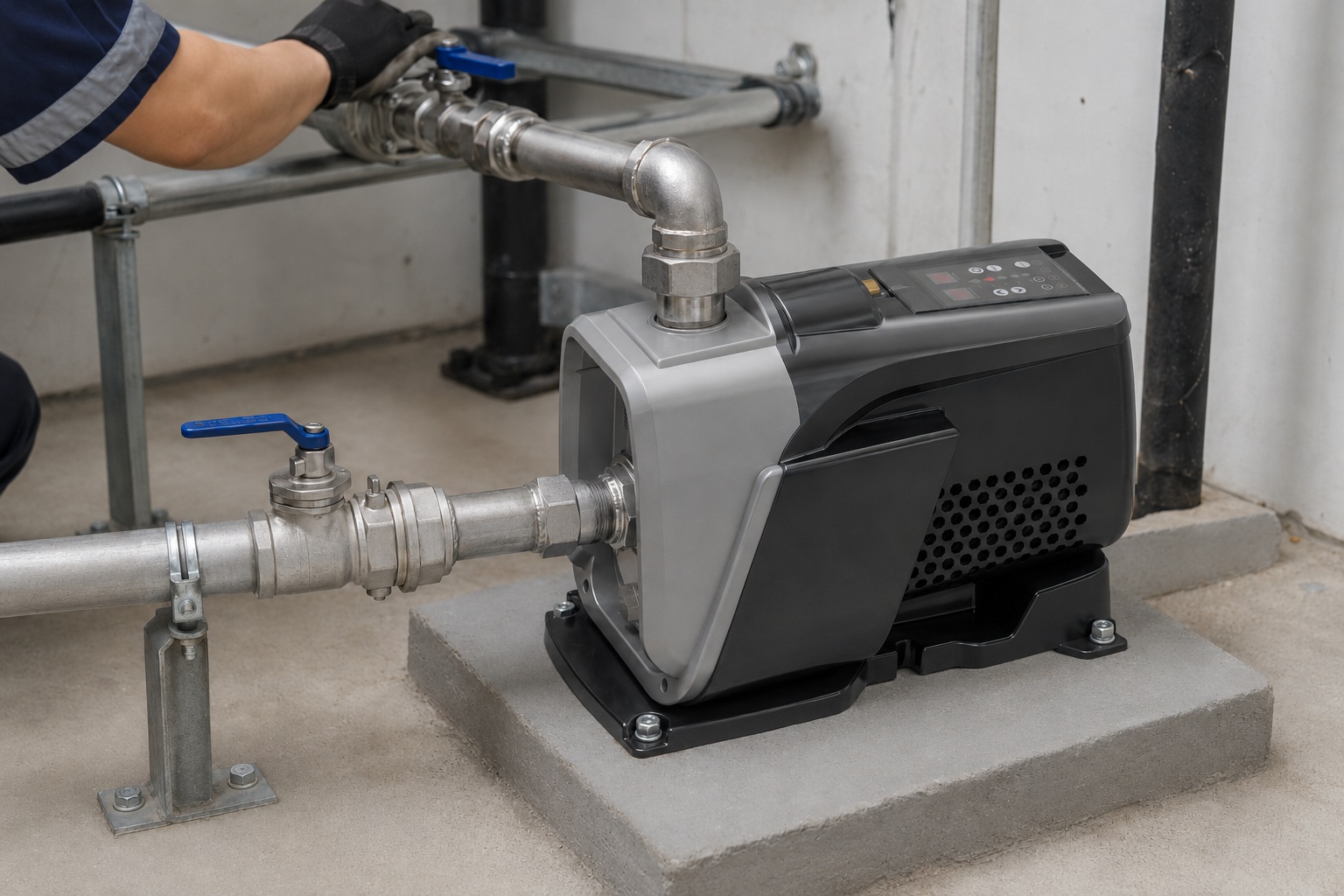
An inline pump is a centrifugal pump where the suction and discharge connections are in a straight line, or "in line" with the piping. This design allows the pump to be mounted directly in the pipeline, often without needing a dedicated concrete base, saving both space and installation complexity.
At its heart, the inline pump is about simplicity and integration.
Its design philosophy revolves around becoming a part of the pipeline rather than an external attachment.
This makes it an incredibly popular choice for applications where space is a consideration and the piping layout is relatively straightforward.
Let’s explore the specific features that define this workhorse pump.
How Inline Pumps Work
The operation of an inline pump is elegantly simple.
Fluid enters through the suction nozzle and is directed into the center, or eye, of the impeller.
The impeller, which is a rotating component with vanes, spins rapidly.
This rotation flings the fluid outwards by centrifugal force.
As the fluid is forced away from the center, its velocity increases significantly.
It then enters the volute, which is a snail-shaped casing surrounding the impeller.
The volute is designed to slow the fluid down.
As the fluid decelerates, its kinetic energy (velocity) is converted into potential energy (pressure).
Finally, the pressurized fluid exits through the discharge nozzle, which is positioned 180 degrees from the suction nozzle, maintaining the straight flow path.
Key Construction Features
Several design elements are characteristic of inline pumps.
- Aligned Nozzles: The defining feature is that the suction and discharge nozzles are on the same centerline. This allows for direct installation into a straight run of pipe.
- Mounting Options: They can be mounted either horizontally or vertically, depending on the manufacturer’s specifications and the system layout, offering great flexibility.
- Coupling Types:
- Close-Coupled: In this common design, the impeller is mounted directly on the motor shaft. This creates a very compact, perfectly aligned unit that requires no shaft alignment maintenance.
- Flexibly-Coupled: Larger inline pumps may use a separate pump shaft connected to the motor shaft via a flexible coupling. This allows the motor to be removed for service without disturbing the pump casing or piping.
Advantages of Inline Pumps
The inline pump design offers several compelling benefits.
It often leads to a lower initial purchase price compared to other pump types of similar capacity.
The installation process is typically faster and less expensive.
This is because they often don’t require the construction of a concrete foundation or complex piping elbows.
Their compact nature, especially in close-coupled models, saves valuable floor space in mechanical rooms.
Maintenance is also simplified, as many designs allow for the removal of the motor and impeller without disconnecting the pump casing from the pipeline.
Common Applications
You will find inline pumps in a wide variety of systems.
They are a staple in commercial Heating, Ventilation, and Air Conditioning (HVAC) systems for circulating hot and chilled water.
They are also frequently used for domestic water pressure boosting in smaller residential and commercial buildings.
Other common uses include general water circulation loops and auxiliary roles in larger industrial systems.
A Closer Look at Vertical Pumps
Need to generate very high pressure but have limited floor space?
Vertical pumps are the go-to solution for high-head applications.
They achieve this in a remarkably small footprint.
A vertical pump is a centrifugal pump with a vertically oriented shaft. The motor is mounted directly above the pump end, creating a design that minimizes the required floor space. They are particularly known for their ability to generate high pressures, especially in multi-stage configurations.
The vertical pump is an engineering solution designed for efficiency in both space and performance.
By stacking components vertically, it solves the common problem of crowded mechanical rooms.
More importantly, its design lends itself perfectly to multi-stage construction.
This allows it to achieve pressures that would be difficult or inefficient for most single-stage inline pumps to reach.
This combination of a small footprint and high-pressure capability makes it indispensable in many demanding applications.
The Mechanics of Vertical Pumps
A vertical pump operates on the same centrifugal principle as an inline pump, but with a key difference in its layout and flow path.
Water typically enters at the bottom of the pump and is directed into the first impeller.
The impeller pressurizes the fluid and discharges it into a diffuser.
In a multi-stage pump, this diffuser then guides the fluid into the eye of the next impeller, which is stacked directly above the first.
Each successive impeller-diffuser stage adds more pressure to the fluid.
This "stacking" effect allows the pump to achieve very high discharge pressures.
After passing through the final stage, the highly pressurized fluid is collected and directed out of the discharge nozzle, which is typically located at the top of the pump, near the same level as the suction nozzle but on a different plane.
Distinctive Design Elements
Vertical pumps have several features that set them apart.
- Vertical Shaft Orientation: The most obvious feature is the vertical alignment of the motor, shaft, and pump end.
- Minimal Footprint: This design requires significantly less floor area compared to a horizontally-mounted pump of similar power, making it ideal for tight installations.
- Multi-Stage Capability: The vertical layout is perfectly suited for adding multiple impeller stages to a common shaft within a single casing, efficiently multiplying the pressure output.
- Serviceability: In many designs, the motor can be lifted straight off the top for service or replacement without disturbing the pipe connections below.
Benefits of Vertical Pumps
The primary advantage of a vertical pump is its space-saving design.
For high-rise buildings and compact industrial facilities, this is often a deciding factor.
Their ability to be configured as multi-stage pumps makes them exceptionally good at producing high head (pressure).
This is essential for lifting water to great heights or for use in high-pressure systems like reverse osmosis and boiler-feed applications.
The mechanical seal is also often under less radial stress due to the design, which can contribute to a longer service life.
Typical Use Cases
Vertical multi-stage pumps are the standard choice for water pressure boosting in tall buildings.
They are critical components in industrial boiler feed systems, where high pressure is needed to inject water into a pressurized steam drum.
You will also see them used in industrial washing systems, filtration plants (especially reverse osmosis), and as jockey pumps in fire suppression systems to maintain system pressure.
A Head-to-Head Comparison: Inline vs. Vertical
Confused about which pump truly fits your project’s needs?
A direct comparison highlights the distinct strengths of each type.
This will guide you to the optimal choice for performance and cost.
The primary difference is orientation and footprint; inline pumps fit within the pipe’s run, while vertical pumps stand upright to save floor space. This leads to key distinctions in pressure capabilities, installation complexity, and ideal applications, making one clearly superior for specific jobs.
Choosing between these two pump designs is not about which is "better" overall, but which is better for a specific task.
An engineer must weigh factors like the required system pressure (head), the available physical space, the budget for installation, and long-term maintenance plans.
A side-by-side analysis of their core attributes provides the clarity needed to make a well-informed decision that ensures system efficiency and reliability for years to come.
Performance and Pressure Capabilities
This is one of the most significant differentiators.
- Inline Pumps: Most inline pumps are single-stage designs. They are excellent for circulation and providing moderate pressure boosts. They are champions of high flow rates at lower to medium pressures.
- Vertical Pumps: Vertical pumps, especially multi-stage models, are built for pressure. By stacking impellers, they can achieve very high head ratings efficiently. They are the clear choice when the primary requirement is high pressure rather than just high flow.
Consider a modern pump system using a Variable Frequency Drive (VFD).
A VFD can intelligently control the speed of either pump type to maintain a constant, stable water pressure.
This technology ensures the pump only uses the energy it needs, dramatically improving efficiency.
When paired with a high-pressure vertical pump, a VFD can deliver precise pressure control for a high-rise building.
When paired with an inline pump, it can provide energy-efficient circulation in an HVAC loop.
Installation and Space Requirements
The physical installation is a major practical consideration.
| Feature | Inline Pump | Vertical Pump |
|---|---|---|
| Footprint | Requires more linear pipe space. | Requires minimal floor space. |
| Foundation | Often requires no foundation. | Usually requires a small concrete pad. |
| Piping | Simpler, straight-in, straight-out. | Requires elbows to connect to main lines. |
| Flexibility | Can be mounted vertically or horizontally. | Must be mounted vertically. |
The choice here often depends on the layout of the mechanical room.
If there is a long, straight run of pipe available, an inline pump is incredibly easy to install.
If floor space is at a premium but there is ample vertical height, a vertical pump is the obvious solution.
Maintenance and Serviceability
Ease of maintenance impacts the total cost of ownership over the pump’s life.
- Inline Pumps: Many "back pull-out" designs allow the motor, seal, and impeller to be removed as a single assembly for servicing. This can be done without touching the pump casing or disconnecting the pipes, which is a major time-saver.
- Vertical Pumps: Servicing the motor is often very easy, as it’s accessible at the top. However, replacing seals or impellers on a multi-stage pump can be more complex. It may require disassembling the entire stack of stages, which is a more labor-intensive process.
Ultimately, the best choice depends entirely on the system’s goals.
For high-pressure, low-footprint needs, the vertical pump excels.
For simple, cost-effective circulation and moderate boosting, the inline pump is often the perfect fit.
Conclusion
The choice between inline and vertical pumps boils down to your specific application’s needs for space, pressure, and flow, with each design offering distinct advantages in different scenarios.
FAQs
What is the advantage of a vertical inline pump?
A vertical inline pump combines the space-saving benefit of vertical mounting with the simple, straight-through piping of an inline design, making it ideal for compact installations.
What is the main purpose of a vertical pump?
The main purpose of a vertical pump, especially multi-stage models, is to generate high pressure (head) efficiently while occupying a minimal amount of floor space.
Are inline pumps less efficient?
Inline pumps are not inherently less efficient. Their efficiency depends on operating at their Best Efficiency Point (BEP), just like any centrifugal pump.
Can inline pumps be used for high-pressure applications?
While standard inline pumps are for lower pressures, some specialized, high-performance models exist. However, vertical multi-stage pumps are generally the preferred choice for high-pressure duties.
Is it easier to service an inline or vertical pump?
Servicing is different for each. Inline pumps often allow easy removal of the motor and impeller without disturbing pipes, while vertical pumps offer simple motor access but can have more complex seal replacements.
What is a vertical turbine pump?
A vertical turbine pump is a specific type of vertical pump designed to be submerged, often used in deep wells or sumps to lift water from a significant depth.
Why do some pumps have the motor on top?
Placing the motor on top, as in vertical pumps, saves valuable floor space and can protect the motor from potential flooding on the mechanical room floor.
What does "head" mean in relation to pumps?
"Head" is a measure of the pressure a pump can generate, expressed as the height of a column of water it can lift. High-head pumps are high-pressure pumps.