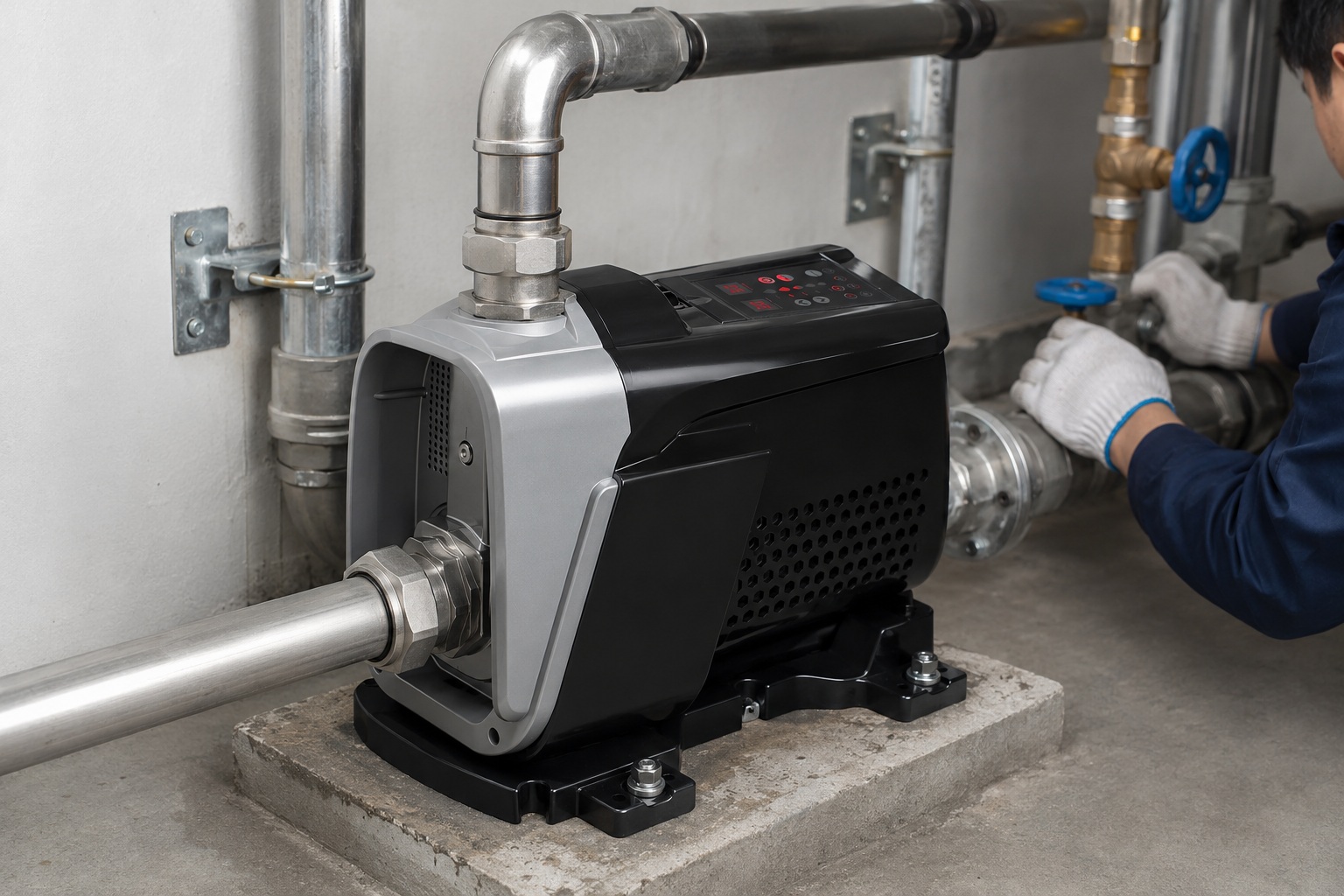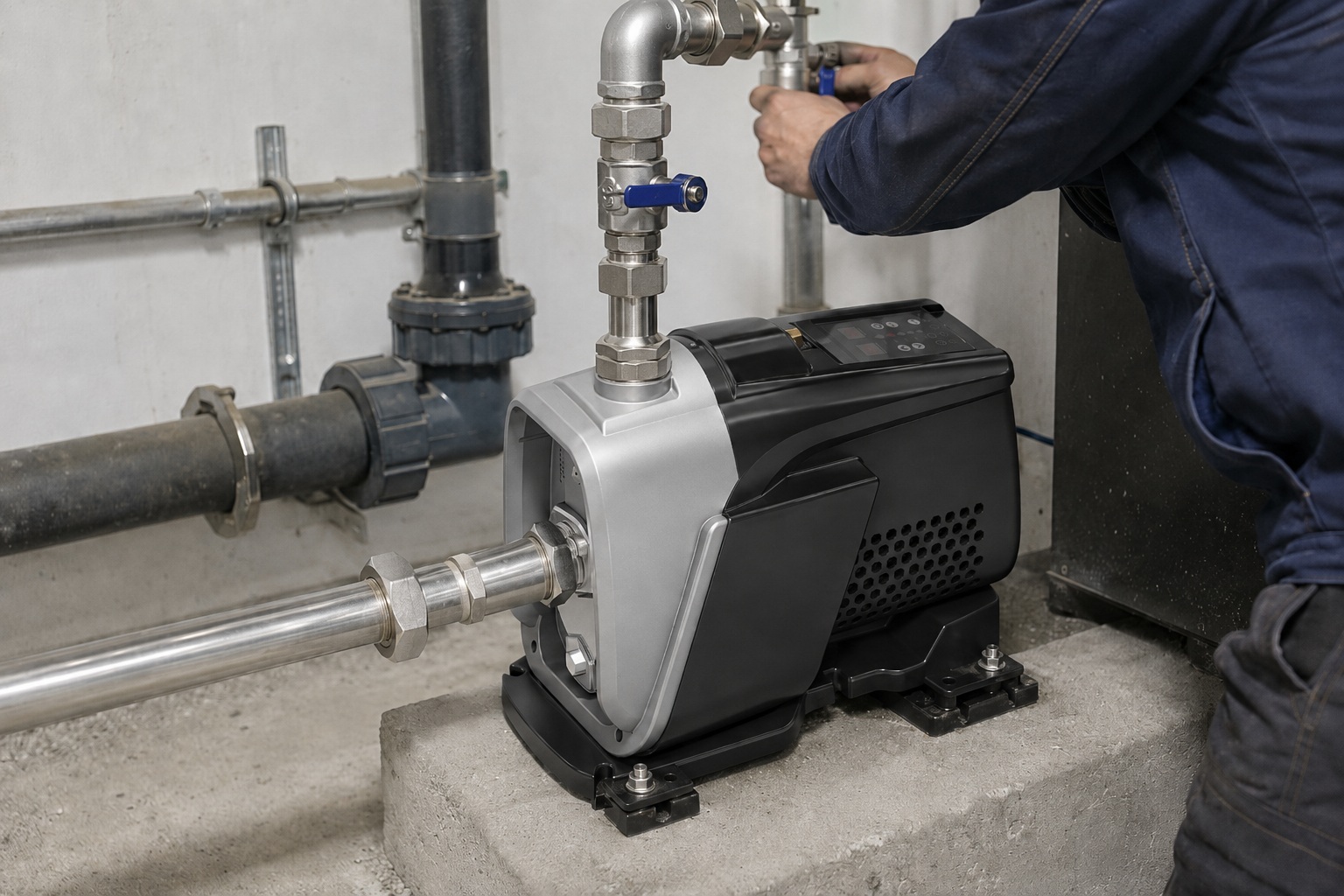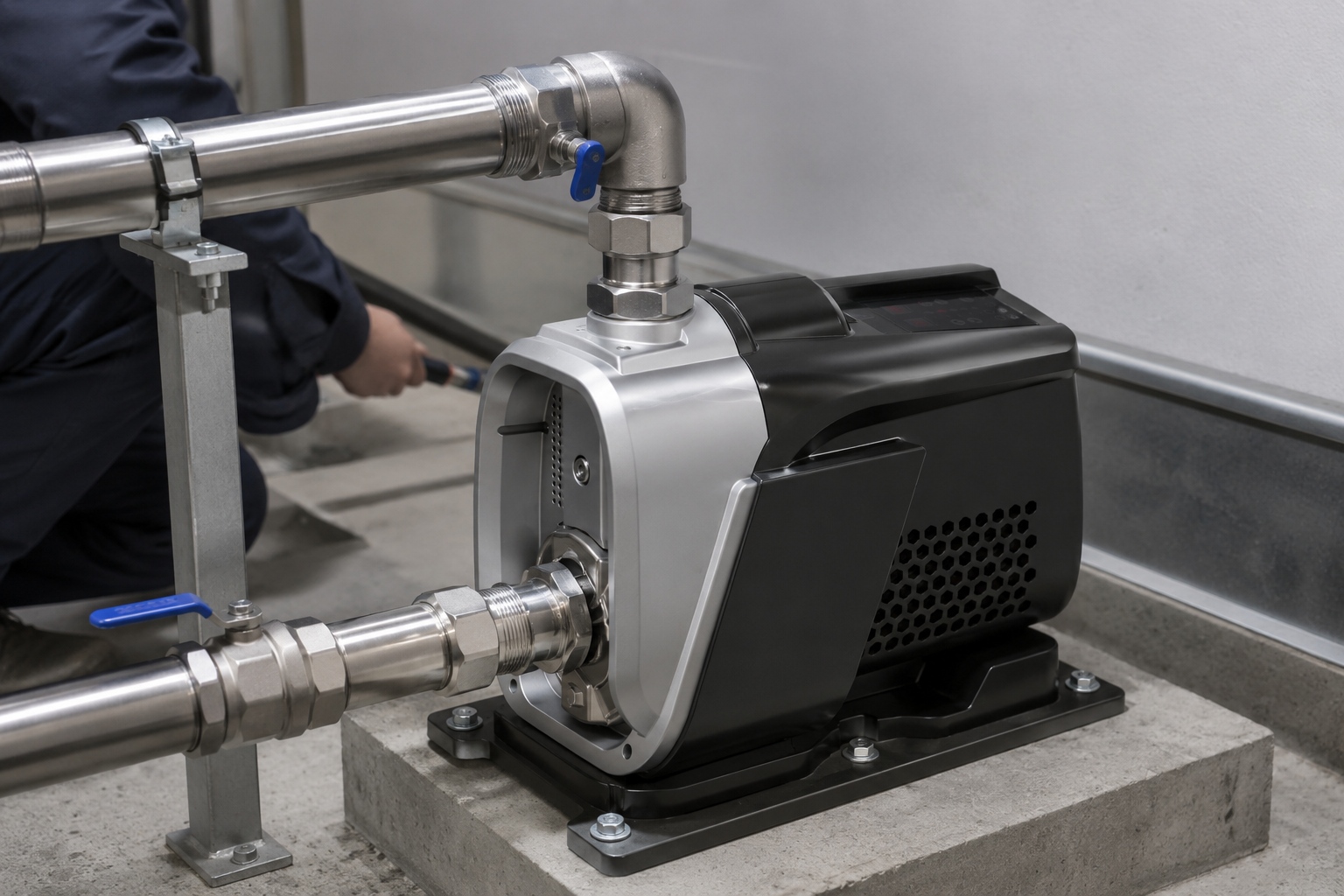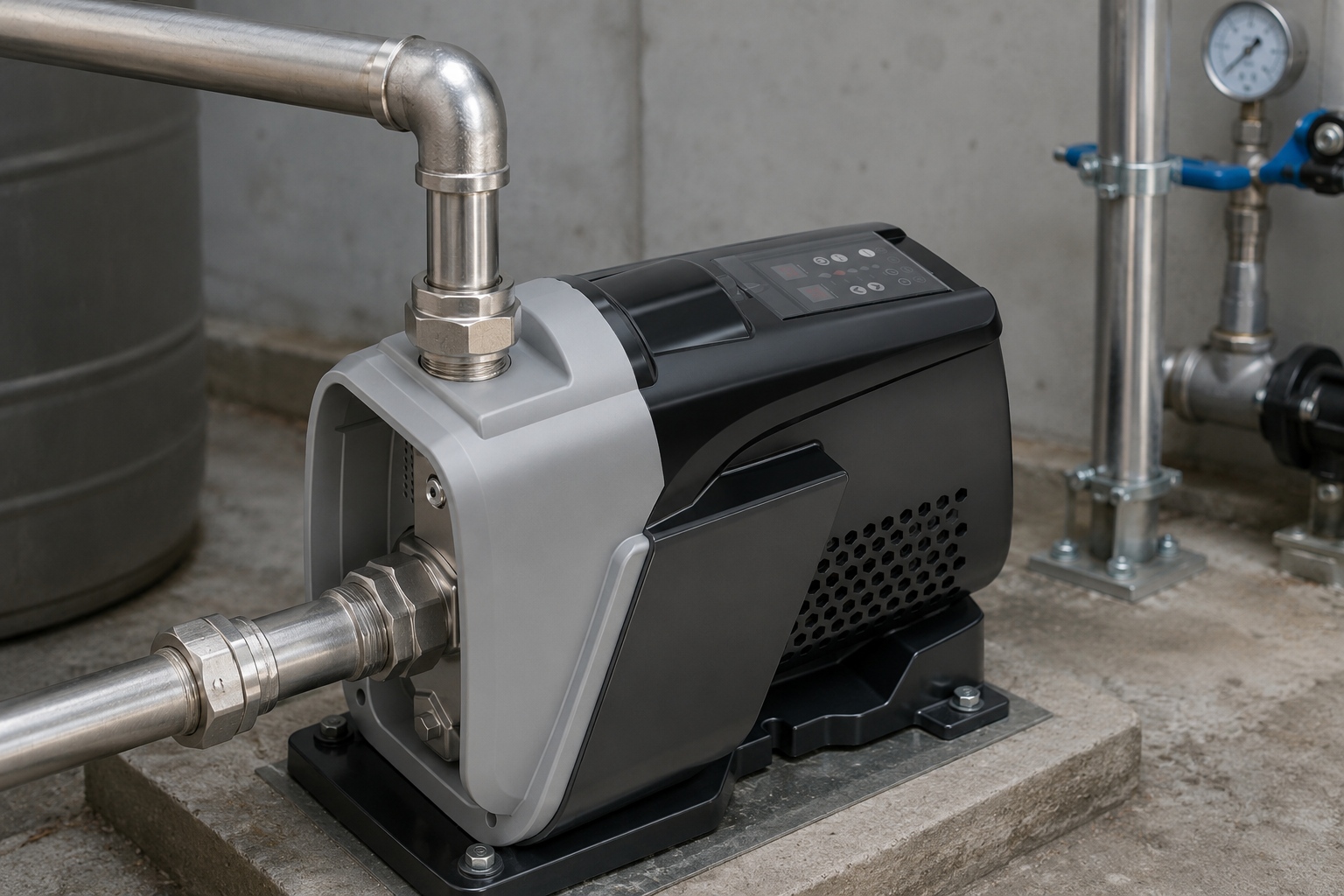
Your pump motor is running, but no water is coming out.
This frustrating situation means your pump has lost its prime, risking serious damage from running dry.
The best way to prime a water pump is to turn it off, open the priming plug, and slowly fill the pump casing and suction line with water until all air is expelled.
This process removes airlocks and restores the vacuum needed for operation.
Failing to prime a pump correctly is one of the most common and preventable causes of pump failure.
A pump is designed to move a liquid, not air.
When it’s full of air, the internal components, like the impeller, spin uselessly without creating the necessary pressure differential to draw water.
More importantly, the water that flows through a pump also serves as its primary coolant and lubricant.
Without this flow, friction generates intense heat very quickly.
This can melt the durable components of a solar plastic impeller pump or destroy the precise seals in minutes.
Understanding the correct priming procedure is not just about getting the water flowing again; it’s about protecting your investment and ensuring the long-term reliability of your entire water system.
This guide will walk you through the process, ensuring you do it safely and effectively every time.
Understanding Why Priming is Essential
Your pump suddenly stops working, though the motor sounds fine.
This isn’t a mechanical failure; it’s an airlock, and the pump is starving for water.
Priming a pump is essential because it removes all air from the pump casing and suction line.
This allows the impeller to create a vacuum, which is necessary to draw water from the source and begin the pumping cycle.
A surface pump, particularly a centrifugal type, works by using a spinning impeller to throw water outward.
This action creates a low-pressure zone, or vacuum, at the center of the impeller, which pulls more water in from the source through the suction line.
This entire process relies on a simple principle of physics: the pump can only create this vacuum if it is already full of water.
Air is about 800 times less dense than water, so the impeller cannot effectively "grip" it to create the necessary suction.
When a pump is filled with air instead of water, it’s called being "air-bound" or having "lost prime."
The motor runs, the impeller spins, but nothing happens.
That’s the "why" of priming, but the "what happens if you don’t" is even more critical.
The Dangers of Running Dry
Running a pump without water is called "running dry," and it is catastrophic for the equipment.
- Overheating: Water flowing through the pump dissipates the heat generated by the motor and the friction of the moving parts. Without water, temperatures can skyrocket in under a minute.
- Mechanical Seal Failure: The mechanical seal is a critical component that prevents water from leaking out along the motor shaft. It relies on a thin film of water for lubrication and cooling. Running dry causes the seal faces to overheat and crack, leading to a major leak.
- Component Damage: The intense heat can melt, warp, or destroy plastic components. In a high-flow solar plastic impeller pump, the impellers themselves can deform, rendering the pump useless. Even a robust solar stainless steel impeller pump can suffer seal failure from dry running.
Smart Protection Against Dry-Running
Modern solar water pump systems have built-in safeguards.
Pumps driven by a high-efficiency BLDC permanent magnet motor are often paired with an intelligent controller.
This controller monitors the motor’s power consumption.
When the pump is running dry, it draws significantly less power because there is no load (water) to move.
The controller recognizes this abnormal state and activates its dry-run protection feature, shutting the pump down automatically.
This saves the pump from self-destruction and alerts the user that priming or a water source issue needs to be addressed.
Step-by-Step Guide: The Standard Priming Method
You know you need to prime your pump, but you’re unsure of the exact steps.
Getting it wrong could mean the pump still won’t work, or you could introduce new problems.
The standard method involves turning off the power, locating and opening the priming port, and using a funnel to slowly fill the pump and suction line with water until it overflows.
Priming a surface pump is a straightforward process, but it requires careful attention to detail to ensure all the air is removed from the system.
This method applies to most centrifugal pumps, including booster pumps, irrigation pumps, and pool pumps.
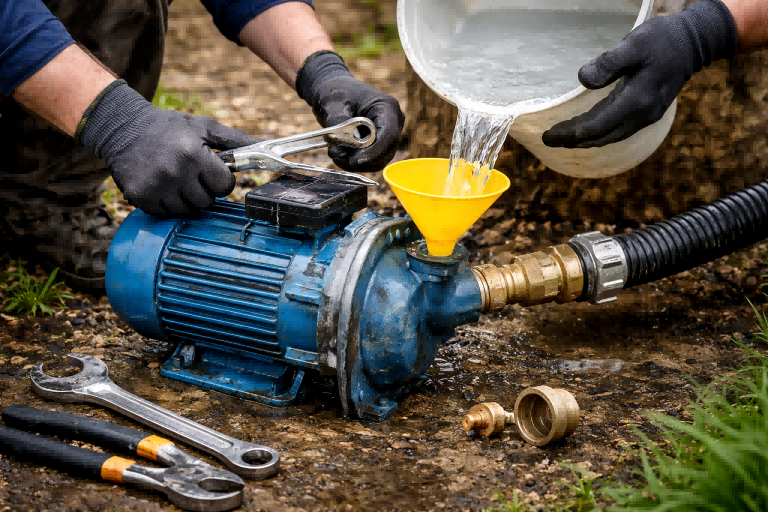
Before you begin, you will need a bucket of clean water, a wrench to open the priming plug, and possibly a funnel to make pouring easier.
The goal is to create a solid, unbroken column of water from the water source, through the suction line, and into the pump casing.
Following these steps precisely will give you the best chance of a successful prime on the first attempt.
The Priming Checklist: A Detailed Walkthrough
Follow these steps in order to ensure your pump is primed safely and correctly.
-
Step 1: Disconnect All Power
This is the most important safety step. Never work on a pump while it is connected to electricity. Go to the circuit breaker and switch off the power to the pump. For solar pumps, disconnect the solar panels from the controller. -
Step 2: Close the Discharge Valve
If your system has a valve on the outlet (discharge) pipe of the pump, close it. This will prevent water from flowing out of the pump as you try to fill it, making the priming process much easier. -
Step 3: Locate and Open the Priming Port
The priming port is almost always located on the top of the pump casing (the "wet end" of the pump). It will be a sealed plug, usually requiring a wrench to loosen and remove. Some pumps may also have small wing nuts or petcocks designed for bleeding air. -
Step 4: Slowly Fill with Water
Using your bucket and funnel, slowly pour water into the priming port. You should hear air gurgling out as the water displaces it. It’s crucial to pour slowly to allow all the trapped air to escape. Continue filling until water completely fills the pump casing and overflows from the priming port. -
Step 5: Replace the Priming Plug
Once the pump is full, securely tighten the priming plug. Use thread seal tape if necessary to ensure an airtight seal. An air leak at the priming plug is a common reason for a pump to lose its prime again. -
Step 6: Open the Discharge Valve
Slowly open the valve on the discharge side that you closed earlier. -
Step 7: Restore Power and Test
Go back to the breaker and restore power to the pump. It should start up and begin building pressure within about 30-60 seconds. You will hear the sound of the motor change as it begins moving water.
If the pump runs for more than a minute without building pressure, shut it off immediately and repeat the priming process.
If it still doesn’t work, you may have an air leak in your suction line.
Priming Pumps with a Foot Valve
Your pump primes perfectly but loses its prime as soon as it’s turned off.
You repeat the process daily, wasting time and water.
The problem lies at the end of your suction line.
For a pump with a suction lift, the best practice is to install a foot valve on the end of the intake line.
This one-way valve keeps the suction line and pump full of water, preventing loss of prime when the pump is off.
When a pump is situated above the water source (a condition known as "suction lift"), gravity is constantly trying to pull the water back down and out of the pump.
If there’s nothing to stop it, the water will drain out of the pump and suction line as soon as the pump shuts off, requiring you to re-prime it for every single use.
This is where a foot valve becomes essential.
A foot valve is a type of check valve, or one-way valve, that is installed at the very beginning of the suction line—the end that is submerged in the well, lake, or tank.
It allows water to be sucked into the pipe but prevents it from flowing back out.
This simple device effectively traps the prime, keeping the entire system ready for the next startup.
How a Foot Valve Simplifies Priming
A system with a properly functioning foot valve makes priming a much simpler task.
- One-Time Priming: In an ideal setup, you only need to prime the pump once during the initial installation. The foot valve will hold that prime indefinitely.
- Easier Filling: When you perform the initial prime, you are filling a sealed column. The water you pour into the pump casing fills not just the pump itself but the entire length of the suction pipe down to the foot valve.
- Reduced Wear and Tear: By eliminating the need for frequent re-priming, you also reduce the risk of accidentally starting the pump dry, which significantly extends the life of the pump’s seals and impellers.
Common Issues with Foot Valves
While essential, foot valves are also a potential source of problems.
| Foot Valve Problem | Symptom | Solution |
|---|---|---|
| Clogged Screen | The pump runs but pressure is very low or nonexistent. | The screen on the foot valve is blocked by debris. Pull the suction line and clean the screen thoroughly. |
| Stuck or Leaking Valve | The pump loses its prime slowly over hours or days. | The valve is not sealing completely due to wear or a small piece of debris. The valve needs to be cleaned or replaced. |
| Incorrect Installation | The system never holds a prime. | The foot valve may be installed backward or the pipe fittings may not be airtight. |
The type of pump can influence its vulnerability.
A high-flow solar plastic impeller pump used for farm irrigation is highly susceptible to clogs from leaves or weeds at the foot valve.
In contrast, a solar screw pump, praised for its high sand resistance in African wells, can still be starved of water if its foot valve becomes completely blocked.
Regularly inspecting and cleaning the foot valve is a key maintenance task for any suction lift pump system.
Pumps That Don’t Need Priming
You’re dealing with a very deep well and need a reliable water source.
The thought of priming a pump with hundreds of feet of pipe is impossible.
You need a different kind of solution.
Submersible pumps and self-priming pumps are the best solutions for applications where manual priming is impractical or impossible.
A submersible pump avoids the issue entirely by operating underwater, while a self-priming pump is designed to purge air automatically.
While understanding how to prime a pump is a critical skill, modern pump technology offers excellent alternatives that eliminate the need for manual priming altogether.
For many applications, especially those involving deep water sources or a need for automated, low-maintenance operation, choosing a pump that doesn’t require priming is the most strategic and reliable long-term choice.
These pumps are designed to either handle air or to be placed in a way that prevents air from ever entering the system in the first place.
This is particularly important in remote installations for agriculture or livestock watering in places like Australia or the Americas, where reliability is paramount.
The Submersible Pump Solution
This is the most common type of pump that does not need priming.
- How it Works: As the name suggests, the entire pump—including the motor and the pump end—is submerged deep within the water source (e.g., a well or a large tank). Because it is always underwater, air can never enter the pump casing. When it turns on, it is already surrounded by and filled with water.
- Key Advantages:
- No Priming Ever: This is their biggest advantage.
- High Efficiency: They are very efficient at pushing water up from great depths compared to sucking it up from the surface. A solar screw pump is a perfect example of a submersible pump designed to produce high head Webb, making it ideal for the deep wells found in Africa and Latin America.
- Quiet Operation: Since the pump is underwater, it operates almost silently.
- Pump Types: The three main types of solar deep well pumps—the solar screw pump, the solar plastic impeller pump, and the solar stainless steel impeller pump—are all submersible designs. They are powered by highly efficient, sealed BLDC permanent magnet motors designed for long life underwater.
The Self-Priming Pump
A self-priming pump is a specific type of surface pump designed to handle air.
- How it Works: It features an extra-large pump casing that acts as a reservoir. During the initial prime, this reservoir is filled with water. If the pump loses its prime, it uses the water trapped in its reservoir to created a liquid/air mixture, essentially "pumping" the air out of the suction line until it can draw a solid column of water again.
- Key Advantages:
- Automatic Air Purging: It can re-prime itself automatically, making it ideal for applications where the suction line may occasionally draw in air.
- Convenience: It offers the convenience of a surface pump (easy access for maintenance) with some of the hands-off reliability of a submersible.
- Limitations: A self-priming pump must be primed once during the initial installation. It also has limits on how high it can lift water (its maximum suction lift), typically no more than 25 feet (about 7.6 meters).
Choosing between these options depends entirely on the application. For deep wells, a submersible pump is the only viable choice. For pumping from a shallow tank where the pump must be located above the water, a self-priming pump is an excellent, low-maintenance solution.
Conclusion
The best way to prime a water pump is by carefully filling it to remove all air, or by choosing a submersible or self-priming model to eliminate the task altogether.
Frequently Asked Questions
What happens if you don’t prime a water pump?
If you don’t prime a water pump, it will run dry. This causes rapid overheating, which can destroy the pump’s seals and melt internal components in minutes.
How do you prime a pump that won’t prime?
If a pump won’t hold its prime, it means there is an air leak in the suction line or fittings. You must find and seal this leak to successfully prime the pump.
How long does it take to prime a water pump?
Priming a small pump can take just a few minutes. For a pump with a long suction line, it may take 10-15 minutes to fill the entire system with water.
Can you prime a pump with the discharge valve open?
It is much more difficult. Closing the discharge valve prevents the water you’re adding from simply flowing out the other side, making it easier to fill the pump completely.
Do all water pumps need to be primed?
No. Submersible pumps are already underwater and never need priming. Self-priming pumps can purge air automatically after the initial prime. Only standard surface pumps require manual priming.
How do you know if a pump has lost its prime?
You’ll know a pump has lost its prime if the motor is running but no water is coming out, or if the water flow sputters and is full of air.
Can a pump prime itself?
Only pumps specifically designed as "self-priming" can prime themselves. Standard centrifugal pumps cannot and will be damaged if run without an initial prime.
What is the priming port on a water pump?
The priming port is a plug or cap located on the top of the pump casing. It is designed to be opened so you can pour water in to fill the pump.