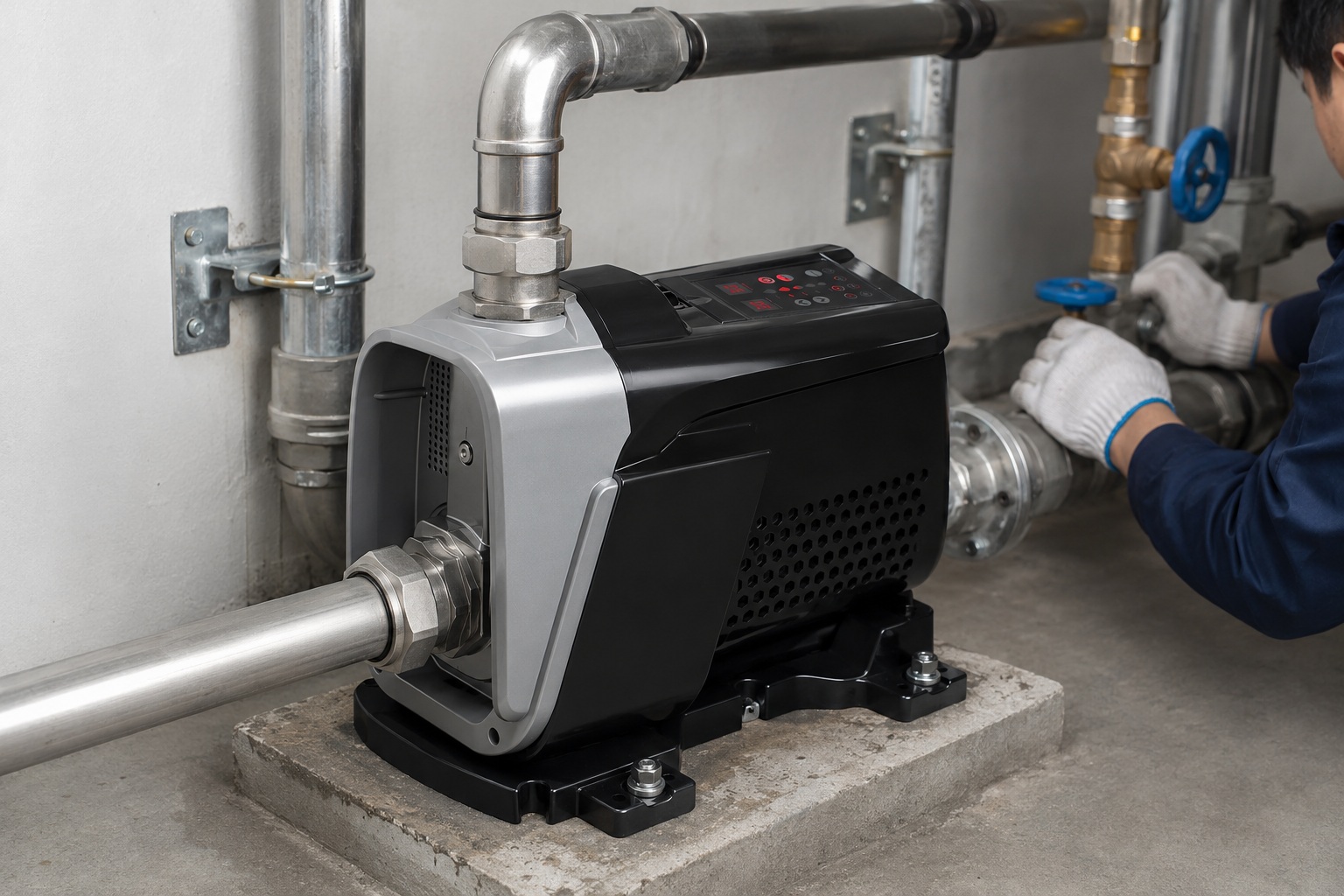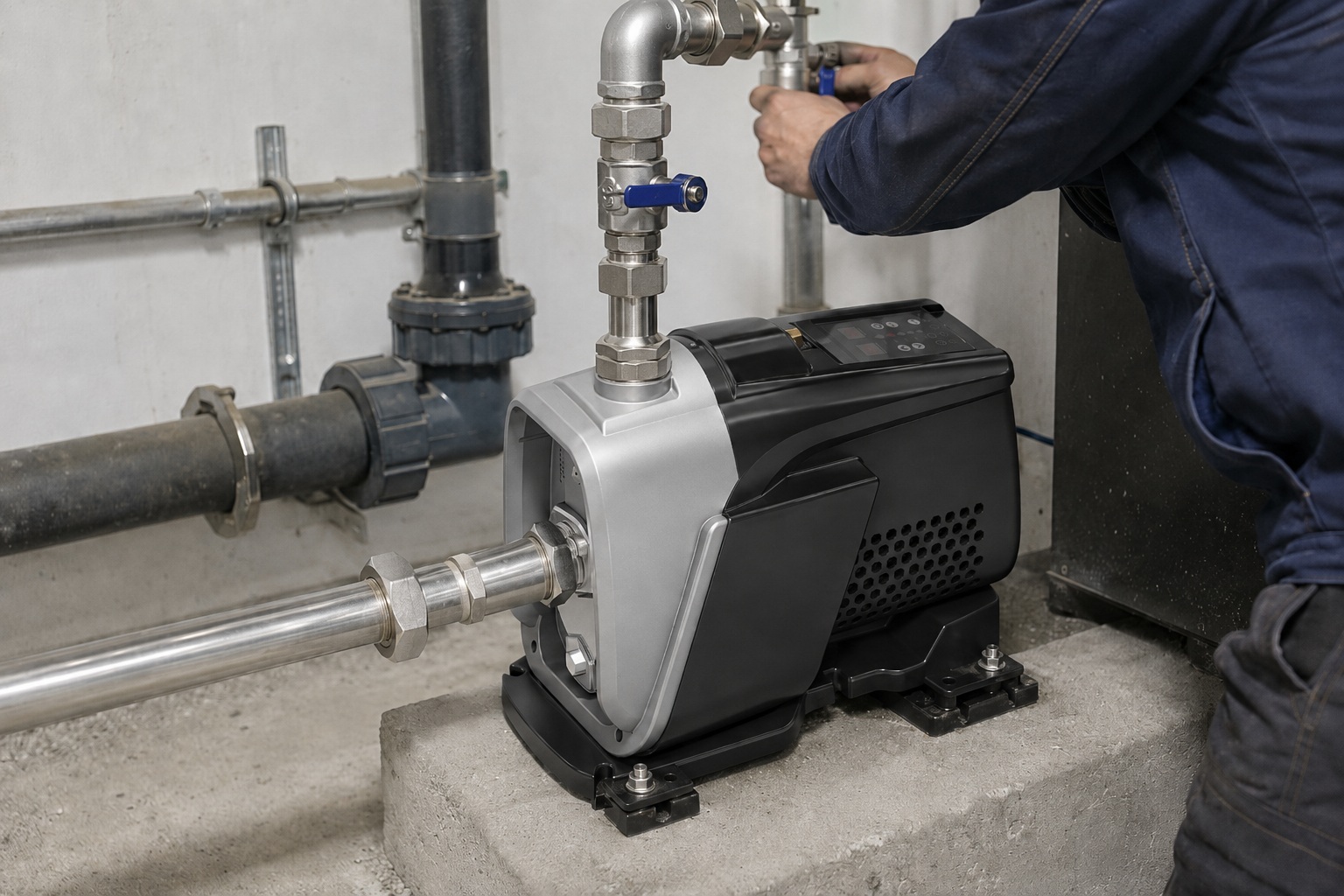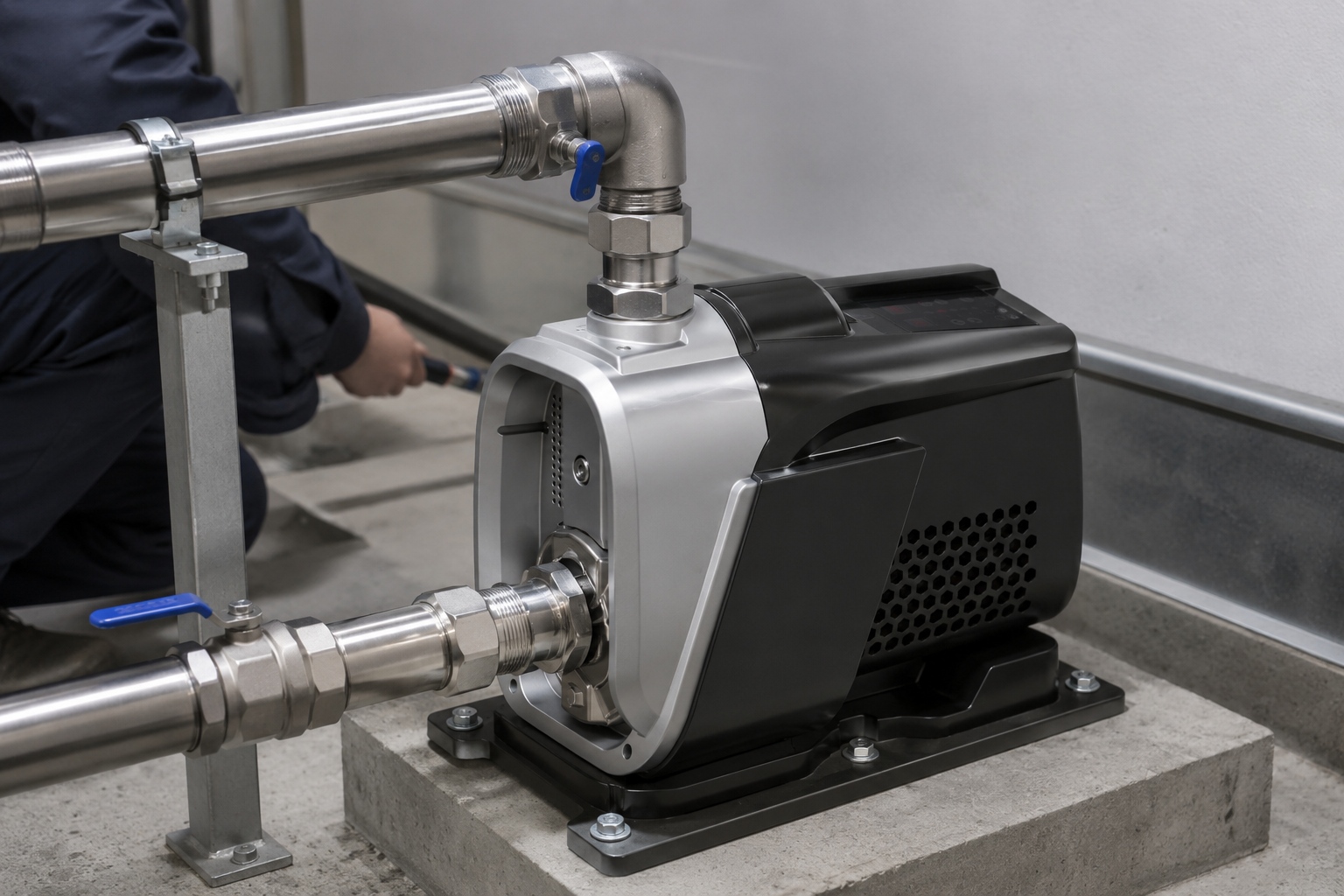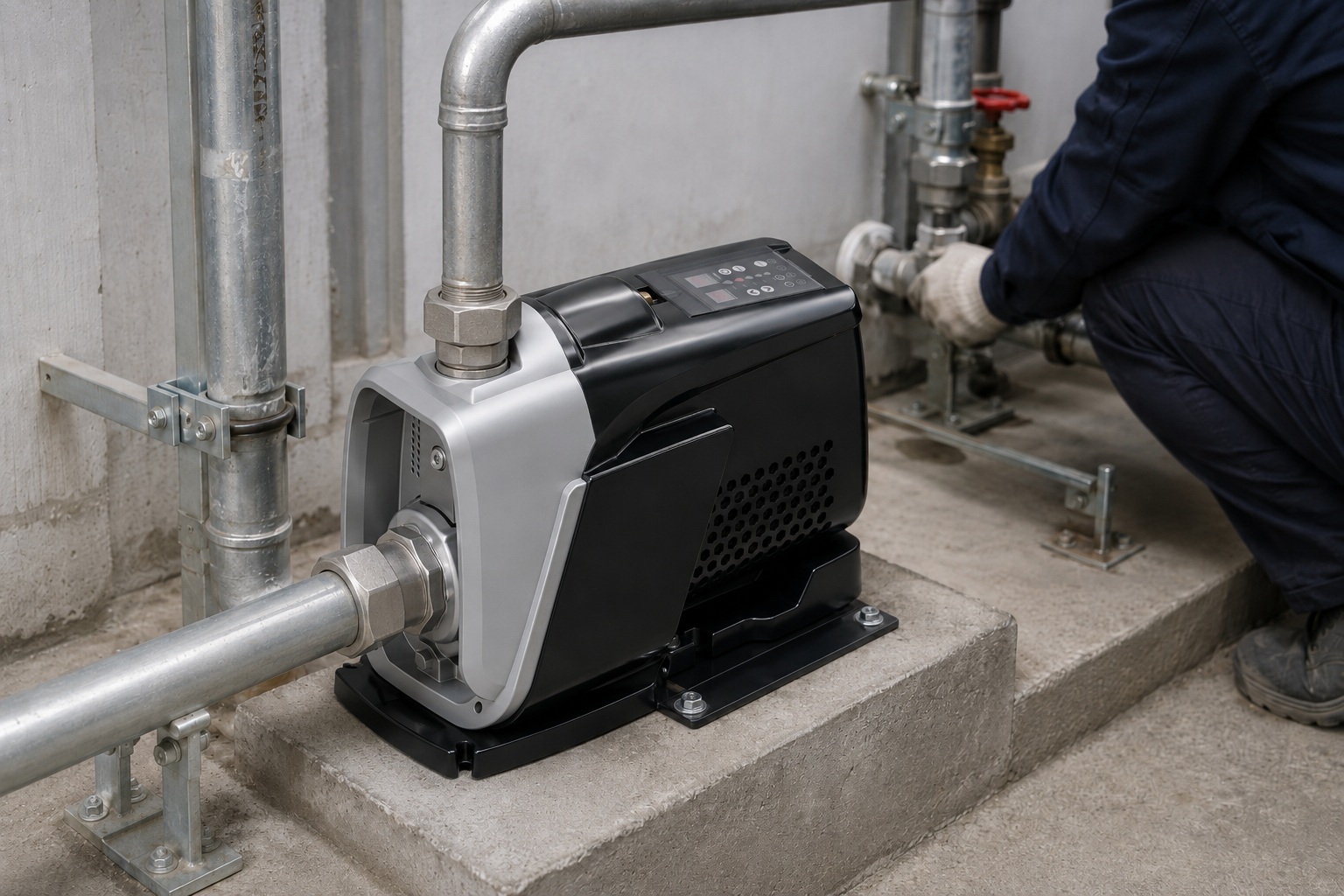
Your solar pump works great when the sun is shining.
But cloudy days or nighttime needs bring your water supply to a halt, creating a critical vulnerability for your farm or home.
Yes, a solar water pump can use electricity.
Modern hybrid solar pump systems are designed with AC/DC controllers that can automatically switch from solar power to grid electricity or a generator, ensuring you have a reliable water supply 24/7.
The term "solar water pump" can be misleading.
It often brings to mind a system that is entirely dependent on direct sunlight, shutting down the moment a cloud passes overhead.
While this is true for basic, direct-current (DC) systems, the industry has evolved significantly to meet the demand for round-the-clock water reliability.
The key to this flexibility lies not in the pump itself, but in the intelligent controller that manages its power sources.
This innovation has transformed solar pumping from a niche, daytime-only solution into a robust and versatile primary water system.
It combines the cost-saving, environmental benefits of solar with the dependability of the traditional electrical grid.
Understanding how these hybrid systems work is essential for anyone looking to invest in a truly resilient and uninterrupted water supply, whether for a remote homestead in Africa, a large farm in the Americas, or a high-end ranch in Australia.
The Foundation: Pure DC Solar Pump Systems
You're considering a solar pump for its off-grid benefits.
But you're concerned about its performance being tied directly to the weather, making it seem unreliable for critical water needs.
A standard DC solar water pump operates exclusively on the direct current power generated by photovoltaic (PV) panels.
This setup is incredibly efficient and simple, but its water output is directly proportional to the intensity of the sunlight it receives.
The backbone of any solar pumping solution is the direct current system.
This is the purest form of solar water pumping and serves as the foundation upon which more complex hybrid systems are built.
In this configuration, solar panels capture photons from sunlight and convert them into DC electricity.
This power is then channeled through a specialized controller, often equipped with Maximum Power Point Tracking (MPPT) technology, directly to the pump's motor.
The MPPT controller is crucial; it constantly adjusts the electrical load to ensure the solar panels operate at their peak efficiency, maximizing water output throughout the day—even in lower light conditions.
This direct-to-motor pathway is highly efficient because it avoids the power conversion losses associated with changing DC to AC power.
The result is a system that extracts the maximum amount of water for every watt of solar energy produced.
Inside the High-Efficiency DC Motor
The real magic of modern solar pumps lies within their motors.
-
The Powerhouse: BLDC Motor
Virtually all high-quality solar pumps today use a Brushless DC (BLDC) permanent magnet motor. Unlike older brushed motors, BLDC motors have no physical brushes to wear out, making them nearly maintenance-free and dramatically increasing their lifespan. Their efficiency ratings regularly exceed 90%, a significant leap from the 60-70% efficiency of traditional AC motors. -
Advanced Materials for Superior Performance
The rotor, the spinning part of the motor, is typically constructed from high-strength magnets, like 40SH neodymium iron boron. This material creates a powerful magnetic field, which allows the motor to generate high torque and power from a compact design. A modern BLDC motor can be up to 47% smaller and 39% lighter than an equivalent AC motor, simplifying installation and reducing shipping costs.
The Trade-Off: Simplicity vs. Consistency
While incredibly effective, the DC-only system has an inherent limitation: it only runs when there is sufficient sunlight.
| Aspect | Pros of a DC-Only System | Cons of a DC-Only System |
|---|---|---|
| Simplicity | Fewer components, easier installation, and lower initial cost. | Limited to daylight hours of operation. |
| Efficiency | Extremely high energy efficiency (over 90%) from panel to pump. | Water supply is variable and dependent on weather and time of day. |
| Cost | No ongoing electricity bills; excellent for off-grid locations. | Requires a water storage tank to ensure supply overnight or on cloudy days. |
| Maintenance | Highly reliable with very few moving parts to fail. | Not suitable for applications requiring constant, on-demand water pressure 24/7. |
This makes the DC-only system a perfect fit for applications where water can be pumped during the day and stored in a tank for later use, such as filling livestock troughs or residential water tanks.
However, for applications requiring constant water flow, a more advanced solution is needed.
The Breakthrough: AC/DC Hybrid Technology
Your water needs don't stop when the sun goes down or during extended rainy periods.
A solar-only pump creates a dependency on weather that is simply not practical for many critical applications.
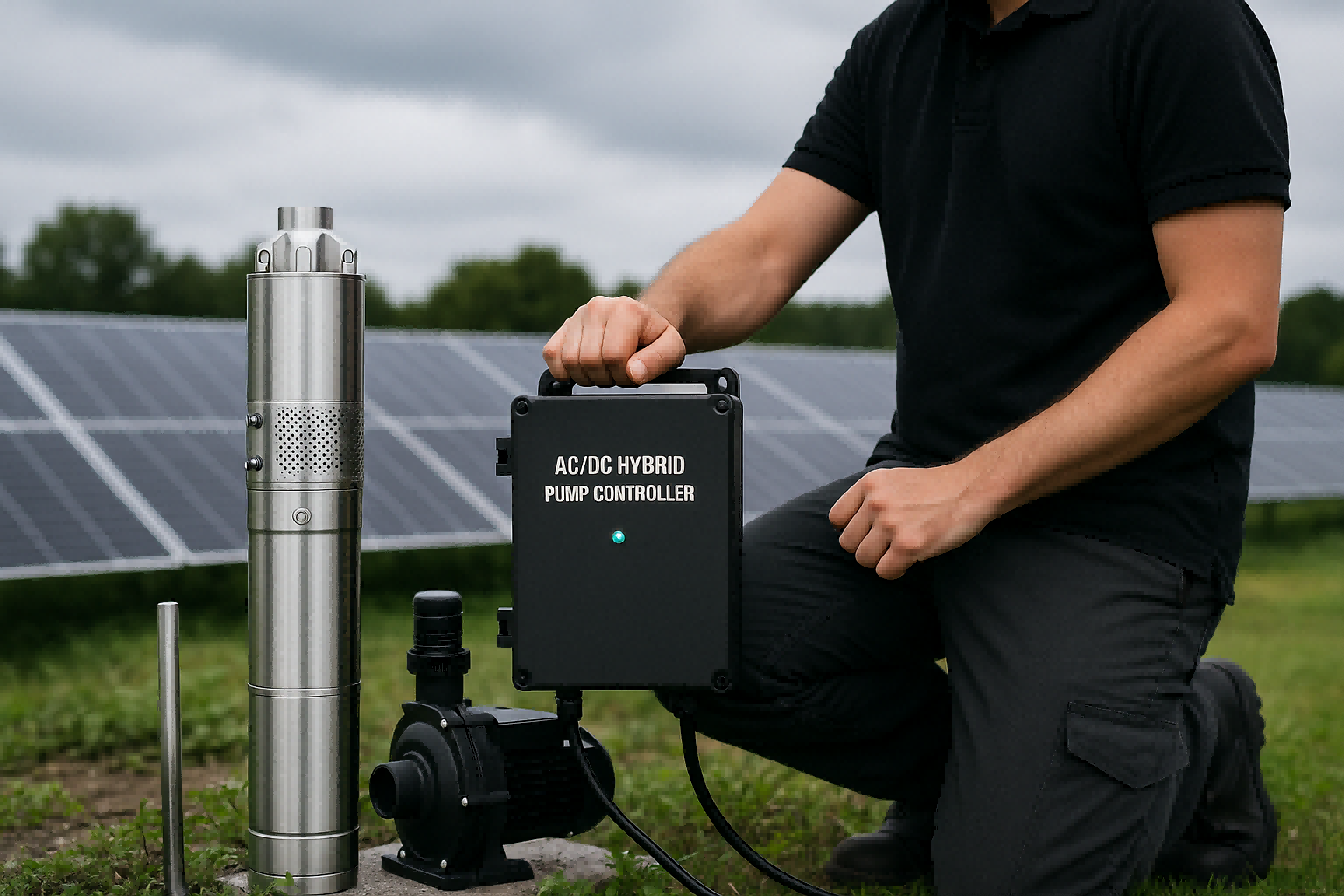
An AC/DC hybrid solar pump solves this problem by integrating a dual-power controller.
This intelligent device automatically prioritizes solar power when available, but seamlessly switches to an AC source like the grid or a generator during cloudy weather or at night.
Hybrid technology represents the most significant advancement in solar water pumping, transforming it from a supplemental system into a complete, standalone water supply solution.
It offers the best of both worlds: the free, renewable energy of the sun and the unwavering reliability of conventional electricity.
The core of this system is the sophisticated AC/DC hybrid controller.
This unit is designed with two separate power inputs: one for the DC electricity from the solar panels and another for AC electricity from the grid or an external generator.
This controller isn't just a simple switch; it's a smart power management system.
It contains complex algorithms that constantly monitor the power being produced by the solar panels.
The system is engineered with a clear priority: use solar first.
As long as the solar panels can produce enough power to meet the pump's needs, the AC input remains dormant.
This ensures you are always using the free energy from the sun, minimizing your operational costs.
How the Automatic Switchover Works
The intelligence of the hybrid controller shines in its ability to manage power automatically, without any human intervention.
-
Priority 1: Full Solar Power
On a bright, sunny day, the controller draws 100% of its power from the solar panels. The pump operates at its maximum potential based on the available sunlight, delivering water at zero running cost. -
Priority 2: Solar and AC Hybrid Blending
As clouds roll in or during the early morning and late afternoon, solar output decreases. The controller detects this drop in voltage. Instead of shutting down, it begins to supplement the solar power by drawing just enough AC power from the grid to make up the difference. This blending function maximizes the use of every available watt of solar energy while maintaining consistent pump performance. -
Priority 3: Full AC Power
At night, or during very heavy, prolonged overcast conditions, the solar input drops to zero. The controller detects the absence of photovoltaic input and automatically switches over completely to the AC power source. The pump continues to run at full capacity, ensuring your water supply is never interrupted. The system will then automatically switch back to solar power as soon as the sun rises.
The Practical Benefits for Global Markets
This technology is a game-changer for distributors and end-users worldwide.
-
For Agriculture in the Americas: A farmer can irrigate fields around the clock, using free solar power during the day and reliable grid power at night, without having to manage two separate pump systems. High-flow solar plastic impeller pumps are perfect for this hybrid application.
-
For Livestock in Australia: A rancher in a region with alkaline soil can use a corrosion-resistant solar stainless steel impeller pump to ensure water troughs are always full, regardless of a passing thunderstorm. The system provides peace of mind that their valuable livestock will never be without water.
-
For Domestic Supply in Africa: A household in an area with an unreliable grid can use solar as its primary power source, significantly reducing electricity bills, while still having the grid as a backup for guaranteed water access.
The AC/DC hybrid pump is not just a product; it’s a complete solution that provides energy independence without sacrificing reliability.
Choosing the Right Pump for Your Hybrid System
You understand the benefits of a hybrid system.
Now you need to select the correct pump to match your specific water source and demand, ensuring optimal performance and longevity.
The pump itself is just as critical as the controller.
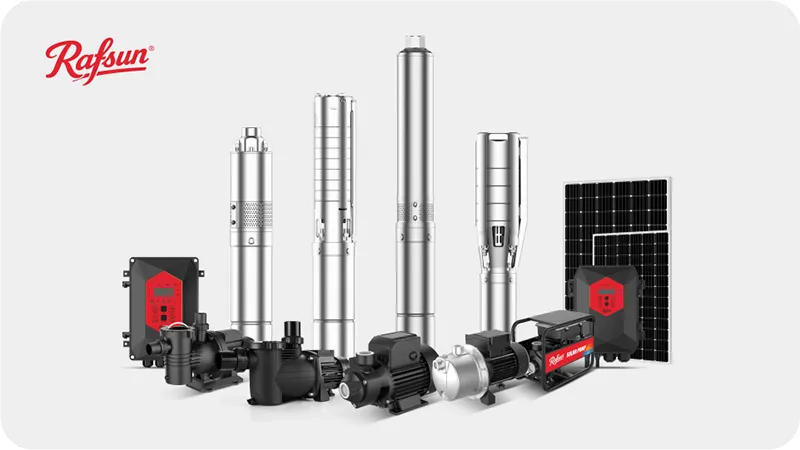
Whether a screw pump for deep wells, a plastic impeller for high flow, or a stainless steel model for harsh water, each is powered by the same efficient BLDC motor and can be integrated into a hybrid system.
While the hybrid controller provides the power management, the physical pump does the work of moving the water.
The choice of pump must be carefully tailored to the specific conditions of your application, including the well depth, required water volume, and water quality.
Fortunately, modern solar pump portfolios offer specialized options, all built around a common high-efficiency motor platform, making them fully compatible with AC/DC hybrid controllers.
This allows for the creation of a customized system that is perfectly optimized for its environment.
The heart of all these pumps remains the high-efficiency BLDC motor, which is capable of operating on a wide range of DC voltages from solar panels or a rectified AC input from the hybrid controller.
This universal motor design is the key that unlocks the interchangeability between different pump ends and power sources.
Matching the Pump to the Application
Selecting the right pump end is a critical decision that directly impacts system efficiency and lifespan.
-
Solar Screw Pump: The Deep Well Specialist
This pump uses a progressive cavity design, with a stainless steel helical rotor spinning inside a rubber stator. This mechanism is incredibly effective at creating high pressure, allowing it to lift water from very deep wells (high head). However, it produces a lower volume of water (low flow).- Ideal for: Deep domestic wells in Latin America, livestock watering in arid regions, and any application where well depth is the primary challenge.
- Key Advantage: Excellent resistance to sand and silt, which would quickly destroy other pump types.
-
Solar Plastic Impeller Pump: The High-Volume Workhorse
This is a multi-stage centrifugal pump that uses a series of stacked plastic impellers to move large volumes of water at moderate pressure. It is designed for high flow rates, making it an excellent choice for irrigation and filling large reservoirs.- Ideal for: Farm irrigation in the Americas, pasture water supply, and filling residential or community water tanks.
- Key Advantage: A fantastic balance of performance and cost. It is lightweight, making it easier to install, and its durable polymer components offer great resistance to abrasion from fine sand.
-
Solar Stainless Steel Impeller Pump: The Premium Durability Option
This pump is also a multi-stage centrifugal design but is constructed with premium SS304 stainless steel for both the impellers and the pump body. This robust construction is specifically designed for long life in aggressive water conditions.- Ideal for: Regions with acidic or alkaline water, coastal areas with brackish water, and high-end installations where maximum longevity is the priority.
- Key Advantage: Superior corrosion resistance. It can operate reliably for years in water that would corrode or degrade lesser pumps, making it a sound long-term investment.
The table below summarizes the best-fit scenarios for each pump type within a hybrid system.
| Feature / Application | Solar Screw Pump | Solar Plastic Impeller Pump | Solar Stainless Steel Impeller Pump |
|---|---|---|---|
| Primary Strength | High Head (Deep Wells) | High Flow (High Volume) | Corrosion Resistance |
| Best For | Domestic water, Livestock | Farm Irrigation, Tank Filling | Harsh/Acidic Water |
| Well Depth | Very Deep (> 100m) | Shallow to Medium (< 100m) | Shallow to Medium (< 100m) |
| Water Quality | Good sand resistance | Good fine sand resistance | Excellent in corrosive water |
| Target Market | Cost-sensitive, deep wells | General agriculture, high volume | Premium, specialty applications |
By pairing the right pump with an AC/DC hybrid controller, a distributor can offer a precisely tailored solution that perfectly meets a customer's unique water needs and environmental conditions, ensuring satisfaction and reliable performance.
Conclusion
A solar water pump can absolutely use electricity.
Hybrid AC/DC systems offer the ultimate flexibility, combining free solar energy with the 24/7 reliability of a grid or generator backup.
Frequently Asked Questions
Can I run a solar pump directly from the grid?
No, you cannot connect a DC solar pump directly to an AC grid outlet. You need a specific AC/DC hybrid controller to safely convert and manage the power.
Can a solar water pump run at night?
Yes, a solar pump can run at night if it is part of a hybrid system connected to the grid or a generator, or if it is powered by a battery bank.
How do you power a solar pump without sun?
Without sun, a solar pump can be powered by an AC source (grid or generator) through a hybrid controller, or by a battery system charged during the day.
Do I need a battery for my solar water pump?
You do not need a battery if you have an AC/DC hybrid system or if you pump water into a storage tank during the day for later use.
Can I use a generator to run my solar pump?
Yes, a generator can be connected as the AC power source to a hybrid solar pump controller, providing water access in any off-grid location.
How many solar panels does it take to run a water pump?
The number of panels depends on the pump's power rating, well depth, and required water volume. A professional can calculate the exact number for your specific needs.
What is a hybrid solar pump controller?
A hybrid controller is an intelligent device that can manage power from both DC solar panels and an AC source, automatically switching between them to ensure continuous operation.