Your pump constantly cycles on and off.
You worry these short bursts are damaging the motor and shortening its lifespan.
Understanding the right run time prevents premature failure.
As a general rule, the minimum run time for a submersible pump is one to two minutes.
This ensures the motor cools properly, preventing damage from heat buildup caused by frequent starts. However, the ideal time depends on the motor technology and system design.
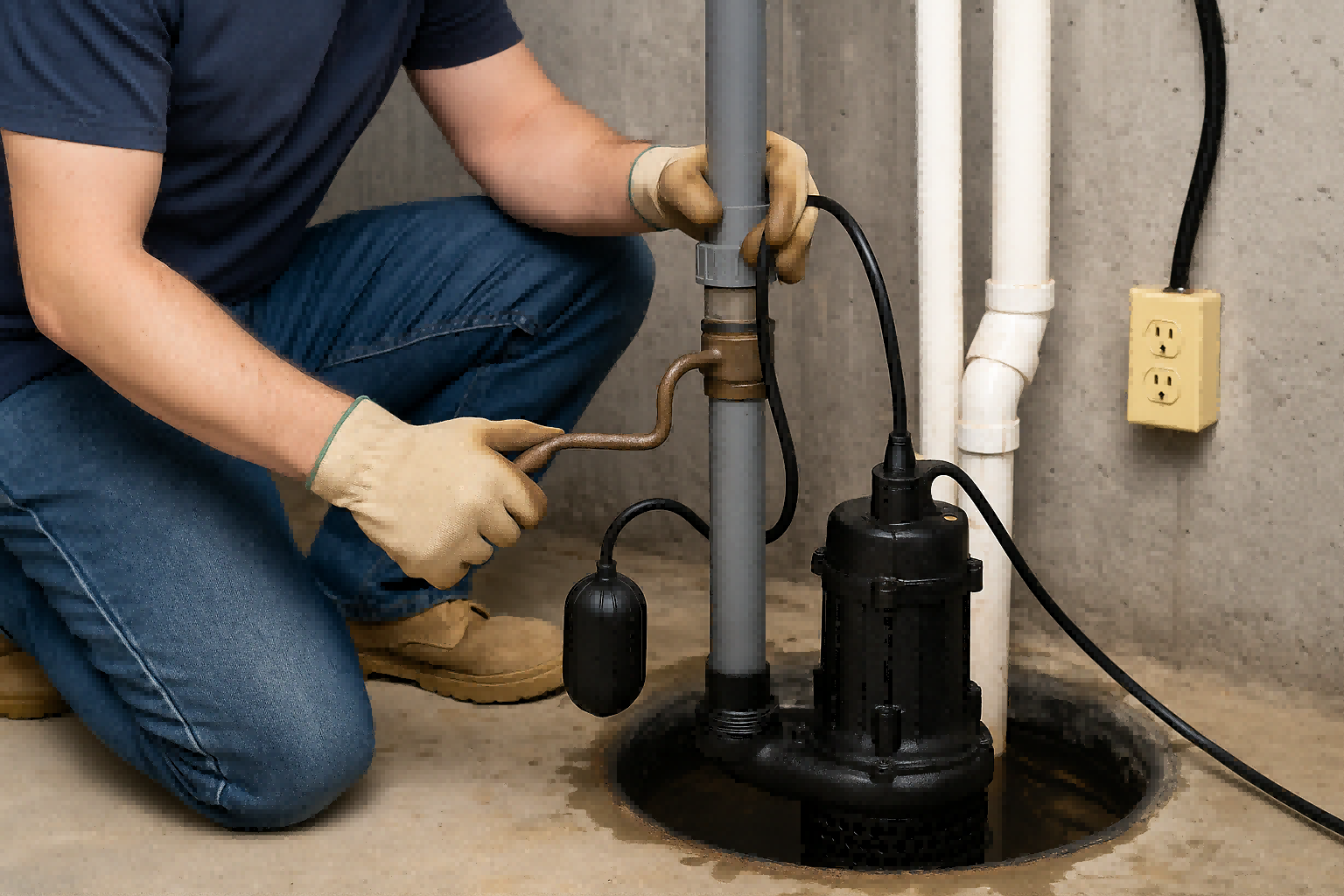
The question of minimum run time is not about a stopwatch.
It is about the long-term health of your pump’s motor.
Every time a pump starts, it endures a surge of electrical current and mechanical stress.
This process generates a significant amount of heat.
The running of the pump itself, with cool water flowing past the motor housing, is what dissipates this heat.
If the pump shuts off too quickly, the heat does not have a chance to escape.
This cycle of rapid heating and insufficient cooling, known as "short-cycling," is one of the leading causes of premature motor failure in submersible pumps.
The key to a long and reliable service life is not just about pumping water, but about managing heat.
To do that, we first need to understand why these short runs are so destructive.
Why Short Run Times Damage Your Pump
Your pump switches on for just thirty seconds, then off again.
You think this is saving energy, but it’s slowly killing the motor.
This constant cycling leads to catastrophic heat damage.
Short run times damage a pump because the motor does not have enough time to cool down.
The initial power surge on startup generates significant heat. Insufficient runtime prevents the flowing water from dissipating this heat, leading to cumulative damage to the motor’s windings and bearings.
Think of your pump motor like an athlete.
A sudden, intense sprint without a proper warm-up or cool-down puts enormous stress on the body.
For a submersible motor, every startup is a powerful sprint.
The inrush of electricity needed to get the motor spinning from a dead stop is several times the normal running current.
This surge creates a concentrated burst of thermal energy—heat.
The pump’s only cooling system is the very water it is submerged in.
As the pump runs, water flows up and past the motor’s outer casing, carrying away the heat.
This process is highly effective, but it requires time.
If the pump only runs for 30 seconds to fill a small pressure tank and then shuts off, it has created all the startup heat but has not run long enough for the cooling process to work.
The heat gets trapped in the motor.
When this happens dozens of times a day, the cumulative effect is devastating.
Heat: The Silent Killer
Heat is the primary enemy of any electric motor.
It is especially dangerous for a submersible motor sealed deep inside a well.
Excessive heat, caused by short-cycling, attacks the most critical components of the motor.
- Motor Windings: The copper windings are coated with a thin layer of enamel insulation. High temperatures degrade this insulation, causing it to become brittle and crack. This can lead to a short circuit between the windings, which is a catastrophic and fatal motor failure. A motor that has "burned out" has suffered this exact fate.
- Bearings: Motors use lubricated bearings to allow the shaft to spin smoothly at thousands of RPMs. Heat breaks down the grease inside the bearings. This loss of lubrication leads to increased friction, which generates even more heat. Eventually, the bearings can seize, stopping the motor completely.
- Seals: The motor is protected by a series of seals to keep water out. The constant expansion and contraction from repeated heat cycles can stress these seals, increasing the risk of a leak that would destroy the motor.
The True Cost of Short-Cycling
Short-cycling dramatically reduces the lifespan of a pump.
A motor that should last 10-15 years might fail in just 2-3 years under these conditions.
The damage is gradual, so you often do not notice a problem until it’s too late.
The number of starts per day is a more critical metric than the total hours run.
Manufacturers often specify a maximum number of starts allowed in a 24-hour period.
Exceeding this number is a sure way to void a warranty and guarantee an early replacement.
| Run Time Per Cycle | Relative Starts Per Day | Internal Motor Temperature | Estimated Motor Lifespan Reduction |
|---|---|---|---|
| 30 Seconds | Very High | Consistently High | 70-80% |
| 1-2 Minutes | Optimal | Stable / Well-Regulated | 0-10% |
| 5+ Minutes | Low | Cool | 0% (Optimal) |
For a distributor like Andrew, educating customers on the dangers of short-cycling is a value-added service.
By explaining how to properly size a pressure tank or use a VFD, you help them protect their investment.
This builds trust and positions your brand as a source of reliable expertise, not just a product supplier.
The Role of the Motor in Pump Longevity
You assume all pump motors are the same.
You are unaware that motor technology directly impacts its heat tolerance.
This oversight costs you in frequent replacements.
The type and efficiency of the motor are critical to a pump’s longevity.
A high-efficiency motor, like a Brushless DC (BLDC) motor, runs significantly cooler. This inherent thermal efficiency makes it more resilient to the stresses of starting and stopping, extending its operational life.
Not all motors are created equal in the battle against heat.
The motor’s fundamental design determines how much of the electrical energy is converted into useful work versus wasted heat.
This efficiency rating is perhaps the single most important factor in a pump’s ability to withstand real-world operating conditions.
Traditional AC induction motors have been the standard for decades.
While reliable, they have efficiency ratings that can be as low as 60-70%.
This means a staggering 30-40% of the electricity they consume is instantly converted into waste heat.
This heat must be managed by the flowing water.
Modern solar pumps have revolutionized the industry by adopting a superior technology: the Brushless DC (BLDC) permanent magnet motor.
This advanced design changes the game entirely.
Why BLDC Motors Run Cooler and Last Longer
BLDC motors are a masterpiece of modern engineering, designed from the ground up for maximum efficiency.
Their advantages directly combat the problem of heat and short-cycling.
- Exceptional Efficiency: BLDC motors consistently achieve efficiencies of over 90%. This is a monumental leap. With less than 10% of energy wasted as heat, the motor has a much lower thermal load to begin with. It heats up less on startup and cools down faster.
- Permanent Magnet Rotor: Instead of using electricity to create a magnetic field in the rotor (which generates more heat), BLDC motors use powerful permanent magnets, such as Neodymium iron boron (40SH). This design inherently reduces internal energy losses and heat production.
- No Brushes: Traditional DC motors use carbon brushes that create friction and heat as they wear down. BLDC motors are electronically commutated, eliminating this source of friction, wear, and heat entirely. They are truly "maintenance-free."
- Higher Power Density: Because they are more efficient, BLDC motors can be made much smaller and lighter for the same power output. A compact design (up to 47% smaller and 39% lighter) has a smaller surface area to heat and allows for more effective cooling from water flow.
The Practical Impact of a Better Motor
The consequence of this superior technology is a motor that is far more durable.
A cooler-running BLDC motor is less susceptible to the insulation and bearing damage that plagues overworked AC motors.
This means it can handle a wider range of operating conditions and is more forgiving of less-than-ideal system setups.
For a distributor, the choice of motor technology is a key selling point.
Leading with the advantages of a BLDC motor—longer life, lower operating costs (less solar panels needed), and greater reliability—is a powerful argument for a quality-focused buyer like Andrew.
It shifts the conversation from a simple price comparison to a discussion about total cost of ownership and engineering excellence.
The motor is the heart of the pump; a better heart means a longer life.
Smart Controllers: The Brains Behind a Healthy Pump
Your pump is controlled by a simple pressure switch.
It has no intelligence to protect itself from damaging conditions.
This lack of control leads to preventable failures.
An intelligent controller is the brain of a modern water system, providing crucial protection against short-cycling and other hazards.
By managing motor speed and monitoring system conditions, it ensures the pump runs efficiently and safely, maximizing both performance and lifespan.
A pump motor, no matter how advanced, cannot protect itself.
It relies on an external control system to tell it when to start, how fast to run, and when to stop.
In traditional systems, this is often just a simple mechanical pressure switch.
This "dumb" switch only knows two things: on and off.
It has no awareness of how long the pump has been running or how frequently it is starting.
Modern water systems demand a smarter approach.
An intelligent electronic controller acts as a dedicated guardian for the pump and motor.
It monitors the entire system in real-time and makes smart decisions to optimize performance and prevent damage.
For solar pumps, this is typically an MPPT (Maximum Power Point Tracking) controller.
How Controllers Prevent Short-Cycling and Other Damage
Smart controllers offer a suite of protective features that are simply impossible with a basic switch.
- Soft Start Function: Instead of hitting the motor with a massive inrush of current from a dead stop, the controller gently ramps up the motor speed. This "soft start" dramatically reduces the electrical and mechanical stress of each startup. It is a key feature that directly reduces the heat generated during the most vulnerable part of the cycle.
- Variable Speed Drive (VFD): The controller can adjust the motor’s speed based on available solar power or demand. Instead of a violent on/off cycle, the pump can run for much longer periods at a slower, more efficient speed. This is the ultimate solution to short-cycling, as it promotes long, stable run times.
- Dry Run Protection: The controller can detect if the well’s water level has dropped and the pump is no longer submerged. It will automatically shut down the motor to prevent it from running dry and overheating—a common and fatal failure mode.
- Overload and Voltage Protection: The controller continuously monitors the electrical supply. It protects the motor from damage caused by voltage spikes, sags, or conditions that would cause the motor to draw too much current.
The Hybrid AC/DC Advantage
The most advanced controllers offer hybrid functionality.
They can accept power from both DC solar panels and an AC grid or generator source.
This provides unparalleled operational flexibility and reliability.
- Automatic Switching: The controller prioritizes free solar energy. When the sun is shining, the pump runs on DC power. If clouds roll in or during the night, the controller can automatically switch to the AC backup to ensure a continuous water supply.
- Energy Blending: Some controllers can even blend power sources. If solar power is insufficient to meet demand, they will supplement it with just enough AC power to get the job done, maximizing the use of free solar energy.
This level of intelligent control transforms a simple water pump into a sophisticated, self-protecting water supply system.
For a business owner like Andrew, offering systems with advanced controllers is a mark of a premium, modern product line.
It demonstrates a focus on reliability, efficiency, and long-term value that customers are willing to pay for.
Conclusion
The minimum run time is about heat management.
Longer runs, controlled by smart technology, protect your investment and ensure lasting reliability.
Frequently Asked Questions
Can a submersible pump run continuously?
Yes, a properly sized submersible pump is designed to run continuously for hours without overheating, as the surrounding water provides constant cooling.
What is pump short-cycling?
Short-cycling is when a pump turns on and off too frequently. This is usually caused by a waterlogged pressure tank or a leak in the plumbing system, and it can quickly burn out the pump motor.
How do I stop my well pump from short-cycling?
To stop short-cycling, first check the air pressure in your pressure tank and adjust it to 2 PSI below the pump’s cut-on pressure. If that doesn’t work, you may have a faulty tank or a water leak.
How many times an hour should a well pump cycle?
A well pump should not cycle more than a few times per hour for average household use. If it’s cycling every few minutes, there is likely a problem with the pressure tank or plumbing.
Does a larger pressure tank save the pump?
Yes, a larger pressure tank saves the pump by allowing for longer run times and fewer starts. This reduces wear and tear on the motor and electrical components, significantly extending the pump’s lifespan.
What is the purpose of a VFD on a pump?
A VFD (Variable Frequency Drive) controls the pump’s motor speed. This provides constant water pressure, eliminates short-cycling, and offers a soft start, which greatly increases the life of the pump and motor.
Can a well pump be too big for a house?
Yes, a pump that is too large for the home’s needs can cause rapid pressure changes and lead to severe short-cycling, which will damage the pump.
How long does a pump last in a well?
A quality submersible well pump can last anywhere from 10 to 15 years, but its lifespan is heavily influenced by factors like water quality, usage patterns, and whether it short-cycles.