Are you worried about your pump's lifespan underwater?
Constant submersion might seem harsh.
But a quality pump is built precisely for this punishing environment.
Yes, submersible pumps are specifically designed to be left in water indefinitely.
Their sealed motors and corrosion-resistant bodies ensure they operate safely while fully submerged. Removing them frequently is unnecessary and impractical for their intended applications, like in a deep well.
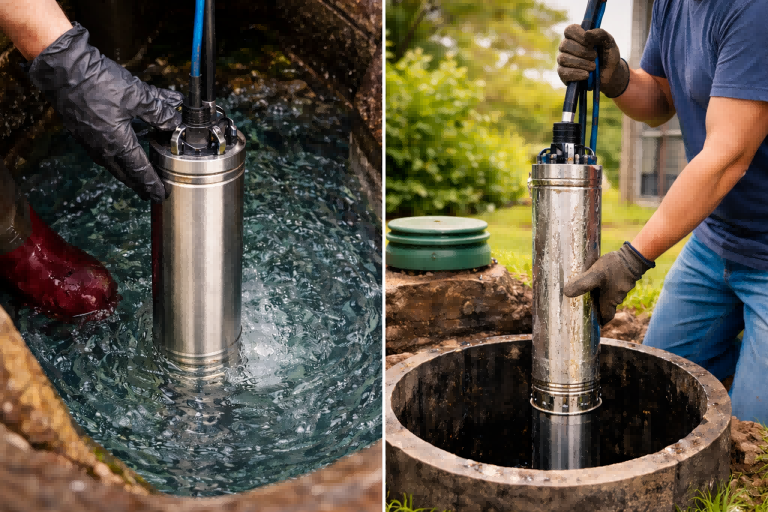
The name "submersible" says it all.
These pumps are not just water-resistant; they are engineered to live and work underwater.
Their entire design, from the motor seals to the body materials, is optimized for continuous submersion.
This is fundamentally different from other pumps, like surface pumps, which would be destroyed by similar conditions.
For users in off-grid and rural areas across Africa, the Americas, and Australia, this design means reliable, long-term water access without constant intervention.
Understanding how they achieve this resilience is key to trusting your investment and ensuring you choose the right pump that can be left in your water source for years to come.
The Core Design: Engineered for Submersion
You see a pump sitting deep within a well.
You wonder how it survives the constant pressure and moisture.
This is not by accident; it is the result of intentional, robust engineering.
Submersible pumps feature hermetically sealed motors and waterproof power cables.
These critical seals prevent any water intrusion into the electrical components. This design is the primary reason they thrive while fully submerged, ensuring both operational safety and long-term functionality.
The ability of a submersible pump to be left in water is not a feature; it is its core identity.
Engineers have spent decades perfecting the design to ensure the two things that should never meet—electricity and water—remain safely separated.
This is achieved through a multi-layered approach to sealing and protection.
Furthermore, the surrounding water is not just a challenge to be overcome; it is an integral part of the pump's thermal management system, keeping it cool and running efficiently.
Motor Sealing and Cooling
The heart of a submersible pump is its motor, and keeping it dry is the number one priority.
Manufacturers use a system of highly effective seals to achieve this.
- Hermetic Sealing: The motor housing is hermetically sealed, meaning it is airtight and waterproof. This is often achieved using precision-machined surfaces, O-rings, and gaskets made from materials that do not degrade in water.
- Mechanical Seals: At the point where the motor shaft exits the housing to drive the pump impellers, a sophisticated mechanical seal is used. This seal typically consists of two extremely hard, ultra-flat rings (often made of carbon or ceramic) pressed together by a spring. One ring turns with the shaft while the other is stationary, creating a near-perfect seal that can withstand high pressure and continuous rotation.
- Benefit of Submersion: Paradoxically, being underwater is good for the motor. The water acts as a natural coolant, constantly drawing away the heat generated during operation. This prevents overheating, which is a major cause of motor failure, and allows the pump to run for extended periods without issue. A pump run without being submerged would overheat and fail in minutes.
The Role of Modern BLDC Motors
The motor technology itself plays a huge role in a pump's suitability for permanent submersion.
Modern solar and high-efficiency pumps utilize Brushless DC (BLDC) permanent magnet motors, which offer significant advantages.
These motors are inherently more efficient, with efficiencies often exceeding 90%.
This high efficiency means less energy is wasted as heat.
A cooler-running motor puts less thermal stress on the seals and internal components, contributing directly to a longer, more reliable service life underwater.
Compared to older AC motors, a BLDC motor's compact design (up to 47% smaller and 39% lighter) and reduced heat generation make it an even better candidate for a sealed, submerged environment.
Material Matters: Resisting Corrosion and Abrasion
Not all water is created equal.
Some sources are acidic or filled with abrasive sand.
A pump’s materials will determine if it lasts for one year or for over a decade.
A submersible pump's lifespan underwater depends heavily on its materials.
High-grade stainless steel and wear-resistant engineering plastics are chosen to combat corrosion and abrasion. Selecting the right pump material for your specific water chemistry is crucial for long-term reliability.
A perfect seal keeps the motor dry, but the pump's exterior is in constant contact with the water.
The chemical makeup and physical contents of that water present the next challenge to longevity.
Corrosion can eat away at metal components, while sand and silt can abrade and destroy pump impellers.
A world-class product portfolio accounts for these diverse conditions by offering pumps made from different materials, each tailored to a specific environment.
For a distributor, this means being able to supply a farmer in Africa with a sand-resistant pump and a homeowner in Australia with a corrosion-proof model from the same reliable technology platform.
The Premium Choice: Stainless Steel Impeller Pump
When water quality is aggressive or when maximum durability is the primary concern, stainless steel is the undisputed champion.
- Material: These pumps use high-grade SS304 stainless steel for the pump body, impellers, and other components in contact with the water.
- Best Environment: They are specifically designed to be left in water with challenging chemistries, such as acidic or alkaline conditions found in certain regions of the Americas and Australia.
- Advantages: Stainless steel offers superior resistance to corrosion and rust. This ensures the pump maintains its structural integrity and performance over a very long service life, making it the most reliable option for high-end residential and critical agricultural applications.
The Economical Workhorse: Plastic Impeller Pump
For many general-purpose applications with relatively neutral water, a plastic impeller pump offers an excellent balance of performance and cost.
- Material: These multi-stage centrifugal pumps are equipped with impellers made from a durable, wear-resistant engineering plastic.
- Best Environment: They excel in conditions with fine sand or silt, as the plastic is less prone to damage from small abrasive particles than some metals. They are widely used for farm irrigation and pasture water supply.
- Advantages: This design delivers high water flow and is lightweight and more economical than an all-stainless model, making it a popular, cost-effective choice.
The Deep Well Specialist: Solar Screw Pump
For very deep wells, a different design is needed, but the principle of material selection remains the same.
- Material: The solar screw pump uses a helical rotor made of stainless steel that turns inside a durable rubber stator.
- Best Environment: This design is exceptionally good at handling sandy and silty water, even in very deep wells. The screw mechanism pushes the water and grit through without the high-speed impact that damages centrifugal impellers.
- Advantages: It provides high pressure (head) to lift water from great depths and is highly resistant to abrasion, ensuring its longevity when left deep within a harsh well.
| Pump Type | Key Material | Best For (Submersion Environment) | Key Resistance |
|---|---|---|---|
| Stainless Steel Impeller | SS304 Stainless Steel | Corrosive water (acidic/alkaline) | High Corrosion Resistance |
| Plastic Impeller | Wear-resistant Plastic | Water with fine sand | High Wear Resistance |
| Screw Pump | Stainless Steel Screw | Sandy or silty water in deep wells | High Sand & Abrasion Resistance |
Should You Ever Remove a Submersible Pump?
Your pump is designed to stay underwater.
So, are there any reasons to ever pull it up?
Yes, but these situations are infrequent and for specific purposes.
You should only remove a submersible pump for essential repairs, non-routine maintenance, or winterization.
For deep well pumps, removal is a major task that is avoided unless absolutely necessary. Routine operation never requires the pump to be removed from the water.
While a submersible pump's home is underwater, there are a few legitimate reasons why it might need to make a trip to the surface.
These instances are the exception, not the rule.
A well-maintained, correctly installed pump can and should operate for many years without being removed.
Modern pumps, especially those with maintenance-free BLDC motors, have further reduced the need for removal.
However, no mechanical device is completely immune to eventual failure or external factors that can necessitate service.
Understanding when and why a pump might be removed helps put its normal, submerged operation in the proper context.
Troubleshooting and Essential Repairs
This is the most common reason for removing a pump.
If your water system fails, the problem could be one of many things: a bad pressure switch, a leak in the pipe, or a failed pump motor.
Once other potential causes have been ruled out, the pump itself becomes the prime suspect.
Symptoms that might require pulling the pump include:
- No Water Flow: The pump is not moving any water, despite having power.
- Very Low Water Pressure: The pump is running, but cannot build sufficient pressure. This could indicate worn impellers or a motor issue.
- Tripping the Breaker: A persistent electrical fault in the motor or cable will trip the circuit breaker, requiring inspection.
In these cases, the pump must be brought to the surface for diagnostics and repair or replacement.
Winterization in Freezing Climates
This applies primarily to pumps in shallow water sources like ponds, cisterns, or shallow wells in regions with hard freezes.
If the water body can freeze solid to the depth of the pump, the expanding ice can crush and destroy the pump.
In these specific scenarios, the pump should be removed before the first hard freeze and stored in a frost-free location for the winter.
This does not apply to deep well pumps. The pump in a deep well is set far below the frost line, where the groundwater temperature remains stable and well above freezing year-round. A deep well pump is never removed for winterization.
End-of-Life Replacement
Even the best-quality pumps have a finite lifespan.
After a decade or more of continuous service, components will eventually wear out.
When a pump reaches the end of its reliable service life and repairs are no longer cost-effective, it will be removed for a final time to be replaced with a new unit.
Investing in a high-quality pump made from the right materials, like stainless steel, and powered by an efficient BLDC motor, maximizes the time until this becomes necessary, ensuring many years of trouble-free operation.
Conclusion
Submersible pumps are engineered to be left in water.
Their sealed motors and durable materials ensure a long, reliable life underwater, making them a perfect, low-maintenance solution for your water needs.
Frequently Asked Questions
How long can you leave a submersible pump in water?
You can leave a quality submersible pump in water for its entire service life.
This can be 10-15 years or more, as they are designed for continuous submersion.
Can a submersible pump run continuously?
Yes, submersible pumps are designed for continuous operation.
The surrounding water keeps the motor cool, preventing it from overheating during long run times.
Do submersible pumps need to be fully submerged?
Yes, they must be fully submerged to operate correctly.
The water is required to cool the motor and to prevent the pump from running dry, which causes rapid damage.
What happens if a submersible pump is not submerged?
Running a submersible pump out of water, even for a minute, can cause it to overheat and fail.
The mechanical seals can be damaged, and the motor can burn out quickly.
How do you keep a submersible pump from freezing?
For deep wells, the pump is naturally protected below the frost line.
For shallow water, the pump should be removed before winter or placed in a deeper part of the water source.
Does a submersible pump use a lot of electricity?
Modern pumps with high-efficiency BLDC motors use significantly less power.
When paired with solar panels, they can operate with zero grid electricity costs.
What is the maintenance on a submersible pump?
Modern submersible pumps require very little maintenance.
Aside from keeping the intake screen clear, most high-quality pumps are considered maintenance-free for years.