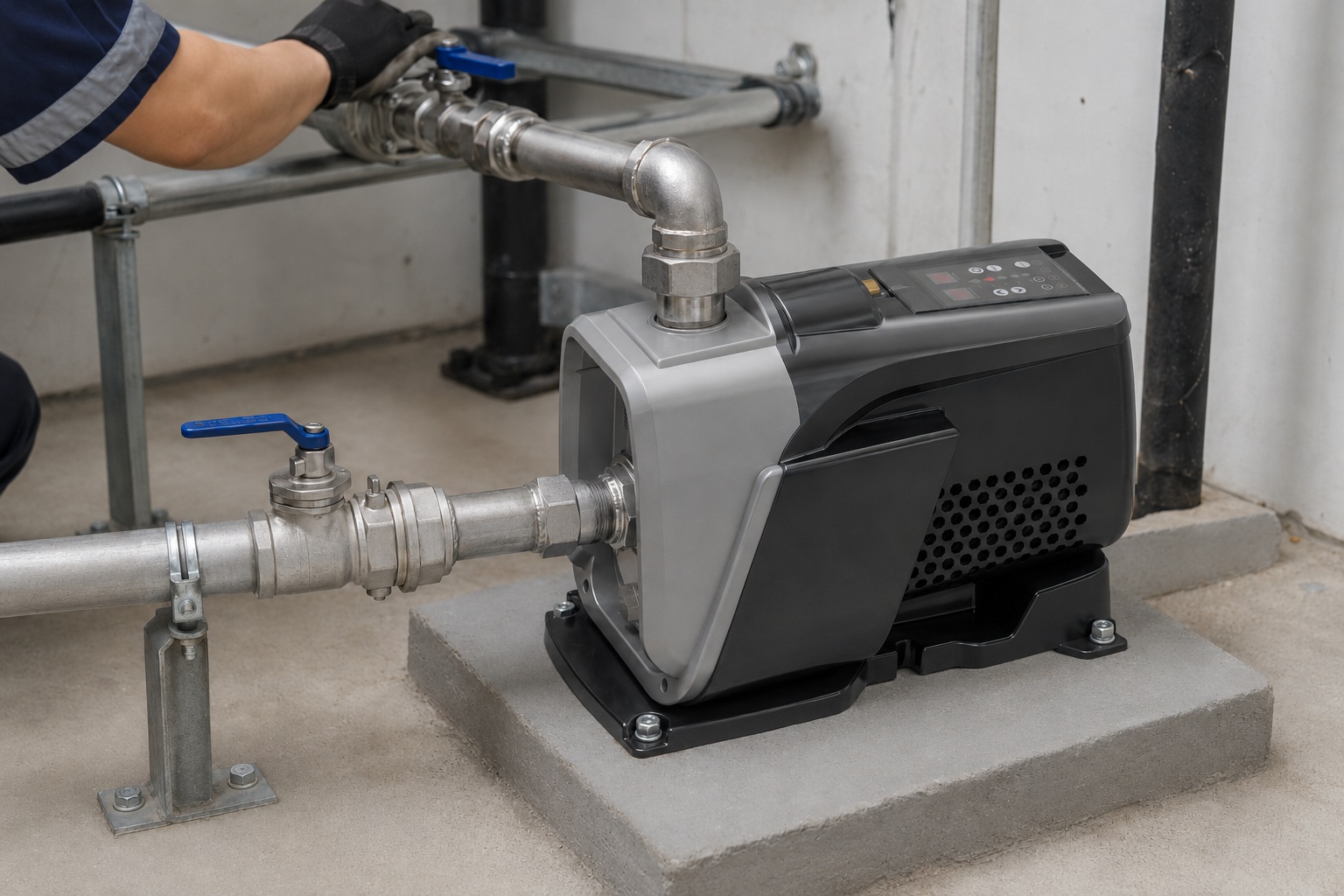
Struggling with weak water pressure at your off-grid property?
This frustrating lack of flow can make simple tasks difficult.
A solar booster pump provides the powerful, consistent pressure you need.
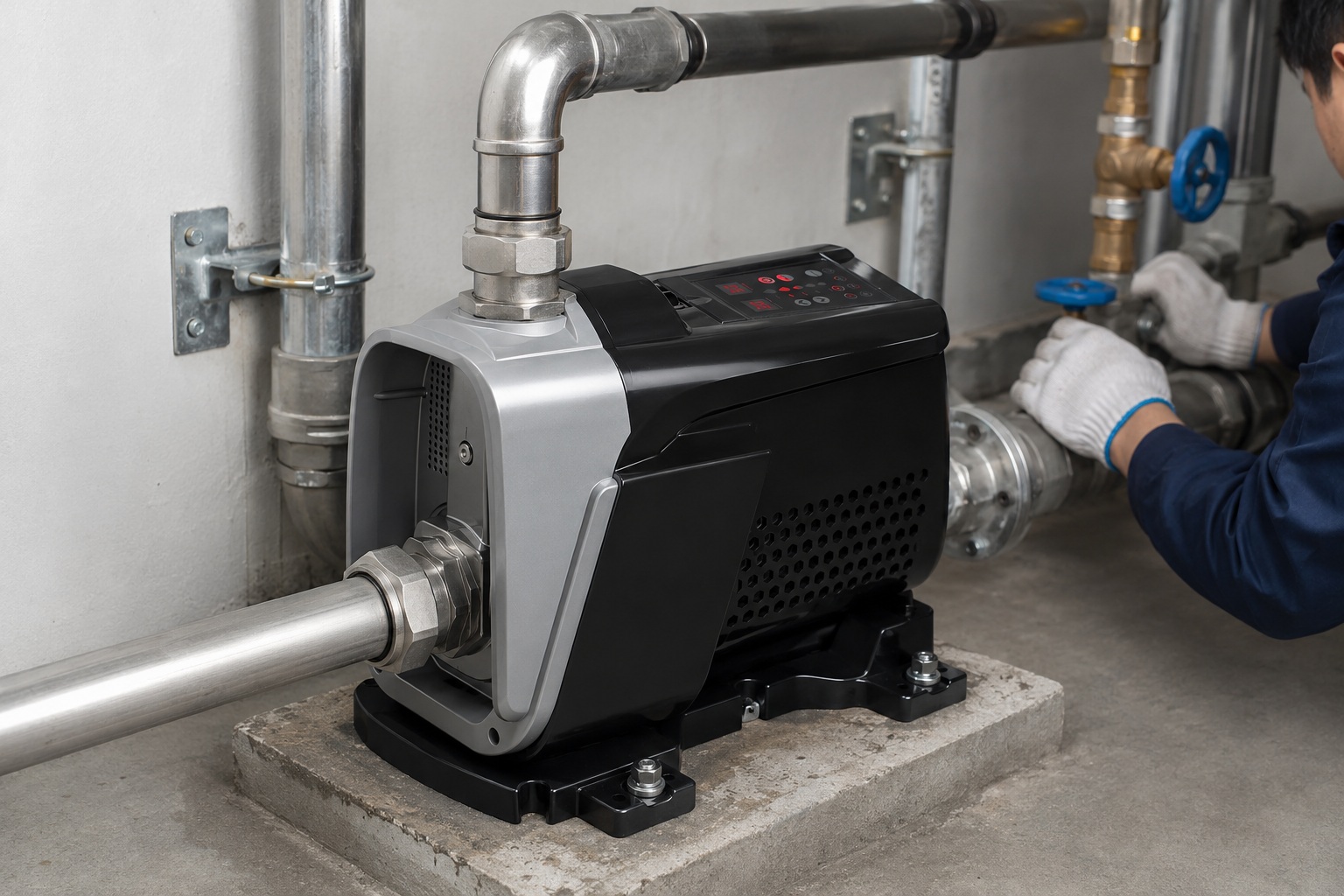
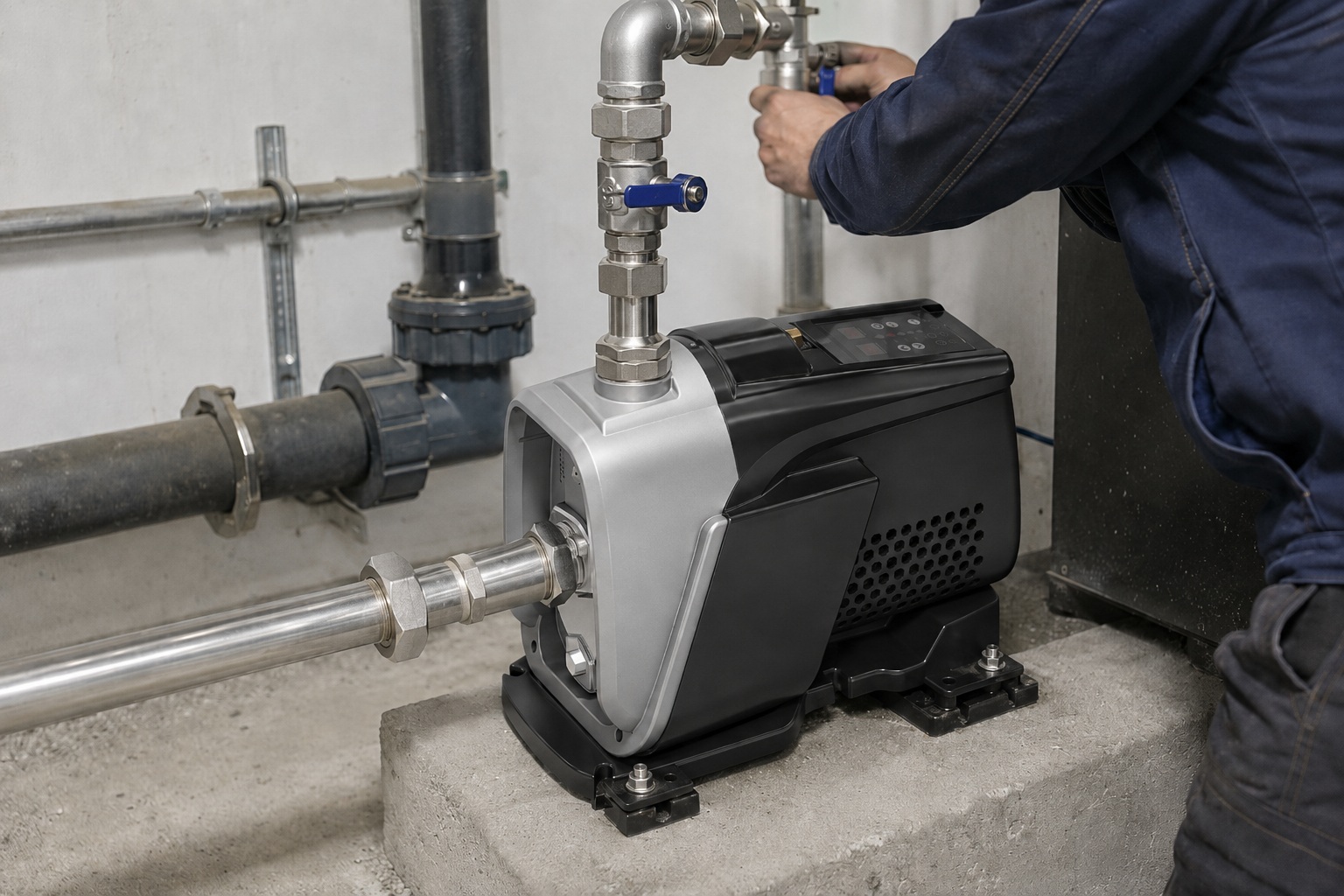
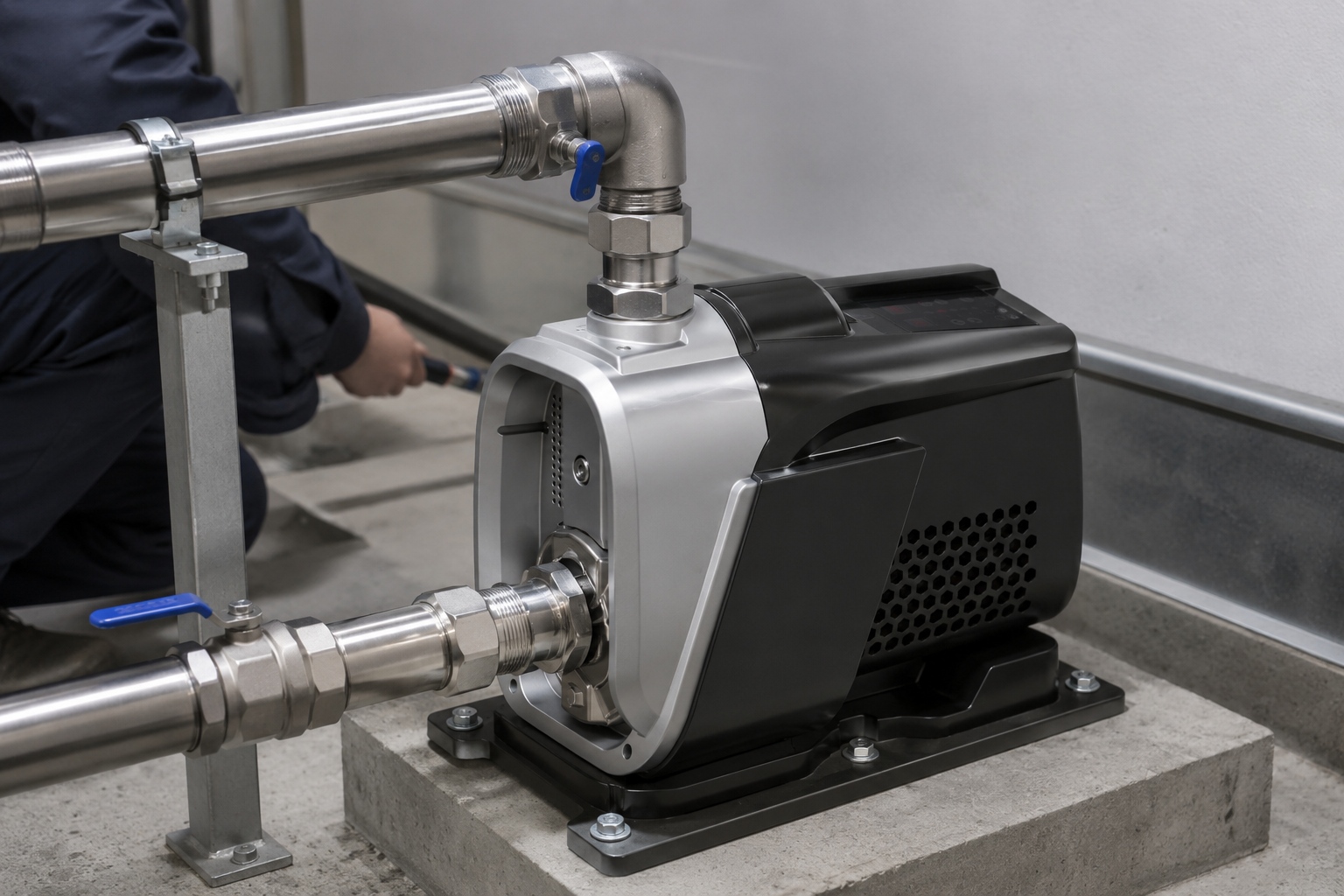
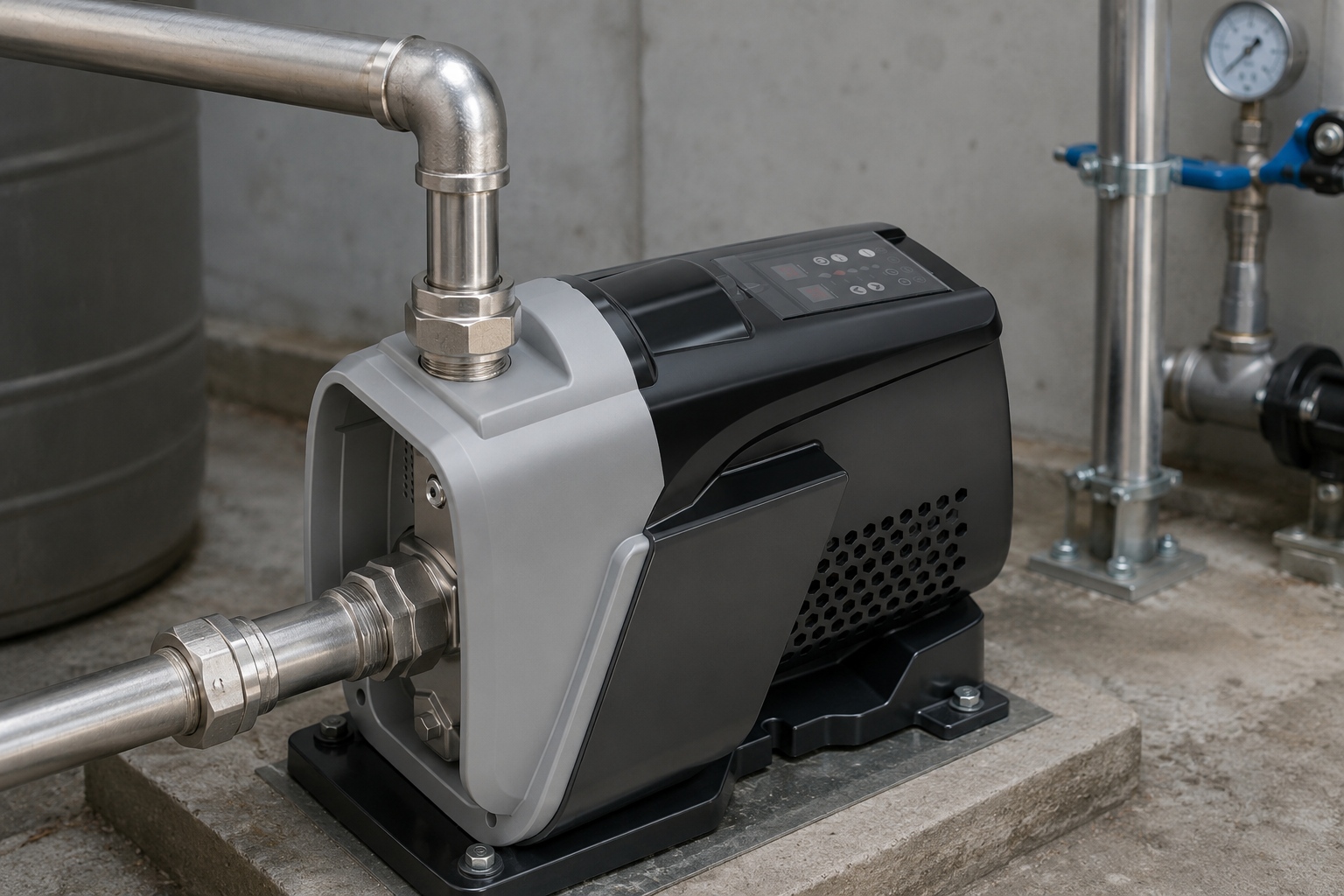
A solar booster pump is a device that uses energy from solar panels to increase the pressure of water within a pipeline.
It does not lift water from a source but rather takes existing water flow and boosts its force for homes, irrigation, or livestock.
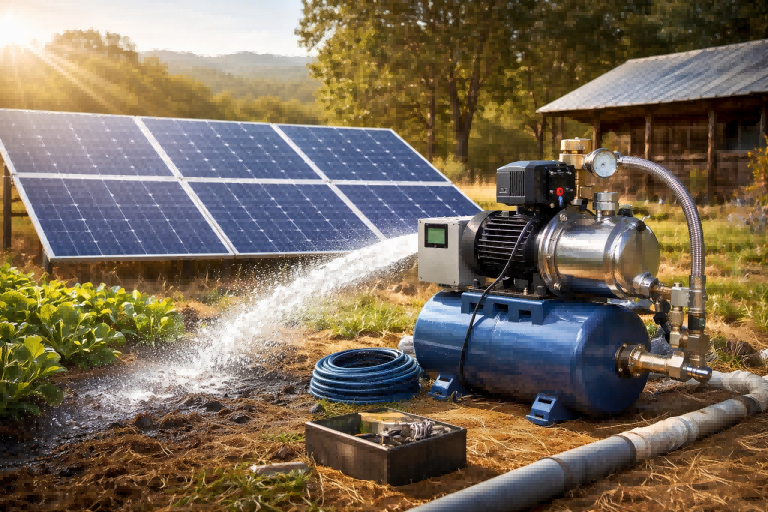
A solar booster pump is an elegant solution to a common problem.
It provides city-like water pressure in places where the electrical grid is unreliable or nonexistent.
This technology harnesses the sun’s free energy to make your water system more powerful and efficient.
To truly understand its value, we need to look beyond its function and examine its core components.
The real innovation lies in the motor that drives it and the intelligent controller that manages its power.
These elements determine its efficiency, reliability, and ultimate performance.
Let’s explore the technology that makes powerful, solar-powered water pressure possible.
How Does a Solar Booster Pump Actually Work?
Confused about how sunlight can turn a trickle of water into a powerful jet?
The internal mechanics might seem complex and unapproachable.
But the system works on a simple, logical principle of energy conversion and automated control.
A solar booster pump works by converting solar energy into electricity to power a motor.
This motor drives an impeller or other mechanism, which increases water pressure. A pressure switch automatically turns the pump on when pressure drops and off when it’s restored.
The process of boosting water pressure with solar power is a seamless integration of several key technologies.
It starts with capturing sunlight and ends with high-pressure water available on demand.
The system is designed to be both automatic and highly efficient.
It responds intelligently to your water needs without manual intervention.
To appreciate the system’s effectiveness, it’s helpful to break it down into its fundamental parts and understand the role each one plays.
From the panels on the roof to the pump on the pipe, every component is optimized to work together.
This creates a reliable and cost-effective solution for low water pressure.
The Core Components of the System
A complete solar booster pump system is more than just the pump itself.
It includes four critical parts that work in harmony.
- Solar Panels (PV Array): These capture sunlight and convert it into direct current (DC) electricity. The number and size of the panels determine the total power available.
- The Controller: This is the brain of the system. It takes the variable DC power from the panels, optimizes it for the motor, and provides crucial safety protections against over-voltage or running dry.
- The Pump Unit: This is the heart of the operation, consisting of the motor and the "wet end." The motor converts electricity into rotational force, and the wet end uses this force to pressurize the water.
- Pressure Tank & Switch: The pressure switch detects when water pressure in the pipes falls below a set level (e.g., when a tap is opened). It signals the controller to start the pump. A pressure tank helps smooth out the water flow and reduce how often the pump cycles on and off.
The Step-by-Step Pressurization Process
Understanding the sequence of events shows how simple and effective the system is.
- Sunlight strikes the solar panels, which generate DC electricity.
- This electricity flows to the controller. The controller immediately begins optimizing the voltage and current.
- A tap is opened somewhere in the system, causing the water pressure in the pipes to drop.
- The pressure switch detects this drop and sends a signal to the controller to activate the pump.
- The controller delivers the optimized DC power to the pump’s motor.
- The motor spins the pump’s impeller, which rapidly increases the pressure of the water flowing through it.
- The tap is closed. Water pressure in the pipes quickly builds back up.
- The pressure switch detects that the target pressure has been reached and signals the controller to stop the pump. The system then waits for the next pressure drop.
Matching Components for Optimal Performance
The synergy between these components is critical.
A high-efficiency pump is wasted if the controller cannot optimize the solar input.
Likewise, powerful solar panels are useless if the motor cannot efficiently convert their energy into pumping power.
For distributors and importers, offering a pre-configured kit where the solar panels, controller, and pump are perfectly matched is a significant value proposition.
It removes the guesswork for the end user and guarantees the system will perform as advertised.
| Component | Primary Function | Key Performance Metric |
|---|---|---|
| Solar Panels | Generate DC electricity from sunlight | Wattage (Wp), Efficiency (%) |
| Controller | Optimize power, control pump, provide protection | MPPT Efficiency (%), Voltage/Current Rating |
| Pump Unit | Convert electricity to water pressure | Motor Efficiency (%), Flow Rate (L/min), Head (m) |
| Pressure Switch | Automate pump operation based on pressure | Cut-in/Cut-out Pressure (PSI/Bar) |
The Engine Inside: Why the Motor Matters Most
Do you assume any motor will do the job?
A cheap, inefficient motor wastes solar energy, requiring more panels and increasing system cost.
The choice of motor is the single most important factor for efficiency and reliability.
The heart of a modern solar pump is its motor.
A high-efficiency Brushless DC (BLDC) permanent magnet motor is the superior choice. It converts over 90% of solar energy into pumping power, reducing the number of solar panels needed and extending the system’s operational life.
In any solar-powered system, efficiency is everything.
Wasted energy means you need a larger, more expensive solar array to get the same job done.
This is especially true for solar pumps.
The motor’s ability to convert precious solar electricity into mechanical force with minimal loss is what separates a high-performance pump from a mediocre one.
While the pump’s "wet end" determines the flow and pressure characteristics, it is the motor that defines the system’s overall solar efficiency.
For years, standard brushed motors were the norm.
Today, advanced Brushless DC (BLDC) permanent magnet motors have changed the game, offering a level of performance that makes solar pumping more viable and affordable than ever before.
Understanding the BLDC Motor Advantage
A Brushless DC (BLDC) motor is a significant upgrade over older motor technologies.
Unlike traditional brushed motors that use physical carbon brushes to transfer power, BLDC motors use an electronic controller.
This fundamental design difference leads to massive gains in performance and longevity.
Furthermore, high-performance BLDC motors use powerful permanent magnets, often made from rare-earth materials like Neodymium iron boron (40SH grade), for their rotor.
This creates a stronger magnetic field, generating more torque with less electrical input.
The result is a motor with an electrical-to-mechanical conversion efficiency often exceeding 90%, compared to 70-75% for a typical brushed motor.
Technical Benefits for Importers and End Users
The advantages of using a BLDC permanent magnet motor are not just theoretical.
They translate into tangible market benefits.
- Higher Efficiency: A 90%+ efficiency rating means the pump can do more work with less power. It can start earlier in the morning, run later in the evening, and perform better on overcast days. For a distributor, this means you can offer a system with fewer solar panels for the same performance, a major competitive advantage.
- Superior Durability: The lack of brushes to wear out means the motor is virtually maintenance-free. This significantly increases the pump’s service life and reduces long-term ownership costs for the end user, building brand reputation for reliability.
- Compact & Lightweight Design: Advanced BLDC motors can be significantly smaller and lighter than traditional motors of equivalent power. Some designs are up to 47% smaller and 39% lighter. This is a huge benefit for importers, as it reduces shipping volume and cost per unit. It also makes installation easier and safer.
- High Starting Torque: BLDC motors deliver high torque from a standstill. For a booster pump, this is crucial for its ability to instantly push against the existing pressure in a pipeline and deliver immediate results.
Motor Technology Comparison
| Feature | BLDC Permanent Magnet Motor | Standard Brushed DC Motor |
|---|---|---|
| Efficiency | > 90% | ~ 70-75% |
| Lifespan | Very Long (no brush wear) | Limited by brush life |
| Maintenance | None | Requires brush replacement |
| Size / Weight | Compact and lightweight | Bulkier and heavier |
| Starting Torque | High | Moderate |
| System Cost Impact | Reduces solar panel costs | Requires more solar panels |
Smart Control for All-Day Water Pressure
Worried that your water pressure will disappear when a cloud passes over?
A simple on/off system can’t adapt to changing sunlight, leading to inconsistent performance.
An intelligent controller ensures you get the most pressure out of every ray of sun.
A smart controller is essential for a solar pump.
It uses Maximum Power Point Tracking (MPPT) to extract up to 30% more power from solar panels. Advanced controllers can also blend AC power from the grid or a generator, guaranteeing water pressure 24/7.
A solar panel does not produce a steady, constant stream of power.
Its output voltage and current change continuously with the intensity of the sunlight.
Connecting a motor directly to a solar panel is incredibly inefficient, as the motor will rarely operate at its ideal speed.
The controller is the critical electronic intermediary that solves this problem.
It constantly analyzes the power coming from the panels and transforms it into the perfect voltage and current for the motor.
This optimization is the key to maximizing the pump’s performance throughout the day.
Furthermore, advanced controllers can manage multiple power sources, providing a level of reliability that solar-only systems cannot match and ensuring water is always available.
The Magic of MPPT: Maximum Power Point Tracking
The most important feature of a high-quality solar pump controller is Maximum Power Point Tracking (MPPT).
An MPPT algorithm continuously scans the voltage and current from the solar panels to find the "maximum power point"—the ideal combination that yields the most possible wattage at any given moment.
It then electronically converts the panel’s output to match this point, delivering a stable, optimized supply to the motor.
This process is dynamic.
As a cloud covers the sun, the maximum power point changes. The MPPT controller adjusts in milliseconds to find the new sweet spot.
This technology can boost the energy harvested from a solar array by up to 30% over the course of a day compared to a simple PWM controller.
This means more water pressure, for more hours of the day.
Hybrid Power: The Best of Both Worlds
For applications where water pressure is absolutely critical 24/7, a hybrid AC/DC controller is the ultimate solution.
This advanced controller is designed with two separate power inputs: one for solar (DC) and one for grid or generator power (AC).
The controller’s internal logic prioritizes solar power above all else.
- Full Sun: When there is ample sunlight, the controller uses 100% free solar energy to run the pump. The AC input is on standby.
- Low Sun / High Demand: If sunlight is weak but there is still some power, the controller’s hybrid function can blend AC power with the available DC power to meet the demand. It always uses as much solar power as possible to reduce electricity costs.
- No Sun (Night/Heavy Clouds): When there is no solar input, the controller automatically and seamlessly switches over to the AC power source to run the pump.
This ensures a completely uninterrupted water supply, giving the user the economic and environmental benefits of solar without ever having to worry about running out of water.
Controller Features That Matter
When evaluating a solar booster pump system, look for a controller with these key features.
- High MPPT Efficiency: An MPPT tracking efficiency of 99% or higher ensures minimal energy is wasted.
- AC/DC Hybrid Capability: For mission-critical applications, this feature is non-negotiable.
- Dry-Run Protection: The controller should be able to detect if the water source has run dry and automatically shut down the pump to prevent damage.
- Full Motor Protection: It should protect against over-voltage, under-voltage, over-current, and overheating, safeguarding the most valuable part of the pump.
- Robust Enclosure: The controller needs a durable, weatherproof housing (e.g., IP65 rated) to protect the sensitive electronics from dust and moisture.
Conclusion
A solar booster pump increases water pressure using free solar energy.
Its performance depends on a high-efficiency BLDC motor and a smart MPPT controller.
This creates a reliable, cost-effective pressure solution.
Frequently Asked Questions
Can a solar pump work without a battery?
Yes, most modern solar pumps, including booster pumps, are designed to work without batteries.
They run directly from solar panel power during the day.
How much pressure can a solar booster pump add?
This varies by model, but many solar booster pumps can add 30-60 PSI (2-4 Bar) or more to an existing water system.
Do I need a pressure tank with a solar booster pump?
A pressure tank is highly recommended.
It provides smoother water flow and reduces how often the pump starts and stops, extending its life.
Can a solar booster pump run at night?
It can if it is connected to a hybrid AC/DC controller.
The controller will automatically switch to grid or generator power when there is no sunlight.
What size solar booster pump do I need?
Sizing depends on your required flow rate (LPM/GPM) and the pressure boost needed (PSI/Bar).
Consult a supplier’s performance chart to find the right model.
How do you install a solar booster pump?
It’s installed "in-line" on the pipe after your water source (like a tank or well pump).
Solar panels are connected to the controller, which is then wired to the pump.
Are solar booster pumps noisy?
Pumps with high-efficiency BLDC motors are typically very quiet, especially when compared to gasoline-powered pumps or older electric models.
How long does a solar pump motor last?
A quality Brushless DC (BLDC) motor can last for over a decade because it has no brushes to wear out, making it a very durable investment.