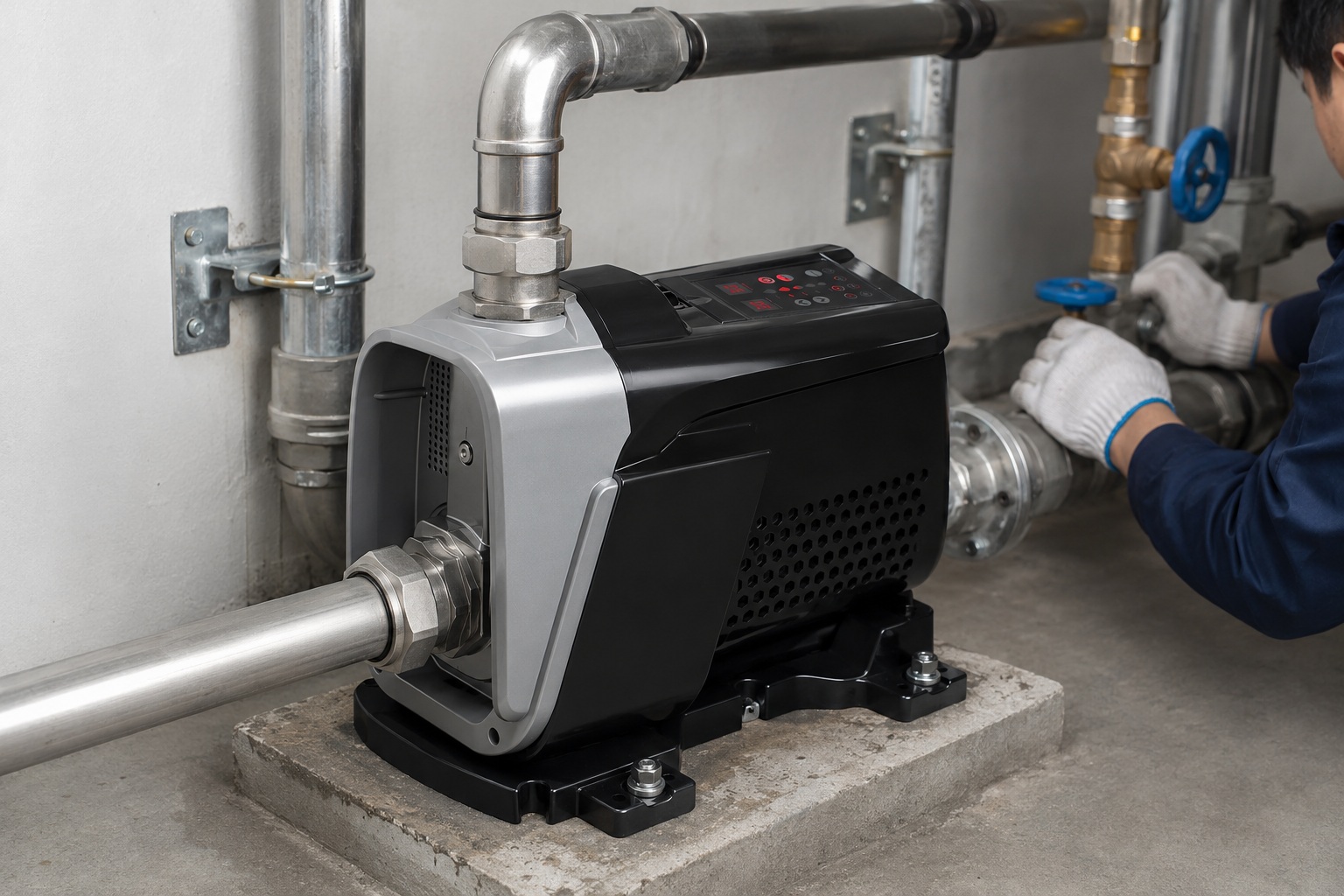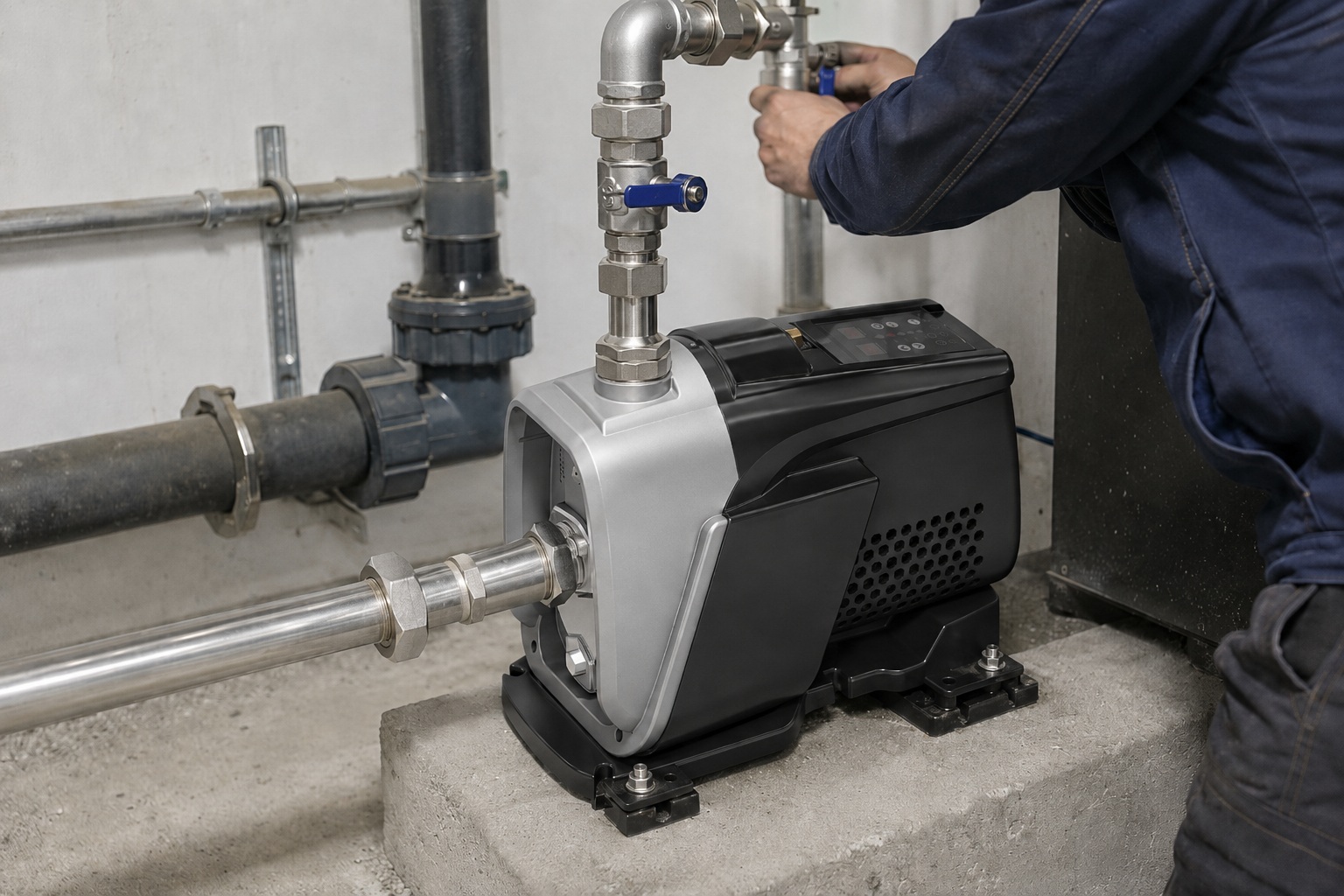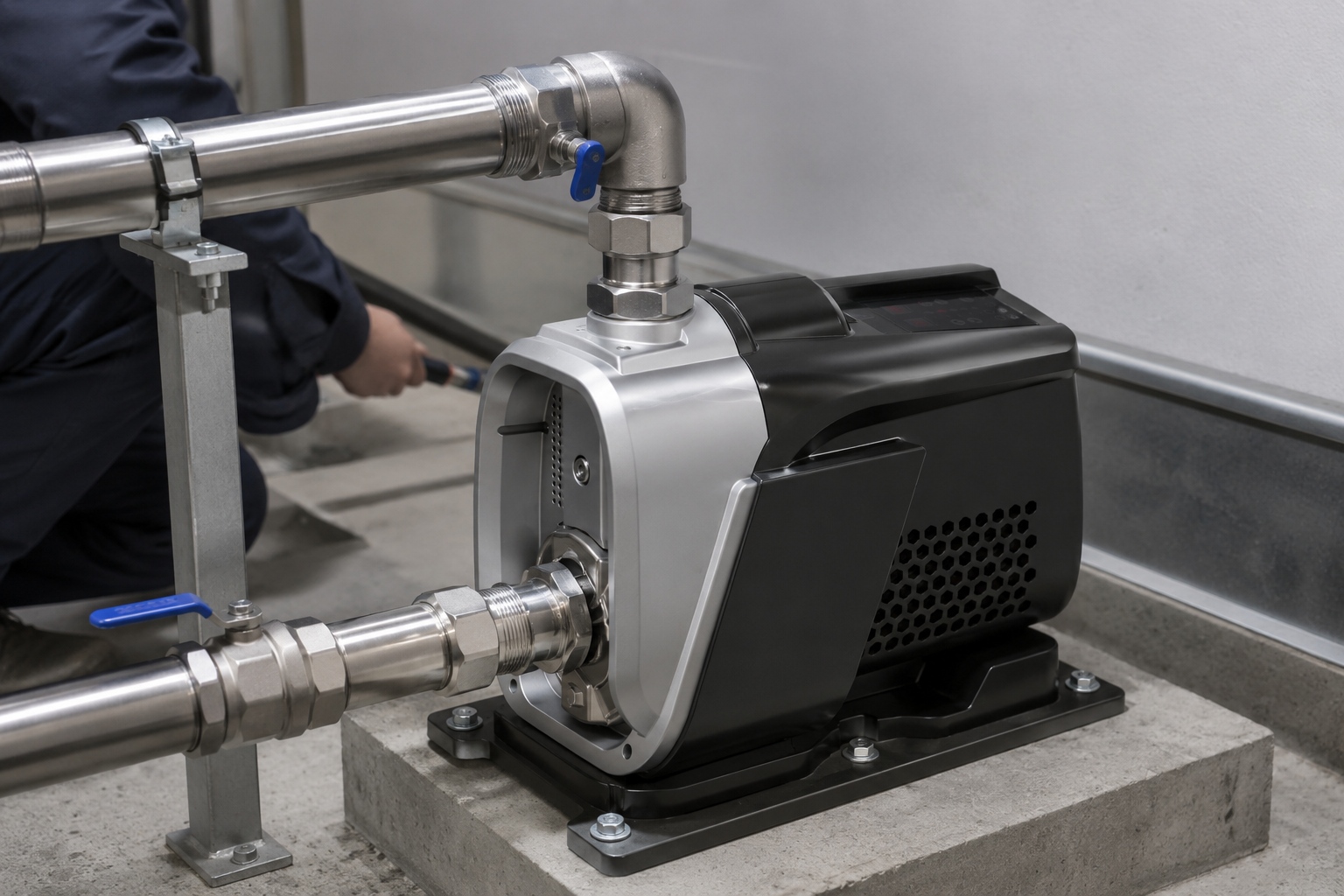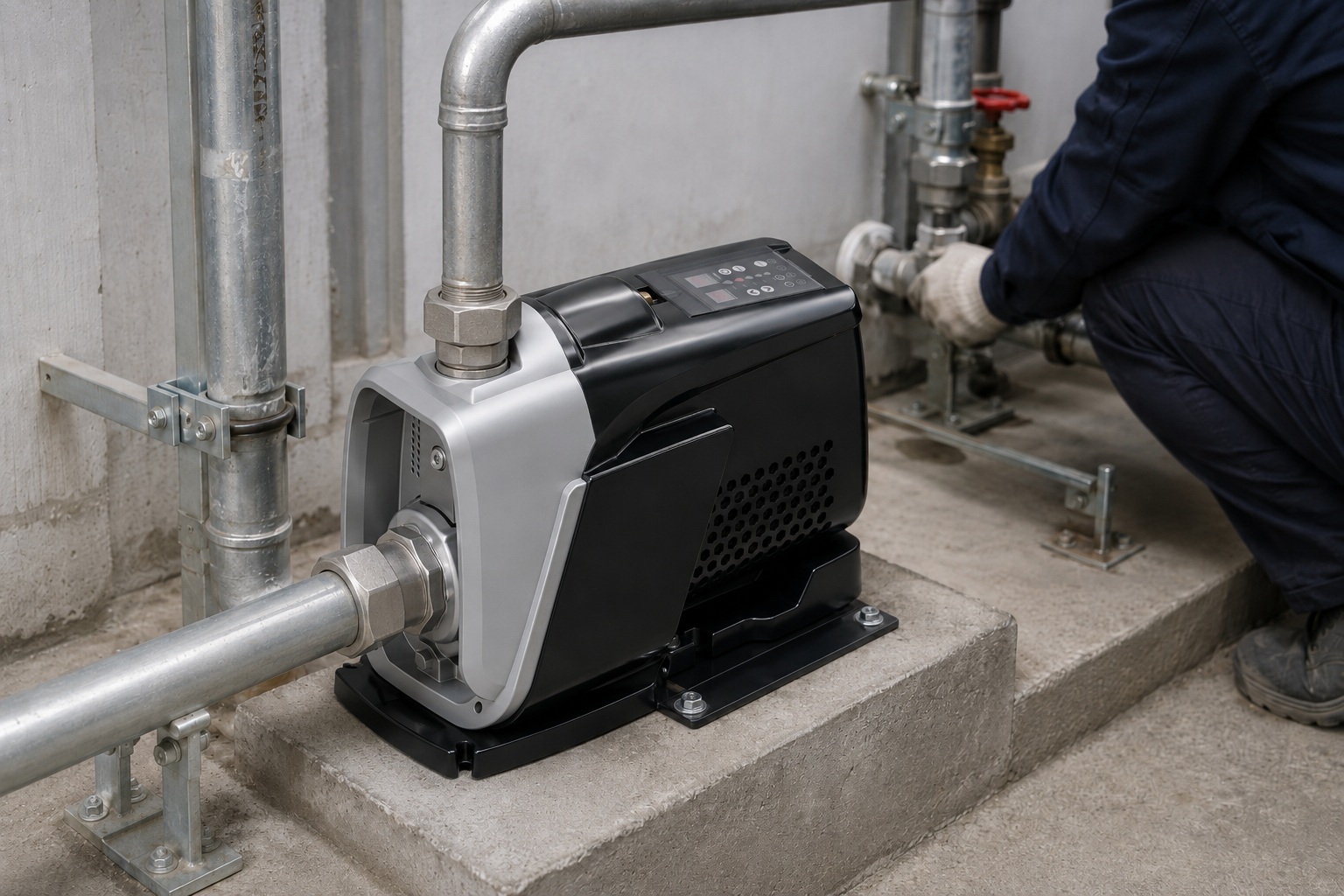
Struggling with weak showers and trickling faucets?
Low water pressure disrupts daily life and can harm appliances.
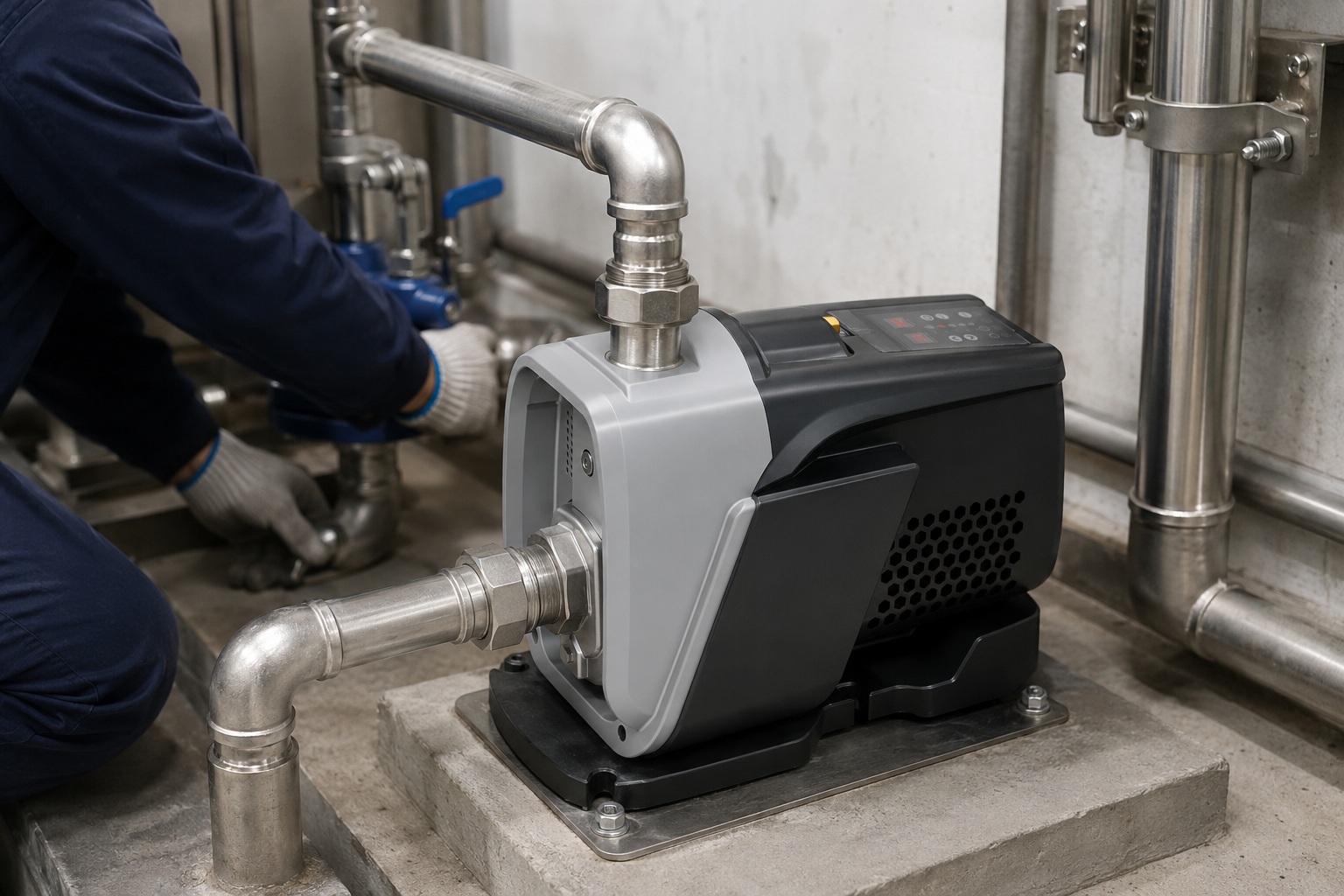
A booster pump is the powerful solution to restore strong, consistent flow.
You likely need a booster pump if you experience consistently low water pressure.Key signs include weak showers, slow-filling washing machines, and poor sprinkler performance.If your water pressure measures below 40 PSI (pounds per square inch) at the point of use, a booster pump is recommended.

Identifying the need for a booster pump starts with recognizing the symptoms of inadequate water pressure.
Many people Tolerate weak flow without realizing a straightforward solution exists.
The problem might not be with your city's water supply or the well itself.
It could simply be a lack of sufficient pressure within your own property's system.
This is especially common in multi-story buildings, homes at the end of a water line, or properties relying on well water.
Before you can select the right solution, you must first accurately diagnose the problem.
Understanding the common signs, knowing how to measure your pressure, and considering the source of your water are the first steps.
This will guide you toward the correct type of pump system that can solve your pressure woes effectively and efficiently.
Are You Experiencing the Classic Symptoms of Low Water Pressure?
Are your showers unsatisfyingly weak?
Does your washing machine take forever to fill?
These daily annoyances are clear indicators that your water pressure is simply not strong enough.
**The most common signs of needing a booster pump are weak water flow from faucets, poor shower performance, and appliances that fail to operate correctly.
These symptoms reveal that your system lacks the force to push water effectively through your pipes.**
The symptoms of low water pressure often become so normal that people stop noticing them.
However, these signs are your system's way of telling you it's struggling.
A weak shower is more than an inconvenience; it can be a sign that your entire plumbing system is underperforming.
When a dishwasher takes too long to cycle, it's not just wasting time; it may not be cleaning effectively due to insufficient water force.
These issues are not just isolated problems but interconnected symptoms of a single root cause: low pressure.
Recognizing these signs is the essential first step.
You must move from accepting the problem to actively diagnosing it.
Only by confirming the presence and severity of low pressure can you begin to explore the most effective solutions, like a booster pump, that will restore functionality and convenience to your home, farm, or business.
Identifying the Telltale Signs in Your Building
Low water pressure manifests in several obvious ways throughout a property.
If you notice one or more of the following, your pressure is likely inadequate.
-
Weak Showers: The flow is a gentle trickle instead of a powerful spray.
-
Slow Faucets: It takes an unusually long time to fill a sink or a pot with water.
-
Appliance Issues: Your washing machine, dishwasher, or icemaker takes longer than usual to complete a cycle or may display error codes related to water fill times.
-
Poor Irrigation Performance: Sprinklers create puddles near the heads instead of spraying evenly across the lawn or field.
-
Multi-Fixture Problems: Turning on a second faucet causes the first one's flow to drop significantly.
Quantifying the Problem: How to Measure Your Water Pressure
Observing symptoms is good, but data is better.
Measuring your water pressure is a simple and definitive way to know if you need a pump.
You can buy an inexpensive water pressure gauge from any hardware store.
Simply screw it onto an outdoor hose bib or your washing machine's cold water connection and turn the faucet on fully.
The gauge will give you a reading in PSI.
Most homes and appliances are designed to operate best between 40 and 60 PSI.
If your static pressure (with no water running) is below 40 PSI, you have a confirmed low-pressure problem.
When It's Not the Pump: Other Potential Causes
Before investing in a booster pump, it's wise to rule out other issues.
Sometimes, low pressure is caused by problems that a pump won't fix.
These can include a partially closed main water valve, a failing pressure-reducing valve (PRV), or older galvanized steel pipes that have become clogged with mineral deposits and corrosion over time.
A quick inspection of these components can save you from making an unnecessary purchase.
Is Your Water Source the Root of the Problem?
Does your water travel a long way uphill?
Is it drawn from a very deep well?
The laws of physics mean that distance and elevation are natural enemies of water pressure.
**If your water source is a deep well or is located far from the point of use, you will experience significant pressure loss.
A pump specifically designed for high-head (vertical lift) applications is required to overcome this and deliver adequate pressure.**
Water pressure is not magical.
It is simply the force pushing water through pipes.
This force is diminished by two primary factors: lifting height (head) and friction loss over distance.
Every foot you lift water vertically reduces its pressure by approximately 0.433 PSI.
Lifting water 100 feet from a well means you have already lost over 43 PSI before it even begins its horizontal journey.
Furthermore, as water travels through pipes, friction between the water and the pipe walls slows it down, further reducing pressure.
Longer pipes and smaller pipe diameters create more friction loss.
For properties relying on deep wells or distant water sources, this combination of vertical lift and friction loss makes low pressure almost inevitable without the right equipment.
A standard pump may not have the power to overcome these forces, making a specialized high-head pump essential.
The Deep Well Solution: The Solar Screw Pump
When the primary challenge is lifting water from extreme depths, a Solar Screw Pump is the ideal solution.
This type of pump doesn't use impellers.
Instead, it employs a stainless steel helical screw (a rotor) that turns inside a durable rubber stator.
This mechanism acts like an Archimedes' screw, pushing "pockets" of water upward under high pressure.
- Function: It is designed for low flow rates but can generate a very high head, meaning it excels at pushing water up from hundreds of feet below the surface.
- Advantages: Its design is highly resistant to abrasion from sand, making it incredibly durable in harsh well conditions common in regions like Africa and Latin America.
- Application: It is the go-to choice for domestic water supply and livestock watering from very deep boreholes where standard centrifugal pumps would fail.
Analyzing Flow vs. Head Requirements
Choosing the right pump means balancing the need for pressure (head) and volume (flow).
| Water Source Challenge | Required Pump Characteristic | Ideal Pump Type | Why It Works |
|---|---|---|---|
| Very Deep Well (>100m) | Very High Head, Low Flow | Solar Screw Pump | Its screw mechanism is specifically engineered to create high pressure to overcome deep vertical lifts. |
| Shallow Well, Long Distance | Medium Head, High Flow | Solar Impeller Pump | Can move large volumes of water efficiently, overcoming friction loss in long pipes. |
| Municipal Supply, Low Pressure | Pressure Boosting | Inline Booster Pump | Sits within the existing plumbing line to increase the pressure of water that is already flowing. |
Do You Need More Water Volume for Your Application?
Is your irrigation system underperforming?
Do you need to move a large amount of water for your farm or pasture?
Low pressure is often tied to low flow, a problem a high-volume pump can solve.
**If your water needs exceed what your current system can deliver, resulting in poor irrigation or slow tank filling, you need a high-flow pump.
A multi-stage centrifugal pump with plastic or steel impellers is designed to move large volumes of water efficiently.**
For many applications, particularly in agriculture and large-scale landscaping, the total volume of water delivered is just as important as the pressure.
You might have "acceptable" pressure at a single outlet, but if you try to run multiple sprinklers or water a large herd of livestock, the system can't keep up.
The total flow rate, measured in gallons per minute (GPM) or cubic meters per hour, is too low.
This is a common bottleneck.
Your well or water source may have plenty of water, but the pump isn't capable of moving it quickly enough to meet peak demand.
This leads to inefficient irrigation, stressed crops, and logistical challenges in managing water resources.
Solving this requires a different type of pump—one engineered not for extreme vertical lift, but for moving a high volume of water at a moderate pressure.
This is the domain of multi-stage centrifugal pumps.
The High-Flow Workhorse: The Solar Plastic Impeller Pump
When the priority is delivering a high volume of water for applications like farm irrigation or filling large troughs, the Solar Plastic Impeller Pump is an excellent choice.
This pump uses a series of impellers and diffusers stacked on top of each other.
Each stage adds a small amount of pressure, but their combined design allows the pump to move a significant amount of water.
- Design: It is a multi-stage centrifugal pump. Water enters the first impeller, is thrown outward by centrifugal force, and is then guided into the next impeller, gathering more energy at each stage.
- Materials: It uses durable, engineered plastic for the impellers. This material offers excellent resistance to abrasion from fine sand, is lightweight, and makes the pump more economical.
- Performance: It delivers high flow rates at a medium head, making it perfect for moving water from moderately deep wells to power irrigation systems or provide water across large pastures. It is widely used in agricultural regions across Africa and the Americas.
For Harsh Conditions: The Solar Stainless Steel Impeller Pump
In environments where the water is corrosive (acidic or alkaline) or where maximum durability is required, the Solar Stainless Steel Impeller Pump is the premium option.
It functions identically to the plastic impeller model but uses SS304 stainless steel for all components that touch water.
- Key Advantage: The stainless steel construction provides superior resistance to corrosion and chemical attack, ensuring a much longer service life in challenging water conditions, such as those found in the alkaline soils of Australia.
- Market Position: While its higher cost and weight target a more niche market, for high-end homes, critical agricultural operations, or ranches with corrosive well water, its reliability and longevity make it a cost-effective investment over the long term.
Is Your Power Source Affecting Your Water Pressure?
Is your water pressure inconsistent?
Does your pump struggle on cloudy days?
An inefficient motor or a limited power source will directly impact pump performance and pressure stability.
**Unreliable pressure can be caused by an inefficient motor that fails to deliver consistent power.
A high-efficiency BLDC permanent magnet motor, paired with a smart hybrid controller, ensures stable performance by maximizing power use and blending energy sources.**
The effectiveness of any pump, especially a solar-powered one, is entirely dependent on its motor and power management system.
You can have the perfectly sized pump for your needs, but if the motor is inefficient, it will fail to convert precious electrical energy into the necessary pumping power.
This is especially critical in solar applications where the power source—the sun—is inherently variable.
An old, inefficient motor might waste 30-40% of its energy as heat, meaning on a slightly cloudy day, it may not have enough usable power to get the pump to its optimal speed, causing your water pressure to drop.
Furthermore, a system that relies only on DC solar power will simply stop working at night or during extended bad weather.
This means your water availability is not continuous.
Therefore, solving pressure problems often requires looking beyond the pump itself and focusing on the core technology that drives it.
The Heart of the System: The BLDC Motor
All modern, high-performance solar pumps utilize a Brushless DC (BLDC) permanent magnet motor.
This technology is the core reason for their superior performance and reliability.
- Extreme Efficiency: BLDC motors operate at over 90% efficiency. This massive improvement means more of the sun's energy is converted into water pressure, and less is wasted as heat. This allows the pump to perform better in low-light conditions.
- Enhanced Durability: With no brushes to wear out, these motors are virtually maintenance-free and have a significantly longer operational lifespan.
- Powerful & Compact: Using strong neodymium magnets, these motors deliver higher torque and power in a package that is up to 47% smaller and 39% lighter than older motor designs. This simplifies installation and reduces shipping costs.
Ensuring 24/7 Water: The AC/DC Hybrid Controller
To solve the problem of intermittent power, an AC/DC Hybrid Controller is the ultimate solution.
This intelligent device acts as the brain of the pump system, managing power from multiple sources to guarantee water is always available.
The controller allows the system to be connected to both solar panels (DC) and the electrical grid or a generator (AC) at the same time.
It prioritizes the free energy from solar panels first.
On cloudy days, it can blend AC power with the available solar power to maintain full pressure.
At night, it automatically switches over to the AC source.
This ensures you have reliable, high-pressure water 24 hours a day, regardless of the weather.
Conclusion
You need a booster pump if you have low pressure or flow.
Diagnose the symptoms, measure your PSI, and select a pump suited to your water source, volume needs, and power availability.
Frequently Asked Questions
What pressure should a booster pump be set at?
Set the cut-in pressure slightly below your desired minimum (e.g., 40 PSI) and the cut-out pressure at your desired maximum (e.g., 60 PSI).
Where should a booster pump be installed?
Install the booster pump on the main water line just after your water meter or pressure tank to boost pressure for the entire property.
How do I choose a booster pump?
Choose a booster pump based on your required flow rate (GPM), desired pressure increase (PSI), and the size of your pipes.
Do booster pumps use a lot of electricity?
Modern booster pumps with efficient motors (like BLDC) and smart controllers use electricity only when running, minimizing energy consumption.
Can a booster pump be too powerful?
Yes.
An oversized pump can create excessively high pressure (over 80 PSI), which can damage pipes, fittings, and appliances.
What is the difference between a water pump and a booster pump?
A water pump moves water from a source (like a well), while a booster pump increases the pressure of water already in the plumbing system.
How do I know if my water pressure regulator is bad?
Symptoms include suddenly very high or very low water pressure, or banging noises (water hammer) in your pipes.
Does a booster pump increase water flow?
A booster pump primarily increases pressure.
While this can improve flow from outlets, the maximum flow rate is ultimately limited by your pipe size.