Running a pool pump can cause shocking electricity bills.
It’s one of the most power-hungry appliances in your home.
You’re paying a fortune just to keep your pool clean.
Yes, you can absolutely run a pool pump on solar power.Modern solar pool pumps use highly efficient motors and can be paired with hybrid controllers, allowing them to run on free solar energy during the day and grid power at night for 24/7 operation.
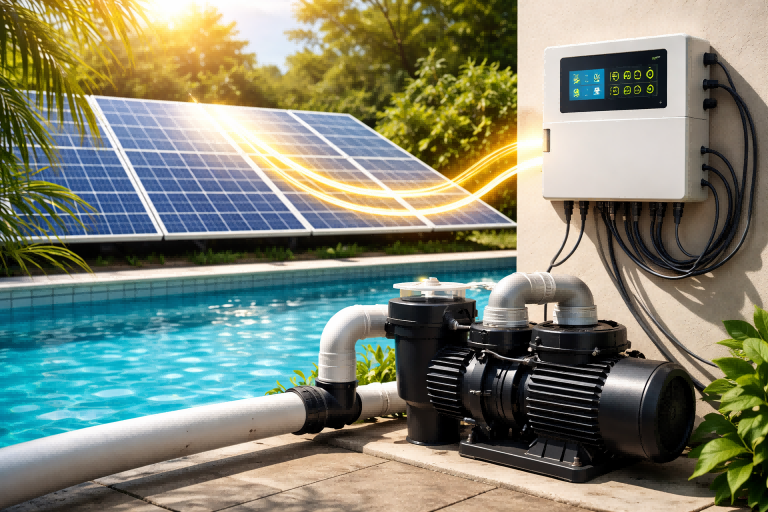
Switching your pool pump to solar power is one of the smartest upgrades a pool owner can make.
It directly tackles one of the highest, most consistent energy costs in a household.
But a successful switch involves more than just plugging a standard pump into a few solar panels.
The real magic is in the specialized technology designed to maximize every bit of energy from the sun.
This technology not only slashes your electricity bills but also offers a more reliable and often quieter solution.
Let’s dive into how these systems work and what makes them so effective.
What Makes a Solar Pool Pump So Efficient?
Are you running an old, noisy pool pump?
It’s likely an energy hog, wasting electricity as heat and noise.
This outdated technology costs you money every single hour it runs.
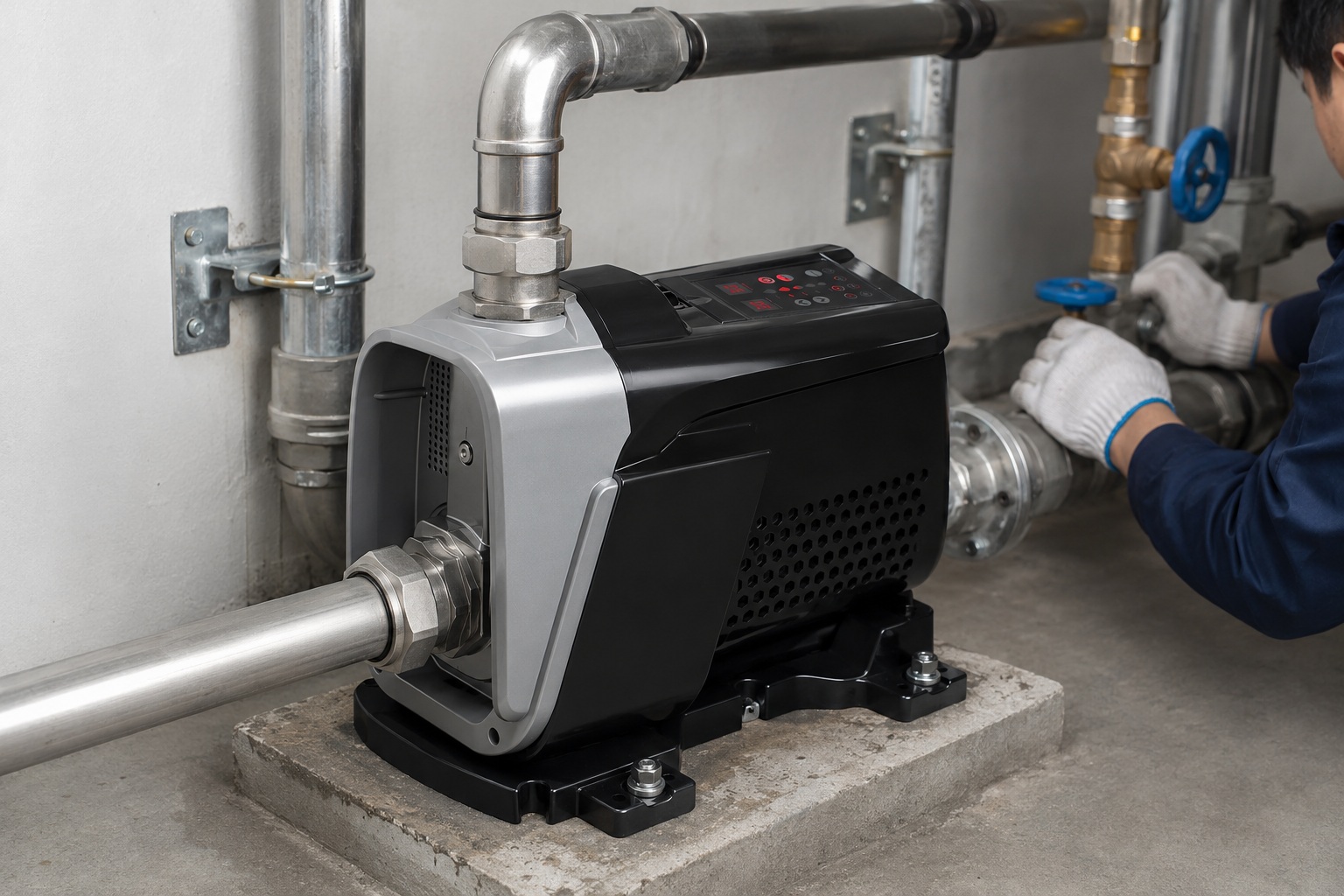
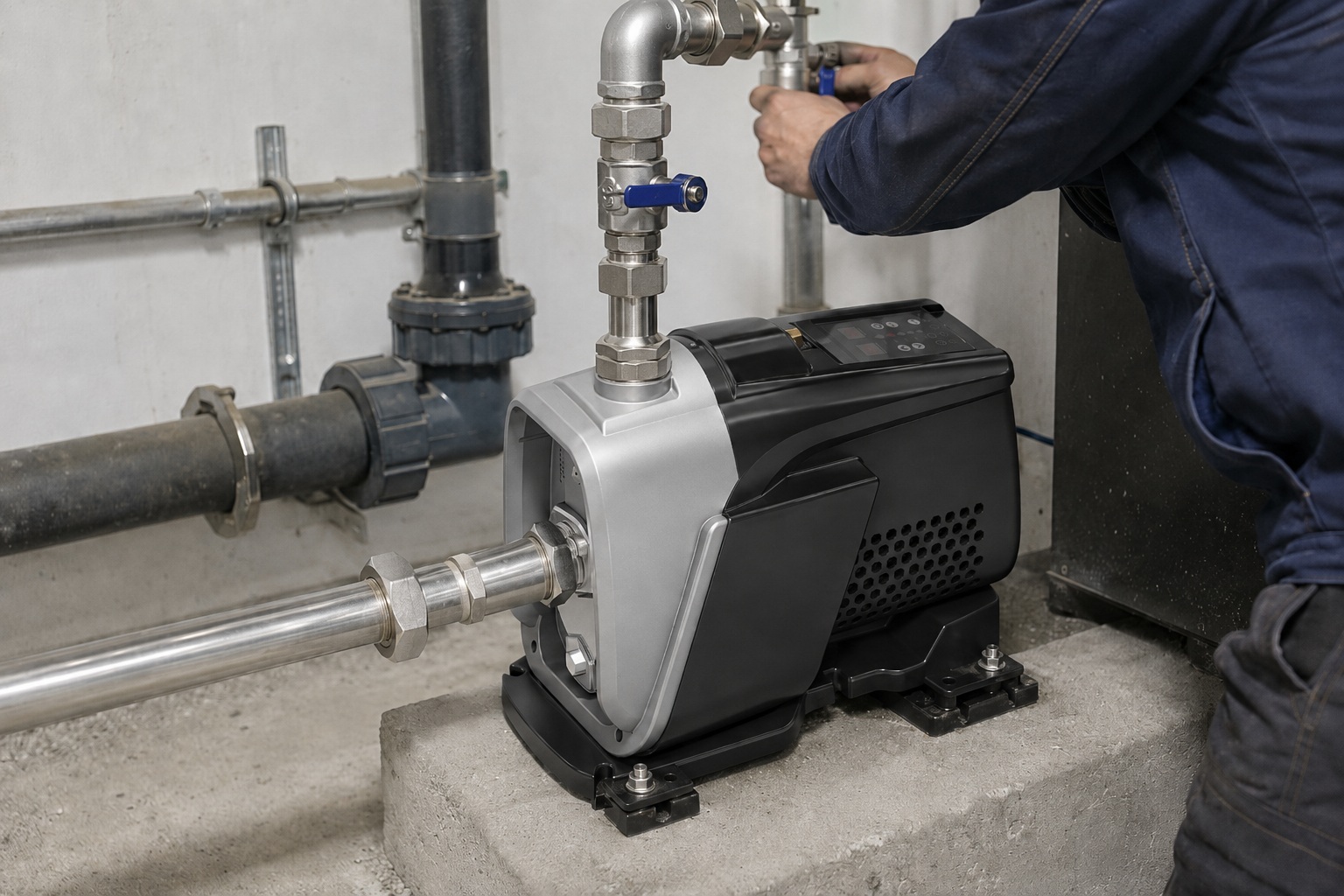
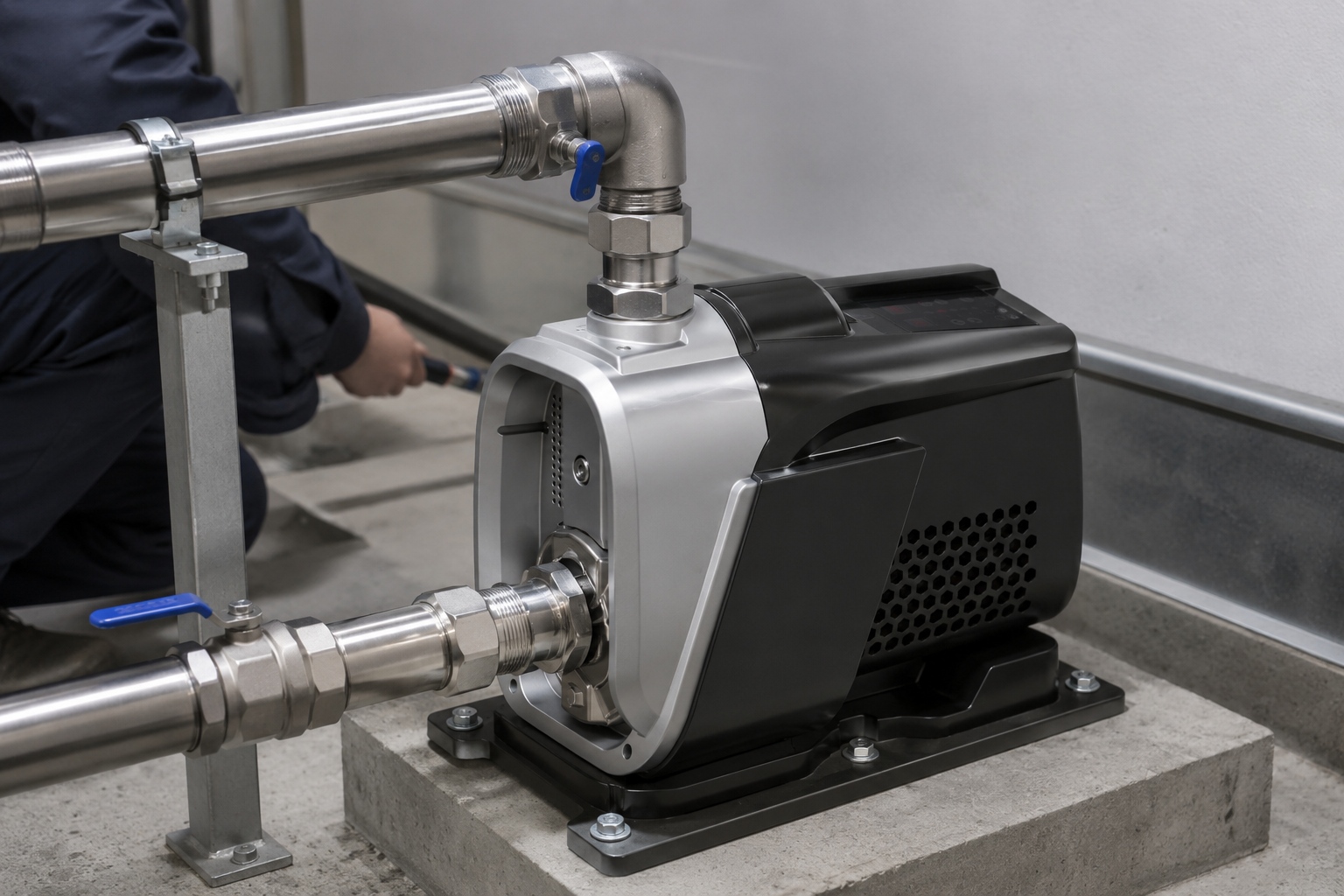
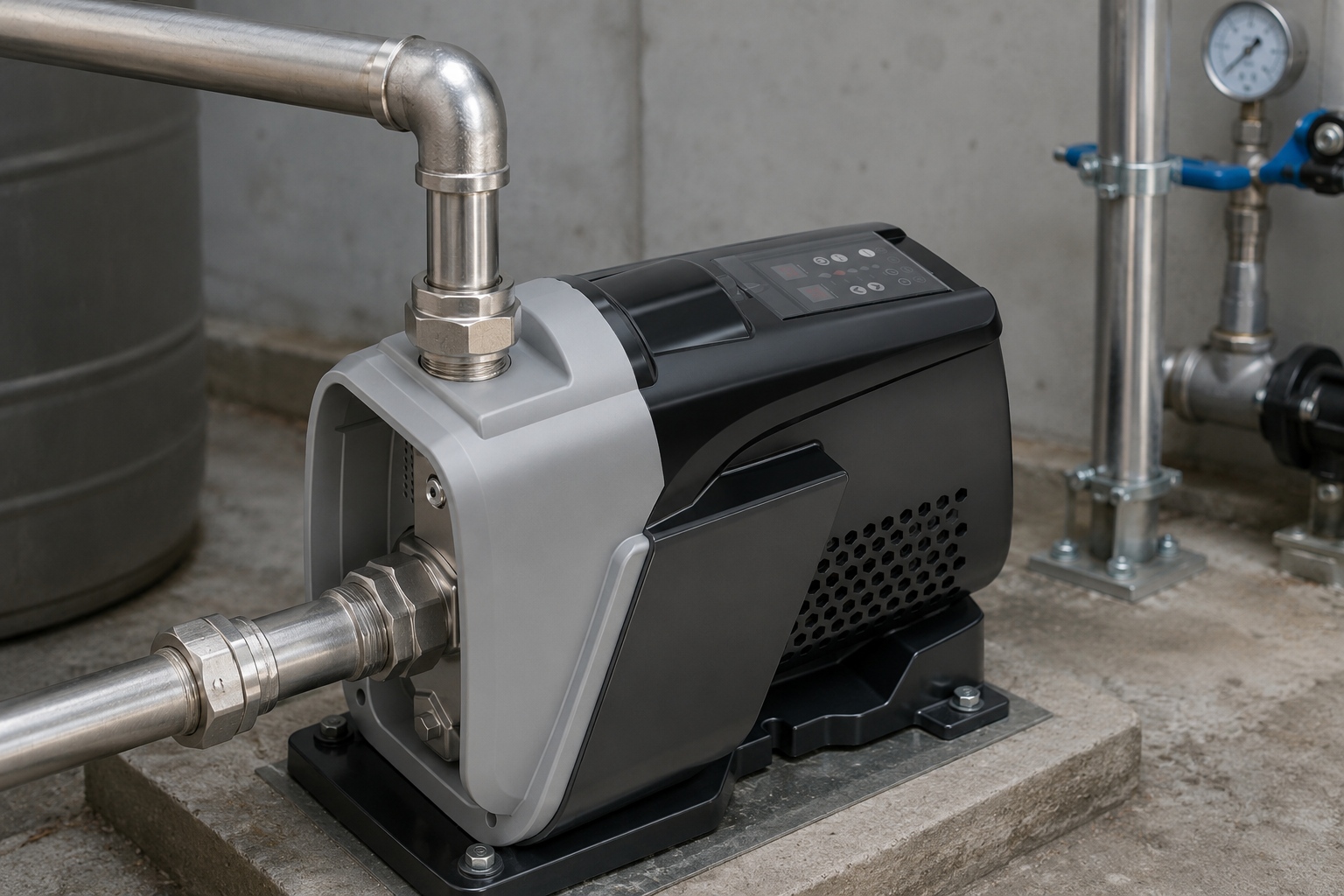
**A dedicated solar pool pump’s efficiency comes from its core technology: a Brushless DC (BLDC) permanent magnet motor.
This motor is over 90% efficient, converting more solar energy directly into water flow.
**
The heart of any solar pump system is its motor.
This is where the biggest leap in technology has occurred.
Traditional pool pumps use standard AC induction motors, which are relatively inefficient, often converting only 50-70% of electricity into useful work.
The rest is lost primarily as heat.
When you’re running on limited power from solar panels, that level of waste is unacceptable.
Solar pool pumps solve this problem by using a completely different type of motor.
The BLDC Motor Advantage
A Brushless DC (BLDC) permanent magnet motor is the standard for high-performance solar applications.
Its design is fundamentally more efficient than its AC counterpart.
-
Superior Efficiency: BLDC motors consistently achieve energy efficiency ratings exceeding 90%.
This means for every 100 watts of power generated by your solar panels, over 90 watts are used to actually pump water.
This dramatic increase in efficiency means you get more pumping power from fewer solar panels. -
Intelligent Electronics: Instead of mechanical brushes that wear out, BLDC motors use a sophisticated electronic controller.
This controller precisely manages the motor’s speed and power consumption.
It allows the pump to run at variable speeds, slowing down in lower light and speeding up in bright sun, always making the most of the available solar energy. -
Enhanced Durability: The "brushless" design has a major reliability benefit.
There are no brushes to wear down, spark, and fail.
This results in a motor that is virtually maintenance-free and has a significantly longer operational lifespan. -
Powerful and Compact: These motors utilize powerful rare-earth magnets, such as Neodymium Iron Boron.
This allows them to generate high torque in a much smaller and lighter package.
A BLDC motor can be up to 47% smaller and 39% lighter than a traditional AC motor of similar power output, simplifying installation.
The table below starkly illustrates the difference.
| Feature | BLDC Motor (Solar Pump) | Standard AC Motor (Traditional Pump) |
|---|---|---|
| Efficiency | > 90% | 50% – 70% |
| Power Source | Native DC (Ideal for Solar) | AC (Requires Inverter from Solar) |
| Speed Control | Built-in, Variable Speed | Often Single Speed or Limited |
| Maintenance | Virtually Maintenance-Free | Brushes may need replacement |
| Lifespan | Long | Moderate |
| Size & Weight | Compact and Lightweight | Bulky and Heavy |
Choosing a pump with a BLDC motor isn’t just an upgrade; it’s a fundamental shift in technology that makes solar-powered pool filtration both practical and highly economical.
How Do I Size a Solar Pool Pump System?
Worried about choosing a pump that’s too weak or too strong?
Picking the wrong size means poor filtration or wasted energy.
You could end up with a cloudy pool or an oversized, expensive system.
**To size a solar pool pump, you must calculate your pool’s total volume and determine your desired turnover rate.
This tells you the required flow rate, which you match to a pump that can operate within your local sun hours.
**
Sizing a solar pool pump system correctly is critical for a clean pool and an efficient system.
Unlike a simple "on/off" grid-powered pump, a solar pump’s performance varies with the sun’s intensity.
Therefore, the sizing process involves matching the pump’s capabilities to your pool’s needs and the solar energy available at your location.
Getting this balance right ensures your pool gets the filtration it needs during the hours the sun is shining, all while using free energy.
Let’s break the process down into simple, manageable steps.
Step 1: Calculate Your Pool’s Volume
First, you need to know how much water you need to filter.
The formula depends on the shape of your pool.
- Rectangular Pools: Length (ft) x Width (ft) x Average Depth (ft) x 7.48 = Volume in Gallons.
- Circular Pools: Diameter (ft) x Diameter (ft) x Average Depth (ft) x 5.9 = Volume in Gallons.
- Oval Pools: Length (ft) x Width (ft) x Average Depth (ft) x 6.7 = Volume in Gallons.
For example, a rectangular pool that is 15 feet wide, 30 feet long, and has an average depth of 5 feet has a volume of: 15 x 30 x 5 x 7.48 = 16,830 gallons.
Step 2: Determine the Required Flow Rate
The "turnover rate" is the time it takes for the pump to filter the entire volume of your pool once.
A residential pool should have at least one full turnover per day.
Many health standards recommend two turnovers for better hygiene.
To find the flow rate needed, you divide the pool’s volume by the number of hours you plan to run the pump.
For a solar pump, this is your location’s number of "peak sun hours" (typically 4 to 7 hours per day, depending on geography).
Let’s assume you have 6 peak sun hours and want one turnover for your 16,830-gallon pool.
- Total Pumping Time in Minutes: 6 hours x 60 minutes/hour = 360 minutes.
- Required Flow Rate (GPM): 16,830 gallons / 360 minutes = 46.75 Gallons Per Minute (GPM).
You need a pump that can provide a flow rate of at least 47 GPM to achieve one turnover during the available sun hours.
Step 3: Account for Total Dynamic Head (TDH)
Your pump doesn’t just circulate water; it has to work against resistance from pipes, filters, heaters, and gravity.
This total resistance is called Total Dynamic Head (TDH).
A higher TDH reduces a pump’s actual flow rate.
You must choose a pump that can deliver your target GPM (47 in our example) at your system’s specific TDH.
While a full TDH calculation can be complex, a simplified estimate for a typical pool system is often between 40 and 60 feet.
You would then look at a pump’s performance curve to find a model that delivers at least 47 GPM at, for example, 50 feet of TDH.
By following these steps, you ensure you select a pump and solar array that are perfectly matched to your pool, guaranteeing clear water powered by the sun.
What Happens on Cloudy Days or at Night?
Are you concerned your pool will turn green without constant sun?
Relying solely on solar power seems risky for essential filtration.
You fear cloudy weather or nighttime will leave your pool vulnerable.
**Modern solar pumps use AC/DC hybrid controllers to solve this.
The system automatically prioritizes free solar power, but it instantly and automatically switches to grid power when sunlight is insufficient, ensuring 24/7 reliability.
**
The single biggest hesitation for pool owners considering solar is the issue of consistency.
What happens when the sun isn’t shining?
A traditional pump runs on a timer, guaranteeing filtration happens regardless of the weather.
Early solar pump systems were "DC-only," meaning they simply stopped working when the sun went away.
This is no longer the case.
The development of intelligent hybrid controllers has completely eliminated this problem, offering the best of both worlds.
Understanding the AC/DC Hybrid Controller
This sophisticated device is the brain of a modern solar pool pump system.
It is designed with two power inputs that can be connected simultaneously: one for the DC power from your solar panels and one for the AC power from your home’s electrical grid.
The controller’s internal logic is programmed for maximum savings and reliability.
-
Solar First Priority: The controller’s default mode is to use 100% of the available solar power.
As long as the solar panels are providing enough energy to run the pump, the system will not draw any power from the grid.
You get free filtration all day long. -
Intelligent Blending: On partly cloudy days, power from the solar panels can fluctuate.
Instead of shutting off, the hybrid controller can blend power sources.
It will use all of the available DC solar power and supplement it with just enough AC grid power to maintain the pump’s target speed and keep the water circulating effectively.
This maximizes your use of free energy. -
Automatic AC Takeover: When the sun goes down or during extended periods of heavy clouds, the DC input will drop to zero.
The controller instantly detects this and automatically switches over to the AC input.
The pump continues to run at its scheduled speed, powered by the grid.
This process is seamless and requires no manual intervention.
The Benefits of a Hybrid System
This dual-power capability provides several key advantages:
- Uninterrupted Filtration: Your pool stays clean and safe, regardless of the weather or time of day.
You can run filtration cycles at night if needed, for example, after a pool party. - Maximum Savings: The "solar first" logic ensures you are always using the free energy source whenever it is available, minimizing what you have to buy from the utility company.
- System Simplicity: You do not need a large, expensive battery bank to store solar energy for nighttime use.
The grid itself acts as your "battery," providing a far more cost-effective and maintenance-free solution for 24/7 power.
With a hybrid solar pump system, you gain energy independence and lower bills without ever sacrificing the reliability of traditional grid power.
Conclusion
Yes, you can power a pool pump with solar.
Modern systems use efficient BLDC motors and hybrid controllers to slash electricity bills without sacrificing reliability, offering a smart, sustainable solution.
Frequently Asked Questions
Can a solar pump run 24 hours?
Yes, with an AC/DC hybrid controller.
It uses solar power when available and automatically switches to grid power at night or on cloudy days for continuous operation.
How many solar panels does it take to run a pool pump?
This depends on the pump’s horsepower and your location, but a typical 1.5 HP pump often requires between 4 to 8 standard-sized solar panels to run effectively.
Do I need batteries for a solar pool pump?
No, batteries are not necessary for most systems.
An AC/DC hybrid controller is a more cost-effective solution, using the grid as a backup instead of expensive batteries.
Is it worth getting a solar pool pump?
For most pool owners, yes.
The significant reduction in electricity bills often means the system pays for itself within 2-4 years, providing free filtration for many years after.
How long does a solar pool pump last?
A quality solar pool pump with a BLDC motor can last for 10 years or more.
The brushless design minimizes wear and tear, offering a longer lifespan than many traditional pumps.
Can you run a solar pump without a controller?
It is not recommended.
The MPPT controller is essential for maximizing power from the panels and protecting the motor, while a hybrid controller ensures 24/7 reliability.
Does a solar pool pump increase home value?
Yes, energy-saving features like a solar pool pump are attractive to potential buyers.
They can increase a home’s perceived value and appeal due to the promise of lower utility costs.