Your pool pump is driving up your power bill.
It’s one of your home’s biggest energy consumers.
You’re spending a fortune just to keep your water clean and inviting.
Yes, you can absolutely run your pool pump with solar power.Modern solar pump systems use highly efficient motors and intelligent controllers to run on free solar energy, drastically cutting electricity costs while ensuring your pool stays clean.
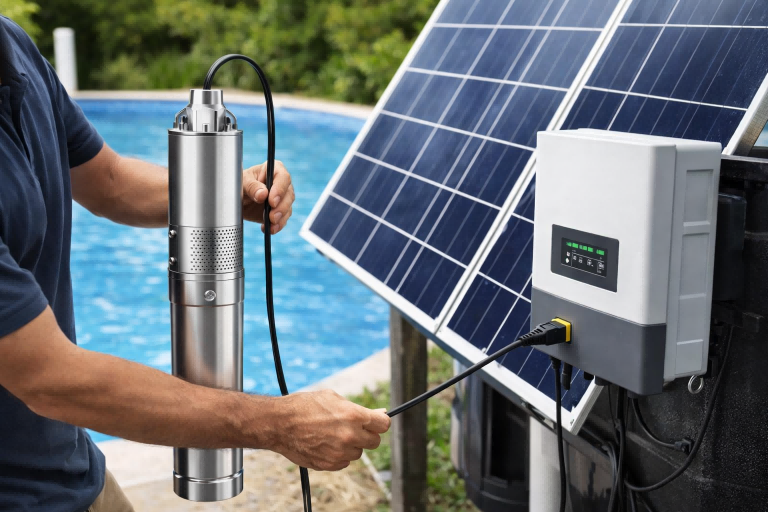
Making the switch to a solar-powered pool pump is a brilliant move for any pool owner.
It directly addresses one of the most significant and consistent energy expenses in a household.
However, a successful transition requires more than just connecting a standard pump to a solar panel.
The true breakthrough lies in specialized technology engineered to squeeze every watt of power from the sun.
This advanced approach not only slashes your energy bills but also delivers a quieter, more reliable, and environmentally friendly solution for pool maintenance.
Let’s explore how these systems function and what components make them so incredibly effective.
What technology makes solar pumps so efficient?
Does your old pool pump groan and whine?
It’s likely an energy guzzler, turning your money into wasted heat and noise.
This outdated tech is costing you every hour it operates.
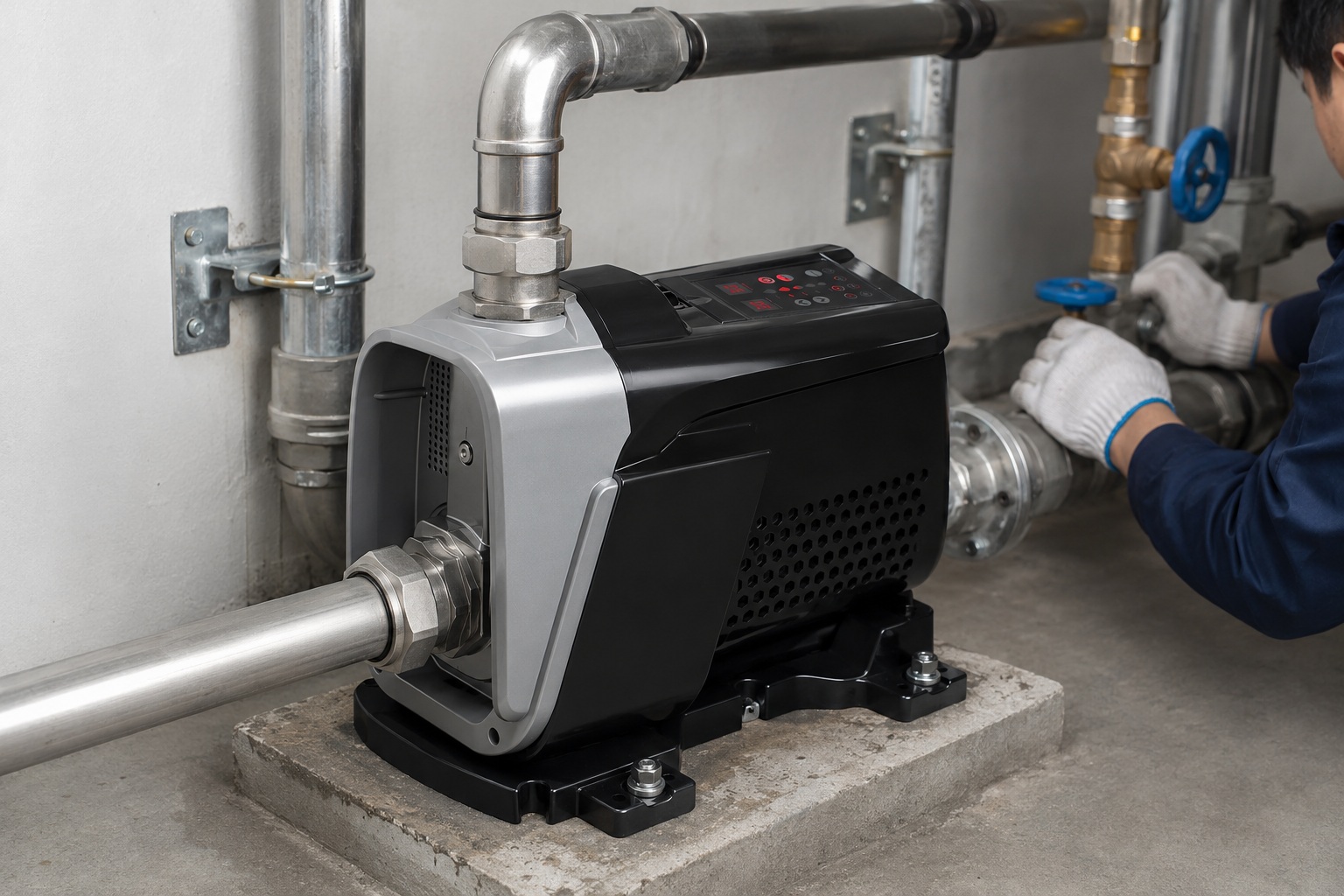
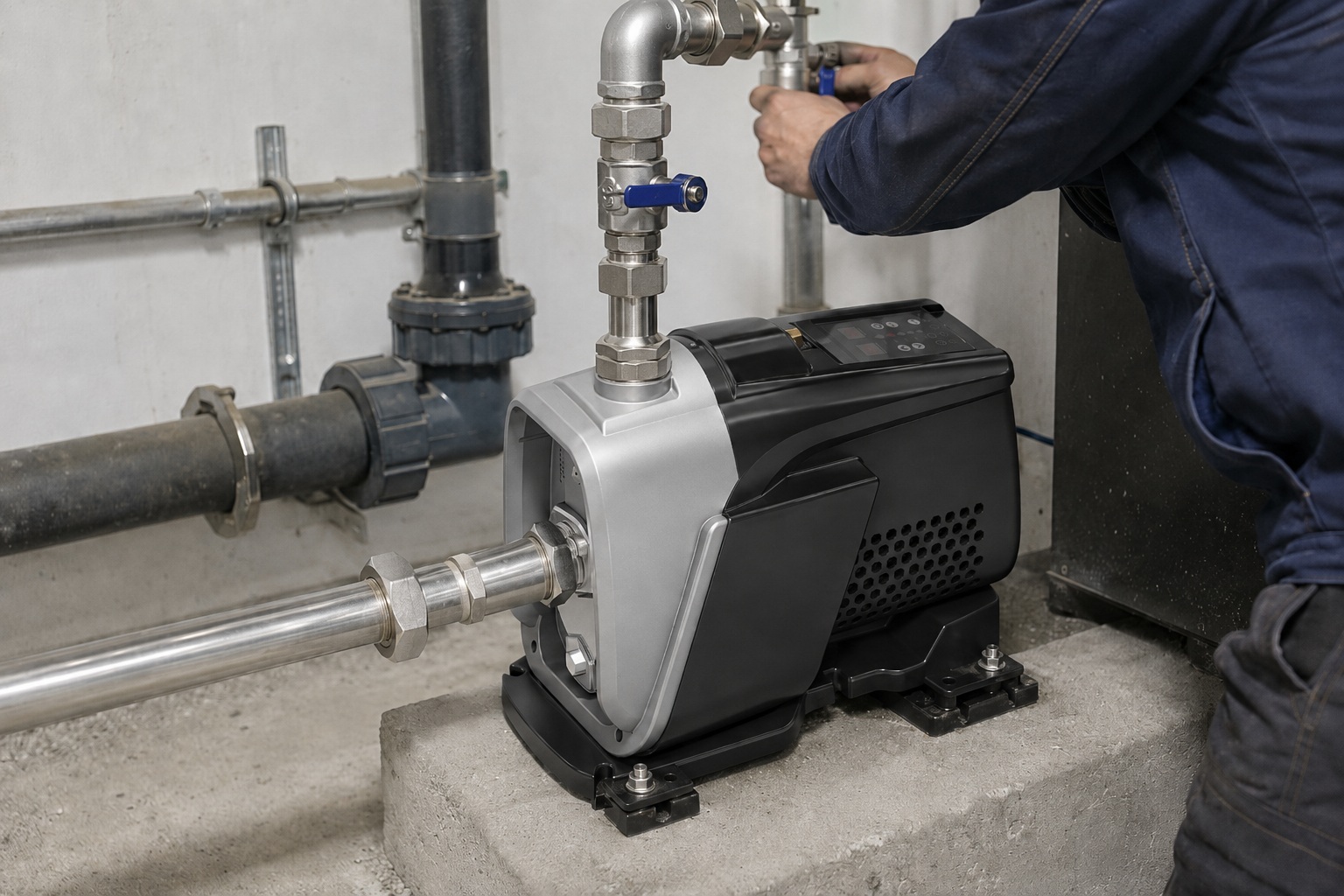
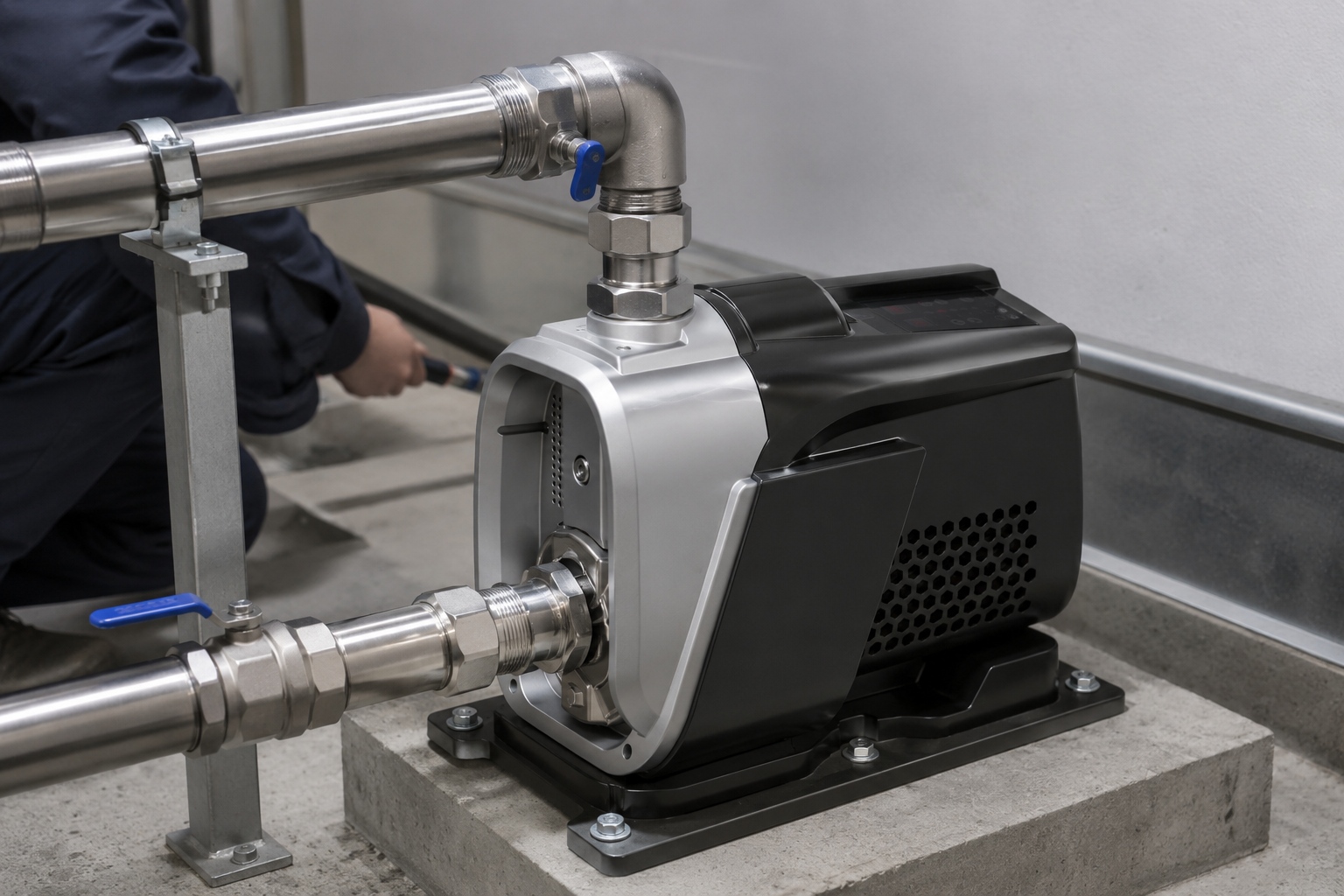
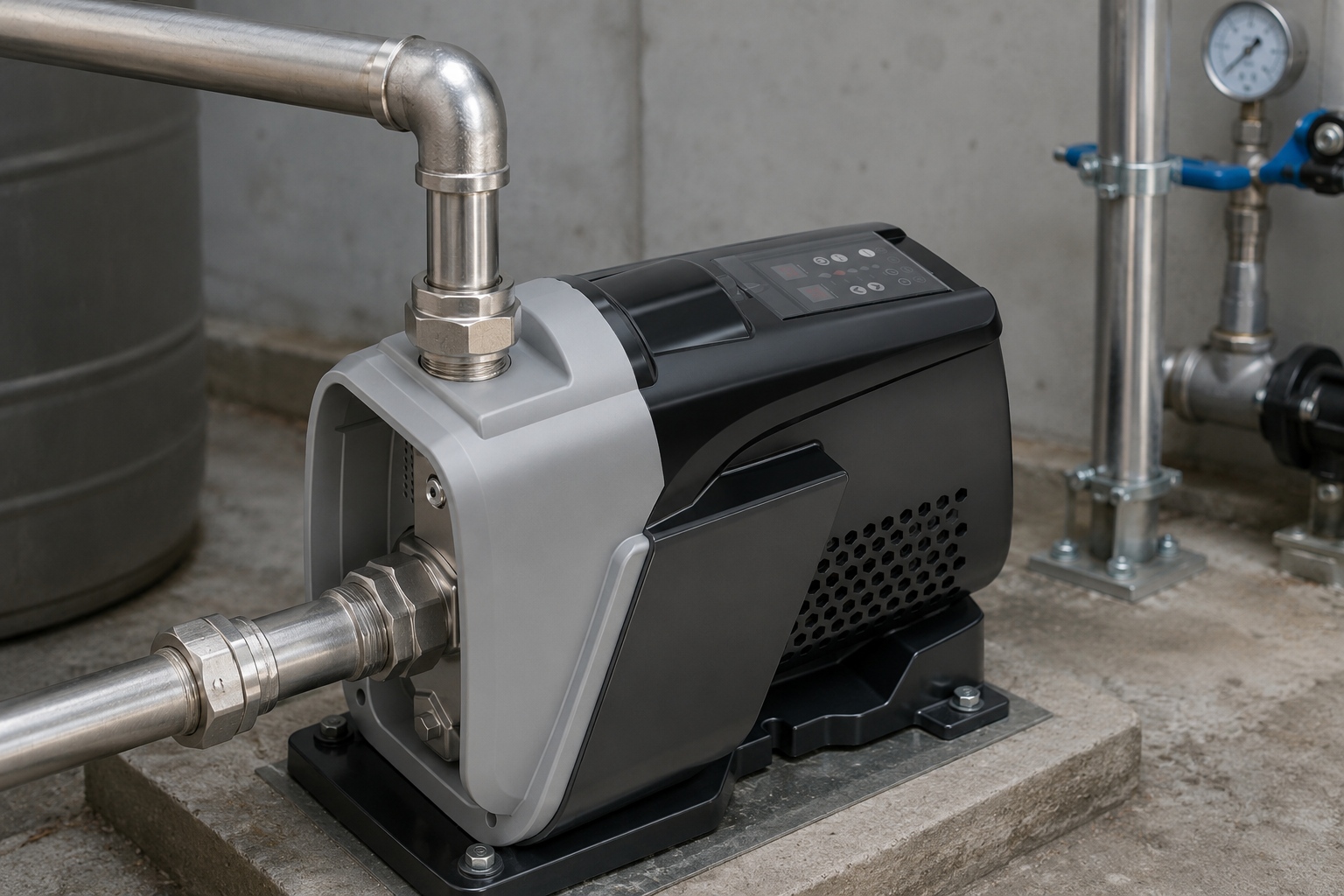
**The incredible efficiency of a solar pump comes from its Brushless DC (BLDC) permanent magnet motor.
This advanced motor boasts an efficiency of over 90%, converting more precious solar energy directly into water-pumping power.
**
The real game-changer in any solar pump system is the motor.
This single component is where the most significant technological leap has been made.
Traditional pool pumps rely on AC induction motors, which are notoriously inefficient.
They often convert only 50% to 70% of the electricity they consume into useful pumping work.
The remaining 30% to 50% is lost, primarily as heat and noise.
When your power source is a finite number of solar panels, that level of waste is simply not viable.
Solar-powered pumps overcome this by employing a fundamentally superior motor design that prioritizes efficiency above all else.
The BLDC Motor: A Revolution in Efficiency
The Brushless DC (BLDC) permanent magnet motor is the gold standard for high-performance solar applications.
Its design provides a massive advantage over older AC motor technology.
-
Unmatched Efficiency: BLDC motors consistently achieve energy efficiency ratings that exceed 90%.
This means for every 100 watts of power your solar panels generate, more than 90 watts are used to move water.
This dramatic improvement means you get more flow from fewer solar panels, lowering the overall system cost. -
Intelligent Power Management: Instead of mechanical brushes that wear out, BLDC motors are managed by a sophisticated electronic controller.
This "brain" precisely adjusts the motor’s speed based on the amount of sunlight available.
The pump can run slower in low light and ramp up to full speed in bright sun, optimizing performance throughout the day. -
Exceptional Durability and Lifespan: The "brushless" aspect is key to the motor’s longevity.
Without brushes to wear down, arc, and fail, the motor is almost maintenance-free.
This leads to a much longer operational life compared to its traditional counterparts. -
Compact Powerhouse: These motors use powerful rare-earth magnets, like 40SH neodymium iron boron, in their rotors.
This allows them to produce high torque in a surprisingly small and light package.
A BLDC motor can be up to 47% smaller and 39% lighter than an AC motor with similar power, making installation much easier.
The following table highlights the stark differences between the two motor types.
| Feature | BLDC Motor (Modern Solar Pump) | Standard AC Motor (Old Pool Pump) |
|---|---|---|
| Energy Efficiency | Exceeds 90% | Typically 50% – 70% |
| Native Power Source | DC (Directly compatible with solar) | AC (Requires an inverter, causing power loss) |
| Speed Control | Integrated and fully variable | Single speed or limited dual-speed |
| Maintenance Needs | Virtually maintenance-free | Brushes and components can wear out |
| Expected Lifespan | Very Long | Moderate |
| Physical Size | Compact and lightweight | Bulky and heavy |
Adopting a pump with a BLDC motor is not just a simple upgrade.
It represents a fundamental shift in technology that makes running your pool on solar power both practical and highly economical.
How do I choose the right size solar pump for my pool?
Afraid of picking a pump that’s too weak or too strong?
The wrong choice results in a cloudy pool or wasted money.
You risk inefficient filtration or an oversized, costly system that you don’t need.
**To size a solar pump, you must calculate your pool’s volume and decide on a turnover rate.
This determines the required flow rate (GPM), which you then match to a pump that can achieve that flow with your local sun hours.
**
Correctly sizing your solar pool pump system is the most critical step to ensuring a crystal-clear pool and an efficient, cost-effective setup.
A solar pump doesn’t just run at full blast like a grid-powered pump; its performance ebbs and flows with the sun’s intensity.
Because of this, the sizing process is a careful balancing act.
You must match the pump’s capabilities to your pool’s specific filtration needs and the amount of solar energy available in your geographic location.
When you get this balance right, your pool gets all the filtration it requires during daylight hours, powered entirely by free energy from the sun.
Let’s walk through the sizing process step-by-step.
Step 1: Calculate Your Pool’s Water Volume
First, you need to know exactly how much water your pump will be filtering.
The formula varies based on your pool’s shape.
(All measurements should be in feet.)
- For Rectangular Pools: Length x Width x Average Depth x 7.48 = Total Gallons
- For Circular Pools: Diameter x Diameter x Average Depth x 5.9 = Total Gallons
- For Oval Pools: Length x Width x Average Depth x 6.7 = Total Gallons
For instance, a rectangular pool that is 16 feet wide, 32 feet long, and has an average depth of 5 feet holds: 16 x 32 x 5 x 7.48 = 19,148 gallons.
Step 2: Determine Your Required Flow Rate
The "turnover rate" is the amount of time it takes to circulate the entire volume of your pool’s water through the filter once.
For a residential pool, achieving at least one full turnover per day is the minimum standard for clean water.
To calculate the necessary flow rate, you divide your pool’s total volume by the number of hours you’ll run the pump.
With a solar pump, this runtime is dictated by your area’s "peak sun hours"—the number of hours per day when the sun is strong enough for optimal panel output.
This is typically 4 to 7 hours.
Assuming you have 6 peak sun hours and your pool is 19,148 gallons:
- Total Pumping Duration (in minutes): 6 hours x 60 minutes/hour = 360 minutes.
- Required Flow Rate (Gallons Per Minute, GPM): 19,148 gallons / 360 minutes ≈ 53 GPM.
You need a pump capable of delivering a flow rate of at least 53 GPM.
Step 3: Factor in Total Dynamic Head (TDH)
A pump’s job isn’t just to move water; it has to push against resistance.
This resistance comes from the friction in your pipes, the filter, any heaters, and the vertical lift required to move the water.
This combined resistance is called Total Dynamic Head (TDH), measured in feet.
A higher TDH acts like an obstacle, reducing the pump’s actual flow rate.
Therefore, you must choose a pump that can deliver your target flow rate (53 GPM in our example) at your system’s specific TDH.
A professional can calculate TDH precisely, but for a typical in-ground pool, it often falls between 40 and 60 feet of head.
You would then consult a pump’s performance chart to find a model that delivers over 53 GPM at 50 feet of TDH.
What if it’s cloudy or I want to run the pump at night?
Worried your pool will turn murky without constant sunlight?
Relying only on the sun seems risky for essential filtration.
You fear that cloudy days or nighttime operation will be impossible.
**This is solved with an AC/DC hybrid controller.
It intelligently prioritizes free solar power but seamlessly and automatically switches to your home’s grid power when sun is unavailable, guaranteeing 24/7 reliability.
**
The number one concern for pool owners considering a solar pump is consistency.
What happens when the sun disappears behind clouds or after sunset?
A standard grid-powered pump runs on a simple timer, ensuring filtration happens no matter the weather.
Early solar pump systems were DC-only, meaning they simply stopped when the sun went away.
This is a problem of the past.
The invention of intelligent hybrid controllers has completely revolutionized solar pumping, offering the best of both worlds: free solar energy and unwavering reliability.
How the AC/DC Hybrid Controller Works
This smart device acts as the brain for the entire system.
It is engineered with two separate power inputs that you connect simultaneously: one for the DC power coming from your solar panels, and one for the AC power from your home’s utility grid or a generator.
The controller’s internal programming is designed for maximum cost savings and total peace of mind.
-
Solar-First Priority Logic: The controller’s primary mission is to use 100% free solar power.
As long as the sun is providing enough energy to run the pump at its desired speed, the system will not draw a single watt from the grid.
This gives you completely free pool filtration for most of the day. -
Intelligent Power Blending: On partly cloudy days, the power from the solar panels can fluctuate.
Instead of shutting off, the hybrid controller performs a clever trick.
It uses all of the available DC solar power and then "blends" it with just enough AC grid power to maintain a consistent pump speed.
This maximizes your use of free energy while preventing any drop in filtration performance. -
Seamless Automatic Switchover: When the sun sets or during extended periods of very heavy cloud cover, the DC power input drops to zero.
The controller detects this instantly and automatically switches the pump to run entirely on the AC power input.
The pump continues its job without any interruption or need for you to flip a switch.
The True Advantage of a Hybrid System
This dual-power capability offers pool owners several massive benefits:
- Uninterrupted Pool Filtration: Your pool stays clean, clear, and safe 24/7, regardless of the weather or time of day.
You can confidently run extra filtration cycles at night after a pool party or during a heatwave. - Maximized Financial Savings: The system is programmed to always default to the free energy source first.
It only resorts to using paid grid power when absolutely necessary, which keeps your electricity bills as low as possible. - System Simplicity and Cost-Effectiveness: You do not need a large, complex, and expensive battery bank to store solar energy for nighttime use.
The grid itself becomes your backup power source, providing a much more affordable and maintenance-free solution for round-the-clock operation.
With a hybrid solar pump, you achieve energy independence without ever giving up the on-demand reliability you expect.
Conclusion
Yes, you can run your pool pump with solar.
Modern systems use ultra-efficient motors and hybrid controllers to slash electricity costs while guaranteeing your pool is always clean and ready to enjoy.
Frequently Asked Questions
Can a solar water pump work at night?
Yes, if it has an AC/DC hybrid controller.
The system automatically switches to grid power when there is no sunlight, ensuring continuous, 24-hour operation is possible.
How much does it cost to run a pool pump on solar?
Once the system is installed, the energy cost is virtually zero during sunny hours.
The system uses free energy from the sun instead of electricity from the grid.
How many solar panels are needed for a 1.5 hp pool pump?
A 1.5 HP pump typically requires about 1,200 to 1,500 watts of solar power.
This usually translates to four to six 300-watt solar panels, depending on conditions.
Is a solar pool pump a good investment?
Absolutely.
The significant savings on electricity bills often result in a payback period of just 2 to 4 years, making it a very strong long-term investment.
Do solar pumps work on cloudy days?
Yes, they do.
Solar panels still produce power, though less, on cloudy days.
A hybrid system can supplement with grid power to maintain performance, ensuring filtration continues.
Can you add batteries to a solar pool pump?
Yes, batteries can be added, but it is often not cost-effective.
Using a hybrid controller that leverages the grid as a backup is typically a much simpler and cheaper solution.
What is the life of a solar water pump?
A quality solar pump with a brushless motor can have a lifespan of over 10 years.
Solar panels themselves are typically warrantied for 25 years, ensuring a long-lasting system.