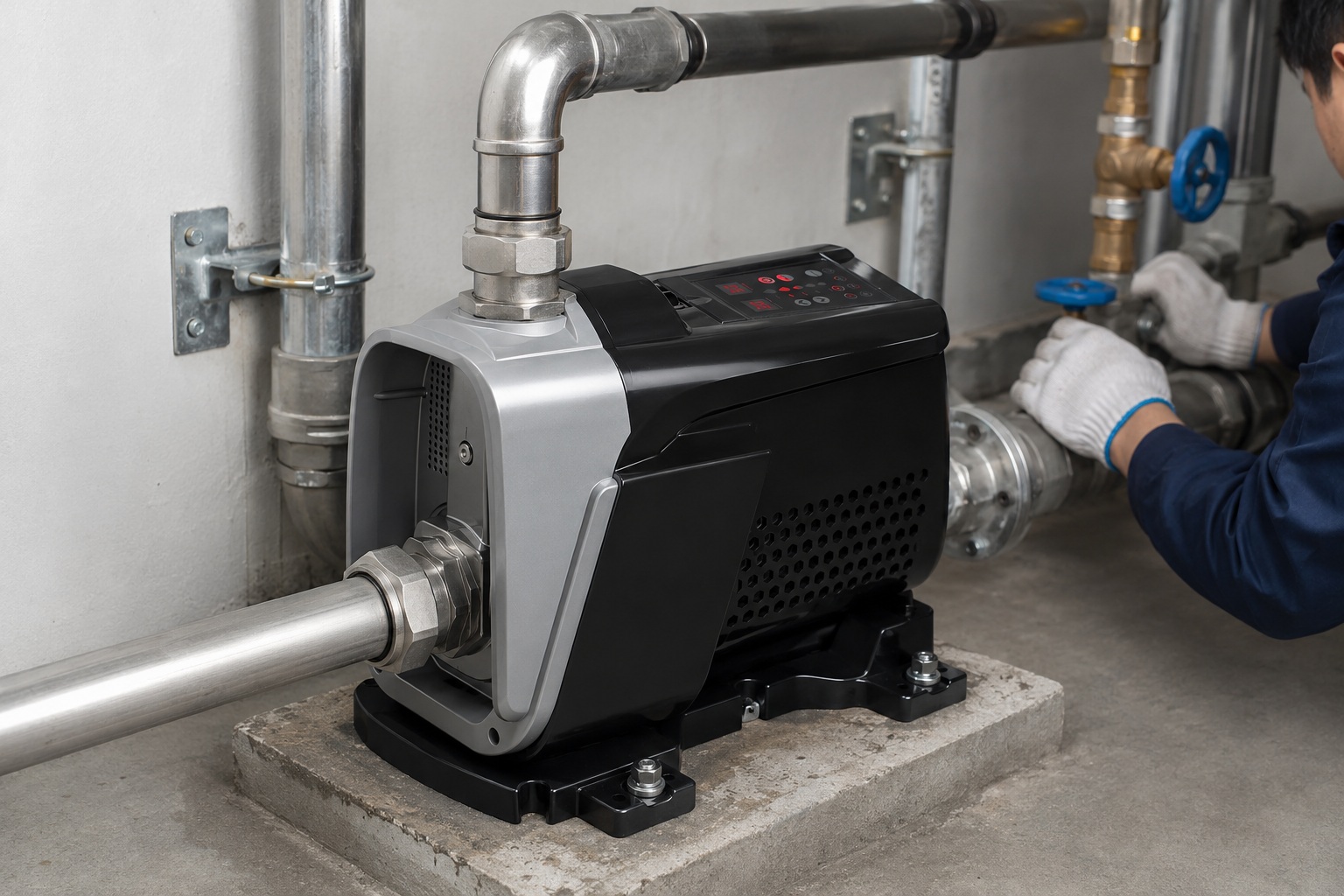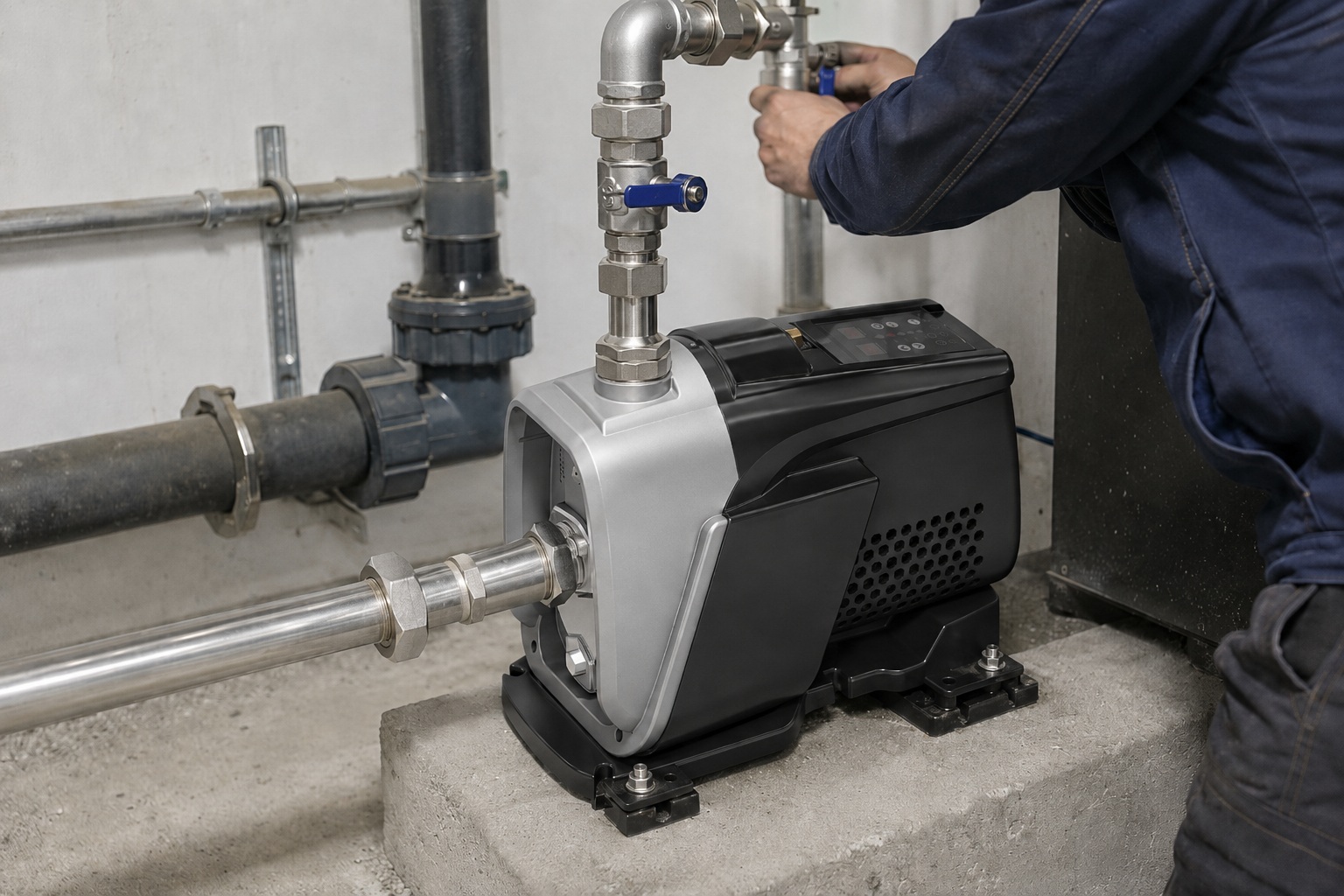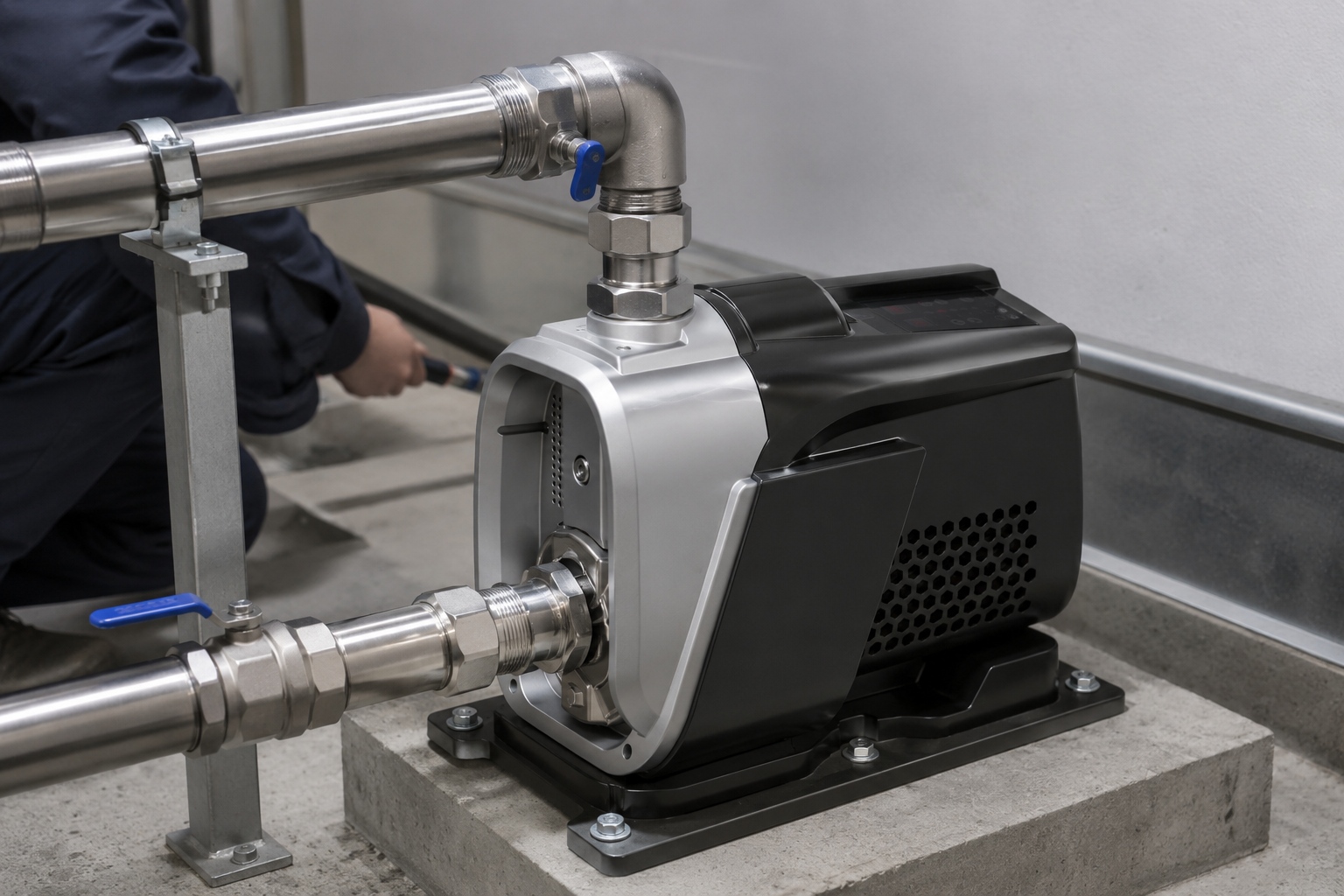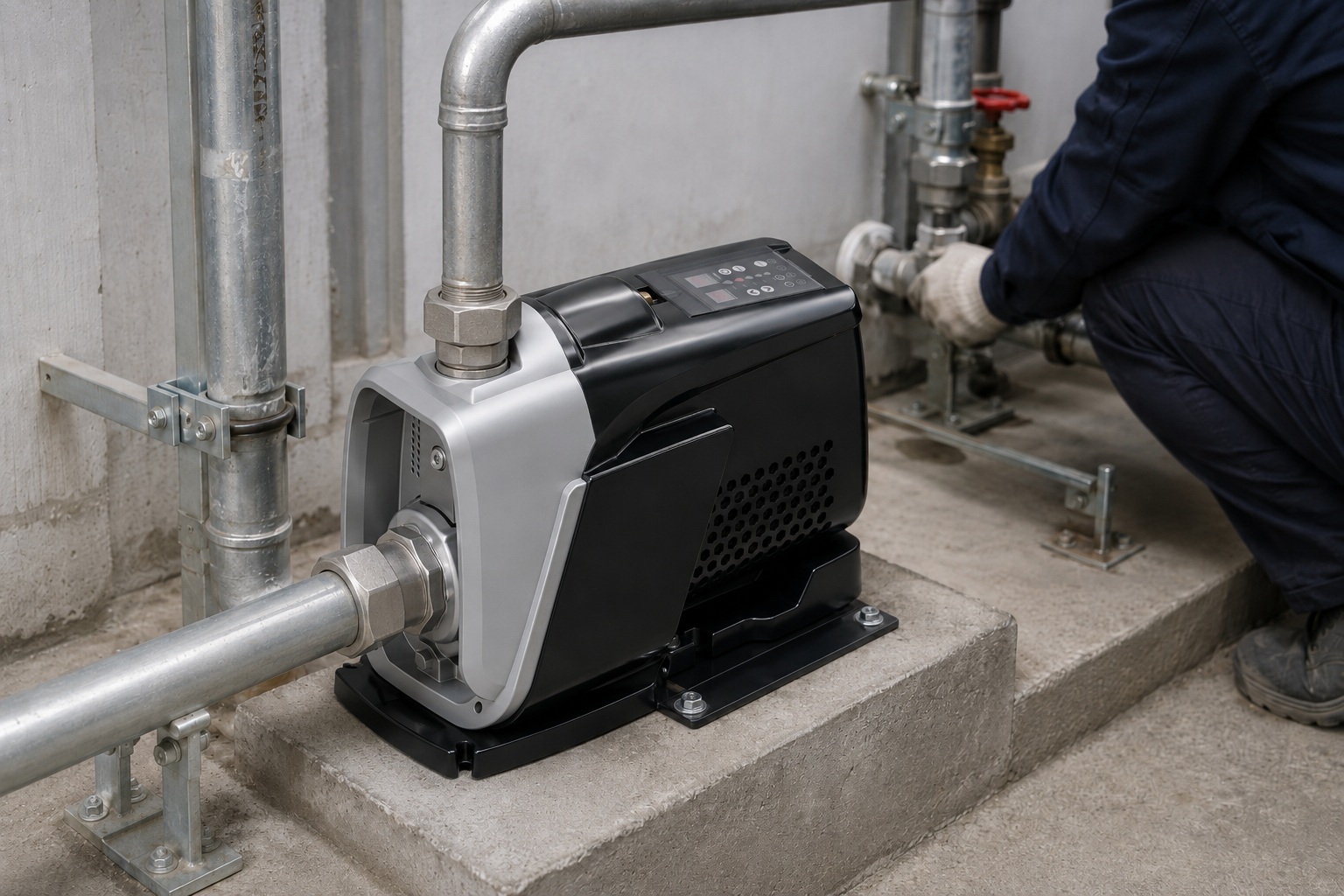
Your electricity bill is sky-high, and a big part of it is your pool pump.
It runs for hours every day, consuming a huge amount of power.
What if you could cut that cost dramatically?
A traditional single-speed pool pump uses between 1,000 and 2,000 watts.However, a modern, energy-efficient solar pool pump uses far less, typically between 100 to 1,000 watts, thanks to its advanced motor technology which can reduce energy consumption by up to 90%.
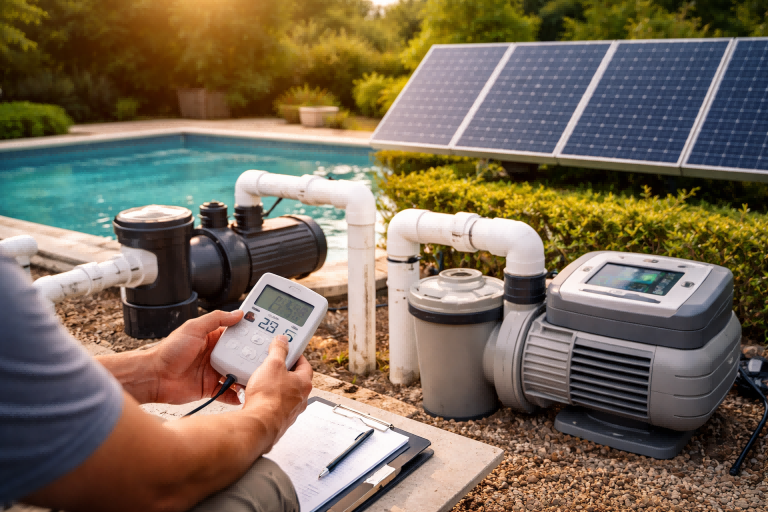
The number of watts a pool pump uses is a critical question for any pool owner.
For decades, pool pumps have been notorious energy hogs, often being the second-largest consumer of electricity in a home after the HVAC system.
But simply asking about watts only tells you part of the story.
The real goal is to understand energy consumption over time and, more importantly, how to reduce it.
The technology inside the pump is what truly determines its efficiency and your final electricity bill.
Let's explore why modern pump technology has completely changed the answer to this question.
What makes modern pool pumps so energy efficient?
Your old pool pump sounds like a jet engine and your power bill reflects it.
It's based on decades-old technology that wastes most of the electricity it consumes as heat and noise.
**Modern solar pool pumps use a high-efficiency Brushless DC (BLDC) motor.
This advanced motor converts over 90% of its power directly into water movement, drastically cutting the watts required compared to traditional AC motors that are often only 50-70% efficient.
**
The secret to a low-wattage, high-performance pool pump lies in its motor.
This is the engine that drives everything, and it's where the most significant technological advancements have been made.
Traditional pool pumps rely on AC induction motors, a technology that has changed very little over the past 50 years.
While functional, these motors are incredibly inefficient by today's standards.
A significant portion of the electricity they draw from the wall is wasted, converted into useless heat and noise instead of pumping power.
This inefficiency is why they require such high wattage (1,000W+) to do their job.
Modern, and especially solar, pool pumps have abandoned this outdated technology for a far superior solution designed for the 21st century.
The BLDC Motor: The Heart of Efficiency
A Brushless DC (BLDC) motor is the core component that allows a solar pool pump to operate on a fraction of the power of its older counterparts.
Its design provides a massive advantage in every performance metric.
-
Unmatched Efficiency: BLDC motors achieve electrical efficiency ratings that exceed 90%.
This means for every 100 watts of power they receive, over 90 watts are used to move water.
This is a massive leap from the 50-70% efficiency of old AC motors. -
Lower Wattage, Same Performance: Because so little energy is wasted, a BLDC motor can achieve the same water flow rate as an AC motor while using significantly fewer watts.
This directly reduces your energy consumption and operating costs. -
Designed for Solar: These motors run on DC power, the same type of power produced by solar panels.
This eliminates the need for a bulky, power-wasting inverter, allowing for a direct and highly efficient connection to solar energy. -
Longer Lifespan & Quiet Operation: With no brushes to wear out, BLDC motors are exceptionally reliable and have a much longer service life with zero maintenance.
They also run significantly quieter, eliminating the disruptive noise associated with old pool pumps.
The difference in technology is stark, as shown in the table below.
| Feature | BLDC Motor (Solar Pool Pump) | AC Motor (Traditional Pump) |
|---|---|---|
| Typical Wattage | 100 - 1,000 W | 1,000 - 2,000 W |
| Energy Efficiency | > 90% | ~50% - 70% |
| Energy Waste | Minimal | Significant (lost as heat/noise) |
| Power Source | Native DC (Ideal for Solar) | AC (Grid-dependent) |
| Maintenance | None (Brushless design) | Brushes can wear out |
| Operational Noise | Very quiet | Loud |
This shift in motor technology is not just an incremental improvement; it is a fundamental change that redefines how much power is truly needed to keep a pool clean.
Why is a variable speed solar pump better than a single-speed pump?
Your single-speed pump runs at full blast all the time, even when it doesn't need to.
This is like driving your car everywhere in first gear, wasting a massive amount of fuel.
**A variable speed solar pump can run at lower speeds for longer, which is far more efficient.
The Pump Affinity Law states that halving the pump's speed reduces its power consumption by 8 times, leading to over 90% in energy savings while still filtering your pool effectively.
**
The second pillar of modern pool pump efficiency is the ability to control its speed.
Traditional pumps are "single-speed," meaning they are either OFF or ON at 100% power.
This is incredibly wasteful because a pool doesn't need maximum filtration power 24 hours a day.
Most of the time, the pump's job is simply to circulate water to prevent stagnation and allow for gentle skimming.
Running at full power for this task is massive overkill and the primary reason for high electricity bills.
Solar pool pumps, powered by intelligent controllers and BLDC motors, are inherently variable-speed.
This allows you to match the pump's power consumption precisely to the task at hand, unlocking enormous energy savings.
The Power of the Pump Affinity Law
The physics behind the savings is explained by the Pump Affinity Law, a core principle of fluid dynamics.
It states a simple but powerful relationship between a pump's speed, flow, and power consumption.
-
Flow is Proportional to Speed: If you reduce the pump's motor speed by 50%, the water flow rate is also reduced by 50%.
-
Power is Proportional to the CUBE of Speed: This is the game-changer.
If you reduce the motor speed by 50% (1/2 speed), the power consumption is reduced by a factor of eight (1/2 x 1/2 x 1/2 = 1/8).
This means running your pump at half speed for twice as long uses only 25% of the energy compared to running it at full speed, yet you achieve the same total water turnover for the day.
| Pump Speed | Flow Rate | Power Consumption | Energy Savings |
|---|---|---|---|
| 100% | 100% | 100% (e.g., 1200 Watts) | 0% |
| 75% | 75% | ~42% (e.g., 506 Watts) | ~58% |
| 50% | 50% | ~12.5% (e.g., 150 Watts) | ~87.5% |
| 25% | 25% | ~1.6% (e.g., 19 Watts) | ~98.4% |
A solar pump controller automatically maximizes this advantage.
It runs the pump at the optimal speed based on the available sunlight.
It starts slowly in the morning, ramps up to a higher speed during peak sun, and then ramps down in the evening.
This slow, continuous circulation is not only more energy-efficient but is also better for your pool's water quality.
It allows the filter to trap smaller particles and ensures chemicals are distributed more evenly.
You get a cleaner pool for a fraction of the cost.
Do solar pool pumps work on cloudy days?
You love the idea of a zero-cost solar pump, but worry it won't work on cloudy days.
A green, murky pool is the last thing you want after a few days of bad weather.
**Yes, they can.
With a hybrid AC/DC controller, your solar pump will automatically draw power from the grid when there isn't enough sunlight.
It prioritizes free solar energy, but provides the 24/7 reliability you need to guarantee your pool stays clean, no matter the weather.
**
The question of reliability is a major consideration for anyone thinking about switching to solar for their pool.
While a DC-only solar pump is a great solution for many, it does have a limitation: no sun means no filtration.
For those who want absolute peace of mind and guaranteed operation, the solution is not to install a complex and expensive battery system.
It's to use a smarter controller.
The AC/DC hybrid controller combines the free energy of solar with the dependability of the electrical grid, offering the best of both worlds.
It's a simple, elegant solution for worry-free solar pool filtration.
How a Hybrid Controller Guarantees a Clean Pool
A hybrid AC/DC controller is a sophisticated power management system that acts as the brain of your pump.
It has two power inputs: one for your DC solar panels and one for your AC grid power.
The controller intelligently manages these two sources based on a cost-saving priority.
-
Solar First, Always: The controller is programmed to use 100% solar power whenever it is available.
As long as the sun is shining, your pump is running for free, and no power is being drawn from the grid. -
Smart Blending for Overcast Skies: On days with intermittent clouds, the solar power might fluctuate.
Instead of shutting off, the hybrid controller will use every available watt from the sun and then "blend" in just enough AC power from the grid to maintain the desired pump speed.
This ensures your pool is still being filtered while maximizing the use of free solar energy. -
Automatic AC Takeover: When the sun goes down or during extended periods of heavy rain, the controller detects the lack of solar power and automatically switches to the AC grid input.
The pump will continue to run for its scheduled time, ensuring your filtration cycle is never missed.
The moment the sun comes back, it switches back to solar priority.
This technology completely removes the "what if" from solar pumping.
You get all the economic benefits of solar without ever having to compromise on the reliability needed to keep your pool sparkling clean, 24 hours a day, 365 days a year.
Conclusion
A pool pump's wattage depends on its motor.
Old AC pumps use 1000-2000W, while modern solar pumps with efficient BLDC motors use a fraction of that, unlocking massive energy savings.
Frequently Asked Questions
How many hours a day should I run my pool pump?
Typically, 8 hours a day is enough to turn over the water.
With a variable-speed solar pump, you can run it for longer at a lower speed for better filtration and lower energy use.
Can a solar pump run a pool cleaner?
Yes, most solar pumps can be run at a higher speed to power suction-side or pressure-side automatic pool cleaners when needed.
What size solar system do I need for a pool pump?
The solar panel array's wattage should be about 1.5 times the pump's maximum wattage.
For a 750W pump, you would want around 1125W of solar panels.
Will a solar pool pump save me money?
Yes.
A solar pool pump can eliminate its electricity cost entirely on sunny days, leading to savings of up to 90% on your pool's energy consumption.
Do solar pool pumps require batteries?
No.
A hybrid AC/DC controller is a much more practical solution, using the grid as a backup instead of expensive, high-maintenance batteries.
How long does a solar pool pump last?
A quality solar pump with a brushless motor can last for over 10 years.
The solar panels themselves are typically warrantied for 25 years.
Is a solar pool pump noisy?
No, they are incredibly quiet.
The combination of a brushless DC motor and the ability to run at low speeds makes them virtually silent compared to old single-speed AC pumps.