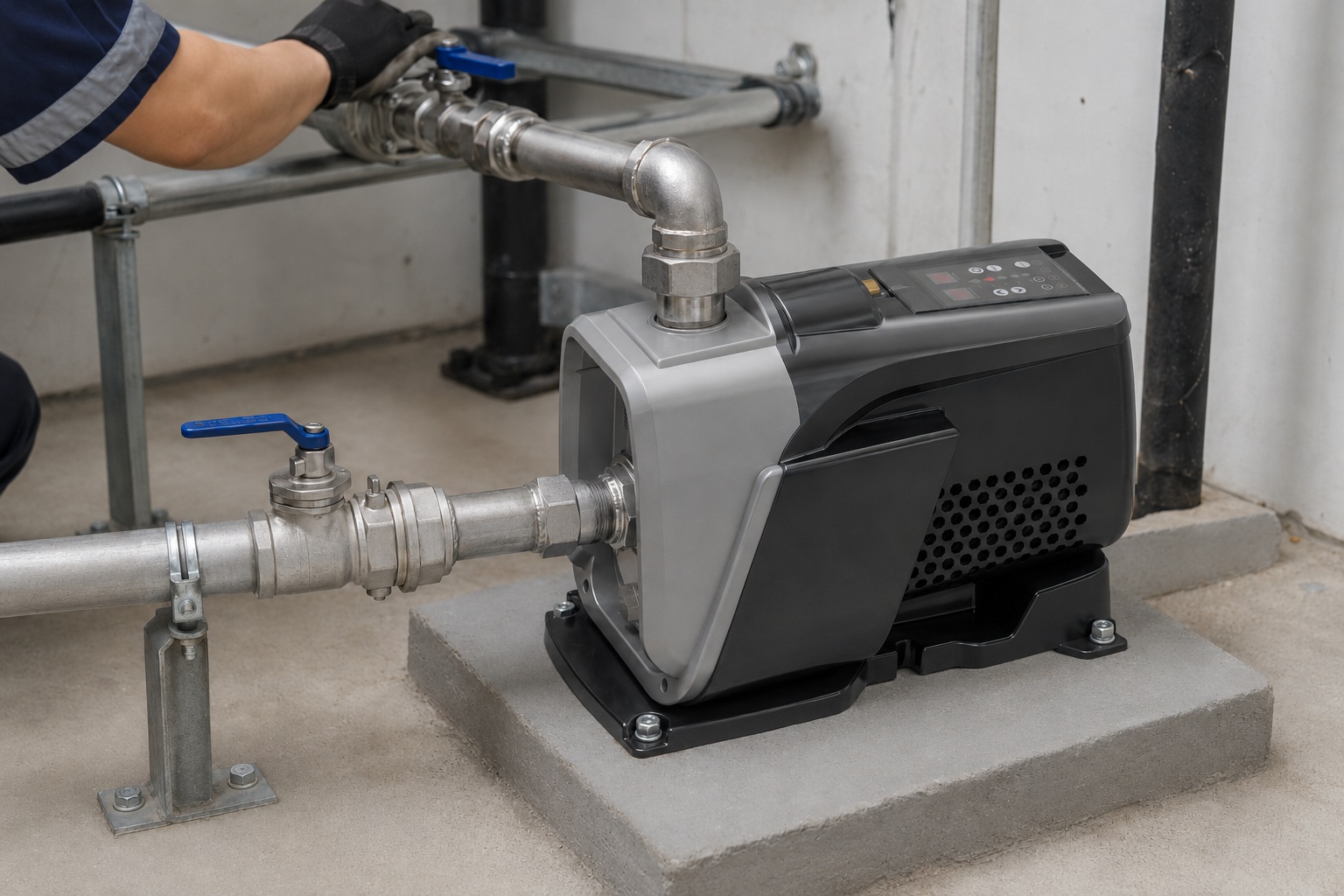
You are installing a new pool pump.
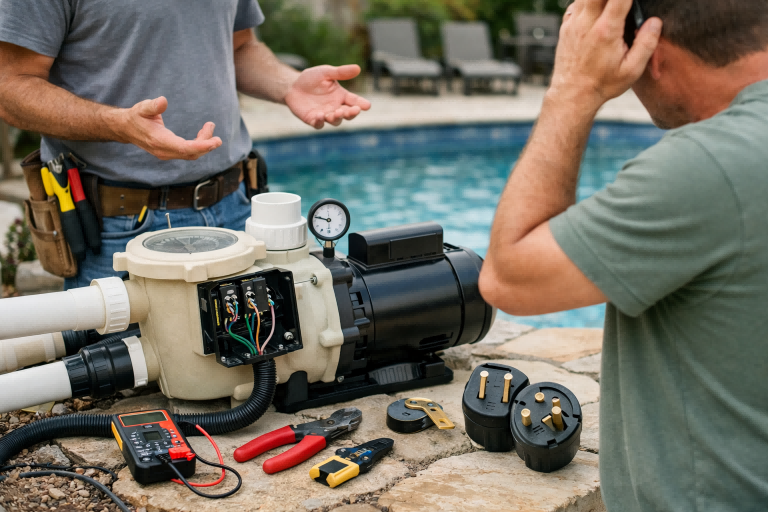
The electrician asks if you want it wired for 110V or 220V.
You’re worried the wrong choice will lead to higher electricity bills for years.
For the same dual-voltage pump, running on 220V is slightly more energy-efficient and can prolong motor life.It allows for smaller, less expensive wiring.However, the actual savings on your energy bill are minimal, often just a few dollars per year.
Understanding the choice between 110 and 220 volts feels like a major technical decision.
Many people believe one is dramatically cheaper to run than the other.
To truly grasp the impact on your wallet and your pump’s health, we need to look beyond the voltage number itself.
We must examine how electricity actually works and what really determines a pump’s efficiency.
Let’s break down the science in simple terms.
Why is 220V considered more efficient?
You hear that 220V is better for large appliances.
But the reason why is often explained with confusing technical jargon.
This makes it difficult to know if the benefit is real.
**Running a pump on 220V is more efficient because it cuts the amperage in half.
Lower amperage means less energy is lost as heat in the wires and motor windings.
This results in a cooler, slightly more efficient operation for the pump motor.
**
The core of the 110V versus 220V debate comes down to a fundamental law of electricity.
Power, which is measured in watts, is the actual work being done by the motor.
You can calculate this power by multiplying voltage (volts) by current (amps).
So, for a motor that needs 1,650 watts of power to run, the math looks very different for each voltage.
This difference in amperage is the key.
Amperage is what generates heat as it flows through wires.
This heat is essentially wasted energy.
The higher the amperage, the more energy is lost warming up the electrical components instead of turning the pump shaft.
By running on 220V, you dramatically reduce this heat-related energy waste.
The Impact of Lower Amperage
Reducing the amperage has several direct, positive effects on your pool pump system.
These benefits go beyond just a tiny saving on your electricity bill.
-
Cooler Motor Operation: Since there is less heat being generated within the motor’s windings, the motor itself runs cooler.
Heat is the primary enemy of electrical components.
A cooler motor experiences less thermal stress, which can lead to a longer operational lifespan. -
Thinner, Cheaper Wiring: The size, or gauge, of the electrical wire needed for an installation is determined by the amperage it must carry safely.
Because 220V wiring only needs to handle half the amps, you can use a thinner gauge wire.
Thinner wire is less expensive and often easier for an electrician to install. -
Reduced Voltage Drop: Over long distances, voltage can "drop" as it travels from your circuit breaker to the pump.
This drop is more significant with higher amperage (110V).
A severe voltage drop can starve the motor of the power it needs, causing it to strain and overheat.
Running on 220V minimizes this risk, especially if the pump is located far from the house.
| Aspect | 110-Volt Operation | 220-Volt Operation | Advantage |
|---|---|---|---|
| Amperage (for 1650W) | 15 amps | 7.5 amps | 220V |
| Energy Loss as Heat | Higher | Lower | 220V |
| Motor Temperature | Warmer | Cooler | 220V |
| Required Wire Size | Thicker (e.g., 12-gauge) | Thinner (e.g., 14-gauge) | 220V |
| Voltage Drop Risk | Higher | Lower | 220V |
While 220V is technically superior in these aspects, it’s important to maintain perspective.
The actual cost savings from this increased efficiency are often very small.
Does voltage matter more than motor type?
You are focused on choosing the right voltage.
You might be overlooking a much more important factor.
This could lead you to buy a new pump that is still incredibly inefficient.
**No, motor type is vastly more important than voltage.
An efficient modern motor, like a variable-speed pump with a BLDC motor, can cut energy use by up to 90%.
This dwarfs the 1-2% efficiency gain from choosing 220V over 110V.
**
Debating between 110V and 220V for a traditional, single-speed pool pump is like arguing about which type of gasoline is best for a car with a terribly inefficient engine.
While one might be marginally better, the real problem is the engine itself.
The same is true for pool pumps.
The vast majority of a pump’s electricity consumption is determined by its motor technology, not its input voltage.
Old-style single-speed pumps use AC induction motors, which are horribly inefficient by modern standards.
These motors can waste 30-50% of the electricity they consume, converting it into useless heat and noise before it ever does any work.
Switching this type of motor from 110V to 220V might save you 1-2% of that energy.
That is a tiny improvement on a fundamentally flawed design.
The Real Revolution: BLDC and Variable Speed
The single biggest leap in pool pump efficiency comes from abandoning the old AC induction motor entirely.
Modern variable-speed pumps (VSPs) use a completely different technology: a Brushless DC (BLDC) permanent magnet motor.
-
Extreme Efficiency: BLDC motors are over 90% efficient.
They waste very little energy as heat.
This change alone can cut your pump’s energy waste by more than half, providing massive savings regardless of the voltage used. -
Variable Speed Advantage: A VSP allows you to run the pump at a very low speed for most of the day for basic filtration.
A fundamental law of hydraulics states that if you halve the pump’s speed, you reduce its energy consumption by eight times.
A single-speed pump cannot do this. -
The True Savings: Running a VSP at a low speed might consume only 100-200 watts, compared to the 1,500-2,500 watts of a single-speed pump.
This is where you see energy savings of up to 90%, making the 110V/220V debate almost irrelevant.
| Feature | Old Single-Speed Pump | Modern Variable-Speed Pump | The Winner |
|---|---|---|---|
| Motor Efficiency | 50% – 70% | > 90% | Variable-Speed |
| Operating Speeds | 1 (High) | Fully Variable | Variable-Speed |
| Typical Energy Use | 1500 – 2500 Watts | 100 – 300 Watts (on low) | Variable-Speed |
| Potential Savings | 1-2% by using 220V | Up to 90% vs. single-speed | Variable-Speed |
The choice is clear.
If your goal is to save significant money, your focus should be on upgrading to a variable-speed pump, not on the voltage of your old pump.
Is it expensive to switch to 220V?
You’ve decided that 220V is the better technical choice.
But you’re worried about the cost of installation.
You fear a huge bill from the electrician will wipe out any potential savings.
**The cost to switch to 220V depends entirely on your existing setup.
If you already have a 220V circuit nearby, it can be very cheap.
If it requires a new wire run from the main panel, it could cost several hundred dollars.
**
The financial viability of converting to a 220V setup is not a one-size-fits-all answer.
It is highly dependent on the specifics of your home’s electrical system and the location of your pool equipment.
An electrician will need to assess your situation to give you an accurate quote.
The cost can range from very minor to quite significant.
This is because a 220V circuit requires two "hot" wires, a neutral, and a ground, and it needs its own dedicated two-pole circuit breaker in your main electrical panel.
A standard 110V outlet only uses one "hot" wire.
Factors That Influence the Installation Cost
Here are the primary variables that will determine how much an electrician will charge to provide 220V power to your pump.
-
Existing 220V Circuits: The best-case scenario is if you already have an unused 220V circuit near your equipment pad, perhaps from a previous hot tub or air conditioner.
In this case, the cost could be minimal, possibly under $100, just to install the correct outlet. -
Distance to the Main Panel: The biggest cost factor is the length of the new wire that needs to be run.
If your pool equipment is on the other side of the house from your main breaker panel, the electrician will spend more time and use more materials, increasing the price. -
Breaker Panel Capacity: Your main electrical panel must have enough physical space to accommodate a new two-pole 220V breaker.
If the panel is full, the electrician might need to install a smaller sub-panel, which would add considerable cost to the project. -
Conduit and Trenching: The wire running to the pump must be protected.
If it runs underground, it will need to be housed in a weatherproof electrical conduit.
If a new trench needs to be dug for this conduit, the labor costs will increase.
Given that the annual energy savings of 220V over 110V are often less than $20, a high installation cost of $500 or more would take decades to pay for itself.
In most cases, it is not financially practical to perform a costly upgrade to 220V for a single-speed pump.
Is there a better option than 110V or 220V?
You understand that motor type is key.
You are still stuck choosing between two types of grid power.
This means you will always have an electricity bill for your pool.
**Yes, the best option is to bypass AC grid power entirely.
A DC solar-powered pump runs on free energy from the sun.
For 24/7 reliability, a hybrid AC/DC model automatically uses grid power only when solar is unavailable, offering the ultimate in savings.
**
The entire debate of 110V versus 220V is confined to the world of traditional AC (Alternating Current) grid power.
You are essentially choosing between two slightly different ways to pay your utility company.
The truly revolutionary solution is to change the power source itself.
This is possible with modern pumps that use highly efficient DC (Direct Current) motors.
A solar-powered pool pump system uses photovoltaic (PV) panels to generate DC electricity, which can power the DC pump motor directly.
This is the most efficient configuration possible.
There is no wasted energy converting power from DC (solar) to AC (grid) and then back to DC (inside a VSP).
During sunny days, your pool is filtered and circulated for free.
This approach moves beyond minimizing your bill; it works to completely eliminate it for a majority of the pump’s runtime.
The Ultimate Solution: Hybrid AC/DC Power
While pure solar is fantastic, savvy pool owners need a system that works in all conditions, day or night, rain or shine.
This is where the hybrid AC/DC controller comes in.
It is a smart device that serves as the brain of your pump’s power system.
-
Dual Power Inputs: The controller has two inputs: one for the free DC power from your solar panels and one for the backup AC power from your home’s grid.
-
Automatic, Smart Switching: The controller’s logic is programmed to always prioritize free solar power.
It will only draw power from the AC grid when the solar energy is insufficient, like at night or on a very cloudy day. -
Energy Blending: On partly cloudy days, the controller is smart enough to use all available solar power and then "blend" in just enough AC power to maintain the desired speed.
This maximizes your use of free energy at all times.
A hybrid AC/DC system effectively makes the 110V/220V debate obsolete.
It provides the massive economic benefit of solar power combined with the total reliability of the electrical grid, giving you a clean pool with the lowest possible operating cost.
Conclusion
For a dual-voltage pump, 220V offers minor efficiency gains.
However, the real savings come from upgrading to a variable-speed motor or, ideally, a hybrid AC/DC solar pump system.
Frequently Asked Questions
Does a pool pump use a lot of electricity?
Yes, a traditional single-speed pool pump is often the second-largest energy consumer in a home after the HVAC system, using 1,500 watts or more.
How many amps does a 1.5 hp pool pump draw?
On 110V, it may draw around 15 amps.
On 220V, the same pump would draw about half that, around 7.5 amps, which is more efficient.
Can I run my pool pump 4 hours a day?
It’s generally not recommended.
Most pools require at least 8 hours of run time for proper sanitation and to achieve one full water turnover, preventing algae growth.
What is the advantage of a 220V pump?
The main advantages are slightly higher efficiency due to lower amperage, cooler motor operation, and the ability to use smaller, less expensive electrical wire for installation.
Do variable speed pumps come in 110V?
Yes, many smaller variable-speed pumps designed for above-ground or smaller in-ground pools are available in 110V models, offering huge savings without needing to rewire.
Does a 2-speed pool pump save money?
Yes, a 2-speed pump saves significant money compared to a single-speed model by allowing you to run it on a much more efficient low speed for filtration.
Is it hard to wire a 220V pump?
For a licensed electrician, it is not hard.
However, it is not a DIY project for most homeowners due to the risks of working with high voltage.