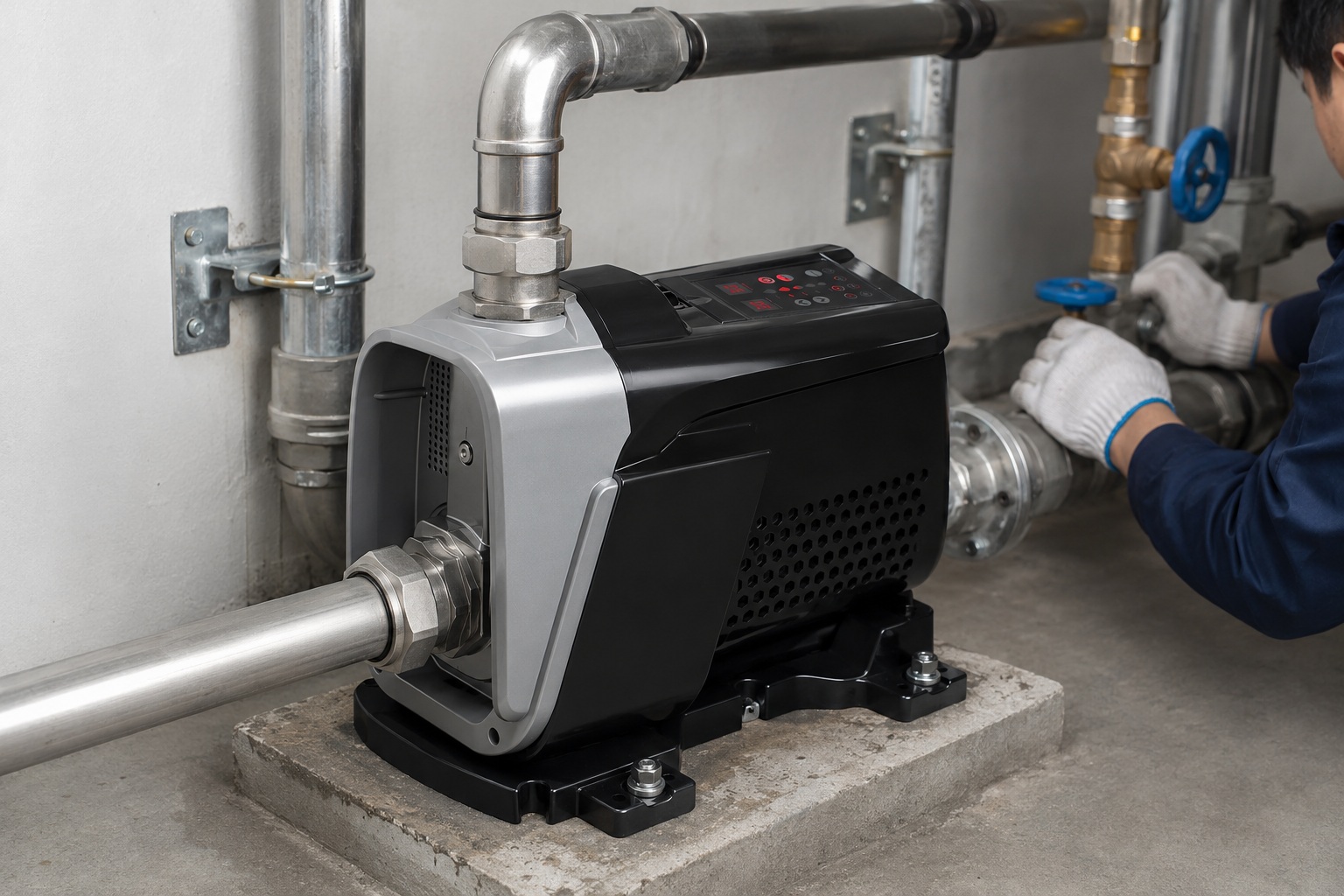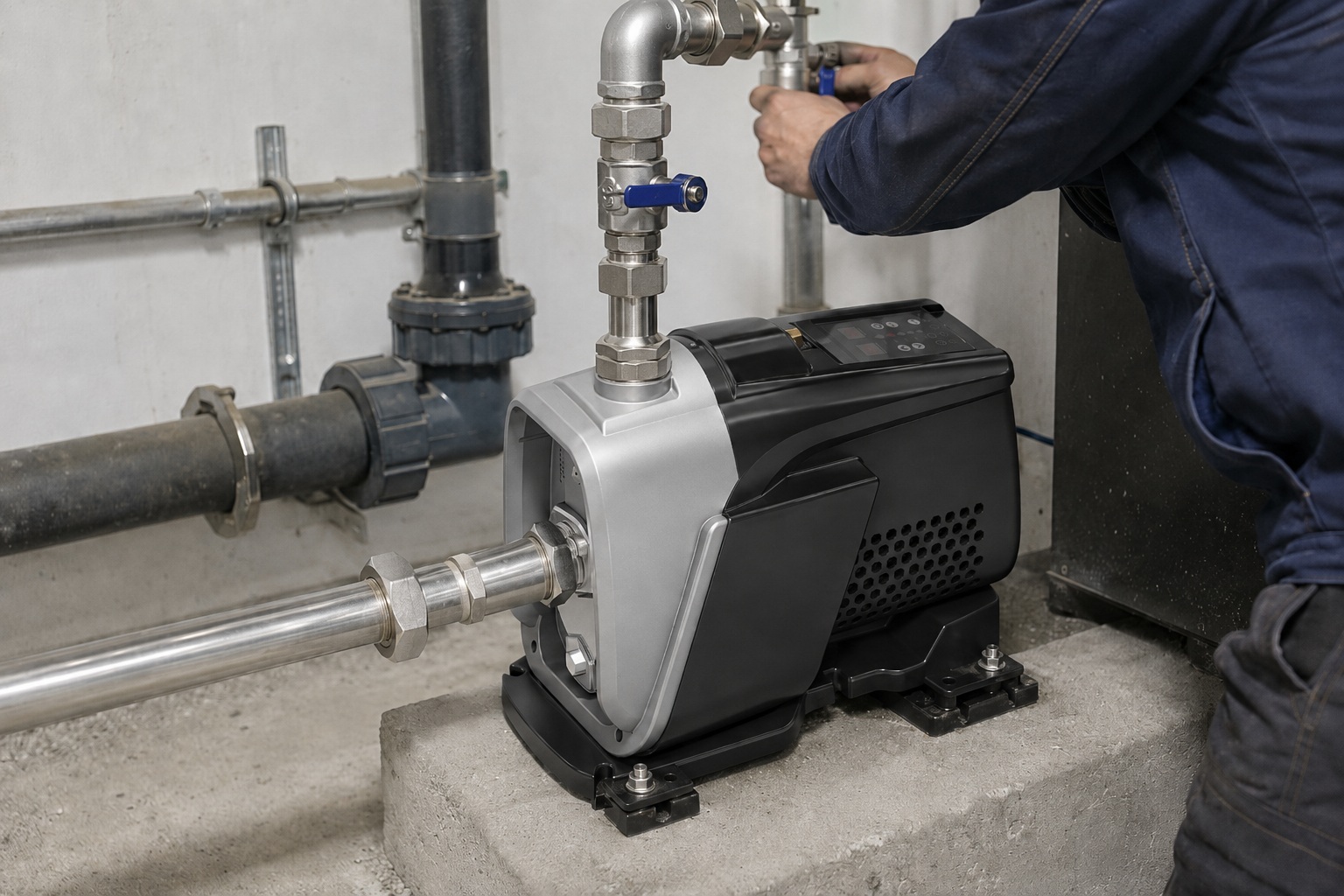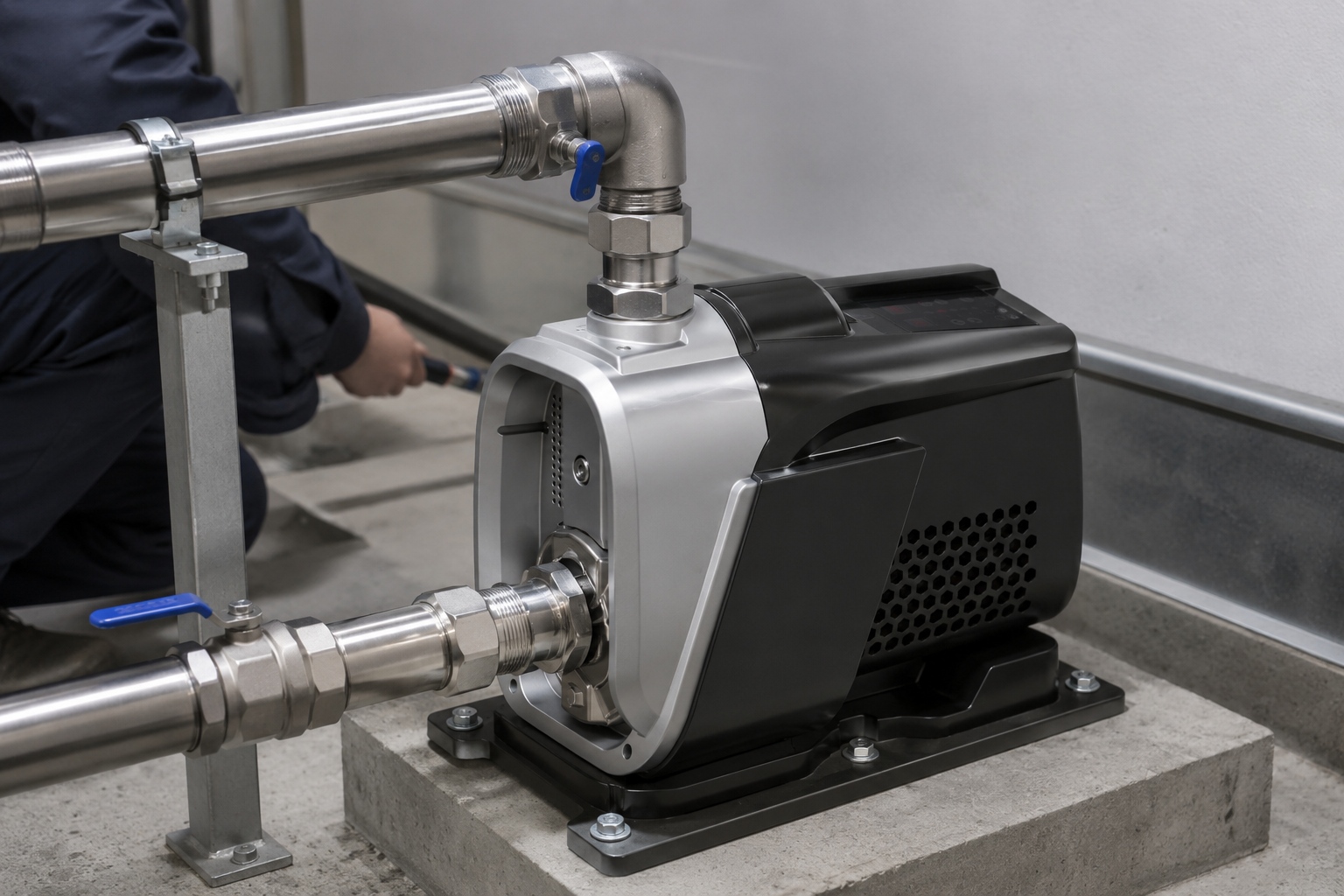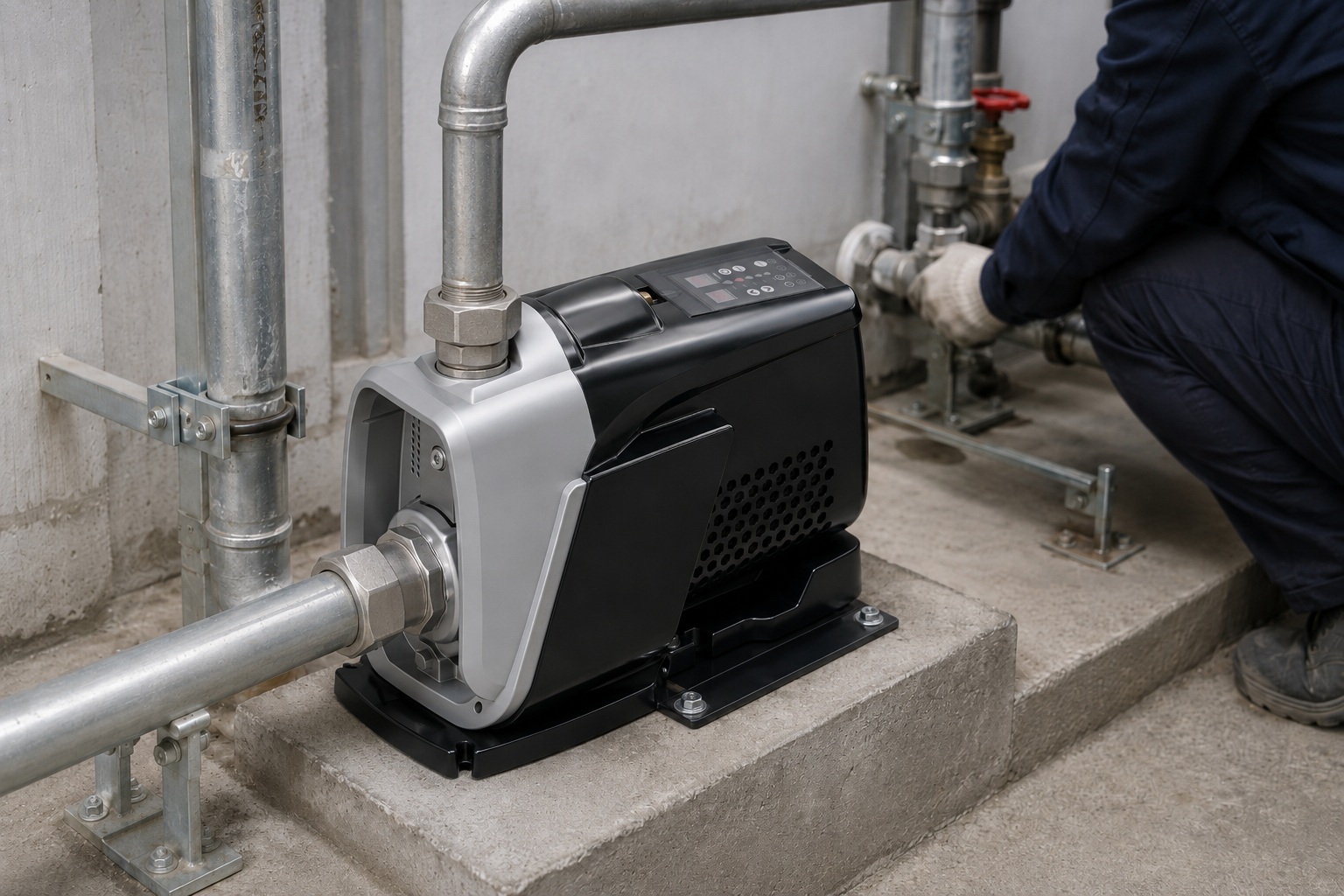
You need water around the clock, but solar pumps depend on daylight.
This creates uncertainty about your water supply after sunset, risking your crops or livestock.
Smart system designs ensure you have reliable water 24/7, even without direct sunlight.
Standard solar water pumps do not work at night as they run directly on sunlight. However, you can achieve a 24/7 water supply by using a water storage tank, adding a battery bank, or installing an advanced AC/DC hybrid controller that automatically switches to grid or generator power.
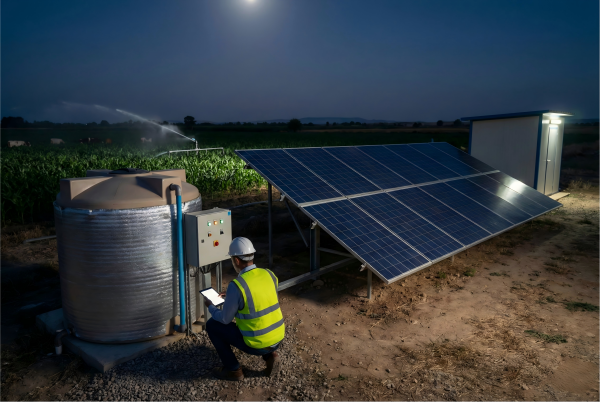
The simple answer to the question is "no".
A solar pump is designed to convert sunlight into electricity, and without sun, it cannot run.
However, the goal is not to run the pump at night; the goal is to have water at night.
Fortunately, there are several highly effective and reliable strategies to achieve this.
These methods transform a daytime-only device into a full-time water solution.
Let's explore the three primary ways to ensure you have water long after the sun goes down.
The Standard Solution | Pumping by Day, Storing for Night
You think you need a complex battery system for nighttime water.
This means high costs, regular maintenance, and more potential failures.
The simplest, most reliable method is just to store water, not electricity.
The most common and cost-effective strategy is to use the solar pump during peak sun hours to fill a large water storage tank.
This stored water acts as a "water battery," providing access to water on demand 24/7 without the recurring cost or complexity of an actual battery bank.
This approach is the industry standard for a reason.
It is simple, incredibly effective, and financially smart.
Instead of storing potential energy in batteries, you store the end product: water.
During the day, when the sun is strongest, your solar pump works at peak efficiency.
It fills a large tank placed on high ground or a tower.
When the sun sets, the pump stops, but you have a full reservoir of water ready for use.
This water can then be gravity-fed to your home, crops, or livestock troughs, providing silent, reliable pressure without any additional energy input.
Calculating Your Storage Needs
The key to this method is sizing your tank correctly.
An undersized tank might run dry, while an oversized one is an unnecessary expense.
The calculation is straightforward.
You must determine your total daily water consumption.
Then, add a buffer for days with low sunlight.
A good rule of thumb is to have enough storage for 2-3 days of your typical water usage.
- Domestic Use: A typical person uses 80-100 gallons (300-380 liters) per day.
- Livestock: A single cow can drink up to 30 gallons (115 liters) per day.
- Irrigation: This varies greatly, but drip irrigation for one acre might use 2,000-5,000 gallons (7,500-19,000 liters) per day.
By calculating your total daily need and multiplying by 2 or 3, you can confidently size a tank that provides a reliable water buffer.
The Clear Advantages of Water Storage
Choosing to store water instead of electricity offers significant benefits in terms of cost, maintenance, and system lifespan.
| Feature | Water Storage Tank | Battery Bank |
|---|---|---|
| Initial Cost | Low | High (Often 2-3x the cost of the pump system) |
| Lifespan | 20+ years | 3-7 years |
| Maintenance | Virtually none | Regular monitoring and replacement |
| Efficiency Loss | None (gravity feed) | 10-20% loss in charging/discharging cycles |
| Complexity | Simple plumbing | Complex wiring, charge controllers, inverters |
This strategy not only provides water at night but also optimizes the entire system.
The pump runs when its power source is most abundant, reducing wear and tear.
The simplicity of the system means there are far fewer points of failure, making it the most robust solution for critical water needs in remote locations.
The Battery-Powered Option | Storing Electricity for Pumping
You need to pump directly from the source at night.
Using a generator is noisy, requires fuel, and manual operation.
A battery bank can store solar energy to run your pump anytime.
For situations where direct pumping is required at night, a battery bank can be integrated into the solar pump system.
The solar panels charge the batteries during the day, and the stored electricity is then used to power the pump after sunset, offering true on-demand pumping 24/7.
While not as common as water storage, using a battery bank is a viable solution for specific applications.
This setup is more complex than a standard system.
In addition to the solar panels and pump, it requires deep-cycle batteries and a solar charge controller.
The charge controller's job is to manage the flow of electricity from the panels to the batteries.
It prevents overcharging, which can destroy the batteries, and manages the power drawn by the pump.
This method is most suitable for applications where a storage tank is impractical due to space constraints or where pressurized water is needed directly from the source at any time of day or night.
It can also be useful for low-flow applications that need to run for extended periods, such as environmental monitoring or water sampling.
Sizing Your Battery Bank
Correctly sizing a battery bank is more complex than sizing a water tank.
It involves a careful energy audit.
- Calculate Pump Energy Consumption: Determine the pump's power draw (in watts) and the number of hours it needs to run at night (runtime in hours). Watts x Hours = Watt-hours (Wh) needed.
- Factor in Inefficiencies: Both the batteries and the inverter (if used) have efficiency losses. You should increase your required capacity by about 20% to account for this.
- Determine Days of Autonomy: Just like with a water tank, you need a buffer for cloudy days. A typical system is sized for 1-2 days of autonomy, meaning the battery bank can power the pump for that long without any sun.
- Consider Depth of Discharge (DoD): To prolong battery life, you should not drain them completely. For lead-acid batteries, a 50% DoD is recommended. For lithium batteries, an 80-90% DoD is common. This means your total battery capacity must be double what you actually need to use each night for lead-acid.
This complexity, combined with the high cost and limited lifespan of batteries, is why most users opt for water storage instead.
Is a Battery Bank Right for You?
Despite the drawbacks, batteries provide a unique capability.
They are essential for mobile pumping systems or any scenario where installing a large, permanent tank is not feasible.
Consider batteries if:
- You have no space for a water tank.
- You need to run a pressure pump directly for an off-grid home at night.
- Your application is mobile, such as a temporary irrigation setup on a large farm.
- Your flow requirements are very low but must be continuous.
For business owners and distributors, offering battery-compatible systems can cater to these niche but important customer needs.
However, for the vast majority of agricultural and domestic users, the next solution offers a more modern and practical approach to 24/7 water.
The Hybrid Solution | AC/DC Controllers for Uninterrupted Power
Relying solely on stored water or batteries feels risky.
What if the tank runs dry or the batteries fail?
An AC/DC hybrid controller ensures your pump always has power.
An AC/DC hybrid controller provides the ultimate reliability.
It allows the solar pump to be powered by two sources: DC power from solar panels and AC power from the electrical grid or a generator.
The controller intelligently and automatically switches between these sources, guaranteeing uninterrupted water flow.
This is the high-tech solution for truly worry-free, 24/7 water security.
It combines the free, clean energy of solar with the constant availability of conventional power.
The controller is the brain of this advanced system.
It is designed with sophisticated logic that always prioritizes solar power to minimize operating costs.
How Hybrid Logic Works
The controller's operation is seamless and fully automatic.
It continuously monitors the power available from the solar panels.
- Full Sun: The pump runs at 100% on free solar power. Any excess AC source is completely ignored.
- Partial Clouds: If solar power drops, the controller doesn't just switch off. It intelligently blends in just enough AC power to supplement the solar input, keeping the pump running at the desired speed while still using every available watt of solar energy. This maximizes your use of free power.
- Nighttime or Heavy Clouds: When solar input drops below a usable threshold (or disappears entirely at night), the controller automatically switches over to the AC source. The pump continues to run at full capacity, powered by the grid or a generator.
When the sun returns, the controller detects the renewed DC power and automatically switches back to solar priority mode.
This entire process happens without any manual intervention.
The Perfect Application for Hybrid Systems
This solution is ideal for critical applications where a water shortage is not an option or for users who want to reduce their energy bills without sacrificing reliability.
Key use cases include:
- Large-Scale Livestock Farming: Ensuring thousands of animals have constant access to drinking water.
- Commercial Irrigation: Protecting high-value crops where a missed watering cycle could be catastrophic.
- Off-Grid Homes with Grid Backup: Using solar for all daytime water needs and having the grid as a silent, automatic backup for nights and cloudy weather.
- Cost Reduction for On-Grid Pumps: Supplementing an existing grid-powered pump system with solar to dramatically cut electricity bills.
For a pump distributor, offering a reliable hybrid solution is a major competitive advantage.
It solves a fundamental problem for high-value customers, demonstrating a commitment to quality, innovation, and unwavering reliability.
It is the definitive answer for anyone who needs water, no matter what the sun is doing.
Conclusion
Standard solar pumps do not run at night.
But with water storage or a hybrid controller, you can have a reliable 24/7 water supply using clean, cost-effective solar power.
Frequently Asked Questions
Can I run my solar pump at night with an inverter?
Yes, but you would also need a large battery bank to power the inverter.
This is generally more complex and expensive than the other solutions available.
How much water can a solar pump pump in a day?
This depends on the pump's power, well depth, and the amount of sunlight.
A small domestic pump might provide 1,000 gallons, while a large agricultural pump can deliver over 50,000 gallons.
Do cloudy days affect solar pumps?
Yes, cloud cover reduces the power output of solar panels, which will slow the pump down.
This is why systems are designed with water storage tanks or hybrid controllers as a buffer.
What maintenance does a solar water pump require?
The system requires very little maintenance.
You should clean the solar panels periodically, and the pump unit itself may need inspection every few years depending on water quality.
Do I need to turn a solar pump on and off?
No, the controller handles this automatically.
It starts the pump when there is enough sunlight in the morning and shuts it off when the sun goes down.
Is a solar water pump worth the investment?
For off-grid locations, absolutely.
The initial cost is offset by the elimination of fuel costs for generators or the expense of running long-distance power lines.
The payback period is often 2-3 years.