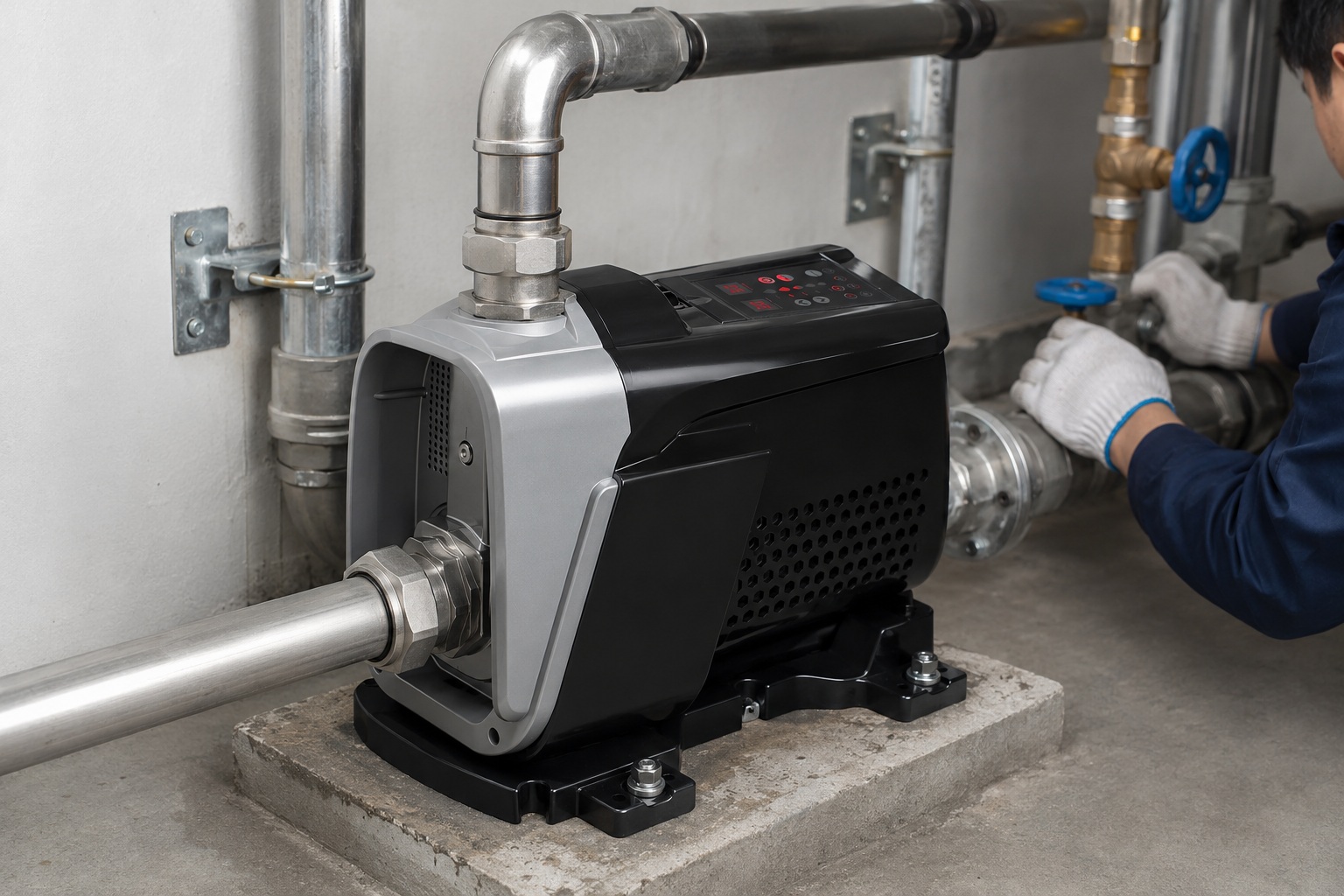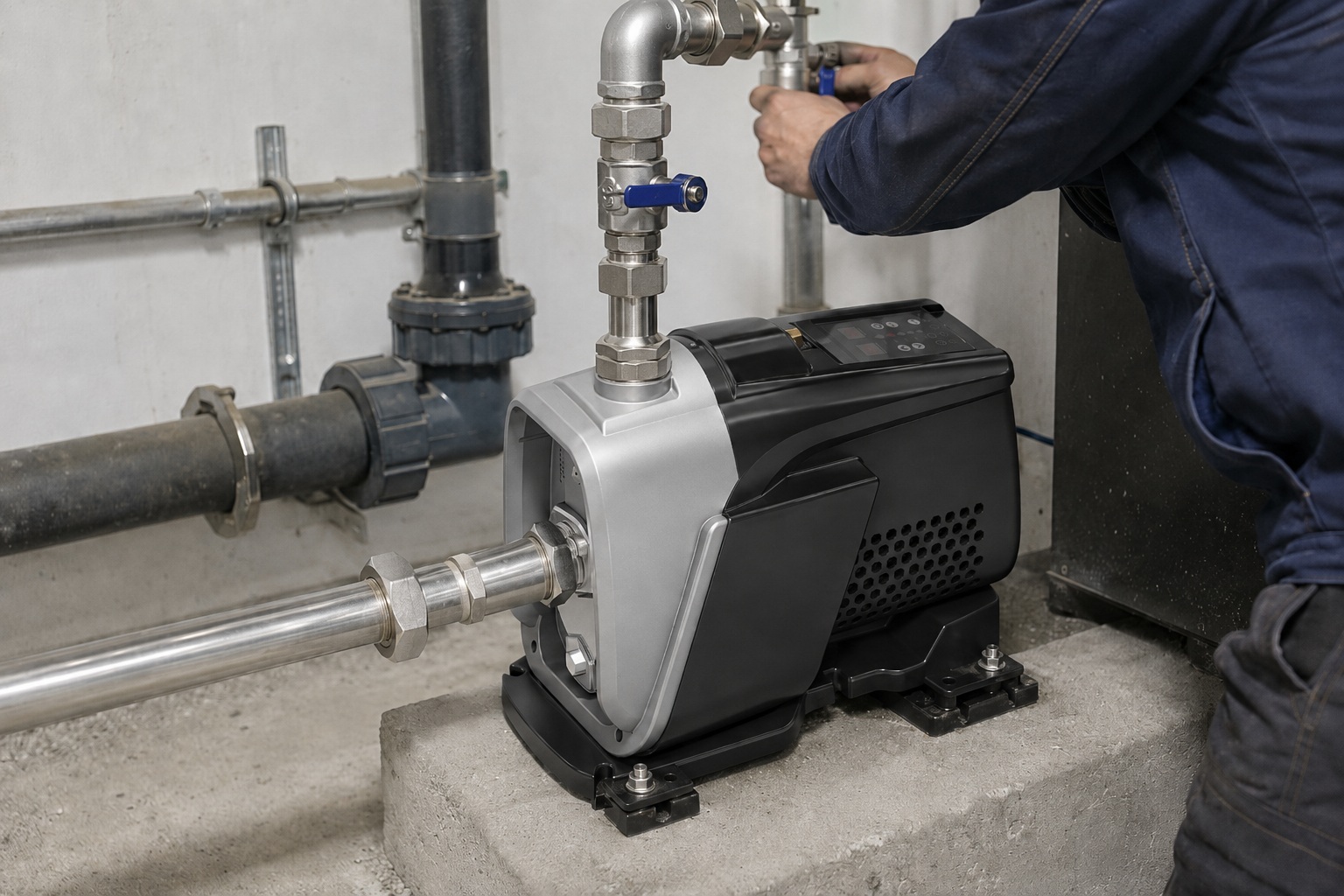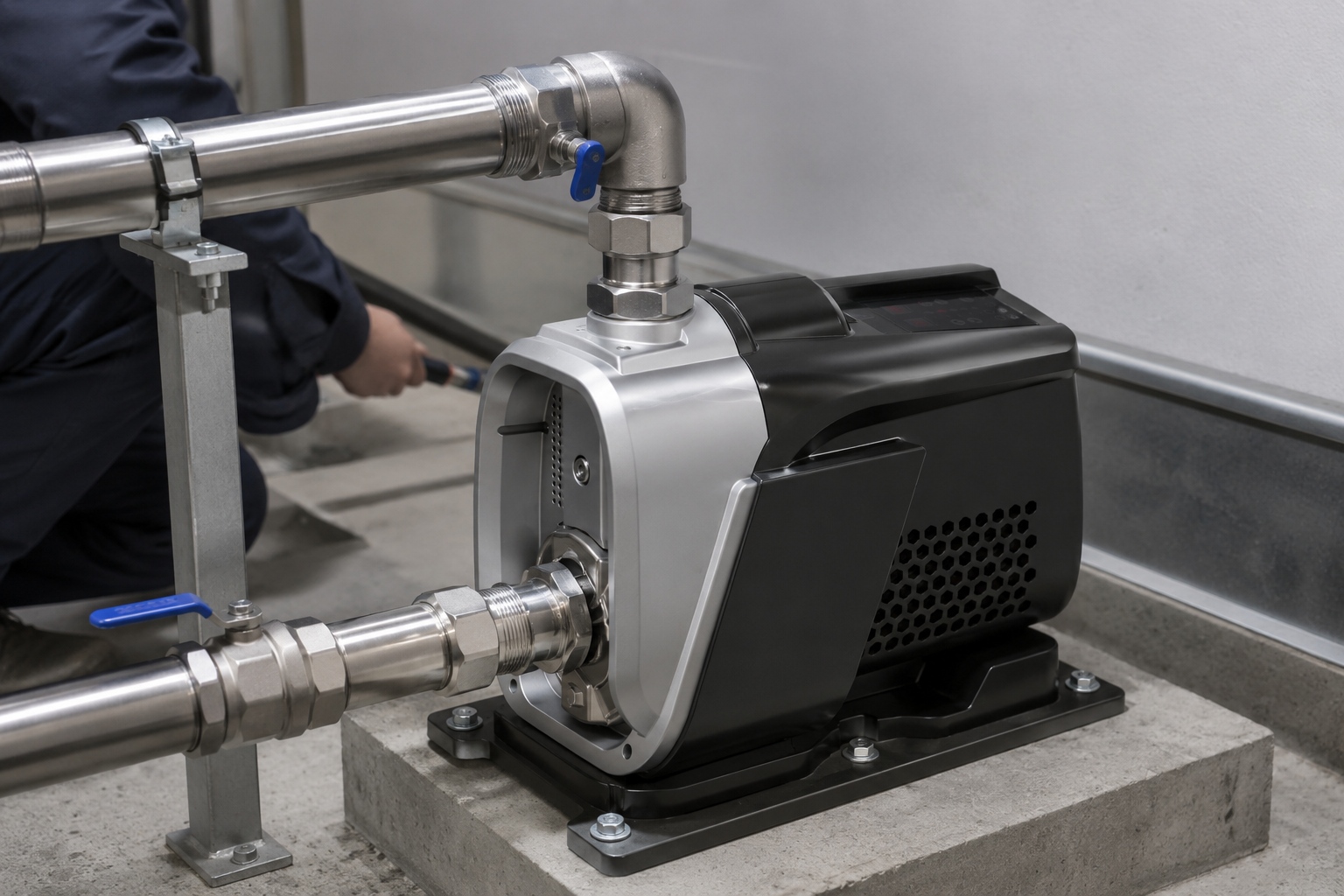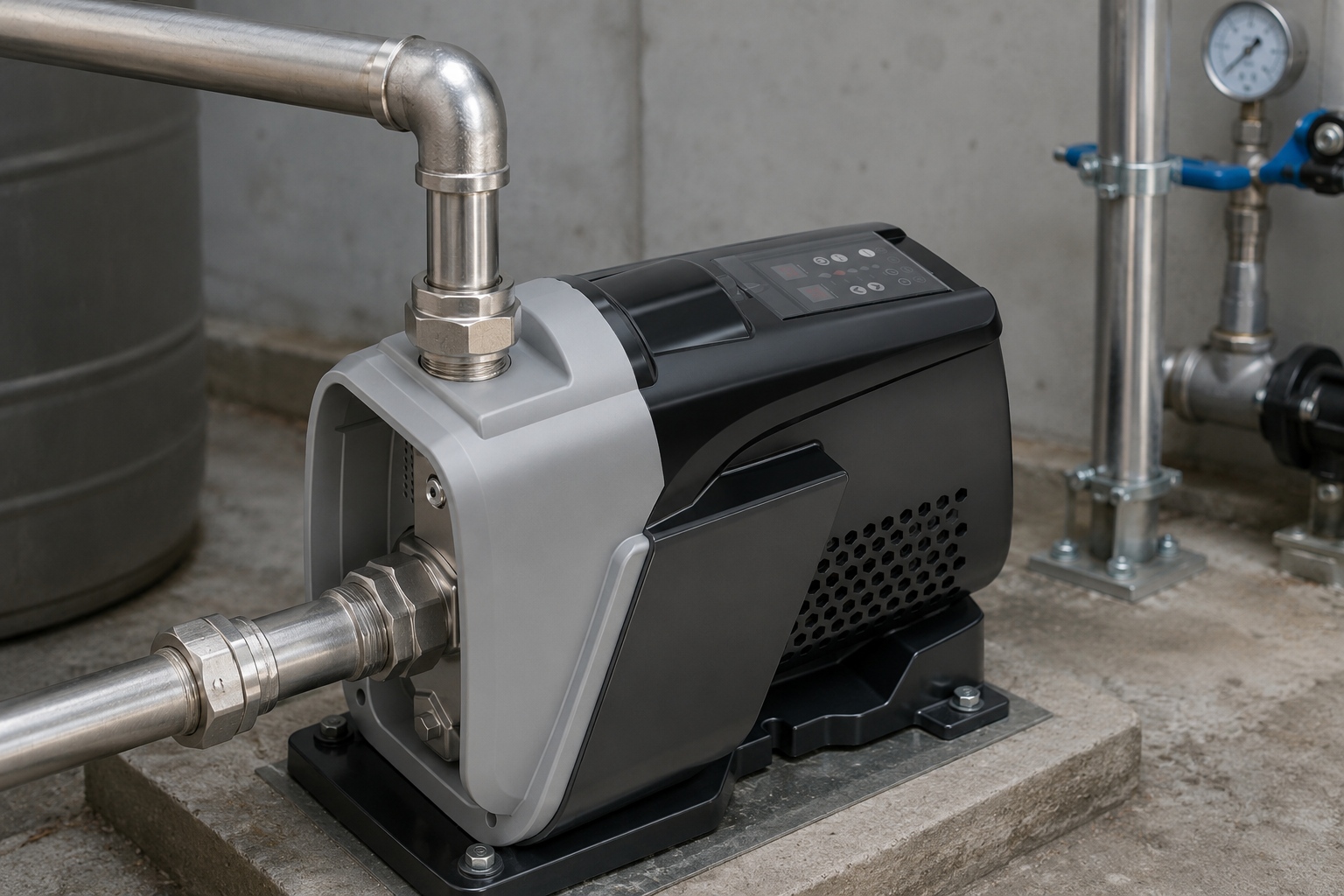
Your solar pump has stopped working, cutting off a vital water supply.
You are miles from help and dreading the cost of a full replacement.
Understanding which parts are repairable versus replaceable can save you significant time and money.
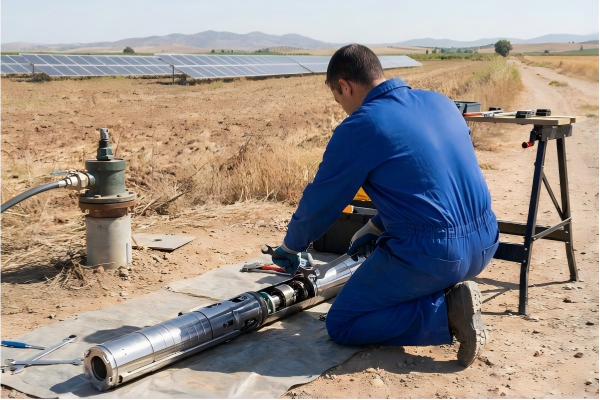
Yes, a solar pump can be repaired, but it depends on which part fails.
The controller and pump end are often repairable or have replaceable components.
However, the sealed brushless DC motor is typically replaced, not repaired, due to its complex, maintenance-free design.
A solar water pump is not a single object.
It is a system with four main parts.
You have the solar panels that provide power.
There is a controller that manages that power.
Deep in the well is the electric motor.
And attached to the motor is the pump end, which actually moves the water.
When your system fails, the first step is to figure out which of these four parts is the problem.
Some of these components are designed for easy replacement.
Others are built as sealed, long-life units that are not meant to be opened.
Knowing the difference is the key to a fast and cost-effective repair.
Let’s break down the repairability of each component, from the easiest to the most complex.
Part 1 | Repairing the Pump End
A worn-out pump is causing low water pressure.
You assume the entire multi-thousand-dollar system is finished.
Often, only a specific part of the pump end needs replacement, a much simpler and cheaper fix.
Whether the pump end is repairable depends on its type.
A screw pump’s rubber stator is often replaceable.
For impeller pumps, replacing a worn impeller stack can be complex, so replacing the entire pump end is common.
The "pump end" is the workhorse of your system.
This is the part that sits below the motor in the well and physically moves the water.
It contains the components that are most exposed to the harsh conditions of your water source, such as sand, silt, or corrosive minerals.
Because of this direct exposure, it’s the part of the submersible unit most likely to wear out over time.
The good news is that the pump end is a modular component.
It can be unbolted from the motor and replaced independently.
This is far less expensive than replacing the entire motor and pump assembly.
However, the specific design of your pump end a screw pump versus a centrifugal impeller pump—greatly influences what typically fails and how it can be fixed.
Understanding your pump type helps you diagnose the issue and explains why a simple "repair" might mean replacing one part or the entire pump end module.
Repairability of a Solar Screw Pump
Solar screw pumps are excellent for high-head (deep wells) applications and are highly resistant to sand.
They operate with a simple, robust mechanism: a single stainless steel screw (rotor) that turns inside a rubber sleeve (stator).
- Common Failure: The most common point of failure is the rubber stator. Over thousands of hours of operation, especially in very sandy water, the rubber will slowly wear down from abrasion. This wear creates a larger gap between the rotor and stator, causing the pump to lose pressure and efficiency. You will notice a gradual drop in water output.
- Repair Process: The stator is a designed wear part, much like brake pads on a car. It is fully replaceable. Repair involves unthreading the pump end from the motor, opening the pump housing, sliding out the old stator, and inserting a new one. This restores the pump to its original performance specifications.
- Best Use Case: These pumps are ideal for domestic water supply and livestock watering in areas with deep wells or questionable water quality.
Repairability of Centrifugal Impeller Pumps
Centrifugal pumps use a stack of spinning impellers to accelerate water upwards.
They are fantastic for high-flow applications like irrigation.
The material of these impellers is the key to their durability and repairability.
| Pump Type | Key Component | Common Failure Mode | Repair Action |
|---|---|---|---|
| Plastic Impeller Pump | Engineering Plastic Impellers | Abrasion and wear from fine sand; cracking from stress or high heat. | Impeller stack replacement is possible but complex. More often, the entire pump end is replaced due to cost-effectiveness. |
| Stainless Steel Impeller Pump | SS304 Stainless Steel Impellers | Highly resistant to wear and corrosion. Failure is rare. Can be damaged by large solids. | Repair is not practical. The pump end is a high-reliability component and is replaced as a whole unit if it ever fails. |
A Solar Plastic Impeller Pump is an economical and lightweight choice, offering excellent flow.
Its weakness is durability in very sandy or corrosive water.
Fine sand will act like sandpaper, slowly eroding the plastic impellers and the diffuser channels.
This wear widens the tolerances inside the pump, causing a loss of pressure.
While it is technically possible to disassemble the pump and replace the impeller stack, it’s a labor-intensive process.
For many distributors and end-users, the cost of labor makes it more practical to simply replace the entire pump end.
A Solar Stainless Steel Impeller Pump is the premium option.
Its SS304 components are extremely resistant to both sand abrasion and chemical corrosion from acidic or alkaline water.
Failures are very uncommon.
If a failure does occur, it is usually due to a catastrophic event like pumping a large rock, not gradual wear.
Because of their robust, precision construction, these pump ends are not designed to be field-serviced.
Like the motor, they are treated as a single, highly reliable component that is replaced, not repaired.
Part 2 | The Heart of the System: The BLDC Motor
Your pump has completely stopped, and there’s no sound.
You’re worried the expensive motor is burned out and needs a complex repair.
Modern solar pump motors are rarely repairable but are also exceptionally reliable and designed for a long, service-free life.
The high-efficiency BLDC motor in a solar pump is a sealed, maintenance-free unit.
It is not designed to be repaired in the field.
If a motor fails, which is rare, the standard and most effective solution is to replace it entirely.
The motor is the core of your solar water pump.
Modern, high-quality systems use a Brushless DC (BLDC) permanent magnet motor.
This is not like an old-fashioned AC motor with parts that can be easily swapped.
A BLDC motor is a piece of advanced technology, designed from the ground up for efficiency and longevity in a harsh underwater environment.
Inside the sealed stainless steel casing, a rotor made with powerful neodymium magnets spins with incredible efficiency—often exceeding 90%.
There are no brushes to wear out.
The bearings are permanently lubricated.
The entire unit is filled with oil or water to cool it and balance pressure.
This design philosophy prioritizes reliability over field serviceability.
The motor is engineered to run for well over a decade without any intervention.
The trade-off for this incredible reliability and efficiency is that it cannot be easily repaired.
Opening the sealed motor casing in a dusty field environment would almost certainly contaminate its precision components, leading to a quick and final failure.
Why BLDC Motors Are Not Repaired
There are several technical reasons why these motors are replacement items, not repair items.
- Sealed Environment: The motor is sealed at the factory in a clean-room environment to keep out water and contaminants. Breaking that seal in the field compromises the motor’s longevity. Re-sealing it properly without specialized equipment is nearly impossible.
- Integrated Electronics: Many BLDC motors have internal electronic components that control the motor’s rotation. These are potted in epoxy and are not accessible.
- Precision Balancing: The rotor is finely balanced to spin at high RPMs without vibration. Any attempt at disassembly could throw off this balance, leading to noise, inefficiency, and eventual self-destruction.
- Cost-Effectiveness: The labor and specialized tools required to diagnose and repair an internal motor fault would often cost more than a brand-new replacement motor. Manufacturers have optimized their production to make replacement motors a more economical choice for everyone.
Diagnosing a Motor Failure
How do you know if the motor is the problem?
First, you must rule out everything else.
- Check Power: Are the solar panels clean and in full sun? Is the controller showing any error codes? Use a multimeter to confirm that the correct voltage is coming out of the controller and heading down the wire to the pump.
- Check for Jams: Sometimes a pump can be jammed by a rock or heavy sediment. Disconnect the power and see if you can hear anything when you briefly reconnect it. A humming or buzzing sound with no rotation can indicate a jam.
- Isolate the Motor: If you have confirmed there is power going to the motor and the pump end is not jammed, and the motor is still not turning, then you can suspect a motor failure.
A failed motor is rare, but if it happens, the solution is straightforward: pull the pump, unbolt the old motor, bolt on a new one, and reinstall the assembly in the well.
Part 3 | The Brains: The Controller and Panels
Your pump system is dead, and the controller is blank.
You’re worried about complex electrical failures and costly technician visits.
The controller and panels are the most accessible parts and are often the easiest to diagnose and fix.
Solar pump controllers and panels are highly reliable but also the easiest parts to repair or replace.
Controllers are modular and can be swapped out in minutes.
Panels rarely fail but can be easily tested and replaced individually if damaged.
While the pump and motor are hidden deep in the well, the controller and solar panels are right there on the surface.
This accessibility makes them much easier to troubleshoot.
Failures in these top-side components are often simpler and cheaper to resolve than any issue with the submersible pump.
The controller, in particular, acts as the system’s brain and central diagnostic hub.
It is your first point of reference when things go wrong.
Solar panels are incredibly durable, but they can be damaged by extreme weather or accidents.
Fortunately, testing and replacing them is a straightforward process.
Before you ever assume a problem lies a hundred feet underground, you should always start your diagnosis with these two components.
Most of the time, the solution is simpler than you think.
Repairing the Solar Pump Controller
The controller is a sophisticated piece of electronics that performs several crucial jobs.
It converts the DC power from the panels into a form the motor can use.
It maximizes the power drawn from the panels using Maximum Power Point Tracking (MPPT).
It protects the motor from over-voltage, under-voltage, and other electrical faults.
- Diagnosis: Modern controllers are your best diagnostic tool. They have LED indicator lights or a digital display that will provide error codes. These codes can tell you if the problem is low sunlight, a faulty sensor, an open circuit, or a problem with the pump itself. Always consult the controller’s manual to understand what the error codes mean.
- Repair vs. Replacement: The internal circuit boards of a controller are not typically repaired in the field. The controller is designed as a self-contained, modular unit. If the controller itself is faulty, the repair is simple: you disconnect the wires, unmount the old controller, mount the new one, and reconnect the wires. It’s a plug-and-play solution that can be done in under 30 minutes.
- Advanced Controllers: Some systems use AC/DC hybrid controllers. These allow the pump to be run on solar power during the day and automatically switch to grid power or a generator at night or on cloudy days. These advanced controllers operate on the same modular replacement principle.
Repairing the Solar Panels
Solar panels are the most reliable component in the entire system.
They have no moving parts and are designed to withstand decades of exposure to sun, rain, and snow.
A properly installed panel from a reputable manufacturer has a failure rate of less than 0.05% per year.
- Common Issues: The most common "failure" is simply that they are dirty. A thick layer of dust can reduce output by over 20%. The first step in troubleshooting is always to clean the panels. Physical damage from hail, falling branches, or vandalism is the next most common issue.
- Testing a Panel: If you suspect a panel is dead, you can test it with a multimeter. Disconnect the panel from the rest of the array. Set your multimeter to DC volts and measure the "Open Circuit Voltage" (Voc) across the panel’s terminals. Set it to DC amps and measure the "Short Circuit Current" (Isc). Compare these readings to the specifications on the sticker on the back of the panel. A panel that reads zero volts or significantly lower than its rating is faulty.
- Replacement: Like controllers, panels are modular. If one panel in an array fails, you can simply replace that single panel. You just need to ensure the replacement panel has similar voltage and current characteristics to the others in the array.
Conclusion
A solar pump can be repaired by replacing its modular parts.
The controller and pump end are serviceable, while the highly reliable BLDC motor is replaced, not repaired, ensuring long-term performance.
Frequently Asked Questions
What is the life of a solar water pump?
Solar panels can last 25+ years.
The BLDC motor and pump end have a typical lifespan of 10-15 years, depending on water quality and usage.
What causes a solar pump to stop working?
The most common causes are dirty solar panels, a tripped controller error, or a clogged pump intake screen.
Actual component failure is less frequent.
How do I reset my solar pump controller?
Most controllers can be reset by disconnecting all power sources (both solar and AC, if applicable) for about 60 seconds and then reconnecting them.
Can a submersible pump motor be rewound?
Traditional AC submersible motors can sometimes be rewound.
However, the sealed brushless DC (BLDC) motors in modern solar pumps cannot and should not be rewound.
Why is my solar pump running slow?
Low sun, dirty solar panels, or a partial clog in the intake or pipes are the most likely causes.
It can also signal wear in the pump end.
How much does it cost to replace a submersible well pump?
Costs vary widely by pump size and well depth.
Replacing just the pump end or motor is significantly cheaper than replacing the entire downhole assembly.
Is it worth repairing a well pump?
If it’s a simple, accessible fix like replacing a controller or a screw pump stator, it is very worthwhile.
For major internal motor failures, replacement is better.