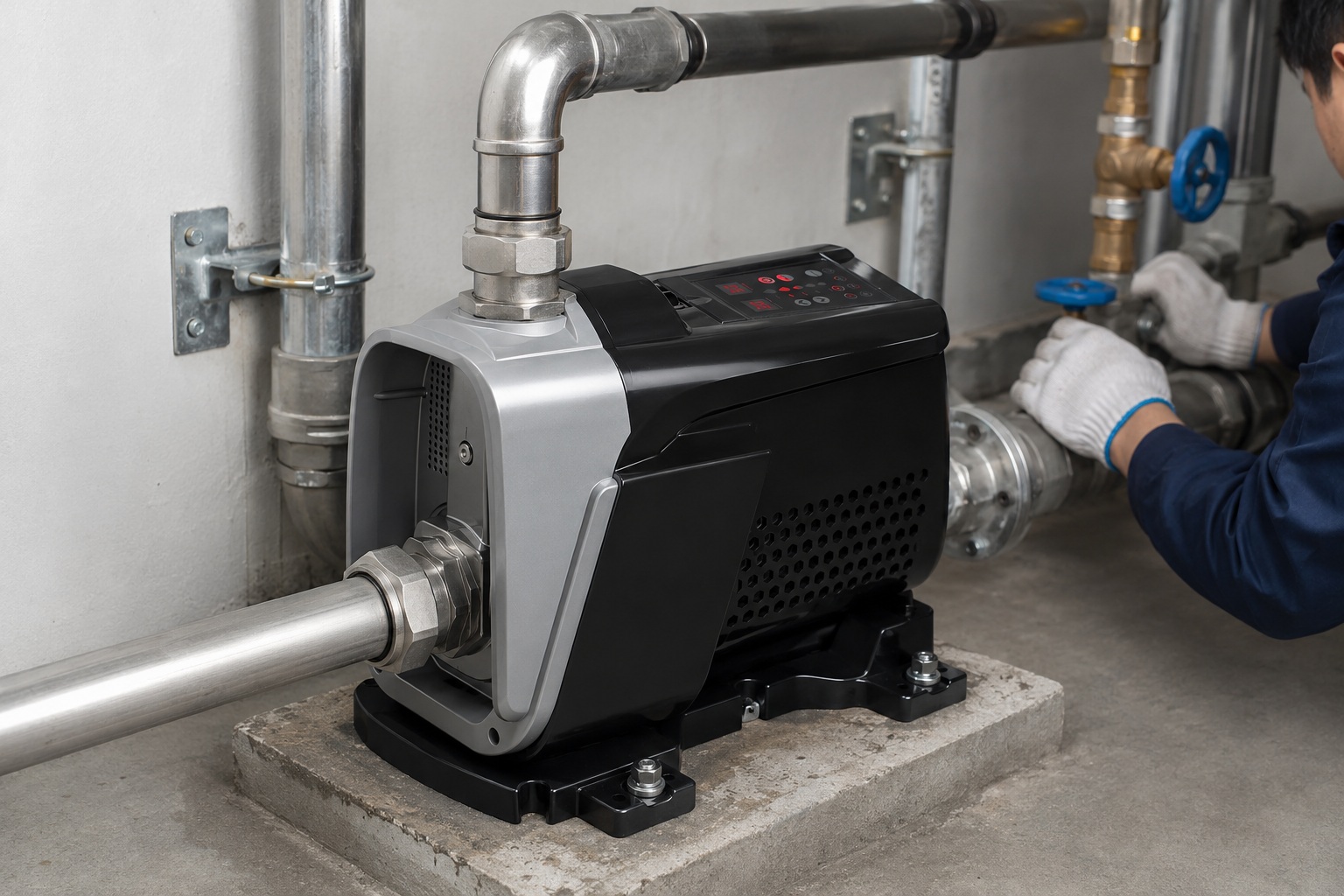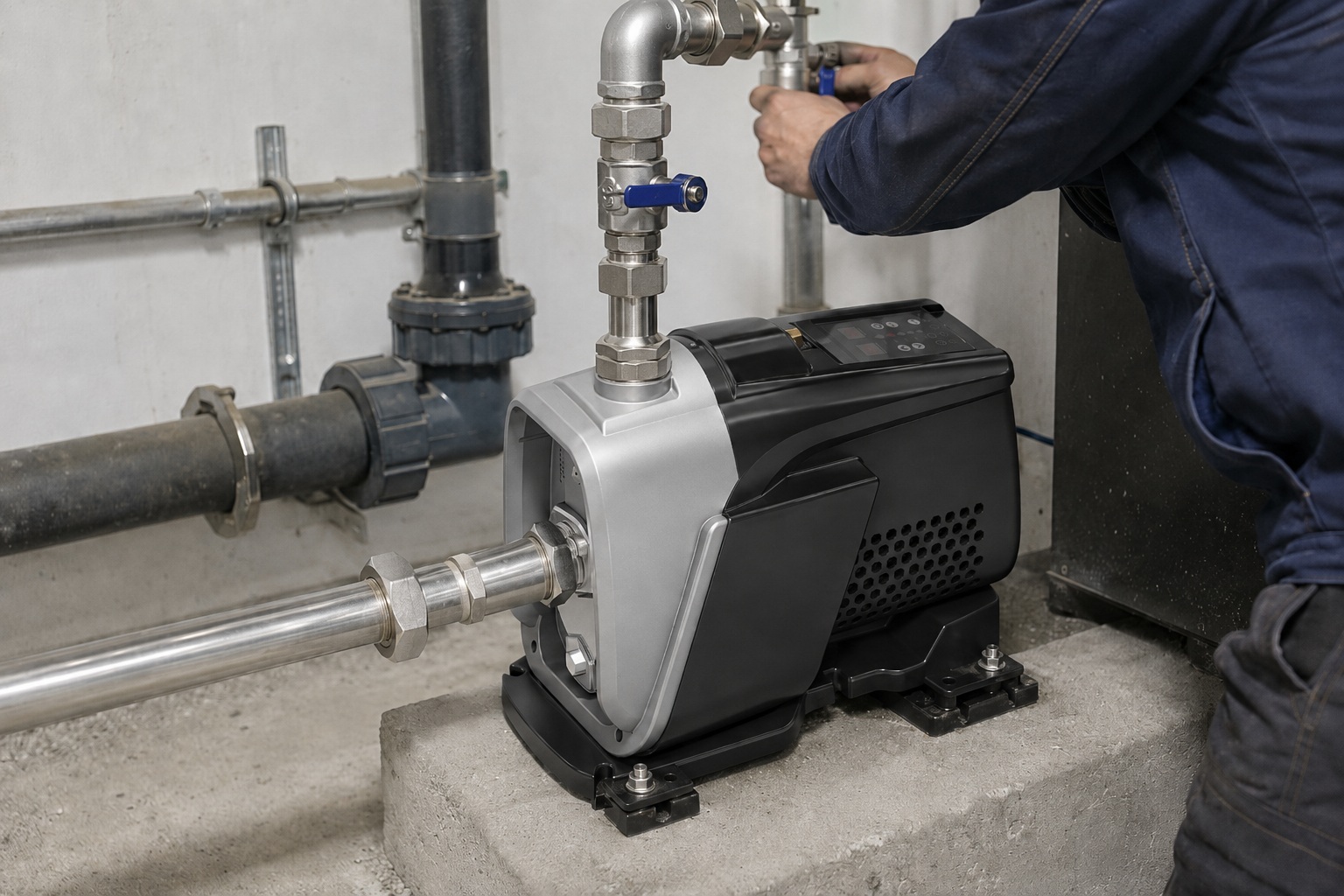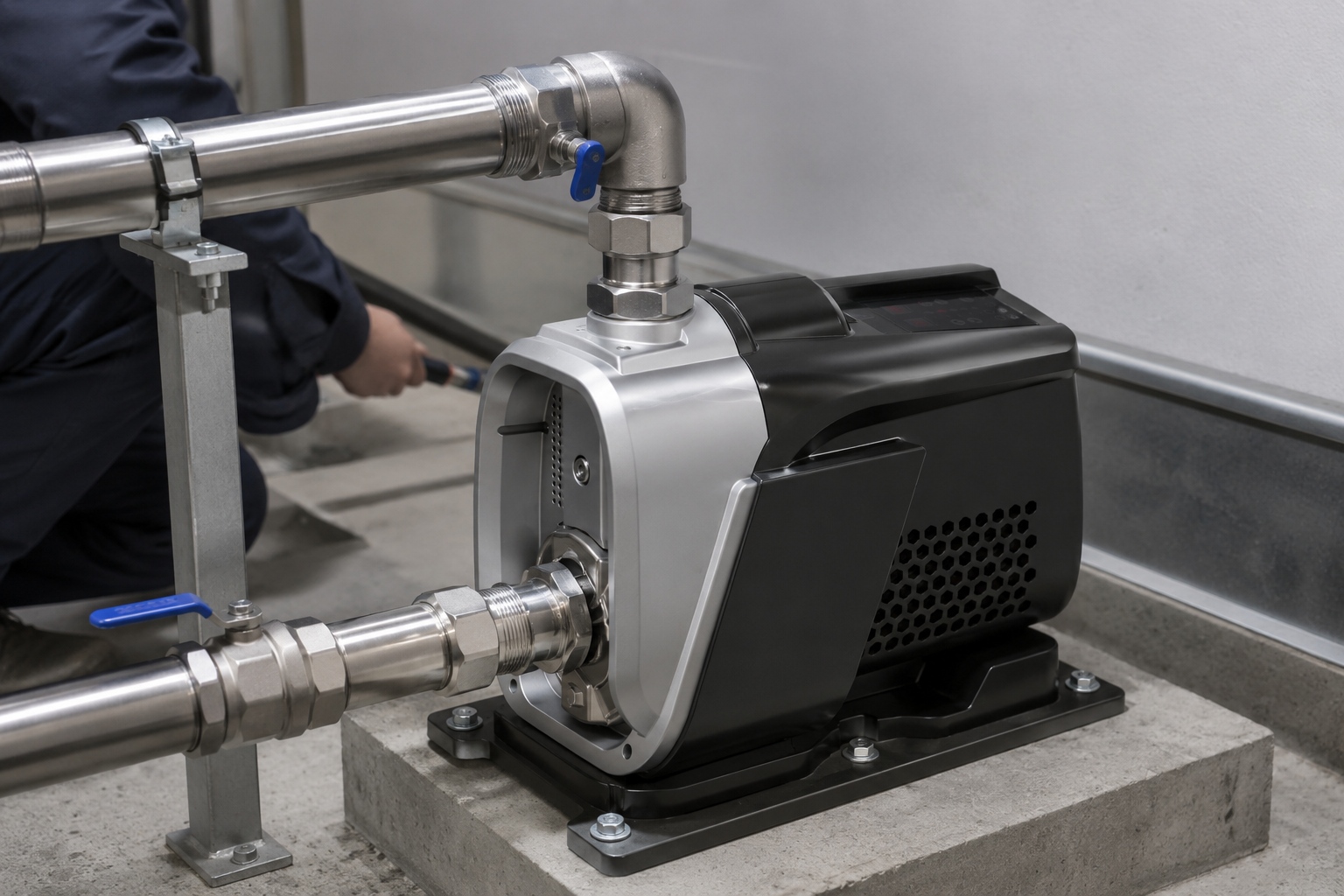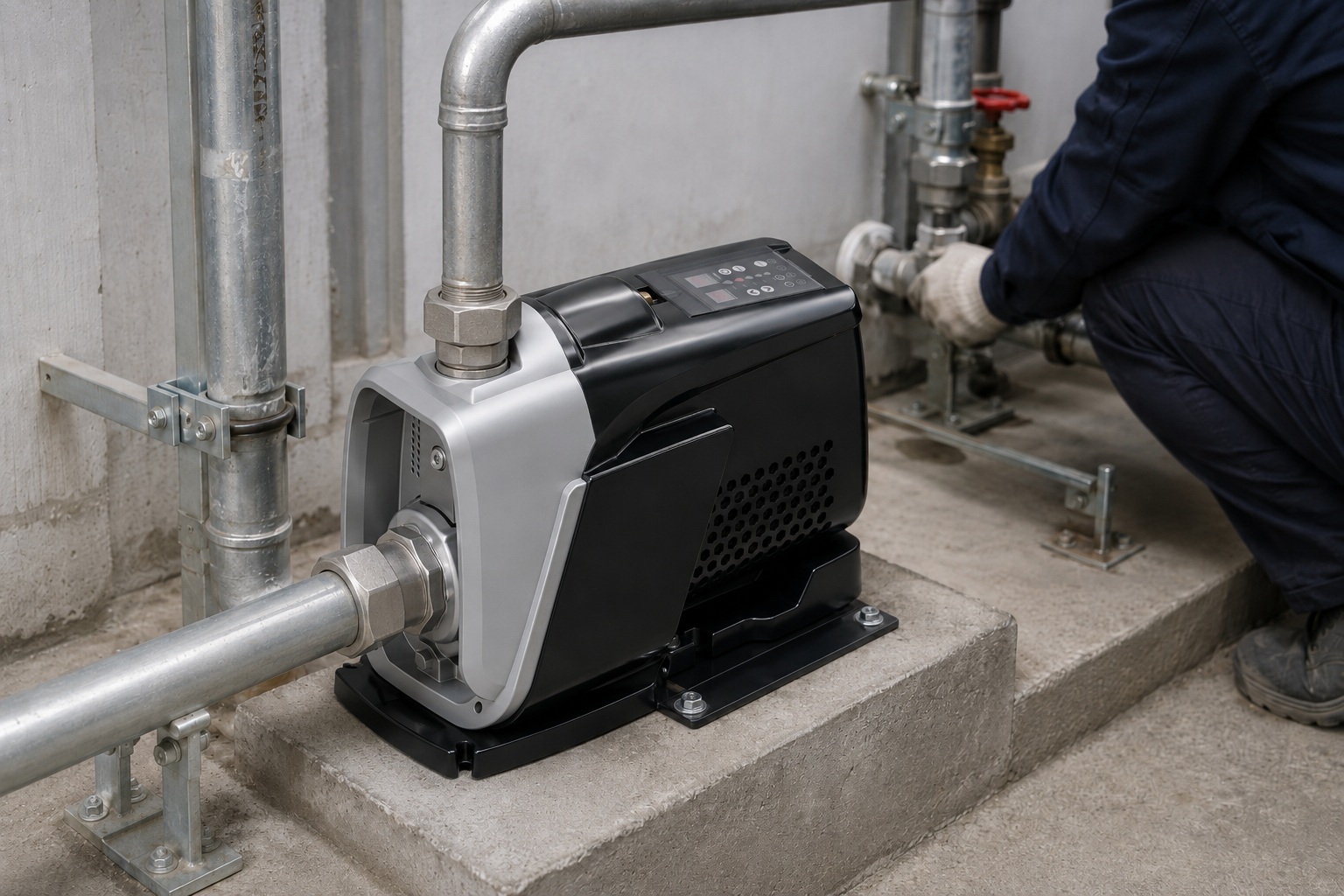
A high electricity bill from your pool pump is draining your operational budget.
Every month, that inefficient pump silently consumes profits.
Understanding the true lifecycle cost is key to a smarter investment.
A basic single-speed pool pump typically costs between $300 and $700 upfront. In contrast, a modern variable-speed model ranges from $800 to $1,500. While the initial investment is higher, variable-speed pumps can reduce energy consumption by up to 90%, significantly lowering the total cost of ownership.
Choosing a pool pump involves more than just the initial price tag.
It is an investment in efficiency, longevity, and long-term operational savings.
For importers and distributors, understanding the complete value proposition is essential for making a profitable decision and providing the best products to your market.
This guide will break down the factors that influence pump costs, from the basic models of the past to the advanced, intelligent systems of today.
We will explore how technology has evolved to deliver significant energy savings and superior performance, helping you navigate the market with confidence.
Let's dive into the details.
The Genesis: Understanding Single-Speed Pumps
Struggling with high, unpredictable energy costs from older pool pump technology?
This inefficiency directly impacts operating expenses and reduces profitability.
Investing in foundational knowledge helps select products with better long-term value.
The most basic option, a single-speed pump, generally costs between $300 and $700. This traditional technology runs at one constant, high speed. While the upfront cost is low, it is the least energy-efficient option, leading to significantly higher electricity bills over the pump's lifetime.
The single-speed pump is the original workhorse of the pool industry, much like the early, foundational networks that started our digital world.
Its design is simple, robust, and straightforward.
The motor operates at a fixed speed, typically 3,450 revolutions per minute (RPM), whenever it is turned on.
This constant high speed is often more powerful than necessary for routine tasks like daily filtration.
Why Is Constant High Speed a Problem?
Running at maximum speed all the time is highly inefficient.
It's like driving your car with the accelerator pushed to the floor for every trip, whether you're on a highway or in a school zone.
This approach consumes a massive amount of energy.
For pool maintenance, tasks like filtration require a much lower flow rate than tasks like running a pool cleaner or a spa.
A single-speed pump cannot adjust, meaning it wastes energy by over-performing for up to 95% of its runtime.
The True Cost Calculation
The initial low price of a single-speed pump is deceptive.
To understand its true cost, you must consider the Total Cost of Ownership (TCO).
This includes the purchase price plus the lifetime energy costs.
Let's look at a typical scenario.
| Cost Component | Single-Speed Pump | Variable-Speed Pump |
|---|---|---|
| Average Purchase Price | $500 | $1,200 |
| Daily Energy Consumption | 10-15 kWh | 1.5-3 kWh |
| Annual Energy Cost | $700 - $1,100 | $100 - $200 |
| 5-Year Energy Cost | $3,500 - $5,500 | $500 - $1,000 |
| 5-Year Total Cost | $4,000 - $6,000 | $1,700 - $2,200 |
As the table shows, the long-term expense of a single-speed pump can be over double that of a more advanced model.
For a business distributing these products, highlighting the TCO is a powerful selling point that builds trust and demonstrates market expertise.
The Evolution: The Rise of Dual-Speed Pumps
Are your customers looking for savings but hesitant about the price of top-tier technology?
Offering only the cheapest or most expensive options can alienate a large part of the market.
Providing a middle-ground solution can capture more sales.
A dual-speed pump, costing between $500 and $900, offers a compromise between single-speed and variable-speed models. It features a high-speed setting for demanding tasks and a low-speed setting for general filtration, potentially cutting energy use by 50-60% compared to single-speed pumps.
The dual-speed pump represents the first major evolution in pool pump efficiency.
It introduced a new protocol for operation: the ability to switch between two set speeds.
This was a significant step forward from the one-size-fits-all approach of single-speed motors.
The concept is simple but effective.
The pump has a high-speed setting, which is identical to a single-speed pump's constant operation, and a low-speed setting for routine filtration.
By running on the lower speed for the majority of the day, the pump can achieve substantial energy savings.
The Physics of Efficiency
The relationship between pump speed and energy use is not linear.
This is governed by the Pump Affinity Laws, a core principle in fluid dynamics.
These laws state that a change in pump speed has an exponential effect on power consumption.
- Halving the pump speed reduces the flow rate by half.
- Halving the pump speed reduces the power consumption by a factor of eight!
This is why the low-speed setting on a dual-speed pump is so impactful.
Even a modest reduction in RPMs results in a dramatic decrease in the electricity required.
Operational Limitations
While dual-speed pumps are a clear improvement, they are not without their limitations.
They still operate at two fixed speeds, which may not be perfectly optimized for every pool's unique requirements.
The high speed is often still too powerful, and the low speed might be insufficient for certain features or larger pools.
The system lacks the intelligence to adapt dynamically.
Consider these factors:
| Feature | Single-Speed | Dual-Speed | Variable-Speed |
|---|---|---|---|
| Speed Settings | 1 (Fixed High) | 2 (Fixed High/Low) | Multiple (Customizable) |
| Energy Savings | None | Good (up to 60%) | Excellent (up to 90%) |
| Operational Control | On / Off | Manual Switch | Digital / Automated |
| Adaptability | Low | Medium | High |
This transitional technology paved the way for more sophisticated solutions.
It introduced the market to the concept of speed control and demonstrated the massive potential for energy savings, setting the stage for the next leap in innovation.
The Modern Web: Variable-Speed Pumps (VSP)
Your competitors are offering smart, energy-efficient products that save customers money.
Stocking outdated technology makes your business appear less competitive and less innovative.
Embracing modern, intelligent pump technology is crucial for market leadership.
Variable-speed pumps (VSPs) are the industry standard for efficiency, costing between $800 and $1,500. They use a permanent magnet motor and intelligent controls to allow for precise speed adjustments. This technology can save pool owners up to 90% on their pump-related energy costs.
The variable-speed pump is the modern era of pool circulation technology.
It functions like a complete, dynamic platform rather than a simple, single-function tool.
This is achieved through a combination of a sophisticated permanent magnet motor—the same type found in electric vehicles—and an onboard digital controller.
This pairing allows the pump's speed to be adjusted with incredible precision, often in increments of just 10 RPM.
Instead of being locked into one or two speeds, a VSP can be programmed to run at the exact speed required for any given task.
How VSPs Create Unmatched Efficiency
The power of a VSP lies in its ability to follow the Pump Affinity Laws to their full potential.
By running at a much lower speed for a longer period, the pump can circulate the same amount of water as a single-speed pump but use a fraction of the energy.
- Filtration: Can be run at a very low RPM (e.g., 1,500 RPM) for 12 hours.
- Heating: A slightly higher speed may be needed to activate a heater's flow switch (e.g., 2,200 RPM).
- Cleaning: A high speed is used for short bursts to power a suction-side cleaner (e.g., 3,000 RPM for 2 hours).
This intelligent scheduling is the key.
The pump only ever uses the exact amount of energy needed for the task at hand.
Core Components and Their Costs
The higher price of a VSP is directly related to its advanced components and the value they provide.
| Component | Function | Contribution to Cost | Benefit |
|---|---|---|---|
| Permanent Magnet Motor | Creates a magnetic field without using electricity, unlike induction motors. | High | Drastically increases energy efficiency (over 90% efficiencies). |
| Onboard Drive/Controller | The "brain" that manages motor speed and scheduling. | High | Allows for precise programming and automation for maximum savings. |
| Enclosed, Fan-Cooled Design | Protects the motor from the elements and keeps it cool. | Medium | Extends motor lifespan, reduces noise, and improves durability. |
| Digital Interface | The user control panel for setting up schedules and speeds. | Medium | Provides user-friendly operation and real-time feedback. |
These components work together to deliver not only energy savings but also a quieter, longer-lasting, and more effective pump.
For a distributor, the sales conversation shifts from "price" to "return on investment," a much more compelling proposition for savvy business owners and consumers.
The Cloud & Mobile Era: Smart & Connected Pumps
Your customers now expect every device to be smart, connected, and easy to control.
Offering standalone pumps that require manual operation feels outdated and inconvenient.
Providing pumps with mobile connectivity meets modern expectations and adds significant value.
Smart, connected pool pumps represent the premium tier, with costs ranging from $1,200 to over $2,500. These pumps integrate VSP technology with Wi-Fi or Bluetooth connectivity, allowing for full control and monitoring from a smartphone app, anywhere in the world.
The latest frontier in pool pump technology is connectivity, mirroring the mobile and cloud revolution in consumer electronics.
Smart pumps take the efficiency of a VSP and add a layer of remote control and automation that offers unparalleled convenience and oversight.
This is no longer a niche feature; it is rapidly becoming the standard expectation for high-end pool equipment.
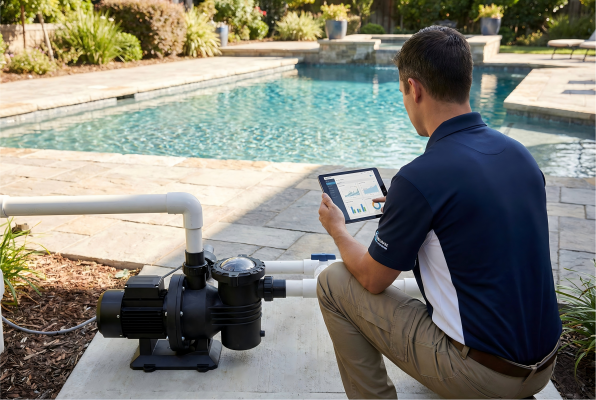
By connecting to a home's Wi-Fi network, the pump can be accessed through a dedicated app on a smartphone or tablet.
What Can a Smart Pump Do?
The mobile app becomes a central command hub for the entire pool circulation system.
This empowers the user with a level of control that was previously impossible without complex and expensive automation systems.
Key functionalities include:
- Remote Operation: Turn the pump on or off from anywhere.
- Schedule Adjustment: Change filtration schedules on the fly.
- Real-Time Monitoring: View current RPM, energy consumption (watts), and flow rates.
- System Alerts: Receive notifications for potential issues like a blockage or loss of prime.
- Integration: Connect with other smart pool devices like heaters, lighting, and chlorinators.
The Business-to-Business Advantage
For importers and distributors, offering smart pumps is a key differentiator.
It positions your brand as a technology leader.
The benefits extend beyond the end-user to the pool service professionals who install and maintain the equipment.
Benefits for Pool Professionals
- Remote Diagnostics: A technician can check a pump's status without a site visit, saving time and money.
- Faster Servicing: Alerts can inform them of a problem before the homeowner even notices.
- Value-Added Service: Offering remote monitoring can be a new revenue stream for service companies.
The premium cost of a smart pump is justified by these powerful features.
It delivers the ultimate in efficiency, convenience, and control, providing a strong narrative for businesses that want to offer the best and most advanced products on the market.
Conclusion
Understanding pool pump costs means looking beyond the sticker price.
The true value lies in long-term energy savings and advanced, intelligent features.
Frequently Asked Questions
Can a variable speed pool pump save you money?
Yes, a variable speed pump can save up to 90% on energy costs compared to a single-speed model, often paying for itself in under two years.
How long should a pool pump last?
A quality pool pump should last between 8 and 12 years. Proper maintenance and installation are crucial factors for maximizing its lifespan.
Is it worth repairing a pool pump?
If the repair cost is less than 50% of a new pump's price, it's often worth it. For older, inefficient models, replacement is usually the smarter long-term investment.
Can I install a pool pump myself?
While possible for those with electrical and plumbing experience, professional installation is highly recommended to ensure safety, proper function, and to protect the warranty.
What size pool pump do I need?
The correct size depends on your pool's volume, filter size, and plumbing. The goal is to turn over the entire volume of pool water in an 8-hour period.
Do all variable speed pumps qualify for rebates?
Many energy-efficient variable speed pumps qualify for local utility rebates. Check with your energy provider for specific program details and requirements in your area.
Is a quieter pool pump more expensive?
Yes, generally. Variable speed pumps are significantly quieter than single-speed models because they run at lower RPMs for most of the day, a key benefit of their advanced motor technology.