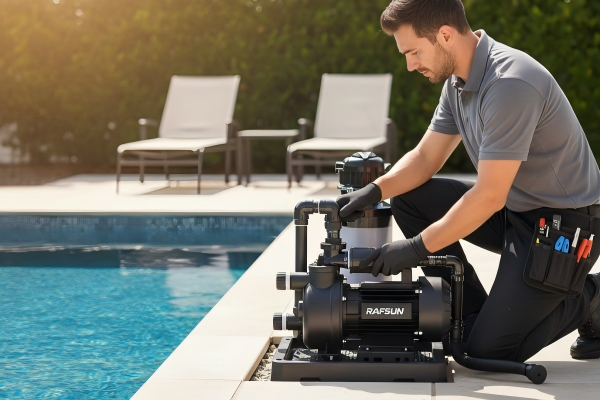
Struggling with high electricity bills from your pool pump?
You want a greener, more cost-effective way to keep your pool clean.
A solar-powered solution could be the answer.
Yes, solar-powered pool pumps exist and are an excellent choice.
They use energy from the sun to circulate and filter your pool water.
This reduces electricity costs and your carbon footprint.
They are becoming increasingly popular for their efficiency and environmental benefits.
Absolutely, the technology is here, and it's making a huge impact.
Solar pumps are not just for pools.
This technology is powerful enough for much more demanding tasks, like drawing water from deep underground.
The same core principles of efficiency and sustainability apply across a wide range of water pumping needs.
Let's explore the different types of advanced solar pumps.
Understanding this technology will show you how versatile and powerful these systems truly are.
This knowledge is crucial for distributors and importers looking to meet diverse market demands.
From residential pools to large-scale agriculture, solar water solutions are changing the game.
Solar Screw Pump: Your Solution for Low Flow, High Head?
Need to lift water from a very deep well?
Traditional pumps struggle with high head, and energy costs can be extreme.
The solar screw pump provides a reliable, off-grid solution.
A solar screw pump is perfect for deep well applications where high lift is needed more than high volume.
Its design allows it to push water from great depths efficiently.
This makes it ideal for domestic water supply and livestock watering in remote, electricity-scarce regions.
The solar screw pump, also known as a progressive cavity pump, is a marvel of simple, effective engineering.
Its unique design makes it a specialized tool for specific water challenges.
By understanding its mechanics, advantages, and limitations, you can better serve customers with deep-well water needs.
How Does It Work?
The pump works using a single helix-shaped stainless steel rotor.
This rotor turns inside a double helix rubber stator.
As the rotor spins, it creates sealed cavities of water that "progress" from the pump's intake to its outlet.
This compression-based action generates powerful pressure, allowing it to lift water from depths exceeding 100 meters with ease.
This mechanism is significantly different from centrifugal pumps, which use spinning impellers to move water.
What Are Its Key Advantages?
The primary benefit is its ability to generate very high head (pressure) even with a low flow rate.
This is critical for deep wells.
Another major advantage is its incredible durability in challenging water conditions.
- Sand Resistance: The screw design can handle water with a higher concentration of sand and silt without clogging or sustaining significant damage. This is a common issue that causes other pump types to fail prematurely.
- Self-Priming: These pumps are generally self-priming, simplifying the installation and startup process.
- Efficiency in Deep Applications: When powered by a high-efficiency BLDC solar motor, they provide a consistent water supply using only solar energy, dramatically cutting operational costs.
What are the Limitations?
The main limitation is its relatively low flow rate.
While it excels at lifting water high, it doesn't move a large volume of water quickly.
This makes it unsuitable for applications requiring high-volume water delivery, such as large-scale farm irrigation or filling large reservoirs rapidly.
The rubber stator is also a wearable part that may need replacement over time, though high-quality materials extend its lifespan considerably.
| Feature | Specification | Best Use Case |
|---|---|---|
| Pumping Principle | Progressive Cavity (Screw) | Deep wells for homes and livestock. |
| Flow Rate | Low | Applications where high volume is not the priority. |
| Head (Lift) | Very High (up to 300m+) | Extracting water from significant depths. |
| Sand Handling | Excellent | Wells with sandy or silty water. |
| Primary Markets | Africa, Latin America, Remote Rural Areas | Areas with limited grid access and deep water tables. |
Solar Plastic Impeller Pump: High Flow and Wear-Resistance Combined?
Need to move a lot of water for irrigation?
High-volume water needs often mean high energy costs and pump wear from abrasive particles.
A durable, high-flow solar pump offers an economical alternative.
Yes, the solar plastic impeller pump is engineered for high flow rates and excellent durability against fine sand.
It is a multi-stage centrifugal pump perfect for farm irrigation, pasture water supply, and residential gardens where moving large volumes of water efficiently is the main goal.
When the goal is moving a significant amount of water rather than lifting it from extreme depths, the solar plastic impeller pump shines.
This pump is a workhorse, designed for efficiency, durability, and cost-effectiveness in agricultural and residential settings.
It represents a perfect balance of performance and value, making it a popular choice in markets across Africa and the Americas.
Understanding the Multi-Stage Centrifugal Design
Unlike the screw pump, this model is a centrifugal pump.
It uses a series of impellers stacked on top of each other (multi-stage).
Each stage adds pressure to the water, increasing the total head the pump can achieve.
- Impellers: Water enters the center of a spinning impeller and is thrown outward by centrifugal force.
- Diffusers: The water then passes through a diffuser, which slows the water down and converts its velocity into pressure.
- Multi-Stage: The process repeats through each stage, with the pressure building until the water exits the pump. This design allows for higher flow rates and moderate head capabilities.
Why Use Engineering Plastic Impellers?
The choice of high-strength, wear-resistant plastic for the impellers is a key design feature.
While some might associate "plastic" with lower quality, modern engineering plastics offer significant advantages.
- Abrasion Resistance: They are highly resistant to wear from fine sand and suspended solids, which can quickly erode metal impellers. This leads to a longer operational life in typical well conditions.
- Lightweight: Plastic impellers are lighter than their stainless steel counterparts. This reduces the rotational mass, requiring less startup torque from the motor. This translates to better performance in low-light conditions and higher overall system efficiency.
- Cost-Effectiveness: Using engineering plastics helps make the pump more affordable without sacrificing performance in its intended applications. This widens market access for end-users.
Ideal Applications and Limitations
This pump is the go-to solution for many surface and shallow-to-medium depth well applications.
- Farm Irrigation: Its high flow rate is perfect for drip systems, sprinklers, and flood irrigation for small to medium-sized farms.
- Livestock Water Supply: It can quickly fill large water troughs and tanks for pasture-based animals.
- Residential Use: Ideal for large gardens, filling ponds, or general home water supply from a shallow well.
The main limitation is its performance in highly corrosive water or at extreme depths where very high pressure is required.
In such cases, a more robust material like stainless steel is a better choice.
| Feature | Specification | Best Use Case |
|---|---|---|
| Pumping Principle | Multi-stage Centrifugal | Farm irrigation and livestock water supply. |
| Flow Rate | High | Applications needing large water volume. |
| Head (Lift) | Medium (typically up to 150m) | Shallow to medium depth wells. |
| Sand Handling | Very Good (for fine sand) | Wells with moderate levels of fine sediment. |
| Primary Markets | Africa, The Americas, Southeast Asia | Agricultural regions needing reliable water transfer. |
Solar Stainless Steel Impeller Pump: The Ultimate Corrosion-Resistant Choice?
Facing corrosive water or need maximum durability?
Acidic or alkaline water can destroy standard pumps, leading to costly and frequent replacements.
You need a pump built to withstand the harshest conditions.
Absolutely.
The solar stainless steel impeller pump is the premium option for longevity and reliability in corrosive environments.
With an SS304 stainless steel impeller and pump body, it resists rust and corrosion, ensuring a long service life even in acidic, alkaline, or saline water conditions.
For applications where water quality is a challenge, the solar stainless steel impeller pump is the definitive solution.
This pump is not just about moving water; it's about providing a long-term, reliable water supply in environments that would compromise lesser materials.
Its robust construction targets a high-end market segment where durability and purity are non-negotiable, such as in parts of Australia and the Americas.
Why is SS304 Stainless Steel Superior?
The material science behind this pump is its core advantage.
SS304 is a specific grade of stainless steel known for its excellent corrosion resistance.
- Corrosion Resistance: It contains a high percentage of chromium and nickel, which form a passive, protective layer on the surface. This layer prevents rust and resists chemical attacks from acidic or alkaline substances found in some groundwater.
- Durability and Strength: Stainless steel is inherently stronger and more resistant to physical impact and abrasion than plastic. This makes the pump suitable for deeper installations where water pressure is higher.
- Water Purity: Because it does not corrode, a stainless steel pump does not leach contaminants into the water. This makes it a preferred choice for providing high-quality drinking water for high-end homes and ranches.
Who Needs This Premium Pump?
The higher initial cost of this pump makes it a strategic choice for specific scenarios.
The investment pays off through a greatly extended service life and reduced maintenance.
- Regions with Problematic Water: This includes areas with alkaline soils, common in Australia, or regions with industrial or agricultural runoff that affects groundwater pH.
- Coastal Areas: Where saltwater intrusion can lead to brackish (salty) well water, stainless steel is essential to prevent rapid corrosion.
- High-End Applications: For premium residential properties, exclusive resorts, or high-value livestock operations, the reliability and purity offered by a stainless steel pump justify the cost.
Comparing with Other Pump Types
While a plastic impeller pump offers good resistance to fine sand, a stainless steel pump provides superior overall durability.
It can handle both abrasive and corrosive elements simultaneously.
Compared to a screw pump, it offers a much higher flow rate, making it suitable for applications that need both high volume and robust construction.
| Feature | Specification | Best Use Case |
|---|---|---|
| Key Materials | SS304 Stainless Steel Impeller & Body | Corrosive water (acidic, alkaline, or brackish). |
| Flow Rate | High | High-demand applications needing both volume and durability. |
| Head (Lift) | Medium to High | Deep wells in challenging geological areas. |
| Primary Advantage | Extreme Corrosion Resistance & Long Service Life | Ensuring water purity and pump longevity. |
| Target Markets | Australia, Parts of the Americas, High-End Users | Niche markets where water quality compromises standard pumps. |
BLDC Permanent Magnet Motor: The Heart of Modern Solar Pumps?
What truly powers a high-performance solar pump?
The pump itself is only half the story; the motor's efficiency determines the entire system's performance.
An inefficient motor wastes precious solar energy.
The BLDC permanent magnet motor is the core technology driving modern solar pumps.
With an efficiency exceeding 90%, this brushless motor is the key to maximizing water output from every watt of solar power.
It’s the engine that makes off-grid water pumping reliable and cost-effective.
The motor is the single most critical component in a solar water pumping system.
It is the bridge between the solar panels and the pump end.
The transition to Brushless DC (BLDC) permanent magnet motors has been a revolutionary step, dramatically improving the efficiency, reliability, and lifespan of solar pumps.
Understanding this core technology is essential for any distributor aiming to offer a competitive product portfolio.
What Makes BLDC Motors So Efficient?
The high efficiency of a BLDC motor comes from its innovative design.
Unlike traditional brushed motors, there are no physical brushes making contact with the rotor.
- No Brushes, No Friction: Traditional motors use carbon brushes to transmit power, which creates friction, heat, and energy loss. BLDC motors use an electronic controller instead. This lack of friction means more of the electrical energy is converted directly into rotational force. Efficiency rates often exceed 90%, compared to 60-75% for brushed motors.
- Permanent Magnet Rotor: The rotor is made from powerful rare-earth magnets, such as 40SH neodymium iron boron. These magnets create a strong, permanent magnetic field, eliminating the need to use electrical energy to create one, which further boosts efficiency.
- Intelligent Control: An external controller precisely manages the power sent to the motor's coils. This allows for variable speed control and optimization based on the available sunlight, a feature managed by the MPPT (Maximum Power Point Tracking) controller.
The Market Value of High Motor Efficiency
The benefits of a 90%+ efficient motor extend across the entire system.
- Fewer Solar Panels: A more efficient motor requires less power to do the same amount of work. This directly translates to needing a smaller, less expensive solar panel array to run the pump. This can reduce the total system cost by 20-30%.
- Lower Operating Costs: By maximizing the use of solar energy, the pump can operate for more hours per day and move more water, lowering the cost-per-liter and accelerating the return on investment.
- Compact and Lightweight Design: High-efficiency motors are more power-dense. They can be made smaller and lighter (up to 47% smaller and 39% lighter) without sacrificing power or torque. This simplifies shipping, handling, and installation.
- Long, Maintenance-Free Life: With no brushes to wear out, BLDC motors are exceptionally reliable and have a very long service life, operating for years without needing maintenance.
The BLDC motor is not just a component; it is the central pillar of the system's value proposition.
It is the technology that makes solar water pumping a truly viable and superior alternative to grid-powered or diesel-powered systems.
AC/DC Hybrid Pumps: Non-Stop Water, Day or Night?
What happens on cloudy days or when you need water at night?
Solely relying on solar power can be a problem when sunlight is inconsistent.
This can interrupt critical water supplies for homes or farms.
AC/DC hybrid solar pumps solve this problem completely.
They are designed with an intelligent controller that can automatically switch between solar DC power and grid AC power (or a generator).
This ensures a reliable, 24/7 water supply, regardless of the weather or time of day.
The ultimate goal of any water system is reliability.
While solar power is clean and free, its availability is variable.
The development of AC/DC hybrid technology represents the final step in making solar pumping a truly worry-free, primary water solution.
It combines the economic benefits of solar with the constant reliability of the grid, offering the best of both worlds.
How Does the Hybrid Controller Work?
The magic is in the intelligent controller.
This device is the brain of the system and is engineered to manage multiple power sources seamlessly.
- Dual Power Inputs: The controller has separate inputs for DC power from the solar panels and AC power from the grid or a generator.
- Automatic Prioritization: The system is programmed with a "solar-first" logic. As long as the solar panels are producing enough power to run the pump, the controller will use 100% solar energy. The AC input remains on standby.
- Hybrid Power Blending: If solar input drops due to passing clouds, the controller's hybrid function can blend AC power with the available DC power. It will use as much solar energy as possible and only supplement with the necessary amount of AC power to maintain pump operation. This maximizes the use of free solar energy.
- Automatic Switchover: When there is no solar input at all (e.g., at night or during heavy, prolonged storms), the controller automatically switches over to the AC power source to ensure the pump can run whenever needed. The user does not need to do anything.
Key Benefits for End-Users and Distributors
This hybrid capability provides immense value and opens up new markets.
- Uninterrupted Water Supply: The most significant benefit is water security. For households, this means water is always available. For farmers, it means irrigation schedules are never missed, protecting crop health and yields.
- Maximized Savings: By always prioritizing solar, the system still drastically reduces electricity bills. The grid is used only as a backup, not a primary source. This delivers the cost savings of solar without compromising on reliability.
- System Simplicity: For the end-user, the system is fully automatic. There is no need for manual switches or complex battery storage systems to ensure 24/7 operation. Batteries add cost, complexity, and maintenance requirements, which the AC/DC hybrid system avoids.
- Expanded Market: For distributors, AC/DC pumps appeal to a broader customer base. They are perfect for customers who are connected to the grid but want to reduce their energy costs, as well as for off-grid users who have a backup generator.
The AC/DC hybrid solar pump is the most advanced and flexible water pumping solution available today.
It ensures that the investment in a solar water system delivers constant, reliable value, day and night.
Conclusion
A successful solar pump system combines the right pump type, a high-efficiency motor, and an intelligent controller.
This creates a reliable, cost-effective, and environmentally friendly water solution for any need.
FAQs
Can a solar pump run at night?
A standard solar pump only runs when there is sunlight.
However, AC/DC hybrid models can automatically switch to grid or generator power to run at night or on cloudy days.
Do I need batteries for a solar water pump?
No, batteries are not required.
Most systems pump water into a storage tank during the day, which then provides water by gravity whenever needed, eliminating the need for complex battery systems.
How many solar panels are needed for a water pump?
This depends on the pump's power rating, the well's depth, and your daily water requirement.
A professional supplier can calculate the exact number of panels needed for your specific situation.
How long do solar water pumps last?
A high-quality solar water pump system can last for many years.
The BLDC motors have a very long lifespan, and solar panels are typically warrantied for 20-25 years of performance.
Can solar pumps be used for high-pressure applications?
Yes, certain models like solar screw pumps are specifically designed for high-pressure, high-head applications.
They can effectively lift water from very deep wells.
What maintenance is required for a solar pump?
Solar pumping systems require very little maintenance.
The brushless motor is maintenance-free, and the solar panels only need occasional cleaning to ensure they are free of dust and debris.
Are solar water pumps difficult to install?
No, the installation is relatively straightforward.
The systems are designed to be simple, and the lightweight components make them easier to handle and set up compared to some conventional pump systems.
Is a solar water pump a good investment?
Yes, it is an excellent investment.
While the initial cost may be higher than a conventional pump, the savings on electricity and maintenance lead to a quick return on investment and long-term savings.