Wondering about the right depth for your water well?
Shallow wells risk contamination and can run dry.
Drilling to the correct depth is crucial for a safe, reliable water supply.
The ideal borehole depth for drinking water varies greatly but typically ranges from 30 to 150 meters (100 to 500 feet). This depth is necessary to access a clean, reliable aquifer, bypassing surface contaminants and seasonal fluctuations in the water table for a consistently safe supply.
Finding the right depth for a borehole isn’t just about digging until you hit water.
It’s a calculated process.
The goal is to secure a water source that is not only plentiful but also pure and sustainable for the long term.
This involves understanding geology, local water tables, and potential sources of pollution.
Drilling too shallow can lead to a well that is easily contaminated or dries up during droughts.
Drilling too deep can be unnecessarily expensive and may even tap into water with undesirable mineral content.
Let’s explore the critical factors that determine the perfect depth for your drinking water well.
This will ensure your investment provides safe, clean water for years to come.
Understanding the Water Table and Aquifers
Drilling blind is a recipe for failure.
You could hit a dry patch or a contaminated source.
Understanding your local geology is the first step to securing a reliable water supply.
An aquifer is an underground layer of water-bearing permeable rock from which groundwater can be extracted. The top of this saturated zone is called the water table. A borehole must penetrate deep enough into the aquifer, well below the water table, to ensure a consistent water supply.
The concept of a water table can be simple.
Imagine the ground is like a sponge.
The level to which that sponge is saturated with water is the water table.
This level is not static.
It can rise after heavy rainfall and fall during prolonged dry seasons.
A shallow well that only just reaches the water table might provide water in the wet season but could run completely dry in the summer.
This is why professional drillers aim for much deeper sources.
Aquifers: Earth’s Natural Reservoirs
Aquifers are the true targets for any serious water well project.
These are not underground rivers or lakes in the common sense.
They are vast layers of rock, sand, or gravel that are saturated with water.
Think of them as underground reservoirs held within the earth’s crust.
There are two main types of aquifers to consider.
- Unconfined Aquifers: These are the uppermost layers, and their upper boundary is the water table itself. They are more susceptible to surface contamination because pollutants can seep down directly from above. They are also more affected by seasonal weather changes.
- Confined Aquifers: These are deeper layers of saturated rock that are "sandwiched" between impermeable layers of clay or solid rock. This confinement puts the water under pressure and, more importantly, protects it from surface pollutants. Wells drilled into confined aquifers are generally more reliable and provide higher quality water, with over 75% of deep wells showing superior purity.
Finding the Right Target
The goal is to drill past the unconfined aquifer.
You want to reach a deeper, confined aquifer.
This ensures the water you draw is naturally filtered and protected.
A hydrogeological survey is often the first step in a professional drilling operation.
This survey uses geological data to map out the underground layers.
It helps identify the depth and potential yield of confined aquifers.
This scientific approach removes the guesswork.
It significantly increases the success rate of drilling, with professionally surveyed sites having a 95% higher chance of hitting a high-yield, pure water source compared to un-surveyed drilling.
Choosing the right aquifer is a balance of depth, cost, and water quality.
| Aquifer Type | Typical Depth Range | Contamination Risk | Reliability |
|---|---|---|---|
| Unconfined | 10 – 50 meters | High | Low (Seasonal) |
| Confined | 30 – 300+ meters | Very Low | High (Stable) |
Why Deeper Isn’t Always Better: Balancing Depth and Cost
Thinking that deeper automatically means better water is a common mistake.
This can lead to huge, unnecessary expenses.
You need to find the sweet spot between safe depth and a reasonable budget.
Drilling deeper increases costs for labor, casings, and more powerful pumps. While essential for bypassing contaminants, excessive depth can be economically impractical. The goal is to reach a protected aquifer that provides safe water without overspending on unnecessary drilling, finding the most cost-effective depth for purity.
The economics of borehole drilling are straightforward.
Every extra meter drilled adds to the final cost.
These costs are not just for the drilling itself.
They include several components that scale with depth.
Deeper wells require more materials, more powerful equipment, and more time to complete.
Let’s break down where the money goes.
The Breakdown of Drilling Costs
Understanding the cost structure is key for any project manager or importer advising their clients.
It’s not a single line item.
It’s a collection of related expenses.
- Drilling Per Meter/Foot: This is the primary cost. Drilling companies charge based on the depth drilled, and the rate can increase for harder rock formations found deeper down.
- Well Casing: A steel or PVC pipe, known as the casing, is installed to prevent the borehole from collapsing and to seal off contaminants. The deeper you go, the more casing material you need. High-quality casing can represent up to 30% of the total material cost.
- Pumping System: A deeper well requires a more powerful, and thus more expensive, pump to lift water to the surface. A pump for a 150-meter well can cost significantly more than one for a 50-meter well. For our B2B customers, offering a range of deep well pumps that match these depths is a critical part of the business.
- Labor and Equipment: Mobilizing heavy drilling rigs and the skilled crew to operate them is a substantial cost. Longer drilling times for deeper wells mean higher labor charges.
The Point of Diminishing Returns
There is a point where the benefits of going deeper start to diminish.
Once you have successfully penetrated a well-protected, high-yield confined aquifer, drilling further offers little advantage.
In some cases, it can even be detrimental.
Some very deep geological formations can contain water with high concentrations of minerals like iron, manganese, or sulfur.
This can give the water an unpleasant taste or odor.
It may even require an expensive filtration system to make it potable.
Geological surveys can help predict the water quality at different depths.
This data allows you to target a "sweet spot" aquifer.
This spot provides excellent water quality without the high costs and potential issues of excessive depth.
A cost-benefit analysis is crucial.
For example, drilling an extra 50 meters might increase the total project cost by 25-40%.
If the current depth already provides safe and abundant water, this extra cost is not justified.
The key is to invest in reaching the right aquifer, not just the deepest one.
Key Factors Influencing Borehole Depth
Drilling a borehole isn’t a one-size-fits-all process.
Ignoring local conditions can lead to a dry or contaminated well.
Success depends on a careful analysis of several site-specific factors.
The required depth of a borehole is determined by three main factors: local geology, the level of the water table, and the proximity to potential sources of contamination. Each of these elements must be carefully evaluated to find the optimal depth for a safe and sustainable water supply.
Determining the ideal depth for a water well is a science.
It involves balancing multiple variables.
A driller can’t just pick a number.
They must act like a detective, gathering clues from the environment to make an informed decision.
A successful borehole is one that considers all the unique characteristics of its location.
Let’s examine the most critical factors one by one.
1. Local Geology
The type of rock and soil underground is the single most important factor.
Porous materials like sand and gravel can hold vast amounts of water.
These layers are ideal for aquifers.
Impermeable layers like thick clay or solid granite act as barriers.
These barriers, known as aquitards, protect deeper aquifers from surface contamination.
A geological map of the area is an invaluable tool.
It shows the sequence of these layers.
The driller’s goal is to go through the upper, potentially contaminated layers.
They must pass any shallow aquitards.
Then, they must penetrate deep enough into a confined aquifer to ensure a stable supply.
In areas with fractured rock, water flows through cracks and fissures.
Finding these water-bearing fractures is key.
2. Water Table Level
The water table is the upper level of the groundwater.
As we discussed, this level can change dramatically with the seasons.
It will be higher during rainy periods and much lower during droughts.
A reliable borehole must be drilled deep enough so that the well screen and pump intake remain submerged even when the water table is at its lowest seasonal point.
Drillers often check records of nearby wells.
They also consult historical climate data.
This helps them estimate the minimum water table level.
A common rule is to drill at least 10-20 meters below the lowest recorded water table to create a buffer.
This ensures the well won’t run dry.
3. Proximity to Contaminants
The location of the borehole on the property is critical.
It must be sited as far as possible from potential sources of pollution.
These sources pose a significant threat to groundwater quality.
Common sources include:
- Septic systems: Must be a minimum distance away (e.g., 30 meters or 100 feet, depending on local codes).
- Agricultural areas: Runoff from fertilizers and pesticides can seep into the ground.
- Industrial sites: Chemical spills or waste can cause severe, long-term contamination.
- Landfills or waste dumps: Leachate can poison groundwater over a wide area.
The closer a well is to these threats, the deeper it must be drilled.
The depth provides more layers of soil and rock to act as a natural filter.
A deeper casing, properly sealed with grout, creates a physical barrier.
This barrier prevents contaminated surface water from traveling down the outside of the pipe and entering the well.
Local health regulations often mandate minimum depths and distances to protect public health.
Ignoring these can result in a well that is unsafe for consumption.
Avoiding Contamination: A Critical Depth Consideration
Drilling a well is not just about finding water.
It’s about finding safe water.
A shallow well is an open invitation for germs and chemicals.
Proper depth is your primary defense against waterborne illnesses.
To avoid contamination, a borehole must be deep enough to bypass surface runoff and shallow groundwater, which can carry pollutants. A minimum depth of 30 meters (100 feet) is often recommended, combined with proper well casing and sealing to protect the water source from contaminants.
The ground beneath our feet is a complex filter.
But it’s not a perfect one.
The top layers of soil and rock are often where contaminants accumulate.
These pollutants come from a variety of sources, many of which are part of our daily lives.
Ensuring your drinking water is free from these threats is arguably the most important goal of proper well construction.
Depth plays a crucial role in creating a natural barrier between your water supply and these dangers.
Sources of Surface and Subsurface Contamination
Understanding the enemy is the first step in defending against it.
Pollutants can be microbial or chemical.
Both pose serious health risks.
- Microbial Contaminants: These include bacteria, viruses, and parasites. They often come from human and animal waste, typically from septic tanks, leaking sewer lines, or livestock farms. Diseases like cholera, dysentery, and E. coli infections are direct results of microbial contamination.
- Chemical Contaminants: These include nitrates from fertilizers, pesticides from agriculture, and volatile organic compounds (VOCs) from industrial spills or improper waste disposal. Long-term exposure to these chemicals can lead to severe health problems. Nitrates, for example, are particularly dangerous for infants.
These contaminants are most concentrated near the surface.
Rainfall and irrigation can wash them down into the soil.
A shallow well, drawing from the unconfined aquifer, is highly vulnerable.
It essentially taps into this contaminated water before the earth has had a chance to filter it effectively.
How Depth and Casing Provide Protection
This is where strategic depth becomes a non-negotiable safety feature.
By drilling deeper, you achieve two primary layers of protection.
1. Natural Filtration
The deeper you go, the more layers of soil, clay, and rock the water has to pass through.
Each layer acts as a natural filter.
Clay and dense rock are particularly effective at trapping and neutralizing contaminants.
A study by environmental agencies showed that microbial contaminants are typically reduced by over 99.9% after passing through just 15 meters of suitable soil and rock.
By reaching a confined aquifer, you are accessing water that has undergone this extensive natural purification process over decades or even centuries.
2. Physical Barrier (Well Casing)
Drilling the hole is only half the job.
The well must be completed with a casing.
This is a solid pipe (usually steel or PVC) that lines the borehole.
The space between the casing and the surrounding earth is filled with a special sealant, like bentonite grout.
This creates an impermeable seal.
This seal is critical.
It prevents contaminated surface water from running down the side of the borehole and mixing with the clean water at the bottom.
To be effective, this casing and seal must extend deep enough to pass through all the contaminated upper layers and be anchored into a solid, impermeable rock layer.
This isolates the clean aquifer from the surface, ensuring the water you pump remains pure.
Local regulations will almost always specify a minimum casing depth for this very reason.
Conclusion
Finding the right borehole depth is a critical balance.
It requires weighing geology, contamination risks, and cost.
This ensures a safe, reliable, and affordable water supply for the future.
Frequently Asked Questions
How much does It cost to drill a 100-meter borehole?
The cost for a 100-meter borehole varies significantly by region and geology but can range from $3,000 to $10,000, including basic casing and installation.
Can you drink water directly from a borehole?
Water from a deep, properly constructed borehole is often pure enough to drink. However, it is always recommended to test the water first for any potential contaminants.
How long does a borehole last?
A professionally drilled and maintained borehole can last for decades. The lifespan typically ranges from 20 to 30 years, though many last much longer.
What happens if you drill a borehole too deep?
Drilling too deep is unnecessarily expensive. It can also risk hitting water with high mineral or salt content, which may require costly treatment to be drinkable.
What is the best pump for a deep borehole?
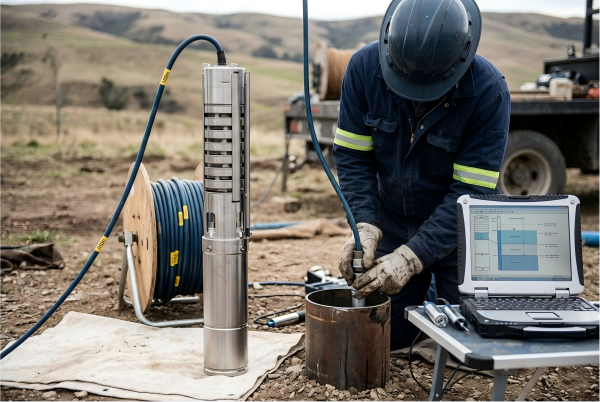
Submersible pumps are the best choice for deep boreholes. They are efficient and reliable, designed to push water up from significant depths without losing pressure.
Do I need a license to drill a borehole?
Yes, in most countries and regions, you need a permit or license from a local water authority before drilling. This ensures regulations on depth and location are followed.
How do you know where to drill for water?
Professionals use hydrogeological surveys, which analyze geological maps and data to identify underground aquifers. Traditional methods like dowsing are not scientifically reliable.
Can a borehole run dry?
Yes, a borehole can run dry if it is too shallow and the water table drops significantly during a drought, or if the aquifer is over-extracted by many users.