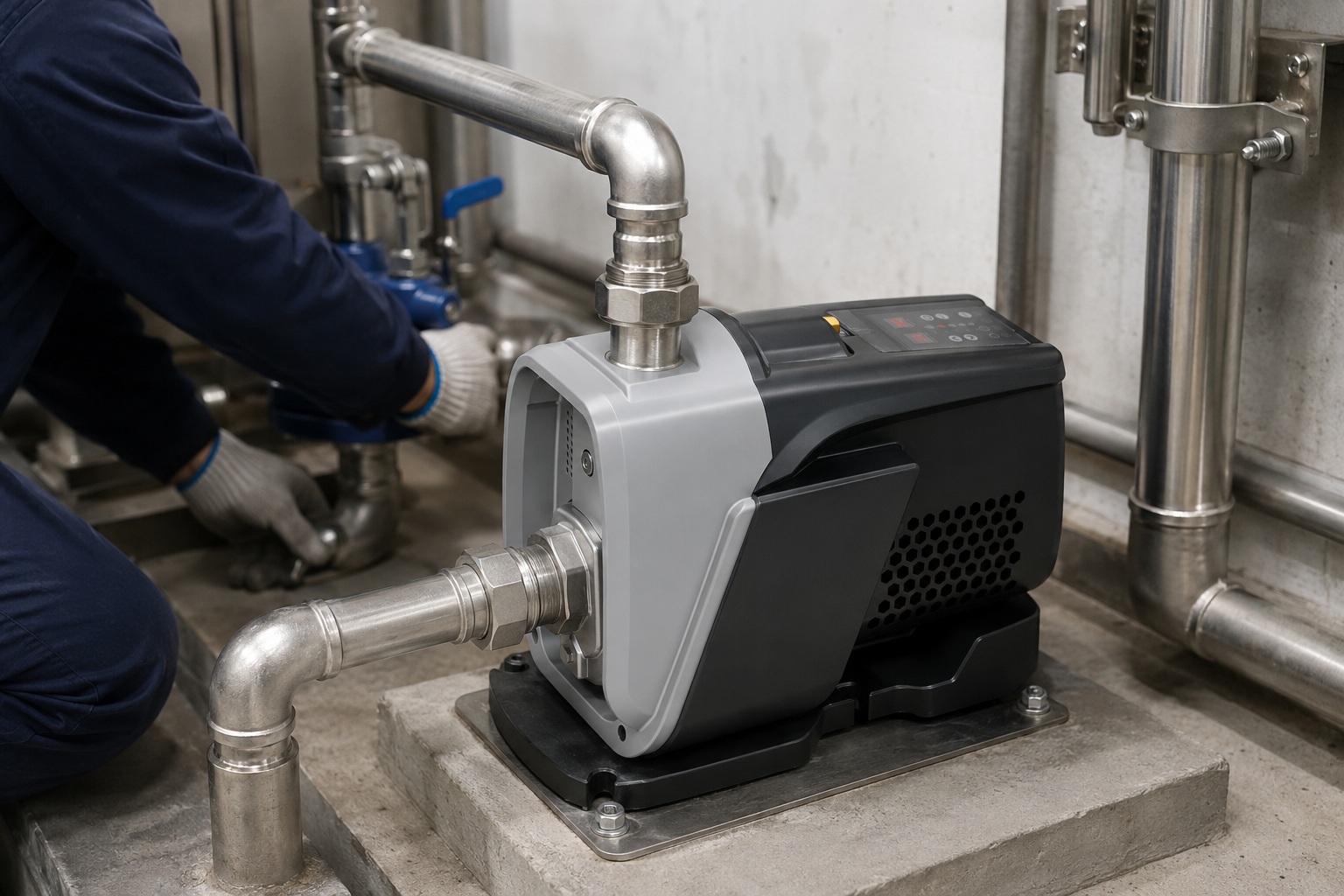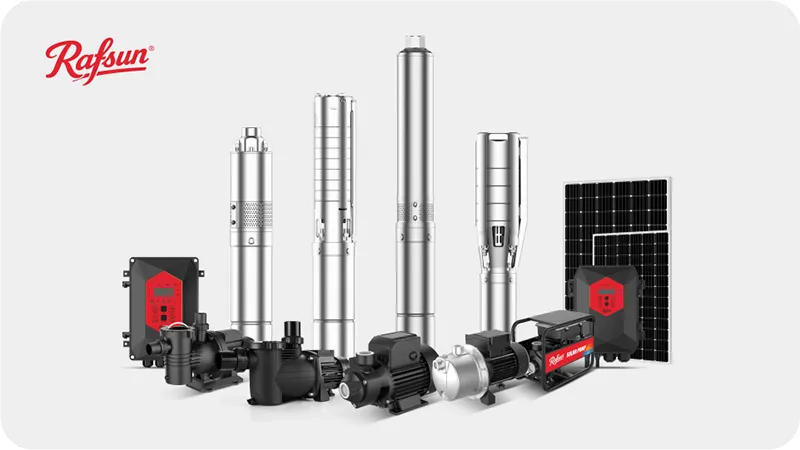
Struggling with pump failures? A dry-running borehole pump can lead to catastrophic damage and costly downtime. Protecting your equipment and your clients' water supply is crucial for business success.
Yes, a borehole pump can absolutely run dry. This occurs when the water level in the borehole drops below the pump's intake. Operating without water for lubrication and cooling causes rapid overheating, leading to severe mechanical damage, motor burnout, and ultimately, complete and costly pump failure.
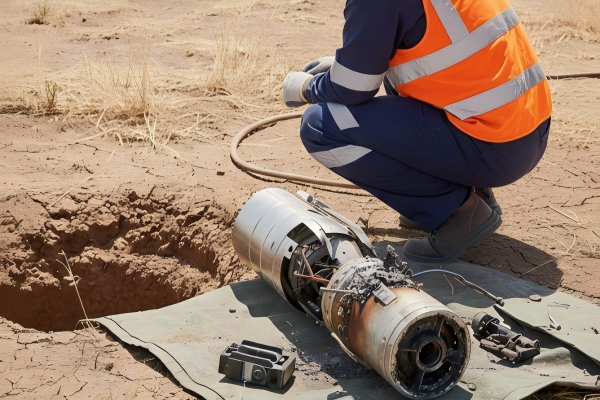
This is one of the most common and destructive issues faced by pump operators. But what exactly happens inside the pump during a dry-run event, and what are the tell-tale signs? Understanding the mechanics of the failure is the first step toward effective prevention. Let's explore the consequences and the smart solutions that keep your water flowing and your investments secure.
What Happens When a Borehole Pump Runs Dry?
Concerned about the hidden damage from a low water table? A pump that runs dry can self-destruct in minutes, causing irreversible harm long before anyone notices a problem.
When a borehole pump runs dry, it loses the water needed for cooling and lubrication. The internal components, particularly the impellers and bearings, experience rapid friction and heat buildup. This leads to component melting, shaft seizure, and catastrophic motor burnout, rendering the pump useless.
A borehole pump is a sophisticated piece of machinery designed to operate while fully submerged. Water is not just the medium it moves; it's an essential part of its operational environment. When that water disappears, a cascade of destructive events begins almost instantly. The consequences extend far beyond a simple shutdown.
The Chain Reaction of a Dry-Run Failure
The primary function of water inside a submersible pump is twofold: lubrication and cooling. Without it, friction becomes the dominant force. The pump's spinning impellers, which can rotate at over 3,000 RPM, are no longer moving water. Instead, they are spinning in air, creating intense friction against the diffuser chambers. This friction generates a massive amount of heat very quickly. Temperatures inside the pump can skyrocket from a normal operating range of 20-30°C to well over 150°C within minutes.
Internal Component Breakdown
This extreme heat is the main culprit behind the damage.
- Impellers and Diffusers: Most modern pump impellers are made from high-strength thermoplastics like Noryl or polycarbonate for efficiency and corrosion resistance. However, these materials have a melting point. When exposed to dry-run heat, they will soften, deform, and can even melt completely, fusing the pump's stages together into a solid block.
- Bearings and Shafts: The bearings that support the pump shaft rely on water for lubrication. Without it, metal-on-metal or ceramic-on-metal contact occurs, leading to rapid wear and seizure. The heat can also cause the pump shaft to warp or break under the stress.
The table below illustrates the rapid progression of damage during a dry-run event.
| Time Elapsed (Dry Running) | Internal Temperature | Component Status | Outcome |
|---|---|---|---|
| 0-30 Seconds | 50-80°C | Water lubrication is lost. Friction starts to build between moving parts. | Minor wear begins. The pump is still potentially salvageable. |
| 1-3 Minutes | 80-150°C | Thermoplastic impellers start to soften and deform. Bearings begin to scour. | Significant internal damage. Repair costs increase. |
| 3-5+ Minutes | >150°C | Impellers melt and fuse. The motor overheats and windings burn out. Shaft seizes. | Catastrophic failure. The pump is typically irreparable. |
Ultimately, this thermal stress travels to the electric motor. Although the motor is sealed, the heat conducted through the pump shaft will cause the motor's internal temperature to rise dangerously. This leads to the breakdown of the winding insulation, causing electrical shorts and complete motor burnout. Up to 75% of submersible motor failures can be attributed directly or indirectly to overheating, with dry running being a primary cause. Protecting a pump isn't just about the pump end; it's about saving the entire unit.
What are the Main Causes of a Pump Running Dry?
Tired of unexpected pump failures tied to water levels? Seasonal changes and high demand can deplete your well without warning, putting your pump at severe risk of dry running.
The primary causes of a pump running dry include drought or seasonal water table drops, over-pumping beyond the well's recharge rate, incorrect pump installation depth, or issues with the well itself, such as screen blockages or casing collapse, which restrict water flow to the pump.
Understanding the root cause of dry running is essential for implementing the correct preventative strategy. It's rarely a fault of the pump itself but rather an issue with the water source or system design. A properly diagnosed problem allows for a targeted solution, saving significant time and money on repeated pump replacements. Let’s break down the common culprits.
Environmental and Usage Factors
The most frequent reason for a pump to run dry is simply that there isn't enough water in the borehole to meet demand. This can be a temporary or a long-term problem.
- Aquifer Depletion: This is the most significant cause. Prolonged periods of drought can cause the static water level of the entire aquifer to drop. A pump that was once safely submerged may now be dangerously close to, or above, the water level. Similarly, seasonal variations can cause water tables in some regions to fluctuate by several meters between wet and dry seasons.
- Over-Pumping: A well has a "safe yield" or "recharge rate"—the maximum rate at which water can be pumped without permanently lowering the water level. If a pump's flow rate exceeds this, it creates a "drawdown" effect where the water level around the pump drops rapidly during operation. In systems with high demand, this can easily expose the pump intake, causing it to run dry. This accounts for an estimated 40% of dry-run incidents in agricultural and community water supply systems.
Installation and Well Integrity Issues
Sometimes, the problem lies not with the amount of water available, but with our ability to access it. Errors in system design and installation are common, avoidable causes of dry running.
Common Installation Mistakes
- Incorrect Pump Setting Depth: Setting the pump too high in the well casing is a frequent mistake. Installers might do this to save on the cost of piping and cable, but it leaves very little buffer if the water level drops. A general rule is to set the pump at least 5-10 meters below the lowest anticipated seasonal water level.
- Mismatched Pump and Well Yield: Installing a high-capacity pump in a low-yield well is a recipe for disaster. The pump will quickly evacuate the water in the casing, leading to frequent cycling and dry-run conditions. A proper well yield test is critical before selecting a pump.
Well Health Problems
Even a well with a healthy aquifer can cause a pump to run dry if the well structure itself is compromised.
- Clogged Well Screens: Over time, well screens can become encrusted with mineral deposits (scaling) or biofilm (bio-fouling). This physically blocks water from entering the well casing, starving the pump even when the surrounding aquifer is full. This can reduce water inflow by over 50% in just a few years.
- Well Casing Collapse: In older wells or unstable geological formations, the well casing itself can deform or collapse, restricting flow or trapping the pump.
Identifying the specific cause is paramount. Monitoring both the static water level (when the pump is off) and the dynamic water level (when the pump is running) can provide clear indicators of whether the issue is aquifer depletion, over-pumping, or a well integrity problem.
How to Protect Your Borehole Pump from Running Dry?
Searching for a foolproof way to prevent pump burnout? Relying on manual checks is risky and impractical. You need automated systems that protect your equipment 24/7 without intervention.
The most effective protection involves installing dedicated dry-run prevention devices. These include level probes that monitor the water table, flow switches that detect a lack of water discharge, and modern VFD controllers with built-in software that senses a no-load condition and shuts the pump down.
Investing in a new pump is a significant expense. Protecting that investment is not optional; it's a core part of responsible system design. Fortunately, there is a range of reliable technologies available to automatically safeguard a pump from dry-run damage. These solutions vary in complexity and cost, but any one of them is vastly cheaper than replacing a burned-out pump. Let's examine the most effective methods available to wholesalers and their clients.
Dedicated Hardware Solutions
These devices are specifically designed to monitor conditions indicative of a dry-running scenario and take immediate action.
- Level Probes/Switches: This is the most direct method. Two or three conductive probes are lowered into the borehole to set depths. One acts as a common reference, while the others are "stop" and "start" probes. When the water level drops below the "stop" probe, the circuit is broken, and a control panel shuts off the pump. When the water level rises back to the "start" probe, the pump is allowed to restart. This method is highly reliable and prevents "chattering," or rapid on-off cycling.
- Flow Switches: Installed on the discharge pipe, a flow switch monitors the actual flow of water out of the pump. If the flow drops below a safe minimum threshold (or stops entirely), the switch signals the controller to shut down the pump. This protects not only against a dry well but also against a blocked pipe or a closed valve, which can cause similar damage.
Motor and Controller-Based Protection
Modern pump controllers offer sophisticated, built-in protection that doesn't always require extra sensors in the well.
- Under-Load Protection: A pump motor's power consumption (measured in amps or watts) is directly related to the work it's doing. Pumping water requires a certain amount of energy. When a pump runs dry, it's no longer moving a heavy column of water, and the load on the motor drops significantly. Advanced controllers and Variable Frequency Drives (VFDs) can monitor this. If the power draw falls below a pre-set "under-load" threshold for a specified time, the controller interprets this as a dry-run event and safely shuts down the pump. This method protects the pump without the need for down-hole wiring. Our VSD pumps at RAFSUN, for example, incorporate under-load protection that can react in under 5 seconds, preventing damage before it starts.
The table below compares these popular protection methods.
| Protection Method | How It Works | Pros | Cons |
|---|---|---|---|
| Level Probes | Directly senses the physical water level in the borehole. | Most direct and reliable method; not affected by pump characteristics. | Requires extra cables running into the well; probes can get fouled. |
| Flow Switch | Senses the actual flow of water in the discharge pipe. | Protects against dry well and blockages; easy to install on surface. | Can be prone to failure in water with high sediment. |
| Under-Load Monitoring | Senses the drop in motor power consumption when the pump is not moving water. | No extra sensors or wires in the well; integrated into modern controllers. | Requires careful calibration; may not work on very small pumps. |
For B2B importers like Andrew, offering pumps with integrated VFD-based protection is a major value-add. It provides your customers with an all-in-one, highly reliable solution that is easier to install and markets as a premium, "intelligent" product. This technology can reduce callback rates for installation errors and premature failures by up to 60%.
Choosing the Right Pump: The Role of Technology in Dry-Run Prevention?
Do you want to offer your clients more than just a pump? Selling a complete, intelligent water system with built-in protection differentiates your brand and builds trust in your products.
Modern Variable Frequency Drive (VFD) pumps are the best choice for built-in protection. Their intelligent controllers constantly monitor power load. If the pump runs dry, the load plummets, and the VFD automatically shuts the pump off, preventing damage without any external sensors.
Simply selling a standalone pump is no longer enough in a competitive market. Clients expect reliable, efficient, and "smart" systems. The technology inside the pump, particularly in its controller, plays the most critical role in its longevity and protection against common failure modes like dry running. As a supplier, guiding your clients toward technologically superior options is key to building a reputation for quality.
The Superiority of VFD/VSD Technology
Variable Frequency Drives (VFDs), also known as Variable Speed Drives (VSDs), are the pinnacle of modern pump control. A VFD doesn't just turn a pump on and off; it precisely controls the motor's speed. This capability unlocks a host of benefits, including superior dry-run protection.
How VFDs Provide Integrated Protection
As we discussed earlier, VFDs use under-load sensing. But their intelligence goes further.
- Smart Algorithms: Unlike a simple relay, a VFD uses a microprocessor. It can be programmed with sophisticated algorithms. For instance, if it detects an under-load condition, it won’t just stop. It can enter a "search mode"—waiting for a programmed period (e.g., 30 minutes) and then attempting a soft restart to see if the well has recovered. This automated recovery reduces system downtime without risking pump damage.
- Parameter Monitoring: VFD controllers like those on RAFSUN pumps monitor multiple parameters in real-time. This includes voltage, current (amps), power (watts), and frequency. An anomaly in any of these can indicate a problem. This multi-faceted monitoring provides a more reliable picture than a single sensor.
Comparison: Standard vs. VFD Pumps
| Feature | Standard Fixed-Speed Pump | RAFSUN VFD Pump |
|---|---|---|
| Dry-Run Protection | None included. Requires external probes or relays. | Built-in via intelligent under-load and power monitoring. No external sensors needed. |
| Energy Efficiency | Runs at 100% speed at all times. High energy consumption. | Adjusts speed to match demand. Reduces energy use by 30-60%. |
| System Pressure | High pressure fluctuations. Requires large pressure tank. | Maintains constant pressure regardless of flow. Improves user experience. |
| Motor Start | High inrush current (5-8x normal). Stresses motor/grid. | Soft-start functionality. No current surge, extending motor life by up to 50%. |
| Overall Value | Lower initial cost. | Higher initial cost but lower lifetime TCO (Total Cost of Ownership) due to energy savings and protection. |
For a distributor, the benefits are clear. Offering VFD pumps positions your brand as a technology leader. It reduces post-sale support issues related to improper protection setup, as the protection is already integrated. It also opens up conversations about energy efficiency and system performance, moving the sales pitch from price to value. At RAFSUN, our 100+ technical patents in intelligent VFD technology are a testament to our commitment to providing these advanced, reliable solutions to our global partners.
Conclusion
A borehole pump running dry leads to certain failure. However, this is entirely preventable with the right knowledge and technology, ensuring system longevity and protecting your valuable investment effectively.
FAQs
What are the first signs of a pump running dry?
The most immediate sign is a loss of water pressure or flow at the outlet. You might also hear unusual noises from the pump or see sputtering from the taps.
How long can a submersible pump run dry before damage?
Damage begins within seconds. Significant, often irreversible damage like impeller melting or bearing seizure can occur in as little as 60-90 seconds of dry operation.
Can a dry pump be repaired?
It depends on the extent of the damage. Minor damage may be repairable, but catastrophic failure from severe overheating usually means the entire pump and motor unit must be replaced.
How do you test for dry-run protection?
You can test level probes by lifting them out of the water. For flow switches or VFDs, you can slowly close a valve on the discharge line to simulate a no-flow condition.
Is dry-run protection standard on all pumps?
No, it is not. It is a feature that must be added with external devices or is found integrated into modern, intelligent pump controllers like VFDs. Always verify its inclusion.
What is well drawdown and how does it relate to dry running?
Drawdown is the drop in water level inside the well caused by pumping. Excessive drawdown, where the level drops to the pump's intake, is a direct cause of dry running.
Does a VFD pump use more electricity?
No, a VFD pump uses significantly less electricity. By adjusting its speed to match water demand, it can reduce energy consumption by 30-60% compared to a fixed-speed pump.
How deep should a borehole pump be installed?
A pump should be installed well below the lowest anticipated water level (pumping water level). A common rule of thumb is at least 5-10 meters below this dynamic level for a safety margin.