Choosing the wrong irrigation pump can waste water, energy, and money.
You need a system that performs reliably without failing under pressure.
This guide simplifies the technical details, ensuring you select the perfect pump for your needs.
To size an irrigation pump, you must calculate two key figures: Total Dynamic Head (TDH), which is the total pressure required, and the desired Flow Rate in gallons per minute (GPM) or cubic meters per hour (m³/h). These values dictate the necessary pump horsepower (HP) and performance curve.
Selecting the right pump is a critical business decision.
It directly impacts operational efficiency and long-term profitability for your clients.
A mismatched pump leads to costly callbacks, damaged crops, and a tarnished reputation.
Conversely, getting it right establishes you as a trusted expert, securing repeat business and referrals.
This article breaks down the essential calculations into manageable steps.
We will guide you through understanding flow rate, pressure, and the other variables that lead to a perfect pump selection.
Let's ensure you have the knowledge to advise your customers with absolute confidence.
Understanding the Core Factors: Flow Rate and Pressure
Struggling to explain pump specs to your clients?
Technical jargon can confuse even experienced buyers, leading to poor purchasing decisions.
Mastering the two foundational pillars of pump selection—flow rate and pressure—will make you the expert they trust.
Flow rate, measured in GPM or m³/h, is the volume of water the pump moves in a set time. Pressure, measured in PSI or bar, is the force needed to move that water. You must match both to the specific requirements of the irrigation system for optimal performance.
Think of flow rate and pressure as the two most important dials you need to set correctly.
Getting them wrong is not an option in commercial or agricultural irrigation.
It’s the difference between a thriving field and a failed crop, a satisfied customer and a costly problem.
What is Flow Rate (Q)?
Flow rate is the volume of water your pump can deliver over a specific period.
It's often expressed as Gallons Per Minute (GPM) or cubic meters per hour (m³/h).
The required flow rate depends entirely on the size of the area you need to irrigate and the type of irrigation method used.
For example, drip irrigation systems for a small orchard might only need 10-20 GPM.
In contrast, a center pivot system irrigating a 100-acre field could require over 1,000 GPM.
You must accurately determine the total water demand of all sprinklers or emitters that will operate simultaneously.
This total demand is the minimum flow rate your pump must be able to provide.
Underestimating the flow rate results in dry spots and unhealthy crops, as the system cannot deliver water to the furthest points effectively.
It's a common mistake that leads to poor system performance and dissatisfaction.
What is Pressure (H)?
Pressure is the force that moves the water through the pipes and out of the sprinklers.
In pump terminology, we often talk about "head," which is a way to measure pressure.
Total Dynamic Head (TDH) is the total equivalent pressure the pump must generate.
This pressure needs to overcome several forces:
- Static Head: The vertical distance the water must be lifted.
- Friction Loss: The pressure lost due to friction as water moves through pipes, valves, and fittings.
- Operating Pressure: The pressure required at the sprinkler head itself to function correctly.
For instance, a typical agricultural sprinkler might need 40-60 PSI (Pounds per Square Inch) to operate as designed.
If a pump can't provide this required pressure, you will see poor water distribution, reduced spray distance, and inefficient watering.
The relationship between flow and pressure is critical.
As you demand more flow from a pump, its ability to produce pressure typically decreases.
This is shown on a pump's performance curve.
Choosing a pump means finding one whose performance curve has a "best efficiency point" (BEP) that closely matches your system's required flow rate and pressure. Operating at the BEP ensures lower energy consumption, reduced wear, and a longer pump lifespan, with studies showing it can improve energy efficiency by 10-15%.
Calculating Your Total Dynamic Head (TDH)
Miscalculating pressure requirements is a frequent and costly error.
This mistake leads to ordering a pump that is either too weak to do the job or so powerful it wastes energy and money.
Let's break down how to accurately calculate the Total Dynamic Head (TDH) your system demands.
To calculate Total Dynamic Head (TDH), you must sum three values: the total vertical lift (Static Head), the pressure lost to friction in the pipes (Friction Loss), and the operating pressure required at the sprinklers. An accurate TDH calculation is non-negotiable for proper pump sizing.
This calculation is the blueprint for your pump's power requirement.
It’s a technical step, but it’s straightforward when you take it component by component.
TDH is measured in feet or meters, and it represents the total work the pump has to do.
Getting this number right ensures the water gets where it needs to go with the force required for proper irrigation.
A pump that can't meet the TDH will fail to deliver water effectively, especially to higher elevations or the end of long pipe runs.
Let’s detail each component to ensure your calculation is precise.
Step 1: Determine Static Head
Static Head is the simplest part of the TDH equation.
It is the total vertical distance in feet or meters that you need to lift the water.
It is not the length of the pipe.
It's purely the change in elevation.
This is comprised of two parts:
- Static Lift Head: The vertical distance from the surface of the water source (like a well, river, or pond) up to the centerline of the pump.
- Static Discharge Head: The vertical distance from the pump's centerline up to the highest point in the discharge pipe or the highest sprinkler head.
Total Static Head = Static Lift Head + Static Discharge Head
For example, if your pump is 10 feet above the well's water level and the highest sprinkler is another 25 feet above the pump, your Total Static Head is 35 feet.
This measurement is crucial and must be accurate.
Using a laser level or GPS can provide precision down to the inch, eliminating guesswork.
Step 2: Calculate Friction Loss
Friction Loss is the pressure lost as water moves through the irrigation system.
Every pipe, elbow, valve, and fitting creates resistance, which the pump must overcome.
This is often the most underestimated component of TDH.
Several factors influence friction loss:
- Pipe Diameter: Smaller pipes cause significantly more friction loss for the same flow rate. Doubling pipe diameter can reduce friction loss by a factor of 16.
- Pipe Length: The longer the pipe, the greater the total friction loss.
- Flow Rate: Higher flow rates drastically increase friction.
- Pipe Material: Rougher pipe interiors (like old iron pipe) create more friction than smooth PVC or HDPE pipes.
You can use friction loss charts to determine the pressure loss per 100 feet of a specific pipe size and material at your target flow rate.
| Pipe Diameter (PVC) | Flow Rate (GPM) | Friction Loss (Feet of Head per 100ft) |
|---|---|---|
| 2-inch | 50 | 4.62 |
| 3-inch | 50 | 0.67 |
| 4-inch | 100 | 1.17 |
| 6-inch | 100 | 0.16 |
Don't forget to add the "equivalent length" for all fittings like elbows and valves, as each one adds to the total friction.
Step 3: Add Required Operating Pressure
Finally, you must account for the pressure required at the point of use.
The sprinklers or emitters themselves need a certain pressure to function correctly.
This information is provided by the manufacturer of the irrigation equipment.
A typical agricultural rotor might require 50 PSI at the head.
You need to convert this PSI value into feet of head to add it to your TDH calculation.
The conversion is simple:
1 PSI = 2.31 Feet of Head
So, a 50 PSI requirement equals 115.5 feet of head (50 * 2.31).
Now, you can calculate the final TDH:
TDH (in feet) = Total Static Head + Total Friction Loss + Required Operating Pressure (in feet).
This final number is one of the two critical values you'll use to select a pump from a manufacturer's performance chart.
Determining Your Required Flow Rate (GPM)
Choosing a pump with the wrong flow rate is like installing the wrong size engine in a car.
The system will either be underpowered and fail to perform, or overpowered and inefficient.
Let's define exactly how to calculate the correct flow rate for any irrigation project.
Calculate your required flow rate by determining the total water demand of all irrigation emitters (sprinklers, drippers) that will run at the same time. This total, in GPM or m³/h, represents the minimum flow your pump must reliably deliver to ensure complete and even water coverage.
This calculation ensures every part of the field or landscape receives the water it needs.
It moves you from guessing to a data-backed decision.
The goal is to deliver water efficiently and uniformly.
To do this, you need to think about the system as a whole, not just individual sprinklers.
The pump is the heart of the system, and its output must match the total demand of the network it serves.
This involves a few key considerations depending on the type and scale of the irrigation being planned.
Let's look at how to approach this for different scenarios.
Step 1: Calculate Total Area and Water Needs
First, determine the total area that needs to be irrigated.
This is a simple length times width calculation for square or rectangular areas.
For irregular shapes, break them down into smaller, manageable geometric sections.
Next, determine the water application rate required.
This depends on factors like:
- Plant Type: Vegetables may require more frequent watering than established turf.
- Soil Type: Sandy soils drain quickly and need more water than clay soils.
- Climate: Hot, windy climates have higher evaporation rates, increasing water demand by up to 25-30%.
A general rule of thumb for many regions is to apply about 1 inch of water per week.
To convert this into gallons, use the following formula:
Gallons Needed = Area (in square feet) x 0.623
This tells you how many gallons are needed to apply 1 inch of water over that specific area.
Step 2: Account for Emitter and Zone Layout
No irrigation system runs all its sprinklers at once.
It is divided into zones.
You need to calculate the flow rate for the single zone with the highest demand.
The pump only needs to be large enough to power one zone at a time.
To do this:
- List all emitters in a single zone. Identify every sprinkler head, drip emitter, or sprayer.
- Find the flow rate of each emitter. The manufacturer provides this data. A spray head might use 1.5 GPM, while a rotor might use 8 GPM.
- Sum the flow rates. Add up the GPM for all emitters in that zone.
Example Zone Calculation:
| Emitter Type | Quantity | Flow Rate per Emitter (GPM) | Total Flow (GPM) |
|---|---|---|---|
| Rotor Head A | 5 | 8.0 | 40.0 |
| Spray Head B | 10 | 1.5 | 15.0 |
| Total | 15 | 55.0 |
In this example, the required flow rate for this zone is 55 GPM.
You must repeat this calculation for every zone in your system.
The zone with the highest total GPM determines the minimum flow rate your pump must be able to produce.
Let's say Zone 1 requires 55 GPM, Zone 2 requires 48 GPM, and Zone 3 requires 62 GPM.
Your pump must be sized for the highest demand, which is 62 GPM.
Choosing a pump with a lower flow rate would mean Zone 3 is under-watered and will not perform as designed.
Assessing Your Power Source and Pump Type
You've calculated TDH and GPM, but one crucial question remains.
How will you power the pump, and which type is best for the job?
Making the wrong choice here can lead to high energy bills or a pump that's unsuitable for the location.
Your available power source—whether single-phase, three-phase, or solar—is the primary factor in choosing a pump type. This choice directly impacts cost, efficiency, and long-term reliability. For example, VSD pumps offer immense energy savings but require a compatible power supply.
This decision bridges the gap between your theoretical calculations and a practical, working installation.
The power source available on-site is a hard constraint you must work within.
It dictates which pump technologies are on the table.
For large-scale agricultural operations, three-phase power is often the standard due to its efficiency with high-horsepower motors.
For remote locations, solar becomes an increasingly viable and cost-effective solution, with operational costs near zero after installation.
Let's explore the most common options to help you align pump technology with your power reality.
Power Source Options
The power available at the pump's location is your first filter.
- Single-Phase Power: Common in residential and small commercial settings (e.g., 110V/220V). It can typically power pumps up to about 5-7.5 HP. It's accessible but less efficient for larger motors.
- Three-Phase Power: The standard for industrial and an agricultural applications (e.g., 208V/480V). It is more efficient for running motors above 5 HP, resulting in lower operating costs and longer motor life. If available, it is almost always the preferred choice for serious irrigation.
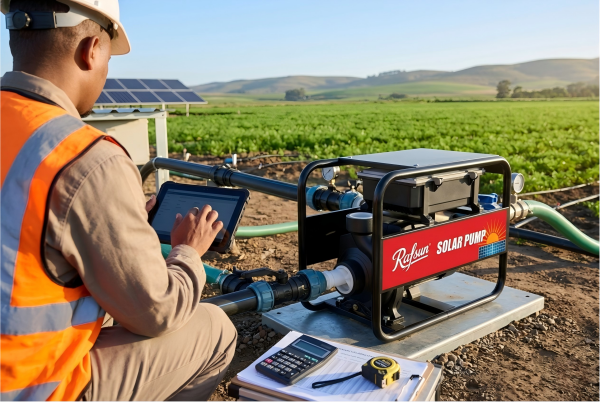
- Solar Power: An excellent option for off-grid or remote locations where running power lines is prohibitively expensive. The initial investment is higher, but there are zero energy costs. Solar pump systems are designed to work during the day when the sun is out, which often aligns perfectly with irrigation needs. Modern systems can achieve over 98% MPPT (Maximum Power Point Tracking) efficiency.
- Engine-Driven: Gasoline or diesel engines provide portability and are useful for temporary setups or where no electrical source exists. They have higher running costs and maintenance needs.
Common Irrigation Pump Types
With a power source identified, you can select the right type of pump.
- Centrifugal Pumps: These are the most common type for irrigation. They are mounted on the surface and "pull" water from a source like a pond, tank, or shallow well. They are reliable and cost-effective but can lose their prime if air gets into the suction line.
- Submersible Pumps: These pumps are placed directly into the water source, typically a deep well. Because they are submerged, they don't need priming and are very efficient at pushing water up from great depths. They are ideal for deep well and borehole applications.
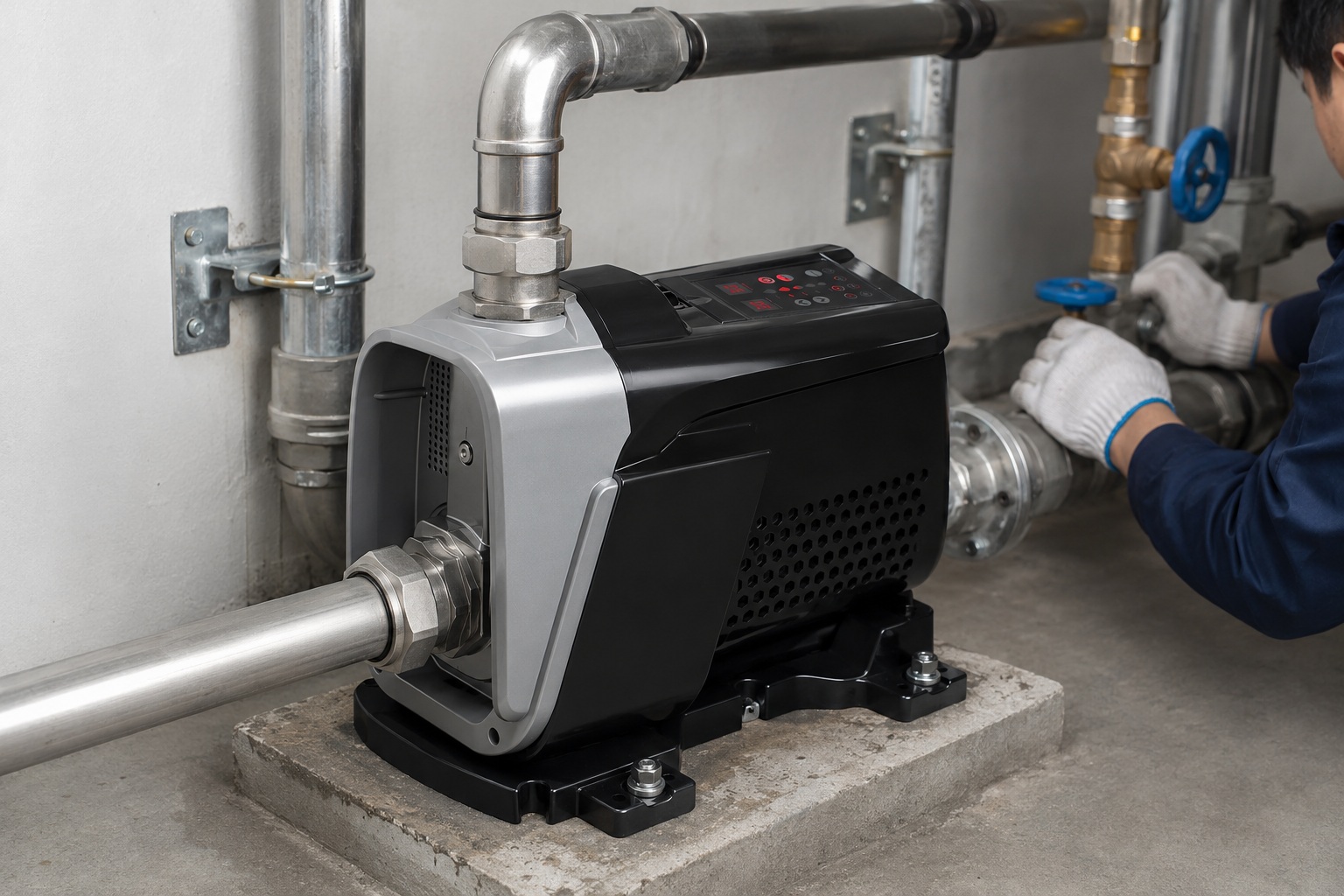
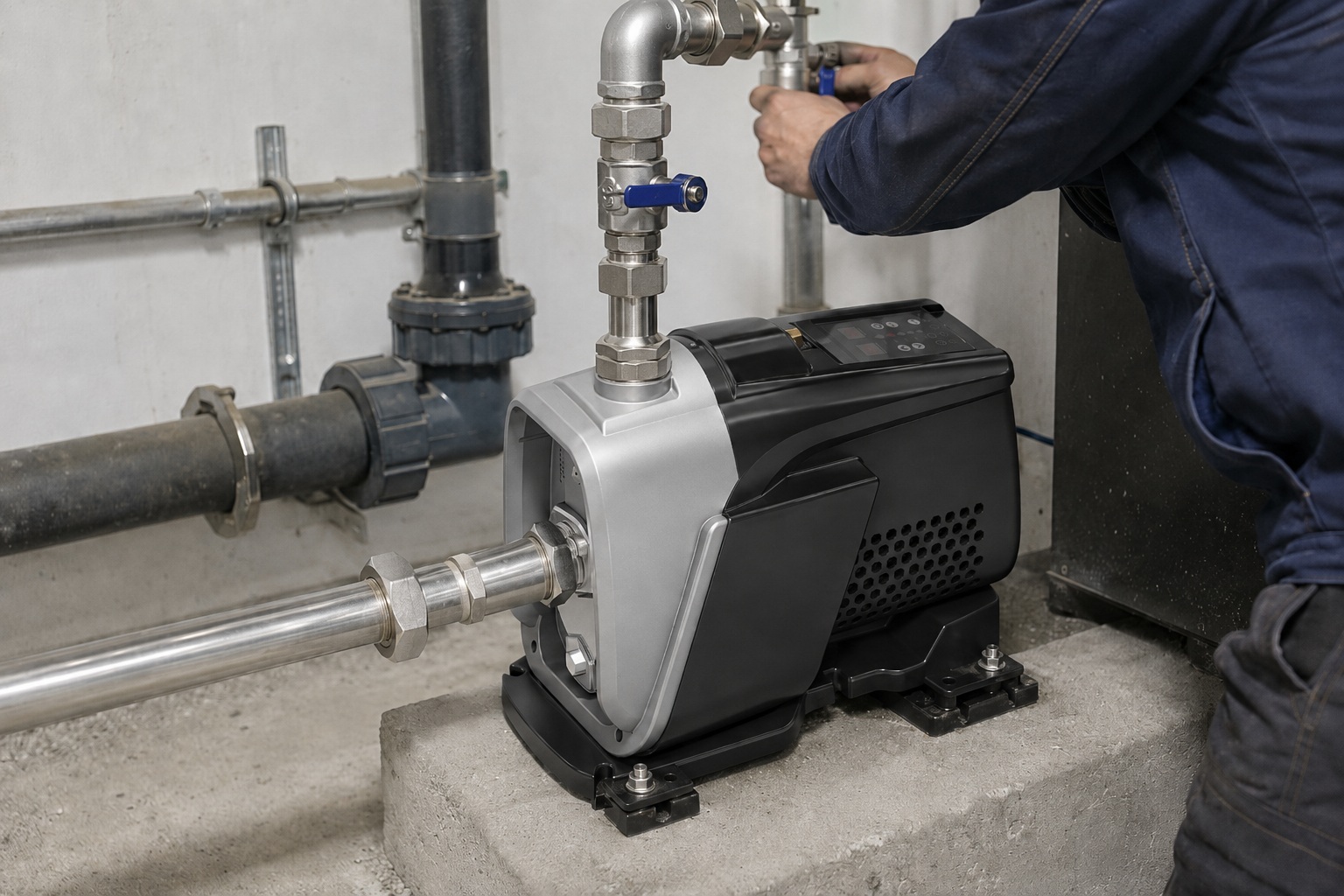
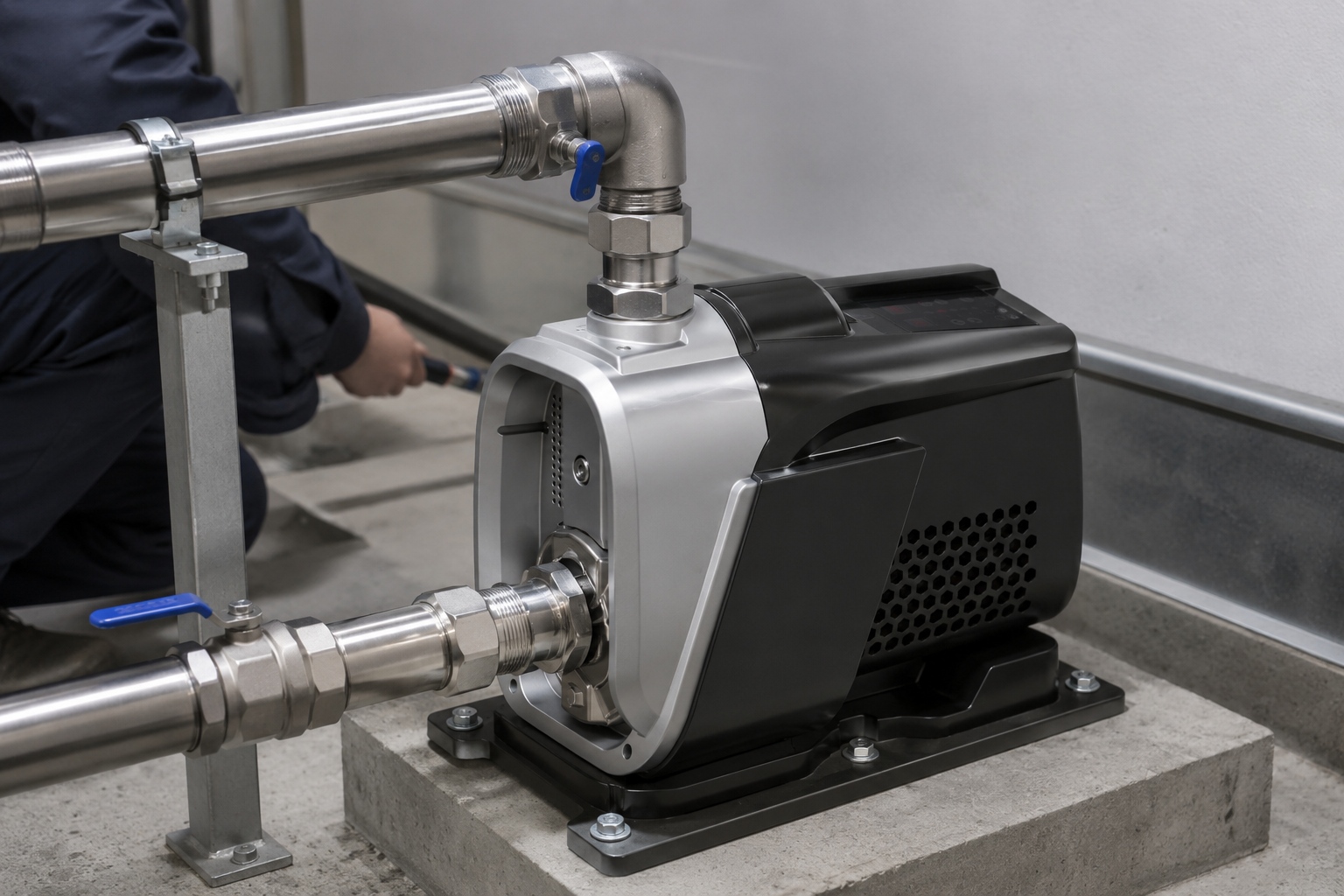
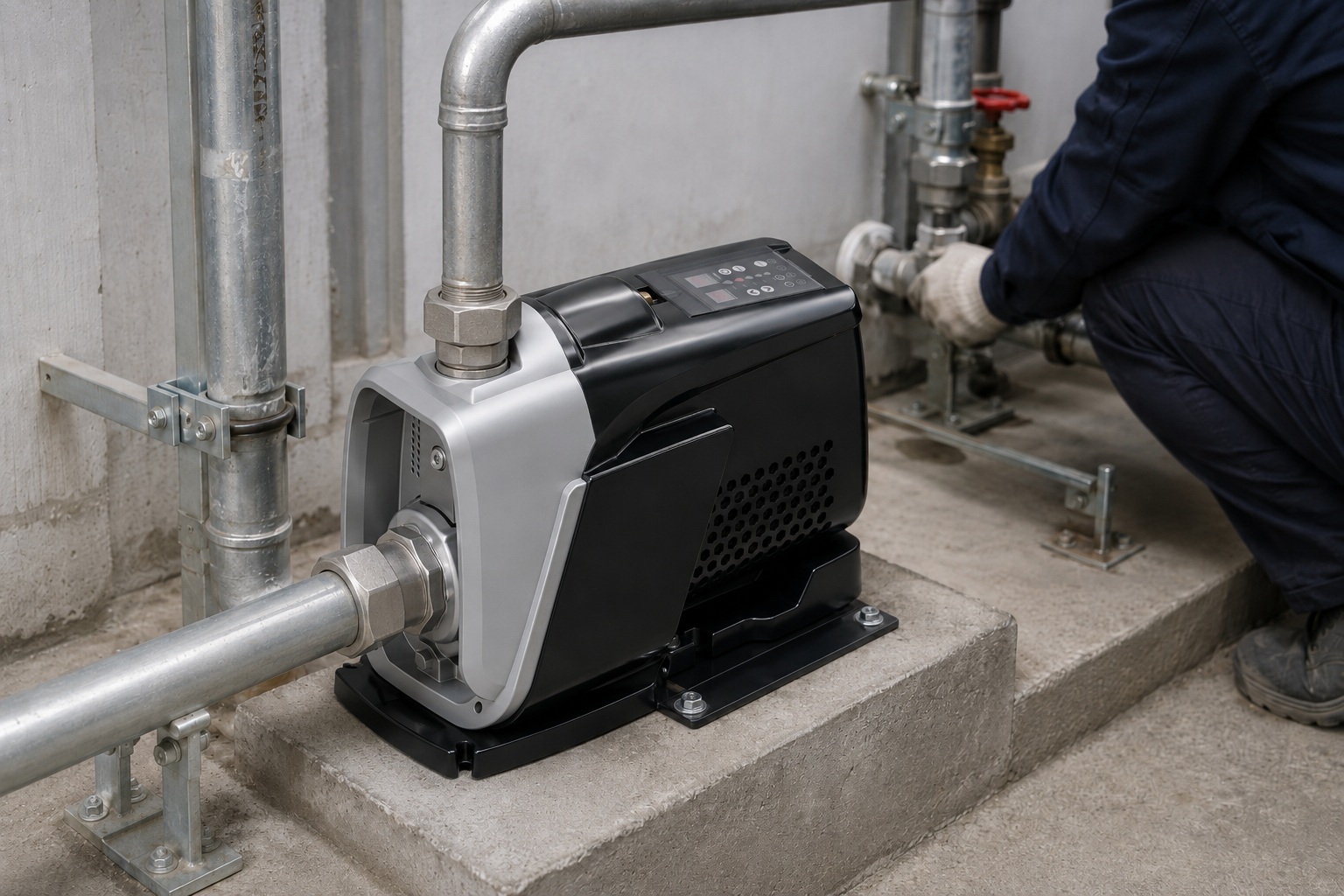
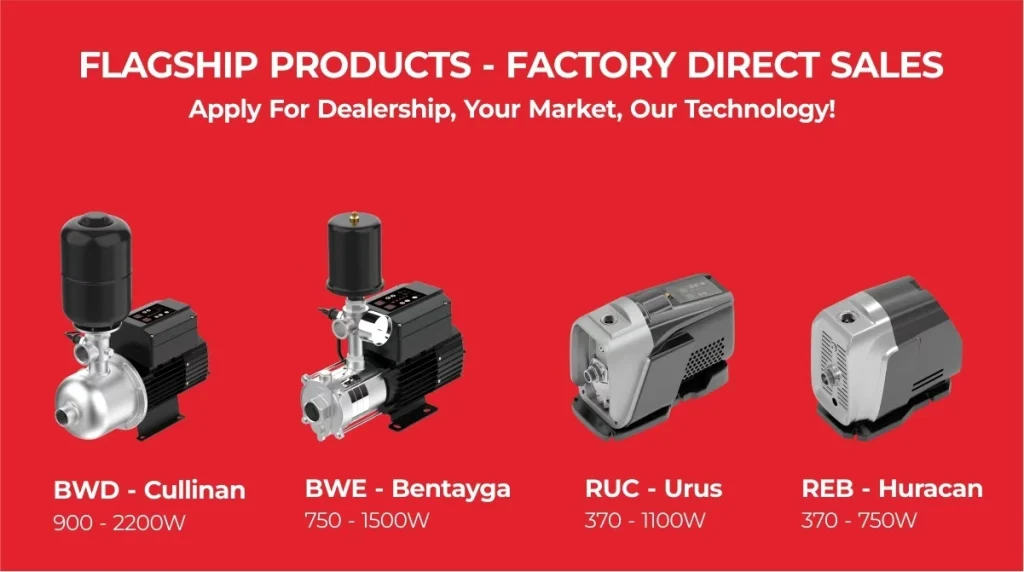
- Variable Speed Drive (VSD) Pumps: Also known as variable frequency drive (VFD) pumps, these are the most advanced option. A VSD pump can adjust its motor speed to precisely match the system's demand for flow and pressure. This results in massive energy savings, often between 30-50% compared to a fixed-speed pump. They also provide a "soft start," which reduces mechanical stress and extends the life of the entire system. Our intelligent permanent magnet variable frequency pumps utilize this technology to offer superior performance and efficiency. They represent the leading edge in water management technology.
Factoring in Efficiency and Future Needs
You've determined your core requirements, but smart procurement goes a step further.
Simply meeting today's needs can be a shortsighted strategy, leading to a system that's obsolete in a few years.
Planning for efficiency and future expansion protects your investment and delivers long-term value.
Always select a pump that operates near its Best Efficiency Point (BEP) for your calculated TDH and flow rate. Also, consider potential future expansion. Sizing a pump with a 10-15% margin for future capacity can prevent the need for a costly replacement down the line.
This final check ensures you're not just buying a pump, but investing in a solution.
Operating a pump away from its BEP wastes significant amounts of energy.
This directly translates to higher electricity bills for the end-user.
Furthermore, agricultural and commercial needs are rarely static.
The client might want to expand their irrigated area or switch to a different crop with higher water demands in a few years.
A pump that is maxed out from day one leaves no room for growth.
Let's discuss how to incorporate these strategic considerations into your final selection.
The Importance of the Best Efficiency Point (BEP)
Every centrifugal pump has a performance curve provided by the manufacturer.
This curve shows the relationship between flow rate (GPM) and head (pressure).
Somewhere on this curve is the Best Efficiency Point (BEP).
The BEP is the point where the pump is moving the most water for the least amount of energy.
Your goal is to select a pump where your system's requirement (your calculated TDH and GPM) falls as close as possible to the pump's BEP.
Operating far from the BEP has several negative consequences:
- Wasted Energy: Efficiency drops off sharply on either side of the BEP. A pump running at 50% efficiency instead of a possible 75% is wasting a third of its energy.
- Increased Vibration and Noise: Off-BEP operation leads to hydraulic instability, causing vibration that damages bearings and seals.
- Reduced Lifespan: The increased stress and wear from running off-BEP can significantly shorten the pump's operational life, leading to premature failure.
When you, as a distributor, can show a client a pump curve and explain how your recommended model places their system right in the efficiency sweet spot, you demonstrate a higher level of expertise.
Planning for the Future
Business needs evolve.
A farm might acquire an adjacent plot of land.
A commercial development might add a new wing.
If the irrigation system was designed with zero margin, any expansion requires a completely new, larger pump.
This is a significant and often unexpected expense for the owner.
A far more strategic approach is to build in a modest capacity for growth.
Here’s a practical way to do it:
- Calculate Current Needs: Determine the TDH and GPM for the system as it will be installed today.
- Discuss Future Plans: Ask the client about their plans for the next 5-10 years. Is expansion likely?
- Add a Safety Margin: If future growth is possible, consider sizing the pump for a 10-15% higher flow rate.
- Select the Pump: Choose a pump that operates efficiently at the current duty point but can also handle the future increased demand without being pushed too far from its BEP.
A VSD pump is exceptionally well-suited for this.
It can run at a lower speed to meet today's needs with maximum efficiency, and then its speed can be increased later to meet a higher demand.
This flexibility is a powerful selling point that justifies the initial investment in higher-end technology.
It positions the purchase not as a cost, but as a future-proof platform for growth.
Conclusion
Choosing the right irrigation pump comes down to a few key calculations.
Accurately determining your Total Dynamic Head and required Flow Rate is essential.
This ensures you select a pump that is both powerful and efficient.
FAQs
How do I calculate the horsepower for an irrigation pump?
Horsepower depends on flow rate (GPM) and total dynamic head (TDH).
Use the formula: HP = (GPM TDH) / (3960 Pump Efficiency).
Can I use a bigger pump than I need?
Oversizing a pump is inefficient.
It wastes energy, increases wear, and can damage your irrigation system through excessive pressure. It is not recommended.
How far can a 1 HP pump push water?
This depends on flow rate and pipe size, not just horsepower.
A 1 HP pump might push 20 GPM a few hundred feet, but only 5 GPM over a thousand feet.
What size pump do I need for 1 acre of irrigation?
It depends on the irrigation type.
Drip irrigation for 1 acre might only need 10-15 GPM, while sprinklers could require 20-30 GPM or more.
Does a longer pipe need a bigger pump?
Yes.
A longer pipe increases friction loss, which raises the Total Dynamic Head (TDH).
A bigger or higher-pressure pump is needed to overcome this.
How do I choose between a submersible and a centrifugal pump?
Use a submersible pump for deep wells.
Use a surface centrifugal pump for drawing water from sources like ponds, tanks, or shallow wells.
What are the benefits of a VSD (Variable Speed Drive) pump?
VSD pumps save 30-50% on energy by matching speed to demand.
They also reduce mechanical stress, providing a soft start and extending pump life.
How does pipe size affect pump performance?
Using a pipe that is too small drastically increases friction loss.
This forces the pump to work harder, reduces flow, and wastes a lot of energy.