Are you trying to move fluids efficiently?
High energy costs can hurt your operations.
Poor performance often plagues many systems.
Understanding the core principle of pumps is the solution.
It helps you optimize fluid transfer.
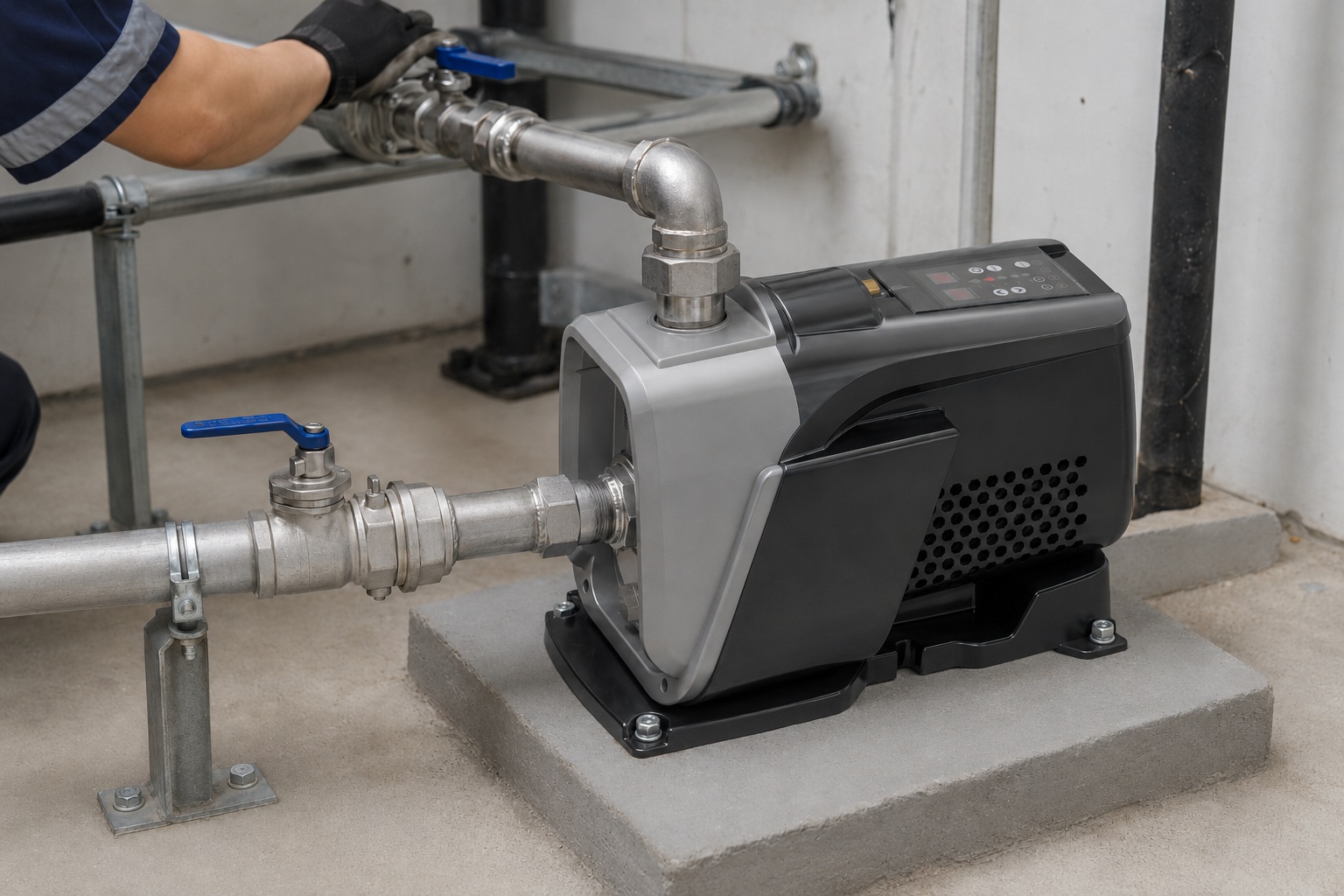
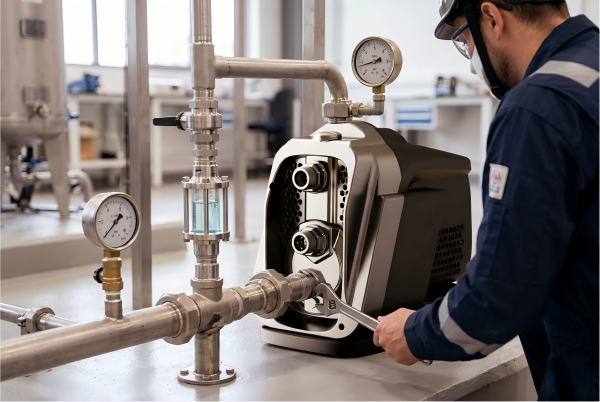
A pump’s primary principle is to move a fluid. It does this by creating a pressure difference. The pump uses mechanical action to do its work. It pushes or pulls liquid from a low-pressure area. It moves it to a high-pressure area. This action converts mechanical energy into hydraulic energy.
This simple concept powers countless applications.
But how does this pressure difference actually happen?
Let’s explore the main families of pumps.
We will look at the clever physics they use.
This knowledge helps you get the job done right.
The Core Concept: How Pumps Create Flow
Struggling with inconsistent fluid movement in your systems?
This can lead to unpredictable results and costly downtime.
Mastering the basic principle of pressure differential is key to reliable flow.
At its heart, a pump works by creating a low-pressure zone at its inlet. This allows atmospheric pressure or head pressure to push fluid in. The pump then creates a high-pressure zone at its outlet. This forces the fluid out into the system, overcoming pipe friction and gravity.
The idea of a pressure differential is fundamental.
You cannot move fluid without it.
Think of it like a hill.
Water naturally flows from a high point to a low point.
A pump creates an "uphill" push.
It artificially creates that high point.
The pump is an energy conversion machine.
It takes one form of energy and changes it into another.
Typically, an electric motor provides rotational energy.
This is mechanical energy.
The pump’s internal components convert this into fluid energy.
Fluid energy has two main components.
Understanding Fluid Energy
Kinetic Energy is the energy of motion.
Fluid moving at a higher speed has more kinetic energy.
Potential Energy is stored energy.
In pumps, this is usually in the form of pressure.
Higher pressure means more potential energy.
A pump’s job is to increase the total energy of the fluid.
This increased energy is what we call "head".
It allows the fluid to travel higher, farther, or faster.
The Role of Atmospheric Pressure
Pumps do not "suck" water in the way we think.
This is a common misconception.
Instead, the pump’s action removes air from the inlet line.
This creates a partial vacuum, or an area of very low pressure.
The surrounding atmospheric pressure is now much higher.
This higher external pressure pushes the fluid into the pump’s inlet.
The maximum height a pump can "lift" water on its suction side is limited by atmospheric pressure.
At sea level, this is theoretically about 10.3 meters (34 feet).
In practice, factors like friction and vapor pressure reduce this to around 7.6 meters (25 feet).
| Factor | Description | Impact on Pump Suction |
|---|---|---|
| Atmospheric Pressure | The weight of the air pressing down on the fluid source. | The primary force that pushes fluid into the pump’s inlet. |
| Vapor Pressure | The pressure at which a liquid turns into a vapor at a given temperature. | If inlet pressure drops below vapor pressure, cavitation occurs, which damages the pump. |
| Friction Loss | Energy lost due to fluid rubbing against the pipe walls. | Reduces the available pressure to push fluid into the pump. |
| Static Lift | The vertical distance the fluid must be lifted to reach the pump inlet. | Directly opposes the atmospheric pressure pushing the fluid in. |
Understanding these basic physics is non-negotiable.
It forms the foundation for designing any effective fluid handling system.
It allows you to troubleshoot problems like a professional.
Without this knowledge, you are simply guessing.
Dynamic Pumps: The Power of Velocity
Are your high-volume applications falling short on performance?
Slow transfer rates can bottleneck your entire process.
Dynamic pumps use velocity to deliver the high flow rates you need.
Dynamic pumps, primarily centrifugal pumps, add energy by increasing fluid velocity. They use a rotating impeller with vanes. This impeller slings the fluid outward at high speed. The pump casing then converts this high velocity into high pressure, creating continuous, non-pulsating flow.
Dynamic pumps are the most common type used worldwide.
They account for over 75% of all industrial pump installations.
Their popularity comes from their simple design and versatility.
The key component is the impeller.
The impeller rotates at high speed, driven by a motor.
As it spins, fluid is drawn into the center, known as the "eye" of the impeller.
The Journey Through a Centrifugal Pump
The impeller has curved vanes.
These vanes catch the fluid and accelerate it.
They sling the fluid outwards using centrifugal force.
This is where the pump gets its name.
The fluid gains a large amount of kinetic energy (velocity).
After leaving the impeller, the high-velocity fluid enters the volute.
The volute is a specially shaped casing.
It looks like a spiral or snail shell.
The cross-sectional area of the volute gradually increases.
From Velocity to Pressure: The Volute’s Job
As the area gets bigger, the fluid has more room to move.
This causes the fluid to slow down.
According to Bernoulli’s principle, as a fluid’s velocity decreases, its pressure must increase.
This conversion is the pump’s primary function.
It efficiently trades speed for pressure.
This newly pressurized fluid is then directed to the pump’s outlet.
The flow from a centrifugal pump is smooth and continuous.
This is a major advantage over other pump types.
The performance of a centrifugal pump is described by its pump curve.
This chart shows the relationship between flow rate and the head (pressure) it can generate.
| Pump Component | Primary Function | Principle Applied |
|---|---|---|
| Impeller | Accelerates the fluid, adding kinetic energy. | Centrifugal Force, Newton’s Laws of Motion |
| Volute (Casing) | Slows the fluid, converting kinetic energy to potential energy (pressure). | Bernoulli’s Principle, Conservation of Energy |
| Shaft | Transmits rotational energy from the motor to the impeller. | Mechanical Torque Transfer |
| Motor | Provides the initial mechanical energy to drive the pump. | Electromagnetism |
Dynamic pumps are excellent for low-viscosity fluids like water.
They excel in applications requiring high flow rates and moderate pressure.
However, their efficiency can drop significantly if not operated near their Best Efficiency Point (BEP).
Modern variable speed drives (VSD) help maintain high efficiency across a wider range of operating conditions.
This can result in energy savings of up to 50% in certain applications.
Positive Displacement Pumps: Trapping and Moving Fluid
Do you need to move thick fluids or require precise dosing?
Inconsistent flow from other pumps can ruin sensitive processes.
Positive Displacement pumps offer the reliable, steady flow needed for tough jobs.
Positive Displacement (PD) pumps work by trapping a fixed amount of fluid in a chamber. They then force this trapped volume out through the discharge pipe. The flow rate is directly proportional to the pump’s speed, making them excellent for viscous fluids and metering applications.
Unlike dynamic pumps, PD pumps do not rely on velocity.
Their principle is one of mechanical displacement.
Think of a simple syringe.
When you pull the plunger back, it traps a fixed volume of liquid.
When you push the plunger forward, it forces that liquid out.
The volume moved is the same with every stroke, regardless of pressure.
This is the core idea behind all PD pumps.
There are two main categories of positive displacement pumps.
Reciprocating Pumps
These pumps use a back-and-forth motion.
Common examples include piston, plunger, and diaphragm pumps.
A piston pump uses a piston moving in a cylinder to displace fluid.
A diaphragm pump uses a flexible membrane that flexes back and forth.
This motion changes the volume of a chamber, drawing fluid in and pushing it out.
Reciprocating pumps deliver a pulsating flow.
This can be smoothed out with pulsation dampeners.
They are capable of producing very high pressures, often exceeding 1,000 bar (14,500 psi).
Rotary Pumps
These pumps use rotating components.
They trap fluid between these components and the pump casing.
Common examples are gear, lobe, vane, and screw pumps.
A gear pump uses two meshing gears to trap and move fluid around the casing.
A screw pump uses one or more screws that rotate to push the fluid axially.
Rotary PD pumps generally provide a smoother flow than reciprocating types.
They are ideal for handling viscous liquids like oils, slurries, and food products.
The tight clearances within PD pumps make them self-priming.
They can also handle entrained gases effectively.
One critical safety aspect is that PD pumps will continue to build pressure if the outlet is blocked.
They can generate enough pressure to rupture pipes or the pump casing itself.
Therefore, they must always be installed with a pressure relief valve.
| Pump Type | Mechanism | Common Applications | Key Advantage |
|---|---|---|---|
| Piston Pump | Reciprocating piston | High-pressure cleaning, metering, oil and gas | Very High Pressure |
| Diaphragm Pump | Reciprocating diaphragm | Chemical transfer, wastewater, slurries | Handles solids, can run dry |
| Gear Pump | Rotating meshing gears | Hydraulic systems, oil transfer, chemical additives | Simple, cost-effective |
| Screw Pump | Rotating screws | Fuel transfer, viscous fluid handling, crude oil | High flow, smooth output |
The choice between a dynamic and a positive displacement pump depends entirely on the application’s needs.
PD pumps shine where precision, high pressure, or high viscosity is required.
Key Performance Metrics: Understanding Pump Efficiency
Are high electricity bills cutting into your profits?
An inefficient pump could be wasting thousands of dollars annually.
Understanding key performance metrics is the first step toward maximizing pump efficiency.
The most critical pump metrics are flow rate, head (pressure), and power consumption. Pump efficiency is the ratio of the hydraulic power delivered to the fluid versus the electrical power supplied to the motor. Optimizing this efficiency directly translates to lower operational costs and better performance.
Evaluating a pump isn’t just about whether it moves fluid.
It’s about how well it does the job.
Several key metrics define a pump’s performance.
An expert must understand these to make smart purchasing decisions.
Flow Rate (Q)
This is the volume of fluid a pump moves in a given amount of time.
It is typically measured in gallons per minute (GPM), liters per second (L/s), or cubic meters per hour (m³/h).
The required flow rate is determined entirely by the application’s demand.
Head (H)
Head is a measure of the energy a pump adds to the fluid.
It represents the height to which a pump can lift a column of liquid.
It is measured in units of length, like meters or feet.
Head is a more universal measure than pressure (like PSI or bar).
This is because it is independent of the fluid’s density.
A pump will lift a light fluid and a heavy fluid to the same height.
The pressure at that height, however, will be different.
Total head includes static head (the actual height difference) and friction head (energy lost to pipe friction).
Power and Efficiency
Brake Horsepower (BHP) is the actual power delivered to the pump shaft from the motor.
Water Horsepower (WHP) is the hydraulic power the pump delivers to the fluid.
Pump Efficiency (η) is the ratio of WHP to BHP.
η = (WHP / BHP) * 100%
For example, a pump with 75% efficiency converts 75% of the motor’s shaft power into fluid movement.
The other 25% is lost to internal friction and turbulence.
Best Efficiency Point (BEP)
Every centrifugal pump has a Best Efficiency Point on its performance curve.
The BEP is the specific flow rate and head where the pump operates most efficiently.
Operating a pump at its BEP is crucial.
It minimizes energy consumption.
It also reduces vibration and wear on components like bearings and seals.
This significantly extends the pump’s lifespan.
Modern systems use Variable Speed Drives (VSDs).
VSDs adjust the motor’s speed to match the system’s demand.
This allows the pump to operate at or near its BEP across a range of conditions.
Proper pump selection involves more than just meeting a flow and head requirement.
It means selecting a pump whose BEP aligns with your system’s most common operating point.
This strategy can reduce energy consumption by 30-50%, offering a rapid return on investment.
Choosing the Right Pump: Matching Principle to Application
Worried about selecting the wrong pump for a critical job?
A mismatch can lead to system failure, product damage, and safety hazards.
Understanding how to match pump principles to applications ensures optimal, safe, and efficient operation.
The choice between a dynamic and a positive displacement pump hinges on the fluid’s properties and the system’s requirements. Use dynamic (centrifugal) pumps for high-volume, low-viscosity applications. Choose positive displacement pumps for high-pressure, high-viscosity, or precision-metering tasks.
The final step is to apply all this knowledge.
Choosing the right pump is a process of elimination.
You must consider several factors to make the correct decision.
Answering a few key questions will guide you to the right pump technology.
What are the Fluid’s Characteristics?
This is the most important starting point.
Viscosity: How thick is the fluid?
- Low viscosity (like water): Centrifugal pumps are ideal.
- High viscosity (like honey or oil): Positive displacement pumps are necessary. Centrifugal pumps lose efficiency rapidly with increasing viscosity.
Solids Content: Does the fluid contain abrasive particles or solids?
- Clean liquids: Standard centrifugal pumps work well.
- Slurries or wastewater: Specialized pumps like diaphragm pumps or solids-handling centrifugal pumps are required.
Chemical Compatibility: Is the fluid corrosive?
- The pump’s materials (cast iron, stainless steel, plastics) must resist chemical attack from the fluid.
What are the System’s Requirements?
Next, analyze the
demands of the piping system.
Flow Rate and Head: What volume do you need to move, and how much pressure is required?
- High flow, low-to-medium head: Centrifugal pumps are the most economical choice.
- Low flow, high head/pressure: A reciprocating positive displacement pump is often the best fit.
Flow Consistency: Do you need a smooth or pulsating flow?
- Smooth flow required: Centrifugal or rotary PD pumps (like screw pumps) are preferred.
- Pulsating flow acceptable: Reciprocating PD pumps can be used.
Metering/Dosing: Is precise volume control needed?
- Yes: Positive displacement pumps are the only choice. Their output is directly proportional to their speed.
Decision Matrix for Pump Selection
This table provides a general guide for initial selection.
| Application Requirement | Recommended Pump Principle | Example Pump Types | Rationale |
|---|---|---|---|
| High Volume Water Transfer | Dynamic | Centrifugal, Axial Flow | Most cost-effective solution for moving large volumes of low-viscosity liquids. |
| High-Pressure Cleaning | Positive Displacement | Reciprocating Piston/Plunger | Generates the very high pressures needed to be effective, at a relatively low flow rate. |
| Thick Sludge Pumping | Positive Displacement | Diaphragm, Lobe, Progressive Cavity | Can handle high viscosity and solids without clogging; provides the force to move thick material. |
| Chemical Dosing | Positive Displacement | Metering Diaphragm, Peristaltic | Delivers precise, repeatable volumes of fluid, which is critical for chemical processes. |
| Building Water Boosting | Dynamic | Multistage Centrifugal, VSD Pumps | Efficiently provides the required pressure increase for municipal water systems in tall buildings. |
By systematically analyzing the fluid and the system, you can confidently select a pump.
This ensures the pump will not only perform its function but do so efficiently and reliably for years.
This method avoids costly mistakes and ensures long-term operational success.
Conclusion
A pump’s principle is simple.
It creates a pressure differential.
This moves fluid from one place to another.
Understanding this principle is key to selecting the right technology for any application.
FAQs
What are the 3 main types of pumps?
The three main categories are dynamic (like centrifugal), positive displacement (like gear or piston), and special types like eductor-jet pumps. Each uses a different principle to move fluid.
What is the simple working principle of a pump?
A pump creates low pressure at its inlet, allowing fluid to be pushed in. It then creates high pressure at its outlet, forcing the fluid out into the system.
How does a pump create pressure?
Centrifugal pumps create pressure by converting high velocity into pressure in the volute. Positive displacement pumps create pressure by squeezing a trapped volume of fluid into a smaller space.
What is the difference between pump and motor?
A motor converts electrical energy into mechanical (rotational) energy. A pump uses that mechanical energy to move fluid, converting it into hydraulic energy (flow and pressure).
What is the function of a pump impeller?
An impeller is the rotating part of a centrifugal pump. Its function is to accelerate the fluid, transferring rotational energy from the motor to the fluid as kinetic energy.
What is pump cavitation and why is it bad?
Cavitation is the formation and collapse of vapor bubbles inside a pump. This happens when suction pressure is too low. It is bad because it causes noise, vibration, and severe damage to pump components.
Can you run a pump without water?
It depends on the type. Running a standard centrifugal pump dry will quickly destroy its mechanical seal. Some positive displacement pumps, like diaphragm pumps, can run dry without damage.
What is pump head vs pressure?
Head is the height a pump can lift a fluid, measured in feet or meters. Pressure is the force per unit area, measured in PSI or bar. Head is independent of fluid density.