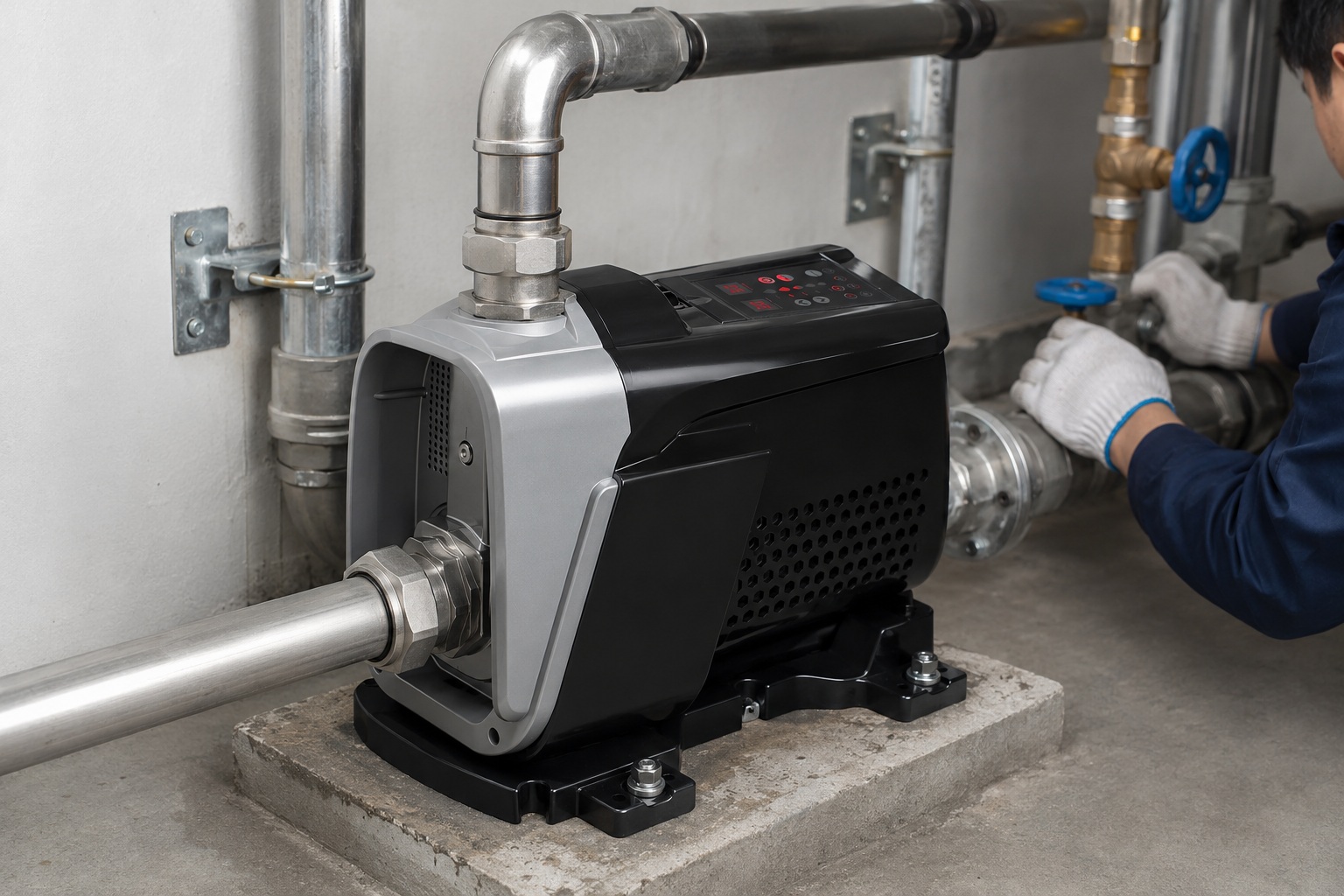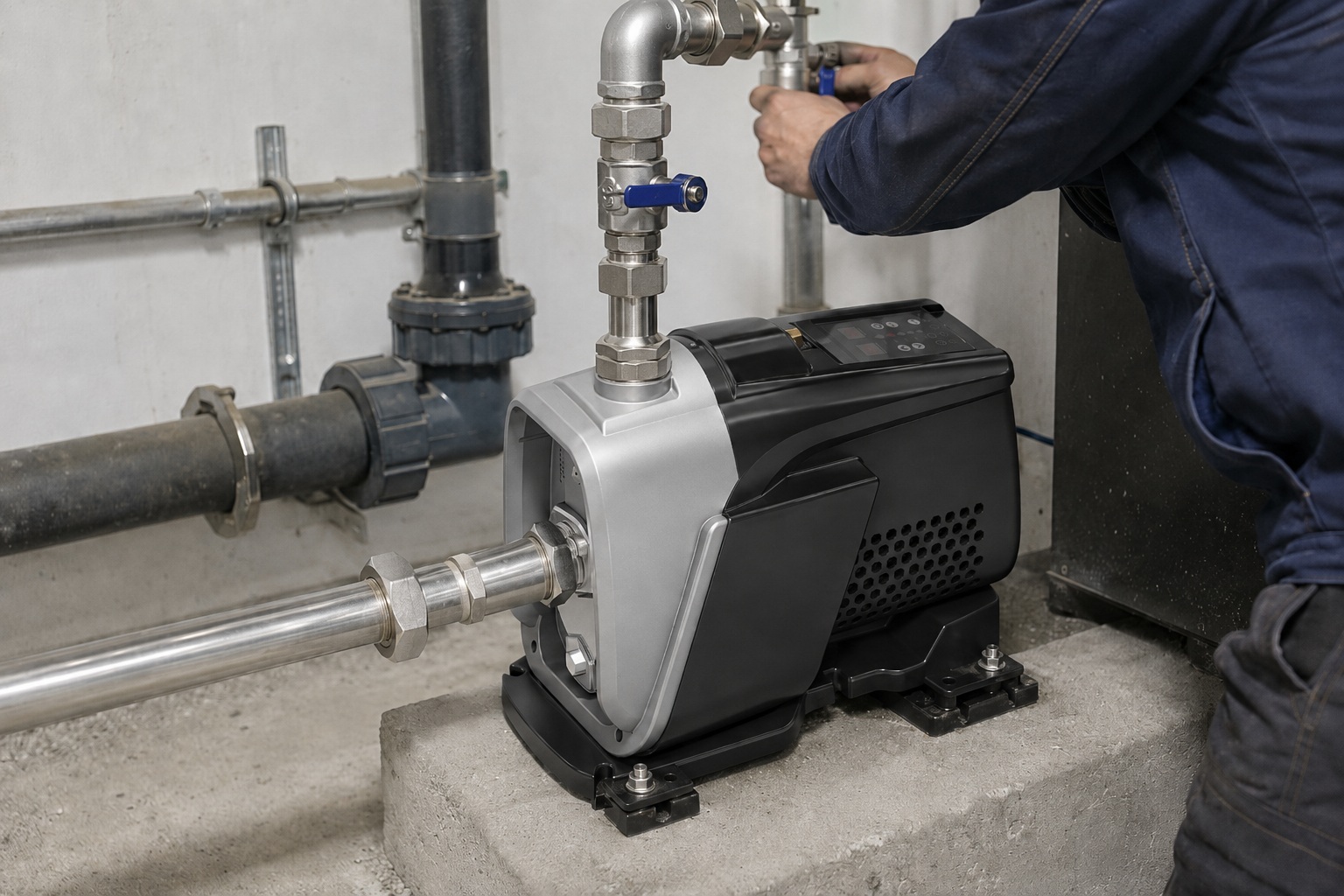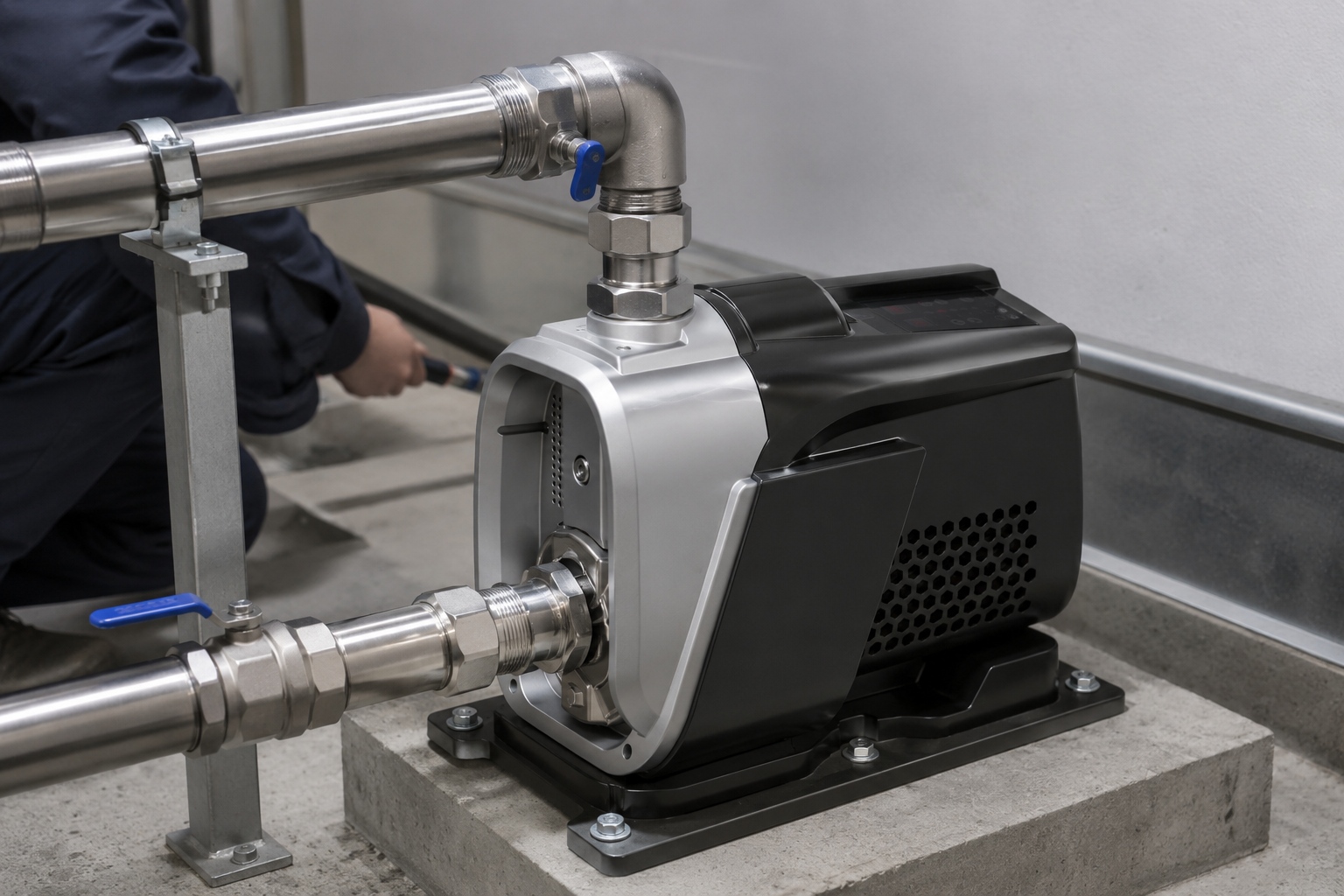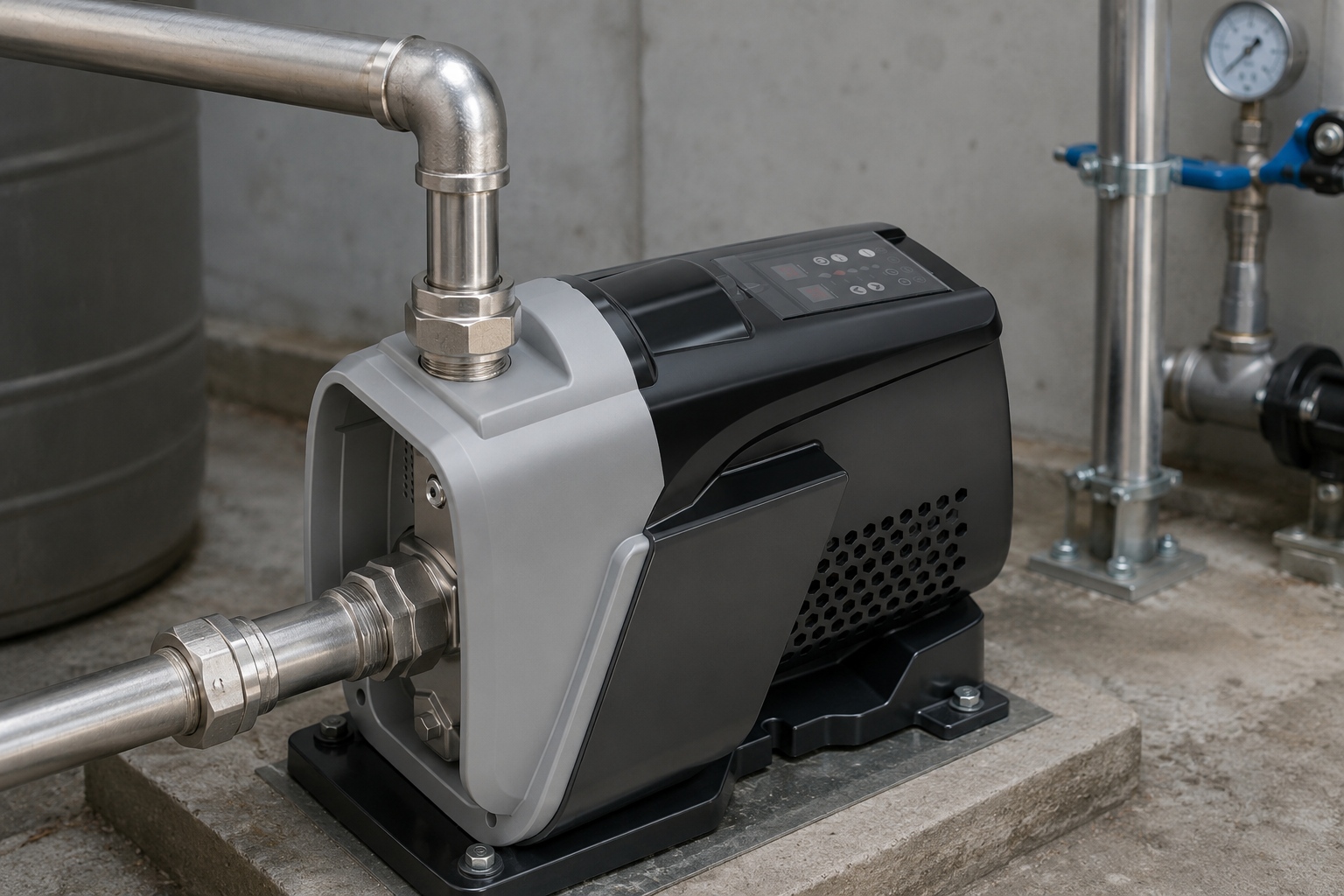
Struggling with inconsistent water flow or pressure issues?
Poor water movement can halt operations and cause daily frustrations.
A robust electric water pump is the essential solution.
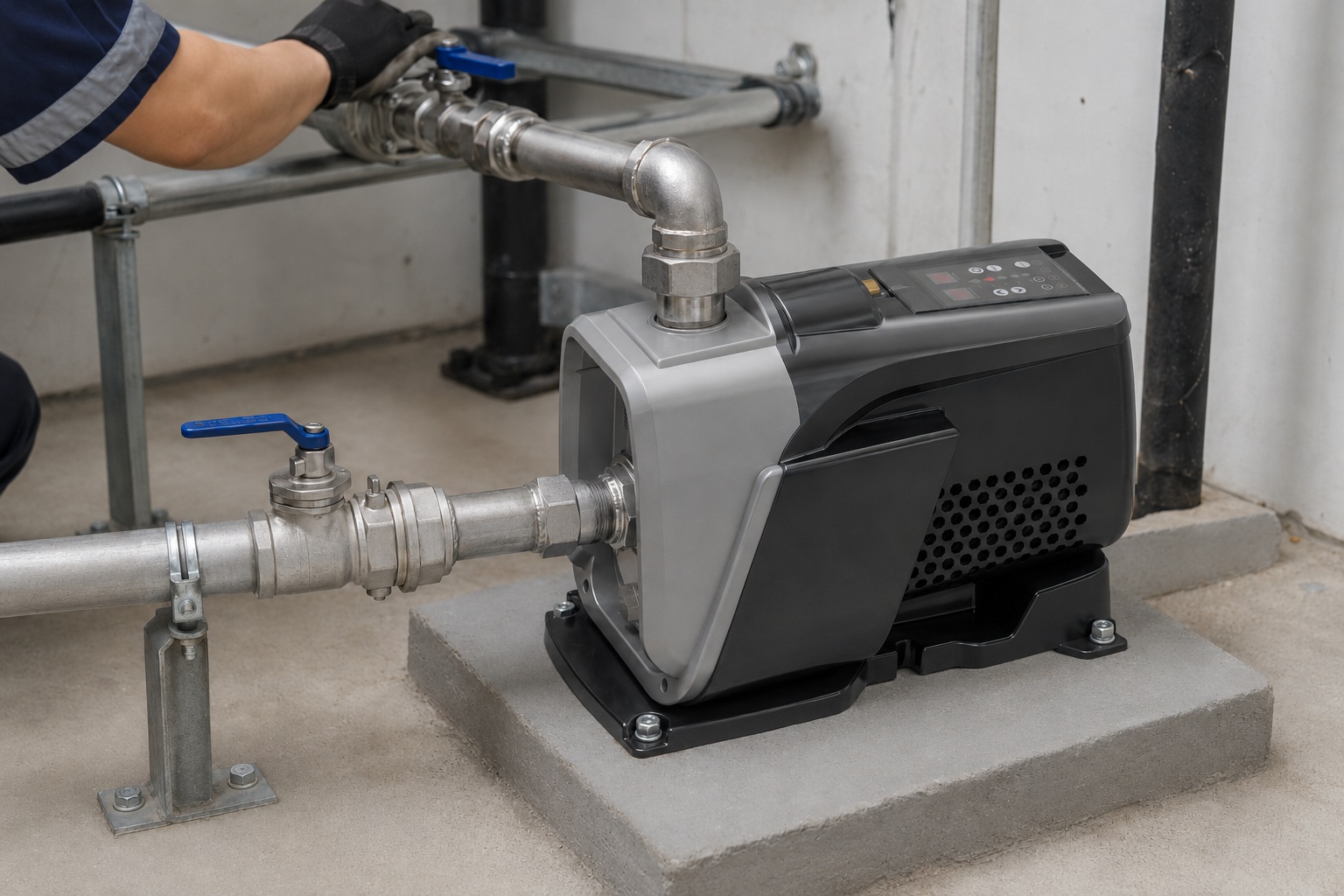
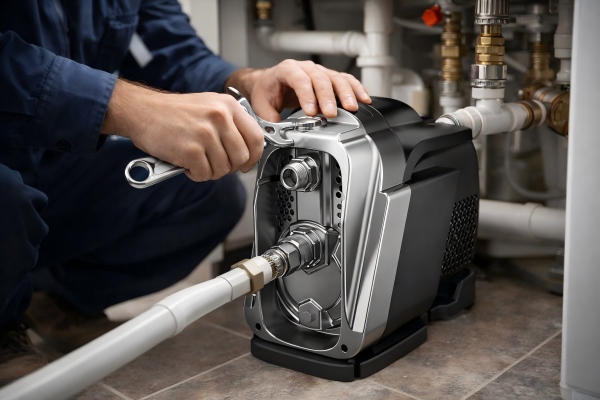
An electric water pump is a device that uses an electric motor to move water from one location to another. It converts electrical energy into hydraulic energy. This process creates the pressure or flow needed for countless residential, agricultural, and industrial tasks worldwide.
Now you know the basic definition.
But how does this crucial device translate electricity into powerful water flow?
The working principle is a fascinating blend of physics and engineering.
Understanding this process is the first step for any distributor or importer looking to source high-quality pumps.
Let’s dive into the core mechanics that make it all happen.
How Do Electric Water Pumps Work?
Is the science behind your pump a mystery?
Not understanding the mechanics can lead to choosing the wrong product for your market.
Mastering the basics ensures you source effective and reliable pumps.
An electric pump works by using a motor to drive an impeller. The motor’s rotation spins the impeller at high speed, creating a low-pressure area at its center (the eye). Water is drawn in and then thrown outward by centrifugal force, increasing its velocity and pressure before exiting.
The core principle is energy conversion.
An electric motor is the heart of the pump.
It receives electrical power and transforms it into rotational mechanical energy.
This energy is transferred to a component called an impeller via a shaft.
The design of the impeller is critical for pump efficiency.
The Journey of Water Through a Pump
The process begins at the pump’s inlet, or suction port.
As the impeller spins, it creates a vacuum or low-pressure zone at its center, known as the impeller eye.
Atmospheric pressure on the source water then pushes it into the pump.
Once inside, the water is caught by the impeller’s rotating vanes.
The vanes sling the water outward at a high velocity due to centrifugal force.
This rapid acceleration significantly increases the water’s kinetic energy.
Converting Velocity to Pressure
The fast-moving water then enters the volute.
The volute is a snail-shaped casing that surrounds the impeller.
Its design is clever.
The cross-sectional area of the volute gradually increases towards the discharge outlet.
As the water flows into this expanding area, its velocity decreases.
According to Bernoulli’s principle, this decrease in kinetic energy is converted into an increase in potential energy, or pressure.
This pressurized water is then forced out of the discharge port, ready to be used.
In simpler terms, the pump efficiently converts high speed into high pressure.
This entire sequence happens continuously, resulting in a steady flow of pressurized water.
For our partners, it’s vital to know that the efficiency of this energy conversion directly impacts operational costs.
Modern pumps, especially intelligent variable frequency drive (VSD) models, can optimize this process, reducing energy consumption by up to 50% in certain applications.
What Are the Main Types of Electric Water Pumps?
Feeling overwhelmed by the vast array of pump types?
Choosing the wrong one means wasted investment and poor performance for your customers.
Knowing the main categories helps you target your market’s specific needs.
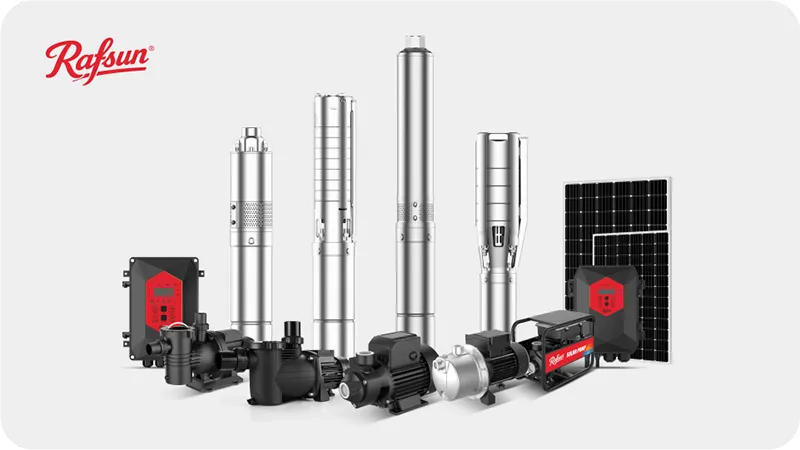
The main types are centrifugal pumps and positive displacement pumps. Centrifugal pumps, including surface and submersible models, are most common and use an impeller to move water. Positive displacement pumps trap a fixed amount of water and force it out, ideal for high-pressure or viscous fluid applications.
Choosing the right pump type is the most critical decision for an importer.
The application dictates the technology required.
Let’s break down the two primary categories to provide clarity for our B2B partners.
This knowledge will empower you to build a product portfolio that perfectly matches your customers’ demands, from residential boosting to large-scale agricultural irrigation.
Centrifugal Pumps
Centrifugal pumps are the most widely used type, accounting for over 75% of pump installations globally.
They are valued for their simplicity, reliability, and ability to handle a wide range of flow rates.
They operate using the centrifugal force principle we discussed earlier.
Surface Pumps
These pumps are installed above the water source.
They are excellent for moving water from shallow wells, lakes, or reservoirs.
Common applications include household booster systems, garden irrigation, and light industrial use.
Their main limitation is suction lift; they typically cannot draw water from depths greater than 7-8 meters due to atmospheric pressure limits.
Submersible Pumps
As the name suggests, submersible pumps are designed to be fully submerged in the fluid.
The motor is hermetically sealed and coupled directly to the pump body.
This design is incredibly efficient because it uses the head of water to push water into the pump, eliminating suction lift limitations.
They are the standard for deep well applications, borehole water extraction, and sump drainage.
| Pump Sub-Type | Best Application | Key Advantage |
|---|---|---|
| Household Booster | Improving residential water pressure. | Compact and easy to install. |
| Deep Well Pump | Extracting water from deep boreholes. | High-pressure capability; no suction limit. |
| Solar Water Pump | Off-grid irrigation and water supply. | Uses renewable energy; low running cost. |
| Vertical Centrifugal | Commercial building HVAC and water supply. | Small footprint; handles high flow rates. |
Positive Displacement (PD) Pumps
Positive Displacement pumps work differently.
They move fluid by trapping a fixed volume and then forcing (displacing) that trapped volume into the discharge pipe.
Their flow rate is directly proportional to their speed (RPM) and is not highly dependent on the system pressure, unlike centrifugal pumps.
Reciprocating Pumps
These use a piston, plunger, or diaphragm moving back and forth to displace the fluid.
They are excellent for applications requiring very high pressures or precise dosing, such as in chemical injection systems.
Rotary Pumps
These use rotating gears, lobes, or screws to move the fluid.
They are better suited for handling viscous fluids like oil and sludge that would challenge a centrifugal pump.
For the markets Rafsun serves, centrifugal pumps, particularly intelligent VSD and solar models, represent the core of demand, offering the best balance of performance, cost, and energy efficiency for a majority of water-moving tasks.
Key Components of an Electric Water Pump
Unsure what makes a pump high-quality?
Ignoring key components can lead to sourcing unreliable products with high failure rates.
Understanding the anatomy of a pump is crucial for evaluating manufacturer quality.
The key components are the electric motor, which provides power; the impeller, which moves the water; the volute casing, which converts velocity to pressure; the shaft, which connects the motor to the impeller; and the mechanical seals, which prevent leaks between the motor and the pump.
A water pump is more than the sum of its parts.
However, the quality of each individual component determines the performance, longevity, and reliability of the final product.
As a B2B partner, being able to "look under the hood" and assess these parts is a mark of a savvy importer.
It’s the difference between sourcing a pump that lasts 1,000 hours and one that operates flawlessly for 10,000 hours.
Let’s examine the most critical elements.
The Motor: The Powerhouse
The electric motor is the pump’s engine.
Its quality directly impacts energy consumption and service life.
Motor Windings
High-quality pumps use 100% copper windings.
Copper offers superior electrical conductivity and heat dissipation compared to aluminum.
A pump with copper windings runs cooler, is more efficient, and has a significantly longer lifespan.
A manufacturer using aluminum windings is cutting costs at the expense of quality.
Permanent Magnet Synchronous Motor (PMSM)
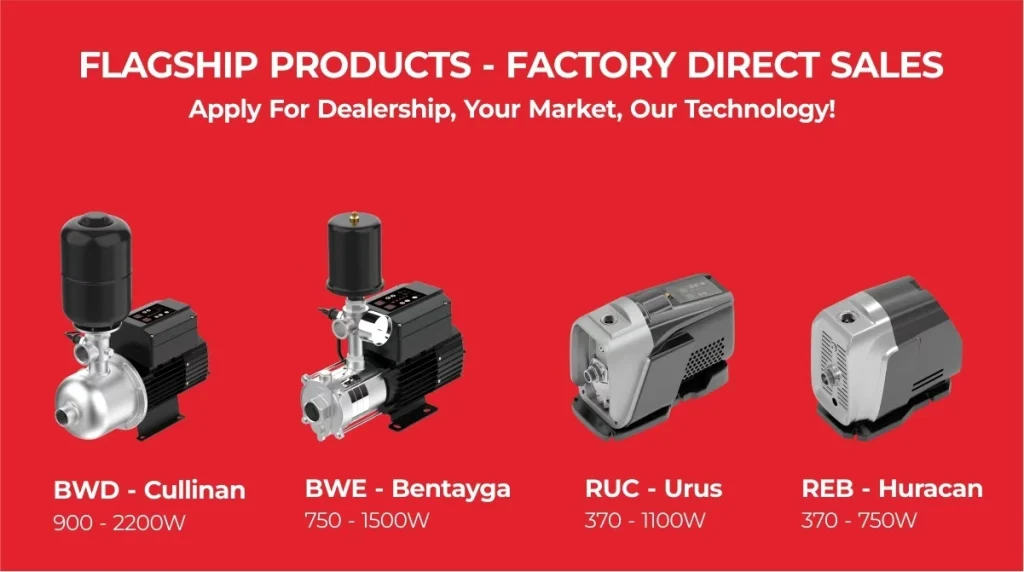
Modern high-efficiency pumps, like our intelligent VSD series, utilize PMSM technology.
Unlike traditional asynchronous motors, PMSMs offer higher efficiency (over 90%), a better power factor, and wider speed regulation.
This technology is the foundation of energy savings.
The Impeller and Volute: The Hydraulic Core
The impeller and volute are where the hydraulic work happens.
Their material, design, and manufacturing precision are paramount.
Materials Science
Different applications require different materials.
| Material | Primary Benefit | Common Use Case |
|---|---|---|
| Cast Iron | Durability, Cost-Effective | General freshwater, Irrigation |
| Stainless Steel | Corrosion Resistance, Hygiene | Potable water, Food processing |
| Bronze | Saltwater Corrosion Resistance | Marine applications, Brackish water |
| Noryl/Technopolymer | Lightweight, Good for clean water | Small domestic booster pumps |
At Rafsun, we utilize high-grade stainless steel (like SS304 or SS316) for key hydraulic components to ensure superior wear and corrosion resistance, a critical factor for markets with varying water quality.
Mechanical Seals and Bearings: The Unsung Heroes
These are often overlooked but are a primary point of failure in low-quality pumps.
Mechanical Seals
A seal prevents water from leaking along the motor shaft into the motor itself.
Failure means a destroyed motor.
High-quality seals made from materials like silicon carbide or carbon-ceramic can withstand high pressures and temperatures, extending the pump’s life by thousands of hours.
Our products undergo rigorous pressure testing to ensure 100% seal integrity.
Bearings
The bearings support the rotating shaft.
Premium, low-noise bearings from reputable brands ensure smooth, quiet operation and reduce wear and tear.
A pump that runs loudly is often a sign of cheap bearings nearing failure.
Understanding these components allows an importer to ask the right questions and differentiate a truly premium manufacturer from an assembler of cheap parts.
How to Choose the Right Electric Water Pump for Your Business?
Are you stocking the right pumps for your clientele?
A mismatched inventory leads to slow sales and lost market share.
A strategic selection process based on data ensures you meet customer demand and maximize profits.
To choose the right pumps, first analyze your market’s needs (e.g., residential vs. agricultural). Then evaluate key performance metrics: flow rate (GPM/LPM), pressure head (meters/feet), and power (HP/kW). Prioritize energy efficiency and manufacturer quality certifications to ensure long-term value and reliability.
For a distributor, choosing a pump isn’t just a technical decision; it’s a strategic business decision.
The goal is to build a portfolio that addresses the core needs of your market while offering a clear value proposition.
This involves looking beyond a single pump and thinking about your entire supply chain, from manufacturer reliability to after-sales support.
Let’s walk through the key considerations for our B2B partners.
Step 1: Define Your Market’s Application Needs
The first step is always market analysis.
You must understand what your customers are trying to achieve.
Residential Applications
- Water Pressure Boosting: This is a huge market in urban and suburban areas. Customers need compact, quiet, and automatic booster pumps. Intelligent VSD pumps are the premium choice here due to their constant pressure and energy savings.
- Garden and Lawn Irrigation: This requires pumps with a moderate flow rate and pressure. Reliability and ease of use are key.
Agricultural Applications
- Drip or Sprinkler Irrigation: These systems require sustained flow rates over long periods. Pump efficiency is paramount to control high energy costs. Solar water pumps are a game-changer in off-grid agricultural regions.
- Water Transfer: Moving water from a river or well to a storage tank. This often requires high-flow, moderate-head pumps.
Commercial & Industrial Applications
- Building Water Supply: Vertical multistage pumps are standard for high-rise buildings.
- HVAC Systems: Circulation pumps are essential for heating and cooling.
- Dewatering: Submersible pumps are needed on construction sites.
Step 2: Master the Key Performance Metrics
Once you know the application, you can specify the pump’s performance.
| Metric | Definition | Unit of Measurement | Why It Matters for Your Business |
|---|---|---|---|
| Flow Rate | The volume of water the pump can move per unit of time. | GPM (Gallons Per Minute), LPM (Liters Per Minute), m³/h. | The primary measure of a pump’s capacity. Must match the application’s demand. |
| Head | The maximum height the pump can lift water against gravity. | Feet (ft), Meters (m), PSI, Bar. | Determines the pressure a pump can generate. Crucial for wells and tall buildings. |
| Power | The energy consumption of the motor. | Horsepower (HP), Kilowatts (kW). | Directly impacts the operational cost for the end-user. Efficiency is key. |
As a distributor, you should stock a range of pumps that cover the most common flow-head combinations in your market.
Step 3: Evaluate Manufacturer Quality and Support
This is where you build a reliable business.
A cheap pump from an unknown factory is a huge risk.
Technical Certifications
- Look for manufacturers with CE, IEC, and RoHS certifications. This is a baseline indicator of quality and safety compliance.
Quality Control Systems
- Ask about their QC process. A structured system with IQC (Incoming Quality Control), PQC (Process Quality Control), and OQA (Outgoing Quality Assurance) is a sign of a serious manufacturer. For example, Rafsun’s 144+ hour salt spray testing ensures durability in coastal regions like Australia or Chile.
R&D and Customization (OEM/ODM)
- A strong R&D department (like our team of 30+ engineers) indicates a forward-looking company. It also means they can support OEM/ODM requests, allowing you to build your own brand, a key preference for buyers like Andrew in Australia.
By following this strategic approach, you move from simply buying pumps to building a powerful, profitable, and reliable product line.
Future Trends: The Rise of Intelligent VSD Pumps
Are your product offerings becoming outdated?
Sticking with old technology means losing ground to competitors offering smarter solutions.
Embracing intelligent pumps is the key to future-proofing your business and leading the market.
The future is intelligent Variable Speed Drive (VSD) pumps. These pumps automatically adjust their motor speed to maintain constant water pressure, regardless of demand. This technology can reduce energy consumption by over 50%, lower noise levels, and dramatically extend the pump’s lifespan.
The water pump industry is undergoing a significant transformation.
The shift is from simple, fixed-speed pumps to intelligent, demand-responsive systems.
For distributors and importers, understanding and capitalizing on this trend is not just an opportunity—it’s a necessity for long-term survival and growth.
Leading this change is the permanent magnet variable speed drive (VSD) pump, often called an intelligent or smart pump.
Let’s explore why this technology is the future.
What Makes a VSD Pump "Intelligent"?
A traditional pump operates at 100% speed whenever it is on.
This is highly inefficient.
It’s like driving your car with the accelerator pushed to the floor and using the brake to control your speed.
An intelligent VSD pump is different.
Key Intelligent Features
- Constant Pressure: A pressure sensor continuously monitors the pressure in the pipes. If someone opens a tap, the pressure drops. The VSD controller instantly increases the motor speed just enough to bring the pressure back to the setpoint. It delivers a true "hotel-like" water experience.
- Energy Savings: The pump only uses the exact amount of energy needed. During periods of low demand (e.g., one small faucet), the pump might run at only 20-30% of its maximum speed. This results in massive energy savings, often between 30% and 60%, a powerful selling point for end-users.
- Soft Start/Stop: The pump motor ramps up and down smoothly. This eliminates the powerful "water hammer" effect that can damage pipes and appliances. It also reduces mechanical stress on the pump itself.
The Technology Behind the Intelligence
The magic lies in the combination of three core technologies.
| Component | Function | Benefit for the End-User |
|---|---|---|
| Permanent Magnet Motor | A highly efficient motor that runs cooler and has a wider speed range than traditional motors. | Lower electricity bills, longer motor life. |
| VSD Inverter/Controller | The "brain" that adjusts the frequency of the electricity supplied to the motor, controlling its speed. | Precise control, automation. |
| Pressure Sensor | The "nerves" that provide real-time feedback on system pressure to the controller. | Constant, reliable water pressure. |
Rafsun has been at the forefront of this technology for over a decade, with 100+ technical patents in intelligent permanent magnet VSD pump technology.
Market Opportunity for Distributors
The global market for intelligent pumps is projected to grow by over 7% annually.
Early adopters in the distribution chain will capture the largest market share.
By offering intelligent VSD pumps, you can:
- Target the Premium Market: Position your brand as a supplier of high-tech, high-value solutions.
- Solve Real Customer Problems: Offer tangible benefits like lower energy bills and better user experience.
- Future-Proof Your Inventory: Stock the products that customers will be demanding tomorrow, not yesterday.
The transition to intelligent pumps is inevitable.
Partnering with a manufacturer that has proven expertise in VSD technology is the most strategic move a distributor can make today.
Conclusion
An electric water pump is a vital device converting electricity into water flow.
From basic models to intelligent VSD pumps, understanding the types, components, and trends is key.
This knowledge empowers you to source quality pumps that meet market needs.
FAQs
What is the difference between a water pump and a motor?
A motor is a component that converts electrical energy into mechanical rotation. A water pump is the complete machine that uses a motor to power its hydraulics and move water.
How long does an electric water pump last?
A high-quality residential pump can last 8 to 15 years with proper maintenance. Industrial-grade pumps from reputable manufacturers like Rafsun are designed for even longer service lives.
Can a water pump run without water?
No, running a pump without water, known as running dry, can cause rapid overheating. This will damage the mechanical seal and impeller, leading to pump failure within minutes.
Does a bigger pump mean more pressure?
Not necessarily. Pressure is determined by "head." A pump with a higher horsepower (HP) might provide more flow (volume), but you need a high-head pump design for more pressure.
What is a self-priming pump?
A self-priming pump is a type of surface centrifugal pump that can clear air from its suction line. This allows it to create a vacuum and begin pumping without needing to be manually filled with water first.
What are the signs of a failing water pump?
Common signs include low water pressure, unusual noises like grinding or whining, the motor overheating, or the pump cycling on and off too frequently.
How much electricity does a water pump use?
This varies greatly depending on the pump’s power (kW) and usage. A key advantage of modern VSD pumps is that they can reduce electricity consumption by 30-60% compared to traditional pumps.
Why is my new pump not pumping water?
Common reasons include incorrect priming, a leak in the suction line preventing a vacuum, the pump being air-locked, or trying to lift water from a depth greater than the pump’s suction lift capability.