Tired of high electricity bills just to run your pond pump?
Traditional pumps consume constant power, increasing costs and limiting placement to near an outlet, creating a hassle.
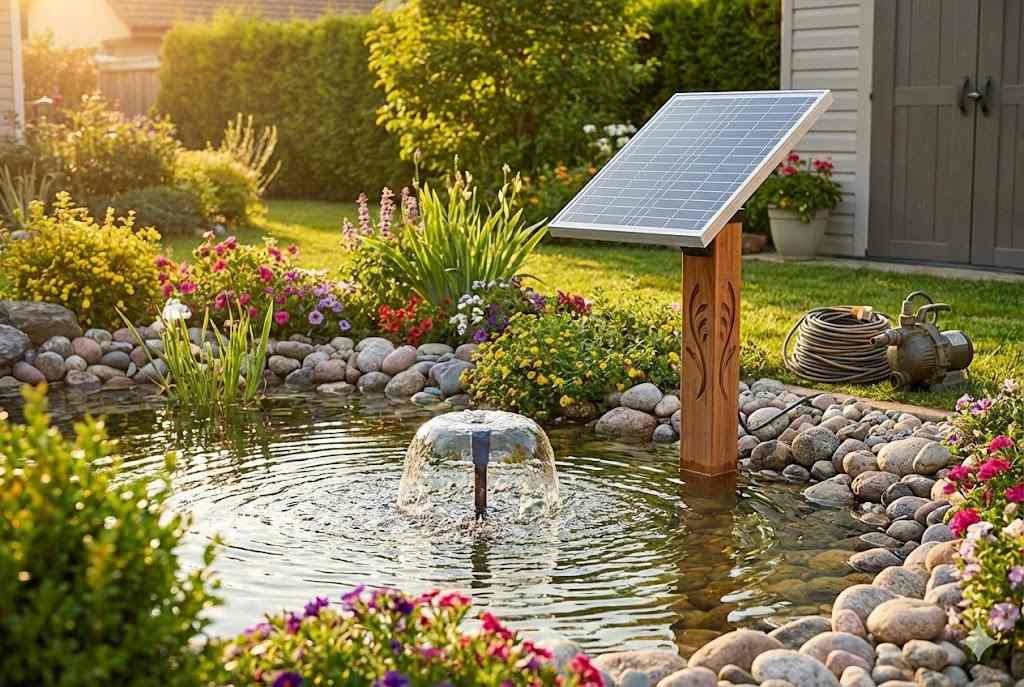
Yes, solar pond pumps are worth it for most applications. Their value comes from zero electricity costs, environmental benefits, and installation flexibility, especially when powered by a high-efficiency motor that maximizes performance and ensures a rapid return on investment.
The initial investment might seem higher than a standard electric pump.
However, the long-term savings and operational freedom often outweigh this upfront cost.
The key to unlocking their full value lies in understanding the technology that drives them.
Let's break down the components that determine if a solar pond pump is a smart investment for you.
The Engine of Value: High-Efficiency Motors
A cheap, inefficient motor wastes solar energy, leading to poor performance.
This means the pump only works in perfect sun, failing on cloudy days and offering a poor return on investment.
The core value of a modern solar pump lies in its high-efficiency Brushless DC (BLDC) motor. With over 90% efficiency, it converts more sunlight into water movement, ensuring reliable operation and making the system cost-effective.
The single most critical factor determining if a solar pump is "worth it" is the motor.
It is the heart of the entire system.
You can have the largest solar panel, but if the motor wastes 40% of the energy it receives, the pump will consistently underperform.
This is where advanced motor technology creates a clear division in the market.
Older or low-cost solar pumps often use brushed motors with efficiencies hovering around 50-60%.
In contrast, premium solar pump systems utilize Brushless DC (BLDC) permanent magnet motors.
These motors are a technological leap forward.
They eliminate energy-wasting brushes and use powerful permanent magnets (like 40SH neodymium iron boron) to create motion.
This design pushes their energy efficiency to over 90%.
What Does >90% Efficiency Mean in Practice?
This high efficiency isn't just a number on a spec sheet; it delivers tangible, measurable benefits that directly impact the pump's value.
- Better Low-Light Performance: Because it wastes so little energy, a BLDC motor requires far less power to start and run. This means the pump starts earlier in the morning, runs later in the afternoon, and continues to operate on overcast days when less efficient pumps would have already stopped.
- Reduced Solar Panel Requirements: A more efficient motor achieves the same water flow with less power. This allows the system to use a smaller, less expensive solar panel array, reducing the initial investment cost. The motor's compact design (up to 47% smaller and 39% lighter) also simplifies installation.
- Longer Lifespan and No Maintenance: The brushless design means there are no parts to wear out and replace. This results in a maintenance-free motor with a significantly longer operational life, enhancing its long-term value.
The Financial Calculation of Efficiency
The financial return of a solar pump is calculated by dividing the initial cost by the electricity savings over time.
A high-efficiency motor accelerates this return dramatically.
It maximizes the energy harvested each day, effectively paying for itself faster through greater Cents saved per hour of operation.
Distributors who stock pumps with high-efficiency BLDC motors can confidently sell them as a superior investment, promising their customers better reliability and a quicker payback period.
| Feature | Standard Brushed Motor | High-Efficiency BLDC Motor | Value Proposition |
|---|---|---|---|
| Energy Efficiency | 50% - 60% | > 90% | Faster ROI, lower panel cost |
| Low-Light Performance | Poor; needs direct sun | Excellent; runs on cloudy days | Increased daily operating hours |
| Lifespan | Shorter; brushes wear out | Very Long | Lower total cost of ownership |
| Maintenance | Requires brush replacement | Maintenance-Free | Saves time and money |
Choosing the Right Pump for Your Pond's Needs
Choosing the wrong pump type results in a disappointing water feature.
You might get a weak trickle for your waterfall or inadequate circulation, failing to meet the pond's needs and wasting your investment.
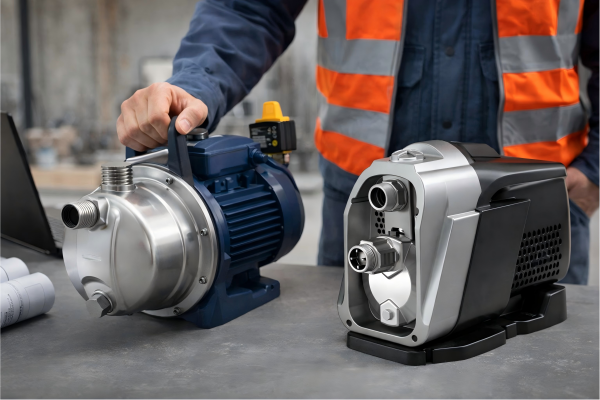
Matching the pump type to your pond's specific goal is crucial. A plastic impeller pump offers high flow for circulation, while a stainless steel model provides durability in harsh water, ensuring long-term value.
Once you've ensured your pump has an efficient motor, the next step is selecting the right pump mechanism, or "wet end."
This part of the pump is what actually moves the water.
The ideal choice depends entirely on your pond's size, features, and water conditions.
Making the right choice ensures the pump performs its job effectively, feels like a worthwhile purchase, and lasts for years.
For most pond applications, two main types of solar centrifugal pumps offer the best combination of performance and value.
The Workhorse: Solar Plastic Impeller Pump
This is the most versatile and economical choice for the majority of ponds.
It is a multi-stage centrifugal pump designed to move a large volume of water at a medium pressure (head).
- Primary Applications: Ideal for general pond circulation, supplying filtration systems, creating aeration, and powering small-to-medium waterfalls or streams.
- Key Advantages: Its engineered plastic impeller provides excellent wear resistance against the fine sand and sediment common in ponds. These pumps are lightweight, which simplifies installation, and their economical price point makes them an excellent value proposition for typical garden ponds.
- Limitations: In ponds with highly acidic water (from leaf decay) or other corrosive conditions, the plastic components may have a shorter lifespan.
The Premium Choice: Solar Stainless Steel Impeller Pump
For pond owners who demand the best in durability or have challenging water conditions, the stainless steel model is the superior investment.
This pump features an impeller and pump body made from SS304 stainless steel.
- Primary Applications: Perfect for architecturally significant ponds, systems in regions with alkaline soil (common in Australia), ponds with treated or acidic water, or for high-end residential water features where longevity is paramount.
- Key Advantages: Stainless steel offers exceptional resistance to corrosion and abrasion, leading to a much longer service life. It provides high reliability and maintains performance in conditions that would degrade lesser materials.
- Limitations: The premium materials result in a higher initial cost and greater weight. This positions it as a high-end solution for customers who prioritize long-term durability over upfront cost.
By offering both options, a distributor can meet the needs of the entire market.
They can provide an economical, high-flow solution for the average pond owner and a premium, ultra-durable option for high-end or commercial installations, ensuring every customer gets a pump that is truly "worth it" for their specific scenario.
Guaranteed Performance: The AC/DC Hybrid Advantage
Solar power is great, but what happens during a week of rain?
A purely solar pump will stop working, leaving your pond stagnant, starving your waterfall of water, and potentially harming your fish.
For absolute reliability, a solar pump with an AC/DC hybrid controller is worth it. It prioritizes free solar energy but automatically uses AC grid power as a backup, guaranteeing 24/7 operation in any weather.
The most significant hesitation for potential buyers of solar pumps is reliability.
The sun is not always shining.
For pond owners with valuable fish or elaborate water features that must run continuously, this perceived unpredictability can be a deal-breaker.
This is where the AC/DC hybrid pump system transforms a solar pump from a "good idea" into a professional-grade, failsafe solution.
It completely eliminates the problem of downtime due to weather.
An AC/DC hybrid system is built around an intelligent controller with two power inputs: one for the solar panels (DC) and another for a standard wall outlet (AC).
The controller's sophisticated software manages these two power sources to provide the perfect balance of cost savings and reliability.
How the Hybrid System Maximizes Value
The controller operates on a simple, intelligent principle: never pay for electricity if you can get it for free.
- Priority on Solar (DC): Whenever there is sufficient sunlight, the controller powers the pump exclusively with the solar panels. The system runs for free, saving money and using clean energy.
- Smart Hybrid Blending: On partly cloudy days when solar power drops, the controller doesn't just shut off. Instead, it seamlessly draws the minimum amount of AC power needed to supplement the solar input and keep the pump running at the desired speed. It maximizes every watt of free solar energy before using any paid electricity.
- Automatic AC Takeover: When there is no sunlight at all (at night or during heavy storms), the controller automatically and instantly switches to 100% AC power. The pond pump continues to run without any interruption.
The Ultimate Selling Proposition
The AC/DC hybrid system makes a solar pump unequivocally "worth it" for any critical application.
It offers the best of both worlds:
- The economic and environmental benefits of solar power.
- The unwavering 24/7 reliability of a traditional electric pump.
For a distributor, this is a powerful selling tool.
You can offer a solution that provides your customers with energy independence and lower bills, while completely removing their anxiety about cloudy days.
It’s the feature that elevates a solar pump from a novelty item to an essential piece of water management infrastructure.
Conclusion
A solar pond pump is worth the investment.
Its value is maximized by a high-efficiency motor, a correctly chosen pump type, and the reliability of a hybrid AC/DC controller.
Frequently Asked Questions
Do solar pond pumps work in the shade?
They need direct sunlight to work effectively. A pump may operate with reduced flow in partial shade but will not run in full shade without a battery or AC backup.
Can you add a battery to a solar pond pump?
Yes, many solar pump systems are designed to be compatible with a battery bank and charge controller. This allows them to store energy for use at night or on cloudy days.
How long do solar powered pond pumps last?
A quality solar pump with a BLDC motor can last for many years, often 10 or more. The solar panels themselves typically have a warranty of 20-25 years.
Do solar pumps need a controller?
Yes, a controller is essential. It manages the power from the solar panel to the motor, preventing damage and maximizing efficiency with features like MPPT (Maximum Power Point Tracking).
Does a bigger solar panel make a pump more powerful?
A bigger panel provides more wattage, allowing the pump to run at its full potential for more hours of the day. However, it cannot make a pump exceed its maximum rated flow rate.
Do you leave a solar pond pump on all the time?
You can, and it will run whenever there is sufficient sunlight. For aeration, continuous operation is beneficial. AC/DC hybrid systems can be left on 24/7.
What size solar pump do I need for my pond?
A good rule of thumb is to have a pump capable of circulating the entire volume of your pond at least once every two hours. Check the pump's GPH (gallons per hour) rating.