You're exploring solar pumps but the technical terms are confusing.
The AC/DC distinction seems critical, and choosing the wrong type could mean an inefficient or unreliable system.
Most modern, high-efficiency solar pumps are fundamentally DC.
They use Brushless DC (BLDC) motors powered directly by solar panels. However, many systems now include hybrid AC/DC controllers, allowing them to also run on AC power from the grid or a generator.

The question of whether solar pumps are AC or DC is a common point of confusion for buyers.
The answer is not a simple choice between one or the other.
Instead, it involves understanding how the system works as a whole, from the solar panels to the motor inside the pump.
Solar panels naturally produce Direct Current (DC) electricity.
For the highest efficiency, it makes sense to use a motor that runs on DC power, avoiding the energy losses that occur when converting DC to Alternating Current (AC).
This is why the core of the modern solar pump industry is built around DC technology.
However, relying solely on DC power means the pump only works when the sun is shining.
To solve this, advanced systems incorporate the ability to use AC power as a backup.
This creates a hybrid system that offers the best of both worlds.
Let's break down the components to see why DC is the foundation and how AC integration provides ultimate reliability.
The Heart of the System: The DC Motor
You need a pump that is powerful and efficient.
But traditional motors are often bulky, inefficient, and require frequent maintenance, driving up long-term costs.
Virtually all modern solar pumps use a high-efficiency Brushless DC (BLDC) motor.
This advanced motor technology is the key to the system's performance, converting solar energy into water pressure with over 90% efficiency.
At its core, a solar water pump is a DC device.
This is a deliberate engineering choice driven by the pursuit of maximum efficiency.
The power source, the photovoltaic (solar) panel, generates DC electricity.
Using a DC motor allows this power to be transferred directly to the pump with minimal energy loss.
If an AC motor were used, the DC power from the panels would first need to be converted to AC power by an inverter.
This conversion process typically loses between 10% and 15% of the energy, meaning you would need more solar panels to do the same amount of work.
By sticking with a native DC system, manufacturers ensure that almost every watt of power generated by the sun contributes to pumping water.
Why Brushless DC Motors Dominate
The specific type of motor used is a Brushless DC (BLDC) permanent magnet motor.
This is a significant upgrade from older, brushed motor designs.
-
Exceptional Efficiency: BLDC motors regularly achieve efficiencies exceeding 90%. This means more water is pumped per watt of solar power, reducing the number of solar panels needed and lowering the initial system cost.
-
Longevity and Reliability: As the name suggests, these motors have no brushes. Brushes in older motors are physical contacts that wear down over time, creating dust and eventually leading to motor failure. The absence of brushes makes BLDC motors virtually maintenance-free and gives them a much longer service life.
-
Power and Compact Design: The rotors in these motors are made with powerful rare-earth magnets like 40SH neodymium iron boron. This allows them to generate high torque and strong power from a surprisingly small and lightweight package. A modern BLDC motor can be up to 47% smaller and 39% lighter than a comparable AC motor, making installation easier and less costly.
The Role of the Controller
The DC power from the solar panels doesn't go straight to the motor.
It first passes through an intelligent controller.
This device, often equipped with Maximum Power Point Tracking (MPPT) technology, acts as the brain of the system.
The MPPT function constantly analyzes the output of the solar panels and adjusts the electrical load to pinpoint the "maximum power point."
This ensures the panels are always operating at their peak efficiency, squeezing every last drop of power out of the available sunlight, even in overcast or low-light conditions.
Because the system is fundamentally designed around DC power, from generation to consumption, it achieves an unmatched level of efficiency that is simply not possible with AC-based systems.
The Hybrid Solution: Integrating AC Power
A DC-only pump is incredibly efficient.
But it stops working the moment the sun goes down or during long periods of bad weather, which is not an option for critical water needs.
Hybrid solar pumps use an AC/DC controller to solve this problem.
This smart device can accept both DC power from solar panels and AC power from the grid or a generator, ensuring a reliable 24/7 water supply.
While the pump's motor is DC, the system that powers it can be much more flexible.
This is where the distinction between the pump and the pumping system becomes important.
Recognizing that water needs are not limited to sunny daylight hours, manufacturers developed hybrid AC/DC solutions.
This technology allows a fundamentally DC pump to run on AC power when necessary.
The key to this capability is the AC/DC controller.
This advanced unit serves as a power management hub with two inputs: one for DC power from the solar array and one for AC power from an external source.
The controller's internal logic is programmed to prioritize solar energy.
It will always use the free and clean power from the sun whenever it is available.
However, when the solar energy is insufficient, the controller can automatically draw from the AC source to keep the pump running.
How the Hybrid System Operates
The process is seamless and fully automated, requiring no manual switching.
-
Full Solar Power (DC): On a clear, sunny day, the controller funnels 100% of the DC power from the solar panels to the DC motor. The pump operates at full capacity based on the sun's intensity, and the AC connection remains idle.
-
Hybrid Blending (DC supplemented by AC): In the early morning, late evening, or on a cloudy day, solar output diminishes. The controller detects the drop in DC voltage. Instead of shutting down, it begins to supplement the solar power by drawing just enough AC power to maintain consistent pump operation. This feature maximizes the use of solar energy.
-
Full AC Power: At night or during extended periods of heavy rain, the solar input falls to zero. The controller automatically performs a full switchover, converting the incoming AC power to the appropriate DC voltage to run the pump motor. This ensures an uninterrupted water supply 24 hours a day, 7 days a week.
| Power Source | System Operation Mode | Cost of Water | Reliability |
|---|---|---|---|
| Bright Sunlight | 100% DC Solar | Free | Dependent on Sun |
| Low Light / Clouds | Hybrid (DC + AC) | Low | Uninterrupted |
| Nighttime / No Sun | 100% AC Grid/Generator | Standard Utility Rate | Uninterrupted |
This hybrid approach makes solar pumping a viable primary water solution for a vast range of applications, from homes and farms in Africa and the Americas to ranches in Australia.
It delivers the environmental and cost-saving benefits of solar without compromising on the reliability demanded by critical water infrastructure.
Matching the Pump Type to Your Needs
You know a hybrid DC system is the right choice.
But the pump itself must match your well's depth and your water volume requirements, otherwise the whole system will underperform.
The same efficient DC motor powers different pump ends.
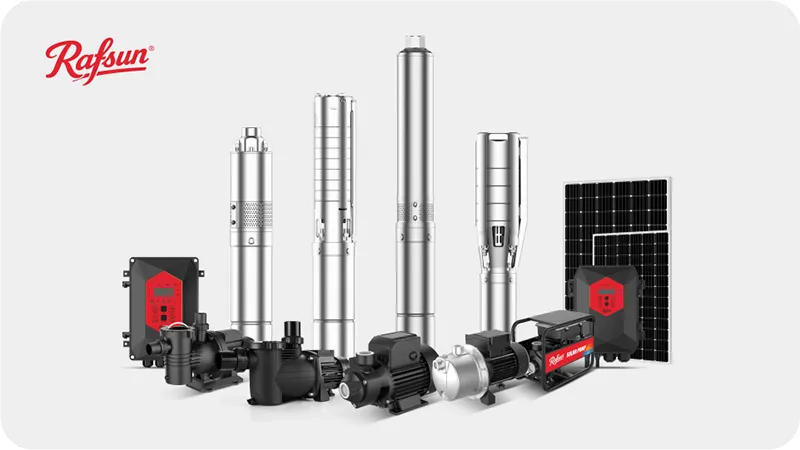
You can choose a screw pump for deep wells, a plastic impeller for high flow, or a stainless steel impeller for corrosive water, ensuring your system is perfectly optimized.
While the motor is always DC, the part of the pump that actually moves water—the "pump end"—comes in several designs.
Each is engineered for a specific set of conditions.
Pairing the right pump end with the universal BLDC motor and hybrid controller is the final step in creating a fully optimized water system.
This modular approach provides incredible flexibility, allowing distributors to build tailored solutions for customers in diverse global markets.
Whether the challenge is extreme well depth in Latin America or high water demand for irrigation in the USA, there is a DC solar pump configuration that fits.
The common motor platform ensures that regardless of the pump end selected, the system will benefit from the same high efficiency, reliability, and hybrid power capabilities.
A Portfolio of Pumping Solutions
Understanding the strengths and weaknesses of each pump type is essential for making the right choice.
-
Solar Screw Pump: The High-Head Specialist
This design excels at lifting water from great depths. It uses a helical stainless steel rotor inside a rubber stator to create very high pressure.- Performance: Low Flow, High Head.
- Best For: Deep domestic wells (over 100 meters), livestock watering where the water table is low, and any situation where lifting power is more important than volume.
- Advantage: Its design makes it highly resistant to damage from sand and silt, a common cause of failure in other pumps.
-
Solar Plastic Impeller Pump: The High-Flow Workhorse
This is a multi-stage centrifugal pump that uses a series of durable plastic impellers to move large volumes of water efficiently.- Performance: High Flow, Medium Head.
- Best For: Farm irrigation, filling reservoirs, pasture water supply, and residential applications where water usage is high.
- Advantage: It provides the best balance of performance and cost. Its lightweight construction also makes installation simpler and faster.
-
Solar Stainless Steel Impeller Pump: The Durability Champion
This pump is functionally similar to the plastic impeller model but is built entirely from SS304 stainless steel.- Performance: High Flow, Medium-to-High Head.
- Best For: Environments with corrosive water, such as acidic or alkaline conditions found in parts of Australia and the Americas. It is also the top choice for high-end homes and commercial operations where maximum lifespan is the primary goal.
- Advantage: Offers unparalleled resistance to corrosion and abrasion, ensuring the highest reliability and longest service life, albeit at a higher initial cost.
By offering this complete and competitive product portfolio, a brand can establish a strong market position based on "efficiency, durability, and environmental friendliness," meeting the needs of virtually any customer.
Conclusion
Solar pumps are fundamentally DC for maximum efficiency.
However, advanced hybrid systems incorporate AC/DC controllers, allowing them to also use grid or generator power for 24/7 reliability.
Frequently Asked Questions
What is the difference between an AC and a DC solar pump?
A DC pump runs directly on power from solar panels with high efficiency. An AC pump requires an inverter to change the solar DC power to AC, which involves some energy loss.
Can I run a DC water pump on AC power?
You can run a DC water pump on AC power only if you use a specific hybrid AC/DC controller designed to safely convert the power and manage the pump.
Which is better, AC or DC submersible pump?
For solar applications, a DC submersible pump is better due to its higher efficiency and direct compatibility with solar panels, reducing costs and complexity.
Do solar pumps work on cloudy days?
DC-only pumps will have reduced output on cloudy days. Hybrid AC/DC pumps work perfectly, automatically supplementing with AC power to maintain consistent flow.
How do you convert a DC pump to AC?
You don't convert the pump itself. You integrate a hybrid AC/DC controller that allows the existing DC pump to be powered by an AC source when needed.
Do I need an inverter for a solar water pump?
You do not need an inverter for a standard DC solar pump. The controller manages the DC power directly. Only AC pumps or hybrid systems using AC power require inversion.
How long do solar water pumps last?
A high-quality solar pump with a BLDC motor can last for 10-15 years or more, as there are no brushes to wear out, requiring minimal maintenance.