Dreaming of energy independence but worried about powering your essential appliances?
This uncertainty keeps many tied to rising grid electricity costs, preventing them from achieving true off-grid freedom and long-term savings.
Yes, you can absolutely run a washing machine on solar power. A properly sized system with panels, an inverter, and a battery bank or hybrid controller can easily handle the load. The key is understanding the appliance's power needs and designing an efficient system.

Powering household appliances with solar energy is no longer a futuristic concept.
It is a practical reality for millions around the world.
The idea of running heavy-duty machines, like a washing machine, might seem complex.
These appliances have significant power demands, especially during certain cycles.
However, the principles that make it possible are the same ones that power critical infrastructure in the most remote places on earth.
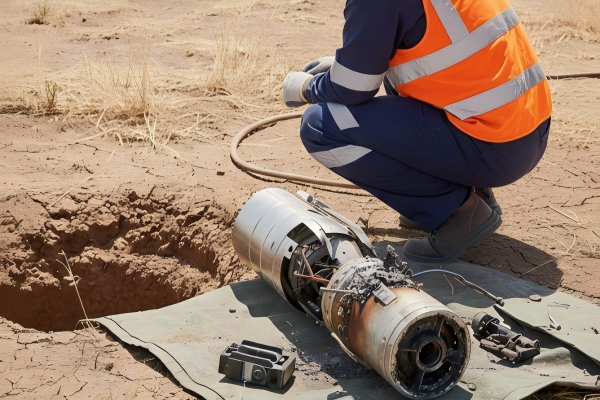
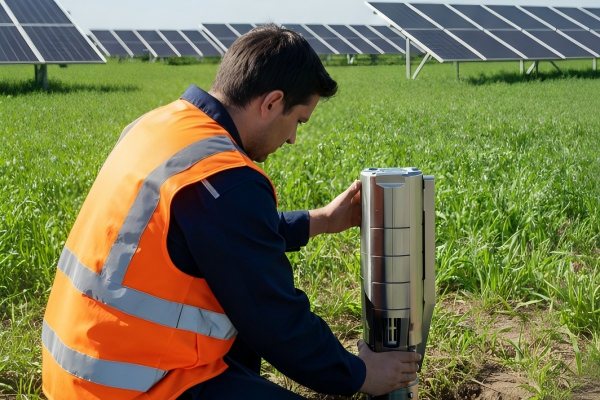
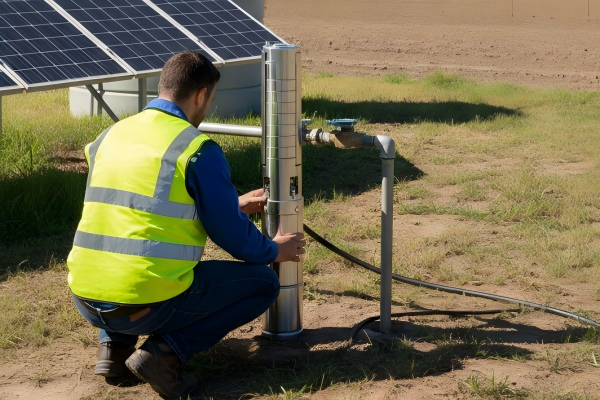
To truly understand how to power a washing machine, we can look at an even more demanding application: solar water pumping.
The engineering solutions perfected for providing water—a life-or-death resource—in off-grid locations offer a perfect blueprint for how to build a robust and reliable solar power system for your home appliances.
Let's explore the key factors in-depth, using insights from advanced solar technology to show how it's not only possible, but often the smartest choice.
Understanding Your Appliance's Power Demand
Think your solar system might not handle your washing machine's power surge?
This fear can lead to oversizing your system, causing unnecessary expense, or undersizing it, leading to frustrating power trips and system failure when you need it most.
Successfully running a washing machine on solar requires calculating both its continuous power draw and, more importantly, the high initial surge from the motor. A typical washer might use 500 watts running but surge to over 2,000 watts for a few seconds.
Before designing any solar power system, you must first become an expert on what you intend to power.
An appliance is not a single, constant load.
A washing machine is a perfect example of a dynamic load.
It has different cycles that consume different amounts of energy.
The heating element for hot water cycles is a massive energy user.
The motor that spins the drum requires a huge burst of energy to start, known as a surge or inrush current.
This is the most critical number for sizing your system's inverter.
The inverter's job is to convert the DC power from your solar panels and batteries into the AC power your appliances use.
It must be able to handle both the continuous running load and the brief, but powerful, peak surge.
Failing to account for this surge is the most common mistake in DIY solar setups.
Calculating Your Energy Needs
To run a washing machine effectively, you have to look at its specifications tag, usually found on the back of the machine.
You are looking for two numbers: running wattage and peak/surge wattage.
If the surge wattage isn't listed, a general rule of thumb is that it can be 3 to 5 times the running wattage.
- Running Power: A modern, energy-efficient front-loader might use between 300-500 watts during its wash and spin cycles.
- Peak/Surge Power: The same machine's motor might require 1,500-2,500 watts for a split second to start turning the heavy, water-filled drum.
- Energy Consumption per Cycle: The total energy is measured in watt-hours (Wh) or kilowatt-hours (kWh). A 90-minute cycle on a 500-watt machine would use 750 Wh (0.75 kWh), not including any water heating.
Here's a simplified table to illustrate the concept:
| Appliance State | Power Demand (Watts) | Duration | System Component Impacted |
|---|---|---|---|
| Motor Startup | 2,200 W | 1-2 Seconds | Inverter (Must handle peak) |
| Washing/Spinning | 500 W | 1.5 Hours | Battery & Panels (Sustain load) |
| Water Heating | 2,000 W | 10-20 Minutes | Battery & Panels (High draw) |
Your solar inverter must have a peak power rating higher than your washer's surge demand.
Your battery bank and solar panel array must be large enough to supply the sustained energy (kWh) needed for the entire cycle without being completely drained.
The Core Principle: System Efficiency
Do you think running appliances on solar means buying a massive, expensive array of panels?
This assumption forces many to abandon solar projects, believing the cost of entry is too high, especially for powering heavy loads like a washing machine.
The size of your solar array is directly reduced by the efficiency of your components. Using a high-efficiency appliance and an efficient power system can cut the number of required solar panels by 30% or more, dramatically lowering upfront costs.
The secret to a cost-effective and powerful solar system is not just about generating more power; it's about wasting less of it.
Every component in the chain, from the appliance itself to the motor inside it, contributes to the overall efficiency.
To understand this better, let's look at the world of professional solar water pumping, where efficiency is paramount.
Water pumps in remote agricultural areas must run reliably for hours every day.
The cost of the solar array is often the single largest expense, so making the pump itself more efficient is the number one priority.
This is where breakthrough motor technology plays a pivotal role.
A Lesson from Advanced Motor Technology
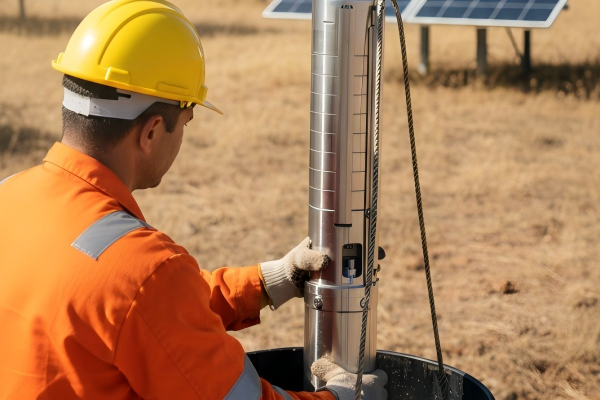
The heart of a modern, high-end solar water pump is a Brushless DC (BLDC) permanent magnet motor.
These are not the simple motors you find in cheap fans.
They are sophisticated pieces of engineering designed for maximum output with minimum power input.
- Extreme Efficiency: A BLDC motor can convert over 90% of the electrical energy it receives into mechanical work. Older AC or brushed DC motors might only be 60-70% efficient. This 20-30% difference is massive.
- Reduced Panel Costs: For a water pump, a 30% increase in motor efficiency means you need 30% fewer solar panels to do the same job. This directly slashes the initial investment in the system.
- Compact & Powerful: These motors, often using powerful neodymium magnets, are smaller and lighter than their traditional counterparts. A motor that is 47% smaller and 39% lighter makes installation and logistics far simpler and cheaper.
Applying the Efficiency Principle to Your Washing Machine
Now, let's apply this lesson back to your home.
- Choose an Efficient Appliance: Start with an Energy Star-rated washing machine. A modern high-efficiency (HE) front-loader uses significantly less power and water than an older top-loader. This is your first and easiest efficiency gain.
- Invest in a High-Quality Inverter: The inverter is your system's motor. A cheap, low-quality inverter might only be 80% efficient, meaning it wastes 20% of the precious power from your batteries just turning itself on. A high-quality pure sine wave inverter can be over 95% efficient.
- Proper System Sizing: An efficient system doesn't have to be oversized "just in case." A professional design based on efficient components delivers the required power without waste, saving you money on panels, batteries, and wiring.
The principle is clear: efficiency at every step reduces the total power you need to generate.
Just as a BLDC motor revolutionized the economics of solar water pumping, a focus on overall system efficiency makes running a washing machine on solar entirely practical and affordable.
Guaranteeing Power: Solving for Cloudy Days and Nighttime
Worried that a cloudy day will leave you with a pile of wet, soapy laundry?
This fear of unreliability is a major barrier, making you doubt if solar can truly replace the constant, on-demand power you get from the electrical grid.
Modern solar systems guarantee power 24/7 through intelligent hybrid technology. An AC/DC hybrid controller automatically blends solar power with grid or generator power, ensuring your washing machine can run anytime, day or night, in any weather.
The biggest misconception about solar power is that it is an "all-or-nothing" proposition.
People imagine that when a cloud covers the sun, their house goes dark.
While this may have been true for early, simplistic systems, modern solar solutions are engineered specifically to solve this problem of intermittency.
The goal is not to rely on the sun 100% of the time, but to use the sun's free energy as the primary source and have seamless, automatic backup options.
Again, the most demanding off-grid applications have led the way.
For a farmer who needs to water crops or livestock, a pump that stops working on a cloudy day is not an option.
The technology perfected for these critical needs provides the perfect solution for household reliability.
The Power of Hybrid Controllers
An AC/DC hybrid controller is the brain of a modern, reliable solar power system.
It acts as an intelligent power manager, constantly monitoring both the solar energy available and the energy your appliance needs.
It doesn't require you to flip a switch or do anything manually.
- Priority 1: Use Solar First. Whenever there is sufficient sunlight, the controller powers your washing machine directly from the solar panels. This is the most cost-effective mode, using 100% free energy. Smart controllers use technologies like MPPT to maximize the harvest from the panels.
- Priority 2: Blend Power Sources. If clouds roll in and the solar output drops, the controller instantly detects the deficit. Instead of shutting down, it supplements the solar energy by drawing just enough power from a secondary AC source (like the grid or a small generator) to keep the appliance running perfectly. It prioritizes using every available watt of solar before asking for backup.
- Priority 3: Full Backup Power. At night, or during long periods of bad weather, the controller automatically switches over to the AC source to run the washing machine. When the sun returns, it seamlessly switches back to solar priority.
This technology guarantees you get the economic benefits of solar without ever sacrificing the on-demand convenience of the grid.
Batteries: Your Personal Energy Reservoir
For completely off-grid setups where no grid connection exists, batteries serve the same purpose.
During the day, the solar panels power your appliances and simultaneously charge a battery bank.
When the sun goes down, the system automatically begins drawing power from the batteries.
A properly sized battery bank can store enough energy to run a washing machine, lights, and other essential loads through the night and into the next day.
Combining these strategies—intelligent hybrid controllers and battery storage—completely eliminates the problem of intermittency.
Conclusion
Running a washing machine on solar is not just possible; it's a smart, reliable, and cost-effective reality.
By understanding power demands and prioritizing efficiency, you can achieve energy independence.
Frequently Asked Questions
What size solar system is needed to run a washing machine?
A 2-3 kW system is often sufficient, but it depends on the washer's efficiency.
You must size the inverter to handle the motor's peak surge, often over 2,000 watts.
Can I run a washer on solar without batteries?
Yes, if you run it during peak sunlight hours.
However, a battery or hybrid controller is needed for use on cloudy days or at night.
How many solar panels does it take to run a washing machine?
Typically, 4 to 6 modern panels (around 400W each) are enough to power the washer and charge batteries.
This depends on your location's sun hours and the washer's consumption.
Is it expensive to run a washing machine on solar?
The initial setup has a cost, but the energy is free.
Over its lifetime, a solar system is significantly cheaper than paying for grid electricity to do your laundry.
Does the hot water cycle use more solar power?
Yes, significantly more.
The electric heating element is the most power-hungry part of a washing machine, often drawing 2,000 watts or more.
What is the best type of inverter for a washing machine?
A pure sine wave inverter is essential.
It provides clean, stable power that is safe for the sensitive electronics in modern appliances and can handle the motor's surge.