Struggling with unreliable water access off the grid?
The high cost and constant maintenance of generators can be a huge problem.
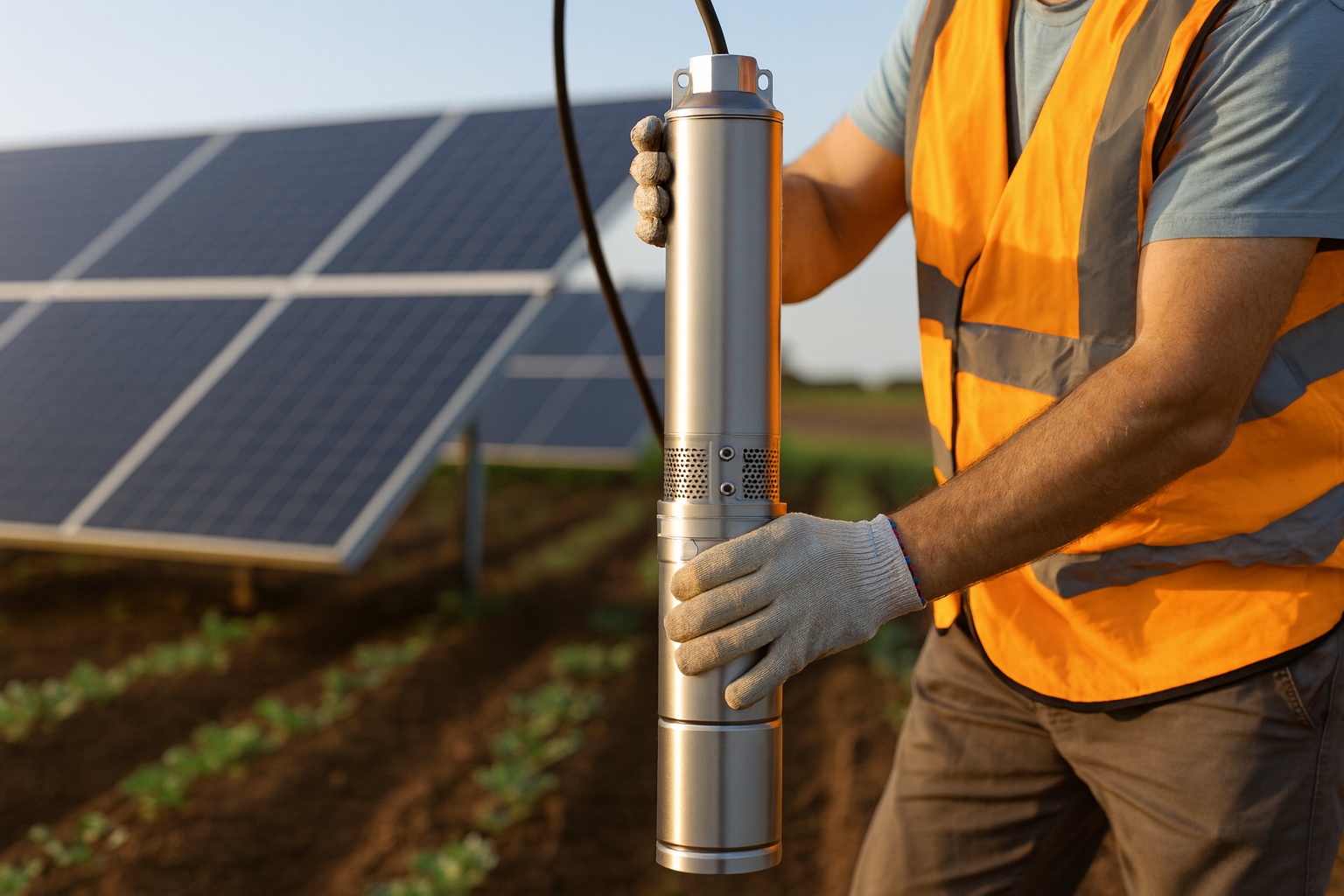
Yes, solar panels can absolutely power a borehole pump.
A properly sized solar array, matched with an efficient pump and controller, provides a reliable and cost-effective water solution.
This system can operate completely independent of the power grid.
It's not as simple as just connecting any panel to any pump.
The success of your system depends on understanding how these key components work together.
To ensure you have water when you need it, you must match the panels, pump, and controller correctly.
Let's explore how to create a powerful and reliable solar pumping system.
What Kind of Pump Can Solar Panels Power?
Choosing the right pump for your solar setup can feel confusing.
Pick the wrong one, and you could waste solar energy or end up with a pump that fails quickly.
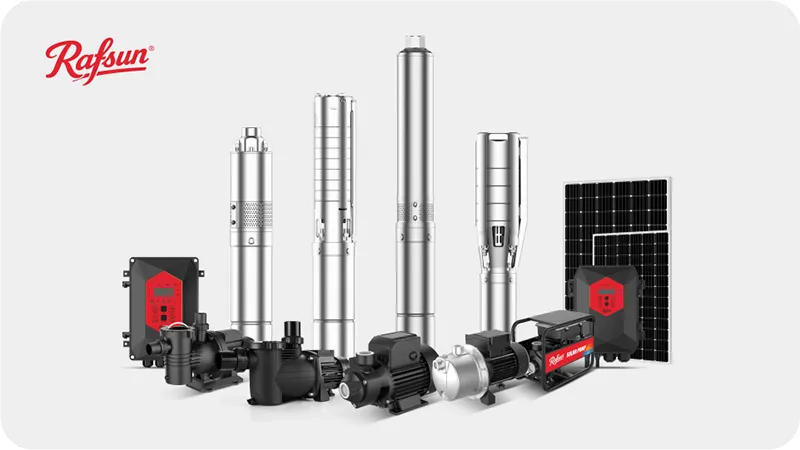
Solar panels can power several types of borehole pumps.
The most common are screw pumps, plastic impeller pumps, and stainless steel impeller pumps.
Each type is designed for different conditions, ensuring a solar-powered option exists for nearly any well.
The type of pump you choose is the first step in designing your solar water system.
It directly affects how much power you'll need and, consequently, how many solar panels are required.
The right pump matches your well's depth, your required water flow, and your water's quality.
Let's break down the three most popular solar pump options to see which is right for you.
The Solar Screw Pump: The Deep Well Specialist
This pump is the perfect solution for lifting water from great depths.
It uses a simple, robust mechanism: a rotating stainless steel screw inside a rubber stator.
This design pushes water upwards through compression.
It is highly efficient at creating high pressure, which is needed to overcome the force of gravity in deep boreholes.
While it generates very high head (pressure), it delivers a lower flow rate.
This makes it ideal for applications like domestic water supply for a home, providing drinking water for livestock, or small-scale garden irrigation.
Its ability to handle sandy or silty water without damage is a major advantage in many rural areas.
The Solar Plastic Impeller Pump: The High-Volume Workhorse
When you need to move a lot of water for tasks like farm irrigation, this is the pump to consider.
It is a multi-stage centrifugal pump.
This means it uses a series of plastic impellers stacked on top of each other.
Each impeller adds pressure, allowing the pump to deliver a high volume of water at a medium head.
The use of durable, wear-resistant plastic makes it a very economical and lightweight option.
This pump is widely used for pasture water supplies and larger garden irrigation where the well depth is not extreme.
It also offers good resistance to fine sand, which is common in agricultural settings.
The Solar Stainless Steel Impeller Pump: The Premium Durability Option
This pump is built to last in the most Challenging water conditions.
It uses impellers, diffusers, and a pump casing all made from high-grade stainless steel (like SS304).
This construction makes it extremely resistant to corrosion.
It is the ideal choice for wells with acidic or alkaline water, or in coastal regions where water may have some salinity.
Like the plastic version, it is a multi-stage centrifugal pump that can deliver high flow rates at medium-to-high head.
It is often chosen for high-end homes, critical livestock operations, and ranches where reliability is the top priority and pump failure is not an option.
| Pump Type | Best For | Flow Rate | Head (Pressure) | Key Advantage |
|---|---|---|---|---|
| Solar Screw Pump | Deep wells, domestic use | Low | Very High | Excellent sand resistance |
| Solar Plastic Impeller Pump | Farm irrigation, high volume | High | Medium | Very economical, lightweight |
| Solar Stainless Steel Impeller Pump | Corrosive water, critical use | High | Medium-High | Maximum durability, long life |
How Many Solar Panels Do You Need for a Borehole Pump?
Worried you'll need a huge, expensive field of solar panels?
Miscalculating the power needs can lead to buying too many panels or, worse, a system that doesn't work when you need it.
The number of panels depends on the pump's power (watts) and your location's sun hours.
An efficient system with a BLDC motor may only need 2-4 panels for a home well.
A large irrigation pump might need 8-12 panels or more.
The question isn't just about the pump; it's about the motor that drives it.
The efficiency of the motor is the single biggest factor in determining how many solar panels you need.
An inefficient motor is a power thief.
It wastes precious solar energy as heat, forcing you to buy more panels to get the job done.
Let's dive into why the motor's technology is the key to an affordable and effective solar pumping system.
The Motor: Your System's Power Engine
Every solar pump is driven by an electric motor.
The motor's job is to convert electrical energy from the solar panels into mechanical energy to turn the pump.
How well it does this job is called its efficiency.
Modern solar pumps use a specific type of motor that dramatically reduces power consumption.
Why a BLDC Motor Saves You Money
The best solar pumps use a BLDC (Brushless DC) permanent magnet motor.
These are not the same as old, standard motors.
They are technological marvels designed for maximum efficiency.
- High Efficiency: BLDC motors can convert over 90% of the electricity they receive into useful work. Older brushed motors might only be 60-70% efficient.
- How this saves you panels: Imagine your pump needs 540 watts of mechanical power. With a 90% efficient BLDC motor, you need to supply 600 watts of electrical power (540 / 0.90). With a 60% efficient old motor, you'd need 900 watts (540 / 0.60). That's a 300-watt difference. You would have to buy at least one extra large solar panel to make up for the motor's inefficiency.
- Powerful Magnets: They use strong, rare-earth permanent magnets (neodymium iron boron) in the rotor. This creates strong magnetic fields without needing to use electricity, boosting torque and power.
Calculating Your Panel Needs
Here is a simplified process for estimating your panel requirements.
- Determine Pump Power: First, a supplier helps you choose a pump based on your head and flow needs. This pump will have a power rating in watts (e.g., 750W). This is the power the BLDC motor consumes.
- Account for System Losses: You should always oversize your solar array slightly to account for things like dust on panels, hot temperatures, and controller inefficiency. A good rule of thumb is to multiply the pump's power by 1.3.
- Calculate Total Watts: For a 750W pump: 750W x 1.3 = 975W. You need a solar array that can produce about 975 watts of power in full sun.
- Divide by Panel Wattage: If you are using 350W solar panels: 975W / 350W-per-panel = 2.78. You would need to round up and purchase 3 solar panels.
The high efficiency of the BLDC motor keeps that initial wattage number as low as possible.
This directly translates into needing fewer solar panels, which saves you money on panels, mounting hardware, and installation space.
Does a Solar-Powered Pump Work on Cloudy Days?
Afraid your water will stop flowing the moment a cloud passes over?
Relying 100% on the sun means a lack of water at night or during long stretches of bad weather, which is a serious problem.
A standard solar pump will slow down or stop on cloudy days.
However, a system with a hybrid AC/DC controller can automatically switch to grid or generator power.
This ensures you have a reliable water supply 24/7, regardless of the weather.
The problem of intermittent sunshine has several solutions.
You could install a large water storage tank or a bank of expensive batteries.
But these solutions add significant cost and complexity to your system.
A far more elegant and cost-effective solution is built right into the pump's control system.
A modern hybrid controller gives you the best of both worlds: free solar energy when it's available and guaranteed water when it's not.
How a Hybrid Controller Provides 24/7 Water
A hybrid controller is an intelligent brain for your pumping system.
Unlike a standard DC-only controller, it is designed with two power inputs: one for your solar panels (DC) and one for an AC source like the utility grid or a generator.
It constantly monitors the power coming from the solar panels.
- On a Sunny Day: The controller uses 100% free power from the solar panels to run the pump. The AC input is ignored.
- On a Partly Cloudy Day: This is where smart controllers shine. If solar power drops, the controller won't just shut off. It will automatically draw only the extra power it needs from the AC source to keep the pump running at full speed. It "blends" the two power sources to maximize your use of free solar energy.
- At Night or on a Rainy Day: When there is no power from the solar panels, the controller seamlessly switches over to the AC input. It runs the pump entirely on grid or generator power.
This automatic switching means you never have to think about it.
Your water pressure remains constant, and your tank stays full.
Cost-Benefit: Hybrid Controller vs. Batteries
For 24/7 reliability, many people think of batteries.
Let's compare the costs.
| Solution | Upfront Cost | Lifespan | Maintenance |
|---|---|---|---|
| Battery Bank | $2,000 - $5,000+ | 5-10 years | Requires monitoring, eventual replacement |
| Hybrid Controller | $50 - $150 (extra over standard) | 15+ years | None |
As you can see, the financial choice is clear.
Adding batteries is a major investment and a recurring one, as batteries need to be replaced.
The small additional cost for a hybrid controller provides the same level of water security for a fraction of the price.
It eliminates the need for expensive, heavy batteries and the complex charge controllers they require.
For anyone with access to an AC power source, even if it's just a backup generator, the hybrid controller is the smartest and most economical way to guarantee water around the clock.
Conclusion
Yes, solar panels can power a borehole pump effectively and reliably.
The key is to create a balanced system by matching an efficient pump and motor to a correctly sized solar array and a smart controller.
FAQs
How long will a solar pump last?
A quality solar pump system can last for 15-20 years or more. The BLDC motor and pump are very durable, while solar panels are typically warrantied for 25 years.
What size solar pump do I need?
The size depends on your well's depth, the distance and height you need to pump the water, and your daily water usage. A pump supplier can calculate the correct size for you.
Can a solar pump fill a tank?
Yes, this is a very common and effective setup. The pump fills a storage tank during the day, and you can draw water from the tank anytime using gravity or a separate pressure pump.
How deep can a solar pump go?
Solar pumps can be configured for a wide range of depths. Solar screw pumps are specialists for very deep wells, capable of pumping from over 200 meters (650+ feet).
How many solar panels does it take to run a 1 hp well pump?
A 1 hp pump (about 750W) with an efficient BLDC motor would typically require a solar array of about 1000-1200 watts. This would be three or four modern solar panels.
What is the maintenance on a solar water pump?
Maintenance is very low. You should occasionally clean the solar panels. The brushless motor requires no maintenance, and the pump itself is underground and designed for a long service life.
Is it better to have a bigger pump or more solar panels?
It is better to have an efficient, correctly sized pump and the right number of panels. An oversized pump will cycle on and off frequently, causing premature wear and being inefficient.