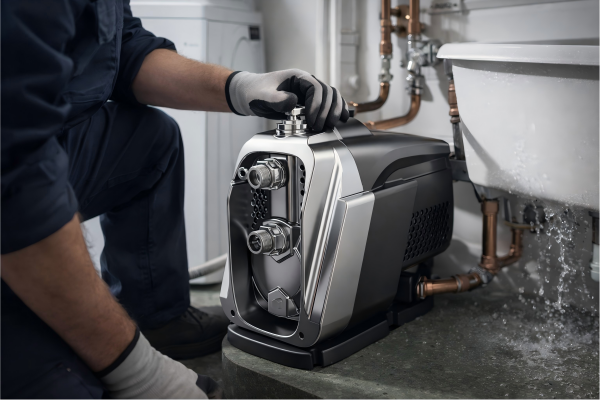
Low water pressure disrupts daily life.
A booster pump seems like a simple fix.
But a small mistake can lead to major plumbing disasters.
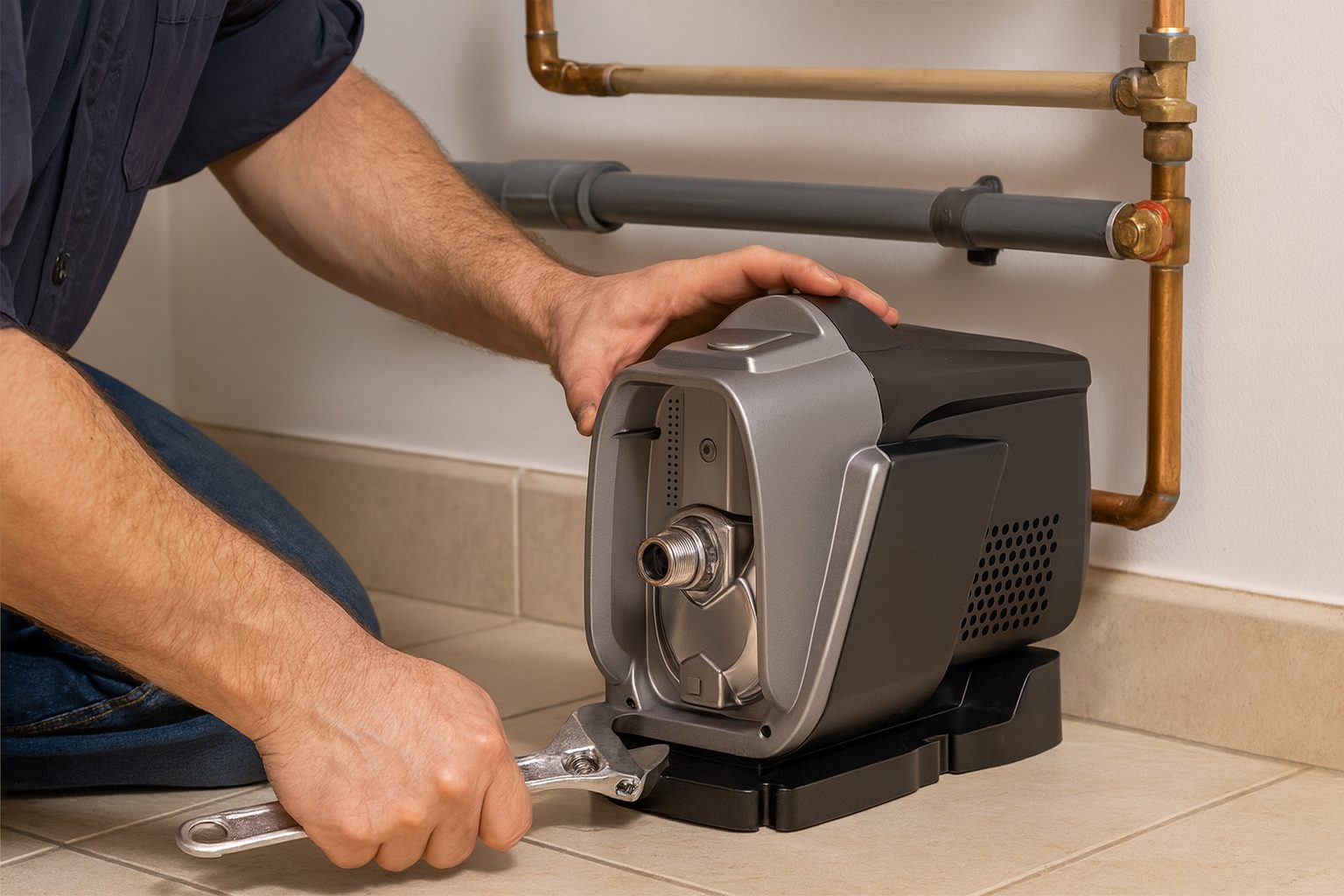
Yes, you absolutely need a qualified plumber to install a booster pump.
This installation involves complex plumbing and electrical connections that require professional expertise.
A plumber ensures the setup is safe, efficient, and compliant with all local building codes, protecting your property and investment.
Hiring a professional might seem like an extra cost upfront.
However, it's a critical investment in your home's safety and the pump's long-term performance.
A simple DIY error could lead to leaks, electrical hazards, or even damage to the new pump itself.
In the following sections, we will break down exactly why a professional plumber is essential for this job.
We will cover the technical complexities, the importance of legal compliance, and how a pro can save you money in the long run.
Understanding these points will help you make an informed decision and ensure your water pressure problems are solved correctly the first time.
Why Professional Installation is Recommended
Struggling with weak showers and slow-filling appliances is a common frustration.
You know a booster pump is the solution.
But the thought of a complicated installation process is holding you back.
Professional installation is recommended because it guarantees safety, proper function, and adherence to legal codes.
A certified plumber handles the intricate plumbing and electrical work, selects the right pump for your specific needs, and can identify underlying issues that a booster pump alone might not solve.
The value of a professional plumber goes far beyond simply connecting pipes.
It's about a holistic approach to solving your water pressure issues permanently and safely.
A plumber brings diagnostic tools and years of experience to the job, which is something a DIY guide can never replace.
They analyze your entire plumbing system to ensure a booster pump is the right choice and that it will perform optimally once installed.
Advanced systems, especially those with Variable Frequency Drives (VFDs), have specific requirements that a professional is trained to handle.
Let's dive deeper into the key areas where a plumber's expertise is non-negotiable.
Plumbing and Electrical Work
The core of a booster pump installation involves directly modifying two of your home's most critical systems: plumbing and electrical.
This is not a simple "plug-and-play" task.
It requires precision, technical knowledge, and an understanding of how these systems interact.
Mistakes in either area can lead to significant water damage or dangerous electrical faults.
A professional plumber is trained and licensed to manage these risks effectively.
The Plumbing Connection
First, the plumber must physically integrate the pump into your main water line.
This starts with shutting off the water supply and draining the pipes to work safely.
The process then involves precisely cutting a section of your main water pipe.
The material of this pipe—be it copper, PEX, or PVC—dictates the tools and connection methods required.
For instance, copper pipes often require soldering, a skill that creates a strong, permanent, and leak-proof seal but also involves an open flame.
A plumber also installs essential components like shut-off valves on either side of the pump.
This creates a bypass loop.
A bypass loop is critical because it allows you to isolate the pump for future maintenance or replacement without shutting off water to the entire house.
Check valves are also installed to prevent backflow, ensuring water only moves in the correct direction and protecting your water supply from contamination.
The Electrical Connection
Connecting the booster pump to your home's electrical system is equally complex and carries significant risks if done incorrectly.
Most booster pumps, especially powerful VFD models, require a dedicated electrical circuit connected directly to your home's breaker panel.
This is not a job for a standard extension cord.
A plumber or a licensed electrician they work with will run the correct gauge of wire from the panel to the pump's location.
They will install a new, appropriately rated circuit breaker to protect the pump from overloads.
Crucially, the connection must be properly grounded to prevent electrical shocks.
In many areas, building codes require that pumps in potentially wet locations be protected by a Ground-Fault Circuit Interrupter (GFCI).
This device can shut off power in milliseconds if it detects a fault, preventing serious injury.
An expert ensures all wiring is secured, protected from physical damage, and meets every single code requirement for a safe and reliable installation.
Code Compliance
You've got your new pump and are ready to boost your water pressure.
But did you know that installing it could be illegal without the right permits and inspections?
This oversight can lead to serious fines and safety hazards.
A licensed plumber ensures your booster pump installation complies with all local plumbing and electrical codes.
This protects you from potential fines, ensures your home insurance remains valid, and guarantees the system is installed to vetted safety standards, preventing hazards like electrical fires or water contamination.
Navigating the maze of local building codes is a complex task.
These regulations are in place for a crucial reason: to protect you, your family, and your property.
Codes dictate everything from the type of pipes and fittings you can use to the specific electrical wiring methods required for safety.
A professional plumber is not just familiar with these codes; their license depends on adhering to them.
They know which permits are required for the job and will arrange for the necessary inspections by local authorities.
This creates an official record that the work was completed correctly, which is vital for home insurance and future property sales.
Let's explore the specific areas of code compliance that a professional manages.
Adhering to Plumbing Codes
Plumbing codes are highly detailed and vary by region.
A licensed plumber understands the specific requirements for your area.
These codes govern many aspects of the installation:
- Backflow Prevention: Most codes mandate the installation of a backflow prevention device, like a check valve or a more complex reduced pressure zone (RPZ) valve. This is a critical safety measure to prevent water from the home's plumbing from siphoning back into the municipal water supply, which could contaminate the public water system.
- Pipe Materials and Sizing: Codes specify which types of pipes (copper, PEX, etc.) are approved and how they must be joined. They also dictate the minimum pipe diameter to ensure the system can handle the increased flow and pressure from the booster pump without causing noise or damage.
- Pressure Limitations: Some municipalities have rules about the maximum water pressure allowed in a residential property. A plumber will install and set your booster pump so that it does not exceed these limits, which helps prevent damage to your appliances and fixtures.
Navigating Electrical Codes
The National Electrical Code (NEC) and its local variants provide strict rules for any wiring.
A plumber ensures every part of the electrical installation is compliant.
| Code Requirement | Professional Action |
|---|---|
| Dedicated Circuit | Runs a new, dedicated circuit from the breaker panel specifically for the pump. |
| GFCI Protection | Installs a Ground-Fault Circuit Interrupter for shock protection in wet areas. |
| Proper Wire Gauge | Selects the correct thickness of wire based on pump amperage and distance from panel. |
| Secure Conduit/Cabling | Protects all wiring in approved conduit or sheathing to prevent physical damage. |
| Correct Grounding | Ensures the pump and all electrical components are properly grounded to prevent shock. |
The Importance of Permits and Inspections
Attempting to bypass the permit and inspection process is a risky gamble.
If unpermitted work is discovered, you could face hefty fines and be ordered to remove the installation.
Worse, if a fire or major flood is caused by faulty, unpermitted work, your homeowner's insurance company could deny your claim, leaving you with the full financial burden.
A professional plumber handles this entire process for you, giving you peace of mind that your installation is safe, legal, and fully documented.
Proper Pump Selection
You're facing low water pressure.
Buying the biggest, most powerful booster pump seems like the obvious solution, right?
Unfortunately, this approach often leads to new problems, like noisy pipes or damaged appliances.
A plumber Ccan help you choose the correct type and size of booster pump for your home.
They analyze factors like your home's size, incoming water pressure, and desired output to recommend a pump that solves your problem efficiently without creating new ones, saving you money and frustration.
Choosing the right booster pump is a science.
It’s about finding a delicate balance.
A pump that is too weak will not solve your low-pressure problem.
A pump that is too powerful can cause "water hammer" (a loud banging in the pipes), place excessive strain on your plumbing fixtures and joints, and waste electricity.
A professional plumber has the knowledge to perform the necessary calculations and select a pump that is perfectly matched to your home’s unique hydraulic requirements.
This ensures optimal performance, energy efficiency, and a longer lifespan for both the pump and your entire plumbing system.
Let’s examine the factors a plumber considers when sizing and selecting a pump.
Diagnosing Your Water System's Needs
Before recommending a pump, a plumber conducts a thorough assessment.
This involves measuring two key metrics:
- Static Water Pressure: The plumber uses a pressure gauge to measure the baseline pressure of the water coming into your home from the municipal supply or well when all taps are closed. This tells them the starting point.
- Flow Rate: They measure how many gallons per minute (GPM) your home uses. They might do this by opening several fixtures at once (like a shower and a kitchen sink) and measuring the output, or by using the water meter. This helps determine the volume of water the pump needs to move.
Sizing the Pump Correctly
With this data, the plumber can determine the "Total Dynamic Head" (TDH) required.
This is a calculation that includes the vertical height the water needs to be lifted, the friction loss from pipes and fittings, and the desired final pressure at the faucet.
Based on the required GPM and TDH, they can consult a pump's performance curve.
Understanding Pump Curves
Every pump comes with a chart from the manufacturer called a "pump curve."
This graph shows the relationship between the flow rate (GPM) and the pressure (in feet of head or PSI) that the pump can produce.
A plumber knows how to read these curves to find a pump that will operate at its "Best Efficiency Point" (BEP) for your specific home.
Operating at the BEP means the pump is running at its most efficient, using the least amount of energy and experiencing the least amount of wear and tear.
Choosing the Right Pump Technology
Beyond just size, a plumber will recommend the right type of pump.
For modern homes, a Variable Frequency Drive (VFD) booster pump is often the superior choice.
Unlike a traditional fixed-speed pump that turns on at full power and then shuts off, a VFD pump intelligently adjusts its motor speed in real-time.
| Feature | Traditional Fixed-Speed Pump | Modern VFD Pump |
|---|---|---|
| Operation | Runs at 100% speed or is off. | Adjusts speed to meet water demand. |
| Pressure | Pressure fluctuates as the pump cycles on and off. | Maintains a perfectly constant, user-set pressure. |
| Energy Use | High energy consumption due to constant full-power starts. | Highly energy-efficient, saving up to 50% on electricity. |
| Noise Level | Can be loud when it kicks on. | Operates at an ultra-quiet level. |
| Lifespan | Mechanical stress from abrupt starts reduces lifespan. | Soft-start function reduces wear and extends pump life. |
A plumber can assess whether the higher initial investment in a VFD pump will provide long-term savings and a better user experience for your situation, making it a smarter investment overall.
Identifying Underlying Issues
You’re convinced a booster pump will fix your weak water flow.
But what if the real problem is a hidden clog or a leak in your pipes?
Installing a new pump in this scenario is like putting a bigger engine in a car with a flat tire.
A plumber can diagnose the root cause of low water pressure before installing a pump.
They can check for issues like corroded or clogged pipes, hidden leaks, or a failing pressure regulator.
Solving these underlying problems first might make a booster pump unnecessary or far more effective.
Low water pressure is a symptom, not the disease itself.
A booster pump is a powerful tool, but it's designed to augment a healthy plumbing system, not to compensate for a failing one.
By hiring a plumber for an initial diagnosis, you ensure you are treating the actual problem.
This crucial first step can save you hundreds or even thousands of dollars.
Imagine spending money to install a powerful new pump, only to find that your water pressure barely improves because the real issue was a $50 pressure-reducing valve that had failed at the main line.
A professional plumber has the diagnostic equipment and expertise to pinpoint these hidden issues before any new hardware is installed.
Common Culprits for Low Water Pressure
A plumber will investigate several potential sources of your low-pressure woes.
1. Clogged and Corroded Pipes
This is especially common in older homes with galvanized steel pipes.
Over decades, these pipes can corrode from the inside out, and mineral deposits (scale) can build up.
This buildup effectively narrows the internal diameter of the pipe, restricting water flow like a clogged artery.
A plumber might notice this during an initial inspection or use a special borescope camera to look inside the pipes.
Forcing more pressure through a severely clogged pipe with a booster pump is ineffective and can even dislodge chunks of rust, leading to clogged faucets and appliances.
The correct solution might be a partial or full re-piping of the home.
2. Failing Pressure Reducing Valve (PRV)
Many homes have a Pressure Reducing Valve (PRV) installed where the city water line enters the house.
This bell-shaped device is designed to lower high municipal pressure to a safe level for your home's plumbing.
Over time, these valves can fail or become clogged with debris.
When they fail, they often get stuck in a partially closed position, strangling the water flow to the entire house.
A plumber can test the PRV and replace it if it's faulty, which can often restore full water pressure instantly without the need for a booster pump.
3. Hidden Leaks
Even a small, hidden leak in your plumbing system can cause a noticeable drop in water pressure.
Water is escaping the closed system, so there is less pressure available at your taps.
A plumber can perform a pressure test on your system or use a water meter to check for leaks.
By turning off all water-using appliances and watching the meter, they can see if it continues to spin, indicating a leak somewhere in the system.
Fixing the leak is the correct solution, which also saves water and prevents potential water damage.
4. Issues at the Water Main
Sometimes the problem isn't inside your home at all.
The shut-off valves at your water meter (both on the city side and your side) may not be fully open.
Construction or issues in the municipal pipes can also lead to debris clogging the line before it even reaches your property.
A plumber knows how to check these external components and can coordinate with the water utility if the issue is on their side of the meter.
By methodically ruling out these other causes, a plumber ensures that when a booster pump is installed, it's for the right reason and will deliver the powerful, consistent results you expect.
System Testing
The new pump is installed, the pipes are connected, and the power is on.
The job is done, right?
Not quite.
Without proper testing and calibration, your new system could be inefficient or even unsafe.
A professional will test the system after installation to ensure it is working correctly and efficiently.
This includes checking for leaks, verifying electrical safety, and fine-tuning the pump's pressure settings for optimal performance and to protect your home's plumbing and appliances from damage.
The final step of a professional installation is just as critical as the first.
Commissioning the system involves a comprehensive series of checks and adjustments.
This is where the plumber verifies that all components are working together as a cohesive, efficient, and safe system.
This meticulous testing process ensures you get the full benefit of your investment from day one.
It transforms a collection of newly installed parts into a reliable, high-performance water pressure solution for your entire home.
For advanced systems like VFD booster pumps, this step is particularly important, as their performance can be precisely tailored to the home's needs.
Post-Installation Commissioning Checklist
A plumber follows a rigorous checklist to confirm the quality and safety of their work.
1. Leak Detection
The first and most critical test is to check for leaks.
The plumber will slowly turn the water back on and meticulously inspect every new joint, fitting, and connection point they worked on.
They check the suction side of the pump, the discharge side, and the bypass loop.
Even a tiny drip can lead to significant water damage, mold growth, or pump performance issues over time.
This inspection is done under full operating pressure to ensure the seals are robust.
2. Electrical System Verification
Next, the plumber verifies the electrical system's integrity.
This involves:
- Voltage Check: Using a multimeter to confirm the pump is receiving the correct, stable voltage as specified by the manufacturer.
- Amperage Draw: Measuring the amount of current the pump is drawing while running to ensure it's within the expected range. An unusually high draw could indicate a problem with the motor or a blockage.
- GFCI Test: Manually tripping the GFCI breaker or outlet to confirm it shuts off power to the pump correctly, verifying this crucial safety feature is operational.
3. Pressure Calibration and Adjustment
This is where the system is fine-tuned for your home.
The plumber will:
- Set the Cut-In/Cut-Out Pressure: For traditional pumps, this means setting the pressure at which the pump turns on (cut-in) and turns off (cut-out).
- Set Constant Pressure (for VFD pumps): For a VFD pump, the plumber will use the digital controller to set the exact desired constant pressure (e.g., 55 PSI). They will then open multiple faucets and monitor the pump's display to see it intelligently ramp up its speed to maintain that exact pressure.
- Check for Water Hammer: They will quickly open and close faucets to listen for any signs of water hammer. If present, they may need to adjust the pump's settings or install a water hammer arrestor.
4. Real-Time Performance Monitoring
Modern VFD pumps provide a wealth of real-time data that a professional can use for final diagnostics.
By accessing the pump's control panel, they can monitor key performance indicators to confirm everything is perfect:
| Data Point | What It Reveals |
|---|---|
| RPM | Shows the motor speed is correctly adjusting to demand. |
| Power (Watts) | Confirms the pump is operating efficiently. |
| Voltage (V) | Verifies stable electrical supply under load. |
| Temp (°C/°F) | Ensures the motor and controller are not overheating. |
By reviewing this data, a plumber can confirm the pump is not only working, but working optimally for maximum efficiency and longevity.
This final, thorough testing process is the hallmark of a professional job and provides the ultimate assurance that your water pressure problems are solved correctly.
Conclusion
In short, hiring a licensed plumber for your booster pump installation is essential.
It ensures safety, code compliance, and optimal performance, protecting your investment and your home from costly mistakes.
FAQs
Is a booster pump illegal?
No, booster pumps are not illegal. However, their installation must comply with local plumbing and electrical codes, and sometimes requires a permit to ensure safety and prevent backflow into the public water supply.
What is the downside of a booster pump?
The main downsides can be the initial cost of the pump and professional installation. If improperly sized, it can also cause noise, increase energy bills, or strain your plumbing system.
How do you know if you need a water booster pump?
You might need a booster pump if you consistently experience low water pressure throughout your house, especially on upper floors or when multiple faucets are running simultaneously.
Where should a booster pump be installed?
A booster pump should be installed on the main water line just after the water meter and main shut-off valve. This allows it to boost the pressure for the entire house.
Do booster pumps use a lot of electricity?
Modern Variable Frequency Drive (VFD) booster pumps are very energy-efficient. They adjust their speed to the water demand, using significantly less electricity than older, fixed-speed models.
Can a booster pump damage my pipes?
Yes, if a pump is too powerful for your system, it can create excessive pressure. This can damage old pipes, joints, and connected appliances. This is why professional sizing is critical.
How long does a water booster pump last?
A quality booster pump that is properly installed and maintained can last for 8 to 15 years. Factors like water quality and frequency of use can affect its lifespan.
What PSI should my house water be?
Ideal residential water pressure is typically between 45 and 60 PSI. Pressure above 80 PSI can damage plumbing, while pressure below 40 PSI is generally considered low.