Frustrated with fluctuating water pressure ruining your shower?
You might think a smart VFD pump solves everything, but there's a crucial component you can't ignore for peak performance.
Yes, you still need a pressure tank with a VFD pump, but it can be much smaller.
This small tank acts as a buffer for minor demands.
It also prevents a damaging pressure surge known as water hammer.
This setup protects the pump and improves system efficiency.
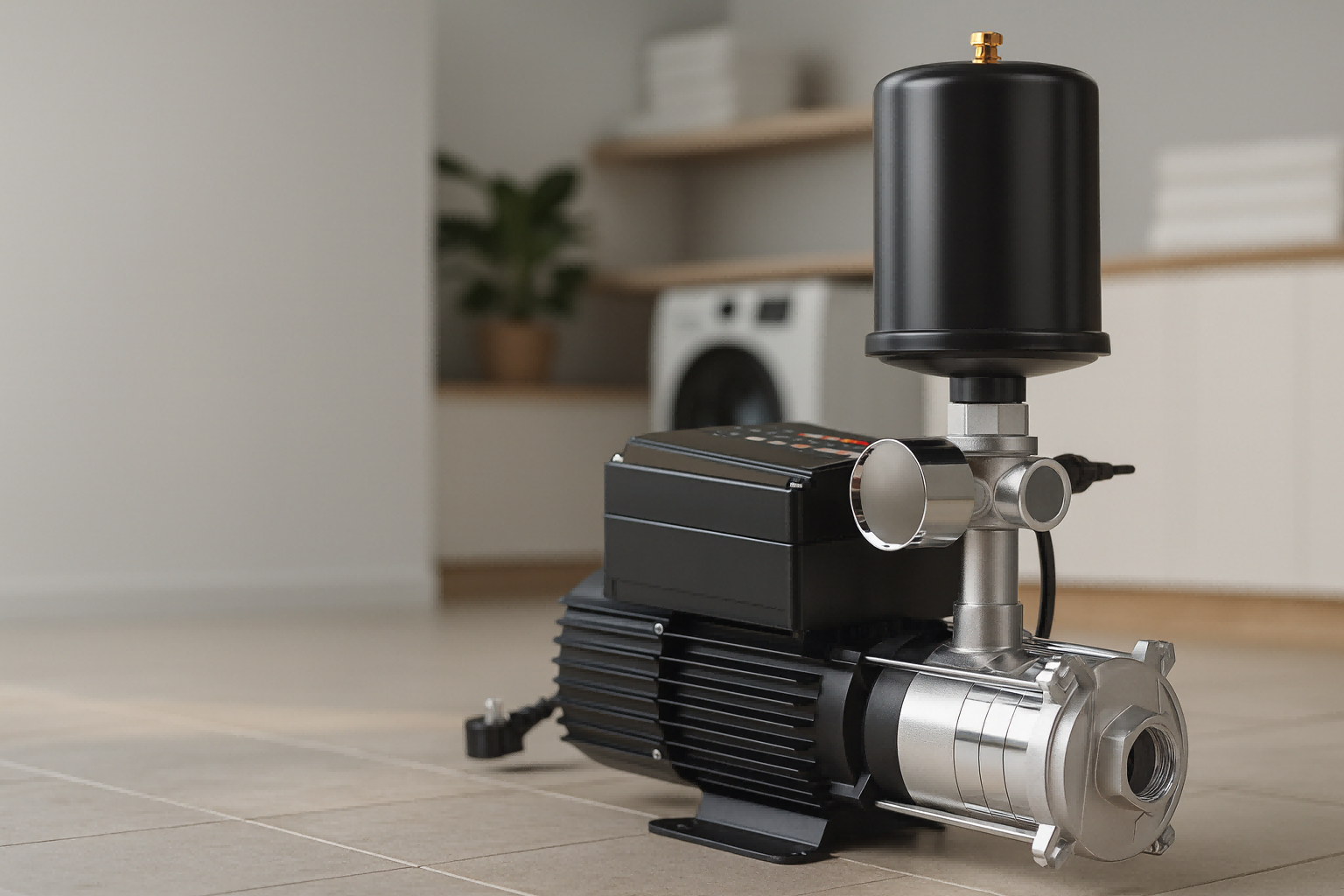
A variable frequency drive (VFD) pump is incredibly smart.
It adjusts its speed to match your water usage, keeping the pressure smooth and consistent.
So, it's easy to wonder why an old-fashioned pressure tank is still part of this modern setup.
While the VFD does the heavy lifting, the pressure tank plays a vital, supporting role.
It's the key to unlocking the full potential of your system, ensuring both longevity and flawless operation.
Let's explore why this small tank is not just an add-on, but a necessity.
Why a VFD Pump Still Needs a Pressure Tank
Struggling to understand why your high-tech pump system includes a pressure tank?
You thought the VFD controller made tanks obsolete, but it's actually a key partner in performance.
A pressure tank in a VFD system acts as a crucial buffer.
It absorbs small pressure changes and handles tiny water demands without forcing the pump to run.
This reduces pump cycling, prevents damage from water hammer, and ultimately extends the life of your entire water system.
A variable frequency drive pump is designed to maintain constant pressure by adjusting its motor speed.
This is a massive leap forward from traditional fixed-speed pumps that cycle on and off aggressively.
However, even the most responsive VFD can't react instantly to every tiny change in water demand.
This is where the small pressure tank becomes an essential teammate.
Think of it not as a primary water storage unit, but as a shock absorber and a mini-reservoir for your plumbing.
It refines the VFD's operation, making the entire system smoother, quieter, and more durable.
The Tank as a Buffer
The VFD pump is smart enough to slow down for low water demand.
However, for extremely small uses, like briefly rinsing a cup, the tank provides that water instantly.
This means the pump motor doesn't have to start for just a few seconds of work.
This action is critical for reducing the number of start/stop cycles, which is a primary cause of wear on a pump motor.
By handling這些 tiny demands, the tank ensures the pump only runs when truly needed, saving energy and reducing mechanical stress.
Preventing Water Hammer
Water hammer is a powerful pressure surge.
It happens when flowing water is forced to stop or change direction suddenly, like when a dishwasher valve snaps shut.
This can create a loud banging noise and send a damaging shockwave through your pipes.
A pressure tank, even a small one, contains a cushion of compressed air.
This air cushion absorbs the pressure spike instantly.
It protects not only your plumbing joints and fixtures but also the sensitive components within the VFD pump itself.
Serving Small, Frequent Demands
Consider the small, frequent water uses in a typical home.
Examples include flushing a toilet or an ice maker filling its tray.
Without a pressure tank, the VFD pump would need to cycle on for each of these minor events.
The tank can supply the water for these tasks on its own.
The system pressure drops slightly, and then the pump will gently run to slowly recharge the tank, preparing it for the next small demand.
This results in a more stable and silent operation.
| Function | How it Helps the VFD System | Main Benefit |
|---|---|---|
| Buffering | Provides water for tiny demands without starting the motor. | Reduces motor wear and tear. |
| Water Hammer Prevention | Absorbs sudden pressure spikes from closing valves. | Protects pipes and pump components. |
| Handling Small Demands | Supplies water for tasks like a toilet flush from its reserve. | Increases pump and system lifespan. |
Ultimately, the pressure tank helps the VFD system operate at its peak.
It smooths out the rough edges of real-world water usage.
This partnership ensures you get the consistent, reliable water pressure you expect, while also maximizing the lifespan of your investment.
The Benefits of Combining a VFD with a Small Tank
Are you spending too much on energy for your water pump?
Traditional systems with large tanks are bulky, inefficient, and deliver inconsistent pressure, but there is a modern solution.
Combining a VFD with a small pressure tank delivers consistent, city-like water pressure while saving space and money.
This smart setup also reduces pump wear by minimizing start/stop cycles, which significantly increases the lifespan of the motor and lowers long-term maintenance costs.
The partnership between a VFD controller and a small pressure tank represents a major evolution in water pressure management.
It moves away from the old "on/off" method, which required massive tanks to minimize pump cycling.
Instead, it creates a responsive system that gracefully adapts to your needs.
This combination isn't just about making the system work; it's about making it work smarter, quieter, and more efficiently.
The benefits are immediate and noticeable, transforming your daily water usage experience while providing tangible savings and peace of mind.
Consistent, Unwavering Pressure
One of the most significant advantages is the quality of the water pressure.
Traditional pumps cause noticeable pressure drops before they kick on, leading to weak showers.
A VFD system, supported by its tank, eliminates these fluctuations.
The VFD maintains a precise pressure setpoint.
The tank smooths out any minor variations.
The result is a steady, powerful flow of water, whether one faucet is open or several appliances are running at once.
This provides a level of comfort and performance similar to a well-managed municipal water supply.
Increased Pump and Motor Lifespan
The number one enemy of an electric motor is frequent, hard starts.
A traditional pump slams to full speed instantly, causing significant mechanical and electrical stress.
A VFD, however, uses a "soft-start" function.
It gradually ramps the motor up to the required speed.
This alone drastically reduces wear.
The pressure tank enhances this protection further.
By handling the smallest water demands, the tank reduces the total number of starts the pump needs to make in a day by as much as 70%.
Fewer starts and smoother operation mean a much longer, more reliable life for the pump motor.
Reduced Footprint and Cost
Traditional well systems often need massive pressure tanks, sometimes 80 gallons or more.
These large tanks are expensive and consume a lot of valuable floor space.
Because a VFD system manages pressure dynamically, it only needs a very small tank, often between 2 and 10 gallons.
This offers several key advantages:
- Space Savings: The smaller tank fits easily into tight spaces, freeing up room in your utility closet or basement.
- Lower Initial Cost: Small tanks are significantly less expensive than their larger counterparts, reducing the overall investment in the system.
- Easier Installation: A lighter, smaller tank is much easier for an installer to handle and position, which can help lower labor costs.
This space and cost efficiency makes upgrading to a VFD system more accessible and practical for a wider range of properties, from residential homes to small commercial buildings.
The system is not just better performing, it's also more intelligently designed from an economic and logistical standpoint.
Key Features of a Modern VFD Pumping System
Worried about your pump failing during a power surge or running dry?
Older pumps lack the intelligence to protect themselves, leading to costly breakdowns and emergency repairs that disrupt your water supply.
A modern VFD pumping system is packed with self-protection features.
It intelligently guards against everything from dry running and voltage fluctuations to overheating and freezing.
This built-in intelligence ensures unparalleled reliability and a significantly longer operational lifespan, giving you total peace of mind.
The brain of a modern water system is its VFD controller.
This is much more than just a motor driver; it's a sophisticated computer dedicated to optimizing and protecting the entire pumping operation.
Manufacturers have engineered these systems to be incredibly resilient.
They anticipate and counteract potential problems before they can cause catastrophic failure.
From the core motor technology to the materials used in construction, every component is chosen for performance and durability.
Let's dive into the core technologies that make these systems so robust and reliable.
Core Drive Technology
The heart of the system is the combination of a high-efficiency motor and the VFD.
Many top-tier systems use a Permanent Magnet Synchronous Motor (PMSM).
These motors are quieter, more powerful, and more efficient than traditional induction motors.
When paired with the VFD, this technology delivers a range of benefits:
- Ultra-Quiet Operation: The precise control of the motor results in noise levels under 50dB, which is quieter than a conversation.
- Constant Pressure: The drive constantly adjusts motor speed to hold water pressure perfectly steady.
- Soft Start & Stop: This function ramps motor speed up and down gradually, reducing mechanical shock and extending the life of the entire system.
Uncompromising Durability and Protection
Modern VFD pumps are built to survive harsh conditions.
This is achieved through a combination of superior materials and intelligent software protections.
Robust Materials
High-quality pumps use corrosion-resistant materials for all parts that touch water.
This often includes AISI 304 stainless steel for impellers and pump housings.
The outer casing is also important, often made from UV-resistant materials to prevent degradation from sunlight in outdoor installations.
Even the internal electronics are protected.
Leading manufacturers completely seal the main circuit board in a waterproof potting compound.
This achieves an IP67 rating, making it impervious to moisture, dust, and condensation, which are common causes of electronic failure in pumps.
Intelligent Protection Suite
The system's software is constantly monitoring operating conditions.
It includes a comprehensive suite of "shields" to protect against damage.
| Protection Type | What It Does | Why It Matters |
|---|---|---|
| Dry Run Protection | Senses a lack of water and shuts the pump off. | Prevents the pump from burning itself out. |
| Voltage Protection | Monitors for and protects against under-voltage and over-voltage. | Shields electronics from unstable power grids. |
| Overheating Protection | Monitors motor and electronics temperature and stops if they get too hot. | Prevents permanent damage from excessive heat. |
| Antifreeze Protection | Automatically runs the pump for short periods if a freeze is imminent. | Prevents ice from forming and cracking the pump. |
These intelligent safeguards work together to make the system incredibly resilient.
It's a pump that not only performs well but also actively protects itself from a wide array of potential threats.
Conclusion
Yes, a small pressure tank is essential with a VFD pump.
It improves efficiency, prevents damage, and extends your system's life, ensuring you get the best possible performance and reliability.
FAQs
What size pressure tank do I need for a VFD?
You only need a small tank, typically 2-10 gallons.
Its job is to buffer small demands and absorb shock, not store large amounts of water.
Can you run a VFD pump without a pressure tank?
It is not recommended.
Without a tank, the pump will cycle excessively for small uses and be vulnerable to water hammer, leading to premature failure.
Does a VFD booster pump save money?
Yes, a VFD pump can reduce electricity consumption by up to 50%.
It runs only at the speed needed, unlike traditional pumps that run at full power.
What is the difference between a VFD and a constant pressure pump?
A VFD is the technology that creates constant pressure.
"Constant pressure pump" is a general term for a system that uses a VFD to avoid pressure drops.
How long does a VFD pump last?
With proper installation and a small pressure tank, a quality VFD pump can last 15-20 years.
The reduced cycling and soft-start feature greatly extend its lifespan.
What is the main advantage of a VFD pump?
The main advantage is consistent, stable water pressure similar to city water.
It also offers significant energy savings and quieter operation compared to standard pumps.
Can a VFD be damaged by a bad power supply?
Modern VFDs have built-in over and under-voltage protection.
This feature shields the sensitive electronics from damage caused by an unstable power grid.