Tired of ugly extension cords and high electricity bills for your pond?
You want a beautiful water feature, but the hassle and cost of traditional pumps are draining your enthusiasm.
Yes, modern solar pond pumps work exceptionally well. They are no longer weak novelties but powerful systems capable of running large fountains and filters, thanks to high-efficiency motors and intelligent controllers.
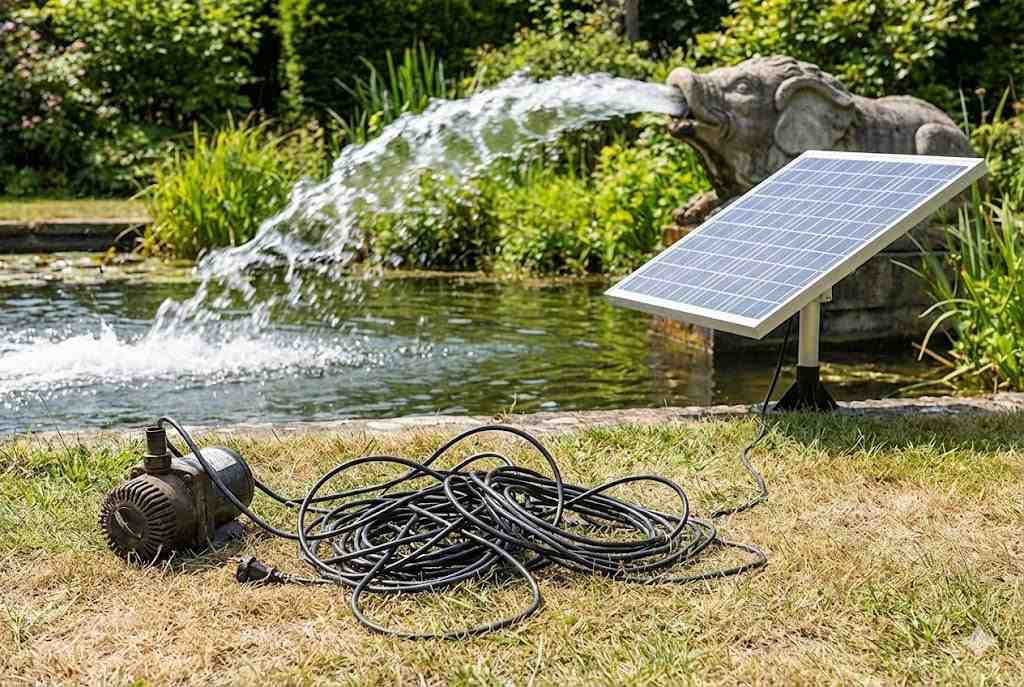
The question of whether solar pond pumps are effective is a common one.
Many people remember the early models.
These were often small, unreliable gadgets that barely created a trickle and stopped working the moment a cloud appeared.
Technology has made a massive leap forward.
The core components that drive industrial-grade solar water systems, such as those used for deep well irrigation in Africa and Australia, are now available for pond applications.
This means you can now get reliable, powerful performance powered entirely by the sun.
The key is to understand what makes a modern system work and how to select the right components for your specific needs, moving beyond the simple "all-in-one" kits of the past.
Let's explore the technology that makes them not only work but often outperform their grid-powered counterparts.
Step 1: Understanding What "Working" Means for a Pond Pump
Is your pond stagnant and lifeless?
A weak pump fails to circulate water, leading to algae blooms and unhealthy fish.
You need a solution that provides consistent aeration and filtration.
A solar pump "works" when it achieves the necessary Gallons Per Hour (GPH) for circulation and filtration, and the required Head Height for waterfalls or fountains, using only solar power.
Before we can say a solar pump "works," we have to define the job.
A pond pump isn't just about moving water; it's about keeping a delicate ecosystem alive and beautiful.
The term "working" breaks down into two critical performance metrics that you must calculate for your specific pond.
Choosing a pump without understanding these numbers is the number one reason for failure and disappointment.
The success of your solar pond pump project depends entirely on matching the pump's capabilities to these two demands.
Calculating Required Flow Rate (GPH)
The Flow Rate, measured in Gallons Per Hour (GPH), is the volume of water the pump can circulate.
This is the most important factor for pond health.
A good rule of thumb is that the pump should be able to circulate the entire volume of your pond at least once every two hours.
-
For General Health & Filtration: If your pond is 2,000 gallons, you need a pump with a flow rate of at least 1,000 GPH.
-
For Ponds with Fish (especially Koi): The circulation demand increases. You should aim to circulate the full volume of water once every hour. For a 2,000-gallon koi pond, you would need a 2,000 GPH pump.
-
For Water Features: Fountains and waterfalls have their own requirements, often specified by the feature's manufacturer (e.g., "requires 500 GPH for a full cascade effect").
You must choose the highest GPH required by any of these factors.
Determining Required Head Height
Head Height (or Lift) is the maximum vertical distance the pump can push water.
If you have a waterfall that is 4 feet above the pond's surface, you need a pump with a Head Height of at least 4 feet.
However, it's more complex than just the vertical height.
Every foot of horizontal tubing and every bend or filter adds "dynamic head" due to friction loss.
A simplified way to account for this is to add 1 foot of Head Height for every 10 feet of tubing.
Example Calculation:
- You have a waterfall 4 feet high.
- The pump is connected by 20 feet of tubing.
- Required Head Height = 4 ft (vertical) + 2 ft (for 20 ft of tubing) = 6 feet.
Your pump must be able to deliver your required GPH at this specific Head Height.
A pump rated for 2,000 GPH at zero head might only deliver 1,200 GPH at a 6-foot head height.
Always check the manufacturer's performance chart to ensure it meets both your GPH and Head Height needs simultaneously.
| Pond Type | Size (Gallons) | Required GPH | Waterfall Height | Tubing Length | Required Head |
|---|---|---|---|---|---|
| Small Garden Pond | 500 | 250 GPH | 2 feet | 10 feet | 3 feet |
| Koi Pond | 1,500 | 1,500 GPH | 0 feet | 5 feet | 0.5 feet |
| Large Feature Pond | 3,000 | 1,500 GPH | 5 feet | 30 feet | 8 feet |
Only when a solar pump system can meet these specific, calculated demands can we confidently say it truly works.
Step 2: The Engine Behind Modern Power: The BLDC Motor
Do you think all solar pumps are inefficient and weak?
This misconception comes from old pumps with basic, brushed motors that wasted over 30% of their energy as heat.
They required huge panels and still underperformed.
Modern solar pumps use high-efficiency Brushless DC (BLDC) permanent magnet motors. With over 90% efficiency, they deliver far more water-moving power from the same amount of sunlight, making them robust and reliable.
The single greatest reason today's solar pond pumps work so well is a technological revolution in their core.
It is not an improvement in solar panels, but a fundamental change in the motor that turns solar energy into water movement.
The transition from simple, inefficient brushed motors to advanced Brushless DC (BLDC) permanent magnet motors has completely rewritten the rules.
This technology is the heart of high-demand industrial solar pumps, and it is what gives modern pond pumps their surprising power and reliability.
Understanding this motor is key to understanding why solar pumps are now a serious solution.
The 90%+ Efficiency Advantage
The efficiency of a motor is the percentage of electrical energy it successfully converts into mechanical work.
The rest is lost as heat.
- Old Brushed Motors: Operate at around 60-70% efficiency. For every 100 watts of solar power, 30-40 watts are completely wasted.
- Modern BLDC Motors: Operate at over 90% efficiency. For every 100 watts, less than 10 watts are wasted.
This 20-30% leap in efficiency is monumental.
It means a BLDC-powered pump can produce significantly more water flow (GPH) and pressure (Head) using a smaller, less expensive solar panel array.
This efficiency gain is the primary driver behind the feasibility and power of modern systems.
How BLDC Technology Achieves This
The superior performance of BLDC motors comes from a smarter design that eliminates sources of energy loss.
- No Brushes: Traditional motors use physical carbon brushes to transmit power, which create friction, heat, and wear out over time. BLDC motors use an electronic controller, eliminating this major point of failure and energy loss. This results in a maintenance-free and much longer operational lifespan.
- Powerful Permanent Magnets: The rotor uses high-strength rare-earth magnets. Unlike other motors that must use electricity to create a magnetic field (an "electromagnet"), the permanent magnet provides this field for free, saving a significant amount of energy.
- Compact and Lightweight: Because they are so efficient, BLDC motors generate very little waste heat. This means they can be built much smaller and lighter for the same power output—often up to 47% smaller and 39% lighter—making installation far simpler.
When you invest in a solar pump system, you are not just buying a pump.
You are buying a motor.
Choosing a system with a high-efficiency BLDC motor ensures you get the most water movement for your investment in solar panels, leading to a powerful, cost-effective, and long-lasting pond circulation system.
Step 3: The Complete System: Beyond Just the Pump and Panel
Are you worried your solar pump will stop working on cloudy days?
This is a valid concern with basic systems that are directly wired.
Without intelligent control, performance plummets, and you have no water circulation when it is most needed.
A complete solar pump system works because it includes an intelligent MPPT controller and often an AC/DC hybrid option. This maximizes solar usage in all conditions and provides 24/7 reliability.
A truly effective solar pond pump is more than just a pump connected to a solar panel.
A complete, engineered system is what guarantees performance, reliability, and functionality beyond just sunny afternoons.
The components that support the pump and motor are what elevate a simple solar device into a dependable piece of infrastructure for your pond.
Two key technologies make this possible: the controller and the power source flexibility.
These elements address the primary weaknesses of older solar pump kits—variable performance and weather dependency.
The Brains of the Operation: MPPT Controller
An intelligent controller is the single most important component for maximizing the energy harvested from your solar panels.
MPPT stands for Maximum Power Point Tracking.
- What it does: A solar panel's power output (voltage and current) changes constantly with the angle of the sun and cloud cover. An MPPT controller continuously analyzes the panel's output and adjusts the electrical load of the pump motor to extract the absolute maximum amount of energy available at any given moment.
- The Benefit: Compared to a simple direct connection, an MPPT controller can boost the overall energy harvest by up to 30%. This means your pump starts earlier in the morning, runs later in the evening, and performs significantly better during periods of light cloud cover. It makes the system far more resilient and effective.
Ensuring 24/7 Operation: AC/DC Hybrid Power
The biggest limitation of a solar-only system is that it doesn't work at night or during extended periods of heavy rain.
For a sensitive ecosystem like a koi pond, a lack of overnight aeration can be dangerous.
This is where hybrid technology provides the ultimate solution.
- Dual Power Inputs: An AC/DC hybrid controller allows you to connect both your solar panel array and your standard household AC power (or a generator) at the same time.
- Automatic Switching: The controller is intelligent. It prioritizes solar power first. It will run the pump entirely on solar whenever sufficient sunlight is available.
- Smart Blending: If solar power drops (e.g., a cloudy afternoon), the controller will blend in just enough AC power to maintain the pump's required speed, maximizing the use of free solar energy.
- Full Backup: When the sun goes down, the controller automatically switches over to full AC power, ensuring your filters and waterfalls run uninterrupted 24 hours a day.
This hybrid approach gives you the best of both worlds: the cost savings and environmental benefits of solar, with the absolute reliability of the grid.
It transforms the solar pump from a daytime feature into a full-time, worry-free utility for your pond.
Conclusion
Modern solar pond pumps absolutely work.
By choosing a system with an efficient BLDC motor, an MPPT controller, and the right GPH, you get a powerful, reliable, and cost-free water circulation solution.
Frequently Asked Questions
Do solar pumps work in the winter?
Yes, they work in winter, but their runtime is shorter due to fewer daylight hours. Performance depends on direct sunlight hitting the panels, not air temperature.
Can a solar pump run a waterfall?
Yes, a properly sized solar pump can run a waterfall. You must choose a pump that can provide the required flow rate (GPH) at the waterfall's specific head height.
Do solar pond pumps need a battery?
Most modern systems do not require a battery. They run directly from the solar panels during the day. Batteries can be added for nighttime operation but increase cost and complexity.
How long do solar pond pumps last?
A quality solar pump with a brushless motor can last for 5-10 years. The solar panels themselves are typically warrantied for 20-25 years of power output.
Can you leave a solar pond pump on all the time?
A solar-only pump will only run when there is sunlight. A system with an AC/DC hybrid controller can be left on all the time, as it will automatically switch to grid power at night.
Do solar pumps work on cloudy days?
Yes, but at a reduced output. A system with an MPPT controller will maximize performance in low light, but heavy cloud cover will significantly decrease water flow.