Is your pump constantly turning on and off for every little task?
This rapid cycling wears out the motor and wastes electricity.
A pressure tank acts as a buffer, protecting your pump and saving you money.
While not always mandatory, a pressure tank is highly recommended for most booster pump systems.It reduces pump cycling, saves energy, and extends the motor's lifespan.For deep well pump systems, a pressure tank is an essential component, not an optional one.
The relationship between a booster pump and a pressure tank is a partnership designed for efficiency and longevity.
While a booster pump can technically function without one, adding a pressure tank to the system is one of the single best upgrades you can make.
It fundamentally changes how the pump operates, shifting it from a reactive, high-wear process to a managed, efficient one.
The tank doesn't just store water; it stores pressure.
This stored pressure allows the system to handle small water demands without ever needing to start the pump's motor.
Understanding this core function is key to appreciating why this combination is the industry standard for creating a reliable and durable water pressure system, whether you're boosting city water or drawing from a deep well.
This simple addition transforms your pump from a sprinter, constantly starting and stopping, into a marathon runner, operating smoothly and for a much longer time.
Why a Pressure Tank Extends Your Pump's Life?
Does your pump make a loud click every time you wash your hands?
That sound is the motor starting, and each start causes wear and a spike in energy use.
A pressure tank dramatically reduces how often this happens.
**A pressure tank works by storing a reserve of pressurized water.
When you open a faucet for a small task, the tank provides the water.
This prevents the pump from starting for minor uses, which drastically reduces wear-and-tear from frequent cycling.**
The biggest threat to a booster pump's motor is "short-cycling."
This is the process of the pump turning on and off rapidly in quick succession.
Every time the motor starts, it draws a large inrush of current, which generates heat and puts significant mechanical stress on its components.
Imagine starting your car's engine, driving for ten seconds, and then turning it off, only to repeat that process a hundred times a day.
The engine wouldn't last very long.
A booster pump motor is no different.
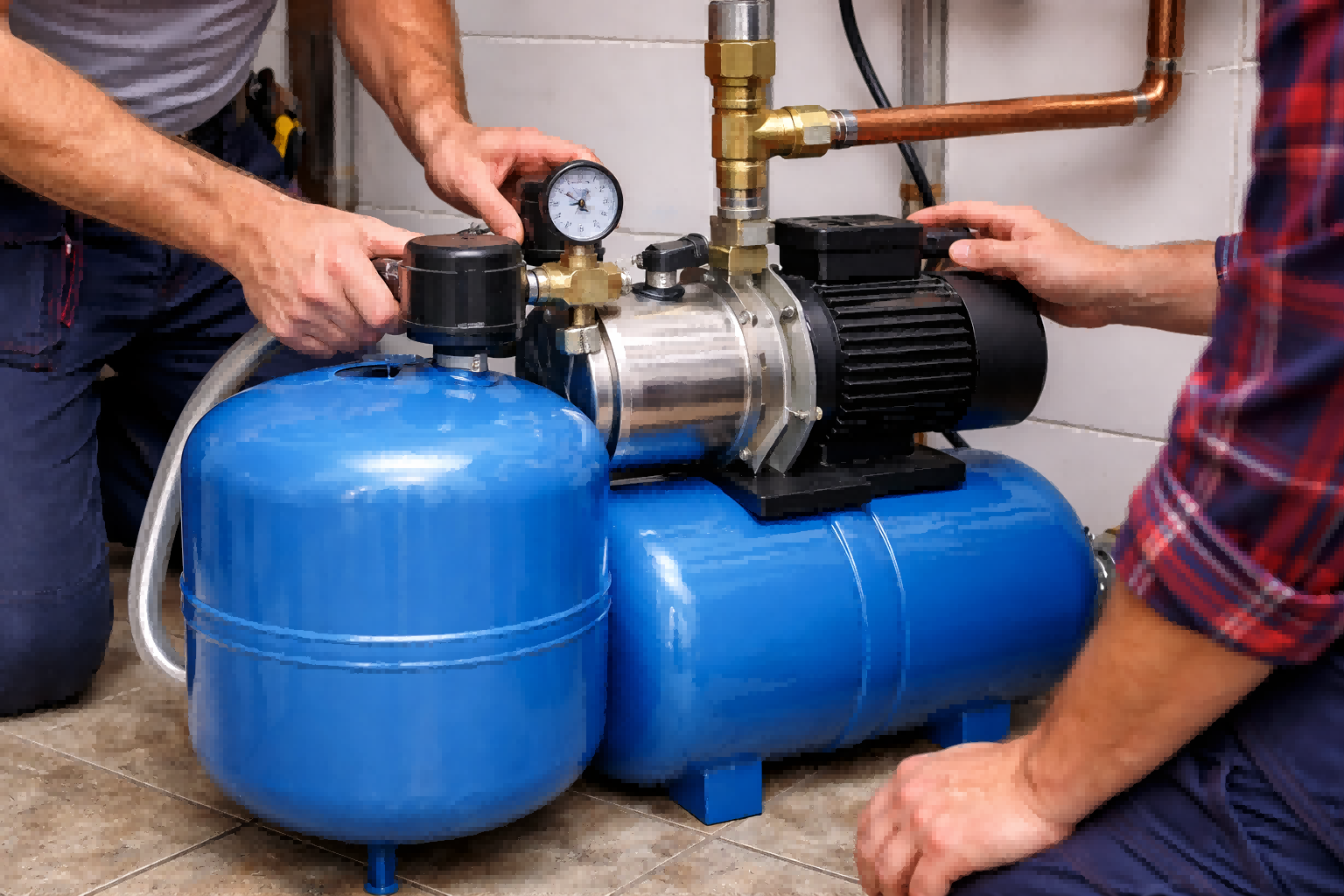
A pressure tank acts as a small water tower for your plumbing system.
It contains a bladder that separates a cushion of compressed air from the water.
When the pump runs, it fills the tank with water, compressing the air.
When you open a tap, this compressed air pushes the water out, satisfying the demand.
The pump only needs to turn on when the pressure in the tank drops below a pre-set minimum level.
The Mechanics of Pump Protection
A pressure tank doesn't just help the pump; it creates a more stable water system for the entire property.
Without a tank, the moment a faucet opens, the system pressure drops, and the pump must turn on instantly.
The moment the faucet closes, the pressure spikes, and the pump must shut off.
This creates a jarring experience and is incredibly inefficient.
- Reduced Start-Stop Cycles: By storing a few gallons of water, the tank can handle tasks like flushing a toilet or filling a glass of water without engaging the pump.
This can reduce the number of motor starts by over 90% in a typical household. - Smoother Pressure Delivery: The tank's air cushion acts as a shock absorber, smoothing out the pressure fluctuations that occur when the pump starts and stops.
This prevents the "water hammer" effect and provides a more consistent, pleasant water flow at the tap. - Energy Savings: The initial surge of electricity needed to start a motor is its point of highest consumption.
By reducing the number of starts, a pressure tank directly lowers the pump's overall energy usage, which translates to lower electricity bills.
Sizing the Pressure Tank Correctly
The effectiveness of the tank is directly related to its size.
A tank that is too small won't provide a meaningful buffer, and the pump will still cycle frequently.
A tank that is overly large is a waste of space and money.
| Pump Application | Recommended Tank Size (Drawdown Capacity) | Benefit of Correct Sizing |
|---|---|---|
| Small Home Booster | 1-2 Gallons | Effectively handles small uses like hand washing and toilet flushes. |
| Large Home / Light Commercial | 2-5 Gallons | Provides a larger buffer for multiple simultaneous small uses without starting the pump. |
| Deep Well Pump System | 10-40 Gallons | Essential for managing the high-power output of a well pump and ensuring minimum run times. |
The "drawdown capacity" is the actual amount of water the tank will dispense before the pump has to turn on.
It is typically about 25-35% of the tank's total volume.
For Deep Well Systems, Is a Tank Optional?
Are you pumping water from hundreds of feet underground?
This requires a powerful pump, and that power needs to be managed carefully.
For these systems, a tank isn't just a good idea; it's a necessity.
**No, for a deep well pump system, a pressure tank is absolutely essential.
The submersible pump is too powerful to turn on and off for small uses.
The tank stores a large volume of water, ensuring the pump runs for longer, efficient cycles.**
When your water source is a deep well, the pump is a submersible unit located far below the surface.
Its job is to do the heavy lifting of pushing a column of water hundreds of feet upwards.
These pumps are not designed for frequent starts and stops.
In this scenario, the pressure tank takes on an even more critical role.
It acts as the primary reservoir and pressure manager for the entire property.
The deep well pump's job is to fill the pressure tank.
The pressure tank's job is to supply the house with water.
This division of labor is crucial for the health of the submersible pump.
Running a high-power deep well pump for only 15 seconds to fill a toilet would cause extreme wear on the motor and waste a huge amount of energy.
Instead, the system is configured so the pump runs for a few minutes to completely fill the large pressure tank, then shuts off for an extended period.
The house then draws all its water from the tank until the pressure drops enough to signal the pump to start another long, efficient refill cycle.
This ensures the pump's motor has adequate time to cool between cycles and operates only at its most efficient point.
Matching Pump Type to the System's Needs
The type of submersible pump used in the well directly impacts how the system works with the pressure tank.
The choice depends on the well's depth and the required water volume.
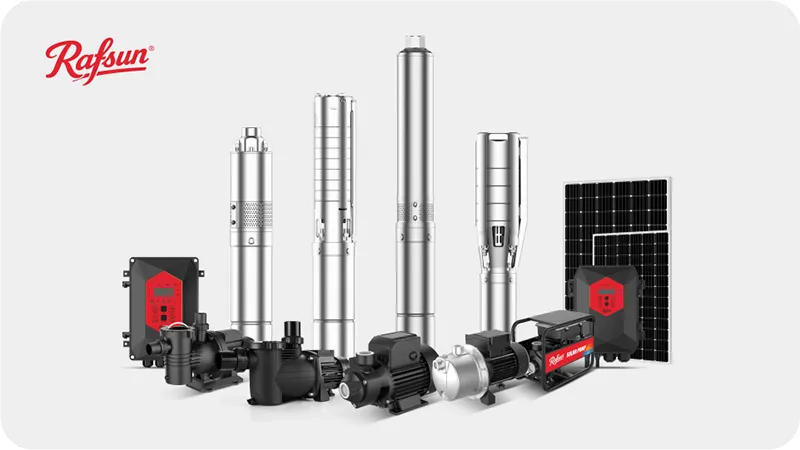
- Solar Screw Pump: This pump is the specialist for very deep wells.
It creates extremely high pressure (high head) but at a lower flow rate.
It's perfect for domestic and livestock use in areas where water tables are low.
Its robust design is highly resistant to sand, a common issue in well water that can destroy other pumps.
It will run for a longer period to fill the pressure tank, which is perfectly suited to its design. - Solar Centrifugal Impeller Pump (Plastic or Stainless Steel): These pumps are designed for higher flow rates at medium head.
They are ideal for shallower wells that need to supply larger volumes of water for applications like farm irrigation or large households.
The plastic impeller version is a wear-resistant, economical workhorse for water with fine sand.
The stainless steel impeller version is the premium choice for corrosive water, ensuring long-term reliability.
These pumps can fill the pressure tank much faster.
The Core Power: The BLDC Motor
All these advanced solar pumps are powered by a highly efficient BLDC (Brushless DC) permanent magnet motor.
This motor technology is a game-changer for off-grid water systems.
With efficiency rates exceeding 90%, these motors convert more solar energy into pumping power.
They are 47% smaller and 39% lighter than older motor designs, simplifying installation.
This high efficiency means the pump can start earlier in the day, run longer on cloudy days, and requires fewer solar panels, directly reducing the overall system cost.
The motor's power and efficiency are what make filling a large pressure tank a quick and energy-efficient process.
Can Smart Controls Replace a Pressure Tank?
Are modern, "smart" pumps making pressure tanks obsolete?
With variable speed technology, pumps can now adjust their speed on the fly.
This changes their relationship with the pressure tank.
*Smart controls and variable speed drives (VSDs) can reduce the size* of the pressure tank needed, but they don't completely eliminate the need for one.
A small tank is still beneficial for handling tiny water demands and providing a buffer.**
The advent of intelligent pump controllers and variable speed drives (VSDs) has introduced a new level of sophistication to water pressure systems.
Unlike a traditional pump that is either fully on or fully off, a VSD pump can adjust its motor speed in real-time to precisely match the water demand.
If you slightly open one faucet, the pump runs slowly.
If you open three faucets and start the shower, the pump speeds up to maintain constant pressure.
This technology is built upon the same principles found in the high-efficiency BLDC motors used in modern solar pumps.
Because these pumps can run very slowly without damage, they dramatically reduce the harshness of starting and stopping.
This leads some to believe that a pressure tank is no longer necessary.
However, even the most advanced VSD pump cannot react instantly to zero demand.
A small pressure tank, often called a "jockey" or "diaphragm" tank, is still incredibly useful.
It absorbs pressure spikes and handles the tiniest water demands—like a dripping faucet or an ice maker filling up—without requiring the pump's motor to turn on at all, even at its lowest speed.
The Role of the Intelligent Controller
In solar pumping systems, the intelligent MPPT (Maximum Power Point Tracking) controller acts as the system's brain.
Its primary job is to optimize the power draw from the solar panels to run the BLDC motor at its most efficient speed based on the available sunlight.
This inherently creates a variable-speed system.
As the sun gets stronger, the pump runs faster.
This technology can be further enhanced with an AC/DC hybrid controller.
- Solar Priority: This controller uses 100% of available solar power first, as it is free energy.
- Hybrid Blending: If clouds appear and solar power drops, the controller automatically supplements with just enough AC power from the grid or a generator to maintain pump speed and pressure.
- Automatic Switchover: At night or during long periods of no sun, it switches completely to AC power, guaranteeing a 24/7 water supply.
Even in this highly advanced, variable-speed setup, a small pressure tank is beneficial.
It provides a buffer that smooths out the transitions between power sources and handles an instantaneous demand for water before the controller has time to ramp up the motor speed, ensuring a perfectly stable and reliable system.
Conclusion
A pressure tank is a vital partner for your pump.
It reduces wear, saves energy, and ensures smooth operation.
For well systems, it's essential; for others, it's a smart upgrade.
Frequently Asked Questions
Can a booster pump work without a pressure switch?
No, a pressure switch is the brain that tells the pump when to turn on and off based on the pressure in the system.
How do I know if my booster pump pressure tank is bad?
If the pump cycles on and off very quickly or water comes out of the air valve, the tank's bladder has likely failed.
What is the ideal pressure for a booster pump?
Ideal pressure is typically set between 40 and 60 PSI.
The pump's cut-in pressure is usually 40 PSI and the cut-out is 60 PSI.
Can a pressure tank be too big for a pump?
Not really.
An oversized tank just means the pump will run for longer but much less frequently, which is generally good for the motor.
Where should a pressure tank be placed?
The pressure tank should be installed on the discharge side of the pump, after the pump but before any fixtures.
Does a pressure tank reduce water flow?
No, a properly sized pressure tank does not reduce flow.
It actually helps stabilize flow and pressure during peak demand.
How long does a pressure tank last?
A good quality well pressure tank typically lasts between 5 and 15 years, depending on water quality and usage.
Do variable speed pumps need a pressure tank?
While they don't require a large tank, a small diaphragm tank is still recommended to handle small leaks and absorb pressure spikes.