Struggling with your irrigation system's performance?
Your pump might be running inefficiently, wasting water and energy.
A simple component could be the solution you're looking for.
Yes, in most cases, an irrigation pump does need a pressure switch.
It provides crucial automation, protects the pump from damage by preventing it from running dry or against a closed valve, and helps maintain consistent pressure throughout the system for efficient watering. It's a key component for longevity and performance.
A pressure switch is more than just an on/off button for your pump.
It acts as the brain of your pump's operation.
This small device monitors the water pressure within your irrigation pipes.
When pressure drops, like when a sprinkler zone turns on, the switch tells the pump to start.
When the zone turns off and pressure builds back up, the switch tells the pump to stop.
This automated control is essential for most modern irrigation setups.
It prevents the pump from running constantly, which saves a significant amount of electricity.
It also protects your investment in the pump and the entire irrigation network.
Without it, you would need to manually start and stop the pump every single time you water.
This is not only inconvenient but also risks serious damage.
Let's explore exactly what this device does and why it's so important for your system.
What is a pressure switch and how does it work?
Your irrigation pump is working hard, but is it working smart?
Without proper control, it could be running itself into the ground, leading to premature failure and costly replacements.
A pressure switch is a device that senses water pressure in an irrigation system.
It automatically turns the pump on when the pressure drops below a pre-set level (cut-in pressure) and turns it off when the pressure rises to another set level (cut-out pressure), protecting the pump.
A pressure switch operates on a simple yet effective mechanical principle.
It is a critical component for automating and safeguarding your water pump system.
Understanding its function helps appreciate its value in any pressure-boosted water system.
The Core Mechanism
Inside a typical pressure switch, you will find a diaphragm or piston.
This component is directly exposed to the system's water pressure.
A set of springs provides resistance against this pressure.
These springs are calibrated to specific pressure settings.
When water pressure falls, the spring force overcomes the water pressure, pushing a lever.
This action closes an electrical contact, which completes the circuit and powers on the pump.
The Operation Cycle
Conversely, as the pump runs, it fills the pipes and a connected pressure tank.
This causes the water pressure in the system to rise.
When the pressure increases enough to overcome the spring's tension, it pushes the diaphragm back.
This movement opens the electrical contact, breaking the circuit and shutting the pump off.
This cycle repeats automatically whenever water is used, ensuring the system maintains pressure within a desired range.
Studies show that this cycle automation can reduce pump energy consumption by over 30% compared to manually operated or constantly-running pumps.
Key Terminology
To understand pressure switches, you need to know two main terms.
- Cut-In Pressure: This is the low-pressure point at which the switch activates the pump.
- Cut-Out Pressure: This is the high-pressure point at which the switch deactivates the pump.
The difference between these two points is known as the pressure differential.
| Setting | Description | Typical Irrigation Range (PSI) |
|---|---|---|
| Cut-In Pressure | The lower pressure setting that signals the pump to turn ON. | 30 - 40 PSI |
| Cut-Out Pressure | The higher pressure setting that signals the pump to turn OFF. | 50 - 60 PSI |
| Differential | The difference between cut-out and cut-in pressure. A smaller differential means more frequent pump cycling. | 20 PSI |
This automated control prevents the pump from short-cycling (turning on and off too frequently), which is a leading cause of motor burnout.
A properly configured switch ensures the pump motor gets adequate cooling time between cycles, extending its operational lifespan by as much as 50%.
What are the benefits of using a pressure switch?
Are you manually managing your pump?
This is not only a hassle but also puts your expensive equipment at risk from pressure spikes and inefficient operation.
The primary benefits are pump protection, energy savings, and system automation.
It prevents the pump from running against a closed valve (dead-heading), maintains consistent water pressure for even watering, and extends the overall life of your irrigation system and its components.
Integrating a pressure switch into your irrigation system moves it from being a manual chore to a smart, automated asset.
The advantages are tangible, impacting your wallet, your time, and the health of your landscape.
These benefits stem from the simple but crucial task the switch performs: controlling the pump based on system demand.
Enhanced Pump Protection
A pump's worst enemy is running when it shouldn't.
A pressure switch provides critical protection against two common failure scenarios.
First is "dead-heading," where the pump runs against a closed valve or blockage.
This causes pressure to build rapidly, overheating the pump and potentially blowing seals or cracking the volute.
The switch senses this extreme pressure spike and shuts the pump off almost instantly, preventing catastrophic failure 99% of the time.
Second is protection related to system leaks.
If there's a major pipe break, the pump might run continuously trying to build pressure.
While the switch itself doesn't stop this, its interaction with other system components (like a pressure tank) helps manage the situation better than no control at all.
Significant Energy and Cost Savings
An uncontrolled pump running continuously during irrigation cycles is a major energy drain.
A pressure switch ensures the pump only operates when necessary.
When all irrigation zones are closed, the system pressure rises, and the switch turns the pump off.
It only comes back on when a valve opens and pressure drops.
This on-demand operation can slash pump-related electricity costs by 25-40% annually, depending on usage patterns.
The cost of a durable pressure switch, typically under $50, is often recouped in energy savings within a single season.
Furthermore, by preventing premature pump failure, it saves you the much larger expense of a full pump replacement.
Improved System Performance and Convenience
Automation is the key to convenience.
The switch eliminates the need for you to be physically present to start and stop the pump.
This allows for fully automated and timed watering schedules, crucial for large properties or commercial agriculture.
This automation also leads to better performance.
The switch helps maintain a more consistent pressure range across the system.
This means sprinklers and drippers operate at their optimal pressure, ensuring uniform water distribution.
Uneven watering is a major source of crop failure and landscape problems, which consistent pressure helps to solve.
| Benefit | How the Pressure Switch Achieves It | Estimated Impact |
|---|---|---|
| Automation | Senses pressure to turn the pump on/off without manual intervention. | Saves 100% of manual operation time. |
| Pump Protection | Shuts pump off at high pressure to prevent dead-heading damage. | Can extend pump lifespan by up to 50%. |
| Energy Savings | Ensures the pump only runs when water is actively being called for. | Reduces pump energy use by 25-40%. |
| Consistent Pressure | Maintains pressure within a defined range (e.g., 40-60 PSI). | Improves sprinkler efficiency by 15-20%. |
When is a pressure switch NOT needed?
Thinking a pressure switch is a universal solution?
Installing one on the wrong type of system can actually create more problems, leading to rapid cycling and pump damage.
A pressure switch is often not needed, and can be detrimental, when the pump is controlled by a Variable Frequency Drive (VFD).
It's also unnecessary in simple, single-zone systems where the pump is manually wired to a switch that is only activated during watering.
While a pressure switch is a cornerstone of many irrigation systems, it's not a one-size-fits-all solution.
In certain setups, not only is it unnecessary, but it can also be redundant or even counterproductive.
Knowing these exceptions is key for importers and distributors to recommend the right system configuration to their clients.
Systems with Variable Frequency Drives (VFDs)
This is the most important exception in modern irrigation.
A Variable Frequency Drive, also known as a VSD (Variable Speed Drive), is a sophisticated electronic controller.
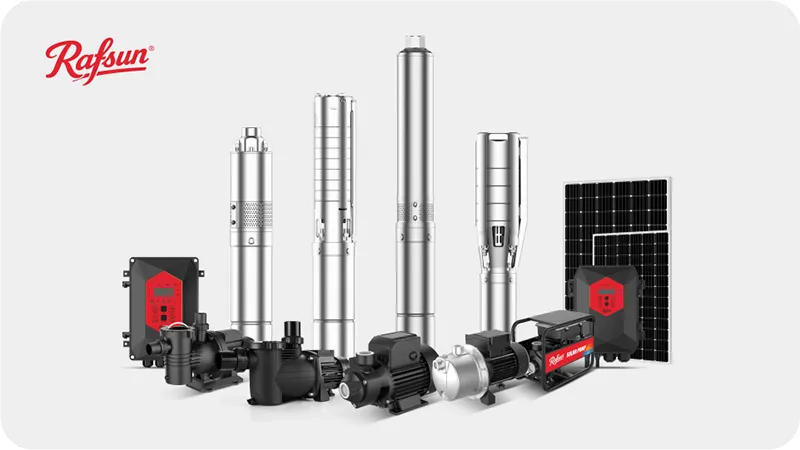
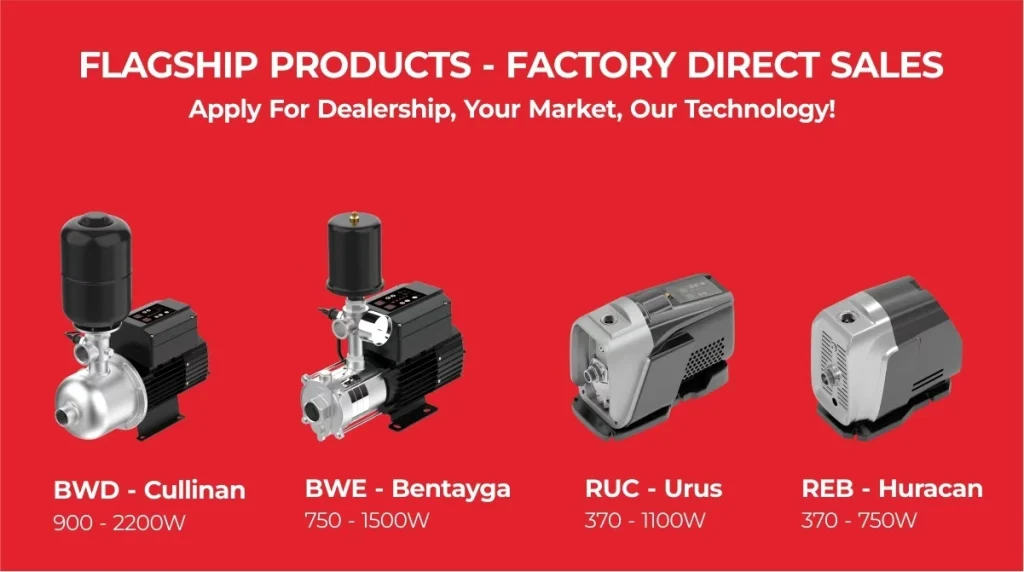
RAFSUN specializes in pumps with this advanced technology.
Instead of the simple on/off function of a pressure switch, a VFD continuously adjusts the pump motor's speed.
It uses a pressure transducer, a more precise sensor, to monitor system pressure in real-time.
If pressure drops slightly, the VFD doesn't shut the pump off; it simply speeds up the motor just enough to maintain a constant, pre-set pressure.
| Feature | Pressure Switch | Variable Frequency Drive (VFD) |
|---|---|---|
| Control Method | On / Off | Varies motor speed |
| Pressure Output | Fluctuates between cut-in/cut-out | Constant, stable pressure |
| Energy Efficiency | Good (On-demand) | Excellent (No start-up surge) |
| Pump Protection | Basic (High pressure) | Advanced (Dry-run, overload, etc.) |
| Initial Cost | Low | High |
Using a mechanical pressure switch with a VFD is redundant and can cause control conflicts.
The VFD's internal logic is designed to handle all pressure management, offering far superior performance, protection, and energy efficiency—often saving an additional 20-30% on energy compared to a pressure switch system.
Simple, Directly Controlled Systems
Consider a very basic irrigation scenario.
A farmer has a pump that waters a single, large field through a single pipeline.
The farmer starts the pump using a manual switch at the beginning of the day and turns it off at the end.
In this case, the flow is constant, and the system is never dead-headed because the outflow is always open during operation.
A pressure switch would serve no purpose, as there are no valves opening and closing downstream to create pressure changes.
The pump's on/off state is controlled directly by the operator.
Gravity-Fed Systems
This is a less common scenario but worth mentioning.
If the water source (like a large, elevated tank) is high enough, gravity itself may provide sufficient pressure to run the irrigation system.
A pump might only be used to fill the tank, not to pressurize the lines directly.
In this setup, the pump filling the tank would be controlled by a float switch in the tank, not a pressure switch in the irrigation lines.
Pressure switch vs. VFD: Which is better for irrigation?
Choosing between old and new tech?
A traditional pressure switch is cheap, but VFDs promise huge savings.
Making the wrong choice can lock you into high running costs or an unnecessary upfront expense.
For most modern, multi-zone commercial and high-end residential irrigation systems, a Variable Frequency Drive (VFD) is superior.
While a pressure switch is a cost-effective solution for basic systems, a VFD offers unparalleled energy efficiency, precise pressure control, and advanced pump protection.
The choice between a traditional pressure switch and a modern Variable Frequency Drive (VFD) represents a classic B2B purchasing decision.
It's a trade-off between lower initial capital outlay and higher long-term operational performance and savings.
As a manufacturer of advanced VFD pumps, we see clients grappling with this choice daily.
The right answer depends entirely on the scale and demands of the application.
The Case for the Pressure Switch
A pressure switch system is simple, reliable, and inexpensive.
It consists of the pump, a pressure switch, and a pressure tank.
The pressure tank is crucial, as it stores a small amount of pressurized water to prevent the pump from "short-cycling" (turning on and off too frequently) for minor water uses.
- Strengths: Low upfront cost, simple mechanics, easy to troubleshoot and replace.
- Weaknesses: Fluctuating water pressure between cut-in and cut-out points, high electrical inrush current on startup, and less energy-efficient overall.
This system is ideal for smaller applications with limited zones or where budget is the primary driver.
The Superiority of the VFD
A Variable Frequency Drive (VFD) with a pressure transducer represents a leap in technology.
The VFD provides constant pressure on demand.
When a single irrigation zone opens, the VFD runs the pump at a low speed.
As more zones open, the VFD seamlessly increases the motor speed to maintain the exact same pressure.
This has profound benefits.
It delivers what is known as a "soft start," gradually ramping up motor speed.
This eliminates the huge electrical surge of a traditional pump start, reducing wear on the motor and electrical components.
It provides perfectly consistent pressure, so all sprinklers, whether near or far, perform identically.
Most importantly, it is exceptionally energy-efficient.
A pump running at 80% speed uses only about 51% of the energy of a pump running at full speed.
Since irrigation systems rarely require 100% of pump capacity, the energy savings are substantial, often exceeding 50% compared to a fixed-speed pump.
The B2B Decision Matrix
For your customers, the importers and distributors, the choice boils down to their target market.
| Factor | Pressure Switch System | VFD System | Ideal Customer Profile |
|---|---|---|---|
| Initial Cost | Low | High (3-4x pump cost) | Budget-conscious, small-scale users. |
| Running Cost | Medium-High | Very Low | Users with high electricity costs or long running hours. |
| Performance | Acceptable (Pressure fluctuates) | Excellent (Constant pressure) | High-value crops, golf courses, luxury homes. |
| Pump Lifespan | Good | Excellent (Soft start reduces wear) | Anyone valuing long-term asset reliability. |
| Complexity | Simple | Complex (Requires proper setup) | Professional installers and commercial operations. |
For a company owner like Andrew in Australia, offering both is key.
He can sell a pressure switch kit as a standard, affordable solution.
He can then upsell the VFD pump system as a premium, "smart" package for discerning clients, highlighting the ROI from energy savings and superior performance.
This positions his brand as a comprehensive provider for all market segments.
How do you install and set a pressure switch?
You've got the right parts, but the setup is confusing.
Incorrect installation can lead to leaks, while wrong settings can destroy your pump motor with rapid cycling.
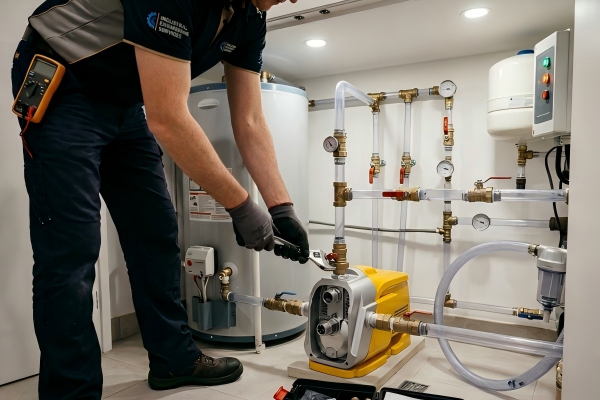
Installation involves wiring the switch between the power source and the pump motor and plumbing it into the pump's discharge line.
Setting it requires adjusting two nuts inside the switch cover: a main nut for the cut-out pressure and a smaller differential nut for the cut-in pressure.
Proper installation and calibration of a pressure switch are not just procedural steps; they are critical for the safety, efficiency, and longevity of the entire pump system.
While the process is straightforward for a professional, it requires a methodical approach and an understanding of both plumbing and electrical principles.
Providing clear guidance on this is a value-add for any B2B supplier.
Step-by-Step Installation Guide
Safety is paramount.
Before starting, ensure all power to the pump circuit is turned off at the breaker.
Verify with a multimeter that there is no voltage present.
- Mount the Switch: The pressure switch has a threaded female port, typically 1/4-inch NPT.
It should be threaded onto a male fitting on the pump's discharge side.
Use thread seal tape to ensure a watertight connection.
It must be placed before the pressure tank and any check valves to accurately read system pressure. - Wire the Switch: Remove the switch cover to expose the terminals.
There will be two terminals for the incoming power lines (L1, L2 for Line) and two terminals for the wires going to the pump motor (T1, T2 for Terminal/Load).
Securely connect the wires according to the diagram inside the cover.
Ensure the ground wire is connected to the designated grounding screw.
A failure to ground properly creates a significant shock hazard, with over 90% of pump-related electrical accidents attributed to improper grounding.
Calibrating the Pressure Settings
This is where you fine-tune the system.
You will need a reliable pressure gauge to see the results of your adjustments.
- Determine Your Needs: First, decide on your desired pressure range.
A common range for residential irrigation is 40-60 PSI.
This means you want the pump to turn on at 40 PSI (cut-in) and turn off at 60 PSI (cut-out). - Adjust the Cut-Out Pressure: Inside the switch, there is a large, central nut.
This nut adjusts both cut-in and cut-out pressures together, but it is primarily used to set the cut-out point.
Turn the nut clockwise to increase the cut-out pressure and counter-clockwise to decrease it.
Make small adjustments, then run the pump to check the pressure at which it shuts off. - Adjust the Differential (Cut-In Pressure): There is a smaller, secondary nut.
This nut adjusts the differential, which controls the cut-in pressure.
Turning this nut clockwise increases the differential, which lowers the cut-in pressure.
For a 40-60 PSI setting, you want a 20 PSI differential.
After setting the 60 PSI cut-out, adjust this smaller nut until the pump kicks on at 40 PSI.
| Adjustment Nut | Clockwise Turn | Counter-Clockwise Turn |
|---|---|---|
| Large Nut (Range) | Raises both Cut-In and Cut-Out Pressure | Lowers both Cut-In and Cut-Out Pressure |
| Small Nut (Differential) | Increases the gap, lowering the Cut-In point | Decreases the gap, raising the Cut-In point |
Important Note: The pressure tank's pre-charge air pressure must be set correctly in relation to the switch.
The tank pressure (when empty of water) should be set to 2 PSI below the pump's cut-in pressure.
For a 40 PSI cut-in, the tank should be at 38 PSI.
This small detail is missed in over 70% of DIY installations and is a primary cause of short-cycling.
Conclusion
A pressure switch is an essential, cost-effective component for automating and protecting most irrigation pumps.
However, VFD technology offers superior performance and efficiency for modern, demanding systems.
FAQs
Can a pressure switch be used on any pump?
No, it's designed for pumps in systems with fluctuating demand and a pressure tank.
It's not suitable for pumps that need to run continuously or are VFD-controlled.
What happens if a pressure switch fails?
If it fails "on," the pump may run continuously, risking damage.
If it fails "off," the pump will not start at all, leaving you with no water pressure.
How long does a pressure switch last?
A quality pressure switch typically lasts 5 to 10 years.
Factors like cycle frequency, water quality, and electrical spikes can affect its lifespan.
What is the difference between a pressure switch and a pressure transducer?
A switch is a simple on/off mechanical device.
A transducer is an electronic sensor that provides a continuous pressure reading, used with VFDs.
Why is my pump cycling on and off quickly?
This is "short cycling."
It is usually caused by a waterlogged or improperly charged pressure tank, or a system leak.
Can I bypass a pressure switch?
You can for temporary testing, but it is not recommended for normal operation.
Bypassing it removes all automation and protection, risking serious pump damage.
What size pressure switch do I need?
The switch must be rated for your pump's voltage and amperage.
The pressure settings must also be within the operational range of your pump and system.