Struggling with unreliable water access in off-grid areas?
The high cost and environmental impact of traditional pumps can be a significant barrier to sustainable water solutions.
The depth a solar pump can pull water from, known as its "head," varies significantly by pump type.
Screw pumps excel at high heads, reaching over 200 meters.
Centrifugal pumps (plastic or stainless steel impellers) are designed for medium heads, typically up to 150 meters, but deliver much higher flow rates.
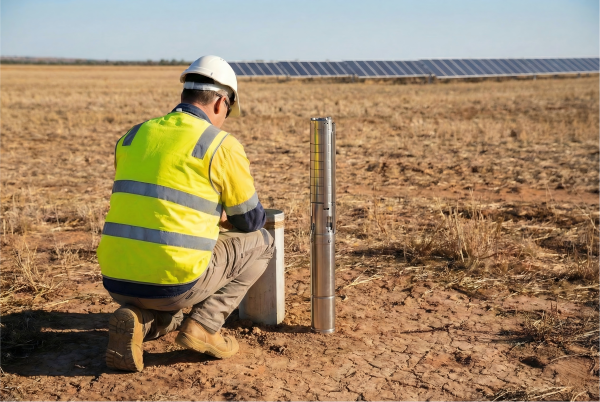
Choosing the right solar pump isn't just about depth.
It's about matching the pump's specific design to your unique water requirements, well conditions, and budget.
Understanding the core technology behind these pumps is the key to unlocking reliable, cost-effective water access for any application.
This guide will break down the different types of solar deep well pumps, explaining how their design affects their performance, so you can make an informed decision for your market.
We will explore the specific capabilities of each model, from low-flow, high-head screw pumps to high-flow centrifugal options, and uncover the critical role of the motor that powers them all.
Solar Screw Pump: The Deep Well Specialist
Frustrated by wells that are too deep for standard pumps?
Finding a reliable, sand-resistant solution for high-head applications in harsh environments can be a major challenge for your customers.
Solar screw pumps are engineered for extreme depths, capable of achieving a high head of over 200 meters.
They provide a consistent but lower flow rate, making them ideal for domestic water supply and livestock watering from very deep wells.
Deeper Dive: How Screw Pumps Conquer Depth
A solar screw pump, also known as a progressing cavity pump, operates on a simple yet effective principle.
It uses a single helical rotor (the screw) that rotates inside a double helical stator (typically made of rubber).
As the screw turns, it creates a series of sealed cavities that progress along the pump's axis.
These cavities trap a fixed volume of water and push it steadily towards the surface.
This mechanism is what allows the pump to generate immense pressure, overcoming the gravitational force of lifting water from extreme depths.
Key Performance Characteristics
- High Head, Low Flow: The primary advantage of a screw pump is its ability to produce a very high head.
While a centrifugal pump loses efficiency dramatically as the head increases, a screw pump maintains consistent pressure.
However, this comes at the cost of flow rate, which is typically lower than that of impeller-based pumps. - Exceptional Sand Resistance: The rubber stator and stainless steel screw design is highly tolerant of sand and other small solids.
The flexible stator can deform to allow particles to pass through without causing significant wear or damage, a critical feature for wells in arid or developing regions where water quality can be poor.
This durability reduces maintenance costs and extends the pump's service life in challenging conditions. - Operational Efficiency: Because the pump moves a fixed volume of water with each rotation, its performance is very stable across a range of depths.
This makes it an efficient choice for applications where a consistent, reliable water supply is more important than high volume.
Ideal Applications and Market Positioning
The unique capabilities of the solar screw pump make it a perfect fit for specific markets and uses.
It serves as the go-to solution for deep well challenges where other pumps fail.
| Application | Target Region | Key Benefit |
|---|---|---|
| Domestic Water Supply | Electricity-scarce Africa | Reliable water from deep boreholes for homes |
| Livestock Drinking Water | Arid parts of Latin America & AUS | Consistent, low-volume supply for troughs |
| Small-Scale Irrigation | Mountainous or hilly terrain | Pumping water uphill over long distances |
For distributors, positioning the screw pump as the "deep well problem-solver" is a powerful strategy.
It addresses a critical niche that centrifugal pumps cannot fill.
By highlighting its sand resistance and reliability in harsh water conditions, you can build confidence with customers in markets where well quality is a persistent concern.
This pump isn't for large-scale farm irrigation, but it's an indispensable tool for ensuring life-sustaining water access in the toughest off-grid environments.
Solar Plastic Impeller Pump: The High-Flow Workhorse
Need to provide large volumes of water for irrigation without breaking the bank?
Many pumps struggle with wear from sandy water or are too expensive for large-scale agricultural projects.
Solar plastic impeller pumps are designed for high-flow, medium-head applications, delivering large water volumes efficiently.
They are an economical and wear-resistant choice ideal for farm irrigation, pasture water supply, and filling reservoirs.
Deeper Dive: The Power of Centrifugal Force
Unlike the positive displacement action of a screw pump, this model uses a multi-stage centrifugal design.
It features a series of impellers, which are rotating wheels with angled vanes.
As water enters the pump, the motor spins the impellers at high speed.
This rotation flings the water outward through centrifugal force, increasing its velocity.
The water then moves into a diffuser, which slows the water down and converts its kinetic energy into pressure.
Each impeller and diffuser combination is called a "stage," and by stacking multiple stages, the pump can achieve a higher head.
Key Performance Characteristics
- High Flow, Medium Head: The centrifugal design is optimized for moving large volumes of water.
This makes plastic impeller pumps the perfect choice for applications like flood irrigation or rapidly filling large tanks.
Their head is typically in the medium range (up to 150 meters), which is sufficient for the majority of agricultural and domestic wells that don't require extreme depth. - Excellent Wear Resistance: The impellers are made from high-strength, engineered plastics.
These materials offer exceptional resistance to abrasion from fine sand.
Rather than chipping or breaking, the plastic surface can wear away slowly and evenly, allowing the pump to maintain a high level of performance for longer in moderately sandy conditions.
This durability makes them a reliable workhorse in real-world farm environments. - Lightweight and Economical: Plastic is significantly lighter than stainless steel, which translates into lower manufacturing and shipping costs.
This makes the pump more affordable for end-users, especially for large projects in markets like Africa and the Americas where budget is a key consideration.
The lighter weight also simplifies installation, reducing labor costs and time.
Strategic Market Fit
The solar plastic impeller pump is the volume-mover in any solar pump portfolio.
Its balance of performance and cost makes it a highly competitive option for mainstream applications.
| Feature | Advantage | Target Customer |
|---|---|---|
| High Flow Rate | Quickly irrigates large fields, fills stock tanks, and supplies communities. | Farmers, ranchers, and community water project managers. |
| Cost-Effective | Lower initial investment makes it accessible for large-scale deployment. | Buyers in price-sensitive markets like Africa and Southeast Asia. |
| Lightweight Design | Easier and cheaper to transport and install, even in remote locations. | Installers and DIY users looking for a straightforward setup. |
When presenting this pump to distributors, emphasize it as the "economic irrigation solution."
Its strength lies in delivering the highest volume of water per dollar spent.
While it may not be suitable for highly corrosive water or extreme depths, it excels in the vast majority of agricultural and domestic settings.
It is the go-to pump for customers who prioritize high output and value, making it a staple for any distributor targeting the farming and ranching sectors.
Solar Stainless Steel Impeller Pump: The Premium Durability Choice
Dealing with corrosive water that destroys standard pumps?
Acidic or alkaline water conditions can rapidly degrade equipment, leading to costly replacements and system downtime for your high-end clients.
The solar stainless steel impeller pump is a premium solution built for longevity in corrosive environments.
It combines high flow with medium-to-high head capabilities, ensuring reliable performance where other pumps fail.
Deeper Dive: Engineering for Harsh Environments
This pump operates on the same multi-stage centrifugal principle as the plastic impeller model.
However, its key components—the impellers, diffusers, and pump body—are constructed from SS304 stainless steel.
This material choice is what sets it apart and defines its role in the market.
SS304 is a high-grade alloy known for its exceptional resistance to a wide range of corrosive agents, including acids and alkalis.
The rigid and precisely engineered steel impellers can also maintain their shape under high pressure and at high rotational speeds, contributing to sustained efficiency over the pump's long life.
Key Performance Characteristics
- Superior Corrosion Resistance: This is the pump's defining feature.
It is specifically designed to operate in water with a low or high pH, something that would quickly degrade plastic or lower-grade metal components.
This makes it essential for regions with acidic groundwater or alkaline soil, such as parts of Australia and the Americas.
The investment in stainless steel pays off through a significantly longer service life and reduced maintenance in these challenging conditions. - High Reliability and Structural Integrity: Stainless steel offers greater strength and rigidity compared to engineered plastics.
This structural integrity ensures the pump can handle the stresses of deep well operation and potential water hammer effects without risk of component failure.
This results in higher overall reliability, a critical factor for high-end residential water supply or mission-critical commercial applications where downtime is not an option. - Sustained Performance: While plastic impellers can wear over time in sandy conditions, stainless steel impellers maintain their precise hydraulic profile for much longer.
This means the pump's efficiency and performance remain close to factory levels for an extended period, ensuring the user gets the water flow they expect year after year.
Niche Market Domination
The stainless steel impeller pump is not a mass-market product; it is a premium, specialized tool.
Its higher cost is justified by its unique ability to solve a difficult and expensive problem.
| Application | Ideal Market | Core Value Proposition |
|---|---|---|
| Corrosive Water Pumping | Alkaline soil regions of Australia; industrial areas | Unmatched durability and longevity in aggressive water. |
| High-End Home Supply | Parts of the Americas, Europe | Ultimate reliability and "peace of mind" for premium homes. |
| High-Value Agriculture | Wineries, specialty crop farms | Protecting high-value operations from water system failure. |
For distributors like Andrew, this pump is a high-margin product that targets a sophisticated customer base.
It's for the client who understands the cost of failure and is willing to invest in a long-term solution.
It should be marketed as the "ultimate durability pump" for special water conditions.
The higher weight and cost are not limitations but rather indicators of its robust construction and premium quality.
Adding this pump to a portfolio demonstrates technical leadership and the ability to meet the needs of the most demanding and profitable market segments.
BLDC Motor: The High-Efficiency Heart of the Pump
Are your customers paying too much for solar panels?
An inefficient motor wastes precious solar energy, requiring a larger, more expensive solar array and driving up total system costs.
The Brushless DC (BLDC) permanent magnet motor is the core of modern solar pumps, boasting an efficiency of over 90%.
This ultra-high efficiency reduces solar panel requirements, lowers operating costs, and ensures maximum water output.
Deeper Dive: The Technology Driving Performance
The BLDC permanent magnet motor represents a major leap forward from traditional brushed motors.
Its exceptional efficiency stems from its advanced design.
Core Components and Advantages
- Brushless Design: Traditional motors use carbon brushes to transfer power to the rotor, which creates friction, heat, wear, and energy loss.
BLDC motors eliminate these brushes.
Instead, an electronic controller switches the power in the stator windings, creating a rotating magnetic field that the rotor's permanent magnets follow.
This design is over 20% more efficient, maintenance-free, and has a much longer lifespan. - Permanent Magnet Rotor: The rotor is constructed using powerful rare-earth magnets, typically high-grade 40SH Neodymium Iron Boron (NdFeB).
These magnets create a strong, permanent magnetic field without requiring any electrical energy.
This means more of the incoming solar power is converted directly into rotational force, not wasted generating a magnetic field as in an induction motor. - Compact and Powerful: This highly efficient design allows BLDC motors to be significantly smaller and lighter than older motor technologies with the same power output.
A typical BLDC motor for a solar pump can be up to 47% smaller and 39% lighter than its predecessor.
This reduces material costs, simplifies shipping, and makes the pump far easier for one person to install.
The Strategic Value of a Superior Motor
The motor isn't just a component; it's the foundation of the entire pump system's value proposition.
Its efficiency has a cascading effect on every aspect of the system.
| Technical Advantage | Market Value for the End-User |
|---|---|
| >90% Motor Efficiency | Reduces Solar Panel Costs: Fewer panels are needed to achieve the same water flow, lowering the initial system investment by 15-25%. |
| High Torque at All Speeds | Reliable Startup: The motor provides strong starting torque even in low sunlight, ensuring the pump starts earlier in the morning and runs longer in the evening. |
| Compact & Lightweight | Lower Installation Costs: Easier to handle and install, often requiring only one person, which saves time and money. |
| Maintenance-Free Design | Zero Operating Costs: No brushes to replace. This is a "fit and forget" solution, critical for remote, off-grid installations. |
When paired with an intelligent Maximum Power Point Tracking (MPPT) controller, the system's efficiency is further optimized.
The MPPT controller constantly adjusts the electrical load to ensure the solar panels are operating at their peak power output, squeezing every possible watt from the available sunlight.
For distributors, the BLDC motor is the ultimate technical selling point.
It allows you to guarantee your customers lower total system costs, higher reliability, and more water per watt, establishing a clear position of technological leadership and superior value in the market.
Hybrid AC/DC Systems: Ensuring Water 24/7
What happens when the sun doesn't shine?
Relying solely on solar power can be a concern for applications needing a constant water supply, especially on cloudy days or at night.
Modern solar pumps can be equipped with an AC/DC hybrid controller, providing a seamless, uninterrupted water supply.
This system automatically switches to AC grid or generator power when sunlight is insufficient.
Deeper Dive: The Logic of Hybrid Power
An AC/DC hybrid system offers the best of both worlds: the free, clean energy of solar and the unwavering reliability of the grid.
The key to this system is an intelligent controller designed with dual power inputs.
How It Works
- Solar Priority: By default, the system is designed to prioritize solar power.
When the sun is shining, the MPPT function of the controller draws 100% of its power from the photovoltaic (PV) panels.
This ensures you are using free solar energy whenever it is available, minimizing electricity costs. - Automatic Blending (Hybrid Function): In situations with partial sunlight, such as on overcast days, the controller uses an intelligent hybrid function.
It will draw as much power as it can from the solar panels and supplement the rest with AC power.
This maximizes the use of solar energy while still ensuring the pump operates at the required speed to deliver water. - Automatic AC Switchover: When there is no solar input, such as at night or during heavy, prolonged cloud cover, the controller automatically and seamlessly switches over to the AC power source.
This could be the local utility grid or a backup generator.
The pump continues to operate without any interruption, providing true 24/7 water security.
Market Benefits and Applications
The AC/DC hybrid capability transforms a solar pump from a daylight-only device into a complete, all-weather water solution.
This dramatically expands its appeal and a`s a significant value proposition.
| System Feature | Customer Benefit | Ideal Application |
|---|---|---|
| Uninterrupted Water Supply | Guarantees water access 24/7, regardless of weather or time of day. | Critical domestic water supply, dairy farms, high-value crop irrigation. |
| Maximized Cost Savings | Prioritizes free solar energy first, only using paid AC power when necessary. | Businesses and homes connected to the grid that want to lower utility bills. |
| Operational Flexibility | Allows users to run the pump at full power at any time for urgent water needs. | Filling large reservoirs quickly or responding to emergency water demands. |
For distributors, offering an AC/DC hybrid option is a powerful competitive advantage.
It removes the primary objection some customers have about solar-only systems—the issue of intermittency.
It positions your product line as a sophisticated and reliable solution suitable for a wider range of clients, including those with grid connections who are looking for energy savings and water security.
This feature provides peace of mind, assuring the end-user that they will have water whenever they need it, worry-free.
Conclusion
The right solar pump matches pump type, motor efficiency, and intelligent control to the specific head, flow, and water conditions, ensuring a reliable and cost-effective solution for any off-grid application.
Frequently Asked Questions
What is the maximum head for a solar water pump?
The maximum head depends on the pump type.
Solar screw pumps are designed for high-head applications and can often pump from depths exceeding 200 meters (650 feet).
How many solar panels do I need for a deep well pump?
The number of panels depends on the pump's power rating, the well's depth, and desired flow rate.
A high-efficiency BLDC motor significantly reduces the number of panels needed, lowering system cost.
Can a solar water pump work without a battery?
Yes, most modern solar water pump systems are direct-drive and do not require batteries.
They pump water when the sun is shining and stop when it's dark, storing water in a tank instead of energy in a battery.
How long do solar water pumps last?
A quality solar pump system can last for many years.
The BLDC motors are designed for over 10 years of service, and solar panels often have a warranty of 25 years.
Can solar pumps work on cloudy days?
Yes, they can, but their performance will be reduced.
An AC/DC hybrid system solves this by automatically supplementing with grid or generator power to ensure consistent water flow on cloudy days.
Which solar pump is best for dirty water?
Solar screw pumps show excellent resistance to sandy or silty water due to their progressing cavity design, making them a durable choice for wells with less-than-perfect water quality.
Is a solar water pump worth it?
For off-grid locations, a solar pump is almost always worth it.
The high initial cost is offset by zero energy costs, low maintenance, and long-term water security, providing a rapid return on investment.
How do I choose a solar water pump?
To choose the right pump, you need to know your well's total dynamic head (depth + pressure), required daily water volume (flow rate), and water quality (sandy or corrosive).