Choosing the wrong pump can mean weak water pressure or a failed investment.
It's a costly and frustrating mistake.
You're left with a system that just doesn't deliver the water you need.
To choose a pump size, you must first calculate two numbers: your required flow rate in Gallons Per Minute (GPM) and the Total Dynamic Head (TDH) in feet or meters.These figures tell you how much water you need and how much work the pump must do.

Selecting the right pump is about more than just picking a model off a shelf.
It's a process of matching a machine to a specific job.
Get it right, and you'll have a reliable, efficient water supply for years.
Get it wrong, and you face constant problems, from inadequate water flow to a pump motor that burns out prematurely.
This is especially true for solar water pump systems, where every watt of energy is precious.
A correctly sized pump ensures you get the most out of your solar investment.
Let's walk through the essential steps to make sure you choose the perfect pump size for your needs.
What Are the Two Key Numbers for Sizing?
Are you confused by terms like "head" and "flow"?
These technical specifications can stop you from making a confident choice.
Without understanding them, you are just guessing.
The two most critical numbers for sizing any pump are the Flow Rate (how much water) and the Total Dynamic Head, or TDH (how much lift and push is required).
Before you can even look at a pump catalog, you must define the job you need the pump to do.
Think of it like hiring an employee.
You first need to write a job description before you can find the right candidate.
For a water pump, that job description is written with two key metrics: Flow Rate and TDH.
Every pump is designed to operate within a specific range of these two values.
A pump's performance curve chart shows exactly how much flow it can produce at a given head.
By calculating your specific requirements first, you can go to these charts and find the pump that is a perfect match for your application.
Defining Flow Rate
Flow Rate is the volume of water you need the pump to deliver in a set amount of time.
It is typically measured in:
- Gallons Per Minute (GPM)
- Liters Per Minute (LPM)
- Cubic Meters Per Hour (m³/h)
This number is determined by your end-use.
A single home has a very different flow rate requirement than a 10-acre farm needing irrigation.
Accurately estimating your peak water demand is the first step in the sizing process.
Defining Total Dynamic Head (TDH)
Total Dynamic Head (TDH) is the total equivalent height that water must be lifted, considering all the pressures and friction losses in the system.
It is the total amount of work the pump has to do.
It is measured in feet or meters.
TDH is not just the vertical distance you are lifting water.
It is a combination of three factors:
- Static Head: The vertical distance the water is lifted.
- Friction Head: The pressure lost due to friction as water moves through pipes and fittings.
- Pressure Head: The pressure you want delivered at the final outlet, converted into an equivalent height of water.
Calculating TDH accurately is crucial.
Underestimating it will result in a pump that can't deliver water to the destination or provides only a weak trickle.
How Do I Calculate Total Dynamic Head (TDH)?
Is the term "Total Dynamic Head" intimidating?
Calculating it seems complex.
You might be tempted to just measure the vertical lift and ignore the rest, leading to an undersized pump.
To calculate TDH, you must add three components: the Static Head (total vertical lift), the Friction Head (losses from pipes), and the desired Pressure Head at the outlet.
The biggest mistake people make is thinking that "head" is just the vertical distance from the water source to the outlet.
This is only one part of the equation, known as the Static Head.
The pump also has to overcome the friction of the water rubbing against the inside of the pipes and fittings.
Furthermore, it needs to provide usable pressure at the end.
A pump that can just barely lift water to a faucet with zero pressure is useless.
Let's break down how to calculate each component to find your true TDH.
Step 1: Calculate Static Head
Static Head is the easiest part to measure.
It is the total vertical elevation change from the surface of your water source to the highest point of delivery.
- For a well pump: It's the distance from the pumping water level in the well to the ground level, PLUS the vertical height from the ground to your storage tank's inlet.
- For a surface pump: It's the vertical distance from the surface of the pond or river up to the discharge point.
For example, if the water level in your well is 100 feet down and your storage tank inlet is 10 feet above ground, your Static Head is 110 feet.
Step 2: Calculate Friction Head
Every foot of pipe and every elbow or valve adds a little bit of resistance, which the pump has to overcome.
This resistance is called friction loss, and it is expressed as an equivalent amount of head.
Friction Head depends on three things:
- Pipe Diameter: Smaller pipes cause much higher friction loss.
- Flow Rate: The faster the water moves, the higher the friction.
- Pipe Length and Fittings: Longer pipes and more fittings increase total friction.
You can find friction loss tables online.
They tell you how many feet of head are lost per 100 feet of a specific pipe size at a given flow rate.
For a 10 GPM flow, 1.25-inch pipe has a friction loss of about 2.3 feet per 100 feet, while a 1-inch pipe has a loss of 6.3 feet.
This shows why using a pipe that is too small can kill your pump's performance.
Step 3: Calculate Pressure Head
This is the pressure you need at the final destination.
If you are filling an open tank, the pressure head is zero.
But if you are feeding a pressurized system for a house, you need to add this value.
The conversion is simple: 1 PSI of pressure = 2.31 feet of head.
If you want a minimum of 40 PSI in your house, you must add 92.4 feet (40 x 2.31) to your TDH calculation.
Finally, you add them all together: TDH = Static Head + Friction Head + Pressure Head.
How Do I Determine My Required Flow Rate?
Not sure how much water you actually need?
Guessing your flow rate can lead to a pump that can't keep up with demand.
You could end up with a system that runs out of water during peak use.
**To determine flow rate, add up the GPM demand of all fixtures that could run simultaneously.
For irrigation or livestock, base it on the total water volume needed per day.**
Your required flow rate, measured in Gallons Per Minute (GPM), depends entirely on your application.
A pump is sized to meet the peak demand of your system.
This means you need to think about the maximum amount of water you might use at any one time.
Sizing for the average use will leave you short during busy periods.
Let's look at how to estimate this for different scenarios.
For Household Water Supply
In a home, flow rate is determined by the number of water-using fixtures.
You need to estimate how many of these could realistically be running at the same time.
A good method is the "fixture count" method.
Assign a GPM value to each fixture and add them up.
| Fixture | Typical Flow Rate (GPM) |
|---|---|
| Standard Showerhead | 2.5 |
| Kitchen Faucet | 2.2 |
| Bathroom Faucet | 1.5 |
| Toilet | 1.6 (per flush, not continuous) |
| Washing Machine | 2.0 |
| Dishwasher | 1.5 |
| Outdoor Hose Bib | 5.0 |
A typical family home might have a shower and a washing machine running at the same time.
That's a peak demand of 4.5 GPM (2.5 + 2.0).
To be safe, a pump capable of 8-12 GPM is a common choice for an average-sized home.
This provides a buffer and ensures strong pressure even when multiple taps are open.
For Agricultural Irrigation
For irrigation, the calculation is different.
It's based on the total volume of water needed per day, spread across the available pumping hours.
This is especially important for solar pumps, which have a limited window of peak operation.
- Calculate Total Area: Determine the square footage of the area you need to water.
- Determine Water Needs: This depends on the crop and climate, but a general rule is 1 inch of water per week.
1 inch of water over 1 square foot is about 0.623 gallons. - Calculate Daily Volume: Multiply your area by the gallons-per-square-foot needed.
For a 1-acre garden (43,560 sq ft) needing 1 inch per week, that's roughly 27,154 gallons per week, or about 3,880 gallons per day. - Calculate GPM: If you have 6 peak sun hours for your solar pump to run, you need to deliver 3,880 gallons in 360 minutes.
Flow Rate = 3,880 gallons / 360 minutes = 10.8 GPM.
You would need a pump that can deliver at least 11 GPM at your calculated TDH.
Which Type of Solar Pump Matches My Needs?
You have your TDH and Flow Rate numbers.
Now what?
Choosing from different pump types can be confusing.
Picking the wrong type means you get poor performance, even if the "size" is technically correct.
**Match the pump type to your head and flow requirements.
Screw pumps are for low flow and high head.
Centrifugal pumps (plastic or stainless steel impellers) are for high flow and medium head.**
Once you've calculated your required performance, the next step is to select a pump technology that is designed to deliver that performance efficiently.
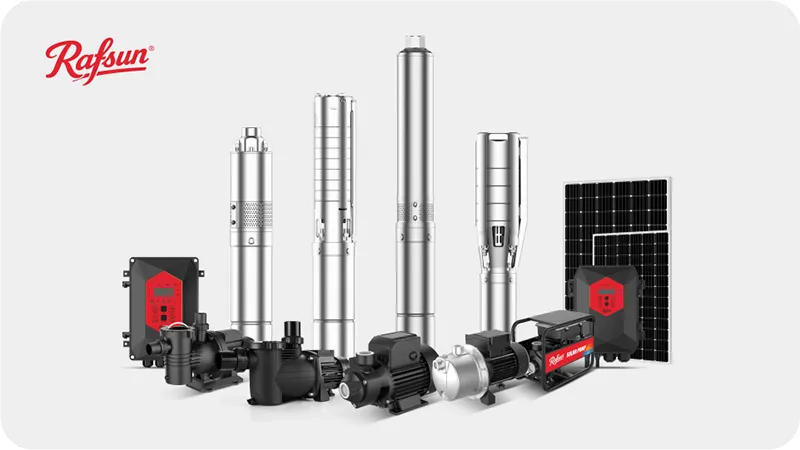
This is where understanding the different types of solar deep well pumps becomes critical.
They are not interchangeable.
Each has a distinct design that makes it better for certain applications.
Using the wrong one is like using a sports car to haul gravel; it might work, but it's inefficient and will likely break down.
Let's see how the three main types of solar pumps fit different performance profiles.
Solar Screw Pump: Low Flow, High Head
This type of pump, also known as a progressing cavity pump, uses a helical rotor (the screw) inside a rubber stator.
As the screw turns, it traps cavities of water and pushes them upwards.
- Best For: Deep wells where you need to lift water a long vertical distance (high static head), but you don't need a large volume of water quickly.
- Performance Profile: It excels in high TDH (e.g., over 300 feet) but provides low flow rates (e.g., 1-5 GPM).
- Applications: Ideal for domestic water supply for a single home, filling a livestock drinking trough from a deep well, or small-scale, low-volume irrigation.
- Extra Benefits: They are highly resistant to sand and sediment, making them very durable in less-than-perfect water conditions.
Solar Centrifugal Pumps: High Flow, Medium Head
These pumps use one or more impellers that spin at high speed, flinging water outwards by centrifugal force to create pressure.
They are designed to move large volumes of water.
They come in two main varieties based on impeller material.
Plastic Impeller Centrifugal Pump
- Best For: Applications that need a lot of water but don't have extreme vertical lifts.
- Performance Profile: Excels at high flow rates (e.g., 10-50+ GPM) with low to medium TDH (e.g., up to 250 feet).
- Applications: Perfect for farm irrigation, moving water to livestock pastures, and larger home gardens.
- Extra Benefits: They are lightweight and the most economical option for high-flow needs.
They offer good resistance to fine sand.
Stainless Steel Impeller Centrifugal Pump
- Best For: The same high-flow applications as the plastic impeller pump, but in situations requiring maximum durability and longevity.
- Performance Profile: High flow rates with medium to high TDH.
The stainless steel construction allows for tighter tolerances and often slightly better efficiency and head capability than plastic versions. - Applications: This is the premium choice for corrosive water environments (acidic or alkaline), high-end off-grid homes, and applications where reliability is paramount.
- Extra Benefits: Extremely long service life and high resistance to corrosion and abrasion.
By matching your calculated TDH and GPM to these profiles, you can narrow your search to the correct pump type, ensuring optimal performance and efficiency.
Why Is the Motor as Important as the Pump?
Focused only on the pump's head and flow?
You might be overlooking the engine that drives it all.
An inefficient motor wastes precious energy, increasing your costs and reducing the water you get from your solar panels.
**The pump's motor is the core of the system's efficiency.
A high-efficiency BLDC motor can reduce solar panel requirements by up to 30%, lowering overall costs and maximizing water output.**
Choosing the right pump size is only half the battle.
The other half is ensuring the pump is driven by an efficient motor.
The motor's job is to convert electrical energy from your solar panels or grid into the rotational force that drives the pump.
Any energy wasted by the motor as heat is energy that isn't being used to move water.
This is why modern solar pumps have moved away from older motor technologies and embraced a far superior alternative.
The BLDC Motor Revolution
The most advanced and efficient solar pumps today are universally driven by Brushless DC (BLDC) permanent magnet motors.
Their advantages are a game-changer for off-grid water systems.
-
Incredible Efficiency: BLDC motors regularly achieve efficiencies of over 90%.
Older brushed DC or AC motors might only reach 50-70% efficiency.
This means more of your solar power is turned directly into water flow. -
More Water, Fewer Panels: Because the motor is so efficient, the pump can do more work with less power.
This directly translates to needing fewer solar panels to achieve your desired GPM and TDH.
This can significantly reduce the total system cost. -
Compact and Powerful: These motors use powerful rare-earth magnets (like Neodymium Iron Boron).
This allows them to be much smaller and lighter than traditional motors while producing more torque.
A typical BLDC motor can be 47% smaller and 39% lighter than its predecessor, making installation far easier. -
Extreme Durability: The "brushless" design means there are no physical brushes to wear out.
This eliminates a common point of failure and makes the motor virtually maintenance-free, with a very long service life.
When you select a pump, you are not just selecting the "wet end" (impellers or screw).
You are selecting a complete system.
Choosing a pump with a high-efficiency BLDC motor is as important as getting the head and flow calculations correct.
It ensures your well-sized pump operates at its peak potential for years to come.
Conclusion
Choosing a pump size is a two-step process.
First, calculate your TDH and flow rate.
Second, select a pump type and motor technology that efficiently meets those needs.
Frequently Asked Questions
What happens if a pump is oversized?
An oversized pump can cause 'cavitation' or run inefficiently off its best efficiency point.
This leads to noise, vibration, and premature wear on the pump components.
What is the difference between head and pressure?
Head is the height a pump can lift water.
Pressure is the force the water exerts.
They are related; 1 PSI of pressure is equal to 2.31 feet of head.
How many GPM does a house need?
An average home typically requires a pump capable of 8 to 12 GPM.
This ensures adequate pressure even when multiple faucets or appliances are running simultaneously.
Can I use a bigger pipe to get more water?
Using a larger diameter pipe significantly reduces friction loss.
This allows your pump to deliver more water (higher GPM) at the same pressure.
What does "pump curve" mean?
A pump curve is a graph showing a pump's performance.
It plots the flow rate (GPM) the pump can produce against the total dynamic head (TDH) it is working against.
How do I size a pump for a well?
You need to know the well depth, the static water level, the drawdown, and the well's recovery rate.
These factors help you calculate the TDH and a safe flow rate.