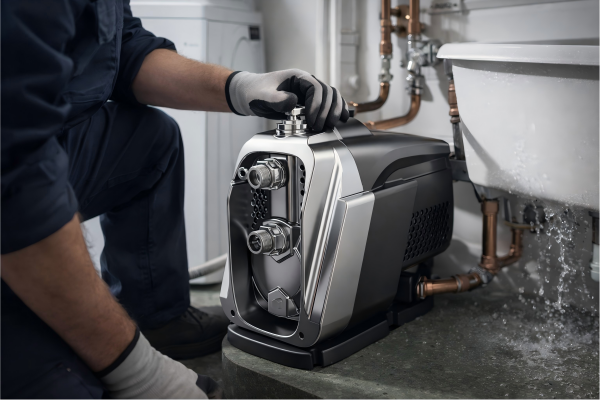
Frustrated with weak showers and trickling taps?
Low water pressure disrupts daily life.
A booster pump solves this by actively increasing your water flow.
A booster pump works by using a motor to spin an impeller, which draws in water and pushes it out with increased force.A pressure switch detects low pressure, automatically activating the pump to restore strong, consistent water flow throughout your pipes.
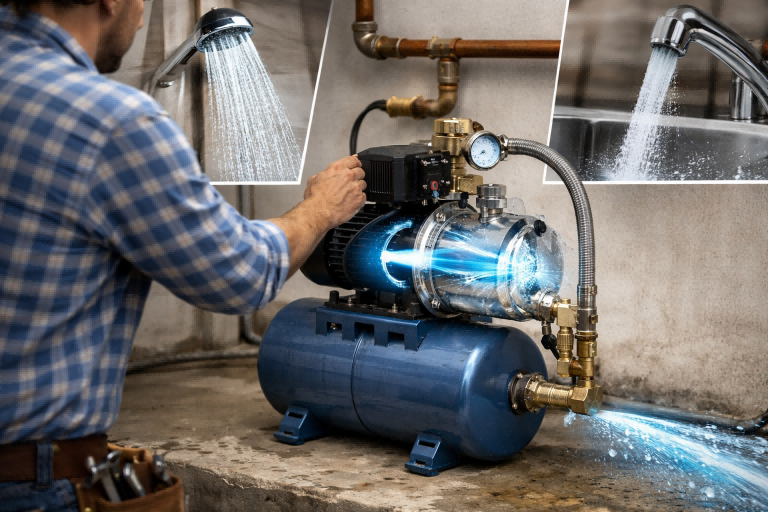
The basic principle behind a booster pump is straightforward.
It acts like a fan for your water, giving it the extra push it needs.
However, the real effectiveness of a modern booster pump lies deeper than this simple concept.
Its performance is not just about the pump itself, but about the harmony between its three core elements.
These are the internal pumping mechanism, the motor that drives it, and the intelligent controller that manages everything.
To truly understand how a booster pump works, we must look at how these components work together to deliver reliable pressure.
What's Inside? The Core Pumping Mechanisms
Think all pumps are the same inside?
The internal design dictates performance.
Choosing the wrong one leads to inefficiency or failure for your specific water needs.
**The core mechanism determines how the pump builds pressure.
Centrifugal pumps use spinning impellers for high flow.
Positive displacement pumps, like screw pumps, trap and force water, creating very high pressure.
The choice depends on the application's needs.**
The "wet end" is the part of the pump that directly handles the water.
Its design determines the pump's fundamental characteristics: how much water it can move (flow) and how much force it can push with (head or pressure).
Different applications demand different balances of flow and head.
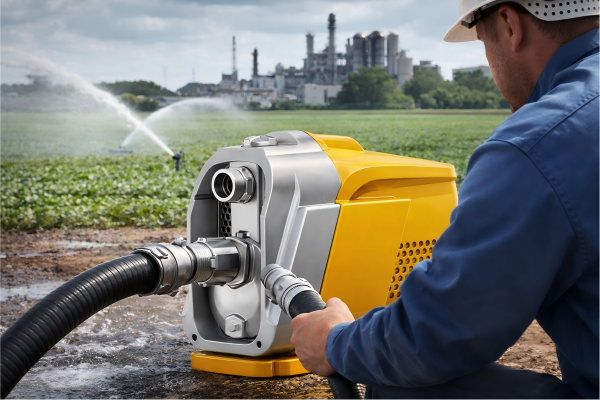
For example, irrigating a large field requires high flow, while pushing water up to the top floor of a tall building requires high head.
Understanding the two primary types of mechanisms used in booster pumps is essential for selecting the right tool for the job.
The choice between a centrifugal design and a positive displacement design has significant implications for performance, efficiency, and suitability for the water conditions.
Centrifugal Pumps: The High-Flow Workhorse
The most common type of mechanism in booster pumps is the centrifugal pump.
It works much like a fan.
A motor spins a component called an impeller at high speed.
The impeller's rotating vanes sling water outward using centrifugal force, increasing its velocity.
This high-velocity water then enters a casing (volute) that slows it down, converting the velocity into high pressure.
Many booster pumps are "multi-stage," meaning they contain several impellers and volutes in a series.
Each stage adds more pressure, allowing the pump to achieve a higher overall head.
Impeller material is a key differentiator.
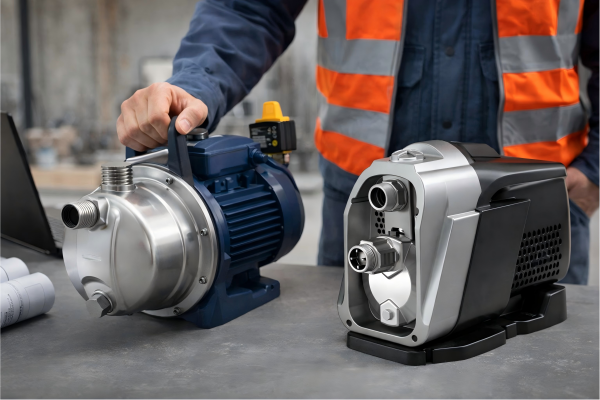
- Plastic Impellers: These are lightweight, economical, and offer excellent resistance to wear from fine sand. This makes them ideal for farm irrigation or general home boosting where the water source is relatively clean and high output is prioritized over extreme pressure.
- Stainless Steel Impellers: These offer superior durability and high resistance to corrosion. They are the premium choice for boosting water that may be acidic or alkaline, or for high-end applications where longevity and reliability are the top priorities. They are heavier and more costly but provide a longer service life in harsh conditions.
Positive Displacement Pumps: The High-Pressure Specialist
A less common but powerful alternative is the positive displacement pump.
Instead of slinging water, this design traps a fixed amount of water and then forces it out.
A perfect example is the screw pump (also known as a progressing cavity pump).
This mechanism uses a single helical metal rotor that spins inside a flexible rubber stator.
As the rotor turns, it forms sealed cavities of water that "progress" from the inlet to the outlet.
Because the cavities are sealed, this mechanism can build immense pressure (very high head).
However, the size of these cavities limits the amount of water it can move (low flow).
This design is exceptionally resistant to sand and is perfect for applications needing to overcome significant back-pressure or push water very high, like in specialized domestic systems.
Mechanism Comparison: Flow vs. Head
| Mechanism Type | Primary Advantage | Best Application | Key Limitation |
|---|---|---|---|
| Centrifugal (Plastic Impeller) | High Flow, Economical | Farm Irrigation, Home Boosting | Lower durability in corrosive water |
| Centrifugal (SS Impeller) | High Flow, Corrosion Resistance | Poor Water Quality, High-End Homes | Higher Cost and Weight |
| Positive Displacement (Screw) | Very High Head, Sand Resistance | Pushing water to great heights | Limited Water Flow |
The Engine: Why the Motor is Critical for Performance
Is your pump's motor wasting electricity or solar power?
An inefficient motor inflates running costs and demands a larger power source.
This makes your system expensive and unreliable.
**The motor converts electrical energy into the mechanical force that drives the pump.
A high-efficiency Brushless DC (BLDC) motor is superior, converting over 90% of energy into power.
This reduces electricity costs and minimizes solar panels needed.**
The pump's wet end can only work if something provides the power to make it spin.
That power comes from the electric motor.
In the past, simple AC or brushed DC motors were used, but they were often inefficient, bulky, and required regular maintenance.
The single greatest advancement in modern booster pump technology is the adoption of the high-efficiency Brushless DC (BLDC) permanent magnet motor.
The motor's efficiency is paramount because it dictates the overall efficiency of the entire system.
A 10% improvement in motor efficiency means a 10% reduction in electricity consumption or a 10% reduction in the number of solar panels required.
This has a direct impact on both the initial investment and the long-term operational cost of the booster pump system.
The BLDC Permanent Magnet Advantage
Unlike older motors that use carbon "brushes" to transmit power—parts that physically wear down and create friction—a BLDC motor is controlled electronically.
This frictionless design immediately boosts efficiency and eliminates the need for maintenance.
Furthermore, high-performance BLDC motors utilize powerful rare-earth permanent magnets in their rotor, typically made from materials like 40SH neodymium iron boron.
This creates an incredibly strong magnetic field, allowing the motor to generate more power and higher torque from less electricity.
The measurable benefits are significant.
- Extreme Efficiency: BLDC motors regularly achieve electrical-to-mechanical conversion efficiencies of over 90%. Older brushed motors often struggle to reach 75%. This 15%+ efficiency gain is a massive advantage.
- Enhanced Durability: With no brushes to wear out, the service life of a BLDC motor is dramatically longer, limited only by the high-quality bearings. This means a more reliable, "fit-and-forget" product for the end user.
- Compact Power: These motors deliver more power from a smaller package. They can be up to 47% smaller and 39% lighter than traditional motors of equivalent output. This reduces shipping costs for importers and makes installation for the technician far easier.
- High Starting Torque: BLDC motors can deliver maximum torque instantly. This is crucial for a booster pump that needs to immediately overcome the existing static pressure in a pipeline the moment it turns on.
The Market Impact of Superior Motor Technology
For a B2B importer or distributor, understanding the motor's value is a key selling point.
Offering a booster pump with a high-efficiency BLDC motor provides a clear competitive edge.
You can market it as a system that saves the end user money every day through lower electricity bills.
If it's a solar booster pump, you can offer a more competitively priced package because the high-efficiency motor requires a smaller, less expensive solar panel array to achieve the same water pressure.
It positions the product as a premium, technologically advanced solution that is both environmentally friendly and cost-effective over its long, maintenance-free lifespan.
The Brains of the Operation: The Control System
What good is a pump that doesn't know when to turn on or off?
A "dumb" pump runs constantly, wasting energy and wearing itself out.
An intelligent control system provides automation and protection.
**The control system is the brain that automates the booster pump.
A pressure switch signals the controller to start the pump when pressure drops.
The controller manages the motor for optimal performance and protects it from damage, ensuring efficient, on-demand operation.**
A truly effective booster pump system is more than just a pump and a motor.
It is an automated system that responds intelligently to the user's needs.
This automation is managed by the control system, which typically consists of a pressure switch and an electronic controller.
This "brain" is responsible for telling the pump when to run, how fast to run, and when to stop.
It ensures that you have strong water pressure the instant you need it, and that the pump is resting and conserving energy when you don't.
Furthermore, a modern controller provides a suite of protections that safeguard the pump and motor from damaging operational conditions, vastly extending the system's lifespan and reliability.
For solar-powered booster pumps, the controller plays an even more critical role by maximizing the use of every available watt of solar energy.
Automatic On-Demand Operation
The most fundamental job of the control system is automation.
- Pressure Switch: This device is installed on the plumbing and constantly monitors the water pressure in the pipes. It has a pre-set "cut-in" pressure (low) and "cut-out" pressure (high).
- Activation: When someone opens a tap, the pressure in the pipes drops. Once it falls below the cut-in pressure, the pressure switch sends an electrical signal to the controller.
- Operation: The controller receives the signal and instantly powers up the BLDC motor, which drives the pump to boost the water pressure.
- Deactivation: When the tap is closed, the pressure quickly builds. Once it reaches the cut-out pressure, the switch signals the controller to stop the motor.
A pressure tank is often included in the system to act as a small reservoir of pressurized water.
This prevents the pump from "cycling" (rapidly turning on and off) if there is a small leak or a tap is opened for just a second, which reduces wear on the motor and switch.
The Role of the Smart Controller
The electronic controller does much more than just turn the motor on and off.
It is a sophisticated microcomputer that manages and optimizes performance.
- Motor Management: It provides the precise electrical signals needed to run the highly-efficient BLDC motor.
- Soft Start: It gently ramps up the motor speed instead of jolting it to full power, which reduces mechanical stress and electrical surges.
- System Protection: It constantly monitors for dangerous conditions like dry-running (no water), over-voltage, under-voltage, and motor overheating, shutting the pump down before damage can occur.
- Solar Optimization (MPPT): For solar booster pumps, the controller uses Maximum Power Point Tracking (MPPT). This algorithm extracts up to 30% more energy from the solar panels by constantly adjusting the electrical load to match the optimal output of the panels as sunlight conditions change.
- Hybrid AC/DC Functionality: Advanced controllers can accept both solar (DC) and grid/generator (AC) power. They prioritize free solar energy, but can automatically blend in or switch to AC power during cloudy weather or at night, guaranteeing 24/7 water pressure.
Conclusion
A booster pump increases water pressure using a motor-driven mechanism.
Its effectiveness relies on the pump type, a high-efficiency motor, and a smart controller.
Together, these provide powerful, on-demand water flow.
Frequently Asked Questions
What pressure should a booster pump be set at?
Typically, a booster pump is set to cut in around 30-40 PSI and cut out around 50-60 PSI for residential use.
Where should a booster pump be placed?
It should be installed on the main water line after the water meter or pressure tank, and before the line splits to various fixtures.
Can a booster pump be too powerful?
Yes.
A pump that is too powerful for your plumbing can create excessive pressure, potentially causing leaks or damaging fixtures and appliances.
Does a booster pump use a lot of electricity?
Modern booster pumps with high-efficiency BLDC motors are very energy efficient.
Actual usage depends on how often it runs to meet your water demand.
Can a booster pump pull water from a well?
No, a booster pump is designed to increase the pressure of water that is already flowing in a pipe.
It cannot lift water from a source like a well.
How do I know if I need a booster pump?
If you consistently experience low water pressure at multiple fixtures in your home, especially on upper floors, a booster pump is likely needed.
Do booster pumps turn on and off automatically?
Yes, they are controlled by a pressure switch that senses when water pressure drops (a tap is opened) and automatically turns the pump on.