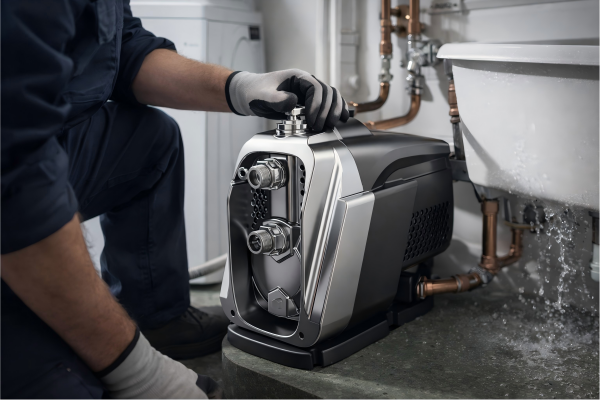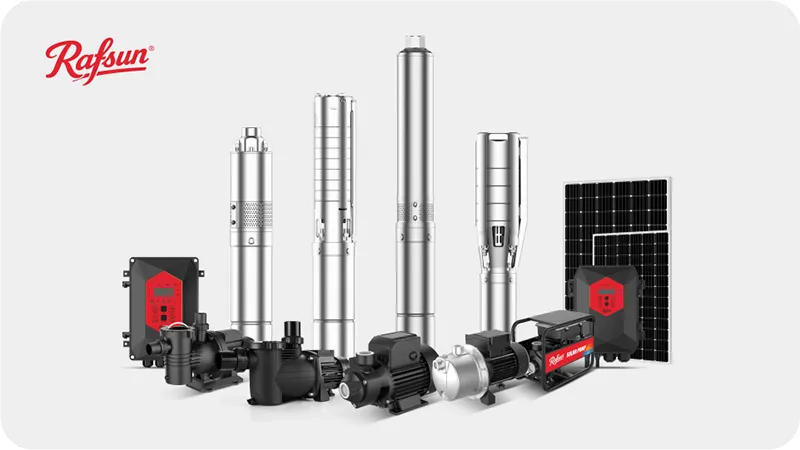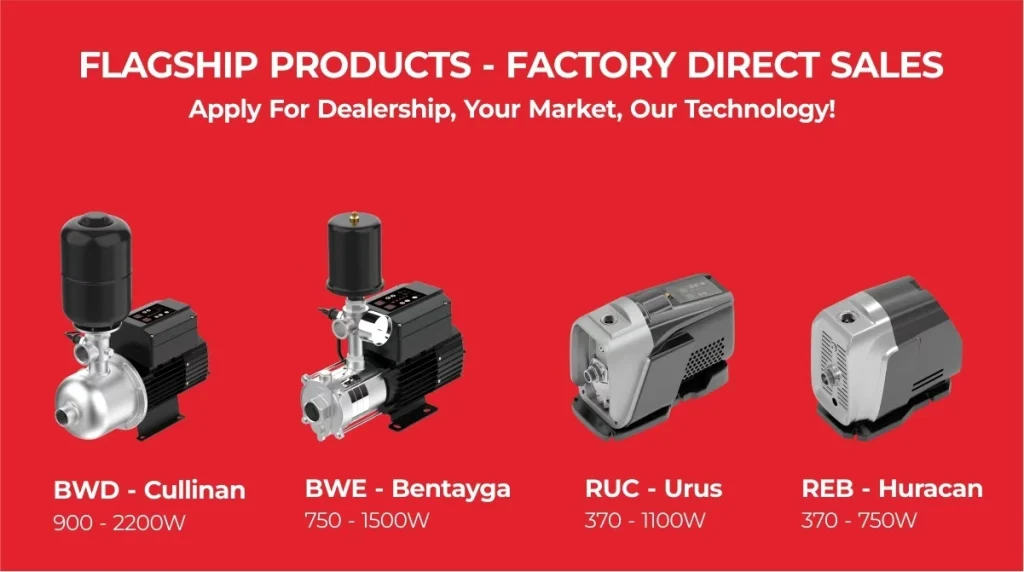
You need to move water over a long distance but lack reliable grid power.
You worry a solar pump won't have the strength.
What if it could?
A solar pump's pushing distance, or "head," depends on the pump type and motor power.
A high-head screw pump can push water hundreds of meters vertically, while high-flow impeller pumps are designed for shorter distances but larger volumes.
The right system is key.
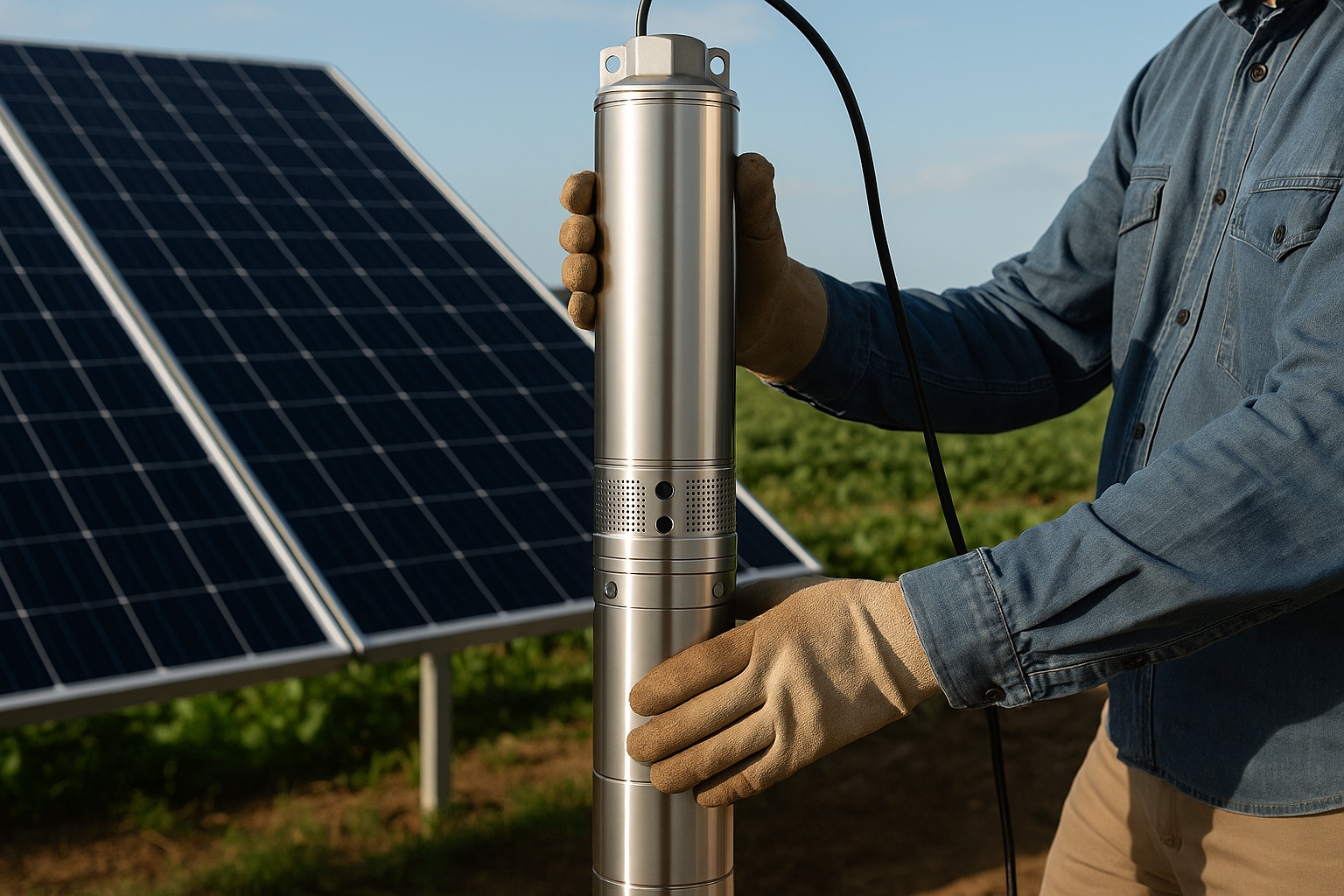
The distance a pump can push water is not a single, simple number.
It is a calculation that involves several critical factors working together.
Understanding these factors is the first step to selecting a system that will meet your needs without fail.
This knowledge ensures you invest in a solution that delivers water exactly where you need it, day after day.
Let's break down what truly defines a solar pump's power.
What Really Determines How Far a Solar Pump Pushes Water?
You hear technical terms like "head" and "lift," but they are confusing.
This makes choosing the right pump feel like a risky gamble.
We can make it simple.
The total pushing distance is called Total Dynamic Head (TDH).
It is the sum of the vertical height from the water source to the destination, plus the friction created by pipes.
Calculating TDH accurately is the most crucial step in choosing the right solar pump.
Thinking about how far a solar pump can push water requires looking beyond just the vertical lift.
While lifting water from a deep well is impressive, it is only part of the story.
The true work of the pump is measured by its ability to overcome all resistance it encounters.
This total resistance is what we call Total Dynamic Head, or TDH.
It provides a complete picture of the workload placed on the pump.
For distributors and importers, teaching your clients how to calculate TDH is a valuable service.
It prevents them from buying the wrong pump and builds your reputation as a knowledgeable expert.
A pump that is correctly matched to the TDH will operate efficiently, last longer, and deliver the expected amount of water, leading to a satisfied customer.
Breaking Down Total Dynamic Head (TDH)
TDH is composed of two main elements that you must add together.
- Static Head: This is the simplest part of the calculation. It is the total vertical distance the water needs to travel. You measure from the water level in your well or tank up to the final discharge point.
- Friction Head: This is the "hidden" resistance that many people forget. As water moves through pipes, it rubs against the inner walls. This friction creates back-pressure that the pump must overcome. The amount of friction depends on the pipe's length, its diameter, and the number of bends or fittings.
Why an Accurate TDH Calculation is Non-Negotiable
Getting the TDH wrong has serious consequences.
If you underestimate the TDH, you will choose a pump that is too weak for the job.
The pump may struggle to deliver any water at all, and the motor will be forced to work too hard, causing it to overheat and fail prematurely.
On the other hand, if you overestimate the TDH, you will buy a pump that is much more powerful and expensive than you need.
This wastes money on both the initial purchase and potentially on a larger solar array than necessary.
The simple formula to remember is:
Total Dynamic Head (TDH) = Static Head + Friction Head
This number is the most important piece of information you need to select the right solar pump.
Which Pump Type is Right for Your Pumping Distance?
You need a reliable water solution for a specific need.
But with different pump types available, choosing the correct one is confusing.
An incorrect choice could lead to poor performance and money wasted.
The right pump type depends on your specific head and flow needs.
Solar screw pumps provide low flow but high head for deep wells.
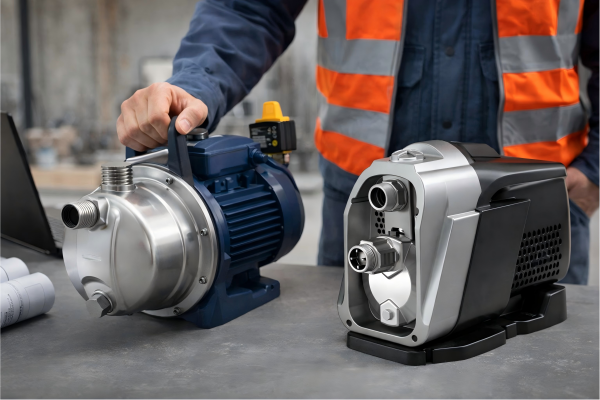
Plastic impeller pumps offer high flow for irrigation at medium head, while stainless steel models resist corrosion in harsh water conditions.
Once you know your Total Dynamic Head (TDH), you can select a pump designed to handle that specific workload.
Solar deep well pumps are not a one-size-fits-all product.
They are specialized tools engineered for different environments and tasks.
A pump that excels at lifting small amounts of water from a very deep well will be inefficient for irrigating a large field.
Conversely, a high-volume irrigation pump would fail quickly if installed in a deep, sandy well.
As a distributor, offering a diverse portfolio of pump types is a major competitive advantage.
It allows you to provide a tailored solution for every customer, whether they need water for a home, for livestock, or for a large farm.
This targeted approach ensures optimal performance, longevity, and customer satisfaction.
High Head for Deep Wells: The Solar Screw Pump
This pump is the specialist for deep wells and high-lift applications.
- How it Works: It uses a hardened stainless steel screw (rotor) that rotates inside a durable rubber housing (stator). This mechanism acts like a screw, pushing "pockets" of water upward with great force.
- Best For: It excels in situations where you need to overcome very high static head, common in the deep wells of Africa and Latin America. It's the ideal choice for domestic water supply and livestock drinking troughs when the water source is far below the ground.
- Key Advantage: Its design is naturally resistant to abrasion from sand and grit, which gives it a long service life in harsh well conditions. Its main limitation is a lower flow rate compared to other types.
High Flow for Agriculture: The Solar Plastic Impeller Pump
This pump is the workhorse for applications that require moving a lot of water.
- How it Works: It is a multi-stage centrifugal pump. It uses a series of spinning impellers to accelerate water, creating high flow. The impellers are made of a high-strength, wear-resistant engineered plastic.
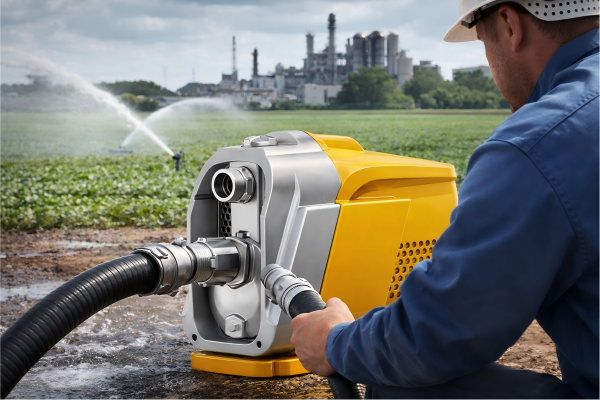
- Best For: Farm irrigation, pasture water supply, and filling large storage tanks where the TDH is low to medium.
- Key Advantage: It delivers a high volume of water efficiently. The engineered plastic is excellent at resisting wear from fine sand, making it a reliable and economical choice for many agricultural settings.
Durability for Harsh Water: The Solar Stainless Steel Impeller Pump
This is the premium option for longevity in challenging water conditions.
| Feature | Solar Plastic Impeller Pump | Solar Stainless Steel Impeller Pump |
|---|---|---|
| Primary Use | High-volume irrigation, fine sand | Corrosive or alkaline water |
| Material | Wear-resistant engineered plastic | SS304 Stainless Steel |
| Main Advantage | Economical and lightweight | Maximum corrosion resistance |
| Ideal Market | General agriculture, ranches | Alkaline soils, high-end homes |
This pump is built with an SS304 stainless steel pump body, impeller, and outlet.
This material makes it highly resistant to rust and chemical degradation from acidic or alkaline water.
For regions with challenging water chemistry, such as parts of Australia and the Americas, this pump's superior corrosion resistance guarantees the longest possible service life.
How Do Motors and Controllers Maximize Pumping Distance?
You know the pump is important, but what about the motor?
You worry that an inefficient motor will waste precious solar power.
This could mean less water pumped and a shorter system lifespan.
A high-efficiency Brushless DC (BLDC) motor is the core of a powerful solar pump.
Paired with an intelligent MPPT controller and an AC/DC hybrid option, the system maximizes every watt of solar energy to push water farther and ensure a 24/7 supply.**
The pump end does the physical work, but the motor and controller are the heart and brain of the entire system.
They determine how effectively solar energy is converted into water pressure.
An advanced motor and intelligent controller can significantly increase the amount of water a pump can deliver and the distance it can push it, even with the same set of solar panels.
The core technology driving modern solar pumps is the Brushless DC (BLDC) permanent magnet motor.
With an efficiency exceeding 90%, it wastes very little energy as heat.
This means more power from your solar panels goes directly into pumping water.
For a business owner, this efficiency offers a key selling point: it can reduce the number of solar panels needed, lowering the total system cost for the customer.
The Brains of the Operation: MPPT and Hybrid Control
The controller's job is to manage the power from the solar panels and protect the motor.
- Maximum Power Point Tracking (MPPT): An MPPT controller is essential for maximizing efficiency. It constantly adjusts the electrical load to find the "sweet spot" where the solar panels produce the most power. This technology can boost the water output by up to 30% compared to simpler controllers.
- AC/DC Hybrid Capability: This feature provides ultimate reliability. The controller can accept power from both the DC solar panels and an AC source like the grid or a generator. It always prioritizes free solar power. However, if the sun isn't shining, it automatically switches to or blends in AC power to ensure you have water 24/7. This eliminates any concerns about water availability on cloudy days or at night.
The Strategic Value of a Superior Motor
The BLDC motor's design offers more than just efficiency.
It uses powerful rare-earth magnets, making it smaller and lighter than traditional motors of the same power output.
This simplifies transportation and installation, which is a significant advantage in remote areas.
Furthermore, because it has no brushes that wear out, the motor is maintenance-free and has a very long service life.
For an importer or distributor, a product line built around this high-efficiency motor and intelligent controller combination is a powerful asset.
It establishes your brand as a provider of technologically advanced, reliable, and cost-effective water solutions that can meet the demands of any application.
Conclusion
A solar pump can push water great distances.
Success depends on matching a durable pump, an efficient motor, and an intelligent controller to the site's unique demands.
FAQs
How far can a solar water pump push water horizontally?
A pump's horizontal distance depends on friction loss.
With a properly sized pipe, it can push water for kilometers, though this will increase the Total Dynamic Head.
What is the maximum head of a solar water pump?
High-head solar screw pumps are designed for deep wells.
They can achieve a maximum head of over 200-300 meters, lifting water from extreme depths.
Do I need a bigger pump to push water further?
Not necessarily.
You need the right type of pump.
A high-head pump is designed to push water further, while a high-flow pump is for moving volume over shorter distances.
How does pipe size affect how far a pump can push water?
A smaller pipe creates more friction, reducing how far a pump can push water.
Using a larger diameter pipe significantly reduces friction loss over long distances.
Can a solar pump push water uphill?
Yes, pushing water uphill is a core function.
The vertical uphill distance is the "static head," a key part of the Total Dynamic Head calculation.
Does pushing water further reduce the flow rate?
Yes, there is an inverse relationship.
As the pumping distance (head) increases, the volume of water the pump can deliver (flow rate) will decrease.